How we make this list: we compare pricing pages, product documentation and public user reviews. Ratings come from G2, Capterra or Trustpilot, with the date we checked them.
Key takeaways
- Process Street and Tallyfy turn recurring procedures into checklists that run themselves, which is where most small and mid size teams should start.
- Pipefy and Kissflow add forms, approvals, and automation for operations teams that have outgrown shared spreadsheets.
- Nintex, Camunda, and Appian are the heavy end: process mapping, automation, and orchestration for enterprises with dedicated process teams.
- SweetProcess is the documentation first pick: it stores the procedure itself beautifully and tracks who has read and followed it.
- Pricing in this category is mostly quote based, because vendors price by users, runs, and modules. Budget through trials, not headline figures.
Quick comparison
| Tool | Best for | Starting price | Free plan |
|---|
 Process Street | Recurring checklists and approvals | See website | No |
 Pipefy | Operations workflows with forms | $26 per user per month | No |
 Kissflow | Low code process apps | See website | No |
 Tallyfy | Simple tracked procedures | See website | No |
 SweetProcess | Documenting procedures | $99 per month | No |
 Nintex | Enterprise automation and mapping | See website | No |
 Camunda | Developer led process orchestration | Free | Yes |
 Appian | Enterprise low code process platform | See website | No |
Is your product missing or out of date?
We review this list regularly. Vendors can request a listing, send updated pricing or ask about featured placement.
The best process management software
#1Process Street
Best for: Recurring checklists and approvals4.6/5 on
G2 (463 reviews, checked Oct 2026)
Visit process.st
Starting priceSee website
Free planNo
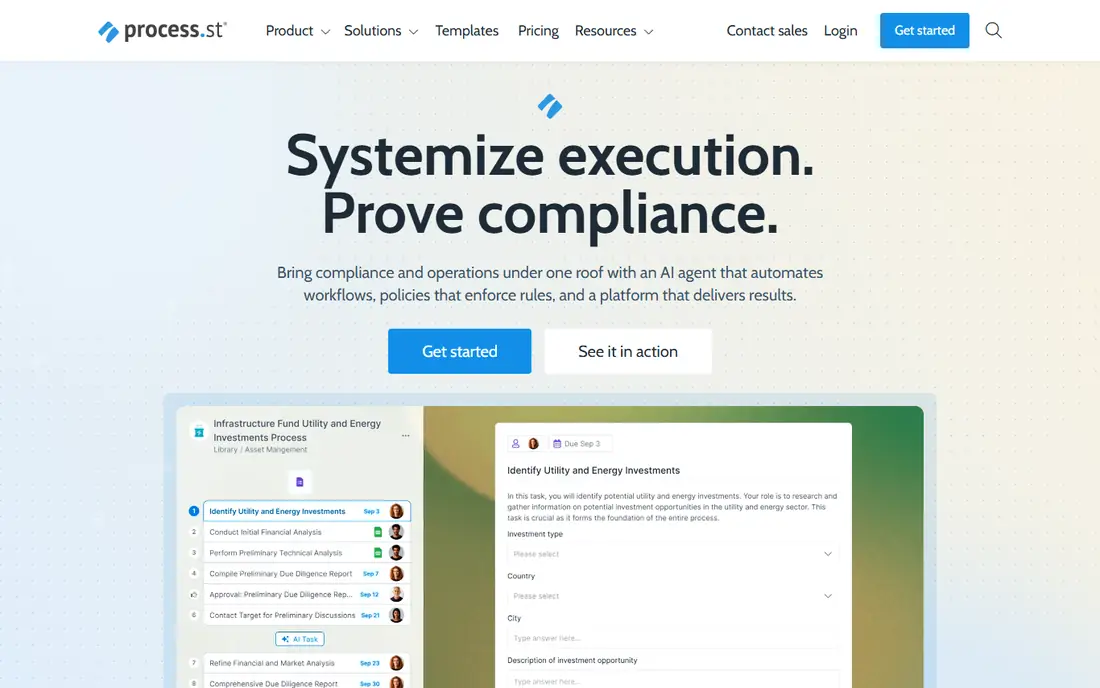
Process Street is the checklist workflow tool most operations teams meet first. A procedure becomes a template; each run assigns tasks, collects form data, routes approvals, and leaves an audit trail. It suits onboarding, client intake, content production, and any process that fails when a step lives in someone's memory.
The trade off is depth against accessibility. There is no process mining or heavy orchestration here, and current pricing is plan based rather than a simple per user figure. Process Street fits small and mid size companies that need repeatable work to run the same way every time, without hiring a process team.
What we like- Turns any procedure into a runnable checklist with assignments and due dates
- Approvals and conditional logic built in
- AI assisted workflow drafting
- Integrates with the common business stack
Watch out for- Pricing moved to plan based quotes, so budgeting needs a call
- Per run thinking matters at high volume
- Reporting is lighter than BPM platforms
#2Pipefy
Best for: Operations workflows with forms4.6/5 on
G2 (231 reviews, checked Oct 2026)
Visit pipefy.com
Starting price$26 per user per month
Free planNo
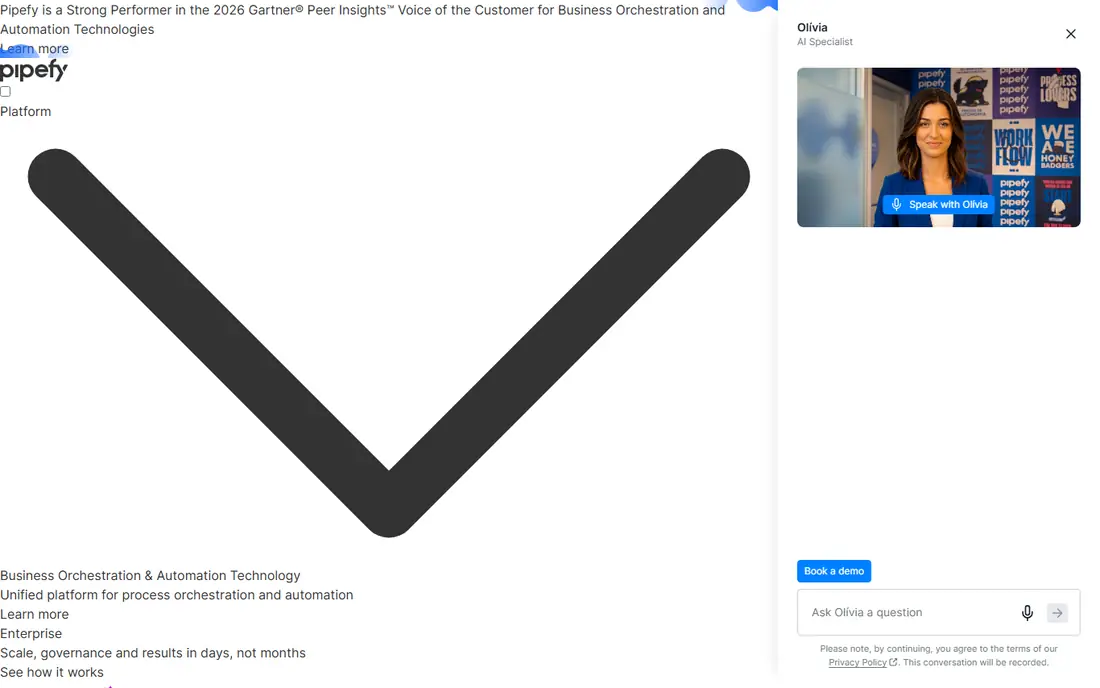
Pipefy organises work as pipes: a request enters through a form, moves through phases, and automation handles the handovers, notifications, and SLA warnings. Procurement requests, employee onboarding, and customer onboarding are its home ground. Published pricing is reported from $26 per user per month on the entry business tier.
The trade off is structure against flexibility. Pipefy wants your process shaped like its pipes; very freeform work fights the model. Pipefy fits operations and shared services teams replacing email and spreadsheet intake with something trackable.
What we like- Visual pipes for requests, approvals, and fulfilment
- Public forms feed work in cleanly
- Automation rules between steps
- Per user pricing is published, reported from $26
Watch out for- Costs climb with users and automation volume
- Complex branching can tangle
- Analytics are mid tier
#3Kissflow
Best for: Low code process apps4.3/5 on
G2 (590 reviews, checked Oct 2026)
Visit kissflow.com
Starting priceSee website
Free planNo
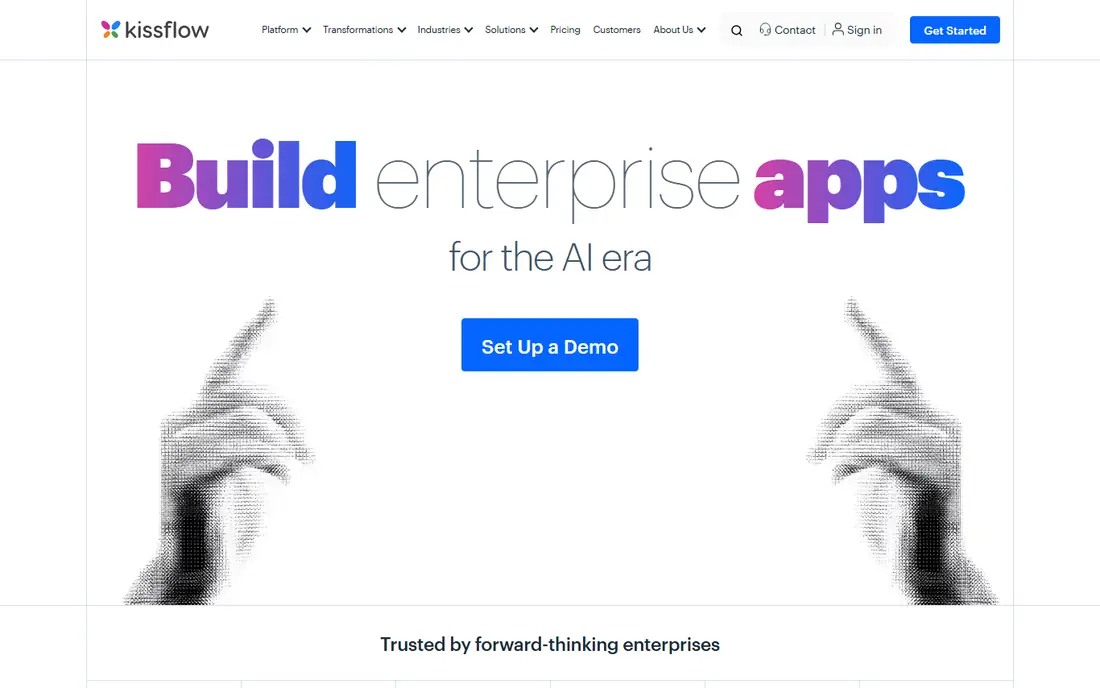
Kissflow sells a platform rather than a checklist: citizen developers in operations build the approval flows, procurement processes, and case workflows the business needs, with IT keeping oversight. It has moved upmarket over the years, and its pricing reflects that, quoted per deployment.
The trade off is capability against weight. A twenty person company does not need an app building platform; a two thousand person company outgrows checklists. Kissflow fits mid size and enterprise organisations that want business teams to own their processes with IT guardrails rather than IT bottlenecks.
What we like- Business users build process apps without code
- Covers processes, projects, and cases in one platform
- Governance controls for IT
- Strong in mid market deployments
Watch out for- Pricing is quote based and aimed at larger rollouts
- Platform breadth means setup decisions take time
- Smallest teams will find it oversized
#4Tallyfy
Best for: Simple tracked procedures4.9/5 on
G2 (6 reviews, checked Oct 2026)
Visit tallyfy.com
Starting priceSee website
Free planNo
Tallyfy's idea is that a procedure should be trackable like a delivery: launch the playbook, and everyone sees which step is waiting on whom, including outside guests such as clients submitting documents. It strips process software down to that promise and keeps the interface deliberately plain.
The trade off is focus against power. Teams needing heavy automation, complex forms, or analytics will look further up this list. Tallyfy fits service businesses, agencies, and operations teams whose main pain is not knowing where a standard job currently stands.
What we like- Every run of a procedure is tracked step by step
- Guests can complete tasks without accounts
- Focuses on the procedure rather than the project
- Simple to learn
Watch out for- Pricing is quote led in recent plans
- Automation depth trails Pipefy
- Smaller integration catalogue
Starting price$99 per month
Free planNo
SweetProcess answers the step before automation: getting the procedure out of the owner's head and into a document staff actually follow. It structures procedures, policies, and processes with clear steps and media, then adds tasks and tracking so you can see the work run. Its flat pricing, reported at $99 per month for a team of up to twenty, is refreshingly simple for this category.
The trade off is documentation against automation. SweetProcess will not integrate your CRM and ERP into one flow. SweetProcess fits franchises, agencies, and growing companies where consistency across people and locations is the problem to solve first.
What we like- Best in class procedure documentation with steps, screenshots, and video
- Tracks acknowledgement and task runs
- Pricing is flat per team, reported at $99 per month for up to 20 members
- Built for franchises and repeatable operations
Watch out for- Documentation first, automation second
- No free plan
- Less suited to cross system orchestration
#6Nintex
Best for: Enterprise automation and mapping4.2/5 on
G2 (1,311 reviews, checked Oct 2026)
Visit nintex.com
Starting priceSee website
Free planNo
Nintex is the enterprise suite in this category: map the process, automate it with workflow and RPA, generate the documents, and measure where it slows down. It grew from SharePoint workflow roots into a broad automation platform used across large organisations.
The trade off is coverage against complexity and cost. Buying Nintex is a programme, not a purchase order, and pricing is entirely quote based. Nintex fits enterprises standardising process automation across departments, especially those deep in Microsoft or Salesforce ecosystems.
What we like- Full stack from process mapping to workflow, RPA, and document generation
- Deep Microsoft and Salesforce roots
- Process intelligence shows where work stalls
- Enterprise support and services
Watch out for- Enterprise pricing by quote
- Product line grew by acquisition and can feel stitched
- Implementation partners often required
#7Camunda
Best for: Developer led process orchestration4.5/5 on
G2 (327 reviews, checked Oct 2026)
Visit camunda.com
Starting priceFree
Free planYes
Camunda orchestrates processes at the level where processes become software: order flows across a dozen services, claims across systems of record, payments across partners. Its models use the BPMN standard, its core is open source and free to run, and the paid platform adds the tooling and support enterprises require.
The trade off is power against audience. Camunda belongs to platform engineering teams, not operations managers with a checklist problem. Camunda fits technology led companies whose core processes span many systems and need orchestration that survives an audit.
What we like- Open source core you can run free
- BPMN standard modelling that architects trust
- Orchestrates microservices, systems, and human tasks
- Enterprise edition adds monitoring and support
Watch out for- Developer led, so business users will not run it alone
- Enterprise pricing by quote
- Total cost includes the engineers who build on it
#8Appian
Best for: Enterprise low code process platform4.5/5 on
G2 (520 reviews, checked Oct 2026)
Visit appian.com
Starting priceSee website
Free planNo
Appian is the platform enterprises buy when process work becomes application work: case management, claims, onboarding, and compliance processes built as low code applications on one data and workflow foundation. Process mining sits beside the builder, so improvement is measured rather than guessed.
The trade off is platform against price and commitment. Appian suits organisations consolidating many process applications onto one governed platform, typically in finance, insurance, government, and life sciences. For a single department's approvals, everything above it on this list is cheaper and faster to start.
What we like- Combines low code apps, workflow, RPA, and process mining in one platform
- Strong in regulated industries
- Data fabric reduces integration work
- Vendor invests heavily in AI features
Watch out for- Premium enterprise pricing
- Projects need Appian skilled builders
- More platform than most process problems require
How we chose
We ordered this list by the size of problem each tool solves, from documented procedures and checklists up to enterprise orchestration, because that is how buyers actually climb the category. We checked current pricing models in October 2026 and published figures only where vendors state them plainly, marking the rest See website. We left out general project tools that call task lists process management, and pure process mining vendors that do not run work.
How to choose process management software
Start by writing down the process you most need to fix and what fixing means: fewer missed steps, faster approvals, or an audit trail. If the answer is missed steps, buy a checklist tool such as Process Street, Tallyfy, or SweetProcess and be running within a week. If work arrives through messy intake, Pipefy's forms and pipes fit better. Reserve the platforms, Kissflow, Nintex, Camunda, and Appian, for when processes cross systems and departments and someone owns process improvement as a job. Trial with the real process, including the exception that always breaks it: the missing document, the approver on leave, the client who replies by email. Count the true price as licences plus the hours to build and maintain the workflows, and re check after ninety days whether runs are actually completing inside the tool or drifting back to email, because adoption, not features, decides the return.
Frequently asked questions
What is process management software?
Software that defines a repeatable process once and then runs, tracks, and improves it: assigning steps, routing approvals, collecting data, and showing where work waits. It ranges from simple checklist runners to enterprise platforms that orchestrate processes across many systems.
What is the difference between workflow and BPM software?
Workflow tools run tasks in order for a team. Business process management, or BPM, adds modelling standards, automation across systems, monitoring, and improvement analytics for the whole organisation. The tools at the top of this list are workflow first; Camunda, Nintex, and Appian are BPM.
How much does process management software cost?
Checklist tools publish per user or flat team pricing, with Pipefy reported from $26 per user per month and SweetProcess at $99 per month for up to twenty members. Platforms price by quote based on users, volume, and modules, and enterprise deals commonly reach five or six figures a year.
Can small businesses use process management software?
Yes, and they often gain the most, because one missed step is a larger share of total work. Start with documentation and checklists: SweetProcess, Process Street, and Tallyfy are sized for small teams. Skip the enterprise platforms until a process crosses several systems.
What is process mining and do I need it?
Process mining reads the event logs of your existing systems and shows how work actually flows, including the detours nobody documented. It is valuable at enterprise scale and unnecessary for a team formalising its first ten procedures.
How long does implementation take?
A checklist tool can run its first real process the day you buy it. Platform rollouts, with integrations, data migration, and change management, take months. The honest driver is not the software but how clearly your processes are defined before you start.
Sources we checked (0)
Is your product missing or out of date?
We review this list regularly. Vendors can request a listing, send updated pricing or ask about featured placement.

Shihab Mia · Founder, Rankite
Shihab has 5+ years in B2B and SaaS SEO. He writes Rankite's software buying guides from pricing pages, documentation and public user reviews. More about Shihab.