How we make this list: we compare pricing pages, product documentation and public user reviews. Ratings come from G2, Capterra or Trustpilot, with the date we checked them.
Key takeaways
- NetJets is the best private jet company for reliability, with the largest fleet and broad global reach.
- Flexjet suits flyers who want dedicated crews, consistent cabins, and premium service.
- VistaJet is best for global intercontinental travel, with no positioning fees on its program.
- Wheels Up and XO offer more flexible entry points, with deposit models rather than full ownership.
- Sentient Jet and Magellan Jets suit flyers who want jet cards without owning a share.
- BlackJet is a newer card option with hours that never expire.
- Private flying is expensive and the fine print matters: daily minimums, peak days, fuel surcharges, and taxes can add a large amount to the headline hourly rate.
Quick comparison
| Tool | Best for | Starting price | Free plan |
|---|
 NetJets | Largest fleet and reliability | $215,000 for 25 hours | No |
 Flexjet | Dedicated crews and premium cabins | See website | No |
 VistaJet | Global intercontinental travel | See website | No |
 Wheels Up | Flexible domestic membership | See website | No |
 Sentient Jet | Jet cards that never expire | See website | No |
 XO | App-first booking and shared flights | $100,000 deposit | No |
 Magellan Jets | Concierge service and flexibility | See website | No |
 BlackJet | Cards with hours that never expire | $200,000 for 25 hours | No |
Is your product missing or out of date?
We review this list regularly. Vendors can request a listing, send updated pricing or ask about featured placement.
The best private jet companies
Starting price$215,000 for 25 hours
Free planNo
NetJets is the largest private jet company, with a fleet of roughly 800 aircraft and bases around the world. Its jet card starts near $215,000 for 25 hours on a light jet, and fractional shares start at a 1/16 share for about 50 hours a year over a multi-year term. The depth of the fleet means an aircraft is usually available even on peak days, and service standards are consistent worldwide.
The trade offs are price and expiry. NetJets is among the most expensive options, and card hours must be used within the contract term, typically around 24 months. For flyers who need guaranteed availability and fly often, NetJets is the reliability benchmark, and its scale is the reason it can promise aircraft where smaller operators must broker one.
What we like- Largest fleet at 800 plus aircraft
- Global reach
- Strong peak-day access
Watch out for- High entry cost
- Card hours expire
- Premium pricing
Starting priceSee website
Free planNo

Flexjet is the other large fractional operator, with a fleet of roughly 300 aircraft and a reputation for cabin quality. Its Red Label program assigns dedicated crews to an aircraft, which means the same crew learns your preferences over time. Fractional shares run for several years, and a 25-hour card is also available, though card pricing is quote-only.
Share costs are high, with monthly management fees on top of the share price, and card pricing is not published, so comparison takes a sales conversation. For flyers who value crew continuity and a boutique cabin experience, Flexjet is a top choice.
What we like- Dedicated crews on Red Label shares
- Consistent cabins
- Strong transatlantic reach
Watch out for- Quote-only card pricing
- Share terms run several years
- Premium cost
Starting priceSee website
Free planNo
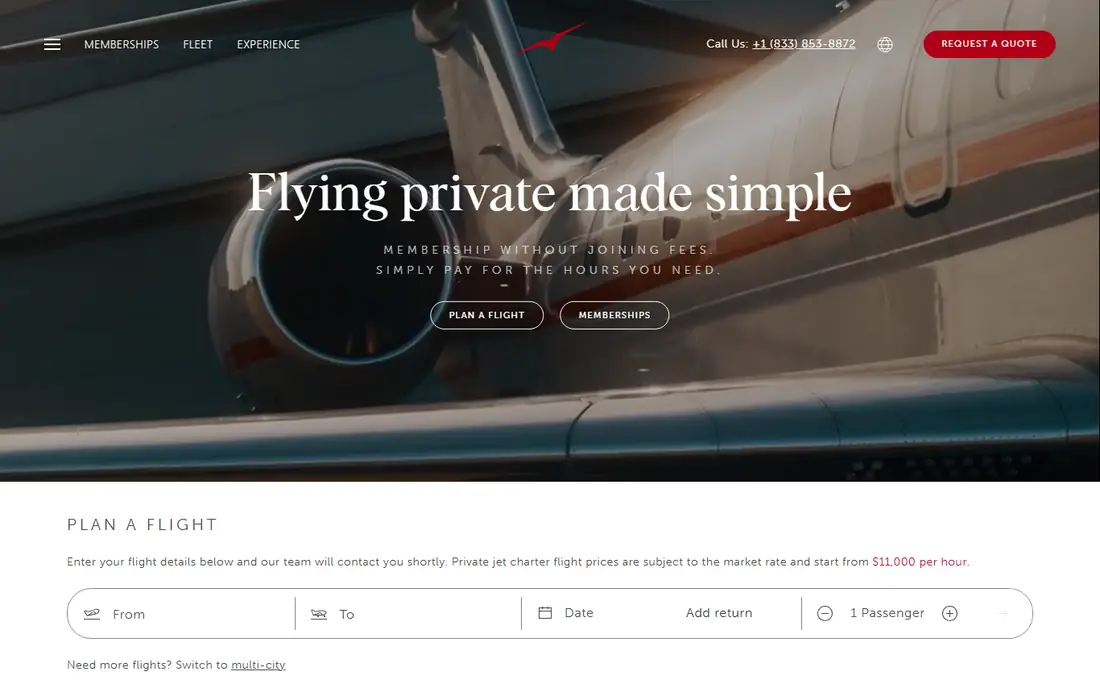
VistaJet runs a subscription model rather than ownership. Members commit to a multi-year program, typically 50 or more hours a year, and pay an annual fee plus per-flight rates, with no positioning fees charged for moving an aircraft to your departure point. The fleet is made of Bombardier aircraft, which gives a consistent cabin worldwide, and the company serves intercontinental routes heavily.
Hourly rates are high, often estimated above $15,000 for larger aircraft, and pricing is quote-only, so you cannot compare it precisely without a proposal. The multi-year term is a real commitment. For global travelers who fly long routes often and want one consistent operator worldwide, VistaJet fits well.
What we like- Global fleet of Bombardier aircraft
- No positioning fees
- Consistent worldwide service
Watch out for- Multi-year commitment
- High hourly rates
- Quote-only pricing
Starting priceSee website
Free planNo
Wheels Up offers membership and deposit models rather than full ownership. Members pay initiation and annual dues, then pay capped or dynamic hourly rates when they fly, with a deposit drawn down as they travel. Since its acquisition by Delta, members also gain airline partnership perks. The model suits domestic flyers who want flexibility without a multi-year share.
Deposits are large, commonly around $100,000 to $200,000 depending on plan, and dynamic pricing means some flights cost more than the capped rate suggests. International reach is thinner than NetJets or VistaJet. For US domestic flyers who want a lower entry point than fractional ownership, Wheels Up is a practical option.
What we like- Lower entry than fractional shares
- Delta partnership perks
- Broad domestic access
Watch out for- Deposit and dues add up
- Dynamic pricing on some plans
- Domestic focus
Starting priceSee website
Free planNo
Sentient Jet sells jet cards in 25-hour blocks with fixed hourly rates, and its standout feature is that hours never expire. That suits irregular flyers who do not want to lose prepaid hours at the end of a contract term. Entry prices are lower than the largest fractional cards, and the company vets operators through safety programs.
Sentient Jet brokers flights through a network of operators rather than owning the whole fleet, so cabin consistency varies more than at NetJets or Flexjet. Prices vary by cabin and published figures disagree, so check the current card price. For flyers who buy hours but fly unpredictably, the never-expire feature is valuable.
What we like- Hours never expire
- Fixed rates
- Lower entry than major fractional cards
Watch out for- Brokered fleet varies
- Peak terms vary
- Prices vary by cabin
#6
XO
Best for: App-first booking and shared flights
Visit xo.com
Starting price$100,000 deposit
Free planNo
XO is an app-first private aviation platform with deposit-based membership. Members fund an account, commonly from $100,000, and book flights through the app, with options for shared flights that split the cost of an empty leg or a common route. The platform draws on VistaJet safety standards and a broad operator network.
Pricing is dynamic on many flights, so the same route can cost different amounts on different days. Shared flights only work where demand lines up. For tech-comfortable flyers who want app booking and a flexible deposit model, XO is a modern choice.
What we like- Modern app booking
- Shared flight options
- Deposit model is flexible
Watch out for- Dynamic pricing
- Shared flights depend on demand
- Deposit is large
Starting priceSee website
Free planNo
Magellan Jets offers jet cards and membership with a strong concierge service that handles catering, ground transport, and trip details. Cards run in 25-hour blocks with fixed rates, and the company can source a wide range of aircraft through vetted operators, which gives flexibility on cabin size.
Magellan Jets brokers flights rather than owning a large fleet, so consistency depends on the operator assigned. Pricing is not published in full, so comparison needs a quote. For flyers who value personal service and flexible sourcing over fleet ownership, Magellan Jets is worth a quote.
What we like- Strong concierge service
- Flexible fleet access
- Fixed-rate cards
Watch out for- Brokered fleet
- Pricing not published
- Smaller scale than NetJets
Starting price$200,000 for 25 hours
Free planNo
BlackJet is a newer jet card provider with a 25-hour card starting near $200,000 and hours that never expire. Carbon offset is included at no extra cost, and operators are vetted through its own safety program. The card covers North America and transatlantic routes, with hourly rates that vary by cabin class.
As a newer and smaller provider, BlackJet has a shorter track record than NetJets or Flexjet, and flights are brokered through operators rather than an owned fleet. For flyers who want a never-expire card with sustainability included, BlackJet is an option to compare against Sentient Jet.
What we like- Hours never expire
- Carbon offset included
- Vetted operators
Watch out for- Newer and smaller
- Brokered fleet
- Limited track record
How we chose
We compared fleet size, program models, entry costs, hour expiry, peak-day access, and safety vetting. We favored companies with published pricing and noted where pricing is quote-only or where sources disagree. We did not test any service hands-on, and private aviation terms change often, so confirm current contracts before signing.
Buying guide: what to check before you sign
Start with how many hours you actually fly each year, since shares suit 50 or more hours, cards suit 25 hours, and on-demand charter suits fewer. Check daily minimums, since the industry average is near 96 minutes per booking, which means a short flight can cost far more than the flight time suggests. Ask about peak days, fuel surcharges, federal excise tax, and repositioning fees, since these can add thousands per flight. Check whether hours expire and whether rates are fixed or dynamic. Finally, compare at least three quotes on the same route and cabin, since headline hourly rates hide very different totals. Ask each provider to quote the same trip with all fees included, including fuel surcharges, taxes, daily minimums, and any peak-day charges, so the comparison is honest. Also ask what happens if your plans change, since cancellation terms and hour rollover rules differ widely and can matter more than a small hourly rate difference.
Frequently asked questions
How much does a private jet card cost?
Light jet cards commonly start near $150,000 to $250,000 for 25 hours, while midsize cards run higher. Fuel surcharges, taxes, and daily minimums add to the card price, so the total cost per flight is higher than the hourly rate alone.
What is the difference between fractional ownership and a jet card?
Fractional ownership buys a share of an aircraft for several years with monthly management fees, while a jet card prepays a block of hours without owning an aircraft. Shares suit frequent flyers, while cards suit occasional flyers.
Do jet card hours expire?
It depends on the provider. NetJets and Flexjet cards typically expire within 12 to 24 months, while Sentient Jet and BlackJet hours never expire. Check the contract before you buy.
Are private jets safer than commercial flights?
Private operators follow strict safety rules, and major providers vet operators and crews carefully. Safety records vary by operator, so ask about safety ratings and audit programs before you book.
Can I share a private flight to lower the cost?
Yes, some platforms offer shared flights and empty-leg deals that split the cost. Shared options depend on route demand and timing, so they are not guaranteed on every trip.
Sources we checked (0)
Is your product missing or out of date?
We review this list regularly. Vendors can request a listing, send updated pricing or ask about featured placement.

Shihab Mia · Founder, Rankite
Shihab has 5+ years in B2B and SaaS SEO. He writes Rankite's software buying guides from pricing pages, documentation and public user reviews. More about Shihab.