How we make this list: we compare pricing pages, product documentation and public user reviews. Ratings come from G2, Capterra or Trustpilot, with the date we checked them.
Key takeaways
- Signal offers the strongest default privacy, with end-to-end encryption on every chat and minimal data collection.
- WhatsApp gives strong encryption plus the largest reach, but it is owned by Meta and collects more metadata.
- Telegram offers large groups and channels, but end-to-end encryption applies only in Secret Chats, not by default.
- The most private app is only useful if your contacts use it, so weigh privacy against who you actually message.
Quick comparison
| Tool | Best for | Starting price | Free plan |
|---|
 Signal | Strongest default privacy | Free | Yes |
 WhatsApp | Largest private reach | Free | Yes |
 Telegram | Large groups and channels | Free; Premium $4.99 per month | Yes |
 Wire | Team and business privacy | Free; Pro plans available | Yes |
 Threema | No phone number needed | $3.99 one-time | No |
 Viber | International calls and chat | Free | Yes |
 Session | Anonymous messaging | Free | Yes |
 Element | Decentralized team chat | Free; paid hosting available | Yes |
Is your product missing or out of date?
We review this list regularly. Vendors can request a listing, send updated pricing or ask about featured placement.
The best private chat apps
#1Signal
Best for: Strongest default privacy4.4/5 on
G2 (453 reviews, checked Oct 2026)
Visit signal.org
Starting priceFree
Free planYes
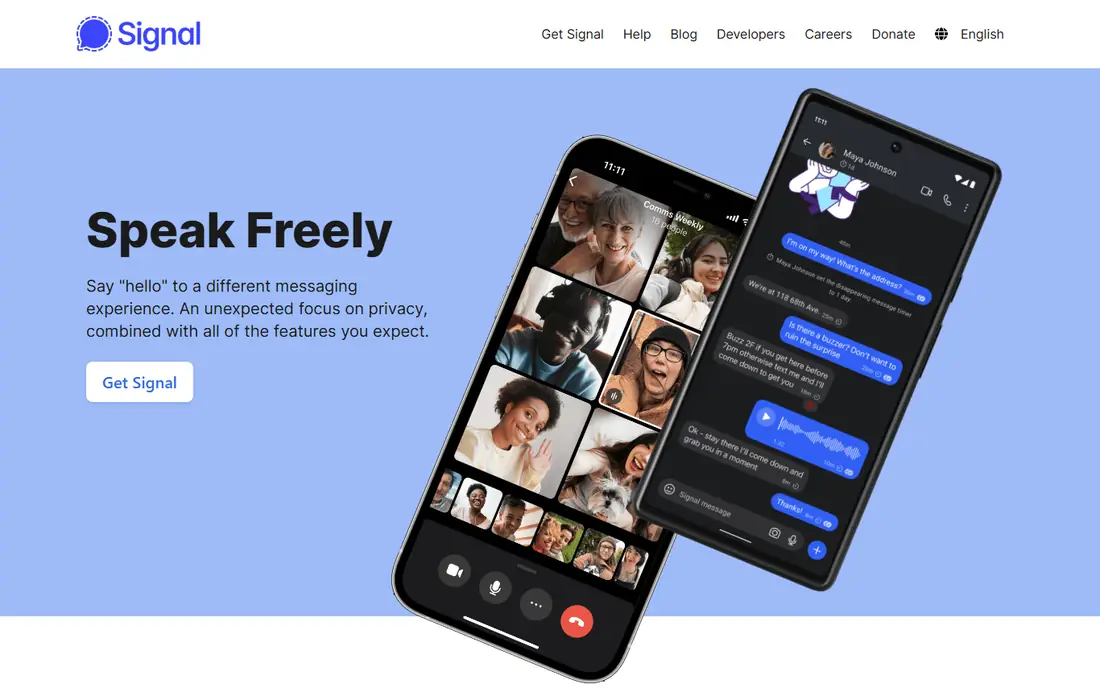
Signal is the reference point for private messaging. Every message, call, and group chat uses end-to-end encryption by default, so you do not need to enable a special mode or remember which chat is protected. The app is open source, run by a nonprofit, and collects very little metadata, which is why privacy experts and journalists often recommend it first. Disappearing messages, safety numbers, and username sharing add control without complicating daily use.
The limits are reach and registration. Signal has far fewer users than WhatsApp, so some contacts will not be on it, and registration still starts with a phone number, even though usernames can hide that number from other users. Signal suits people who want the strongest default protection for personal chats, calls, and small groups, and who are willing to invite key contacts to join.
What we like- End-to-end encryption by default
- Open-source code
- Minimal metadata collection
- Disappearing messages
Watch out for- Smaller user base than WhatsApp
- Phone number needed to register
- Fewer fun features than Telegram
#2WhatsApp
Best for: Largest private reach4.6/5 on
G2 (250 reviews, checked Oct 2026)
Visit whatsapp.com
Starting priceFree
Free planYes
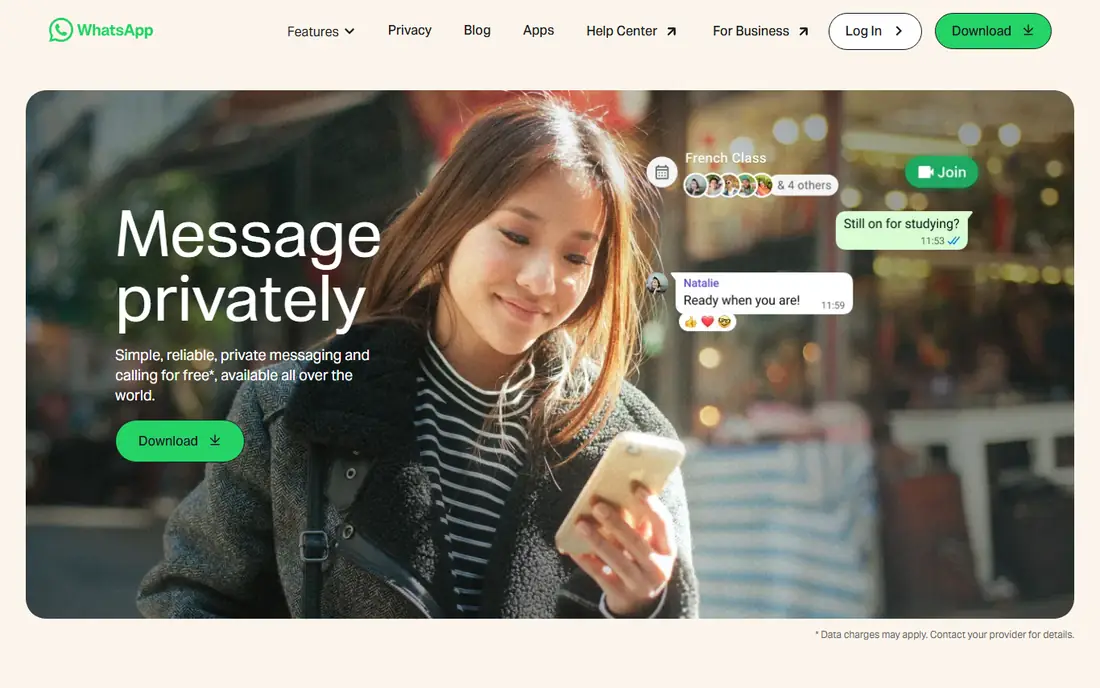
WhatsApp combines strong message encryption with unmatched reach. Messages and calls are end-to-end encrypted by default, and the person you want to message almost certainly already has the app, which removes the hardest part of private chat: getting contacts to switch. Multi-device support, group chats, voice and video calls, and business messaging make it a practical daily app for family, work, and community groups.
The privacy trade is metadata and ownership. WhatsApp is owned by Meta, and it collects more metadata, such as who you message and when, than Signal does, even though message content stays encrypted. Cloud backups also need end-to-end encrypted backup turned on separately. WhatsApp suits most people as the practical private chat app, with Signal added for the most sensitive conversations.
What we like- End-to-end encryption by default
- Almost everyone already has it
- Voice, video, and group calls
Watch out for- Owned by Meta
- Collects more metadata than Signal
- Backup encryption needs a separate setting
Starting priceFree; Premium $4.99 per month
Free planYes
Telegram is the best app on this list for large communities, channels, and file sharing. Groups can hold up to 200,000 members, channels can reach unlimited subscribers, and files up to 2 GB can be shared for free, with 4 GB on Premium. Cloud sync keeps history on every device, and bots support automation, polls, and community tools that other private apps do not match.
The encryption limit is critical and often missed. Regular Telegram chats are encrypted in transit and stored on Telegram servers, but they are not end-to-end encrypted. Only Secret Chats, which are device-specific and must be started per conversation, offer end-to-end encryption, with no cloud sync and no multi-device history. Telegram suits communities and public channels, while Signal or WhatsApp suit private one-to-one chats where default encryption matters.
What we like- Groups up to 200,000 members
- Channels with unlimited subscribers
- Large file sharing and bots
Watch out for- End-to-end encryption only in Secret Chats
- Cloud chats are not end-to-end encrypted
- Privacy claims can mislead new users
#4Wire
Best for: Team and business privacy4.2/5 on
G2 (62 reviews, checked Oct 2026)
Visit wire.com
Starting priceFree; Pro plans available
Free planYes
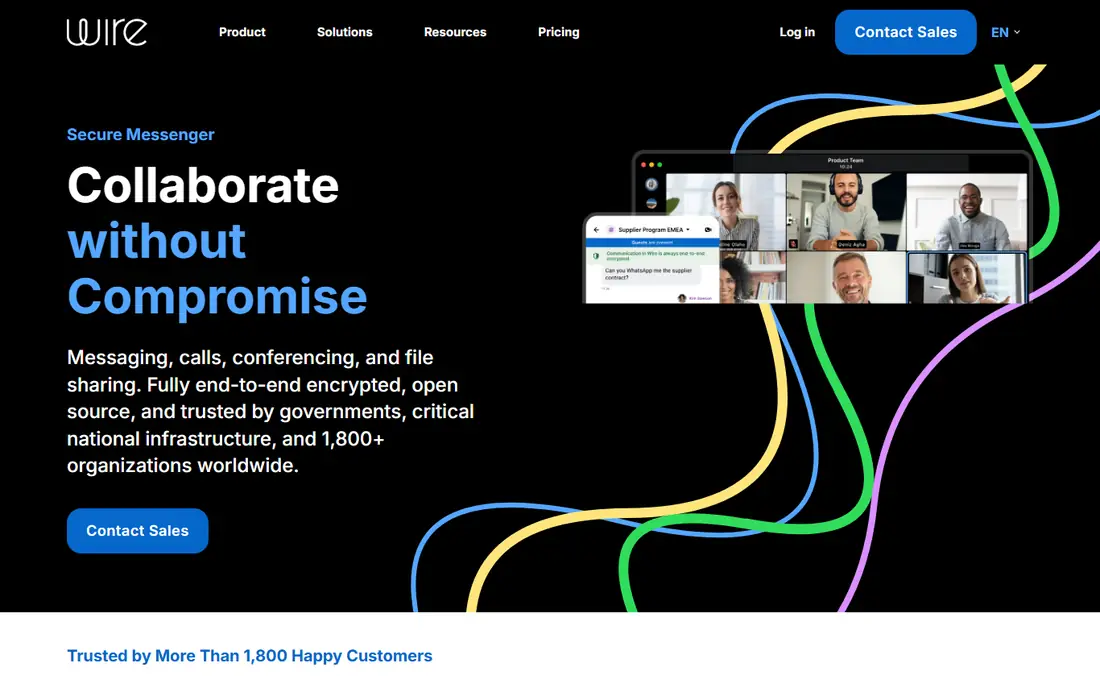
Wire offers end-to-end encrypted messaging, voice, and video calls with a focus on teams and businesses that need privacy plus admin controls. The personal app is free, while Pro adds team management, guest access, and compliance features for organizations. Open-source clients and a European base appeal to companies and nonprofits that want a clear privacy model for work chat.
For personal use, Wire feels quieter than Signal or WhatsApp, since fewer friends and family members will already have it. The business focus also means some features are built for admins rather than casual users. Wire suits small teams, nonprofits, and professionals who need private team chat with admin controls, rather than a general replacement for family messaging.
What we like- End-to-end encryption for chats and calls
- Team and business features
- Open-source clients
Watch out for- Smaller personal user base
- Paid Pro features for teams
- Setup is more business-focused
Starting price$3.99 one-time
Free planNo

Threema stands out because it does not require a phone number or email address to register. Each user gets a random Threema ID, and contacts can be verified by scanning a QR code in person, which gives a strong anonymity model for people who do not want an account tied to a phone number. Messages, calls, and group chats are end-to-end encrypted, and the app is based in Switzerland with a clear privacy policy.
The one-time price of $3.99 and the small user base are the limits. Friends must buy the app and install it, which is a higher barrier than a free download, and Threema lacks the large groups, channels, and bots of Telegram. Threema suits people who value anonymous registration above all, such as journalists, activists, or anyone who wants chat without a phone-number link.
What we like- No phone number or email needed to register
- End-to-end encryption
- Anonymous ID system
Watch out for- One-time purchase with no free tier
- Smaller user base
- Fewer features than Telegram
Starting priceFree
Free planYes
Viber offers end-to-end encrypted messages and calls, plus Viber Out for calling non-Viber phone numbers at low international rates. That combination suits people with family abroad, since chat, voice, and video calls sit in one app and international calling does not need a separate service. Viber is especially popular in Eastern Europe, parts of Asia, and the Middle East, where many contacts already use it.
The privacy model is weaker than Signal. Viber is owned by Rakuten, a large corporation, and metadata protection is less strict, so it suits everyday private chat more than sensitive conversations. Viber works well as a regional or family app where contacts already use it, with Signal reserved for chats where stronger privacy matters most.
What we like- End-to-end encryption for messages and calls
- Viber Out for low-cost international calls
- Large user base in some regions
Watch out for- Owned by Rakuten
- Metadata is not fully protected
- Fewer privacy features than Signal
Starting priceFree
Free planYes
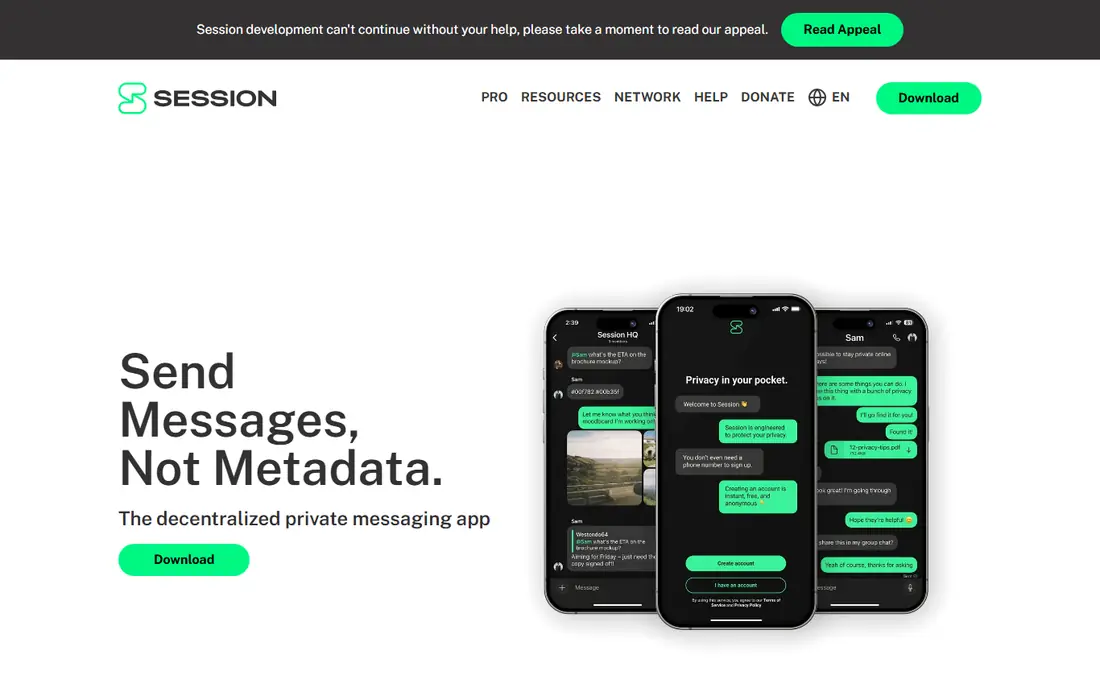
Session offers anonymous, decentralized messaging with no phone number, email, or account needed. Messages are routed through a decentralized network rather than a central server, and chats use end-to-end encryption, which appeals to users who want to avoid central metadata collection altogether. The app is free and open source, with a simple chat interface for one-to-one and group messages.
The trade is maturity and reach. Session has a much smaller user base than Signal or WhatsApp, and voice and video calls are more limited, so it suits text-focused private chat rather than a full phone replacement. Session is a strong choice for anonymous messaging with a small circle, especially when avoiding any account link matters more than having every contact already on the app.
What we like- No phone number or email needed
- Decentralized routing
- End-to-end encryption for chats
Watch out for- Smaller user base
- Voice and video calls are limited
- Performance can be slower than Signal
#8Element
Best for: Decentralized team chat4.2/5 on
G2 (43 reviews, checked Oct 2026)
Visit element.io
Starting priceFree; paid hosting available
Free planYes
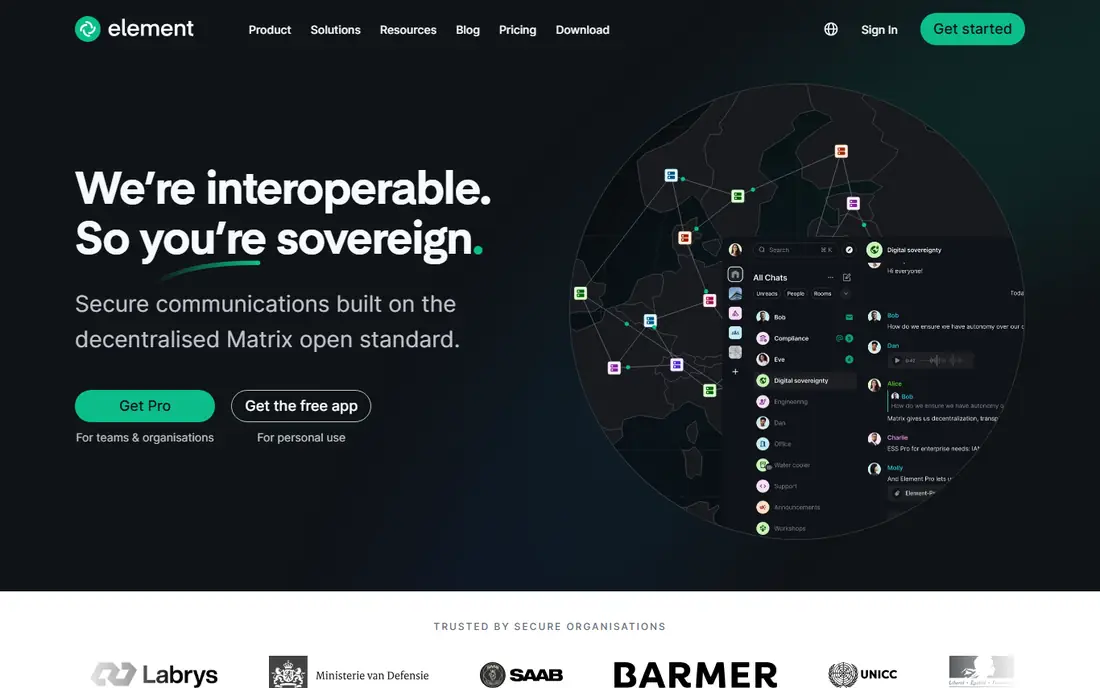
Element is the main app for Matrix, a decentralized, open protocol for messaging. Private rooms can use end-to-end encryption, and teams can run their own server for full control over data, which appeals to organizations, open-source communities, and privacy-focused teams. Element supports rooms, spaces, voice and video calls, and bridges to other chat services, giving it more team structure than a simple personal messenger.
The complexity is the barrier. Choosing a server, understanding rooms versus direct messages, and managing encryption keys takes more effort than installing Signal or WhatsApp. Element suits teams and communities that want decentralized control and are willing to learn the setup, rather than casual users who want a simple private chat app today.
What we like- Built on Matrix, a decentralized protocol
- End-to-end encryption in private rooms
- Self-hosting option for teams
Watch out for- Setup is more complex than Signal
- User base is smaller
- Interface feels technical for casual users
How we chose
We compared private chat apps using vendor privacy pages, encryption documentation, and public reviews, focusing on default encryption, metadata collection, registration needs, and real reach. Each app had to be live today, offer end-to-end encryption for at least private chats, and serve a distinct need, from strongest privacy to large groups to anonymous registration. We flagged clearly where encryption is not default, since that distinction decides whether an app is truly private for everyday use.
How to choose the right level of privacy
Start with who you message. If your family and friends already use WhatsApp, that app gives you encrypted chats with no migration effort, and you can add Signal for sensitive conversations with a smaller circle. If your main need is a large community or channel, Telegram gives scale, but use Secret Chats for private one-to-one messages and do not assume cloud chats are end-to-end encrypted.
Next, check the privacy details that matter to you. Registration needs, metadata collection, backup encryption, and server location all affect privacy in ways that a simple encrypted label does not show. Turn on disappearing messages for sensitive chats, enable two-step verification where offered, and check backup settings, since an unencrypted cloud backup can weaken otherwise strong message encryption.
Finally, keep good habits across any app. Verify safety numbers or security codes for sensitive contacts, avoid sharing passwords or codes in chat, and be careful with links and files from unknown senders. No app protects you if you share sensitive details with the wrong person, so privacy settings and careful habits work together.
Frequently asked questions
Which private chat app is the most secure?
Signal is the strongest default choice, with end-to-end encryption on every chat, open-source code, and minimal metadata collection. Threema and Session offer stronger anonymity, but Signal gives the best balance of privacy and everyday usability for most people.
Is Telegram really private?
Telegram cloud chats are encrypted in transit but are not end-to-end encrypted, so only Secret Chats offer full end-to-end protection. Use Telegram for groups and channels, and use Secret Chats or Signal for private conversations where default encryption matters.
Is WhatsApp safe to use for private chats?
WhatsApp messages and calls are end-to-end encrypted by default, which protects content from interception. WhatsApp collects more metadata than Signal and is owned by Meta, so users who want minimal metadata should use Signal for the most sensitive chats.
Do I need a phone number for a private chat app?
Most apps, including Signal and WhatsApp, need a phone number to register. Threema and Session do not, using a random ID instead, which suits users who want chat without linking an account to a phone number.
What are disappearing messages?
Disappearing messages delete themselves after a set time, such as 24 hours or seven days, on all devices in the chat. They reduce the chat history stored on a device, but they do not stop screenshots or guarantee that a recipient has not saved a message elsewhere.
Can I use more than one private chat app?
Yes, and many people do. Use WhatsApp for broad reach, Signal for sensitive chats, and Telegram for communities, rather than forcing all contacts onto one app. That mix gives you privacy where it matters without losing contact with people who use a different app.
Sources we checked (8)
- https://www.signal.org
- https://www.whatsapp.com
- https://www.telegram.org
- https://www.wire.com
- https://www.threema.ch
- https://www.viber.com
- https://www.getsession.org
- https://www.element.io
Is your product missing or out of date?
We review this list regularly. Vendors can request a listing, send updated pricing or ask about featured placement.

Shihab Mia · Founder, Rankite
Shihab has 5+ years in B2B and SaaS SEO. He writes Rankite's software buying guides from pricing pages, documentation and public user reviews. More about Shihab.