How we make this list: we compare pricing pages, product documentation and public user reviews. Rankite is independent; if a vendor ever pays for a featured spot, that listing is clearly labeled Partner.
Key takeaways
- Pricefx and PROS lead the enterprise tier with AI-first price optimization; Pricefx reports an average 8.4 percent margin gain across its customer base.
- Zilliant is the strongest fit for B2B manufacturers and distributors that need predictive pricing tied to sales execution.
- Vendavo suits B2B companies that want pricing, quoting and rebates on one commercial platform instead of three vendors.
- Competera serves enterprise retailers with demand elasticity modeling and predictive scenario planning.
- BlackCurve, Prisync and Price2Spy cover the SMB e-commerce end with competitor tracking and dynamic repricing, all offering free trials.
Quick comparison
| Tool | Best for | Starting price | Free plan |
|---|
 PROS PROS | large enterprises with complex, high-volume pricing | See website | No |
 Zilliant Zilliant | B2B manufacturers and distributors protecting margin | See website | No |
 Pricefx Pricefx | enterprises that want AI-first pricing across the commercial cycle | See website | No |
 Vendavo Vendavo | B2B companies that need pricing, quoting and rebates together | See website | No |
 Competera Competera | enterprise retailers running AI-driven price optimization | See website | No |
 BlackCurve BlackCurve | SMB e-commerce teams on Shopify, Magento or BigCommerce | See website | Free trial |
 Prisync Prisync | small to mid-size online retailers that need dynamic repricing fast | See website | Free trial (14 days) |
 Price2Spy Price2Spy | brands and retailers that need MAP enforcement and marketplace visibility | See website | Free trial (14 days) |
Is your product missing or out of date?
We review this list regularly. Vendors can request a listing, send updated pricing or ask about featured placement.
The best predictive pricing software
#1
PROS
Best for: large enterprises with complex, high-volume pricing
Visit pros.com
Starting priceSee website
Free planNo
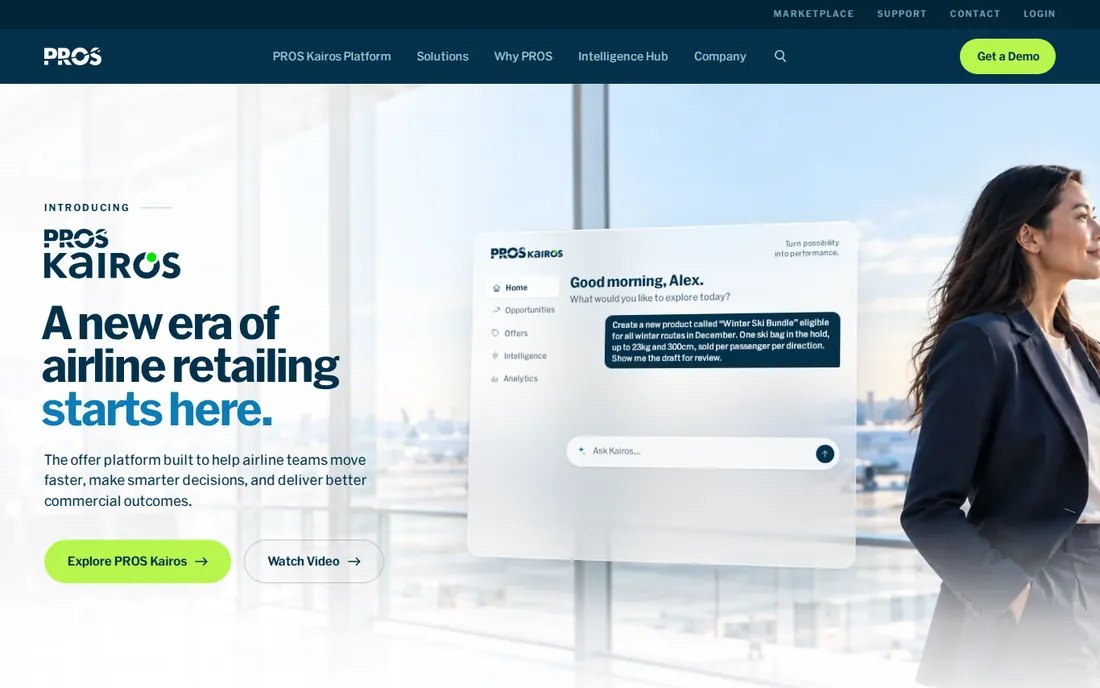
Pricefx reports an average 8.4 percent margin gain across its customers, and PROS plays in the same league with a longer history. PROS has spent decades building pricing science into software, and its platform now centers on AI-driven price optimization, real-time elasticity forecasting and offer management. The company reports more than 140 airline customers and 40 years of industry experience, alongside a large B2B installed base.
For predictive pricing specifically, PROS stands out in environments where prices must react to demand, capacity and cost in real time. The trade-offs are the usual enterprise ones: quote-based pricing, long sales cycles and implementations that need dedicated teams. This is software for companies where a one percent margin improvement is worth millions, not for a Shopify store repricing a hundred SKUs.
What we like- Decades of pricing science and AI optimization
- Strong in both B2B and travel/airline verticals
- Real-time price optimization at scale
Watch out for- Enterprise-only engagement with quote-based pricing
- Implementations are major projects
#2
Zilliant
Best for: B2B manufacturers and distributors protecting margin
Visit zilliant.com
Starting priceSee website
Free planNo
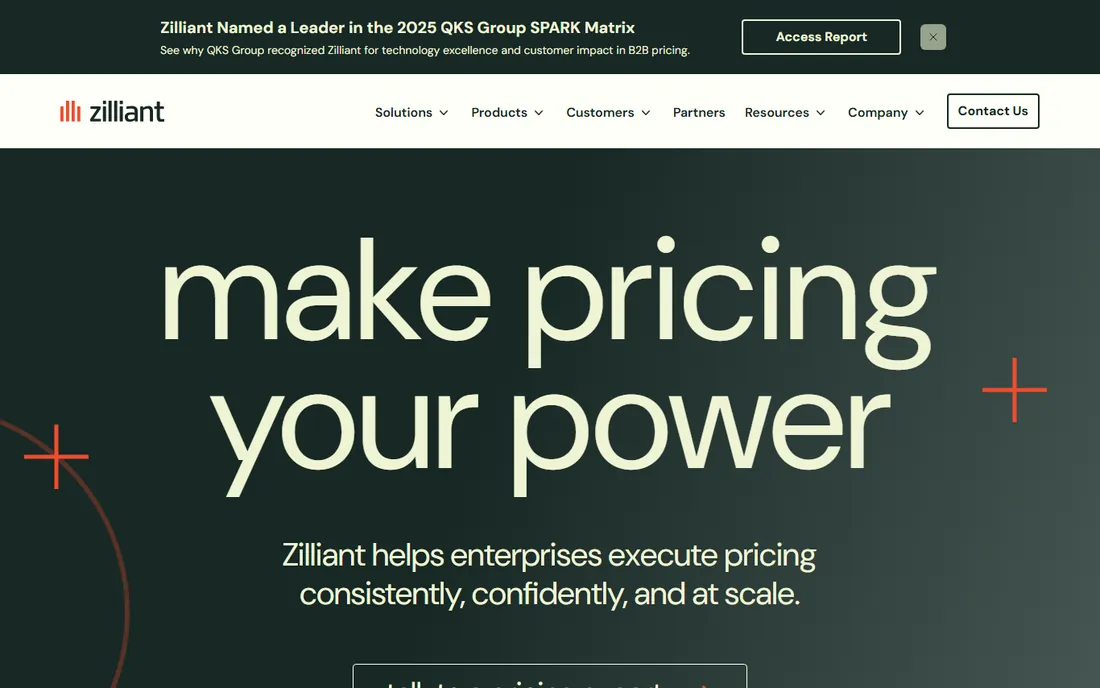
Zilliant's whole thesis is that the price you set is not the price you get. Discounts, exceptions and rep-level decisions pull execution away from strategy, and Zilliant closes that gap with AI-driven pricing intelligence, real-time guidance and governed execution. Its customer base leans heavily toward manufacturers and distributors dealing with complex B2B price structures.
What distinguishes Zilliant in practice is the sales integration: pricing guidance reaches reps inside their quoting workflow rather than living in a separate analytics tool. The company was named a Leader in the 2025 QKS Group SPARK Matrix for B2B price optimization. Pricing is quote-based and the platform is unapologetically B2B; retailers should look at Competera or the e-commerce tools below instead.
What we like- Purpose-built for B2B price optimization and management
- Named a Leader in the 2025 QKS SPARK Matrix
- Pricing guidance embedded in sales workflows
Watch out for- Quote-based pricing
- B2B focus means less for pure retailers
#3
Pricefx
Best for: enterprises that want AI-first pricing across the commercial cycle
Visit pricefx.com
Starting priceSee website
Free planNo
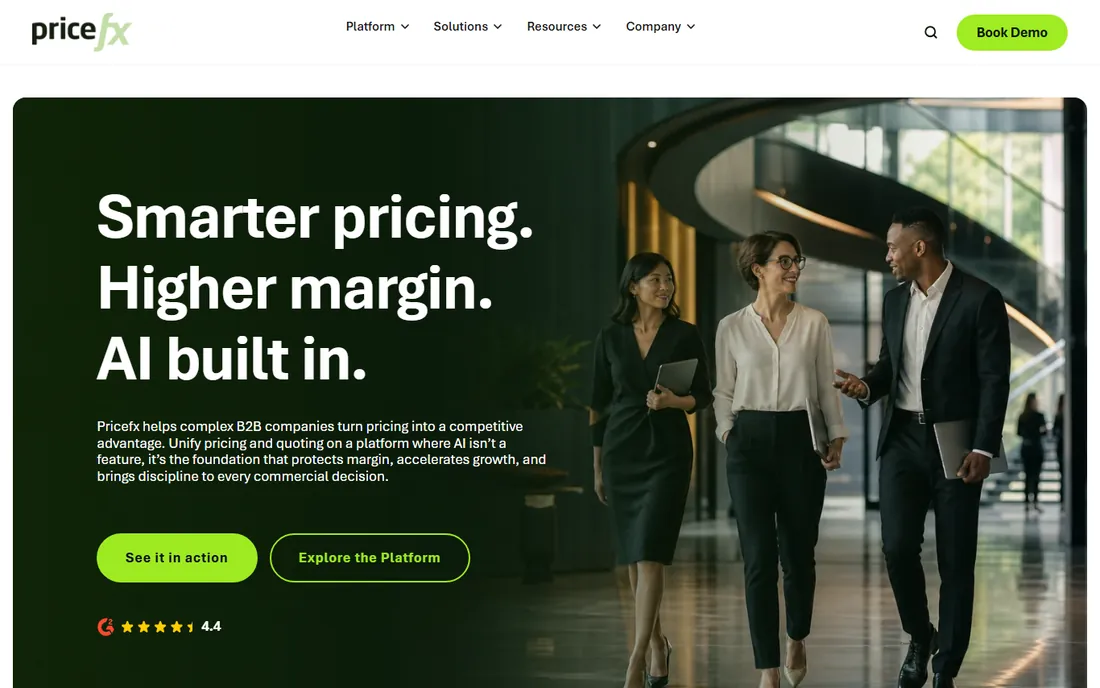
Pricefx positions AI as the foundation rather than a feature, and the numbers it publishes are striking: an average 8.4 percent margin gain, 15x ROI in 12 months, and 70 percent faster pricing approvals. The platform unifies pricing strategy, AI optimization and execution in one governed system, covering the full lifecycle from price setting to quotes, agreements, rebates and promotions.
The 2026 version adds AI agents that continuously scan for margin leaks and pricing outliers, with 125+ configurable templates, plus a toolkit that translates business objectives into working platform configuration. Pricefx was named a Leader in the 2026 Gartner Magic Quadrant for B2B Pricing and Rebates Optimization Software. Pricing is quote-based. The platform fits enterprises ready to run pricing as a discipline; companies wanting a single point tool will find it heavier than necessary.
What we like- AI optimization with transparent, explainable recommendations
- Named a Leader in the 2026 Gartner Magic Quadrant for B2B pricing
- 125+ prebuilt AI agent templates
Watch out for- Quote-based enterprise pricing
- Best value requires committing to the platform, not a single module
#4
Vendavo
Best for: B2B companies that need pricing, quoting and rebates together
Visit vendavo.com
Starting priceSee website
Free planNo
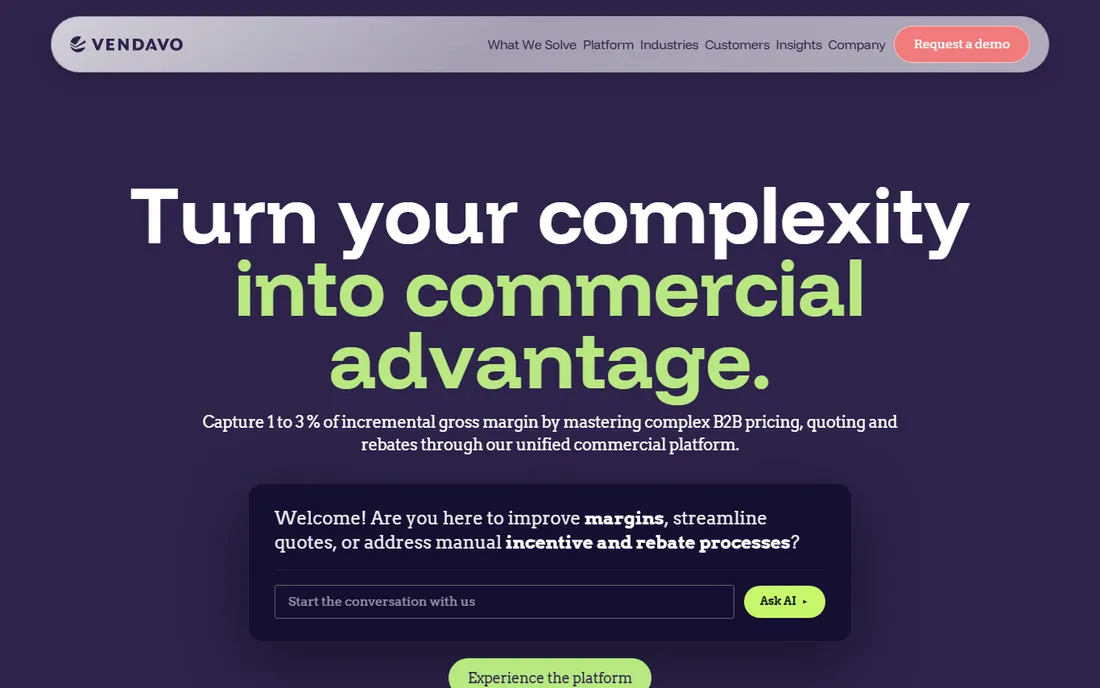
Vendavo's argument is that pricing does not live alone. Its unified commercial platform combines price management and optimization with quoting, customer agreements, rebates and incentives, and margin analytics. The company claims customers capture 1 to 3 percent of incremental gross margin by mastering complex B2B pricing through the platform.
For buyers, the appeal is consolidation: one data model, one vendor, one implementation covering the commercial cycle from price setting to rebate settlement. The AI is described as quantitative and transparent, aimed at CFO-defensible recommendations. Pricing is quote-based and the platform's breadth means implementations run longer than a single-purpose optimizer. Choose Vendavo when the problem spans pricing, quoting and rebates; choose a point tool when it does not.
What we like- Unified commercial platform for pricing, CPQ, rebates and analytics
- Embedded transparent AI
- Strong margin analytics
Watch out for- Quote-based pricing
- Breadth means longer implementations than point solutions
#5
Competera
Best for: enterprise retailers running AI-driven price optimization
Visit competera.ai
Starting priceSee website
Free planNo
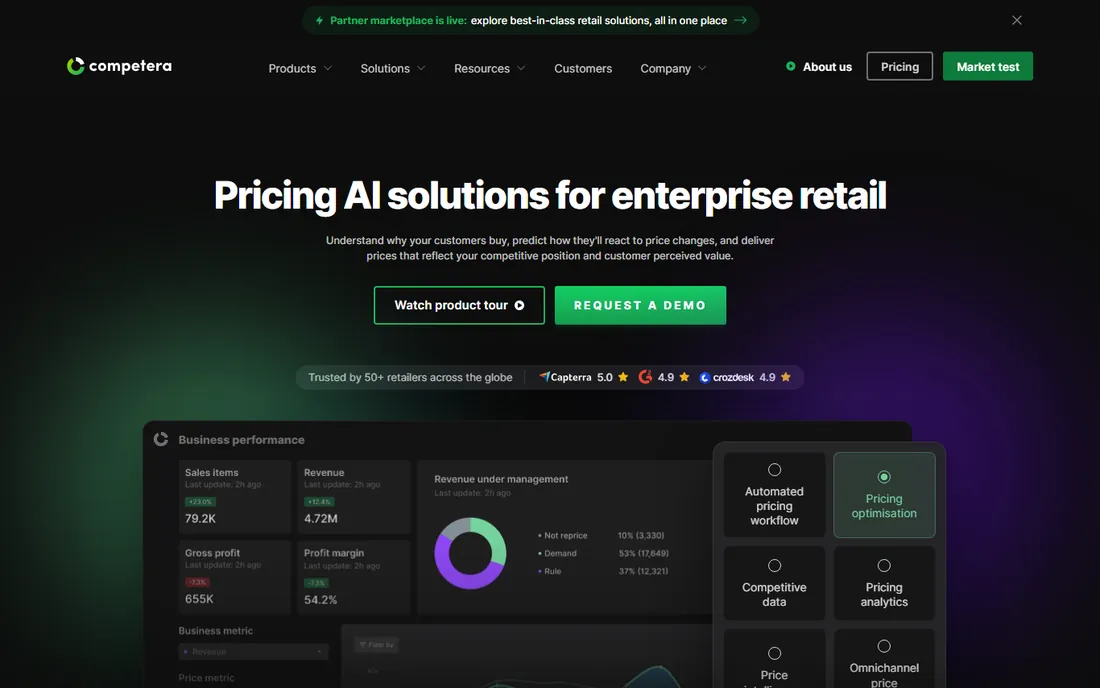
Competera moves beyond rule-based and competitor-based pricing into demand intelligence: understanding why customers buy, predicting how they react to price changes, and delivering optimal price recommendations at scale. The platform's predictive scenario planning lets retailers simulate a pricing strategy and forecast its business impact before executing, which is the core promise of predictive pricing done right.
The company reports 50+ retail customers globally and claims 95 percent-plus accuracy in predicting business outcomes, with ISO 27001 certification behind it. Pricing is quote-based and the platform is built for enterprise retail complexity: multi-channel operations, large assortments and competitive markets. Smaller retailers will get faster value from the e-commerce tools below.
What we like- True demand elasticity modeling, not just competitor matching
- Predictive scenario planning before execution
- 95%+ outcome prediction accuracy claimed
Watch out for- Enterprise focus with quote-based pricing
- Overkill for small catalogs
Starting priceSee website
Free planFree trial
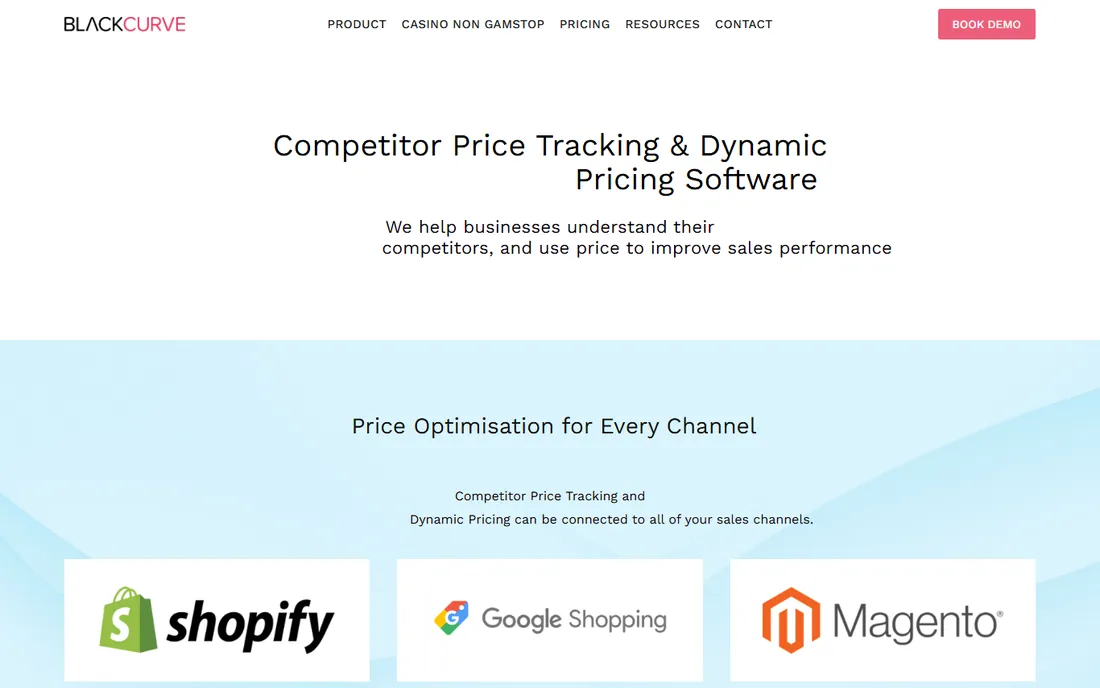
BlackCurve sits at the accessible end of predictive pricing. It combines competitor price tracking with dynamic pricing rules, pulling competitor data from Google Shopping and syncing with Shopify, Magento and BigCommerce through native apps or API. The pitch is straightforward: know where your prices stand against the market, then reprice automatically to protect margin or chase position.
For a retailer with hundreds or thousands of SKUs, automated competitor matching and daily price collection replace the spreadsheet work that used to eat a pricing analyst's week. The platform also covers the profitability angle, flagging where prices are too low relative to competitors so margin stops leaking quietly. Pricing is not published, but a free trial lets you test it against your own catalog before talking numbers.
What we like- Competitor price tracking plus dynamic pricing in one tool
- Native Shopify, Magento and BigCommerce integrations
- Google Shopping data built in
Watch out for- No public pricing
- Predictive depth is lighter than enterprise platforms
#7
Prisync
Best for: small to mid-size online retailers that need dynamic repricing fast
Visit prisync.com
Starting priceSee website
Free planFree trial (14 days)
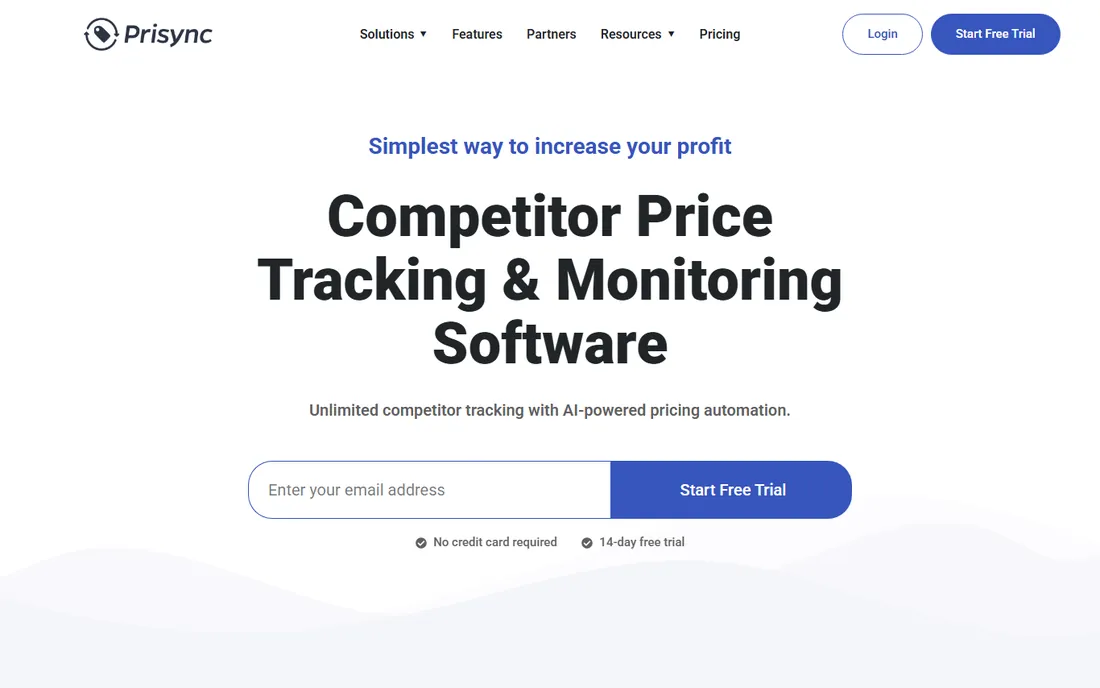
Prisync promises unlimited competitor tracking with AI-powered pricing automation, and it is designed for speed of adoption: no technical integration required, a self-service dashboard, and a 14-day free trial with no credit card. The platform monitors competitor prices, tracks stock availability and applies dynamic pricing rules so your prices respond to the market without manual intervention.
The company has operated since 2013 and positions itself as the highest-rated option in its niche on review sites. For retailers that find enterprise platforms overwhelming, Prisync's simplicity is the selling point: define competitors, set rules, and let the automation run. Pricing is quote-based rather than published. The analytics are solid for the segment but do not match the elasticity modeling of Competera or the financial depth of Pricefx.
What we like- AI-powered competitor tracking with dynamic pricing automation
- 14-day free trial with no credit card
- Self-service setup with no integration required
Watch out for- Pricing plans not published on the site
- Advanced analytics trail the enterprise platforms
#8
Price2Spy
Best for: brands and retailers that need MAP enforcement and marketplace visibility
Visit price2spy.com
Starting priceSee website
Free planFree trial (14 days)
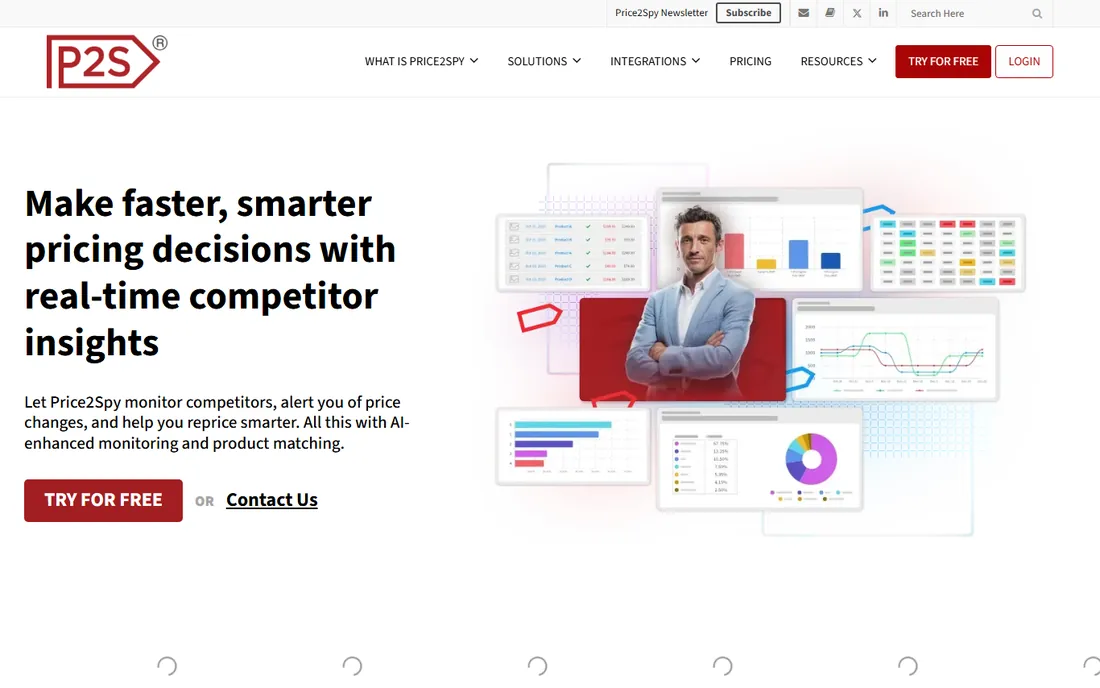
Price2Spy is built for brands and retailers that sell through many channels and need to see everything. Its AI-enhanced monitoring tracks competitor prices, detects MAP violations instantly, follows price positioning across major marketplaces, and monitors product variations down to sizes and colors. The reporting layer includes 25+ ready-made reports covering price index, competitiveness and deviations across markets.
The platform integrates with Shopify, Magento, WooCommerce, BigCommerce and others, plus Google Analytics to connect pricing data with traffic and conversion. Pricing follows three tiers: Starter and Basic are self-service, while Premium is price-on-request for large brands needing multi-market visibility. A 14-day free trial with no credit card is the sensible starting point. For MAP enforcement specifically, Price2Spy is the most focused tool on this list.
What we like- Instant MAP violation detection
- Marketplace and seller monitoring
- 25+ ready-made pricing reports
- 14-day free trial
Watch out for- No public pricing
- Enterprise tiers are price-on-request
Predictive pricing vs. dynamic pricing vs. price monitoring
These terms get mixed together, so here is the clean version. Price monitoring is observation: tracking what competitors charge and where your prices sit. Dynamic pricing is reaction: changing your prices automatically according to rules, such as staying 2 percent below the lowest competitor. Predictive pricing is anticipation: using models of demand elasticity, seasonality and market conditions to set the price that maximizes margin or revenue before the market moves.
The tools on this list sit at different points on that spectrum. BlackCurve, Prisync and Price2Spy are strongest at monitoring with dynamic repricing layered on. Competera adds genuine demand elasticity modeling. PROS, Zilliant, Pricefx and Vendavo operate at the predictive end, forecasting the business impact of pricing decisions across complex B2B portfolios. Match the tool to the question you are actually asking: if you need to know what competitors charge today, you do not need predictive modeling; if you need to know what a 3 percent increase does to volume next quarter, monitoring alone will not answer it.
What to look for before you buy
Data quality decides everything. A predictive pricing tool is only as good as the transaction history, cost data and competitor feeds behind it. Before demos, audit what you have: clean SKU-level sales history, current costs, and competitor coverage for your key products. Vendors will ask for this during implementation; having it ready shortens the project by months.
Integration scope is the second check. Enterprise tools need ERP, CRM and e-commerce connections to execute prices where selling happens. Ask which integrations are native, which need middleware, and what the data latency is. A price recommendation that takes a day to reach your storefront is a report, not a pricing system.
Model transparency is the third. Ask the vendor to explain a recommendation in plain language: which factors moved the price and by how much. Finance teams will not approve black-box pricing, and reps will not follow guidance they cannot defend to a customer. Pricefx and Vendavo both emphasize explainability for exactly this reason.
Finally, check the commercial model. Enterprise predictive pricing is quote-based across the board, with annual contracts and implementation services billed separately. The SMB tools offer free trials; use them against your real catalog, not a demo dataset, because matching accuracy on your products is the whole test.
How we chose
We evaluated tools against what predictive pricing actually requires: demand modeling or price optimization capability, data ingestion from real commercial sources, execution back into selling systems, and a live product in 2026. Research came from vendor pricing pages, product documentation, public reviews on G2, Capterra and Reddit, and analyst evaluations. We opened every vendor homepage directly to verify the URL, used vendor-published figures where available (such as Pricefx's reported 8.4 percent average margin gain), and wrote "See website" wherever pricing sits behind a sales conversation. No hands-on testing is claimed; the method is documentation, pricing verification and review analysis applied consistently.
Frequently asked questions
What is predictive pricing software?
It is software that uses historical sales data, demand elasticity models and market signals to recommend or set prices that maximize margin or revenue. Unlike simple repricing rules that react to competitors, predictive pricing forecasts the outcome of a price change, such as how a 3 percent increase affects volume, before you commit to it.
How much does predictive pricing software cost?
Enterprise platforms (PROS, Zilliant, Pricefx, Vendavo, Competera) are quote-based with annual contracts; expect five to seven figures depending on scale and modules. SMB e-commerce tools are far cheaper and all three offer free trials, but none publishes pricing on its own site, so confirm numbers directly with the vendor before budgeting.
What is the difference between predictive pricing and dynamic pricing?
Dynamic pricing changes prices automatically based on rules, usually tied to competitor moves or inventory. Predictive pricing forecasts demand and margin impact before setting the price. Dynamic pricing reacts to the market; predictive pricing anticipates it. Many tools do both, but the modeling depth differs enormously between a repricing rule and an elasticity model.
Do I need predictive pricing for a small online store?
Probably not yet. If your catalog is under a few hundred SKUs and your main problem is staying competitive, a monitoring and repricing tool like BlackCurve, Prisync or Price2Spy solves the real pain at a fraction of the cost. Predictive pricing earns its keep when you have enough transaction history for models to learn from and enough margin at stake to justify the investment.
How long does implementation take?
SMB tools can be running in days: connect your store, define competitors, set rules. Enterprise platforms typically take three to nine months, driven by data preparation, ERP integration and model training on your history. The most common delay is dirty or incomplete transaction data, so audit your sales history before you sign.
Sources we checked (12)
- https://pros.com/
- https://zilliant.com/
- https://pricefx.com/
- https://vendavo.com/
- https://competera.ai/
- https://blackcurve.com/
- https://prisync.com/
- https://price2spy.com/
- https://www.scmgalaxy.com/tutorials/top-10-ai-pricing-optimization-tools-in-2025-features-pros-cons-comparison/
- https://slashdot.org/software/comparison/BlackCurve-vs-Price2Spy/
- https://softwarefinder.com/ecommerce-software/prisync
- https://comparisons.financesonline.com/prisync-vs-intouch-crm
Is your product missing or out of date?
We review this list regularly. Vendors can request a listing, send updated pricing or ask about featured placement.

Shihab Mia · Founder, Rankite
Shihab has spent more than a decade helping SaaS and e-commerce brands grow through search. He writes Rankite's software buying guides from pricing pages, documentation and public user reviews. More about Shihab.