How we make this list: we compare pricing pages, product documentation and public user reviews. Ratings come from G2, Capterra or Trustpilot, with the date we checked them.
Key takeaways
- Printful and Printify are the strongest picks for sellers who run their own store, with Printful offering in-house quality control and Printify offering the lowest base costs.
- Gelato is the best choice for sellers with buyers in many countries, thanks to local production in 32 countries.
- Redbubble and TeePublic suit artists who want built-in traffic, since buyers already shop those marketplaces.
- Spreadshop, Fourthwall, and Bonfire fit creators and groups who want a free branded shop or a fundraising campaign without running a store.
- Every company on this list lets you start free, so your real cost is the base price plus shipping on each order, not a subscription.
Quick comparison
| Tool | Best for | Starting price | Free plan |
|---|
 Printful | Own-store brands wanting quality control | $0 | Yes |
 Printify | Lowest base costs and biggest catalog | $0 | Yes |
 Gelato | International sellers | $0 | Yes |
 Redbubble | Artists wanting marketplace traffic | $0 | Yes |
 TeePublic | Fan art and pop culture designs | $0 | Yes |
 Spreadshop | Free branded creator shops | $0 | Yes |
 Fourthwall | Creator shops with memberships | $0 | Yes |
 Bonfire | Fundraising and group campaigns | $0 | Yes |
Is your product missing or out of date?
We review this list regularly. Vendors can request a listing, send updated pricing or ask about featured placement.
The best pod companies
#1Printful
Best for: Own-store brands wanting quality control4.4/5 on
G2 (181 reviews, checked Oct 2026)
Visit printful.com
Starting price$0
Free planYes
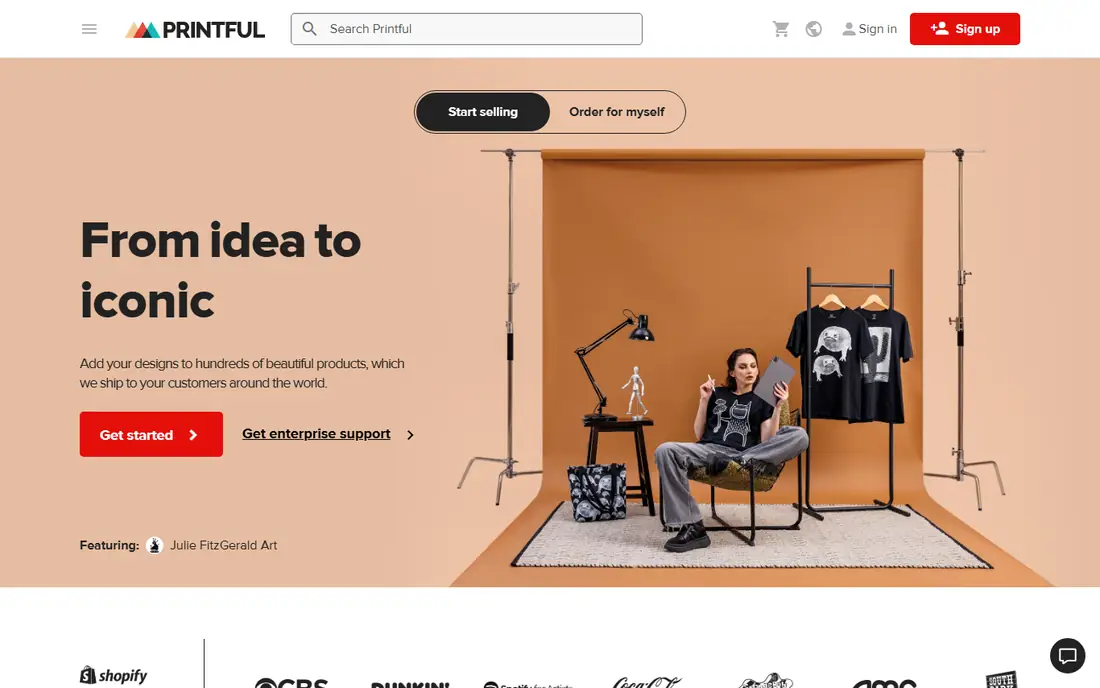
Printful prints in its own facilities rather than handing orders to outside printers, and that control is its main advantage. Every order passes a quality check before shipping, and results stay consistent from one order to the next. The catalog covers more than 475 products, from apparel and drinkware to wall art and accessories, and it connects with Shopify, Etsy, WooCommerce, and other major platforms.
Printful is free to join, and you pay only the product cost plus shipping when an order arrives. The optional Growth plan costs $24.99 per month and cuts product prices by up to 33 percent, with discounted branding and samples. Growth becomes free for a year once you reach $12,000 in annual sales. The catch is base cost: a popular Bella+Canvas tee starts around $11.50 to $12.95 on the free plan, which is higher than Printify's cheapest providers. Printful fits sellers building a brand who care about consistent quality and custom packaging.
What we like- In-house production with quality checks
- Strong branding options
- Wide store integrations
Watch out for- Higher base costs than network rivals
- Best discounts require the paid Growth plan
#2Printify
Best for: Lowest base costs and biggest catalog4.6/5 on
G2 (57 reviews, checked Oct 2026)
Visit printify.com
Starting price$0
Free planYes
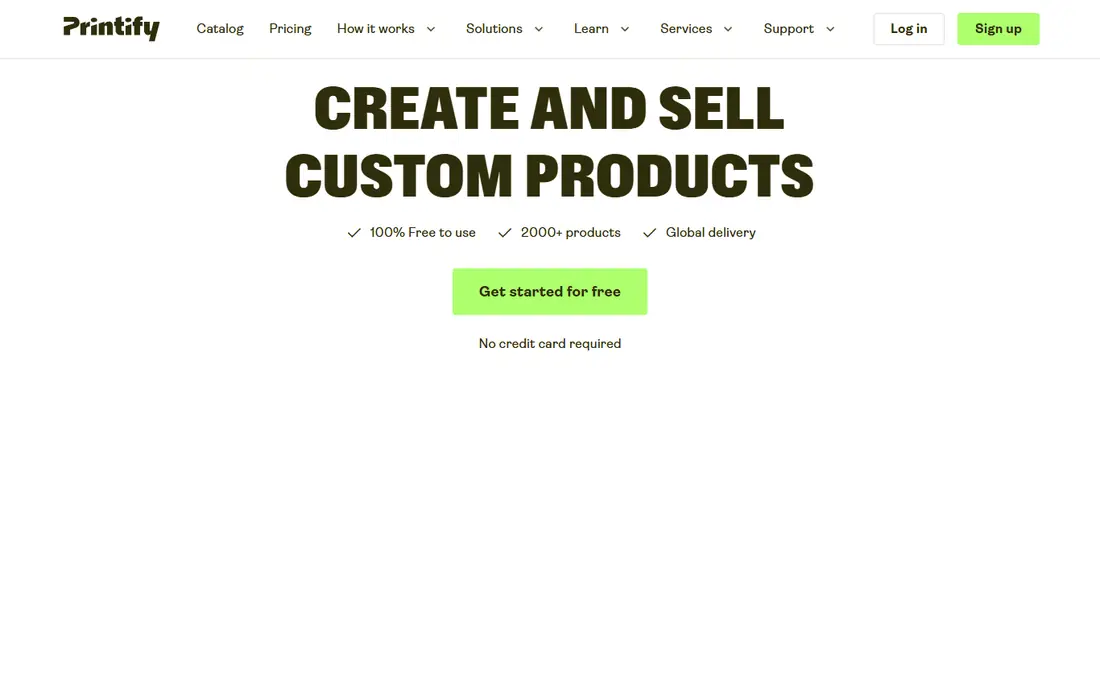
Printify works as a network, not a single printer. You pick from dozens of print providers for each product, comparing price, location, and provider ratings, and Printify routes the order to the provider you chose. That competition keeps base costs low: a basic Gildan tee can start under $8, and the catalog spans more than 2,000 products across apparel, home goods, and accessories. Integrations cover Shopify, Etsy, eBay, WooCommerce, and more.
The free plan includes full catalog access, unlimited designs, and up to 5 stores. Premium costs $39 per month, or $24.99 per month billed annually, and adds up to 20 percent off most products, up to 33 percent off new products, and 10 stores. The honest catch is consistency: because providers differ, print quality and shipping speed can vary, so ordering samples from each provider you use is essential. Printify fits sellers who test many products and want the lowest possible base cost.
What we like- More than 2,000 products
- Choose among many print providers
- Free plan with 5 stores
Watch out for- Quality varies by provider
- Best discounts require Premium
#3Gelato
Best for: International sellers4.5/5 on
G2 (11 reviews, checked Oct 2026)
Visit gelato.com
Starting price$0
Free planYes
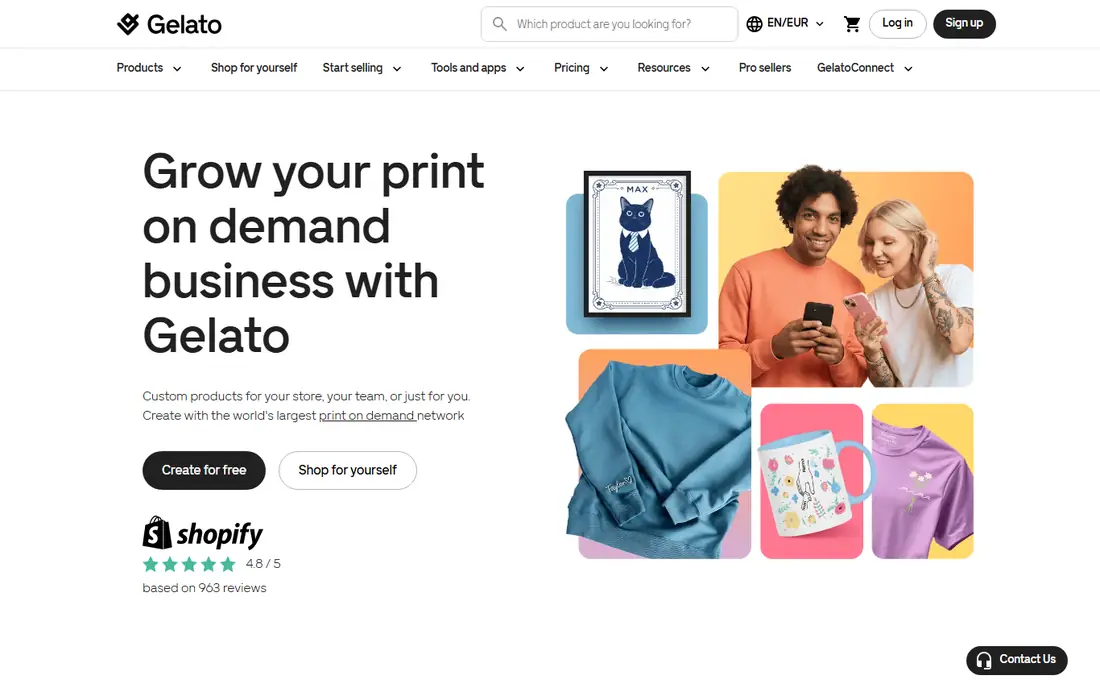
Gelato routes each order to a partner printer near the buyer, with production in 32 countries. That local model cuts shipping times and avoids cross-border customs surprises for international customers, which matters if your buyers live in Europe, Australia, or Asia as well as the United States. The catalog is strongest in apparel, wall art, stationery, and photo products, and Gelato states that 90 percent of orders are produced locally and arrive within 5 days.
The free plan includes access to the production network, two connected stores, and the design editor. Gelato+ costs $29.99 per month, or $19.99 per month billed annually, and adds up to 33 percent off eligible products plus premium mockup and branding tools. The drawback is catalog size: with a smaller range than Printify, some niche products may not be available. Gelato fits sellers whose customers span several countries and who sell wall art or stationery alongside apparel.
What we like- Local production in 32 countries
- Strong wall art and stationery range
- Free plan
Watch out for- Smaller catalog than Printify
- Some branding and mockup tools sit behind Gelato+
Starting price$0
Free planYes
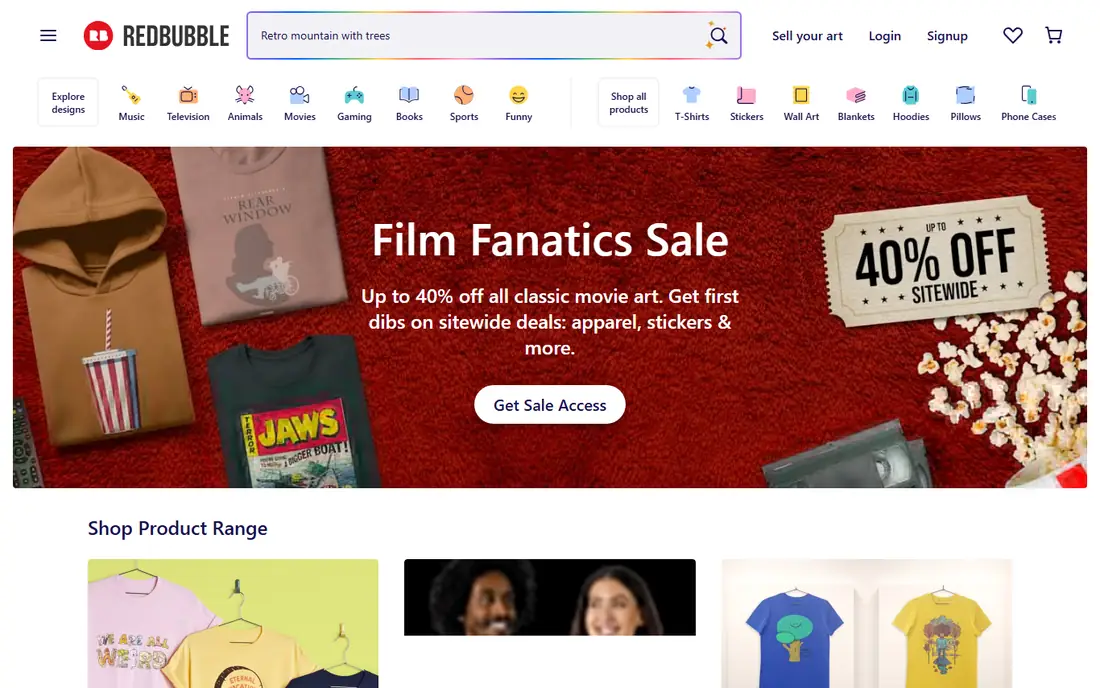
Redbubble is a marketplace, not a fulfillment service for your own store. You upload artwork once, and Redbubble applies it to more than 70 products, from shirts and stickers to phone cases, pillows, and wall art. Buyers already visit Redbubble to shop, so you can earn without building traffic yourself. Opening an artist shop is free, and Redbubble handles printing, shipping, and customer support.
The trade-off is control. Redbubble sets retail prices, and your earnings are a margin set by Redbubble on each product, which is modest on many items. Competition is also heavy, since hundreds of thousands of artists sell on the platform. Redbubble fits illustrators and designers who want a low-effort extra sales channel and are happy to trade margin for reach. It works best alongside your own store, not as a replacement for one.
What we like- Huge built-in audience
- Upload once and sell on 70 plus products
- No store to run
Watch out for- You do not set retail prices
- Artist margins are thin on many products
Starting price$0
Free planYes
TeePublic is part of the Redbubble Group and shares its fulfillment backbone, but it has its own audience and royalty model. Artists earn a fixed amount per product sold, which makes payout math predictable: you always know what a shirt sale pays. The audience leans toward fandom, gaming, music, and pop culture designs, and regular sitewide sales, often at steep discounts, bring in buyers who might never find a small shop on their own.
Joining is free, and one upload is applied across dozens of products with automatic mockups. You can import an existing Redbubble shop with a built-in tool. The catch is the same as Redbubble: you cannot set your own prices, and sale prices are set by TeePublic. TeePublic fits designers whose work suits fan and pop culture niches and who want steady marketplace volume without running ads or a store.
What we like- Strong pop culture audience
- Fixed royalties per sale
- Frequent sitewide sales drive volume
Watch out for- Fixed royalties limit pricing control
- No storefront integrations
Starting price$0
Free planYes
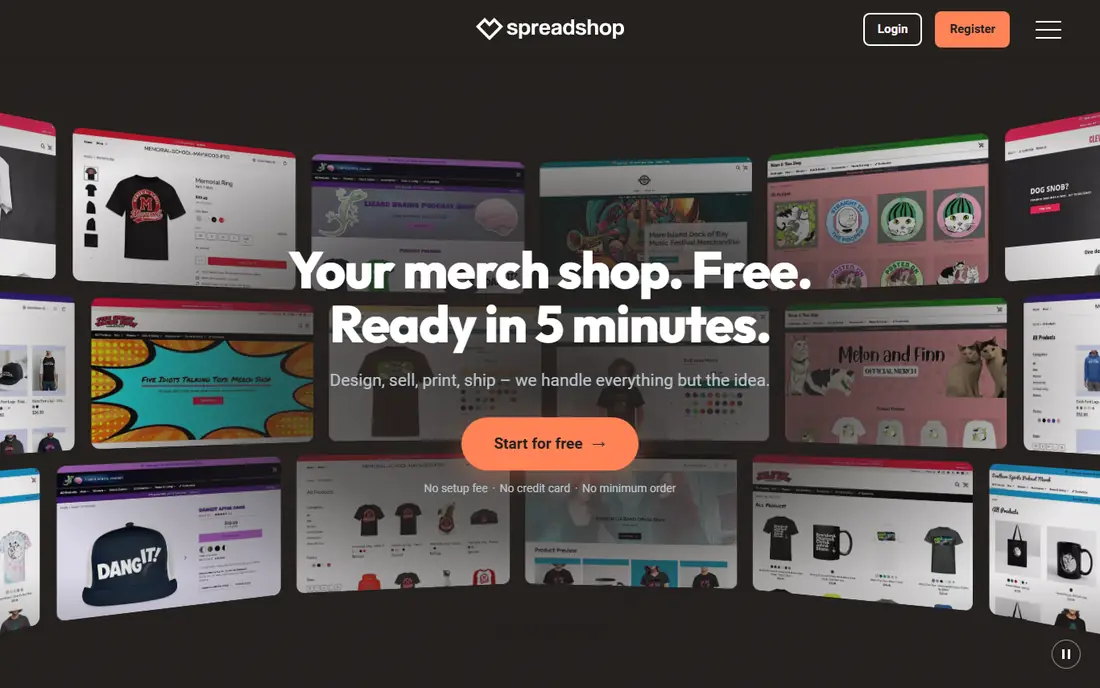
Spreadshop, from the Spreadshirt group, gives you a free shop under your own brand name, with colors, logo, and layout you can adjust. There is no setup fee, no monthly fee, and no minimum order. You set the selling price, Spreadshop deducts the base price for product and print, and the rest is your margin. US orders print in Las Vegas and typically ship within 48 hours, and the platform handles printing, packing, shipping, returns, and support.
Spreadshop also works as an official YouTube Shopping partner, so creators can show products under videos and in Shorts, plus integrations with Instagram, Facebook, and TikTok. Payouts arrive monthly once you reach the minimum balance, by direct deposit or PayPal. The drawback is catalog depth: it is narrower than Printify's 2,000-plus range. Spreadshop fits creators, bands, clubs, and podcasters who want a simple branded shop without paying for a store platform.
What we like- Free shop with your own branding
- No minimum order
- YouTube Shopping partner
Watch out for- Smaller catalog than Printful and Printify
- Base prices vary by product
Starting price$0
Free planYes
Fourthwall is built for creators who sell to an existing audience. You get a branded shop you can customize, and you can sell print-on-demand products alongside memberships, digital downloads, and other offers in one place. There are no upfront costs: Fourthwall sources products through vetted partners, handles production, quality control, and shipping, and offers integrations with YouTube, Instagram, TikTok, and Spotify. A free tier covers up to 50 listings, which is enough for most creator shops.
The platform is used by large creators and media brands, which shows in the polish of its storefronts and checkout. The catch is scope: Fourthwall is a creator commerce platform first, so its POD catalog is narrower than Printify's, and it suits sellers with an audience better than sellers relying on marketplace discovery. Fourthwall fits YouTubers, streamers, podcasters, and newsletter writers who want one home for merch, memberships, and digital goods.
What we like- Polished branded storefronts
- Memberships and digital products alongside merch
- No upfront costs
Watch out for- More of a creator platform than a pure POD catalog
- Product costs vary
Starting price$0
Free planYes
Bonfire takes a different approach: you design a shirt, launch a campaign, and supporters order during the campaign window. Bonfire prints and ships after the campaign ends, and you keep the difference between the selling price and the base cost. There are no setup fees, no upfront costs, and no minimum order quantities, and Bonfire ships worldwide, with international shipping from $11.99 for the first item. It also lets you order products at cost with no minimums.
The platform is a natural fit for nonprofits, schools, teams, and causes, since campaigns double as fundraisers. Bonfire charges an 8 percent processing fee on donations and tips, reduced to 3.5 percent for verified nonprofits. The limitation is the model itself: Bonfire is built around campaigns, not a permanent storefront, so it is a weaker pick for a seller who wants an always-open shop. Bonfire fits anyone raising money or selling a limited run to a defined group.
What we like- Free campaigns with no minimums
- Built for fundraising
- Worldwide shipping
Watch out for- Campaign-based model, not an always-open store
- 8 percent fee on donations and tips
How we chose
We compared companies that offer real print-on-demand selling in the United States today, using their own pricing pages, catalogs, and documentation. We checked public reviews on G2, Capterra, Trustpilot, and Reddit to see how quality, shipping, and support hold up for working sellers. We favored companies with a free starting tier, a clear pricing page, and a mix of own-store fulfillment, marketplaces, and creator shops, so the list covers different ways of selling rather than one model repeated eight times.
How to pick the right pod company for you
Start with where your buyers already are, not with the longest feature list. That single choice narrows the field fast.
If you run your own store
Pick Printful for consistent quality and branding, or Printify for the lowest base costs and the widest catalog. Order samples from both before you commit, and compare the same blank shirt with the same print placement. Check shipping cost to your main buyer countries, since a cheap base price can be undone by an expensive delivery charge.
If you want built-in traffic
Pick Redbubble or TeePublic and accept thinner margins in exchange for an audience. Upload your best work, use clear titles and tags, and treat the marketplace as one channel among several. Marketplace sales are a useful floor, but they rarely replace a store you control.
If you sell to fans or raise money
Pick Fourthwall or Spreadshop for a branded shop, or Bonfire for a campaign. These platforms remove the store setup work and let you share one link with your audience. For fundraising, compare the base cost and any donation fee against a standard shop before you launch.
Watch the real costs
On every platform, your profit is the retail price minus base cost, shipping, store fees, and payment processing. Order a sample of each product you plan to sell, check the print quality and fit, and confirm delivery times to your main markets. Prices change during the year, so recheck the live catalog before you set retail prices for a new season.
Frequently asked questions
What is a pod company?
A print-on-demand company prints a product only after a customer orders it. You upload a design, the company prints it on a shirt, mug, poster, or other blank product, and ships it to the buyer. You never hold inventory, and you pay the base cost plus shipping only when a sale happens.
Do pod companies charge a monthly fee?
Most do not require one. Printful, Printify, Gelato, Redbubble, TeePublic, Spreadshop, Fourthwall, and Bonfire all let you start free. Paid plans such as Printful Growth at $24.99 per month, Printify Premium at $39 per month, and Gelato+ at $29.99 per month add product discounts and extra tools, but they are optional.
Which pod company is best for beginners?
Printful and Printify are the safest starting points for a first store, because both are free, well documented, and connect to major store platforms. If you would rather skip the store entirely, Redbubble or TeePublic let you upload designs and start selling to marketplace traffic with no setup work.
How much money can you make per shirt?
It depends on your base cost, shipping, and retail price. A typical free-plan tee costs roughly $8 to $13 to produce, plus shipping, so a $25 retail price can leave $5 to $12 before store and payment fees. Marketplace sales pay less per item but need no advertising. Always run the math on your exact products before setting prices.
Do I need to own the rights to my designs?
Yes. Every platform on this list requires you to upload only designs you created or licensed. Using someone else's artwork, logos, or characters without permission can get your shop closed and your payouts held. If you use licensed fan art programs, follow that program's rules exactly.
Can I sell on more than one pod company at once?
Yes, and many sellers do. A common setup is Printful or Printify for your own store plus Redbubble or TeePublic for marketplace reach. Just keep your listings consistent, avoid promising delivery times one platform cannot meet, and track which platform each order came from.
Sources we checked (8)
- https://www.printful.com
- https://printify.com
- https://www.gelato.com
- https://www.redbubble.com
- https://www.teepublic.com
- https://www.spreadshop.com
- https://fourthwall.com
- https://www.bonfire.com
Is your product missing or out of date?
We review this list regularly. Vendors can request a listing, send updated pricing or ask about featured placement.

Shihab Mia · Founder, Rankite
Shihab has 5+ years in B2B and SaaS SEO. He writes Rankite's software buying guides from pricing pages, documentation and public user reviews. More about Shihab.