How we make this list: we compare pricing pages, product documentation and public user reviews. Rankite is independent; if a vendor ever pays for a featured spot, that listing is clearly labeled Partner.
Key takeaways
- Small teams that need fast, affordable creator search should start with Heepsy or Modash, which pair large databases with low entry costs.
- DTC and ecommerce brands that want customers turned into creators get the most complete workflow from GRIN, Upfluence or Aspire.
- Enterprise teams running global programs with strict compliance needs fit CreatorIQ, Traackr or impact.com, where pricing is custom and discovery is only one part of the suite.
- Collabstr works best when you want to hire individual creators quickly at published rates instead of building long-term programs.
- Fake followers remain the main risk in this category, so every shortlist should be filtered by audience authenticity before any outreach goes out.
Finding the right creators is where most influencer programs stall. You post a call for collaborators and get flooded with applications from accounts whose followers were bought in bulk. Or you spend weeks manually scrolling Instagram and TikTok, only to discover the creator you liked has an audience in a country you do not ship to. A dedicated discovery platform replaces that guesswork with filters: niche, location, follower count, engagement rate and audience authenticity, applied across millions of profiles in seconds.
The tools below split into two groups. Discovery-first tools like Heepsy and Modash exist mainly to help you find and vet creators, and they tend to cost less. Full influencer marketing suites like Upfluence, Aspire, GRIN, CreatorIQ, Traackr and impact.com add outreach, campaign management, payments and reporting on top of search. Marketplaces like Collabstr sit in between, letting you hire creators at published rates without a heavy platform contract. The right pick depends on how often you run campaigns and how much of the workflow you want handled in one place.
Quick comparison
| Tool | Best for | Starting price | Free plan |
|---|
 Upfluence Upfluence | Ecommerce brands finding creators at scale | See website | No |
 Aspire Aspire | Brands building long-term creator communities | See website | No |
 CreatorIQ CreatorIQ | Large enterprises with global programs | See website | No |
 GRIN GRIN | DTC brands turning customers into creators | See website | Free trial (30 days) |
 impact.com impact.com | Teams merging influencer and affiliate programs | See website | No |
 Heepsy Heepsy | Small teams that need fast, cheap discovery | See website | Yes |
 Modash Modash | Data-driven teams vetting creators worldwide | See website | Free trial |
 Traackr Traackr | Global brands that need compliance and measurement | See website | No |
 Collabstr Collabstr | Hiring individual creators at published rates | See website | Yes |
Is your product missing or out of date?
We review this list regularly. Vendors can request a listing, send updated pricing or ask about featured placement.
Starting priceSee website
Free planNo
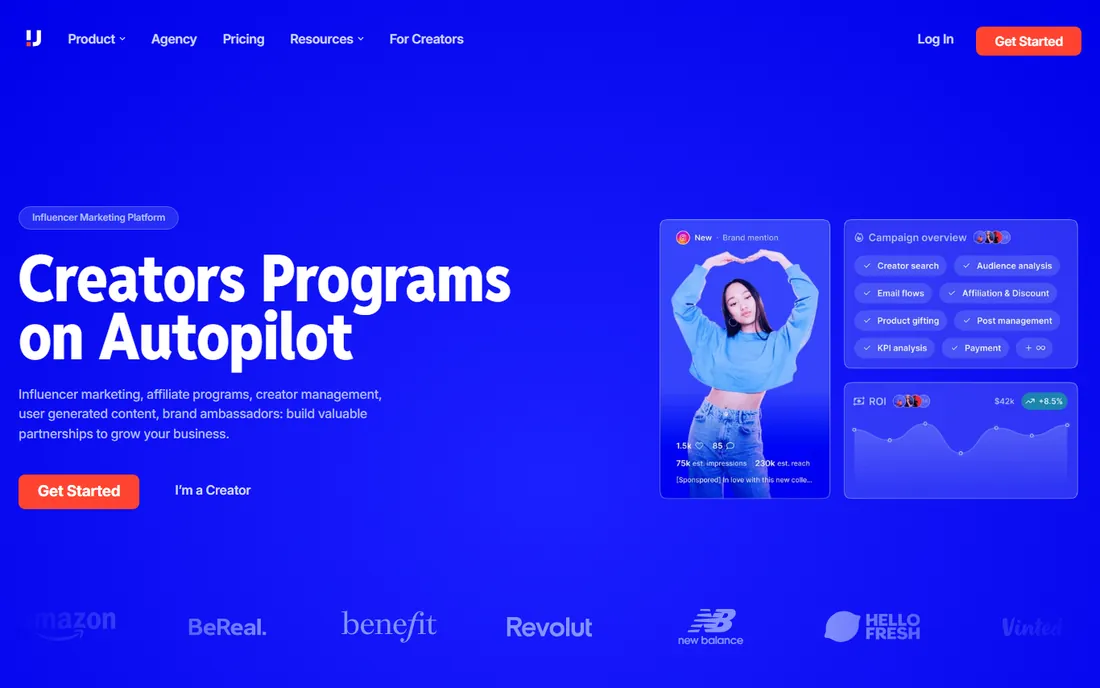
Upfluence starts from a simple idea: your best influencers are often your existing customers. The platform indexes millions of creator profiles across Instagram, TikTok, YouTube, Twitch and blogs, and it can also scan your own customer list to find buyers with real audiences. That combination suits ecommerce brands that want discovery plus a full workflow, not just a search box.
The honest catch is commitment. Upfluence does not publish pricing and is built for brands running creator programs as a standing channel, not a one-off campaign. Small teams sometimes find the feature set heavier than they need. If you plan to run influencer marketing year-round and want search, outreach and payments under one roof, the depth pays off.
What we like- Search across millions of creator profiles
- Built-in CRM and campaign workflow
- Handles outreach, payments and reporting in one place
Watch out for- Pricing is not published and skews enterprise
- The learning curve is real for small teams
#2
Aspire
Best for: Brands building long-term creator communities
Visit aspire.io
Starting priceSee website
Free planNo
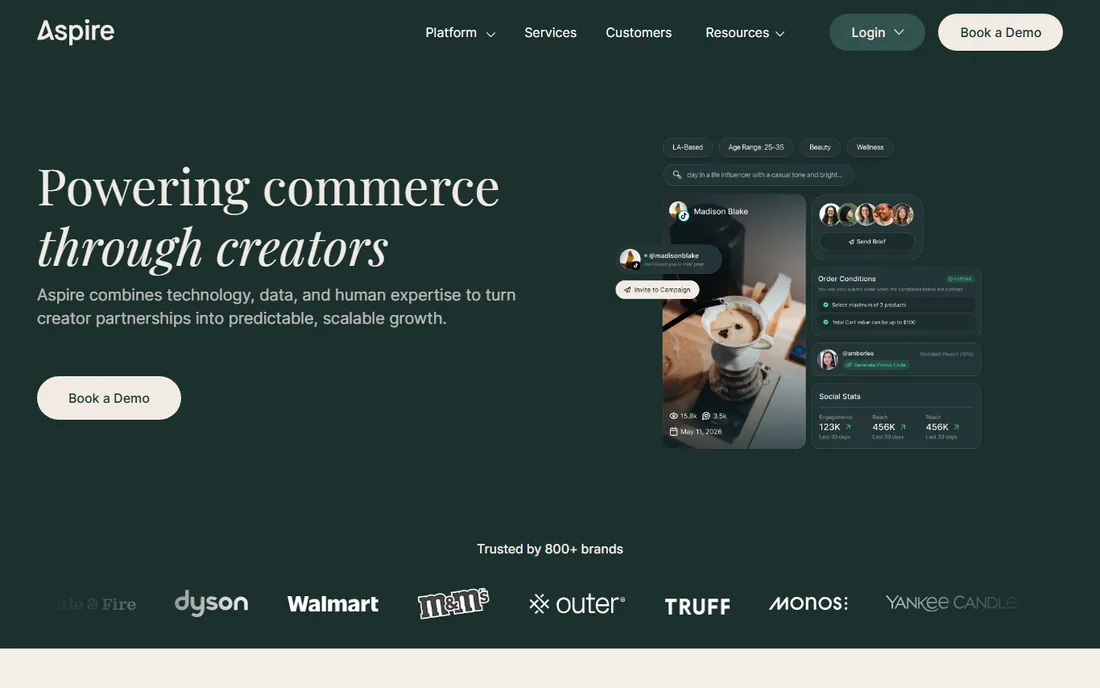
Aspire positions itself less as a search tool and more as a place to build a creator community that keeps producing over time. Discovery is there, with audience analytics to check demographics before you reach out, but the emphasis is on relationships: contracts, content approvals, payments and long-term tracking of the same creators across campaigns.
That makes it a natural fit for brands that want ambassadors rather than one-off posts. The tradeoff is that Aspire asks for a real implementation effort and pricing is quote-based, so it fits teams with a dedicated influencer marketer better than a founder doing this on the side.
What we like- Strong creator relationship management
- Good fit for ambassador and affiliate-style programs
- Detailed audience analytics
Watch out for- Enterprise-leaning contracts
- Setup takes real time and planning
Starting priceSee website
Free planNo
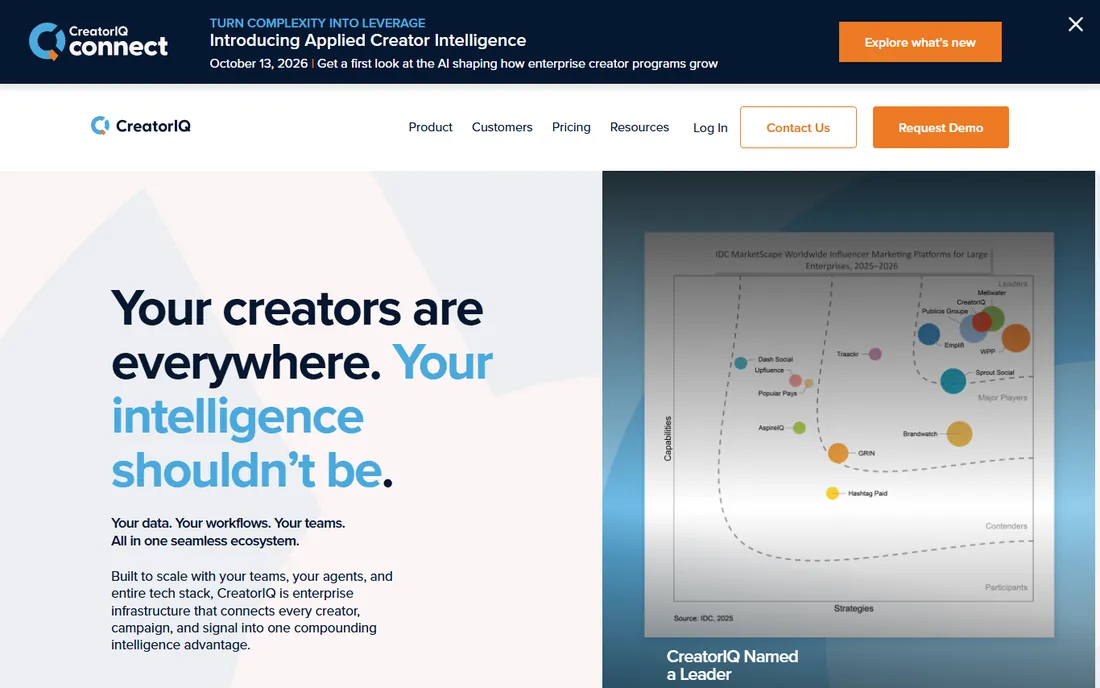
CreatorIQ is the heavyweight option. It is designed for global brands running creator programs across regions, languages and currencies, with the governance, approval chains and audit trails that legal teams at large companies require. Discovery draws on a large database with platform integrations that pull in verified performance data.
Nobody buys CreatorIQ for a single product launch. Pricing is custom, onboarding is a project, and the value shows up when you are managing hundreds of creators across markets. Smaller brands will find better value elsewhere on this list.
What we like- Enterprise-grade compliance and data controls
- Integrations with major social platforms
- Standardized measurement across campaigns
Watch out for- Built for big budgets and big teams
- Overkill for a first campaign
#4
GRIN
Best for: DTC brands turning customers into creators
Visit grin.co
Starting priceSee website
Free planFree trial (30 days)
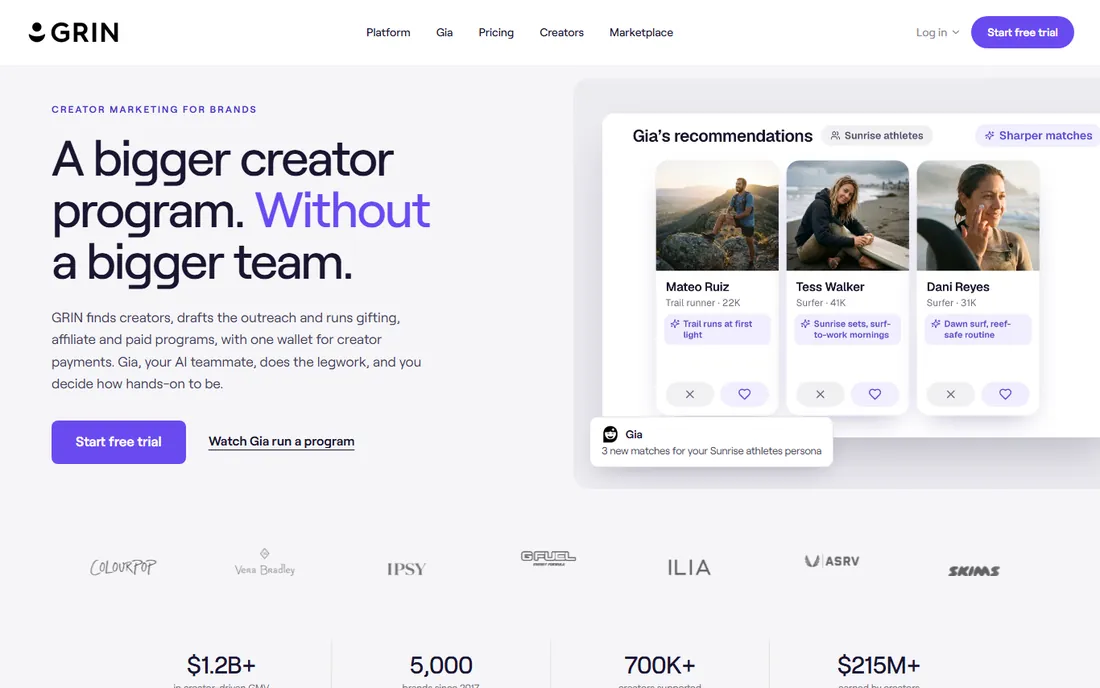
GRIN calls its category creator management rather than influencer marketing, and the difference matters. The platform is built around the full lifecycle: finding creators, seeding products, managing outreach, tracking content and paying people. It recently opened self-serve access with a 30-day trial and month-to-month billing, which lowers the barrier for smaller DTC brands.
The honest catch is scope. GRIN is tuned for brands that sell physical products and seed them to creators. Service businesses and B2B companies will find the workflow less aligned with how they buy. For a Shopify-style brand, though, the fit is direct.
What we like- Purpose-built for direct-to-consumer brands
- 30-day self-serve trial with no annual contract
- Strong product seeding and outreach tools
Watch out for- Focused on ecommerce use cases, less suited to B2B
- Advanced reporting tiers cost more
#5
impact.com
Best for: Teams merging influencer and affiliate programs
Visit impact.com
Starting priceSee website
Free planNo
impact.com is primarily a partnership management platform, and its creator product sits inside that frame. The strength here is convergence: if your influencers also drive affiliate revenue, you can manage both relationships, contracts and payouts in one system instead of reconciling a discovery tool with an affiliate network.
As a pure discovery tool it is thinner than the specialists above. Pick impact.com when your program already mixes creators with affiliates and publishers and you want one system of record, not when your main need is searching a creator database.
What we like- Unites influencer, affiliate and partnership tracking in one platform
- Strong reporting across partnership types
- Large partner marketplace
Watch out for- Discovery is weaker than specialist tools
- Pricing is enterprise-level
Starting priceSee website
Free planYes
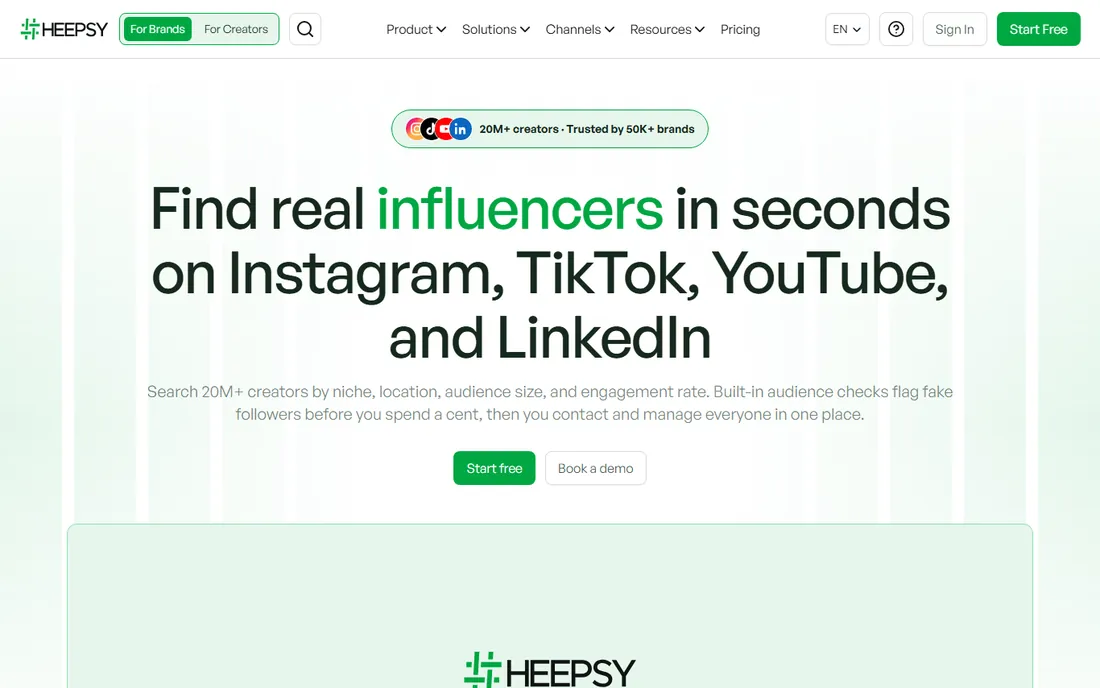
Heepsy is the discovery-first pick for teams without an enterprise budget. You can search across Instagram, TikTok, YouTube and LinkedIn in four ways: plain-language AI search, keyword matching on bios and captions, lookalikes of creators you already trust, and direct handle lookup. Every profile shows an audience authenticity breakdown, which addresses the fake-follower problem at the point of search rather than after you have paid.
The free plan makes it easy to test with real searches before spending anything. The tradeoff is that Heepsy does not manage the whole campaign lifecycle as deeply as Upfluence or GRIN. Use it to find and vet creators, and pair it with your own outreach process or a separate tool for payments.
What we like- Free plan to start
- AI search plus lookalike and handle lookup
- Fake-follower checks built into every search
Watch out for- Campaign management features are lighter than full suites
- Database depth varies by niche
#7
Modash
Best for: Data-driven teams vetting creators worldwide
Visit modash.io
Starting priceSee website
Free planFree trial
Modash is an Estonian company that has built its reputation on data quality. The platform indexes a large creator database with detailed audience demographics and fake-follower detection, and it can track creator content automatically without asking influencers to connect their accounts first. That last detail matters when you want to vet someone before first contact.
Pricing is more accessible than the enterprise suites, which makes Modash a strong middle option: serious data without a five-figure contract. The tradeoff is workflow depth. Campaign management and payments exist but are not the product's center of gravity.
What we like- Deep audience data and filtering
- Monitors creators without requiring signup
- Transparent entry pricing for smaller teams
Watch out for- No built-in CRM depth of larger suites
- Newer brand with a smaller partner ecosystem
#8
Traackr
Best for: Global brands that need compliance and measurement
Visit traackr.com
Starting priceSee website
Free planNo
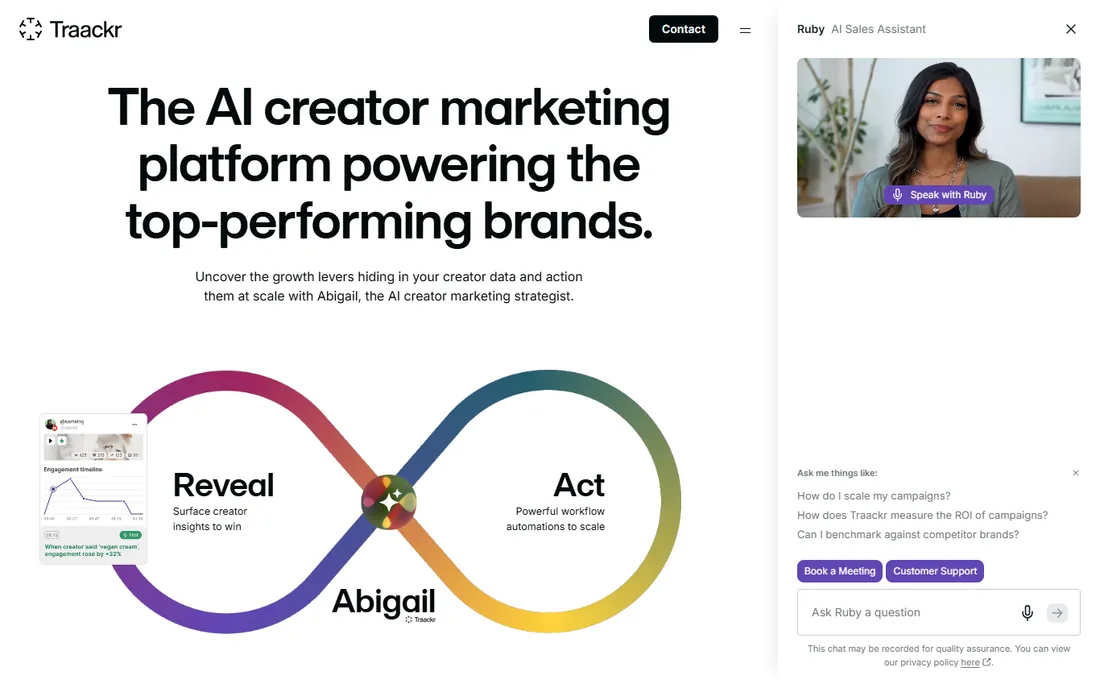
Traackr has been in this space since 2008, which shows in the product's maturity. Discovery taps a large global database, but the differentiator is what happens after: standardized measurement across markets, compliance controls, and benchmarking that lets a global team compare creator performance across regions consistently.
This is a platform for companies with influencer marketing as a managed, budgeted function. Pricing is custom and the sales cycle reflects that. Mid-size brands can get similar discovery cheaper; what they cannot get elsewhere is Traackr's depth of program-level governance.
What we like- Deep creator intelligence and benchmarking
- Strong compliance and approval workflows
- Long track record with global brands
Watch out for- Quote-based pricing aimed at large programs
- Onboarding takes time
Starting priceSee website
Free planYes
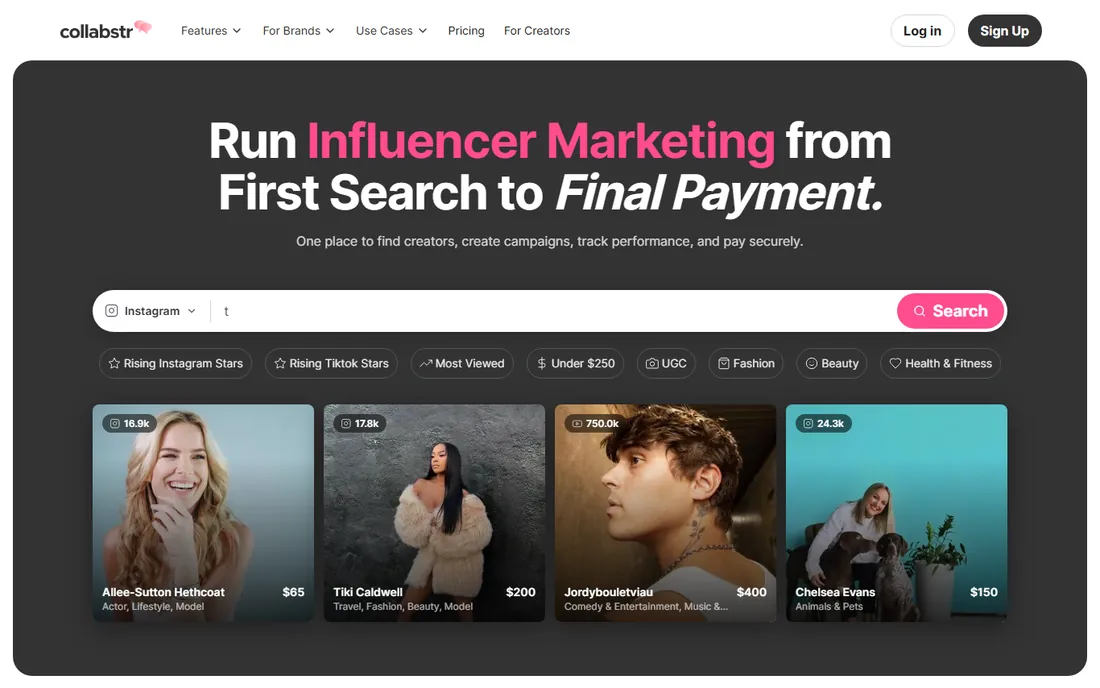
Collabstr works like a marketplace rather than a software suite. Creators list fixed rates for posts, videos and UGC, you search by niche and platform, and you hire directly. Payment sits in escrow until deliverables are approved, and the platform handles invoicing and tax paperwork. Browsing and joining cost nothing; you pay the creator's rate plus a platform fee.
The model suits brands that need creators for specific campaigns without committing to platform software. The catch is the reverse: if you want to build an always-on ambassador program with deep reporting, a marketplace gives you less structure than a dedicated platform.
What we like- Free to browse and join
- Creators publish fixed rates upfront
- Escrow payments protect both sides
Watch out for- Built for one-off hires, not long-term program management
- Platform fee on top of creator rates
How we chose
We started from the queue brief for this category and checked each vendor's own site for what the product actually does today, since influencer platforms rename and merge often. Pricing comes from vendor pricing pages where published; most enterprise tools in this space sell on quote, so we marked those "See website" rather than repeating third-party estimates. We weighted discovery depth (database size, filters, authenticity checks), workflow coverage (outreach, contracts, payments, reporting) and fit for small to mid-size US companies, and we checked recent product news to confirm none of the nine had been shut down or acquired.
Start with how you will use it. If you run two or three campaigns a year, a discovery tool plus a marketplace gets you there without an annual contract. If creator content is a standing growth channel, the suite model pays for itself in saved coordination time.
Check the database before the demo. Ask which platforms are indexed, how often profiles refresh, and whether you can filter by audience location and language. A database of 20 million profiles is useless if half the entries are stale.
Verify authenticity tooling. Every vendor claims fraud detection. Ask for specifics: what percentage of an audience is flagged as suspicious, how growth anomalies surface, and whether you can see the breakdown before paying. Run five creators you already know through any trial to calibrate.
Read the contract terms. Some platforms lock you into annual deals with per-seat pricing; others now offer month-to-month self-serve. Match the commitment to how sure you are. And confirm data export: if you leave, your creator lists and campaign history should leave with you.
Mistakes that waste your first quarter
The most common error is buying an enterprise suite for a test budget. A five-figure annual contract does not make a first campaign perform; it just raises the cost of learning. Start with a discovery tool or marketplace, prove the channel, then upgrade.
The second is skipping audience checks. Follower counts are cheap to fake and engagement pods can manufacture comments. Every creator on your shortlist should pass an authenticity screen before you send a single product.
The third is treating discovery as the whole job. Finding creators is perhaps a third of the work. Outreach, negotiation, content review, usage rights and payment take the rest. When comparing tools, score the full workflow, not just the search box.
Frequently asked questions
How much does an influencer discovery platform cost?
Discovery-first tools often start under $100 per month or offer free plans, while full suites typically sell on custom annual quotes that run into five figures. Marketplaces like Collabstr are free to browse and take a fee per hire instead.
Can I find influencers without paying for software?
Yes. Manual search on Instagram, TikTok and YouTube works for a handful of creators, and some platforms offer free tiers. Paid tools earn their keep when you need filters, authenticity checks and outreach at volume.
What is the difference between a discovery tool and an influencer marketing platform?
A discovery tool helps you find and vet creators. A full platform adds outreach, contracts, content approvals, payments and reporting. Some products do both; decide which half you actually need before paying for the bundle.
How do I spot fake followers before hiring a creator?
Look for audience authenticity scores, sudden follower spikes, and a mismatch between follower count and real engagement. Discovery tools like Heepsy and Modash surface these signals inside the search results.
Do I need a contract to try these platforms?
Not always. Several vendors now offer free plans or month-to-month trials, while enterprise suites usually require annual agreements. Confirm the billing terms during the demo, not after signing.
Which platform is best for a small ecommerce brand?
Start with a discovery-first tool or a marketplace to prove the channel on a small budget. Move to a full creator management suite like GRIN or Upfluence once influencer content becomes a regular part of your marketing.
Sources we checked (10)
- https://www.upfluence.com/
- https://www.aspire.io/
- https://www.creatoriq.com/
- https://grin.co/
- https://www.impact.com/
- https://www.heepsy.com/
- https://www.modash.io/
- https://www.traackr.com/
- https://collabstr.com/
- https://www.businesswire.com/news/home/20260127539452/en/GRIN-Opens-Instant-Self-Serve-Access-to-Its-Creator-Marketing-Platform
Is your product missing or out of date?
We review this list regularly. Vendors can request a listing, send updated pricing or ask about featured placement.

Shihab Mia · Founder, Rankite
Shihab has spent more than a decade helping SaaS and e-commerce brands grow through search. He writes Rankite's software buying guides from pricing pages, documentation and public user reviews. More about Shihab.