How we make this list: we compare pricing pages, product documentation and public user reviews. Ratings come from G2, Capterra or Trustpilot, with the date we checked them.
Key takeaways
- Framer and Webflow are the fastest route to a marketing site and blog that look funded: Framer starts free with a $10 per month Basic plan, Webflow site plans start at $14 per month.
- Ghost and the newsletter platforms solve a different job: owning an audience. Ghost runs a publication and memberships from $18 per month with no cut of member revenue.
- Substack costs nothing until readers pay, then takes 10 percent of paid subscription revenue. beehiiv starts free to 2,500 subscribers and takes no cut on paid plans.
- Sanity is the free to start choice when the startup's engineers want content as data, with paid seats at $15 per month.
- Pick for the next eighteen months, not for the launch photo. Migration is the tax startups pay for choosing on price alone.
Quick comparison
| Tool | Best for | Starting price | Free plan |
|---|
 Framer | Fast, design led sites and blogs | Free | Yes |
 Webflow | Polished marketing sites with a CMS | $14 per month | Yes |
 Sanity | Structured content for product led teams | Free | Yes |
 Ghost | Publications, newsletters, and memberships | $18 per month | No |
 Substack | Newsletter first startups and creators | Free | Yes |
 beehiiv | Newsletters built to grow and monetise | Free | Yes |
 HubSpot Content Hub | Content tied to a startup CRM | $20 per seat per month | Yes |
 WordPress | The free, own everything option | Free | Yes |
Is your product missing or out of date?
We review this list regularly. Vendors can request a listing, send updated pricing or ask about featured placement.
The best content platforms for startups
#1Framer
Best for: Fast, design led sites and blogs4.5/5 on
G2 (144 reviews, checked Oct 2026)
Visit framer.com
Starting priceFree
Free planYes
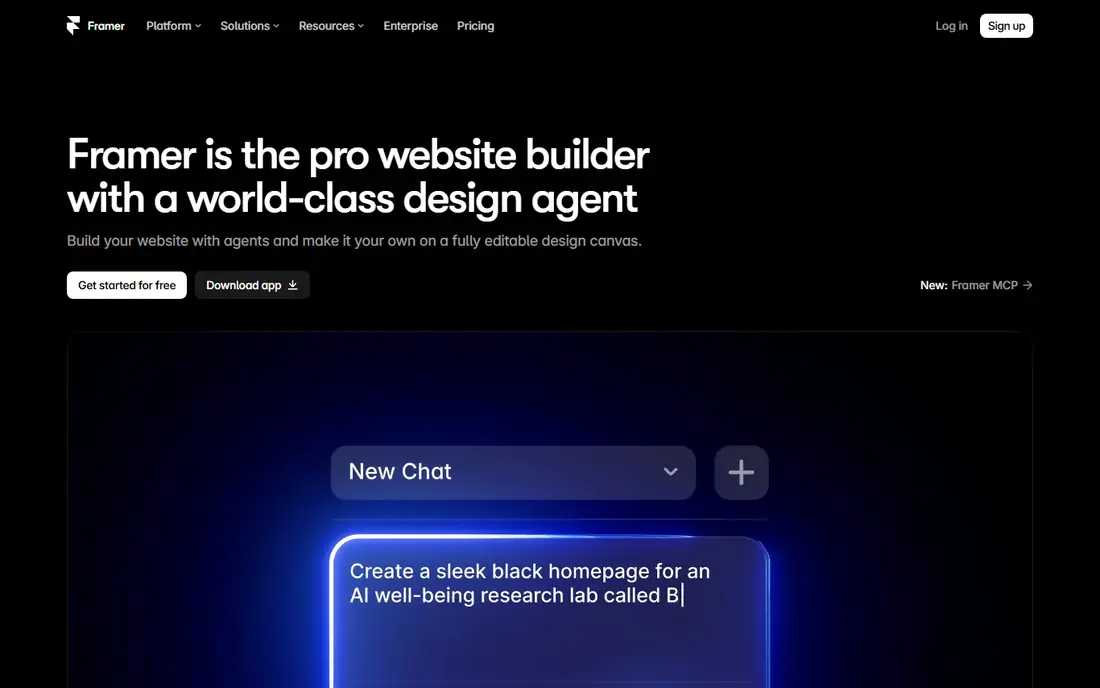
Framer is where early stage design taste lives. A founder or designer lays out pages on a free form canvas, publishes instantly, and runs a blog through a CMS that the $10 per month Basic plan already includes, a point its fans make against Webflow, whose cheapest plan lacks one. The result looks like a company three rounds ahead of its funding.
Framer's ceiling is content scale. A startup publishing a post a week will not find it for years. A content engine publishing hundreds of pages with complex relationships will find Webflow or Sanity more comfortable. For the classic startup problem, a credible site and blog this week, Framer is the current favourite.
What we like- Design canvas that feels like Figma, so pages ship in hours, not sprints
- Free plan, and Basic at $10 per month includes a CMS
- Built in animations and AI assisted page building
- Cheap editor seats compared with rivals
Watch out for- CMS depth trails Webflow for large content libraries
- Commerce is not its strength
- Advanced testing sits in paid add ons
- Very large blogs and complex structures push its limits
#2Webflow
Best for: Polished marketing sites with a CMS4.4/5 on
G2 (995 reviews, checked Oct 2026)
Visit webflow.com
Starting price$14 per month
Free planYes
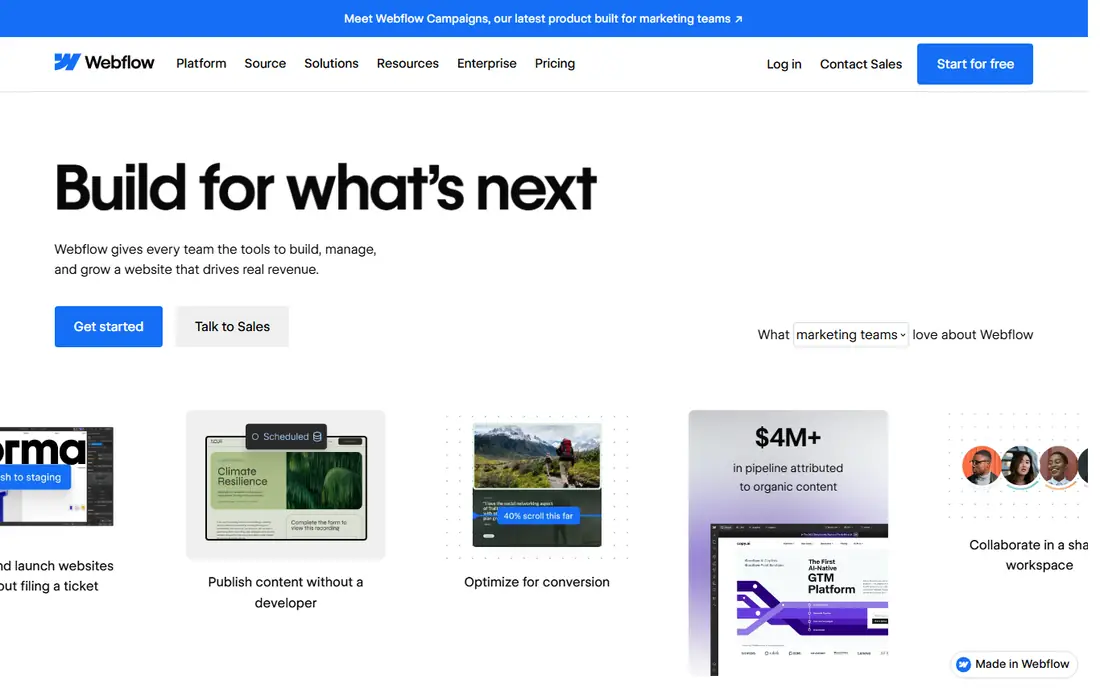
Webflow remains the design led standard for startup marketing sites. Its CMS handles the content shapes a startup actually publishes: blog posts, comparison pages, template galleries, help articles, and its sites look expensive because designers control every pixel. Site plans are listed from $14 per month, though a startup should budget for a CMS plan above the entry tier.
The costs arrive with success: more CMS items, more traffic, more editor seats, each nudging the plan up. That is still a good problem, and Webflow's freelancer market means help is easy to hire. For a startup whose brand is a growth channel, Webflow earns its place near the top of this list.
What we like- The strongest visual control short of hand coding
- CMS collections for blogs, glossaries, integrations pages, and changelogs
- Hosting and CDN included, site plans from $14 per month
- Huge template and freelancer market
Watch out for- Cheapest site plan carries no CMS, the content plans cost more
- Item and traffic limits push growing sites up tiers
- A/B testing sits in an add on reported from $299 per month
- Editor seats are pricier than Framer's
#3Sanity
Best for: Structured content for product led teams4.7/5 on
G2 (926 reviews, checked Oct 2026)
Visit sanity.io
Starting priceFree
Free planYes
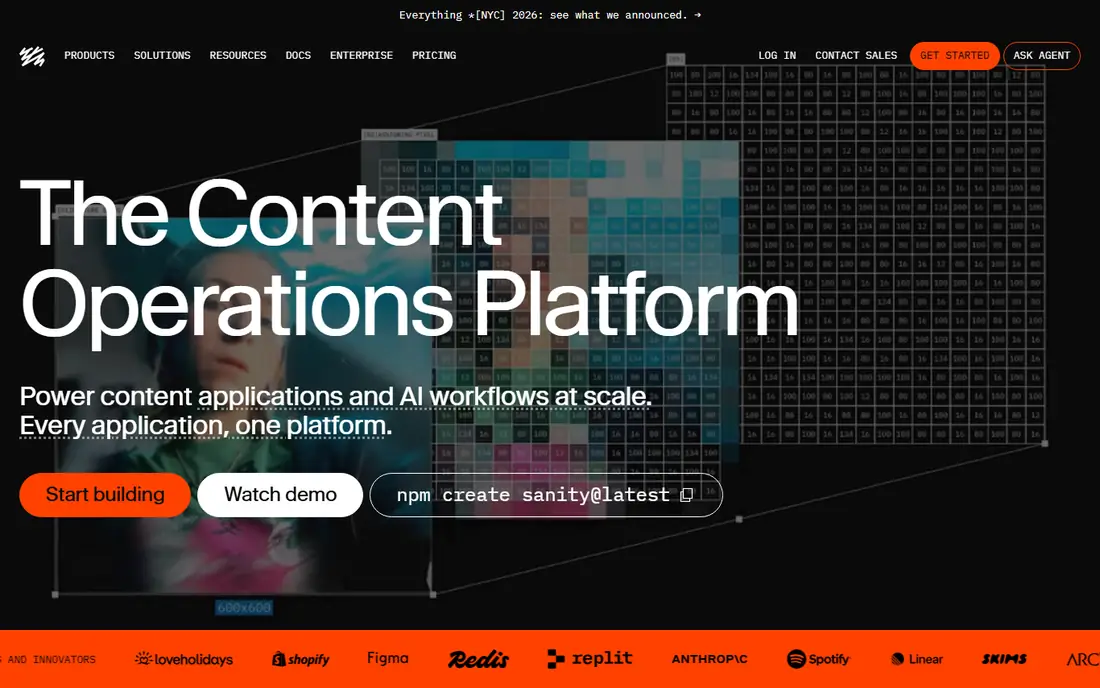
Sanity is the engineers' pick, and at product led startups the engineers are often the founders. Content lives as data behind an API: the same feature description can render on the marketing page, inside the product, and in the docs. Its free plan covers up to 20 seats and a quarter million API requests a month by its pricing page, which is a real production allowance, not a demo.
The price is the build. Somebody must create the site, usually in Next.js, and keep it running. A startup with that person gets a platform it will not outgrow at Series B. A startup without one should take Framer or Webflow and spend its engineering hours on the product.
What we like- Free plan covers up to 20 seats, unusual generosity
- Content as structured data feeds site, app, and docs from one model
- Paid Growth seats at $15 per month
- Developers shape the editing studio to the team
Watch out for- No website included, your team builds and hosts the front end
- Non technical founders cannot evaluate it alone
- Usage is metered on API requests
- Overkill for a landing page and a blog
#4Ghost
Best for: Publications, newsletters, and memberships4.0/5 on
G2 (40 reviews, checked Oct 2026)
Visit ghost.org
Starting price$18 per month
Free planNo
Ghost is the platform for a startup whose content is the product: a publication, a research letter, a community with paid tiers. It pairs a proper website and blog with email newsletters and memberships, and its economics are the honest kind: a monthly hosting fee, from a listed $18 per month on annual billing, and zero percent of what members pay you.
Compare that with Substack below. At a few hundred dollars of monthly member revenue, Ghost's flat fee already wins; at zero revenue, Substack wins. Ghost is open source, so self hosting is possible for teams that want it. For founder led publications and content first startups, Ghost is the professional default.
What we like- Website, newsletter, and paid memberships in one open source platform
- Takes no cut of membership revenue, you keep what Stripe pays out
- Clean editor and fast, search friendly themes
- Ghost(Pro) hosting starts at a listed $18 per month billed yearly
Watch out for- No free hosted plan
- Pricing rises with member count
- Putting the blog on a subdirectory of an existing site needs workarounds or add ons
- No store, commerce is memberships only
#5Substack
Best for: Newsletter first startups and creators4.3/5 on
G2 (17 reviews, checked Oct 2026)
Visit substack.com
Starting priceFree
Free planYes
Substack removed every excuse not to start. A startup or founder can publish a newsletter and a simple site today, pay nothing, and let Substack's recommendation network and app surface the work to readers. Many publications credit most of their growth to that internal discovery, which no platform on this list replicates.
The bill arrives with success: 10 percent of paid revenue, forever, plus Stripe fees. At $10,000 a month in subscriptions that is $12,000 a year, the maths that moves established publications to Ghost or beehiiv. Substack's deal is fair at the start and expensive at scale, which is exactly when moving is hardest. Start here if discovery is your problem; leave when the percentage is.
What we like- Completely free to publish, with unlimited free subscribers
- Discovery inside the Substack network and app brings readers
- Site, email, podcast, and comments handled for you
- Paid subscriptions built in with no setup
Watch out for- Takes 10 percent of paid subscription revenue on top of card fees
- Your publication lives on Substack's domain and rules unless you add a custom domain
- No store, no courses, limited design control
- Leaving with your list is allowed, leaving with your network effect is not
#6beehiiv
Best for: Newsletters built to grow and monetise4.5/5 on
G2 (40 reviews, checked Oct 2026)
Visit beehiiv.com
Starting priceFree
Free planYes
beehiiv was built by people who ran big newsletters, and it shows in the tooling: referral programs, a recommendation network of other newsletters, boost campaigns, and an advertising network that lets a growing publication earn from sponsors, beside the standard editor and website. Its free plan covers your first 2,500 subscribers, and paid plans take no cut of subscription revenue.
Pricing is public and steps up with list size, starting around $49 per month billed annually at the entry paid tier for smaller lists. For a startup whose content strategy is a newsletter with ambitions, beehiiv offers the growth machinery Substack keeps inside its own walls, at the price of a monthly bill once you pass the free tier.
What we like- Free Launch plan covers up to 2,500 subscribers
- Growth tools built in: referrals, recommendations, and an ad network
- Takes 0 percent of paid subscription revenue on paid plans
- Public, transparent pricing by subscriber tier
Watch out for- Paid plans at entry size start around $49 per month billed annually
- Prices climb in steps as the list grows
- It is a newsletter platform first, not a general website builder
- Advanced features sit on higher tiers
#7HubSpot Content Hub
Best for: Content tied to a startup CRM4.5/5 on
G2 (2,207 reviews, checked Oct 2026)
Visit hubspot.com
Starting price$20 per seat per month
Free planYes
HubSpot is the grown up choice a startup makes when content exists to feed a pipeline. Its free tier pairs a real CRM with basic website and blog tools, which is more operational value than any other free offer here. When the startup hires its first sales rep, the content and the customer record are already in one place.
The watch out is the ladder. HubSpot's pricing climbs by seat and by hub, and the jump from Starter to Professional is the one that surprises young companies. A startup should adopt HubSpot for the CRM decision, not the blog decision. If the CRM answer is HubSpot anyway, Content Hub makes the content platform choice for you.
What we like- Free CRM and free content tools cover a startup's first year
- Content, forms, and email share one database with sales
- Built in SEO advice and reporting
- Grows into the full HubSpot stack without migration
Watch out for- Paid seats start around $20 per month and stack across hubs
- Design freedom trails Framer and Webflow
- The pricing ladder steepens quickly past Starter
- Value depends on adopting HubSpot as the CRM
#8WordPress
Best for: The free, own everything option4.4/5 on
G2 (9,546 reviews, checked Oct 2026)
Visit wordpress.org
Starting priceFree
Free planYes
WordPress is the oldest answer and still a rational one. The software is free, a competent host costs a few dollars a month, and a startup owns its site, its content, and its search equity outright, with no percentage taken by anyone. For a content led startup publishing at volume, its plugin ecosystem covers SEO, memberships, courses, and commerce in a way no young platform matches.
The trade is responsibility. WordPress sites get hacked when they are not maintained, and they slow down under careless plugins. A startup choosing WordPress should budget a few hours a month, or a small care plan, as the real price of free. Founders who accept that keep the most control of any option here.
What we like- Free open source software, you pay only hosting
- Every plugin, theme, and freelancer on earth supports it
- No platform can raise your price or change your rules
- Unmatched for content archives at scale
Watch out for- You are the IT department: updates, security, backups, and speed
- The editing experience needs plugins to feel modern
- Cheap hosting makes cheap performance
- Plugin sprawl becomes its own maintenance job
How we chose
We judged platforms by a startup's real constraints: cash, speed to publish, who does the work, and what happens at ten times the traffic. Pricing comes from vendor pages and October 2026 comparisons on Medium's CMS review, Litextension, Dev.to's newsletter platform comparison, and ProfessionalsToolKit's beehiiv pricing analysis. We covered site builders, publishing platforms, and systems because startups mean all three by the word content. We left out enterprise CMS, hosted site builders aimed at local businesses, and pure email tools with no publishing surface.
What to look for in a content platform for a startup
Follow the work, not the feature list. If the founder writes a newsletter, the platform decision is Ghost, Substack, or beehiiv, and the question is whether you pay monthly or pay a percentage. If the designer ships landing pages weekly, it is Framer or Webflow. If the engineers insist content is data, it is Sanity. Choosing across those jobs, not within them, is where startups waste quarters.
Then run the two year maths. A 10 percent revenue cut is free only until it is not; a seat priced platform is cheap only until the team grows; a free CMS is free only until the maintenance hours are counted. Finally, protect the exit. Own your domain, keep your subscriber list exportable, and store your content in formats another platform can import. The startups that switch platforms well are the ones that assumed they would.
Frequently asked questions
What is the cheapest way for a startup to publish content?
Free, at the start: Framer and WordPress cost nothing to begin, Substack and beehiiv charge nothing until money or scale arrives, and Sanity's free plan covers a small team. The real question is the second year. Price the platform at your hoped for size, subscribers, traffic, and team seats, not at today's, because that is the bill you are actually choosing.
Substack or Ghost for a startup newsletter?
Substack when you have no audience: it is free and its network helps readers find you, at 10 percent of paid revenue. Ghost when you have or can build an audience: a flat fee from $18 per month and no revenue cut means it is cheaper from roughly a few hundred dollars of monthly member revenue, and you own the platform relationship. Many publications start on Substack and move; exporting your list is allowed, so the door is not locked.
Do we need a headless CMS like Sanity?
Only if content must live in the product as well as on the site, or your engineers are building the site anyway. A startup whose content is a marketing site and a blog gets there faster on Framer or Webflow. Headless earns its complexity when the same content feeds the app, the docs, and the help centre, which is a later stage problem for most startups.
When should a startup choose HubSpot?
When the CRM decision comes first. If the startup sells with a sales team and will run pipeline in HubSpot, putting the content there too removes integrations and gives content clear revenue reporting. If there is no sales motion yet, HubSpot's content tools alone do not beat the design led or publishing led options here.
Sources we checked (0)
Is your product missing or out of date?
We review this list regularly. Vendors can request a listing, send updated pricing or ask about featured placement.

Shihab Mia · Founder, Rankite
Shihab has 5+ years in B2B and SaaS SEO. He writes Rankite's software buying guides from pricing pages, documentation and public user reviews. More about Shihab.