How we make this list: we compare pricing pages, product documentation and public user reviews. Rankite is independent; if a vendor ever pays for a featured spot, that listing is clearly labeled Partner.
Key takeaways
- QGenda is the market leader for enterprise physician scheduling, with the deepest automation and the broadest adoption.
- Amion remains the beloved simple on-call scheduler that residents and small groups actually enjoy using.
- Shift Admin serves large physician groups that need powerful rules-based scheduling.
- PerfectServe's Lightning Bolt brings AI-optimized scheduling to complex hospital environments.
- Intrigma, TigerConnect, Spok, and Symplr cover specialty needs from resident scheduling to clinical communication.
Quick comparison
| Tool | Best for | Starting price | Free plan |
|---|
 QGenda QGenda | enterprise physician scheduling | See website | No |
 Amion Amion | simple on-call schedules | See website | Free trial |
 Shift Admin Shift Admin | rules-based group scheduling | See website | No |
 PerfectServe PerfectServe | AI-optimized hospital scheduling | See website | No |
 Intrigma Intrigma | resident and fellow scheduling | See website | No |
 TigerConnect TigerConnect | clinical comms with scheduling | See website | Free trial |
 Spok Spok | on-call and clinical communication | See website | No |
 Symplr Symplr | healthcare workforce operations | See website | No |
Is your product missing or out of date?
We review this list regularly. Vendors can request a listing, send updated pricing or ask about featured placement.
The best physician scheduling software
Starting priceSee website
Free planNo
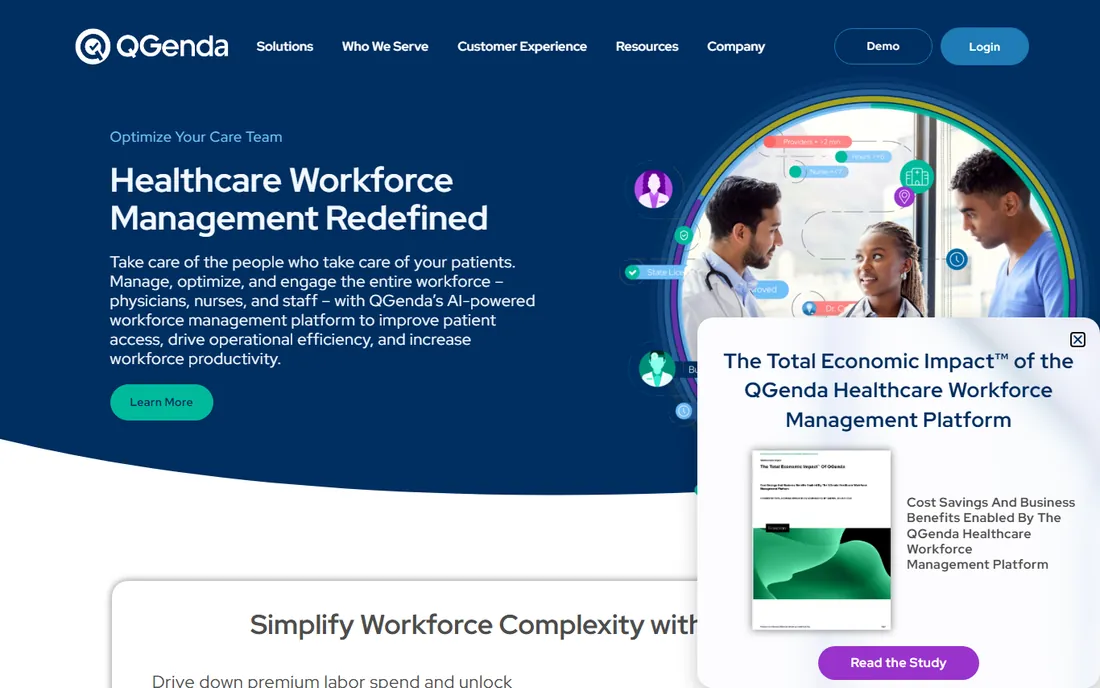
QGenda schedules physicians at more hospitals and practices than any competitor. Automated schedule generation respects provider preferences, credentials, and complex rules; time-off requests and swaps flow through approval workflows; and integrations connect schedules to payroll, credentialing, and clinical communication. Large organizations standardize on it.
Pricing and implementation are enterprise-grade, which prices out small groups. But for hospitals and large practices where scheduling consumes FTEs and errors create compliance risk, QGenda's automation pays back quickly. It is the default enterprise answer for a reason.
What we like- Market-leading automation
- Broad specialty coverage
- Strong integrations
Watch out for- Enterprise pricing
- Implementation takes time
Starting priceSee website
Free planFree trial
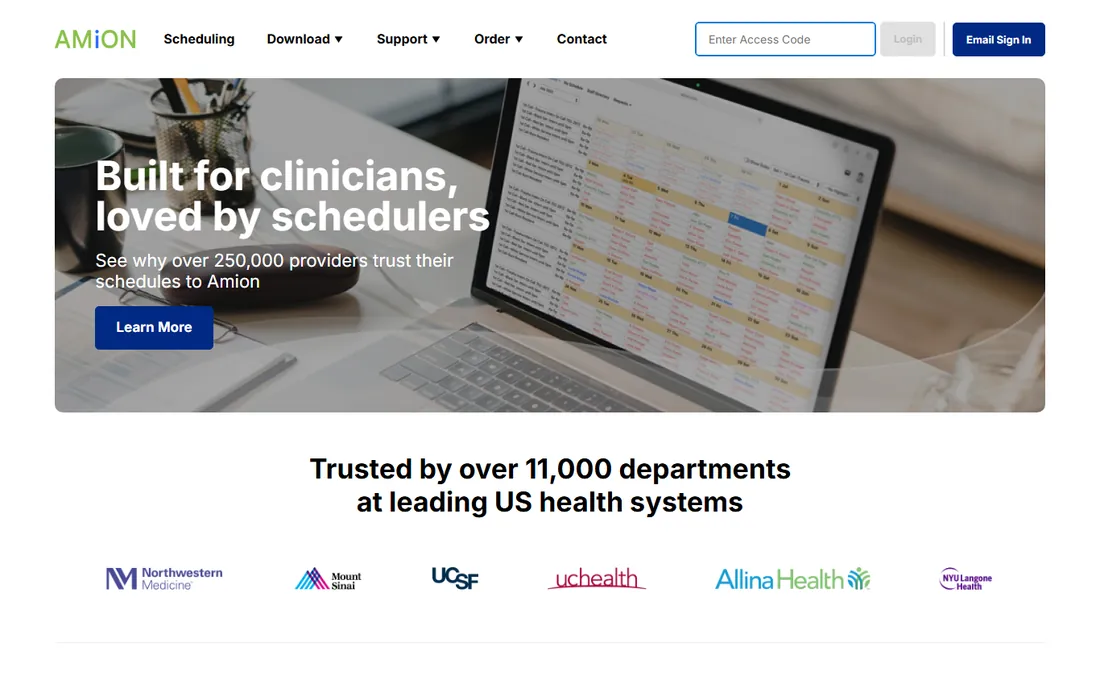
Amion is the scheduler physicians ask for by name. It does on-call schedules simply and well: build the rotation, publish it, handle swaps, and everyone knows who is on. Residents and small groups adopt it without training or IT projects. The Doximity connection keeps it embedded in physician workflows.
It will not auto-generate complex enterprise schedules or integrate deeply with hospital systems. But most scheduling pain is simpler than vendors suggest: knowing who is on call right now. Amion solves that with minimal fuss at accessible pricing, which explains its loyal following.
What we like- Beloved simplicity
- Fast schedule creation
- Physicians actually use it
Watch out for- Less automation
- Limited enterprise features
Starting priceSee website
Free planNo
Shift Admin gives large physician groups a powerful rules engine for complex scheduling: shift equity, consecutive-day limits, credential requirements, and preference weighting all factor into generated schedules. Groups that outgrow spreadsheets but cannot justify QGenda's enterprise pricing find the sweet spot here.
The interface prioritizes function over polish. But schedulers care about the rules engine's accuracy, not its beauty. For emergency medicine, hospitalist, and anesthesia groups with intricate staffing rules, Shift Admin delivers enterprise-grade logic at mid-market prices.
What we like- Powerful scheduling rules engine
- Good for large groups
- Fair pricing
Watch out for- Interface utilitarian
- Less brand recognition
Starting priceSee website
Free planNo
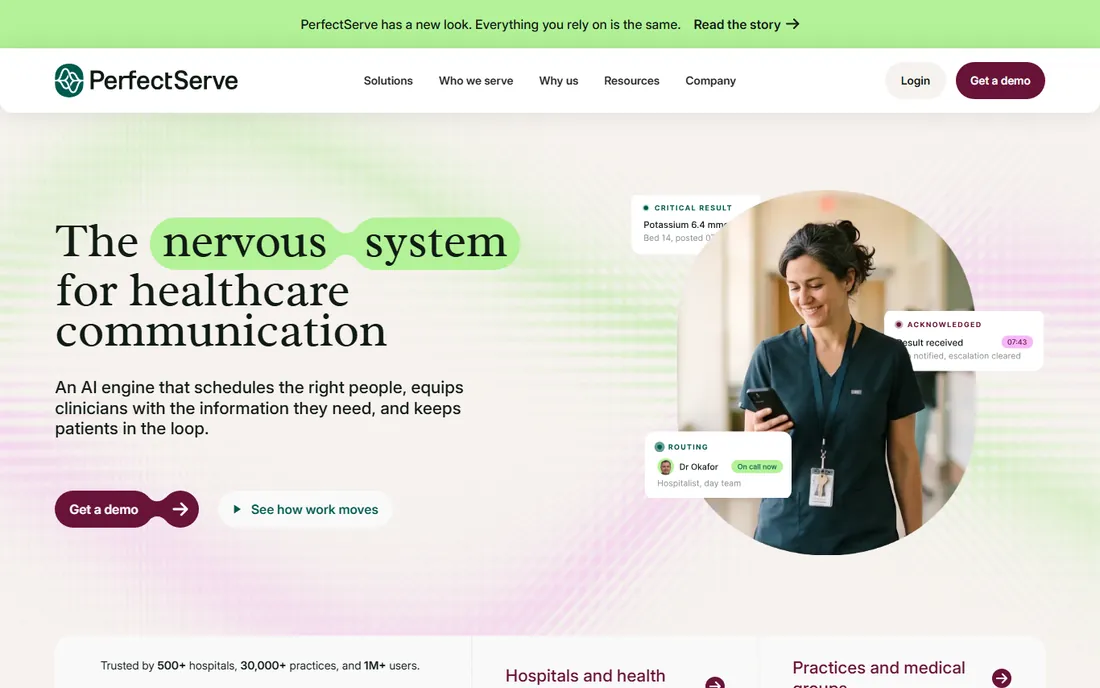
PerfectServe's Lightning Bolt brings AI-driven optimization to physician scheduling: it balances provider preferences, patient demand patterns, and business rules to generate schedules humans would take weeks to build. The clinical communication platform means schedules connect directly to messaging and on-call routing.
This is enterprise software with enterprise timelines and budgets. But hospitals already using PerfectServe for communication get scheduling that shares the same provider directory and on-call data. For complex academic medical centers, the AI optimization addresses scheduling problems manual processes cannot solve.
What we like- Lightning Bolt AI optimization
- Clinical communication tie-in
- Enterprise scale
Watch out for- Enterprise pricing
- Complex deployments
Starting priceSee website
Free planNo
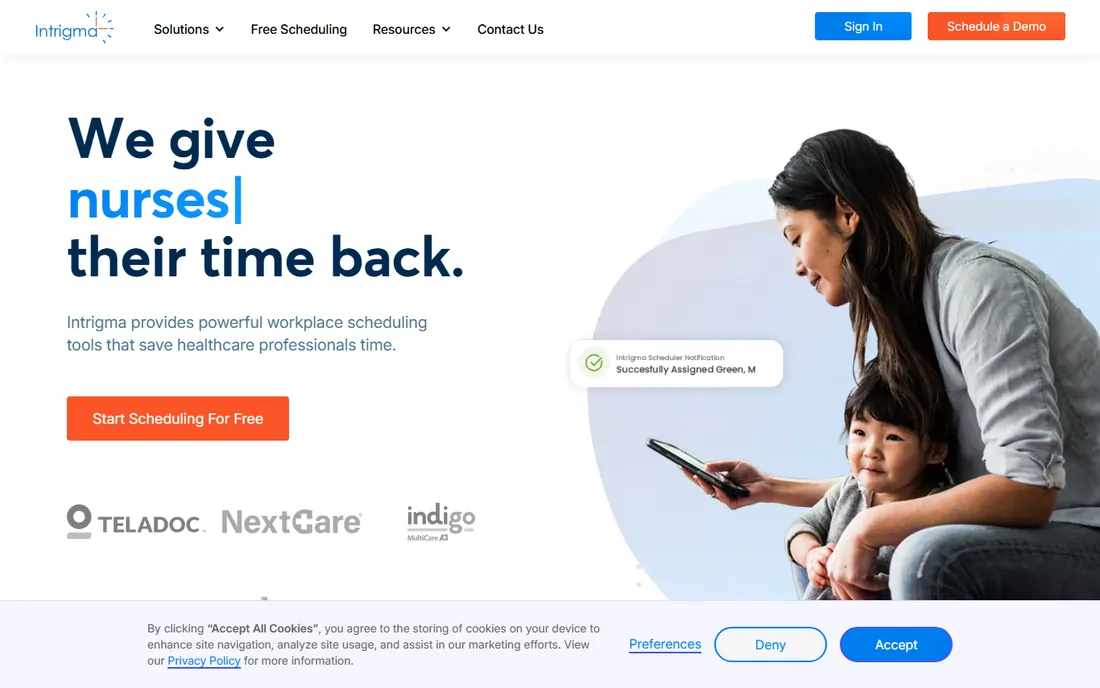
Intrigma specializes in graduate medical education scheduling: resident rotations, duty-hour compliance, and the educational requirements that make residency scheduling uniquely painful. Program coordinators get tools built for their actual workflow rather than adapted from attending scheduling.
The specialization is also the boundary. Attending physician groups need different tools. But residency programs struggling with duty-hour tracking and rotation complexity get purpose-built software instead of spreadsheet heroics. For GME offices, that focus matters more than general scheduling depth.
What we like- Built for GME workflows
- Duty-hour compliance
- Resident-friendly
Watch out for- Niche focus
- Less for attending physicians
Starting priceSee website
Free planFree trial
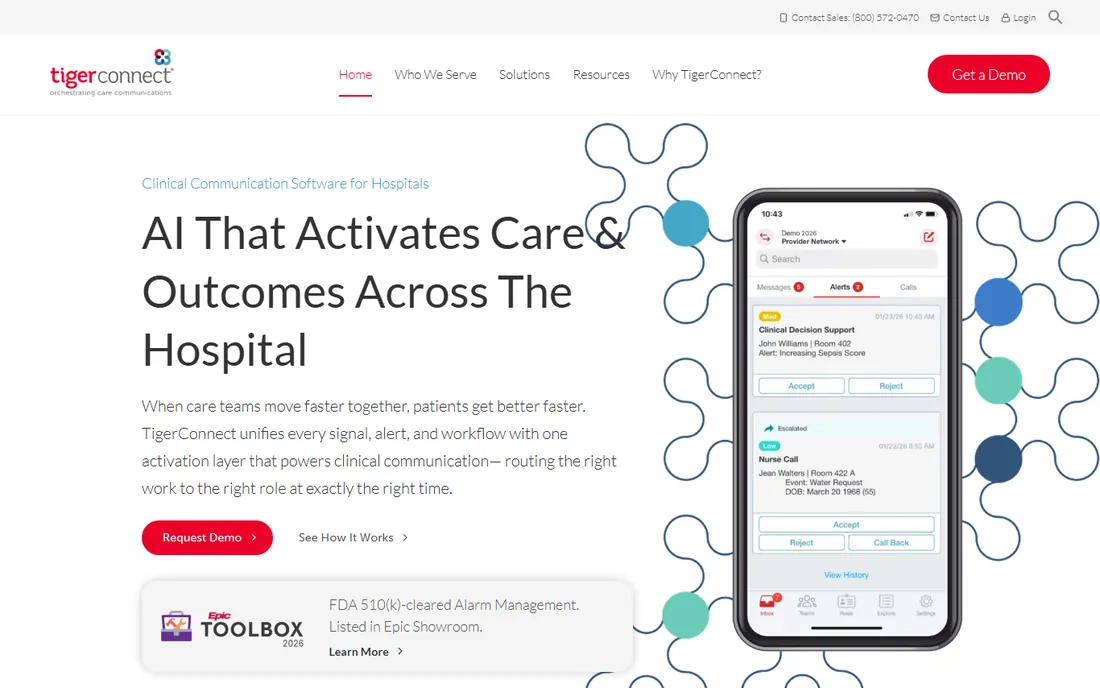
TigerConnect leads with secure clinical communication and adds scheduling to complete the picture. On-call schedules drive message routing: the right physician gets the page automatically based on who is covering. Care teams communicate in a HIPAA-compliant environment tied to the schedule.
Organizations wanting best-of-breed scheduling will find the scheduling features lighter than QGenda's. But the integration value is real: schedules that route communications eliminate the "who's on call" lookup entirely. Hospitals standardizing on TigerConnect for messaging get scheduling as a natural extension.
What we like- Secure clinical messaging
- On-call scheduling integration
- HIPAA-compliant
Watch out for- Scheduling secondary to messaging
- Pricing per user
Starting priceSee website
Free planNo
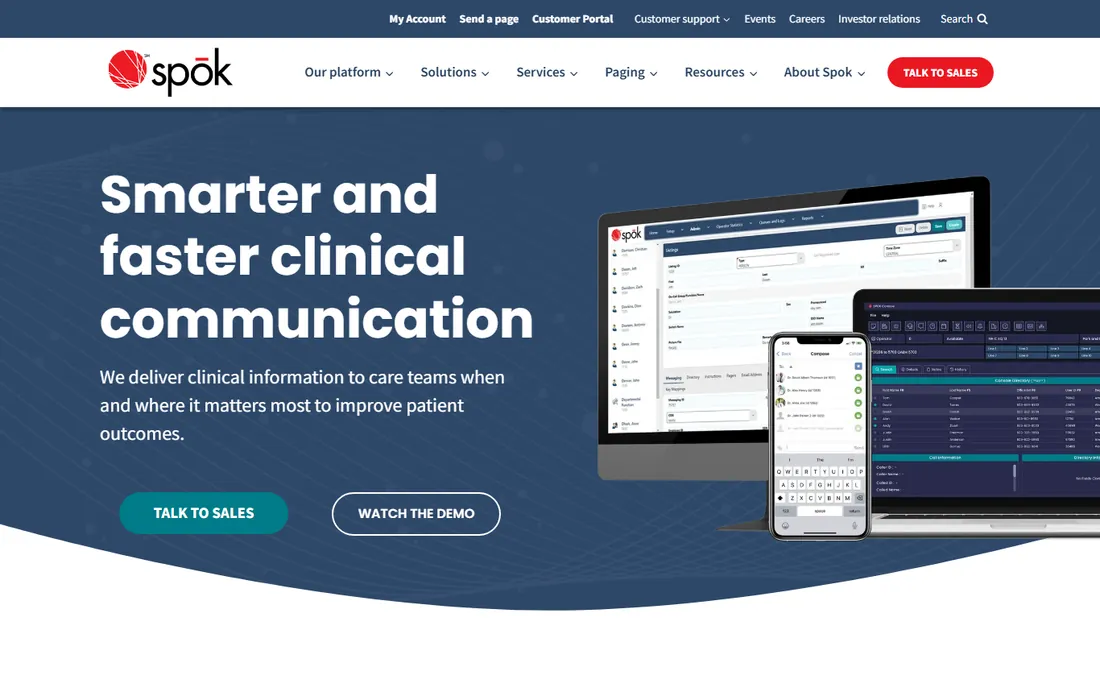
Spok brings decades of clinical communication heritage to on-call scheduling. Its scheduling integrates with paging, secure messaging, and contact center workflows that hospitals have relied on for years. The on-call logic handles the escalations and failovers critical care requires.
The product line carries legacy weight, though modernization continues. But reliability in clinical communication is non-negotiable, and Spok's track record counts. Hospitals with existing Spok infrastructure get scheduling that builds on the communication backbone already in place.
What we like- Deep on-call scheduling
- Paging heritage
- Reliable delivery
Watch out for- Legacy feel
- Modernization ongoing
Starting priceSee website
Free planNo
Symplr approaches scheduling as part of healthcare workforce operations, alongside credentialing, provider data management, and compliance. Organizations already using Symplr for provider management get scheduling that shares the same provider directory and credential data.
Standalone scheduling buyers will find deeper specialists elsewhere. But the platform logic appeals to health systems consolidating vendors: one provider data foundation serving credentialing, scheduling, and compliance together. For systems already in the Symplr ecosystem, the integration argument is strong.
What we like- Broad healthcare operations platform
- Credentialing tie-in
- Enterprise scale
Watch out for- Scheduling one module among many
- Enterprise pricing
What physician scheduling must handle
Medical scheduling has constraints other industries never face. Credential requirements limit who can cover which shifts. Duty-hour rules cap resident hours with legal force. Continuity of care argues against pure shift equity. And last-minute changes need qualified replacements, not just warm bodies.
Evaluate software against your actual constraint set. Academic centers need duty-hour compliance and rotation management. Emergency departments need equity and surge coverage. Small groups need simplicity. The vendors above specialize differently; match the specialty to your pain.
Integration matters more than features
Schedules that do not connect create work. Integration with payroll eliminates manual hour entry. Credentialing integration prevents scheduling unqualified providers. Clinical communication integration routes pages correctly. EHR integration can align staffing with patient volume.
During evaluation, list your integration requirements explicitly and verify each with reference customers, not sales demos. A scheduling tool that stands alone becomes another silo; one that connects becomes infrastructure.
Frequently asked questions
What is the best scheduling software for hospitals?
QGenda leads for enterprise hospital scheduling with the broadest adoption and deepest automation. PerfectServe suits hospitals wanting AI optimization tied to clinical communication. The right choice depends on size, specialties, and existing systems.
How much does physician scheduling software cost?
Small-group tools like Amion cost hundreds to low thousands annually. Mid-market platforms run into the five figures. Enterprise deployments of QGenda or PerfectServe are quote-based and can reach six figures annually for large organizations including implementation.
Can scheduling software handle resident duty hours?
Yes, though specialization helps. Intrigma builds duty-hour compliance into residency scheduling. QGenda and other enterprise platforms include duty-hour tracking. Verify ACGME reporting capabilities specifically if compliance reporting matters to your program.
How do on-call schedules integrate with paging?
Modern platforms route messages based on the live schedule: the covering physician receives pages automatically. TigerConnect, Spok, and PerfectServe all connect scheduling to clinical communication. Verify the integration with your specific paging infrastructure during evaluation.
Should small practices buy enterprise scheduling?
Usually not. Groups under twenty providers do well with Amion or Shift Admin at accessible prices. Enterprise platforms earn their cost through automation at scale; small groups pay for complexity they will not use. Grow into enterprise tools when scheduling consumes real administrative time.
Scheduling fairness and burnout
Bad schedules burn out physicians faster than heavy workloads. Perceived unfairness, not total hours, drives most scheduling complaints: the sense that nights, weekends, and holidays fall unevenly. Transparent rules published to the whole group defuse most conflicts before they start. When everyone sees the equity logic, individual grievances become process discussions.
Honor preferences systematically rather than as favors. Modern scheduling tools weight stated preferences alongside equity rules, which improves satisfaction without sacrificing coverage. Rotate the undesirable shifts explicitly instead of letting them accumulate on the least vocal physicians. And build real recovery into the schedule: post-night shift days off are not generosity but safety policy.
Measure what matters. Track distribution of nights, weekends, and holidays per physician quarterly, and share the results. Groups that audit fairness keep their physicians; groups that schedule by seniority politics or scheduler favoritism lose them. The software provides the data; leadership must act on it.
Swap and time-off workflows that work
Time-off requests are where scheduling goodwill is won or lost. Publish the rules clearly: how far in advance requests are due, how conflicts resolve, blackout dates around holidays. First-come-first-served is simple but rewards planners over everyone; consider rotating priority for peak periods so the same physicians do not always win.
Make swaps self-service within guardrails. Physicians should find their own coverage from qualified colleagues, with the system enforcing credential and hour rules automatically. Manager approval should confirm compliance, not hunt for coverage; the requester's job is finding the swap, the system's job is validating it. Track swap balances to prevent the same physicians always covering: social ledgers of favors given and received keep things fair informally. And handle the holidays explicitly: rotate them years in advance so nobody lobbies annually. Transparent systems beat discretionary ones for the decisions people care about most.
How we chose
We focused on physician-specific scheduling: on-call rotations, credential constraints, and clinical integrations. We verified each vendor's current site, compared automation depth and specialty fit, and weighed adoption across hospitals and practices. We covered enterprise leaders, beloved simple tools, and specialty platforms. No vendor paid for placement, and we did not claim hands-on testing.
How do you schedule across multiple locations?
Multi-site scheduling adds credentialing complexity: not every physician is credentialed at every site, and privileges must be verified before assignment. Centralize the schedule in one system with location-specific rules rather than running separate schedules per site. Build travel time between sites into shift definitions. And designate site leads who understand local quirks while the central scheduler maintains equity across locations. The software must model location constraints explicitly; spreadsheets hide them until they cause compliance problems.
Sources we checked (8)
- https://www.qgenda.com
- https://www.amion.com
- https://www.shiftadmin.com
- https://www.perfectserve.com
- https://www.intrigma.com
- https://www.tigerconnect.com
- https://www.spok.com
- https://www.symplr.com
Is your product missing or out of date?
We review this list regularly. Vendors can request a listing, send updated pricing or ask about featured placement.

Shihab Mia · Founder, Rankite
Shihab has spent more than a decade helping SaaS and e-commerce brands grow through search. He writes Rankite's software buying guides from pricing pages, documentation and public user reviews. More about Shihab.