How we make this list: we compare pricing pages, product documentation and public user reviews. Rankite is independent; if a vendor ever pays for a featured spot, that listing is clearly labeled Partner.
Key takeaways
- Personalization software splits into onsite product recommendations, AI search and discovery, and cross-channel journey orchestration. Know which one you are buying.
- Enterprise retailers with large catalogs shortlist Bloomreach and Dynamic Yield; both are quote-based and need real implementation effort.
- Shopify and mid-market DTC brands get the fastest time to value from Nosto, Rebuy and LimeSpot, which install as apps rather than projects.
- Insider One and Segmentify cover multiple channels (web, email, push, WhatsApp) in one platform for brands replacing several point tools.
- Almost every vendor prices on traffic or GMV, so get your own volume quoted before you compare. Published starting prices are rare in this category.
Quick comparison
| Tool | Best for | Starting price | Free plan |
|---|
 Insider One Insider One | brands orchestrating web, email, SMS, push and WhatsApp together | See website | No |
 Dynamic Yield Dynamic Yield | enterprises running personalization plus experimentation at scale | See website | No |
 Nosto Nosto | mid-market retailers that want personalization live fast | See website | No |
 Bloomreach Bloomreach | large retailers that need AI search plus a customer data platform | See website | No |
 Segmentify Segmentify | retailers wanting real-time onsite personalization with light integration | See website | No |
 Rebuy Rebuy | Shopify stores maximizing cart and checkout revenue | See website | No |
 LimeSpot LimeSpot | small to mid-size Shopify stores that want recommendations today | See website | No |
 Barilliance Barilliance | smaller stores focused on product discovery | See website | No |
Is your product missing or out of date?
We review this list regularly. Vendors can request a listing, send updated pricing or ask about featured placement.
The best personalization software
#1
Insider One
Best for: brands orchestrating web, email, SMS, push and WhatsApp together
Visit insiderone.com
Starting priceSee website
Free planNo
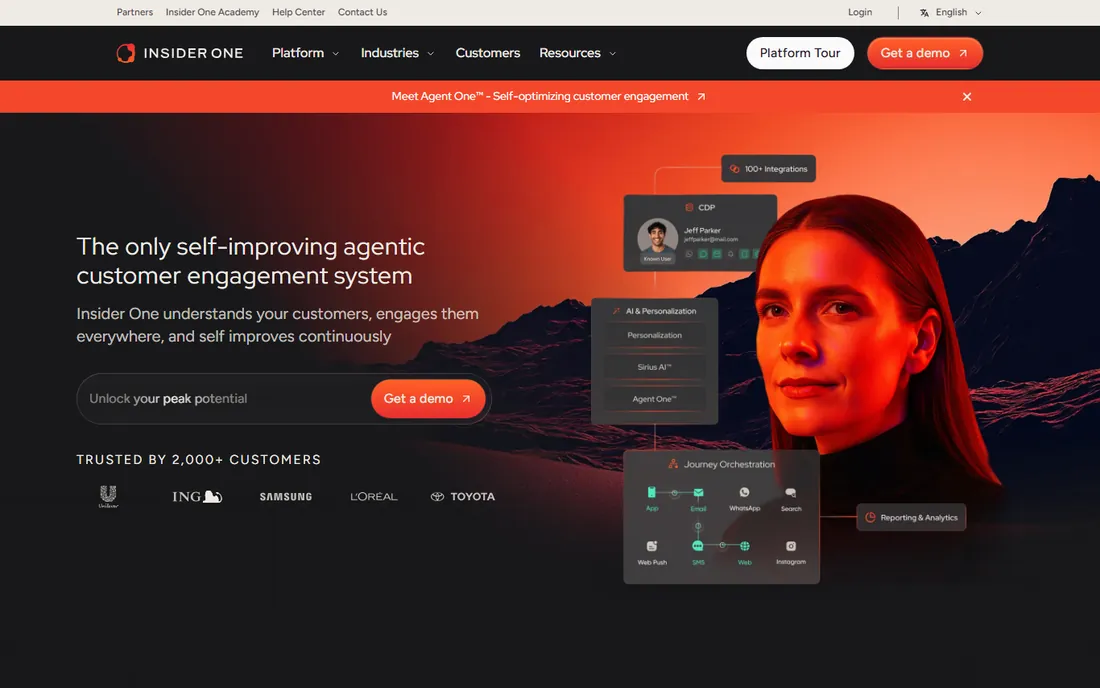
A shopper browses on mobile, abandons the cart, gets an email, ignores it, then buys after a WhatsApp nudge. Insider One exists for that journey. It unifies web, email, SMS, push notifications, WhatsApp and app messaging in one platform with AI that decides which channel and message each customer gets.
The pitch is consolidation: one vendor instead of a personalization tool, an email platform and a push provider. The cost is complexity. Onboarding takes real effort, and pricing is quote-based, reportedly starting in four figures a month. Brands replacing three or four tools at once get the most value.
What we like- True cross-channel orchestration
- Strong AI decisioning
- Consolidates several tools
Watch out for- Quote-only pricing
- Breadth demands real onboarding time
#2
Dynamic Yield
Best for: enterprises running personalization plus experimentation at scale
Visit mastercard.com
Starting priceSee website
Free planNo
Dynamic Yield, now part of Mastercard, is the enterprise workhorse for onsite personalization and testing. Recommendations, content personalization, and A/B and multivariate testing live in one platform, so the team that personalizes is the same team that measures. That combination is why large retailers standardize on it.
It is not a plug-and-play product. Configuration takes weeks, and you need people who can run an experimentation program, not just install a snippet. Pricing is custom and sits in the enterprise tier. Buy it when you have the team to exploit it.
What we like- Deep A/B testing built in
- Strong recommendation engine
- Enterprise-grade targeting
Watch out for- Quote-only pricing
- Needs a technical team to run well
#3
Nosto
Best for: mid-market retailers that want personalization live fast
Visit nosto.com
Starting priceSee website
Free planNo
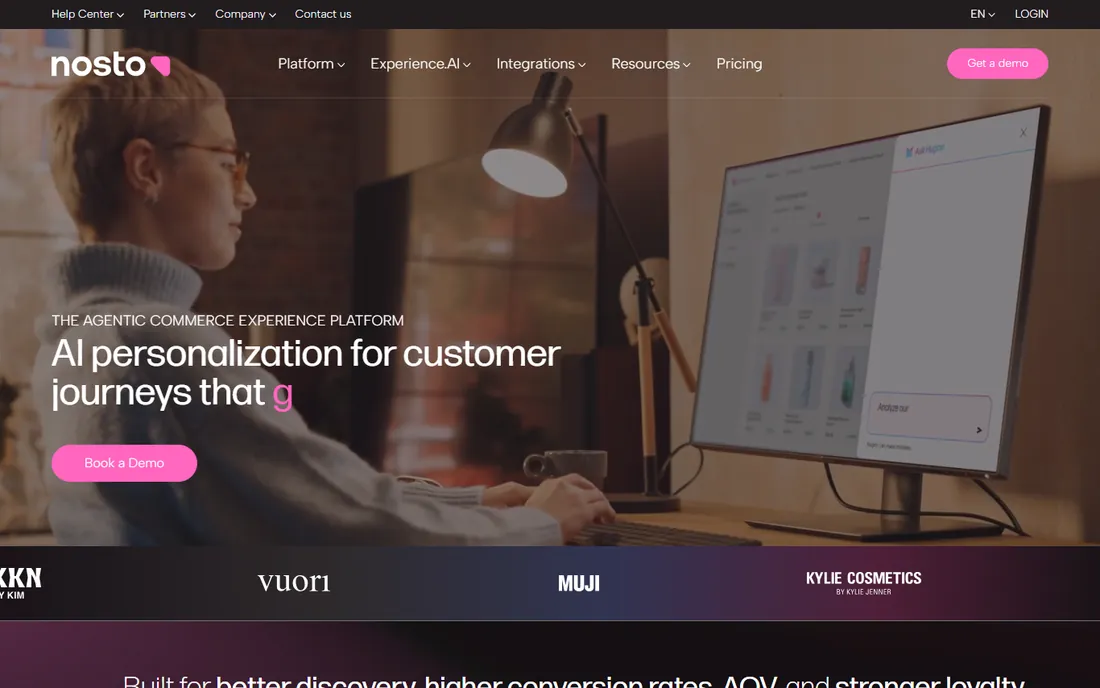
Nosto's advantage is speed. Where enterprise platforms take weeks of configuration, Nosto's snippet-based setup gets recommendations, personalized search and category merchandising running in days. It handles dynamic bundles and user-generated content alongside the core recommendation engine.
Pricing depends on traffic and GMV and is not published. For mid-market and Shopify Plus brands, the combination of fast go-live and merchandising control is the draw. Retailers with hundreds of thousands of SKUs usually graduate to Bloomreach or Algolia for search depth.
What we like- Quick implementation
- Personalized search and merchandising
- Strong Shopify fit
Watch out for- Pricing not published
- Enterprise catalogs may outgrow it
#4
Bloomreach
Best for: large retailers that need AI search plus a customer data platform
Visit bloomreach.com
Starting priceSee website
Free planNo
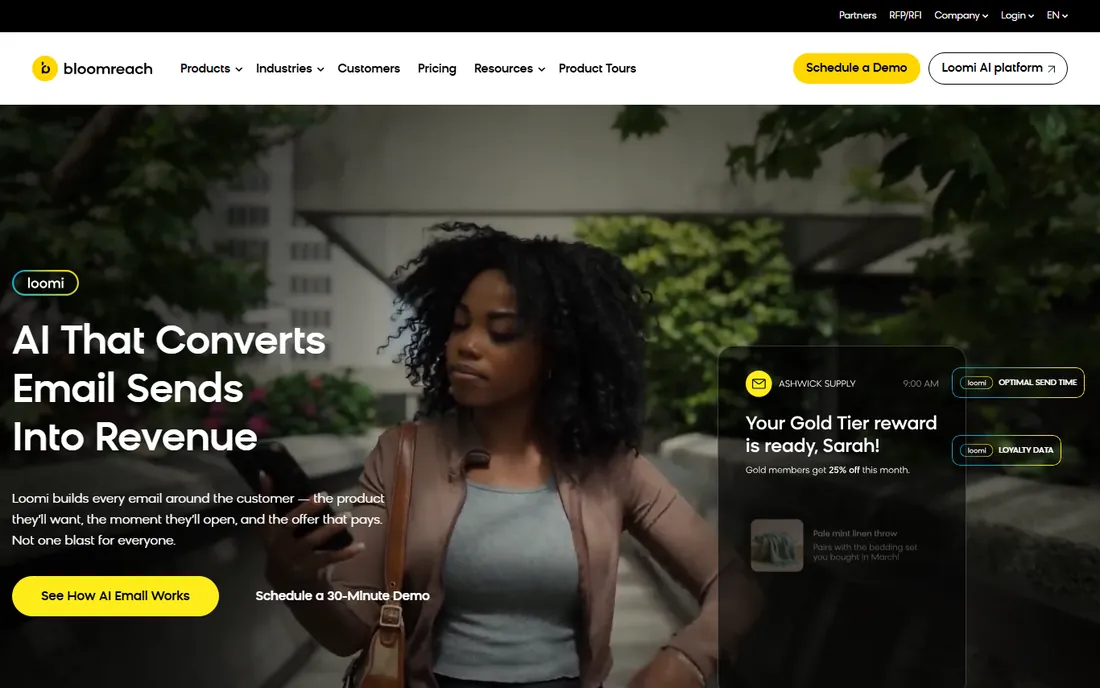
Bloomreach combines three products that most vendors sell separately: AI-powered search and merchandising, a customer data platform, and engagement tools for email and SMS. The Loomi AI search understands natural language queries and terms that do not appear in product descriptions, plus image search for visual discovery.
This is enterprise software with enterprise pricing, commonly reported in the tens of thousands per year, and implementation is a project. It earns that price on large, complex catalogs where search quality directly moves revenue. Small catalogs should look at Nosto or Klevu instead.
What we like- Loomi AI search understands natural language
- CDP unifies customer data
- Strong for huge catalogs
Watch out for- Enterprise pricing and implementation
- Overkill for small catalogs
#5
Segmentify
Best for: retailers wanting real-time onsite personalization with light integration
Visit segmentify.com
Starting priceSee website
Free planNo
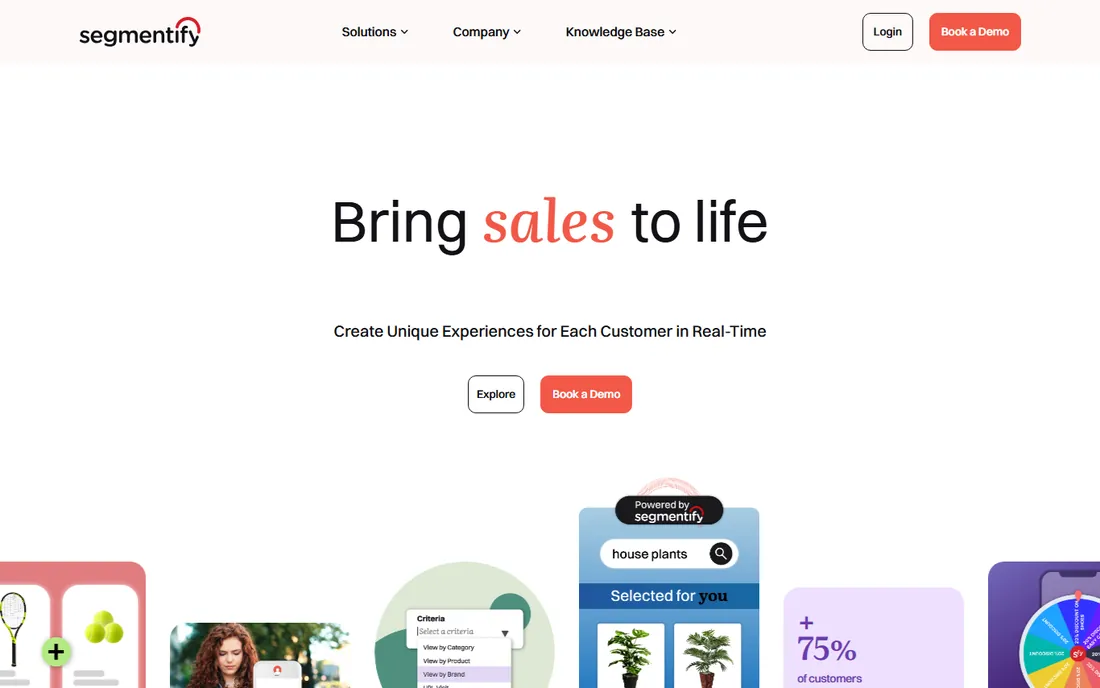
Segmentify's selling point is how fast it goes live. A two-line JavaScript snippet connects recommendations, search and discovery, and cross-channel messaging (email, push, ads) without a development project. The platform reacts to shopper behavior in real time, adjusting recommendations as the session unfolds.
Pricing is quote-based. It positions as the all-in-one alternative for retailers that find Bloomreach too heavy and point tools too narrow. The smaller brand footprint means fewer third-party reviews, so run a real proof of concept on your own catalog before committing.
What we like- Two-line JavaScript integration
- Real-time recommendations
- Covers search and messaging too
Watch out for- Pricing not published
- Smaller brand presence than the giants
Starting priceSee website
Free planNo
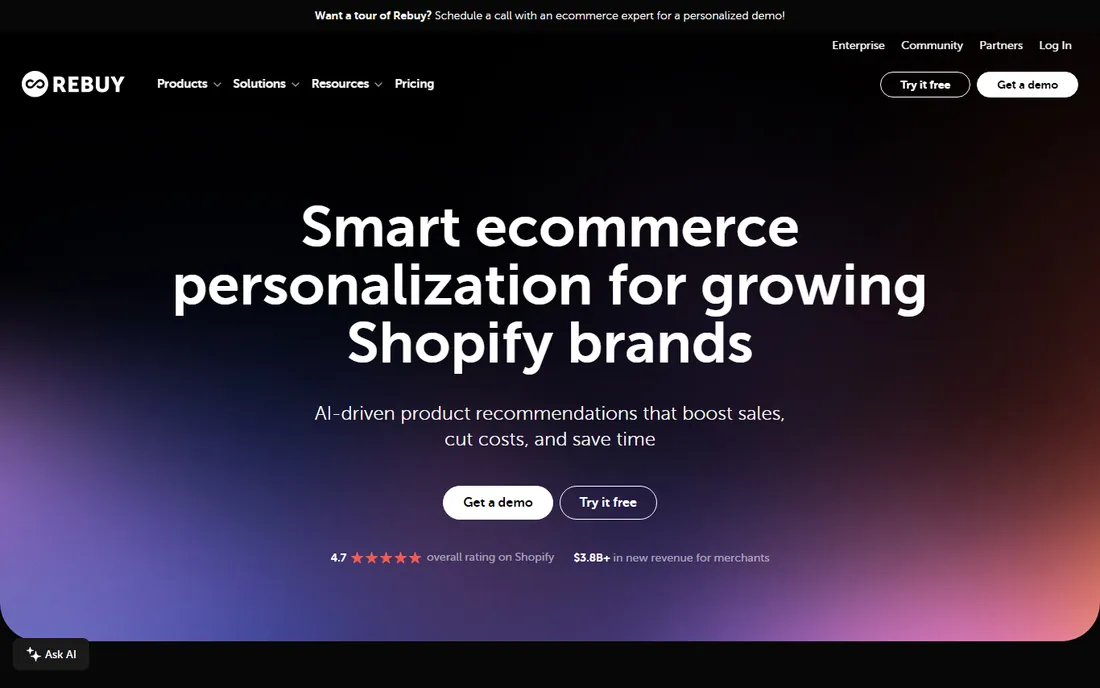
Rebuy does one job extremely well: increasing order value on Shopify. Smart cart drawers, checkout upsells, and post-purchase offers use purchase history and behavior to suggest the right add-on at the right moment. For a DTC brand, this is often the highest-ROI personalization spend available.
It is not a site-wide personalization platform. Product recommendations on category pages and personalized search are outside its focus. Pricing is not published. If your problem is average order value on Shopify, start here. If your problem is discovery across a large catalog, look elsewhere.
What we like- Smart cart and checkout upsells
- Post-purchase offers
- Built for Shopify
Watch out for- Shopify-centric
- Not a full-site personalization platform
#7
LimeSpot
Best for: small to mid-size Shopify stores that want recommendations today
Visit limespot.com
Starting priceSee website
Free planNo
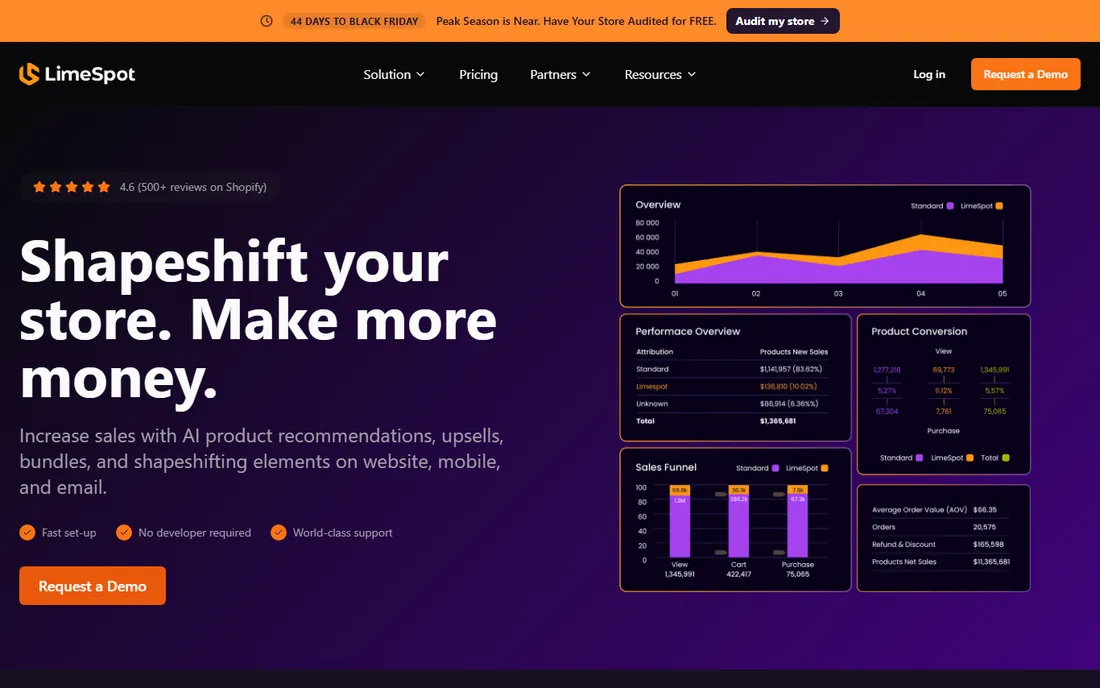
LimeSpot is the quick win for smaller Shopify stores. It installs as an app, adds personalized product recommendations onsite, and extends into email and SMS without a separate integration project. The entry price is the lowest among serious options in this category.
Depth is the tradeoff. Merchandising control, search quality and experimentation cannot match the enterprise tools. But for a store doing its first personalization investment, LimeSpot delivers visible results without a consultant. Pricing starts low and scales with usage.
What we like- Installs as a Shopify app
- Covers onsite, email and SMS
- Affordable entry point
Watch out for- Less depth than enterprise platforms
- Shopify-focused
Starting priceSee website
Free planNo
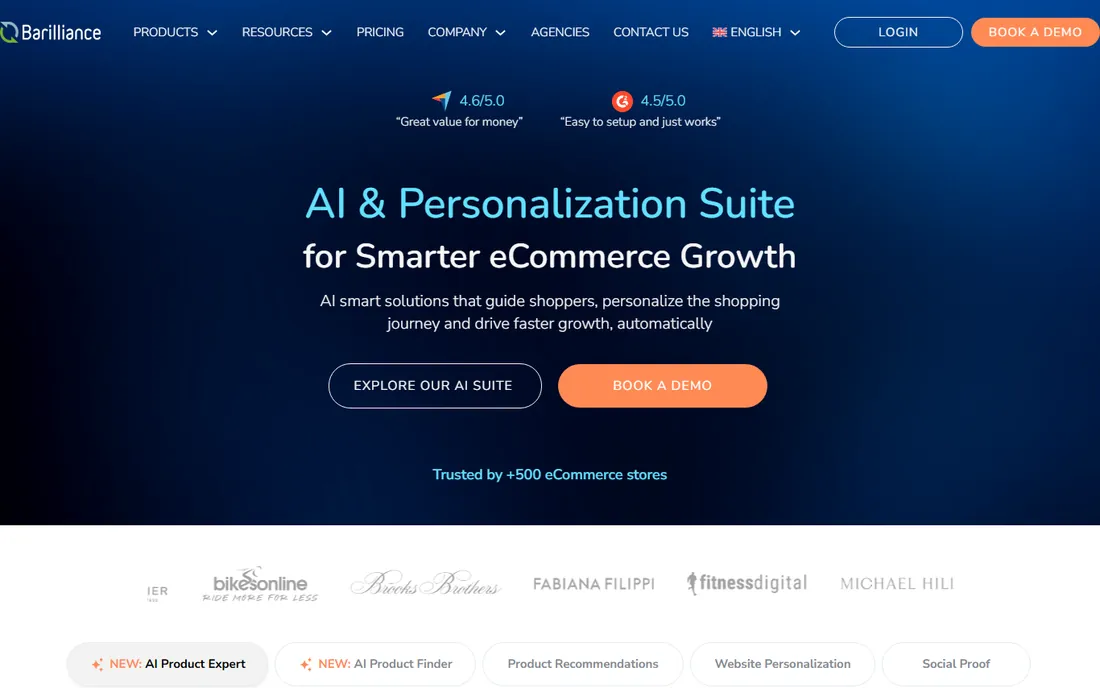
Barilliance targets smaller retailers with a modular approach: buy the recommendation tool, the email personalization tool, or the cart abandonment tool separately. That keeps the entry cost down for stores that only need one capability. Product discovery widgets and triggered emails cover the basics well.
It lacks the AI depth and cross-channel orchestration of the bigger platforms, and the smaller user base means less community knowledge. Pricing is per tool per month. For a small store that wants recommendations without an enterprise contract, it is a pragmatic pick.
What we like- Recommendations plus email personalization
- Cart abandonment tools
- Per-tool pricing
Watch out for- Interface and feature depth trail the leaders
- Smaller ecosystem
Start with catalog size. Hundreds of thousands of SKUs demand search and merchandising depth, which points to Bloomreach or Algolia-class tools. A few hundred products get more value from recommendations and upsells, which points to Nosto, Rebuy or LimeSpot.
Second, map your traffic sources. Email-led brands benefit most from adding an onsite layer that continues the email conversation. Search-led brands need search quality first. Paid-traffic brands need landing and product pages that convert expensive clicks, which argues for testing plus personalization together.
Third, be honest about team bandwidth. Recommendations, segmentation and AI merchandising all underperform if nobody operates them weekly. A powerful platform run on autopilot loses to a simpler tool that someone actually manages. The best decision is the platform your team can run, not the one with the longest feature list.
Fourth, run a proof of concept on your own catalog and traffic. Generic demos hide integration gaps and data quality problems. A two-week trial with real products exposes what the sales deck does not.
Where personalization usually fails
The most common failure is not the software. It is the operating model. A retailer buys an enterprise platform, installs the snippet, and nobody looks at the merchandising rules for six months. Recommendations go stale, segments drift, and the tool gets blamed for what is really neglect.
The fix is unglamorous: assign an owner, review performance weekly, and treat the first ninety days as a tuning period rather than a finished project. The second most common failure is buying before the traffic exists. Personalization learns from visitor behavior, and a store with a few hundred sessions a day does not generate enough signal for AI models to work with. At low volume, simple rule-based recommendations outperform machine learning every time. Buy the sophistication your traffic can actually feed.
How we chose
We selected personalization platforms that exist today and serve distinct jobs: onsite recommendations, AI search, and cross-channel orchestration. Pricing facts come from vendor pages and documentation checked in October 2026. Most vendors in this category do not publish prices, so those are listed as See website rather than invented. Confirm live pricing with each vendor.
The data prerequisite nobody mentions
Personalization runs on customer data, and most stores underestimate how much cleanup that takes. Product feeds need consistent titles, images and attributes. Event tracking needs to fire correctly on every page. Without that foundation, even the best recommendation engine serves generic results.
Before you buy, audit your feed and tracking. Several vendors will do this during a proof of concept. If your catalog data is messy, budget time to fix it, because no algorithm personalizes well on bad data. The stores that win with personalization are the ones that treat data quality as part of the project.
Frequently asked questions
What is personalization software?
Software that tailors the shopping experience to each visitor: product recommendations, personalized search results, targeted content, and cross-channel messages based on behavior and purchase history. It spans onsite tools, email platforms and full journey orchestration suites.
How much does personalization software cost?
It varies enormously. Small Shopify apps start at tens of dollars a month. Mid-market platforms price on traffic or GMV, usually by quote. Enterprise platforms like Dynamic Yield and Bloomreach run into five or six figures a year. Get your own volume quoted.
Is personalization software worth it for small stores?
Often yes, at the low end. Tools like LimeSpot and Rebuy install quickly and lift conversion and average order value measurably. The ROI case weakens for enterprise platforms at small scale, where the implementation cost dwarfs the revenue gain.
What is the difference between recommendations and personalization?
Recommendations suggest products ("customers also bought"). Personalization is broader: tailored search results, content, pricing displays, and messages across channels. Most platforms bundle both, but their strengths differ, so check which job the vendor does best.
Do I need a CDP for personalization?
Not always. Onsite recommendation tools work from behavioral data alone. A customer data platform matters when you want consistent personalization across web, email, SMS and ads from one profile. Bloomreach and Insider One bundle CDP capabilities; point tools do not.
How long does implementation take?
Snippet-based tools like Segmentify, Nosto and LimeSpot go live in days. Enterprise platforms like Bloomreach and Dynamic Yield typically need weeks of configuration and integration. Factor your team's availability into the timeline, not just the vendor's estimate.
Sources we checked (6)
- https://tekpon.com/insights/sales-cs/e-commerce/best-ecommerce-personalization-software/
- https://www.moengage.com/blog/ecommerce-personalization-software/
- https://www.omnisend.com/blog/best-ecommerce-personalization-software/
- https://www.getresponse.com/blog/best-ecommerce-personalization-tools
- https://learn.g2.com/best-e-commerce-personalization-software
- https://algonomy.com/blogs/top-ecommerce-personalization-software/
Is your product missing or out of date?
We review this list regularly. Vendors can request a listing, send updated pricing or ask about featured placement.

Shihab Mia · Founder, Rankite
Shihab has spent more than a decade helping SaaS and e-commerce brands grow through search. He writes Rankite's software buying guides from pricing pages, documentation and public user reviews. More about Shihab.