How we make this list: we compare pricing pages, product documentation and public user reviews. Rankite is independent; if a vendor ever pays for a featured spot, that listing is clearly labeled Partner.
Key takeaways
- Once you pass 50 employees, payroll stops being a side task and becomes a system: mid-market leaders like ADP Workforce Now, Paylocity and Paycor sell payroll inside a full HR suite.
- Almost every mid-market vendor prices by custom quote, so your shortlist should be decided on features and contract terms, not on the first price you see.
- Rippling is the outlier with published pricing ($8 per user per month plus a $40 base fee, payroll from $35 per month plus $12 per employee), which makes it the easiest to budget before you call sales.
- Dayforce, UKG Ready and Namely suit companies that want HR, time tracking and payroll on one record; BambooHR and Paychex Flex suit companies that want the vendor to handle more of the process.
Quick comparison
| Tool | Best for | Starting price | Free plan |
|---|
 ADP Workforce Now ADP Workforce Now | Midsize companies that want a vendor they cannot outgrow | See website (all plans custom-quoted) | No |
 Paychex Flex Paychex Flex | Midsize companies that want a dedicated payroll specialist | See website (custom quote only) | No |
 Paylocity Paylocity | Midsize firms that care about employee experience and engagement | See website (custom quote, modular per-employee pricing) | No |
 Paycor Paycor | HR-led midsize companies hiring and onboarding at volume | See website (custom quote) | No |
 UKG Ready UKG Ready | Hourly-workforce midsize businesses with complex scheduling | See website (custom quote) | No |
 Dayforce Dayforce | Companies that want one continuous payroll and HR record | See website (custom quote) | No |
 Rippling Rippling | Growing companies that want published pricing and one employee record | $8 per user per month plus $40/month base (platform); payroll from $35/month plus $12/employee | No |
 Namely Namely | Midsize companies that want HR, payroll and benefits in one place | See website (custom quote) | No |
 BambooHR BambooHR | Growing companies whose HR team wants simplicity first | See website (custom quote; payroll sold as an add-on) | No |
Is your product missing or out of date?
We review this list regularly. Vendors can request a listing, send updated pricing or ask about featured placement.
The best payroll software for midsize business
Small-business payroll tools assume payroll is a task you finish on Friday. At 50 to 500 employees, it is a system that touches HR, time tracking, benefits, onboarding and compliance at once. The tools below are built for that reality: payroll inside a wider HR platform, multi-state tax handling as standard, and enough reporting to keep a CFO comfortable.
#1
ADP Workforce Now
Best for: Midsize companies that want a vendor they cannot outgrow
Visit adp.com
Starting priceSee website (all plans custom-quoted)
Free planNo
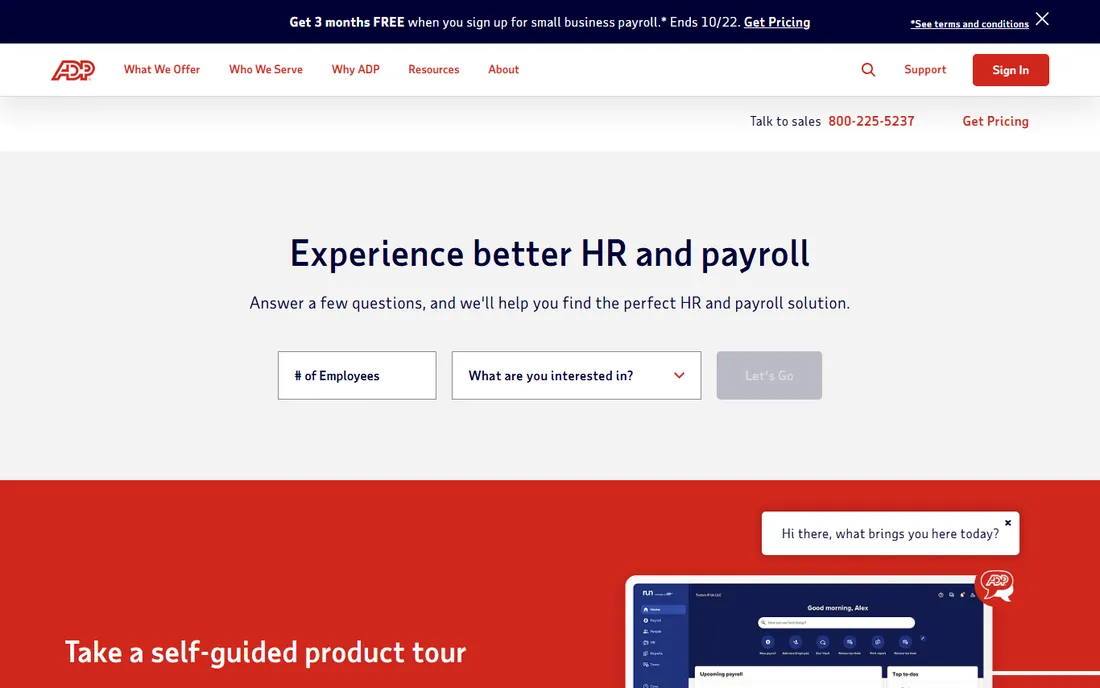
ADP Workforce Now is the safe enterprise-grade pick for companies with 50 to 999 employees. The core payroll engine handles multi-state tax filing, garnishments, multi-EIN setups and international payroll in 140-plus countries. Because ADP also sells TotalSource (PEO) and Vantage HCM, you never outgrow the vendor the way you might outgrow a small-business tool.
The commercial experience is the weak point. ADP publishes nothing, so every number you see online is an estimate and every buyer works through a sales rep. Reviewers consistently report implementation fees, year-end fees and add-on module charges that arrive after the headline quote. Demand the full fee schedule, the contract length and the termination terms in writing before you compare it to anything else.
What we like- Deepest compliance bench in the category with a tax penalty guarantee
- Hundreds of integrations and a clear upgrade path to enterprise ADP products
- HR, benefits, talent and time modules on the same record
Watch out for- No published pricing at any tier
- Implementation and add-on fees are a recurring complaint in reviews
#2
Paychex Flex
Best for: Midsize companies that want a dedicated payroll specialist
Visit paychex.com
Starting priceSee website (custom quote only)
Free planNo
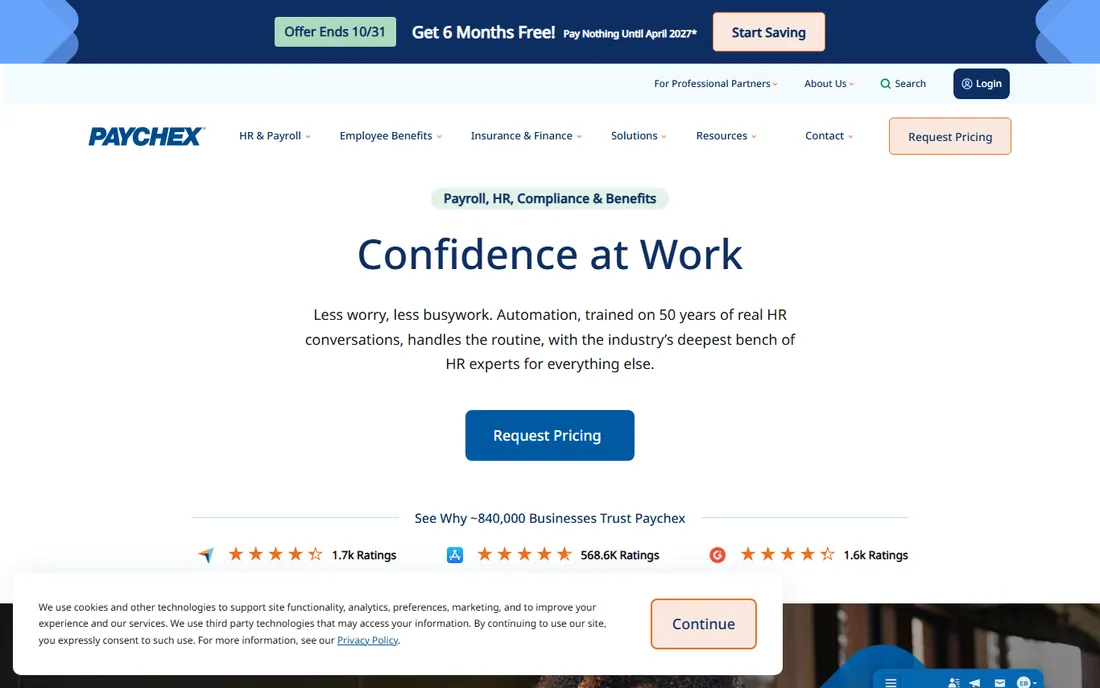
Paychex Flex sells the human touch at mid-market scale. You get a named payroll specialist rather than a rotating support queue, which matters when payroll errors affect hundreds of paychecks. The platform bundles payroll with HR, benefits administration, retirement and insurance, plus a PEO option for companies that want to hand off employer liability.
The pricing reality is rougher. Paychex publishes no prices, and reviews mention implementation fees, year-end fees and add-ons billed separately from the base subscription. Contracts can carry early termination fees. Get the complete fee list in writing, including what counts as an add-on module, before you sign.
What we like- A dedicated payroll specialist assigned to your account, the differentiator reviewers cite most
- All-in-one HR scope including benefits, retirement, insurance and a PEO option
- Strong multi-state compliance handling
Watch out for- No published pricing
- Reviewers report setup fees, year-end fees and separately billed add-ons
#3
Paylocity
Best for: Midsize firms that care about employee experience and engagement
Visit paylocity.com
Starting priceSee website (custom quote, modular per-employee pricing)
Free planNo
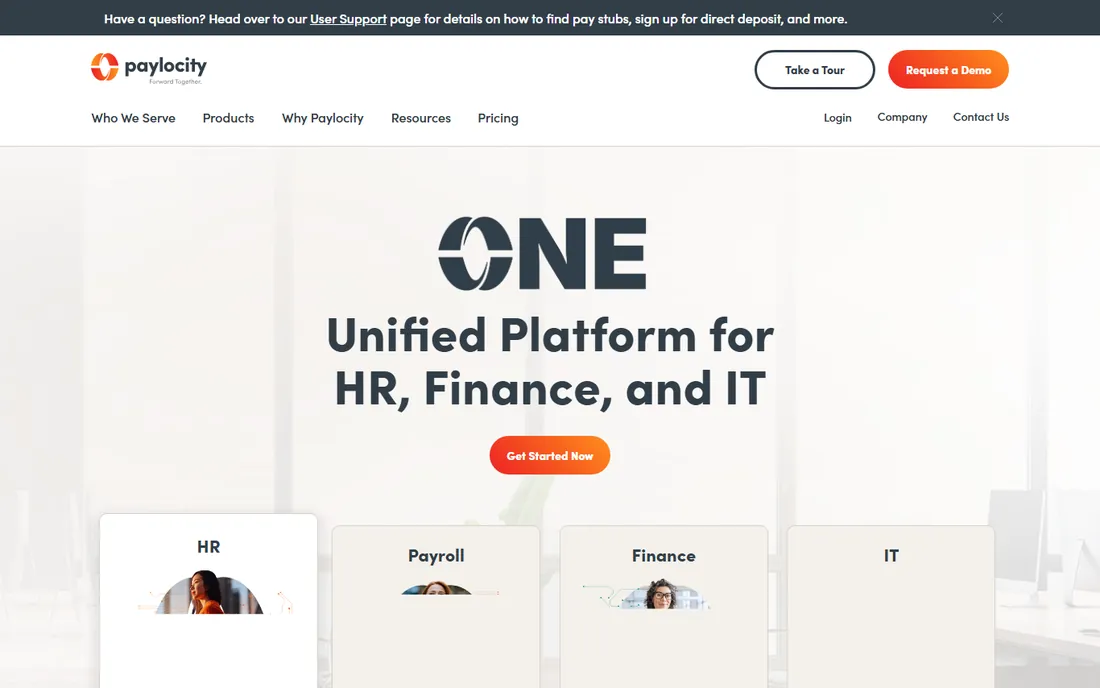
Paylocity differentiates on the employee side of the platform. Where most payroll vendors treat self-service as a checkbox, Paylocity's portal, mobile app and engagement tools (recognition, pulse surveys, community feeds) are genuinely central to the product. Payroll itself covers automated tax filing, multi-state compliance, garnishments and multiple pay rates, with time and labor modules attached.
The catch is the sales process. Pricing is modular and custom-quoted, so you will sit through discovery before you know the number. Midsize buyers report totals that vary widely with module selection. The product is strongest when you buy into the whole engagement story; if you only want payroll, simpler vendors cost less effort.
What we like- Modern self-service portal and mobile app that employees actually use
- Engagement tools like recognition, surveys and community built in
- Strong recruiting and onboarding modules alongside payroll
Watch out for- Everything is custom-quoted, so budgeting takes a sales cycle
- Some reviewers note support quality varies by account size
#4
Paycor
Best for: HR-led midsize companies hiring and onboarding at volume
Visit paycor.com
Starting priceSee website (custom quote)
Free planNo
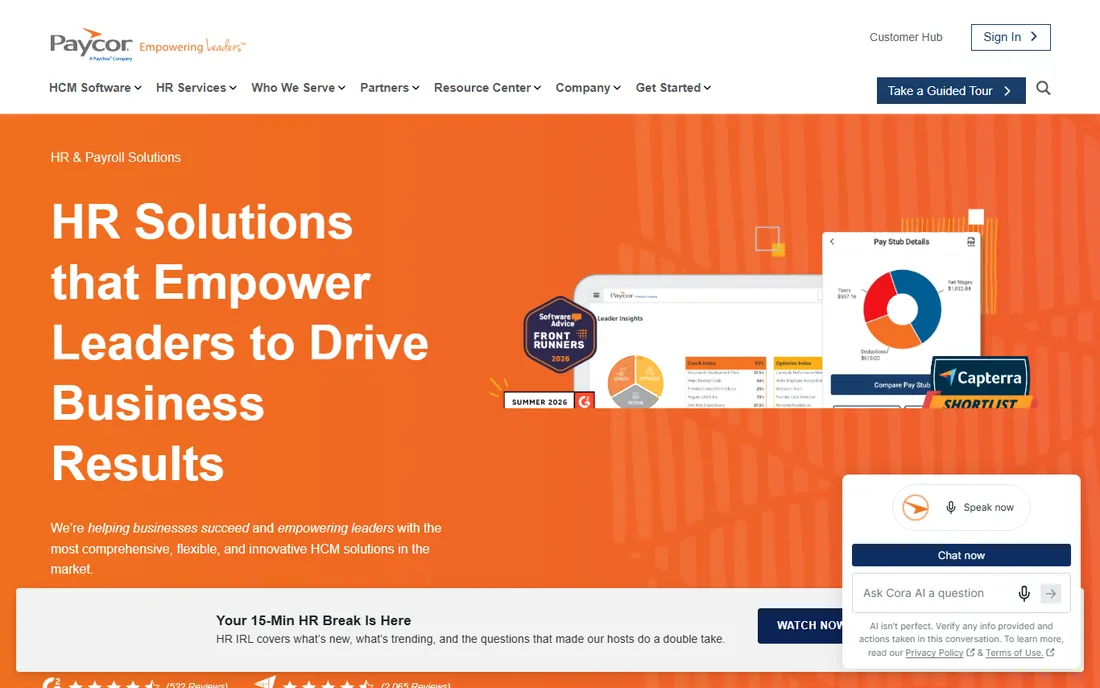
Paycor positions itself as an HR platform that does payroll, not the other way around. Recruiting, applicant tracking, onboarding, benefits and payroll share one flow, which suits companies where HR owns the process and hires steadily. Payroll includes automated tax filing and payment, multi-state support and compliance updates, with tax penalty protection behind its full-service configuration.
Buyers should plan for a real implementation. Paycor is custom-quoted and implementations run through professional services; reviews are mixed on migration timelines and data quality. It is a strong fit for HR-led organizations that will use the recruiting and analytics depth; it is overkill if payroll is all you need.
What we like- Recruiting, onboarding and payroll on one flow that HR teams run end to end
- Strong tax filing with penalty protection on full-service setups
- Analytics and reporting aimed at HR leaders
Watch out for- No published pricing
- Implementation timelines and data migration get mixed reviews
#5
UKG Ready
Best for: Hourly-workforce midsize businesses with complex scheduling
Visit ukg.com
Starting priceSee website (custom quote)
Free planNo
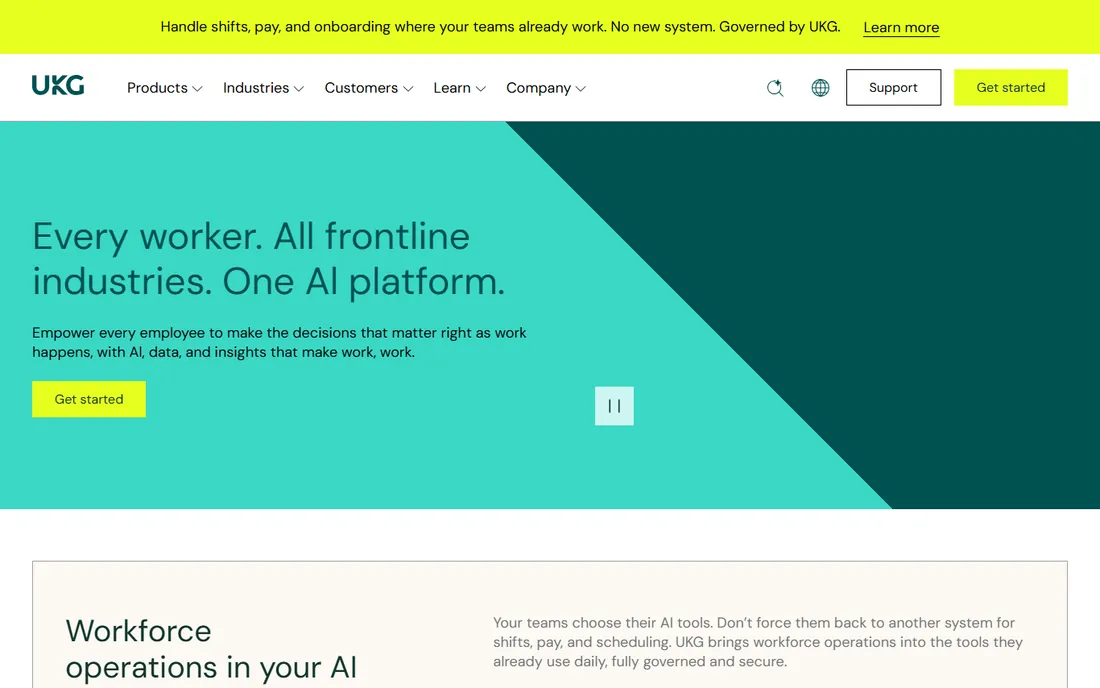
UKG Ready (formerly Kronos) is built for businesses where the hard part is the schedule, not the paycheck. Retail, hospitality, healthcare and manufacturing companies with shift workers, overtime rules, meal-break compliance and multi-location scheduling get timekeeping, scheduling and payroll on one platform. Tax filing is full-service with multi-state coverage.
The trade-off is complexity. This is a deep platform with a longer learning curve and a real implementation project; it is not a self-serve signup. Pricing is entirely custom. For office-only teams it is more than you need, but for hourly workforces with compliance-sensitive scheduling it is one of the most capable options on the list.
What we like- Timekeeping and scheduling depth built for shift-based workforces
- Payroll, HR and time on one platform with strong compliance tooling
- Mobile experience rated well for frontline employees
Watch out for- Custom pricing only
- The platform's depth means longer onboarding and training
#6
Dayforce
Best for: Companies that want one continuous payroll and HR record
Visit dayforce.com
Starting priceSee website (custom quote)
Free planNo
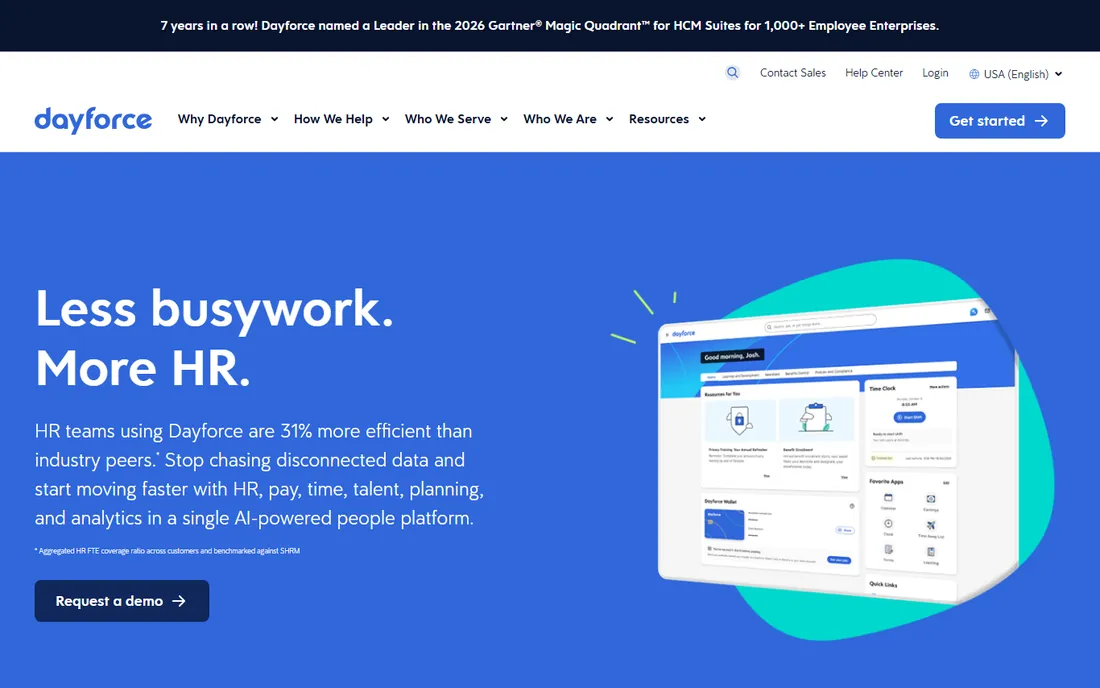
Dayforce's pitch is architectural: one database for HR, payroll, time, benefits and talent, so a change to a timesheet or a benefits election recalculates pay immediately. No syncs between modules, no batch jobs, no reconciliation between payroll and HR records. The product also carries one of the strongest global payroll footprints in the category.
The cost of that architecture is scale. Dayforce sells and prices like an enterprise platform, with implementation projects and custom quotes. Companies under 100 employees often find it oversized. But for midsize businesses with complex pay rules, multiple entities or global ambitions, the single-record design is a genuine advantage.
What we like- Single-database design means pay, time and HR changes apply immediately with no batch syncs
- Continuous payroll calculation shows real-time pay impacts
- Strong global payroll and compliance coverage
Watch out for- Enterprise-scale pricing and implementation
- Smaller midsize buyers report it can feel oversized
#7
Rippling
Best for: Growing companies that want published pricing and one employee record
Visit rippling.com
Starting price$8 per user per month plus $40/month base (platform); payroll from $35/month plus $12/employee
Free planNo
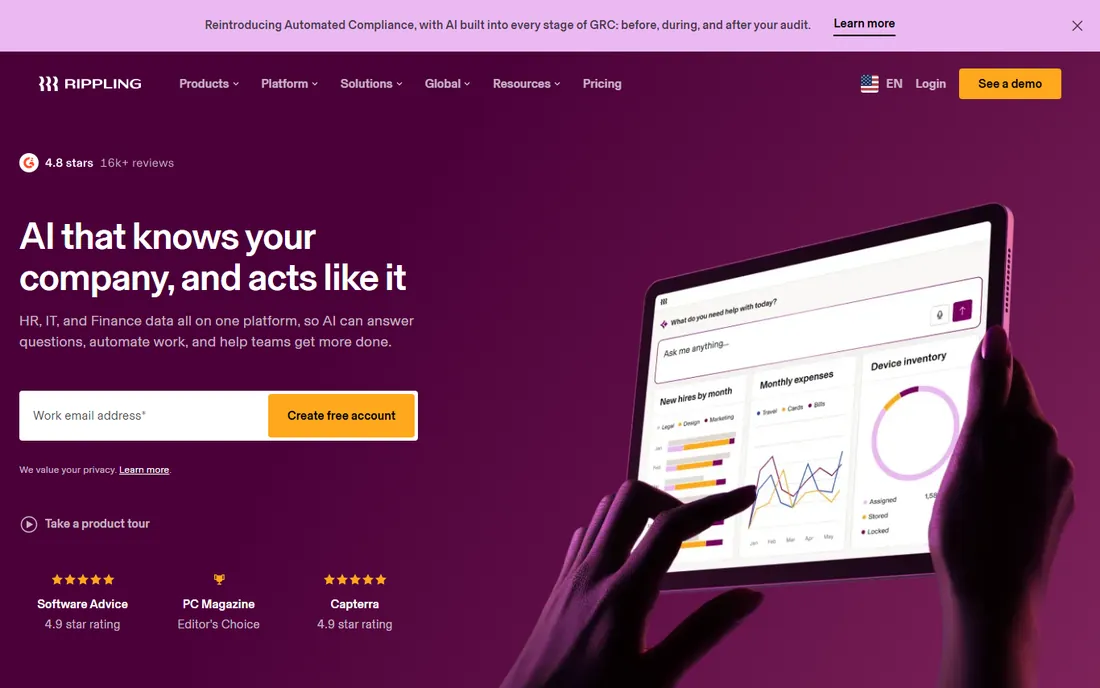
Rippling is the only mid-market vendor here that tells you a price before you talk to sales. The platform starts at $8 per user per month plus a $40 monthly base fee, and payroll starts at $35 per month plus $12 per employee. The product story is the single source of truth: a raise, a termination or a benefits change flows through HR, payroll, IT provisioning and spend automatically.
The honest math is that modules stack. A 100-employee company pays the platform fee, the payroll fee and anything else it adds, so the published numbers are a starting point, not a total. Full configurations still go through sales. But for teams that want to shortlist on price without a discovery call, Rippling is the easiest vendor in this category to evaluate.
What we like- Transparent starting prices published on its own site, rare in this category
- One employee record drives HR, payroll, IT and spend automatically
- Global payroll and contractor payments built in
Watch out for- Modular pricing stacks fast with each added module
- Full configurations still require a sales quote
#8
Namely
Best for: Midsize companies that want HR, payroll and benefits in one place
Visit namely.com
Starting priceSee website (custom quote)
Free planNo
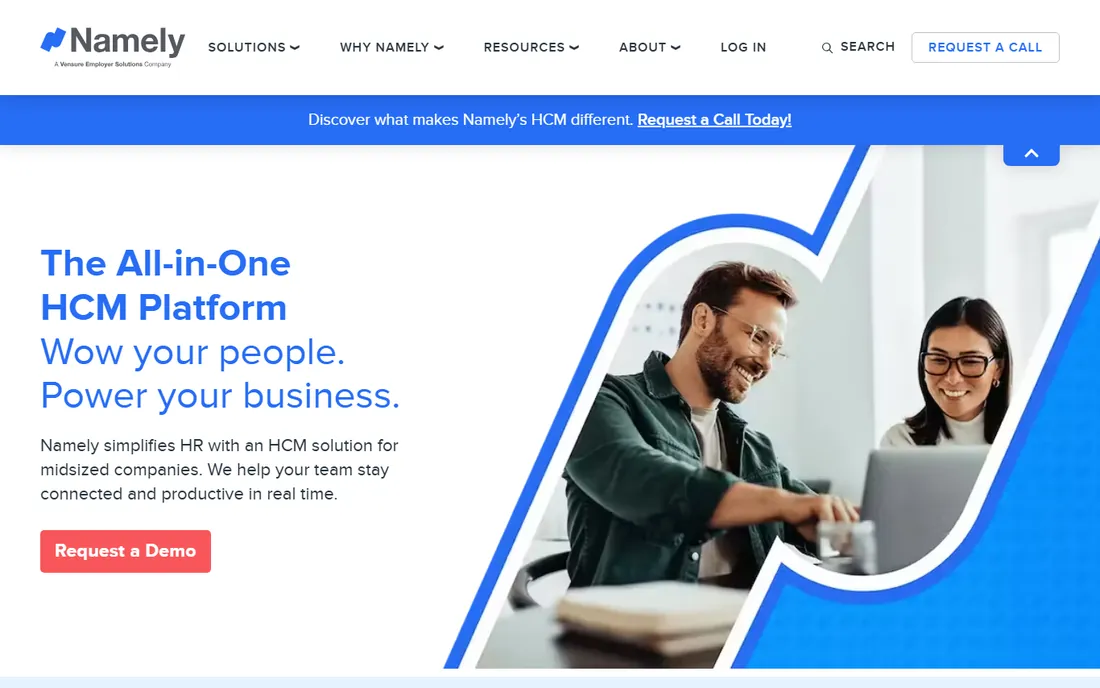
Namely targets the classic midsize profile: 50 to 1,000 employees, a small HR team, and no patience for stitching tools together. Payroll includes automated tax filing across all 50 states, and the platform adds HR, time tracking, benefits administration and performance management. Compliance resources and HR advisory services come with higher tiers.
The platform is less deep than ADP or UKG on reporting and integrations, which matters if your finance team lives in custom reports. Pricing is entirely custom. For HR-led teams that want one vendor and a manageable implementation, Namely is a solid shortlist candidate.
What we like- All-in-one platform covering payroll, HR, time, benefits and talent
- Compliance support and HR advisory services available
- Clean interface that midsize HR teams adopt quickly
Watch out for- Custom quotes only
- Some reviewers note limitations in advanced reporting and integrations
#9
BambooHR
Best for: Growing companies whose HR team wants simplicity first
Visit bamboohr.com
Starting priceSee website (custom quote; payroll sold as an add-on)
Free planNo
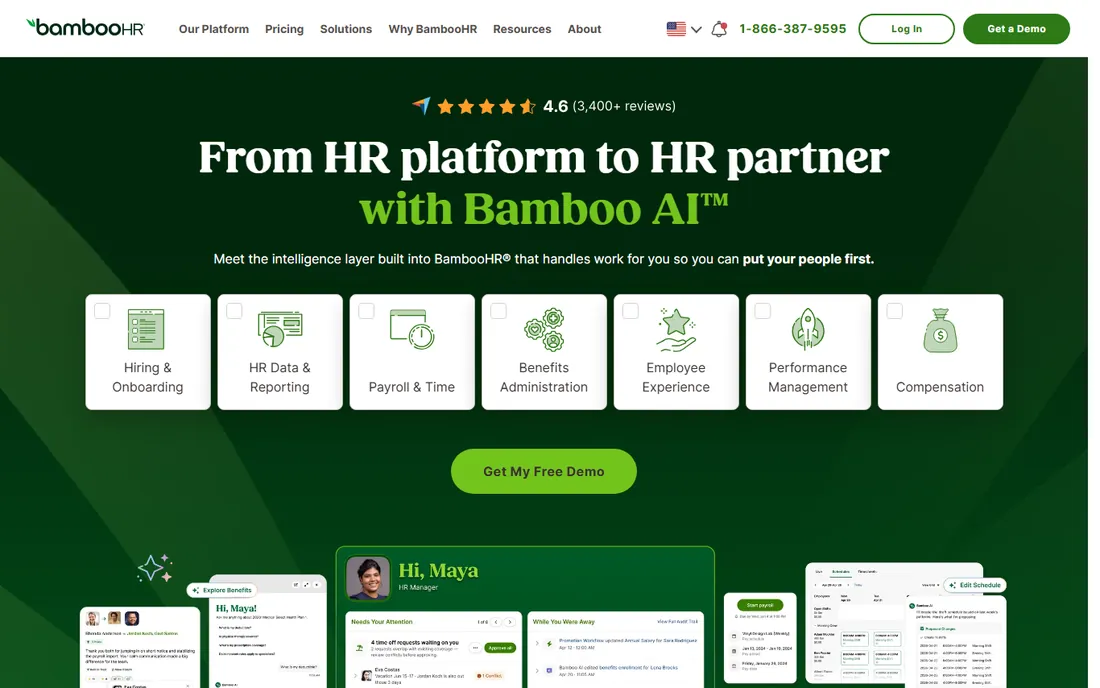
BambooHR is the friendliest platform here, built for companies whose HR team is one or two people. The core product is HR (onboarding, time off, performance), and payroll is an add-on with automated tax filing, multi-state support and direct deposit. The interface is the easiest in this set for non-specialists, and implementation is lighter than the enterprise options.
The limitation is depth. Payroll is not BambooHR's center of gravity, so companies with complex pay rules, unions or multi-entity structures will find ADP, UKG or Dayforce more capable. Pricing is custom-quoted. It fits growing companies that want HR done well and payroll handled, not payroll nerds.
What we like- The easiest HR platform in this set for non-specialists to run
- Payroll add-on with automated tax filing integrates natively
- Strong onboarding and performance tools for the price
Watch out for- Payroll is an add-on, not the core product
- Advanced payroll complexity is thinner than dedicated mid-market platforms
What midsize payroll should actually cost
Almost nobody publishes prices, which tells you something about the category: vendors expect to negotiate. The few anchors available are Rippling (platform $8 per user per month plus $40 base, payroll from $35 per month plus $12 per employee) and the small-business tools that cap out around 100 employees ($49 to $115 per month base for 10 employees). Mid-market totals for 100 to 250 employees typically land in the low thousands per month once HR modules are included, but your number depends entirely on which modules you buy.
Three line items decide your real cost. First, implementation and setup fees: enterprise vendors charge them, small-business tools do not, and mid-market vendors vary. Second, add-on modules: recruiting, time tracking, benefits and analytics are often separate SKUs. Third, year-end fees and off-cycle run charges. Ask every vendor for the same thing: the complete fee schedule, the contract term, the termination fee and what happens to your data if you leave.
At midsize scale you will hear the PEO pitch: a vendor like ADP TotalSource or a Paychex PEO becomes the employer of record for tax purposes, bundles benefits and takes on HR liability. The trade-off is real. A PEO gives you Fortune-500-style benefits and outsourced compliance risk; it also means your employees sit on the PEO's tax IDs, which complicates some M&A, state registrations and reporting.
The alternative is the platform route: keep employer status and run payroll on software like Paylocity, Paycor or Rippling, with benefits bought separately. You keep control and data ownership, but you keep the compliance responsibility too. Companies under 100 employees often find the PEO math attractive; companies over 200 usually find the platform route cheaper and more flexible. Know which model you are buying before you compare quotes, because PEO and software quotes are not comparable numbers.
How we chose
We started with the searches buyers run: midsize payroll software, payroll for 100 employees, mid-market payroll and HR payroll software. We favored platforms built for 50-plus employees over small-business tools, checked each vendor's own pricing and feature pages, and compared feature depth, tax filing coverage and company-size fit against public reviews on G2 and Capterra. Where a price could not be verified on the vendor's page we wrote "See website" rather than guessing.
Frequently asked questions
When should a company move from small-business payroll to midsize payroll?
Around 50 to 100 employees, or when multi-state taxes, complex pay rules, dedicated HR roles or benefits administration appear. Small-business tools cap out on reporting depth and HR features long before they cap out on headcount.
Why do midsize payroll vendors hide their prices?
Modular pricing and negotiated contracts are the norm: the price depends on headcount, modules, implementation scope and contract length. The opacity favors the vendor, so force comparability by asking every finalist for the same complete fee schedule.
What is the difference between ADP Run and ADP Workforce Now?
ADP Run serves businesses with 1 to 49 employees; Workforce Now serves 50 to 999. Workforce Now adds deeper HR, benefits, talent and reporting modules. Companies that outgrow Run typically migrate to Workforce Now.
Do I need a PEO or just payroll software?
A PEO bundles benefits and takes on employer liability; payroll software keeps you the employer of record and just runs the process. Under 100 employees the PEO math can work; over 200, software plus your own benefits is usually cheaper. Compare the total cost of both models before deciding.
How long does implementation take?
Small-business tools onboard in days. Mid-market platforms typically take 4 to 12 weeks including data migration, parallel runs and training. Ask for the implementation plan, the dedicated resources and the go-live guarantee in writing.
Can I switch midsize payroll providers mid-year?
Yes, and it is common during growth spurts. Plan a parallel payroll run for at least one cycle, migrate year-to-date tax data carefully, and avoid December switches when year-end filings are cleaner under one provider.
Sources we checked (11)
- https://www.adp.com/what-we-offer/products/adp-workforce-now.aspx
- https://www.paychex.com/payroll
- https://www.paylocity.com/who-we-serve/mid-market/
- https://www.paycor.com
- https://www.ukg.com/solutions/ukg-ready
- https://www.dayforce.com
- https://www.rippling.com/pricing
- https://www.namely.com
- https://www.bamboohr.com/payroll/
- https://www.g2.com/categories/payroll
- https://www.capterra.com/payroll-software/
Is your product missing or out of date?
We review this list regularly. Vendors can request a listing, send updated pricing or ask about featured placement.

Shihab Mia · Founder, Rankite
Shihab has spent more than a decade helping SaaS and e-commerce brands grow through search. He writes Rankite's software buying guides from pricing pages, documentation and public user reviews. More about Shihab.