How we make this list: we compare pricing pages, product documentation and public user reviews. Rankite is independent; if a vendor ever pays for a featured spot, that listing is clearly labeled Partner.
Key takeaways
- Google Ads captures demand that already exists: someone searching "emergency plumber near me" is one click from calling. Google publishes no minimum budget; you set a daily cap and pay only when someone clicks.
- Meta Ads gives the widest B2C audience on Facebook and Instagram, and you control the budget down to a few dollars a day. On this platform creative quality matters more than budget size.
- LinkedIn Ads has the priciest clicks on this list but is the only platform that targets by job title and company. Its own page states a minimum daily budget starting at $10.
- Microsoft Advertising has no minimum fee, reaches Bing, Yahoo and DuckDuckGo searchers, and imports your Google Ads campaigns free, so you can be live in an afternoon.
- TikTok, Snapchat, Pinterest and Reddit are audience plays, not intent plays: you are buying attention and discovery, so budget creative testing before judging results.
Quick comparison
| Tool | Best for | Starting price | Free plan |
|---|
 Google Ads Google Ads | Businesses that want clicks from people actively searching for what they sell | See website (pay per click; no published minimum) | No (new-advertiser ad credit offers apply after minimum spend) |
 Microsoft Advertising Microsoft Advertising | Businesses that want search clicks beyond Google at lower CPCs | See website (pay per click; no minimum fee stated) | No |
 Meta Ads Meta Ads | B2C brands that can win attention with strong creative on Facebook and Instagram | See website (pay per click or per impression; you set the budget) | No |
 LinkedIn Ads LinkedIn Ads | B2B companies selling to specific job titles, industries or company sizes | See website (pay per click; minimum daily budget from $10, per LinkedIn) | No |
 Amazon Ads Amazon Ads | Brands selling physical products where shoppers compare and buy | See website (pay per click; sponsored ads have no up-front fees, per Amazon) | No |
 TikTok Ads TikTok Ads | Brands with video creative that can entertain a young, discovery-driven audience | See website (pay per click; TikTok recommends a $30/day ad group budget in North America) | No |
 Pinterest Ads Pinterest Ads | Visual products people plan and save: home, fashion, food, weddings, DIY | See website (pay per click; minimums vary) | No |
 Reddit Ads Reddit Ads | Niche audiences organized by subreddit, from gamers to investors to hobbyists | See website (pay per click; minimums vary) | No |
 Snapchat Ads Snapchat Ads | Brands chasing under-30 attention with vertical video and AR experiences | See website (pay per click; minimums vary) | No |
Is your product missing or out of date?
We review this list regularly. Vendors can request a listing, send updated pricing or ask about featured placement.
Every PPC platform will happily take your money, but they sell two different things: intent and attention. Search platforms (Google, Microsoft, Amazon) sell clicks from people already looking for something. Social platforms (Meta, TikTok, LinkedIn, Pinterest, Reddit, Snapchat) sell exposure to people who were not looking for you. The nine platforms below cover the real PPC market for US small businesses, with the budget facts each vendor publishes.
#1
Google Ads
Best for: Businesses that want clicks from people actively searching for what they sell
Visit ads.google.com
Starting priceSee website (pay per click; no published minimum)
Free planNo (new-advertiser ad credit offers apply after minimum spend)
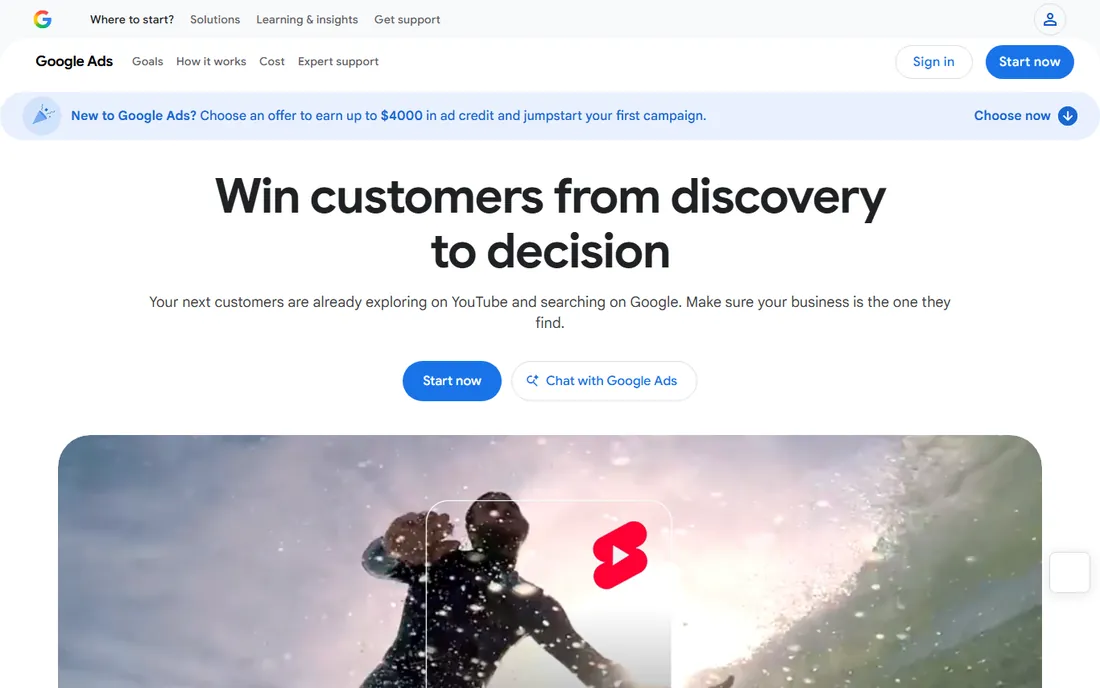
Google Ads is where you go when customers already know what they want. A dentist bidding on "emergency dentist near me" or a SaaS company bidding on its category terms buys clicks that convert at rates social platforms rarely touch. Shopping ads, local placements, YouTube and Performance Max put every Google surface in one account. You only pay when someone clicks, and the daily budget cap is the hard stop.
The honest catch is the auction. Because everyone knows Google converts, competitive keywords run into the dollars and sometimes tens of dollars per click. Beginners get hurt by broad match keywords and default settings that spend on Display before they realize it. Start with exact and phrase match, set a modest daily budget, and give a campaign two to four weeks of click data before judging it.
What we like- The largest search intent pool in the world, plus YouTube, Maps, Shopping and Display inventory in one account
- Performance Max and Smart Bidding automate targeting for beginners
- Daily budget caps and auction controls keep spend predictable
Watch out for- The most competitive auctions on this list, so CPCs in legal, insurance and home services run high
- The interface and keyword match types take real learning
- New accounts can burn budget fast with default settings
#2
Microsoft Advertising
Best for: Businesses that want search clicks beyond Google at lower CPCs
Visit ads.microsoft.com
Starting priceSee website (pay per click; no minimum fee stated)
Free planNo
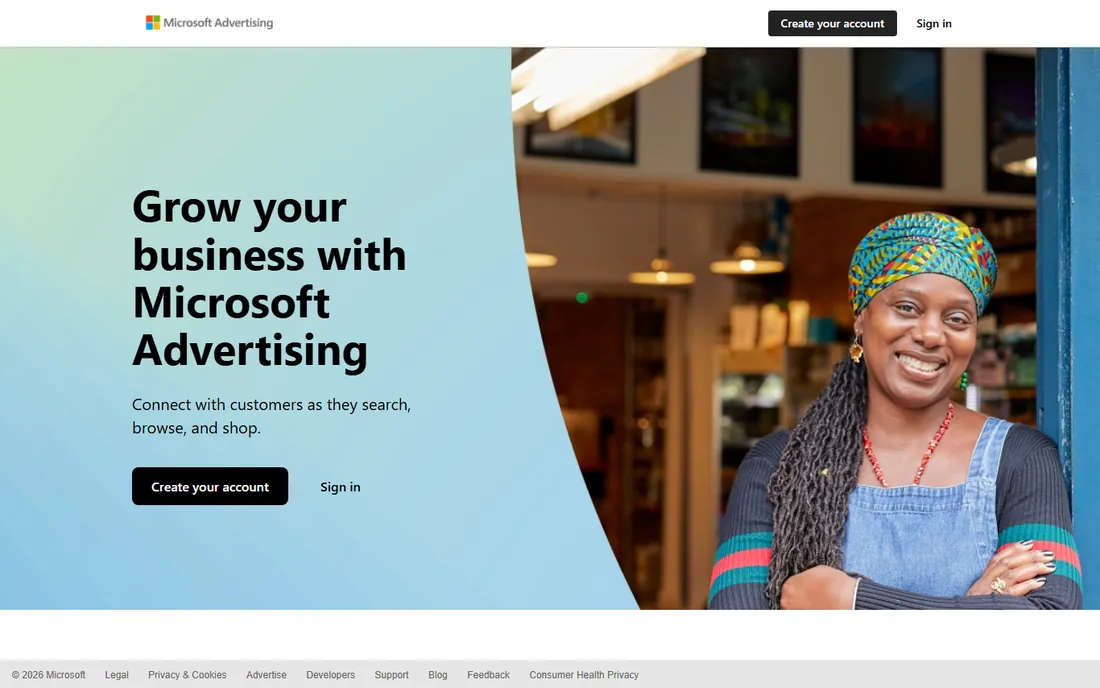
Microsoft Advertising is the same idea as Google Ads on a smaller stage. The import tool copies keywords, ads and bids in minutes, and because fewer advertisers bid there, the same keyword often costs less per click. Bing powers searches on Windows devices, Yahoo and DuckDuckGo, so you reach office workers and professionals who rarely see your Google ads. Microsoft's own page lists no minimum fee, pay per click only, and daily budget control.
The catch is volume. Even with cheaper clicks, there are not enough Bing searches to replace Google for most businesses; treat this as a 10 to 30 percent add-on to a working Google account, not a standalone channel. If your Google Ads already convert, importing them is the highest-ROI hour you will spend this month.
What we like- No minimum fee and you only pay for clicks, per Microsoft's own page
- Reaches Bing, Yahoo, DuckDuckGo and partner searchers, a slightly older and higher-income audience
- Free one-click import of Google Ads campaigns saves hours of rebuild time
Watch out for- Search volume is a fraction of Google's, so scale is limited
- Audience skews desktop and older, which hurts youth-focused brands
- Ad review and support are slower than Google's in some categories
#3
Meta Ads
Best for: B2C brands that can win attention with strong creative on Facebook and Instagram
Visit facebook.com
Starting priceSee website (pay per click or per impression; you set the budget)
Free planNo
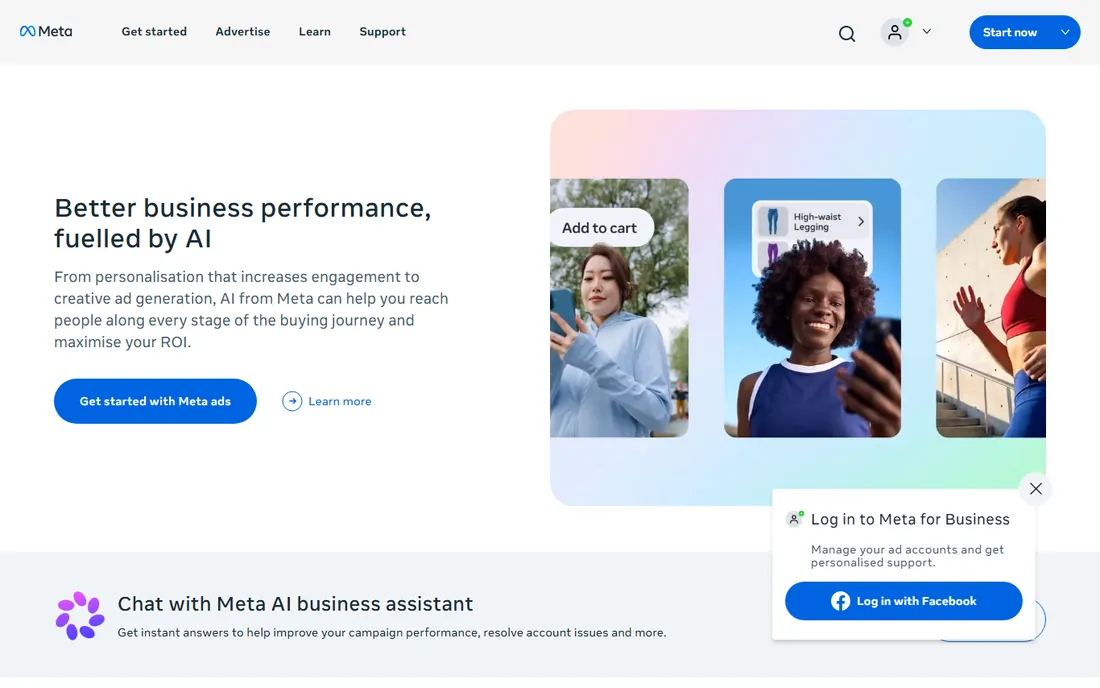
Meta Ads is the default social PPC platform for a reason: nearly every US consumer scrolls Facebook or Instagram daily, and the targeting lets you reach dog owners, new parents, recent homebuyers or fans of specific brands. Campaigns buy on CPC or CPM, and Meta's own small-business page emphasizes budget control with recommended budgets and the freedom to pause anytime. Advantage+ campaigns automate targeting for advertisers who do not want to build audiences by hand.
The honest catch is that you are interrupting people, not answering them. Clicks are cheaper than Google but convert at lower rates, so the math only works if your creative stops thumbs. Budget a real creative pipeline: test five to ten ad variations in the first month, and watch frequency so the same people do not see the same ad fifty times.
What we like- The largest social audience in the US with deep interest, behavior and lookalike targeting
- Placements across Facebook, Instagram, Messenger and Audience Network from one campaign
- Meta's page states you can start, stop and pause ads any time with full budget control
Watch out for- Targeting has narrowed since iOS privacy changes, so broad audiences and creative testing matter more
- Ad account bans and review rejections are common complaints
- Creative fatigue sets in fast, so you need fresh ads constantly
Starting priceSee website (pay per click; minimum daily budget from $10, per LinkedIn)
Free planNo
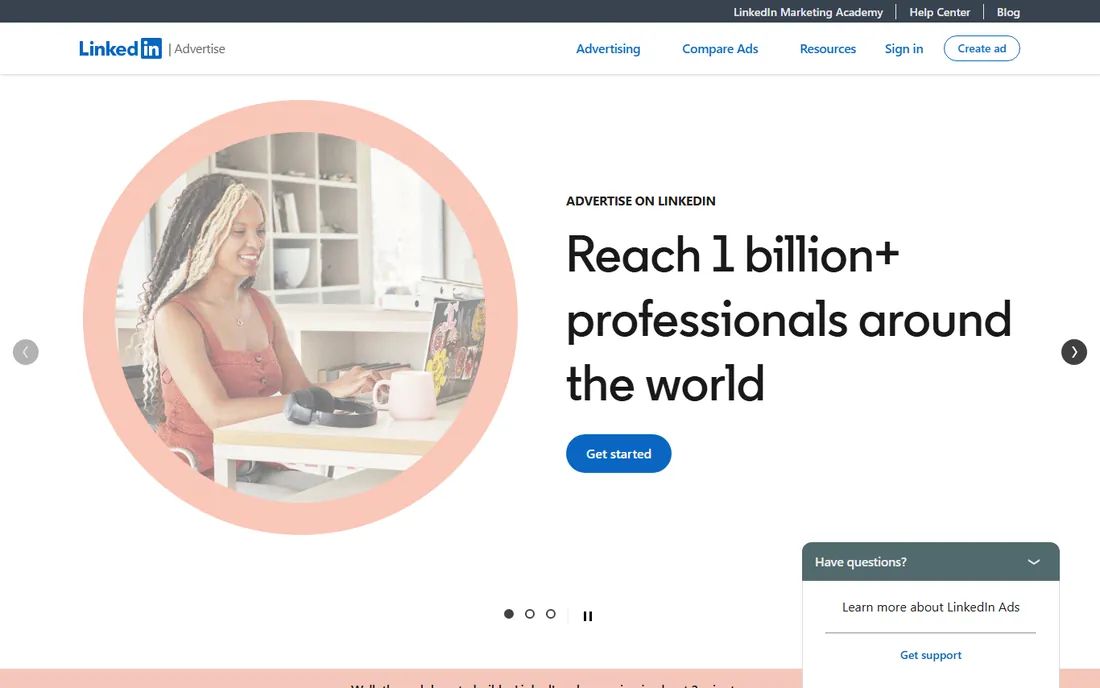
LinkedIn Ads is expensive and worth it in exactly one situation: your deal is big enough that one closed customer pays for months of clicks. A company selling $10,000 software contracts or enterprise services can afford $6 to $12 clicks to reach "VP of Operations at companies with 200-plus employees." Formats include Sponsored Content in the feed, Message Ads delivered to inboxes, and Document Ads that gate whitepapers behind lead forms. Campaign Manager walks through setup in minutes once you have a LinkedIn Page.
The catch is that everything is small and costly. A $20 daily budget buys a handful of clicks, so statistical significance takes weeks. Do not use LinkedIn for cheap products or broad consumer offers; the math cannot work. Use it for B2B lead generation where one customer is worth thousands, with tight landing pages and fast follow-up.
What we like- The only platform that targets by job title, company, seniority, skills and industry with real profile data
- Sponsored Content, Message Ads and Document Ads fit B2B buying cycles
- LinkedIn's page confirms minimum daily budgets start at $10, so small tests are possible
Watch out for- The highest CPCs on this list by a wide margin, often several dollars per click
- Audience size is small, so campaigns exhaust quickly and frequency climbs
- Lead quality is high but volume rarely scales to mass-market levels
Starting priceSee website (pay per click; sponsored ads have no up-front fees, per Amazon)
Free planNo
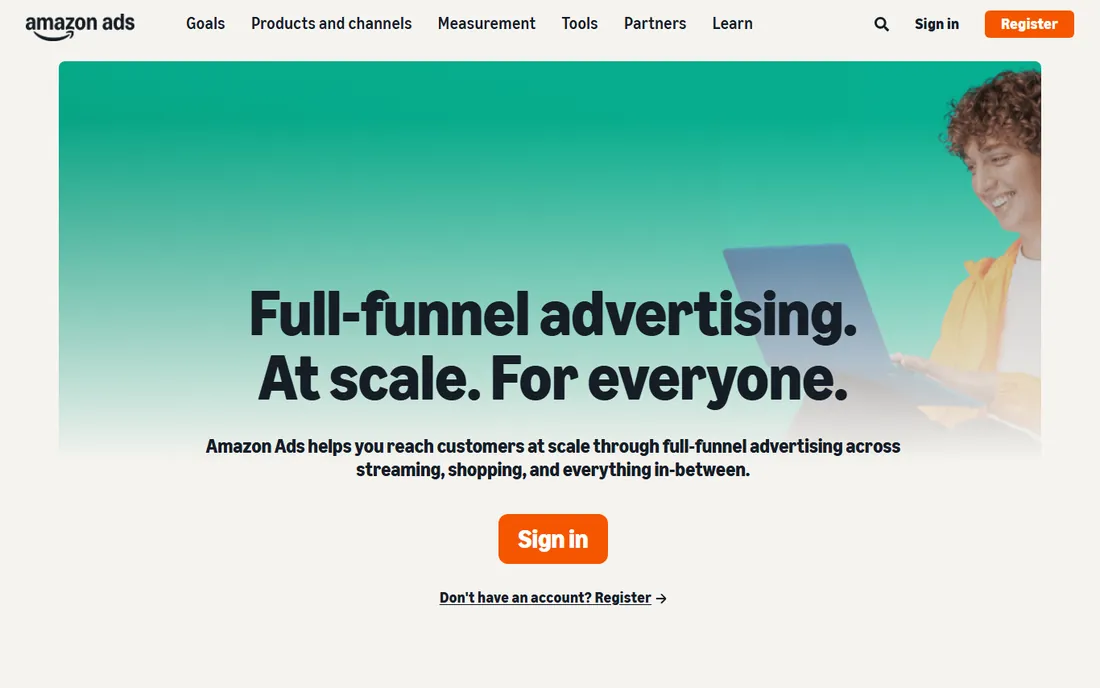
Amazon Ads is PPC for the moment of purchase. Sponsored Products put your listing at the top of search results for "wireless earbuds" exactly when the buyer is comparing options, and Amazon's page confirms there are no up-front fees for sponsored ads: you pay per click and set your own budget. Brands can add Sponsored Brands video, storefronts and display retargeting. Amazon's first-party shopping data also powers off-Amazon campaigns through the DSP for bigger budgets.
The honest catch is the cage match. You bid against dozens of sellers for the same keywords, and Amazon's algorithm rewards listings with strong reviews and conversion history, which new sellers lack. Managed service typically requires a $50,000 minimum spend, per Amazon's own FAQ. Win by nailing the listing first, then advertise; ads amplify a good listing and waste money on a bad one.
What we like- Shoppers arrive with wallets open, so purchase intent is the highest of any social or retail platform
- Sponsored ads are self-service with no up-front fees, per Amazon's own page
- Sponsored Brands, Sponsored Display and the DSP add reach beyond product pages
Watch out for- You compete directly against Amazon's own products and aggressive sellers on the same results page
- Keyword auctions for popular categories are brutal
- Non-sellers get less functionality than brands enrolled in Brand Registry
#6
TikTok Ads
Best for: Brands with video creative that can entertain a young, discovery-driven audience
Visit ads.tiktok.com
Starting priceSee website (pay per click; TikTok recommends a $30/day ad group budget in North America)
Free planNo
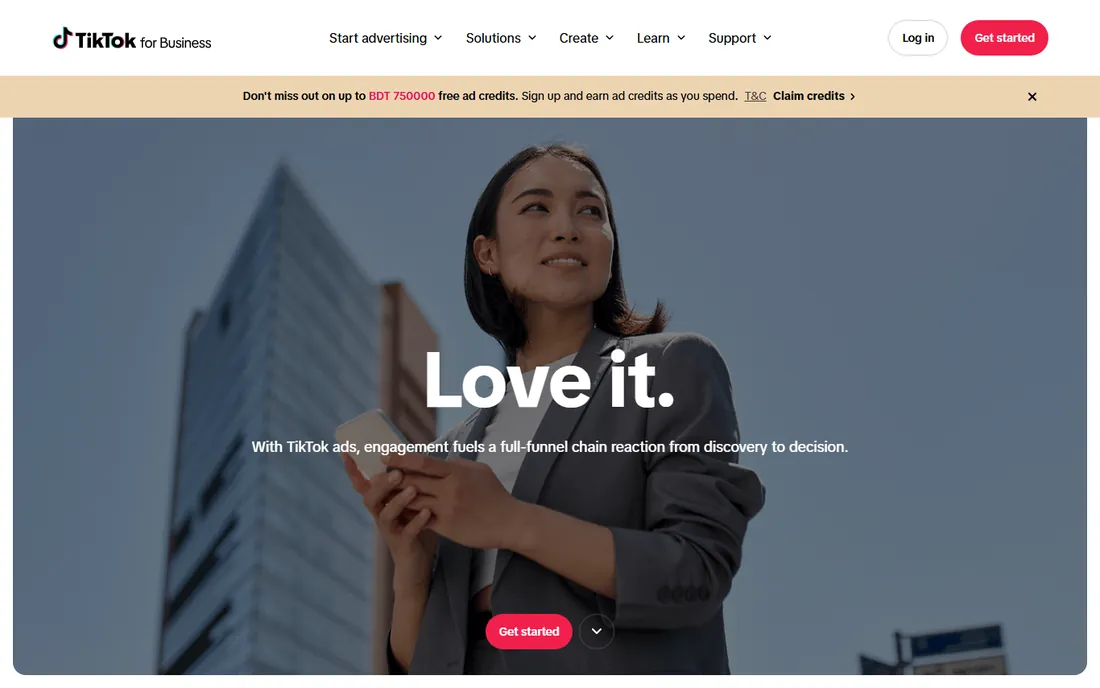
TikTok Ads buys attention in the feed where culture now starts. In-feed ads, TopView takeovers and Spark Ads (which boost a creator's organic post as an ad) all run on video, and TikTok's algorithm is famously good at finding buyers from watch behavior even with broad targeting. The platform's FAQ gives practical budget guidance: a $30 daily ad group budget in North America and EMEA so the learning phase has enough data. Lead generation and TikTok Shop integrations make it more than a brand channel.
The catch is the content treadmill. TikTok users scroll past anything that looks like an ad, so lo-fi creator-style videos beat polished brand spots, and you need fresh creative every week or two.
What we like- Full-screen sound-on video in the most engaging feed in social media
- Spark Ads let you boost existing organic posts with their engagement intact
- TikTok's own FAQ recommends a $30 daily ad group budget in North America, a concrete starting figure
Watch out for- Creative is everything and production is constant: stale ads die in days
- The audience skews young, which limits B2B and high-ticket offers
- Attribution and tracking are weaker than Google or Meta
#7
Pinterest Ads
Best for: Visual products people plan and save: home, fashion, food, weddings, DIY
Visit ads.pinterest.com
Starting priceSee website (pay per click; minimums vary)
Free planNo
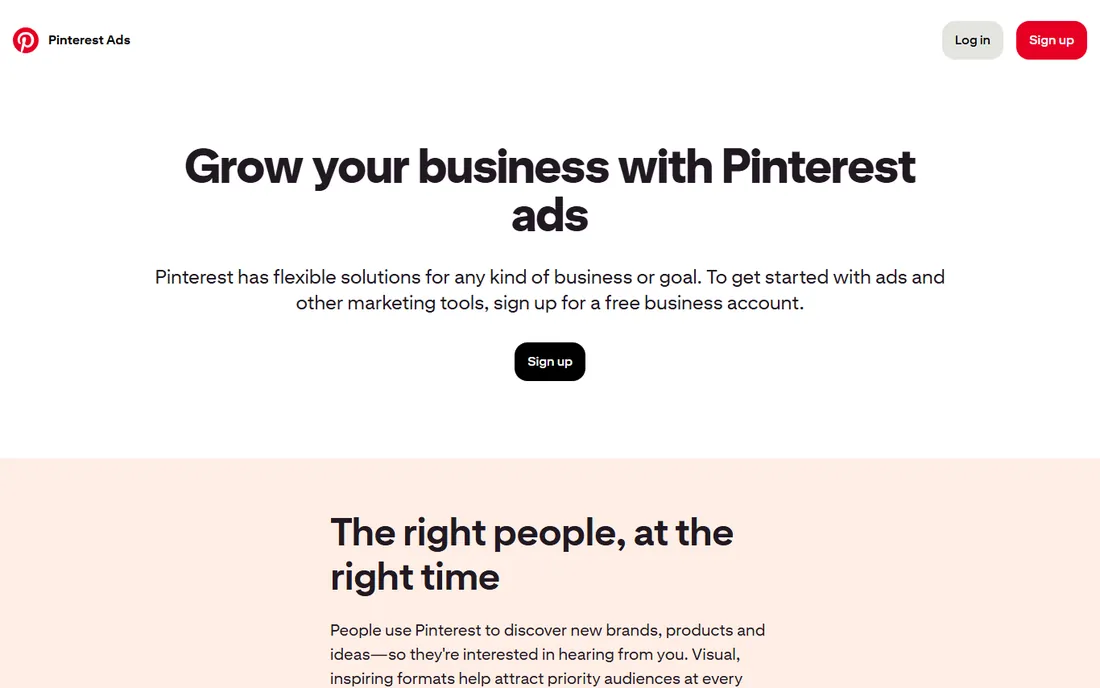
Pinterest Ads is the quiet performer of this list. People use Pinterest to plan weddings, remodel kitchens and build wardrobes, so a promoted Pin for a furniture brand or a recipe kit lands in front of someone already imagining the purchase. Ads Manager runs on standard PPC bidding across traffic, conversion and catalog sales objectives, and a business account is free. Product Pins pull live pricing from your catalog.
The honest catch is intent without urgency. Pinterest users save ideas for months before acting, so last-click attribution undervalues the platform; measure assisted conversions too. Cheap traffic campaigns inflate click counts without sales, so optimize for conversions from the start and install the tag before spending a dollar.
What we like- Users arrive in planning mode, which means high purchase intent for decor, apparel, recipes and events
- Promoted Pins look native and keep driving traffic after the campaign ends
- Shopping integrations tie pins directly to product catalogs
Watch out for- Audience skews heavily female and US-centric, limiting some categories
- Conversion tracking needs the Pinterest tag set up correctly
- Traffic campaigns can deliver cheap clicks that never buy
#8
Reddit Ads
Best for: Niche audiences organized by subreddit, from gamers to investors to hobbyists
Visit ads.reddit.com
Starting priceSee website (pay per click; minimums vary)
Free planNo
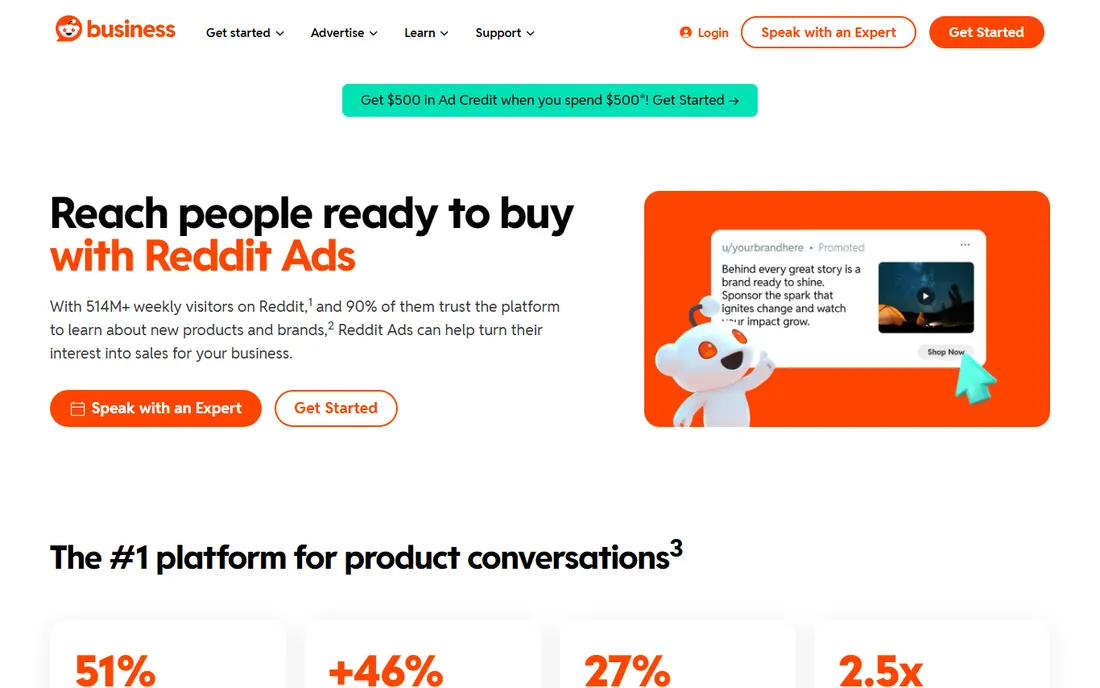
Reddit Ads is the specialist tool for communities. No other platform lets you put an ad in front of r/personalfinance, r/gaming or r/skincareaddiction specifically, and that precision makes Reddit the cheapest way to reach passionate niches. Costs run noticeably lower than mainstream social, and the conversation format means good ads earn organic upvotes and comments that extend their reach free.
The catch is cultural. Redditors distrust advertising and will dissect your claims in the thread under your ad, so anything that smells like hype backfires. Write ads like a knowledgeable community member, disclose the ad plainly, and answer comments honestly. Brands that respect the culture get loyal customers; brands that do not get memes.
What we like- Targeting by subreddit reaches self-organized communities no other platform can isolate
- CPCs and CPMs run well below Meta and Google averages in most categories
- Redditors reward honest, useful ads and punish corporate speak, which keeps creative costs low
Watch out for- The audience is ad-skeptical and will publicly roast bad ads in the comments
- Scale is limited compared to Meta or Google
- Reporting and optimization tools lag the bigger platforms
#9
Snapchat Ads
Best for: Brands chasing under-30 attention with vertical video and AR experiences
Visit ads.snapchat.com
Starting priceSee website (pay per click; minimums vary)
Free planNo
Snapchat Ads buys the attention of the youngest mainstream audience: teens and twenty-somethings who live in the camera. Snap Ads are full-screen vertical videos, Story Ads run in Discover, and AR lenses let users try on products or play with branded filters, a format with no real equivalent elsewhere. Campaigns run on standard PPC bidding with daily budgets, and the pixel tracks conversions for optimization.
The honest catch is who is watching. If your buyer is 35-plus or your product costs thousands of dollars, this is the wrong room. Creative must be vertical, sound-on and hook viewers in three seconds; repurposed TV spots die here. Test with a small budget, watch completion rates, and scale only what holds attention.
What we like- A young audience that is hard to reach on Facebook
- Full-screen vertical Snap Ads plus AR lenses and filters nobody else offers
- The self-serve Ads Manager makes small-budget tests easy
Watch out for- The audience skews young with lower purchasing power, which limits high-ticket offers
- Creative must be vertical video or AR, raising production bar
- Attribution is weaker than Google or Meta
How we chose
We opened every platform's own advertiser documentation or FAQ and recorded what the vendor itself states about minimums and billing. Then we matched each platform to real buyer behavior: purchase intent, demographics and where the audience spends time. Ad platforms do not publish fixed plan prices, so we wrote "See website" for pricing and reported only minimums the vendor itself states.
The biggest PPC mistake is picking a platform before defining the buying moment. Split your options into three buckets. High-intent search (Google, Microsoft, Amazon): the buyer typed words that describe your product, so the click is worth the most and the keyword list is the campaign. Discovery social (Meta, TikTok, Pinterest, Snapchat, Reddit): the buyer was not looking for you, so creative does the selling and you pay for reach and testing before you pay for results. Professional intent (LinkedIn): the buyer is at work, so the click costs the most but the qualification is built in.
Budget follows the bucket. Search campaigns can start small; $20 to $50 a day on Google or Microsoft teaches you plenty in a month. Discovery social needs a testing budget because the first ads usually lose. LinkedIn needs patience: a $300 test budget might buy 30 clicks, so run it only when one customer is worth thousands.
Ecommerce brands belong on Google Shopping, Amazon and Meta, in that order of intent. Local services belong on Google first and Microsoft second, because "near me" searches convert. B2B belongs on LinkedIn and Google, with Meta for remarketing. Youth consumer brands belong on TikTok and Snapchat. Niche hobby products belong on Reddit. Visual planning products belong on Pinterest. One platform done well beats four platforms done badly.
Vendors publish few hard minimums, so here is what their own pages actually say. Google Ads: no published minimum, you set the daily budget, with ad credits for new advertisers. Microsoft: no minimum fee, pay per click, daily budgets. Meta: you set the budget and can pause anytime. LinkedIn: minimum daily budget from $10, but a meaningful test is $500-plus a month. Amazon sponsored ads: no up-front fees; managed service starts around $50,000 minimum. TikTok: $30 daily ad group budget recommended in North America. Pinterest, Reddit and Snapchat: no published minimums.
Add the hidden costs. Creative production is the real first-month bill on social: five to ten ad variations for Meta, weekly fresh video for TikTok, vertical assets for Snapchat. Tracking setup takes hours but decides whether the platform can optimize. And every platform needs roughly 50 conversion events per campaign before bidding stabilizes. A useful rule: your monthly test budget should be at least 30 times your target cost per click on search, or 50 times your target cost per acquisition on social.
Frequently asked questions
How much should a small business spend on PPC ads?
Start with what you can afford to lose while learning: $500 to $1,500 for the first month on one platform. Google and Microsoft work at $20 to $50 a day. LinkedIn needs $500-plus a month to buy enough clicks for a verdict. TikTok's own FAQ recommends a $30 daily ad group budget. Scale only the campaigns whose cost per acquisition beats your margin.
Which PPC platform has the cheapest clicks?
Reddit and Pinterest usually have the lowest CPCs, followed by Microsoft Advertising and TikTok. Google search and LinkedIn have the highest. But cheap clicks that do not convert are the most expensive clicks of all: a $0.30 Reddit click that never buys loses to a $3 Google click that becomes a customer. Compare cost per acquisition, not cost per click.
Can I run ads on Google and social media at the same time?
Yes, and most growing businesses do: Google captures people searching right now while Meta or TikTok creates demand among people who will search later. Keep the budgets and goals separate, since the two measure different things. A common split is 60 percent of budget on search for immediate returns and 40 percent on social for pipeline.
Do I need an agency to run PPC, or can I do it myself?
You can run Google, Meta and Microsoft campaigns yourself if you have a few hours a week and are willing to learn the interfaces. Microsoft's free Google Ads import makes the second platform nearly free to add. Consider an agency or freelancer when monthly spend passes $5,000, or when you need landing page and creative production.
What is a good click-through rate for PPC ads?
On Google Search, 3 to 5 percent CTR is solid for most industries. On Meta and TikTok, 1 to 2 percent on link clicks is typical because users are scrolling, not searching. LinkedIn runs lower, often under 1 percent, which is normal for the professional audience. Compare against your own past performance first.
How long before PPC campaigns show results?
Clicks start the day you launch, but reliable results take two to four weeks on Google and four to six weeks on social platforms. Every platform has a learning phase that needs dozens of conversion events before bidding stabilizes.
Sources we checked (9)
- https://ads.google.com/
- https://ads.microsoft.com/
- https://www.facebook.com/business
- https://business.linkedin.com/marketing-solutions
- https://advertising.amazon.com/
- https://ads.tiktok.com/
- https://ads.pinterest.com/
- https://ads.reddit.com/
- https://ads.snapchat.com/
Is your product missing or out of date?
We review this list regularly. Vendors can request a listing, send updated pricing or ask about featured placement.

Shihab Mia · Founder, Rankite
Shihab has spent more than a decade helping SaaS and e-commerce brands grow through search. He writes Rankite's software buying guides from pricing pages, documentation and public user reviews. More about Shihab.