How we make this list: we compare pricing pages, product documentation and public user reviews. Rankite is independent; if a vendor ever pays for a featured spot, that listing is clearly labeled Partner.
Key takeaways
- Nextech, Modernizing Medicine (EMA) and Compulink are the ophthalmology-first picks, with exam workflows, drawings and device integrations built for eye care rather than bolted on.
- Every system here is custom-quoted: expect per-provider pricing plus implementation and data migration fees, and get the full five-year cost in writing before signing.
- Practices with an ambulatory surgery center should shortlist Nextech and Compulink, which both sell ASC-specific modules alongside the clinic EHR.
- Optometry-heavy practices should look at RevolutionEHR and Eyefinity Encompass; pure ophthalmology and surgical practices fit better with Nextech, EMA or MaximEyes.
Quick comparison
| Tool | Best for | Starting price | Free plan |
|---|
 Nextech Nextech | Ophthalmology and surgical specialty practices | See website (custom quote) | No |
 Modernizing Medicine (EMA) Modernizing Medicine (EMA) | Ophthalmologists who want AI-assisted documentation | See website (custom quote) | No |
 Compulink Advantage Compulink Advantage | Practices that want the EHR shaped to their exact workflow | See website (custom quote) | No |
 NextGen Healthcare NextGen Healthcare | Multi-specialty groups that include ophthalmology | See website (custom quote) | No |
 MaximEyes MaximEyes | Eye care practices that want fast single-screen charting | See website (custom quote) | No |
 RevolutionEHR RevolutionEHR | Optometry-led practices that want flexible terms | See website (custom quote, priced per doctor) | No |
 DrChrono DrChrono | Independent practices that want a mobile-first EHR | See website (custom quote) | No |
 Eyefinity Encompass Eyefinity Encompass | Optometry practices integrated with VSP vision plans | See website (custom quote) | No |
Is your product missing or out of date?
We review this list regularly. Vendors can request a listing, send updated pricing or ask about featured placement.
Ophthalmology EMR systems compared
Here is the blunt version: every ophthalmology EMR demo looks great, every vendor promises fewer clicks, and the differences only appear six months after go-live, when your physicians are either charting faster or quietly furious. The systems below are the ones eye care practices actually run on, separated by what they were built for. Ophthalmology-first platforms handle surgical workflows, drawings and device data natively. Generic or optometry-first systems can work, but know which one you are buying before the contract locks you in.
Starting priceSee website (custom quote)
Free planNo

Nextech is one of the few vendors that treats ophthalmology as a first-class specialty rather than a template pack. Charting, drawings, surgical planning and the ambulatory surgery center module all speak eye care natively, and the company pairs the software with revenue cycle management for practices that want billing handled too. The Best in KLAS recognition for ambulatory ophthalmology in 2026 reflects real traction with eye practices.
The honest catch is the enterprise sales motion. There is no published pricing, implementation is a real project, and you will negotiate the contract. Practices should also confirm the fit if they plan to add services outside eye care, since the specialty depth becomes less of an advantage. For a dedicated ophthalmology practice, especially a surgical one, Nextech belongs on every shortlist.
What we like- Built specifically for ophthalmology, dermatology and plastic surgery with specialty charting
- Recognized with Best in KLAS 2026 for ambulatory ophthalmology
- ASC module and revenue cycle services available from the same vendor
Watch out for- Custom pricing with no published figures, so budgeting requires a sales process
- Specialty focus means less fit if the practice adds non-eye-care service lines
#2
Modernizing Medicine (EMA)
Best for: Ophthalmologists who want AI-assisted documentation
Visit modmed.com
Starting priceSee website (custom quote)
Free planNo
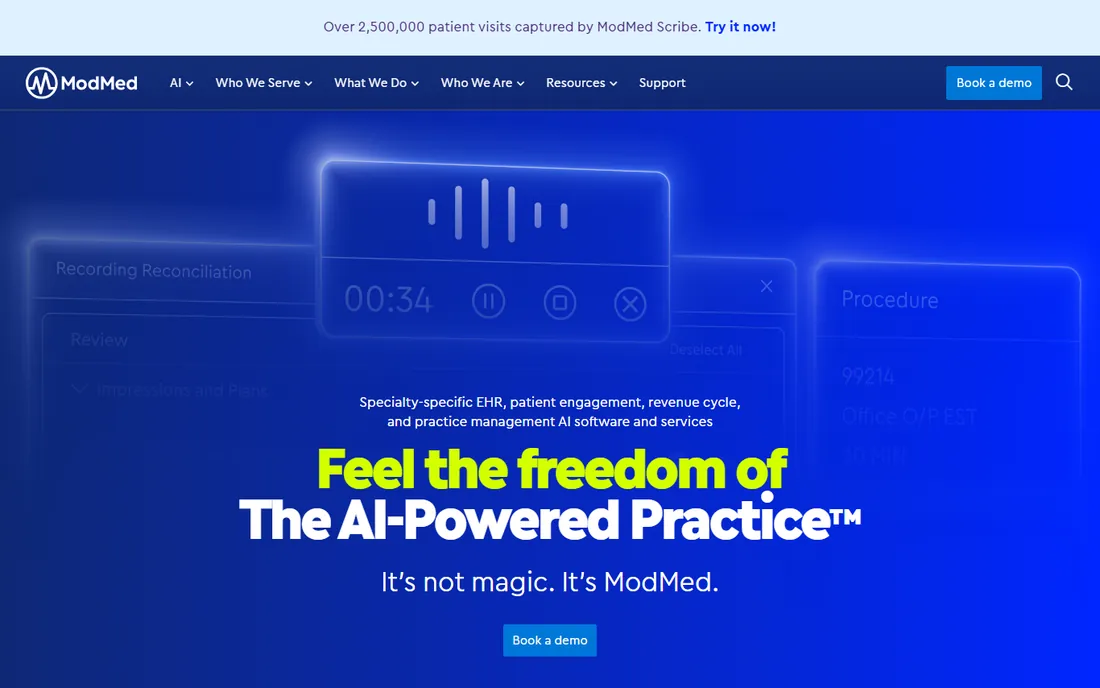
Modernizing Medicine, now branded ModMed, built its name on EMA, an EHR that learns how each physician documents and adapts. For ophthalmology that means exam findings flow into structured data with less typing, and the newer AI documentation tools draft notes from the patient conversation. Practices that live and die by documentation quality and MIPS reporting tend to rate it highly.
The tradeoff is cost and commitment. ModMed positions at the premium end, pricing is entirely custom, and a full rollout with data migration is measured in months, not weeks. Smaller practices should weigh whether they will use the depth they are paying for. For ophthalmologists who chart heavily and want the documentation burden lifted, it is one of the strongest options here.
What we like- EMA ophthalmology EHR designed around how eye doctors document, with structured data capture
- Strong AI scribe and assistant features for clinical documentation
- Specialty-specific analytics and MIPS reporting support
Watch out for- Premium positioning with pricing to match, all custom-quoted
- Implementation timelines can run long for larger practices
Starting priceSee website (custom quote)
Free planNo
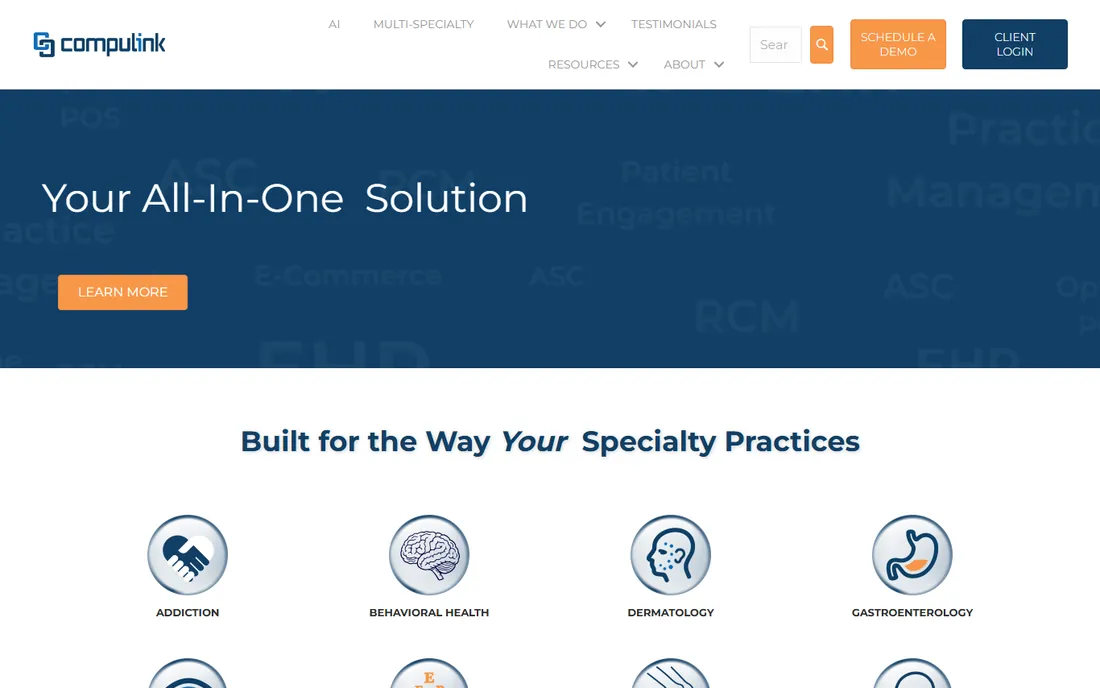
Compulink's pitch is the opposite of one-size-fits-all: Advantage is built to be molded around each practice's documentation style, and eye care practices use that flexibility heavily. Beyond the EHR, the same platform covers practice management, optical point of sale, e-commerce and an ASC module, so a practice with a retail optical shop and a surgery center can run on one system.
That breadth comes with configuration work. The practices that love Compulink invested in shaping it; the ones that did not sometimes find it overwhelming. Pricing is custom and modular, so insist on an itemized quote covering every module you will actually use. For practices that know exactly how they want to work and want software to match, the customization is the reason to choose it.
What we like- Extremely customizable EHR with specialty-specific workflows for ophthalmology and optometry
- All-in-one includes practice management, patient engagement, optical POS and ASC software
- One-tab charting layout designed for speed
Watch out for- Customization depth means implementation needs real configuration effort
- Pricing is quote-only with add-on modules that complicate comparisons
#4
NextGen Healthcare
Best for: Multi-specialty groups that include ophthalmology
Visit nextgen.com
Starting priceSee website (custom quote)
Free planNo
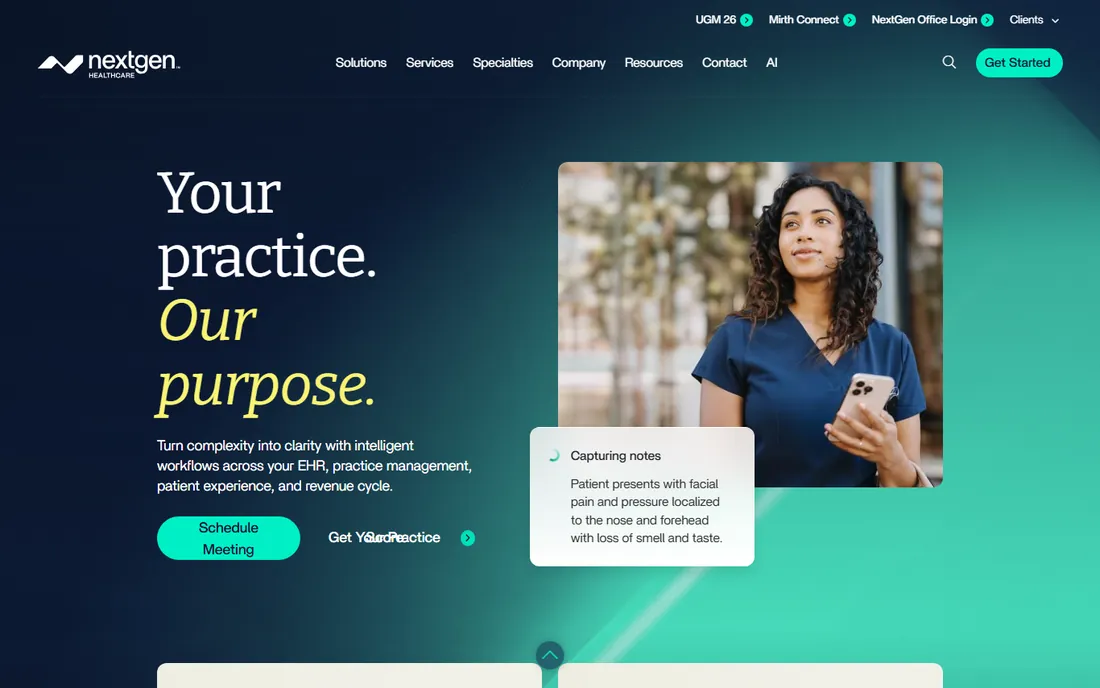
NextGen Healthcare plays at the enterprise end of ambulatory care. For a multi-specialty group or a large eye care organization with many locations, its strengths matter: interoperability across systems, population health management, and a mobile EHR that keeps physicians productive away from the desk. Ophthalmology-specific content exists within the broader platform.
For a small independent ophthalmology practice, it is usually too much system. Pricing is custom and enterprise-shaped, and implementations involve real consulting. The fit question is simple: if your organization has an IT department, NextGen deserves a look. If it does not, the specialty-first vendors above will serve you better for less money and less pain.
What we like- Enterprise-grade platform with deep interoperability and population health tools
- Specialty content packs including ophthalmology
- Strong mobile EHR for physicians working across locations
Watch out for- Built for larger organizations, so small practices pay for scale they do not need
- Implementation is a major project with consulting costs
#5
MaximEyes
Best for: Eye care practices that want fast single-screen charting
Visit maximeyes.com
Starting priceSee website (custom quote)
Free planNo
MaximEyes, from First Insight, is built around a simple idea: the entire exam on one screen. Customizable templates, device data flowing straight into the chart, and optical workflows from inventory to VSP benefit calculation live in the same system. The integration count is a genuine differentiator, since ophthalmic devices are where charting time is won or lost.
As a smaller vendor, diligence matters more. Ask for references from practices your size, confirm the implementation timeline, and verify support responsiveness. Pricing is custom. For eye care practices that prioritize charting speed and device connectivity over brand name, MaximEyes punches above its weight.
What we like- Single-screen charting with fully customizable exam templates
- 270-plus device and system integrations including OCT, fundus and visual fields
- Optical dispensing, lab ordering and VSP tools built in
Watch out for- Smaller vendor than Nextech or ModMed, so peer references matter more
- Pricing is quote-only
Starting priceSee website (custom quote, priced per doctor)
Free planNo
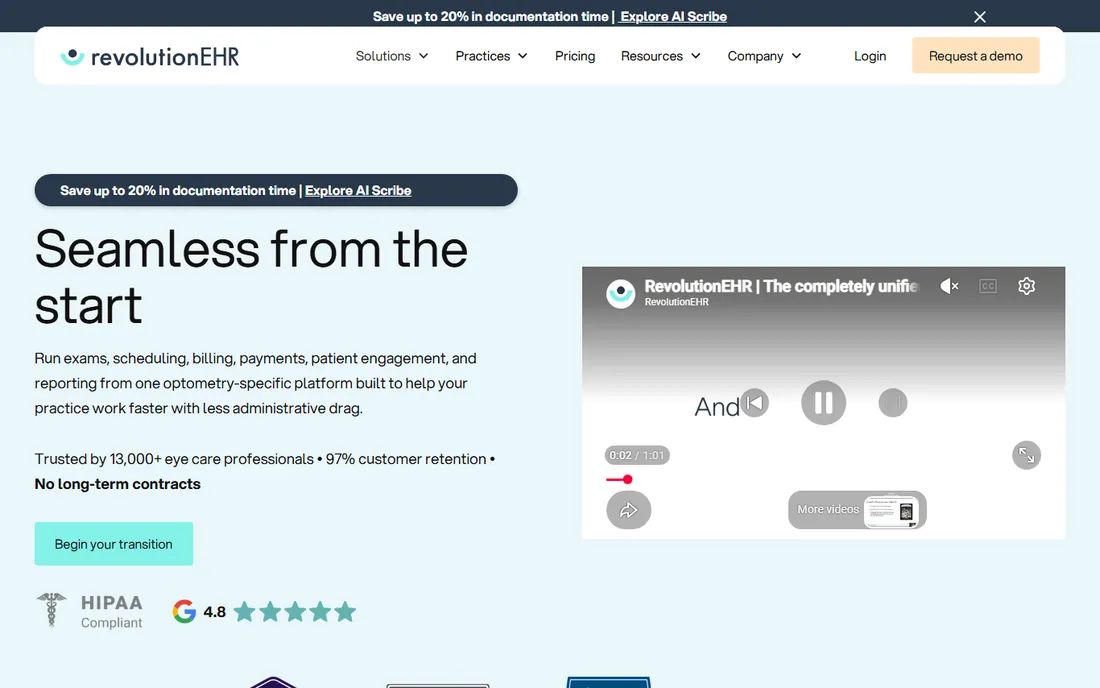
RevolutionEHR is the optometry specialist on this list, and it is upfront about it: exam workflows, optical inventory, contact lens ordering and billing built for how ODs work. The commercial terms stand out in a category full of multi-year contracts. Billing is month-to-month with no long-term commitment, which lowers the risk of a wrong choice considerably.
The boundary to respect is specialty fit. A surgical ophthalmology practice will find the ophthalmology depth thinner than Nextech or EMA. But for optometry-led practices, or ophthalmology practices with a large OD and optical component, the purpose-built workflows and flexible terms make it an easy evaluation. Pricing is per doctor and custom-quoted.
What we like- Built specifically for optometry with exam, optical and billing workflows
- Month-to-month billing with no long-term contract
- AI scribe included at no extra cost
Watch out for- Optometry-first design means less depth for surgical ophthalmology
- Pricing scales per doctor, which adds up for larger practices
#7
DrChrono
Best for: Independent practices that want a mobile-first EHR
Visit drchrono.com
Starting priceSee website (custom quote)
Free planNo
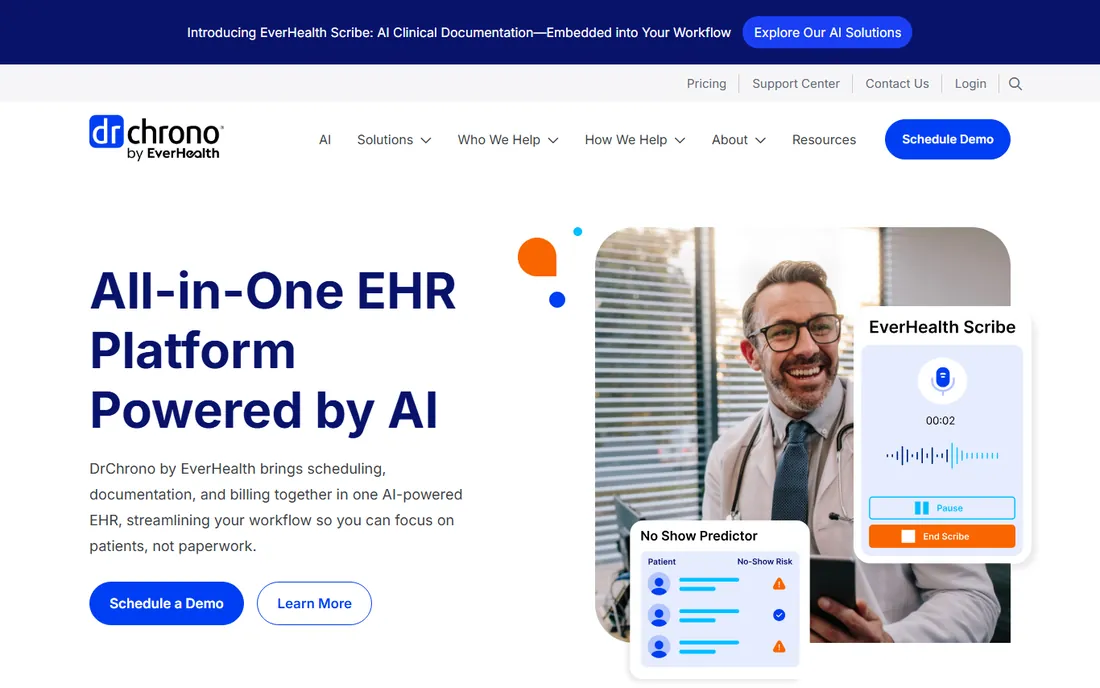
DrChrono's identity is mobility: it was the first EHR built around the iPad, and physicians who want to chart, message patients and check schedules from anywhere still rate it highly. The platform covers the full practice from scheduling to billing, with customizable templates that can be shaped for ophthalmology workflows.
The honest framing is that this is a general ambulatory EHR, not an ophthalmology-native one. Drawings, device integrations and surgical workflows will not match the specialty-built systems out of the box. For a small independent eye care practice that values flexibility and mobile charting over specialty depth, it is worth evaluating. For surgical ophthalmology, start with the specialty-first vendors.
What we like- Strong iPad and iPhone apps that let physicians chart and manage the practice from anywhere
- Customizable specialty templates including eye care workflows
- All-in-one with scheduling, billing and patient engagement
Watch out for- A general EHR rather than ophthalmology-built, so eye-specific depth depends on template configuration
- Pricing is quote-only
#8
Eyefinity Encompass
Best for: Optometry practices integrated with VSP vision plans
Visit eyefinity.com
Starting priceSee website (custom quote)
Free planNo
Eyefinity Encompass is the EHR for the VSP ecosystem. If a large share of your patients carry VSP vision plans, the integrated eligibility checks, authorizations and claims processing save real front-desk time every day. The platform bundles EHR, practice management, patient engagement and analytics, with an AI scribe for documentation.
Like RevolutionEHR, this is optometry-first software. Ophthalmology practices with heavy surgical volume should verify the surgical workflow depth before committing. But for comprehensive eye care practices where vision plans drive the business, the payer integration is a concrete operational advantage that the general EHRs cannot match. Pricing is custom-quoted.
What we like- Deep VSP integration for eligibility, authorizations and claims, a real advantage for VSP-heavy practices
- All-in-one EHR, practice management, patient engagement and analytics
- AI scribe (EncompassScribe) built in
Watch out for- Optometry-first, so surgical ophthalmology workflows are thinner
- The VSP advantage matters less for practices with different payer mixes
What to verify before signing an ophthalmology EMR contract
Start with the exam room, not the brochure. Bring your actual workflows to the demo: a cataract workup, a glaucoma follow-up, a surgical plan. Watch how many clicks each takes, how drawings work, and whether device data from your OCT and visual fields flows in automatically or gets retyped. Vendors demo the happy path; your physicians live in the edge cases.
Then verify the money side. Every system here is custom-priced, so demand an itemized quote: per-provider license fees, implementation, data migration, training, interfaces to each device, and the annual support or subscription cost. Ask what a five-year total looks like, including the renewal terms. Multi-year contracts with annual escalators are standard; know the escalator before you sign.
Finally, check the exit. Ask how you get your data out, in what format, and what it costs. Ask for three references from ophthalmology practices of your size that went live in the last two years, and call them. The reference calls will tell you more than any demo.
How we chose
We started with the searches buyers run: ophthalmology EMR software, best EHR for ophthalmology and eye care EHR. For each candidate we opened the vendor's homepage, confirmed the product is live and serves eye care practices, and checked specialty depth against public reviews on G2 and Capterra and practitioner discussion. We weighted ophthalmology-specific charting, device integrations, ASC support, revenue cycle options and company fit for practice size. Every vendor here prices by quote, so where a price could not be verified we wrote "See website" rather than guessing.
Implementation, data migration and the contract traps
Implementation is where EMR projects succeed or fail, and ophthalmology has specific risks. Data migration from your old system needs to preserve exam history, drawings and images, not just demographics; confirm exactly what migrates and what becomes a scanned PDF. Device interfaces for OCT, fundus cameras and visual fields each need configuration and sometimes extra fees; inventory your devices before the contract, not after.
Training deserves its own line in the contract. Physicians, techs, front desk and billers all need role-specific training, and practices consistently underestimate the hours. Ask how many training hours are included, what additional training costs, and whether you get a dedicated implementation specialist.
The contract traps are familiar: auto-renewal clauses, annual price escalators, per-provider minimums that punish you for turnover, and data extraction fees. Negotiate the renewal cap, the termination notice period and the data export terms before signing. A month spent on the contract saves years of regret.
Frequently asked questions
What is the best EMR for ophthalmology?
For dedicated ophthalmology practices, Nextech, Modernizing Medicine (EMA) and Compulink are the most ophthalmology-native options. MaximEyes is a strong smaller alternative. The right choice depends on surgical volume, ASC needs and how much customization your physicians want.
How much does ophthalmology EMR software cost?
Vendors price by quote, typically per provider per month plus implementation and data migration fees. Total first-year costs for a small practice commonly reach five figures once implementation, training and interfaces are included. Always get the five-year total in writing, including renewal escalators.
What is the difference between ophthalmology and optometry EHR software?
Ophthalmology EHRs emphasize surgical workflows, detailed drawings, device integrations and ASC management. Optometry EHRs emphasize exams, optical retail, contact lenses and vision plan billing. Many eye care practices need elements of both, which is why vendors like Compulink and MaximEyes cover the full eye care spectrum.
How long does it take to implement an ophthalmology EMR?
Small practices typically go live in two to four months; larger or multi-location practices should plan for six months or more. Data migration, device interfaces and physician training drive the timeline. Ask the vendor for a written implementation plan with milestones before signing.
Can I switch EMR vendors later?
Yes, but it is expensive and disruptive, which is why the contract terms matter so much before you sign. Data migration between eye care EHRs is well-trodden ground, but drawings, images and custom templates rarely transfer cleanly. Negotiate data export terms in your initial contract.
Do ophthalmology EMRs integrate with diagnostic devices?
The specialty systems do: Nextech, Compulink and MaximEyes all advertise deep integrations with OCT, fundus cameras, visual fields and other ophthalmic devices. Confirm your specific device models with the vendor, since interface availability varies by manufacturer and model, and some interfaces carry extra fees.
Sources we checked (10)
- https://www.nextech.com/
- https://www.modmed.com/
- https://compulinkadvantage.com/
- https://www.nextgen.com/
- https://www.maximeyes.com/
- https://revolutionehr.com/
- https://www.drchrono.com/
- https://eyefinity.com/
- https://www.g2.com/categories/electronic-medical-records
- https://www.capterra.com/electronic-medical-records-software/
Is your product missing or out of date?
We review this list regularly. Vendors can request a listing, send updated pricing or ask about featured placement.

Shihab Mia · Founder, Rankite
Shihab has spent more than a decade helping SaaS and e-commerce brands grow through search. He writes Rankite's software buying guides from pricing pages, documentation and public user reviews. More about Shihab.