How we make this list: we compare pricing pages, product documentation and public user reviews. Ratings come from G2, Capterra or Trustpilot, with the date we checked them.
Key takeaways
- This list covers legitimate uses only: consent based film and VFX work, academic research, and deepfake detection and forensics. Every creation tool here is listed for work on faces you own or have documented permission to use.
- Creating a deepfake of a real person without their consent is illegal in many jurisdictions. US state laws ban non consensual synthetic media in many contexts, and the federal TAKE IT DOWN Act criminalises non consensual intimate imagery and forces platforms to remove it.
- DeepFaceLab and FaceSwap are the established open source face swap projects used by VFX artists and researchers. Wav2Lip is the research standard for lip sync in visual dubbing.
- Detection matters as much as creation: FaceForensics++ and open detection models are how researchers and forensic analysts test whether media is synthetic.
- None of these tools is a toy. They are research grade software that needs a strong GPU, source footage, and a lawful reason to exist on your machine.
Quick comparison
Is your product missing or out of date?
We review this list regularly. Vendors can request a listing, send updated pricing or ask about featured placement.
Starting priceFree
Free planYes
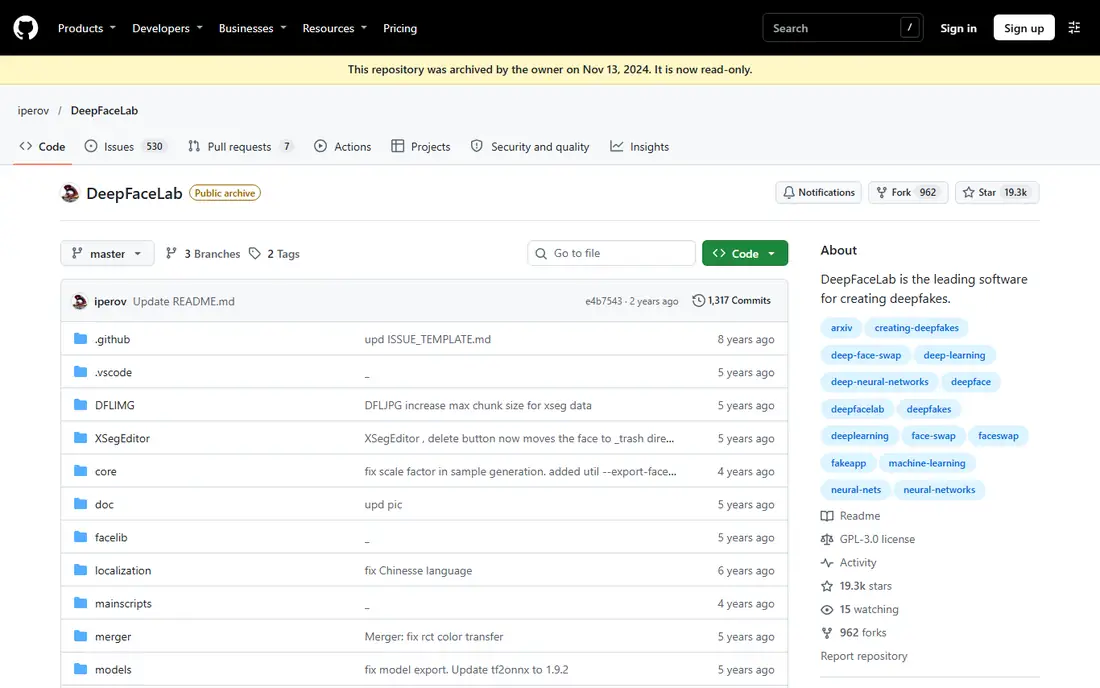
DeepFaceLab is the reference open source face swap system: extract faces, train a model on your source and destination footage, and convert with controls at every stage. Film hobbyists used it for sanctioned tribute and de ageing experiments, researchers used it to understand the technology, and its outputs defined what consumer deepfakes look like.
The trade off is power against age and effort. Training runs take days on a good GPU and the project updates slowly now. DeepFaceLab fits VFX artists and researchers doing consent based work who need the deepest control the open source world offers.
What we like- The most capable open source face swap system, used in professional VFX breakdowns and research
- Fine grained control over training and conversion
- Large knowledge base from years of use
Watch out for- Development has slowed, so expect an ageing codebase
- Steep learning curve and heavy GPU demands
- Capability this strong carries obvious misuse risk, consent documentation is essential
Starting priceFree
Free planYes
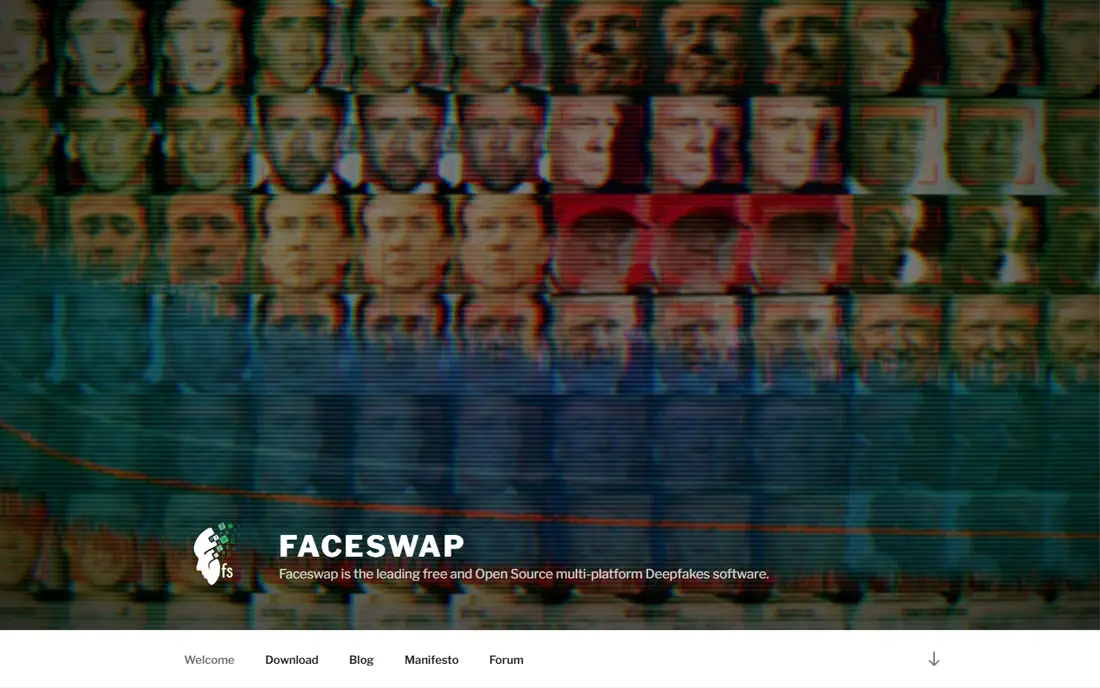
FaceSwap is the community maintained platform for the same pipeline, with a friendlier face: a graphical interface, written guides, and a project culture that states plainly the software is for consented, lawful work. For students and researchers learning how face swapping actually functions, it is the standard teaching tool.
The trade off is accessibility against peak quality. FaceSwap fits research, education, and consent based creative projects where understanding and legitimacy matter more than the last few percent of realism.
What we like- Actively maintained open source project with a GUI and documentation
- The project publishes an ethics stance against non consensual use
- Cross platform
- Good for learning the full pipeline
Watch out for- Quality ceiling below DeepFaceLab on hard footage
- Still needs a capable NVIDIA GPU for sane training times
- Community support rather than any vendor
Starting priceFree
Free planYes
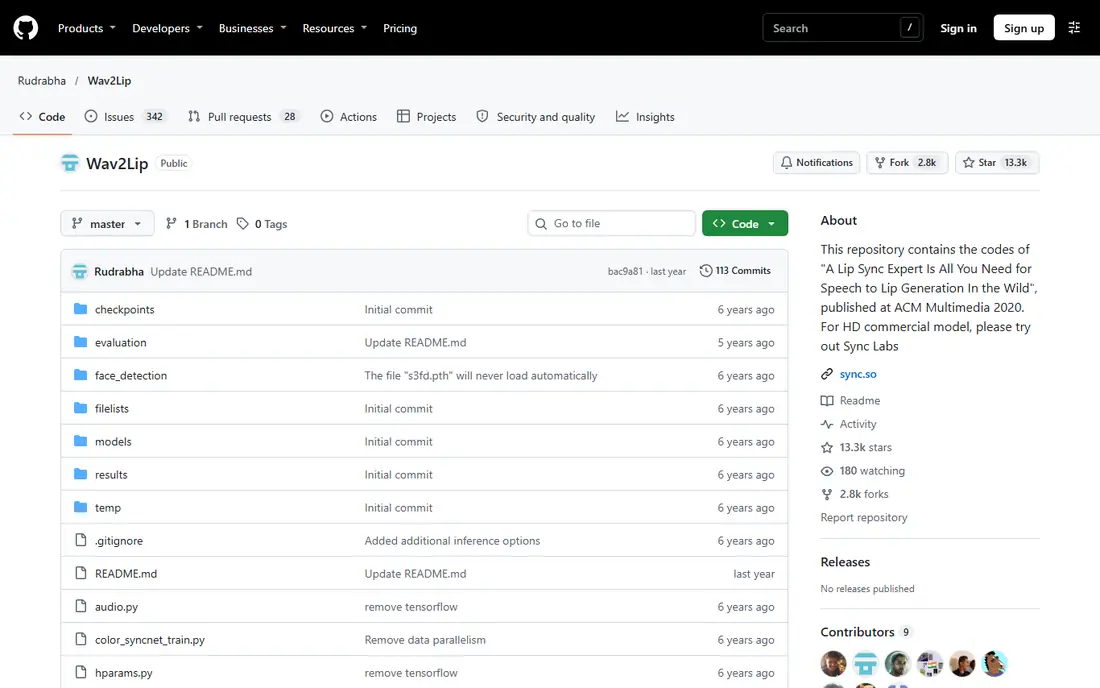
Wav2Lip solves one narrow problem brilliantly: given a face and an audio track, it re renders the mouth to match the words. Its legitimate home is visual dubbing, where a distributor, with full rights and the production's consent, syncs an actor's lips to the translated dialogue so the dubbed version stops looking dubbed.
The trade off is focus against finish. It does one stage of a pipeline and expects engineering around it. Wav2Lip fits localisation teams with rights to the material, and researchers working on speech driven animation.
What we like- The research standard for accurate lip sync to new audio
- The technology behind legitimate visual dubbing that makes translated films watchable
- Small and focused codebase
- Widely cited and extended
Watch out for- Research code, not a packaged product
- Output resolution is limited by modern standards
- Dubbing a real person's performance raises consent and rights questions that must be settled first
Starting priceFree
Free planYes
InsightFace is the analysis engine room: face detection, alignment, and recognition models that other projects build on, including swapping pipelines that need precise landmarks and forensic tools comparing identity across media. Its models appear throughout the published research in this field.
The trade off is component against product, and licence care is required on the model weights. InsightFace fits researchers and engineers building consented production tools or forensic analysis, who can read a licence and a paper trail.
What we like- State of the art face recognition, detection, and alignment models used across research
- The analysis layer under many swap and forensic pipelines
- Strong benchmarks and active releases
- Python friendly
Watch out for- Some pretrained models carry research only licences, read them
- It is a toolkit, not an application
- Recognition technology itself raises privacy duties for any deployment
Starting priceFree
Free planYes
DeepFaceLive performs the swap live, which has one clear legitimate home: a performer appearing on their own stream as a fictional character or their own altered persona, a digital costume. Used on anyone else's face, or to pose as another real person on a call, it is impersonation, and in many places a crime.
The trade off is immediacy against risk. The consent and identity rules here are not fine print; they are the entire basis on which the tool can be used lawfully. DeepFaceLive fits streamers and virtual performers working with their own likeness or licensed characters only.
What we like- Swaps faces in a live camera feed in real time
- The legitimate use is performers streaming as a character with their own setup and consent
- Works with OBS style workflows
Watch out for- Real time impersonation is the highest risk use in this category
- Needs a strong GPU
- From the DeepFaceLab author, with the same ageing codebase caveats

#6
First Order Motion Model
Best for: Animating a still portrait
Visit github.com
Starting priceFree
Free planYes
First Order Motion Model transfers movement from a video onto a still image, making a portrait turn, speak, and smile. Museums and educators have used the technique, with rights and family consent, to animate historical photographs, and researchers use it to study motion transfer.
The trade off is wonder against consent sensitivity. A photograph of a person is not permission to animate them. The model fits researchers and rights cleared heritage and creative projects.
What we like- Animates a single image from a driving video, the technique behind portrait animation research
- Influential, heavily cited paper and code
- Useful for historical photo exhibits with rights cleared
Watch out for- Research code with modest output resolution
- Animating a real person's photograph without consent is exactly the misuse the law targets
- Needs ML experience to run
Starting priceFree
Free planYes
FaceForensics++ is the defensive side of the field: a large dataset of manipulated and real videos with the code and benchmarks that detection research is graded on. Forensic analysts, platform trust teams, and academics use it to build and honestly evaluate detectors.
The trade off is rigour against readiness. It will not scan a video and give a verdict out of the box. FaceForensics++ fits detection researchers and forensic teams building capability, which is the work that keeps the rest of this list honest.
What we like- The standard public benchmark dataset and code for deepfake detection research
- Includes multiple manipulation methods with ground truth
- The dataset new detectors are measured against
- Academic access process
Watch out for- A dataset and benchmark, not a turnkey detector
- Access requires agreeing to research terms
- Detectors trained on it still fail on new generation methods, which is the research problem itself
Starting priceFree
Free planYes
SimSwap is an academic framework that swaps identity from a single photograph, published so the research community can study quality, identity preservation, and, on the defensive side, detection. It appears in this list as research infrastructure, with the same consent rules as everything above, stated more sharply because single image methods lower the effort involved.
The trade off is research value against risk, and the licence restricts use. SimSwap fits academic researchers only, working under institutional rules on consented material.
What we like- A published research framework for high fidelity single image face swapping
- Identity and attribute handling studied in its paper
- Code available for academic work
- Useful comparison point in swap research
Watch out for- Research licence terms apply, check them before any use
- Single image swapping is the highest misuse potential form of the technology
- No support, no product polish
How we chose
We selected open source projects with a defensible legitimate role: established face swap systems used in consent based production and research (DeepFaceLab, FaceSwap), a lip sync model with a real localisation use (Wav2Lip), the analysis toolkit the field builds on (InsightFace), live performance software with a clear own likeness use (DeepFaceLive), a motion transfer research model (First Order Motion Model), the standard detection benchmark (FaceForensics++), and a cited academic swap framework (SimSwap). We excluded anything marketed for impersonation, anonymous prank content, or non consensual imagery, and we excluded closed commercial swap apps entirely because the topic asked for open source. Every project here is free; the real costs are hardware, time, and the legal duty described throughout.
Treat consent as the licence to begin: written permission from every identifiable person whose face or voice you process, covering exactly the use you intend. Keep that documentation with the project files. Know your jurisdiction: many US states ban non consensual synthetic intimate imagery and deceptive election media, several give victims a private right to sue, and the federal TAKE IT DOWN Act adds criminal penalties and platform removal duties for intimate imagery published without consent. Label synthetic media when you publish it, keep source and output records for forensic questions, and if your work is detection or verification, say plainly that detectors give probabilities, not proof. Institutions should route this work through an ethics or legal review before the first render, not after the first complaint.
Frequently asked questions
Is it legal to make a deepfake?
It depends on consent, content, and place. A face swap of yourself, or of a person who gave documented consent for that use in film, education, or research, is lawful in most places. Non consensual intimate imagery is a crime under the federal TAKE IT DOWN Act and many state laws, impersonation for fraud is fraud, and deceptive election media is banned in a growing list of states.
What do film productions actually use these tools for?
De ageing and stunt face replacement with the actor's consent, visual dubbing that syncs lips to translated dialogue with full rights, and previsualisation. Studios mostly use supervised pipelines with legal agreements on every face, which is the model any serious user should copy.
Can these tools detect deepfakes as well as make them?
Detection is a separate discipline. FaceForensics++ provides the benchmark data detectors are trained and measured on, and InsightFace models appear in forensic comparisons. No detector is conclusive: results are probabilities, and verification of important media should combine technical analysis with source checking.
What hardware do these projects need?
A modern NVIDIA GPU with generous memory is the practical baseline for training swap models; detection and analysis work runs on less. All eight projects are free software, so the budget goes to hardware and time instead of licences.
Why is open source deepfake software published at all?
Because the research community cannot defend against, regulate, or build legitimate uses for technology it cannot inspect. The same openness that creates risk also powers detection research, forensic capability, and the film and localisation uses described here. The projects above are published with stated expectations of lawful, consented use.
Can I animate old family photos with these tools?
Animating your own family's photographs, with the agreement of living relatives who appear, is the use case museums and families have adopted, and First Order Motion Model is the research tool behind it. Keep the results inside the family context you agreed, and label the animation as synthetic when it is shared.
Sources we checked (0)
Is your product missing or out of date?
We review this list regularly. Vendors can request a listing, send updated pricing or ask about featured placement.

Shihab Mia · Founder, Rankite
Shihab has 5+ years in B2B and SaaS SEO. He writes Rankite's software buying guides from pricing pages, documentation and public user reviews. More about Shihab.
 DeepFaceLab
 FaceSwap
 Wav2Lip
 InsightFace
 DeepFaceLive
 FaceForensics++
 SimSwap