How we make this list: we compare pricing pages, product documentation and public user reviews. Ratings come from G2, Capterra or Trustpilot, with the date we checked them.
Key takeaways
- BambooHR is the best all-around pick for SMBs, with offboarding checklists, e-signatures, and exit workflows built into plans starting at $10 per employee per month.
- Deel is the standout for distributed teams: its core HRIS, including offboarding workflows, is free for teams of up to 200 people.
- Most dedicated offboarding depth comes from workflow automation, not a separate product: the tools here handle exits as part of the employee lifecycle.
- If exit interviews and turnover insight matter most, Lattice and Talmundo focus on the feedback side of departures.
- Quote-only pricing is common in this category, so budget extra time for sales conversations with HiBob, Namely, HR Cloud, and Talmundo.
Quick comparison
| Tool | Best for | Starting price | Free plan |
|---|
 BambooHR BambooHR | SMBs that want structured, checklist-driven exits | $10 per employee/month (billed annually) | Free trial (7 days) |
 Deel Deel | Remote and global teams that need compliant exits everywhere | Free HRIS for up to 200 employees; paid modules from $5 per employee/month | Yes |
 HiBob HiBob | Mid-size companies that want offboarding people actually complete | See website | No |
 Lattice Lattice | Companies that want to learn from every departure | From $10 per user/month (billed annually) | No |
 HR Cloud HR Cloud | Frontline and multi-location teams with high turnover | See website | No |
 Talmundo Talmundo | Companies that treat exits as part of the employer brand | See website | No |
 Zavvy Zavvy | HR teams that want offboarding on autopilot | See website | No |
 Namely Namely | Mid-market companies wanting HR, payroll, and offboarding together | See website | No |
Is your product missing or out of date?
We review this list regularly. Vendors can request a listing, send updated pricing or ask about featured placement.
The best offboarding software
Starting price$10 per employee/month (billed annually)
Free planFree trial (7 days)
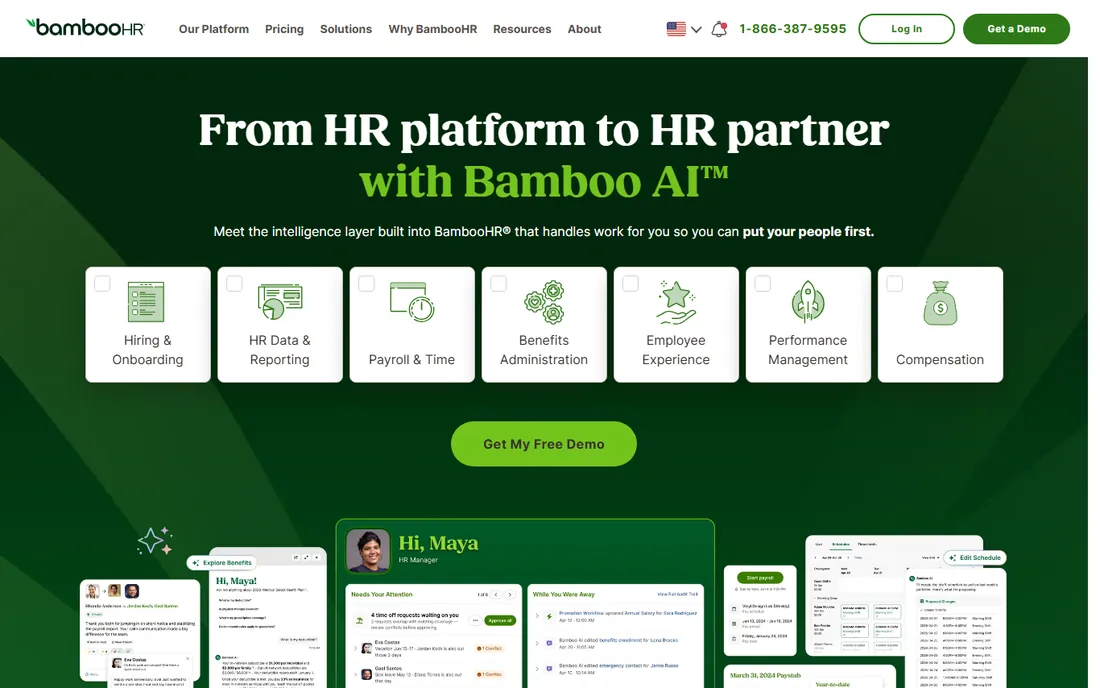
BambooHR treats offboarding as a natural extension of the employee record, which is exactly how it should work. When someone leaves, you trigger an offboarding workflow that assigns tasks to IT, payroll, and the departing employee's manager: collect equipment, revoke access, complete final paperwork, schedule the exit interview. Nothing lives in anyone's head or inbox.
The e-signature feature matters more than it sounds. Separation agreements, final pay acknowledgments, and benefits continuation forms all get signed digitally and filed against the employee record automatically. Turnover reporting then shows you patterns: which departments lose people fastest, how tenure trends look, and where exit interview themes cluster.
The catch is packaging. Offboarding checklists come with the core platform, but the deeper automation and analytics sit in Pro and Elite tiers at $17 and $25 per employee per month. Teams of 25 or fewer pay a flat $250 monthly minimum, which makes BambooHR pricey per head for very small companies. Still, for SMBs that want exits handled properly without enterprise software, this is the most complete option at a published price.
What we like- Built-in offboarding checklists with task assignments
- E-signatures for separation documents
- Strong reporting on turnover and tenure
Watch out for- No free plan and a $250 monthly minimum for small teams
- Payroll and benefits are separate add-ons
- Advanced automation needs higher tiers
#2
Deel
Best for: Remote and global teams that need compliant exits everywhere
Visit deel.com
Starting priceFree HRIS for up to 200 employees; paid modules from $5 per employee/month
Free planYes
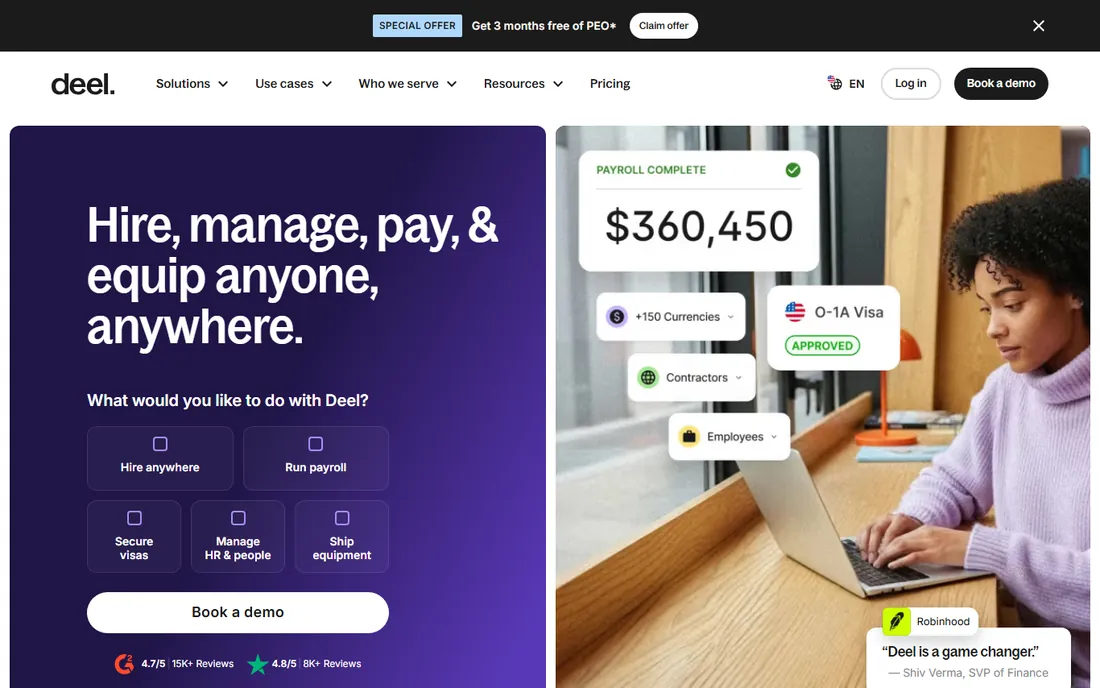
Deel's headline feature for this list is simple: the HRIS is free for teams up to 200 people, and it includes offboarding workflows. For a startup or small agency, that means structured exits, document collection, and access revocation checklists at zero software cost. Paid HR modules start at $5 per employee per month if you outgrow the free tier.
Where Deel pulls ahead of domestic HR tools is international exits. Terminating an employee in another country involves notice periods, severance rules, and final pay calculations that vary wildly by jurisdiction. Deel's compliance infrastructure handles those locally, which is something no US-only HRIS can match. Contractor offboarding, often an afterthought, gets proper workflows too.
The honest catch is that Deel is a platform of many modules, and the free HRIS is the entry point to a paid ecosystem. If you need Deel as employer of record, that starts at $599 per employee per month. Companies with only US employees may find a domestic HRIS simpler. But for distributed teams watching costs, free offboarding workflows with global compliance is genuinely hard to beat.
What we like- Core HRIS free for teams up to 200
- Offboarding workflows handle compliance across 150+ countries
- Contractor offboarding included
Watch out for- Full EOR and payroll modules are expensive
- Performance management integrations are thinner
- No free trial for paid modules
#3
HiBob
Best for: Mid-size companies that want offboarding people actually complete
Visit hibob.com
Starting priceSee website
Free planNo
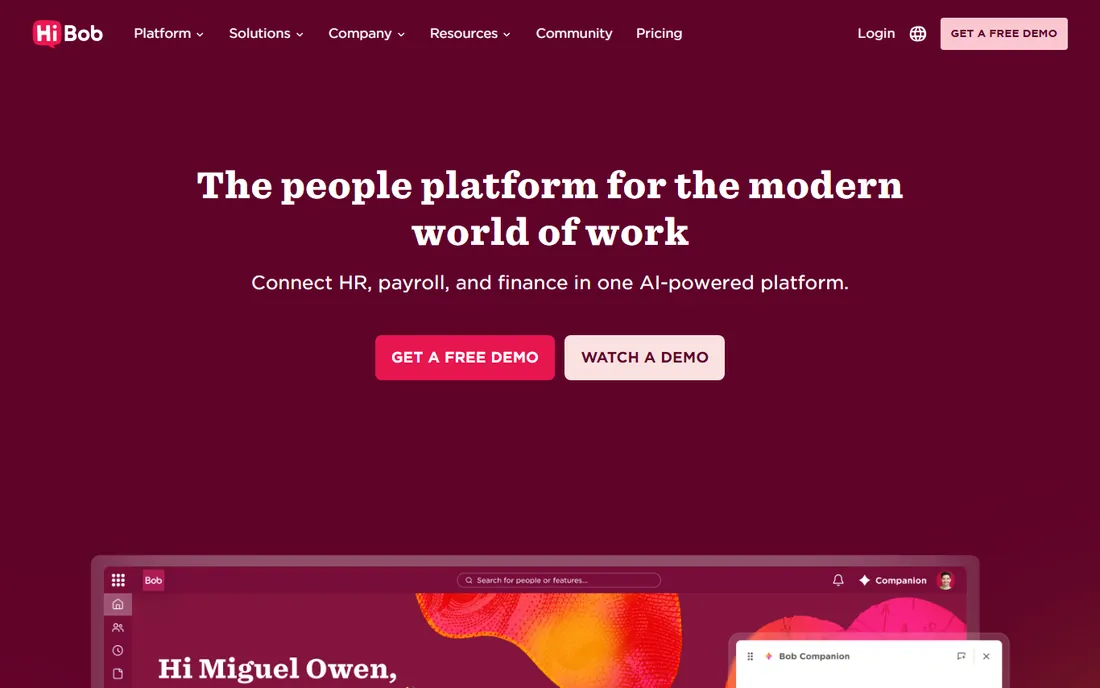
HiBob, whose platform is called Bob, wins on the factor most offboarding tools ignore: whether anyone actually uses the thing. Exit workflows fail when departing employees and their managers ignore clunky HR portals. Bob's interface feels closer to consumer software, which means separation tasks, exit surveys, and equipment returns actually get done instead of lingering for weeks.
The platform automates the full lifecycle in one flow: onboarding, reviews, and offboarding connect so that nothing about a departure starts from scratch. Offboarding tasks trigger automatically, documents route for e-signature, and access deprovisioning ties into IT workflows. People analytics then surface regretted versus non-regretted attrition and flight-risk signals.
The catch is the buying process. HiBob does not publish pricing; third-party estimates land around $16 to $25 per employee per month, plus an implementation fee. That puts it firmly in mid-market territory, and small companies will find BambooHR or Deel more accessible. If you have 100-plus employees and exits currently run on email threads, Bob is worth the quote.
What we like- Modern interface drives high employee adoption
- Automated onboarding, review, and offboarding flows
- Strong people analytics
Watch out for- Quote-only pricing
- Implementation fees typically add 10 to 20 percent
- Some advanced configurations need extra setup
#4
Lattice
Best for: Companies that want to learn from every departure
Visit lattice.com
Starting priceFrom $10 per user/month (billed annually)
Free planNo
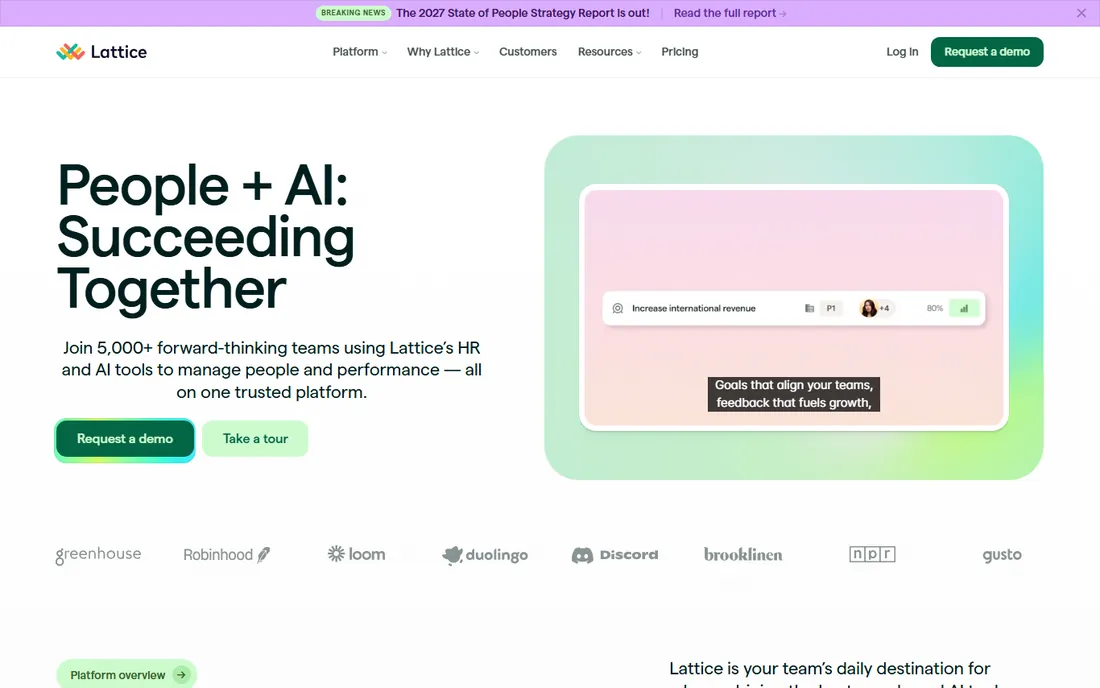
Lattice approaches offboarding from the insight side rather than the checklist side. Its engagement module runs exit surveys automatically when someone leaves, then connects that feedback to performance history, engagement trends, and manager effectiveness. If you want to know why people actually leave, and whether it was preventable, this is the deepest tool on the list.
The platform's strength is connecting the dots across the employee journey. Engagement survey scores from six months ago, review ratings, and goal completion all sit alongside exit feedback, so patterns emerge that a standalone exit interview form would miss. The interface is polished, and HR teams consistently rate it among the easiest performance tools to administer.
Two honest catches. First, Lattice discontinued its HRIS and payroll products in 2026, so offboarding checklists and final-pay workflows live in whatever HRIS you pair it with; Lattice covers the feedback and analytics layer. Second, the $4,000 annual minimum means teams under about 40 people pay a steep effective rate. Lattice fits companies that already run a solid HRIS and want to understand attrition, not companies looking for an all-in-one exit workflow.
What we like- Excellent exit surveys and engagement analytics
- Performance data connects to departure reasons
- Clean, well-designed interface
Watch out for- $4,000 annual minimum prices out small teams
- HRIS and payroll discontinued in 2026, so it pairs with another system
- No free trial
#5
HR Cloud
Best for: Frontline and multi-location teams with high turnover
Visit hrcloud.com
Starting priceSee website
Free planNo
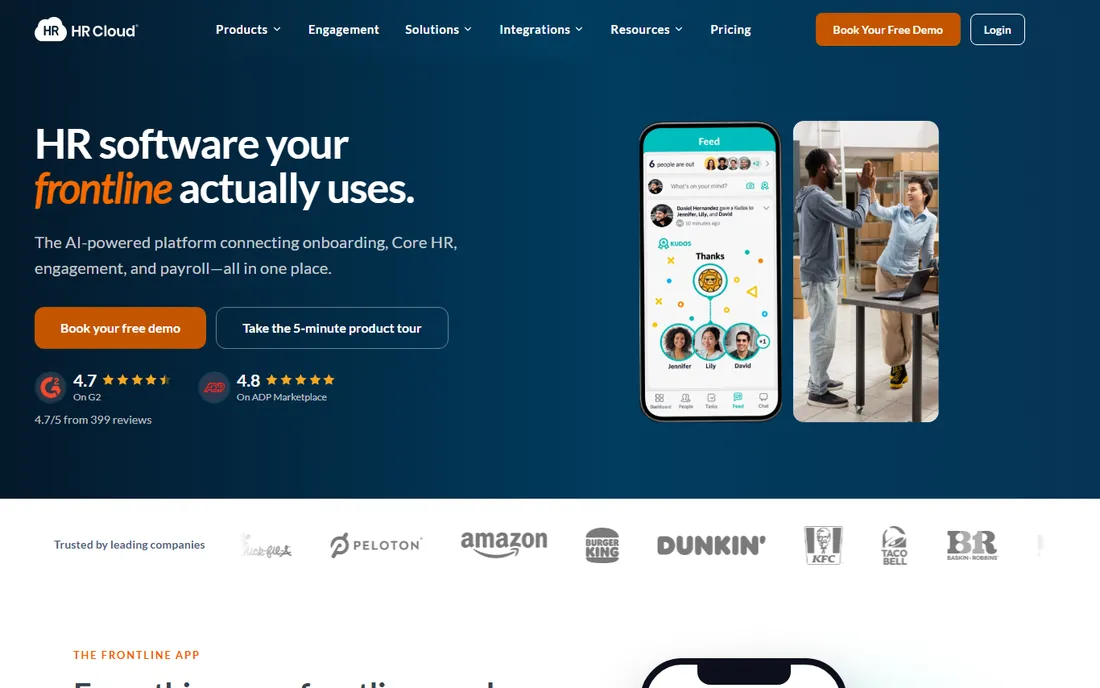
HR Cloud is built for the industries where offboarding happens constantly: retail, hospitality, senior care, and field services. When you process dozens of exits a month across multiple locations, the departure workflow has to work from a phone, not a desk. HR Cloud's mobile-first design means store managers can complete separation checklists, collect equipment, and file documents without ever opening a laptop.
The platform covers the entire employee lifecycle, and offboarding is treated as a first-class module rather than an afterthought. Workflows connect to the HRIS, so final pay, benefits continuation, and record retention trigger from the same termination event. The company reports customers going live in about six weeks with a dedicated implementation lead, which is fast for this category.
The catch is pricing opacity. HR Cloud sells modular suites with custom quotes, so you cannot budget without a sales conversation. The platform also shines brightest when you adopt several modules together; buying offboarding alone may not justify the implementation effort. High-turnover, multi-site operators should shortlist it. Single-office teams will find simpler options.
What we like- Full lifecycle coverage from onboarding through offboarding
- Strong mobile experience for deskless workers
- Modular suites let you start small
Watch out for- Quote-only pricing
- Breadth of modules can overwhelm small teams
- Best value comes from adopting multiple suites
#6
Talmundo
Best for: Companies that treat exits as part of the employer brand
Visit talmundo.com
Starting priceSee website
Free planNo
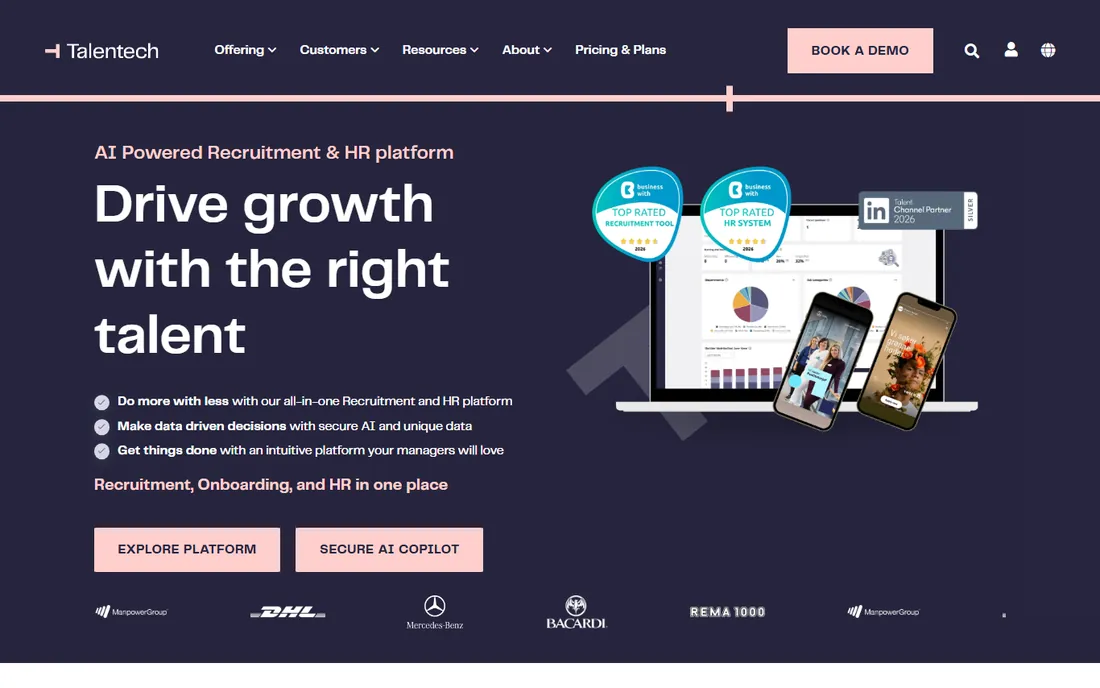
Talmundo, now part of Talentech, comes at offboarding from the employee experience angle. The premise is that how someone leaves shapes what they tell the market about you, and in tight labor markets, alumni become referrers, customers, and sometimes boomerang hires. Talmundo builds structured, branded offboarding journeys with feedback collection baked in.
The platform's survey and feedback tools are its core strength. Exit interviews become structured digital experiences rather than awkward conference room conversations, and the data feeds into retention analytics. Integration with the broader Talentech recruitment and HR platform means the journey from candidate to alumni lives in one system.
The honest catch is fit. Talmundo is lighter on core HRIS functionality than BambooHR or HiBob, so payroll-adjacent offboarding tasks may need another system. Pricing is quote-only, and its European heritage means US-specific compliance workflows deserve verification during the demo. It suits companies that already run a solid HRIS and want to upgrade the human side of departures.
What we like- Experience-focused offboarding journeys
- Strong feedback and survey tooling
- Now part of the broader Talentech platform
Watch out for- Quote-only pricing
- European roots mean US compliance depth varies
- Narrower HRIS functionality than all-in-one suites
#7
Zavvy
Best for: HR teams that want offboarding on autopilot
Visit zavvy.io
Starting priceSee website
Free planNo
Zavvy's pitch is automation depth. Its no-code workflow builder lets HR teams design exit journeys that trigger the right tasks, messages, surveys, and training handoffs automatically when a departure is recorded. Instead of a static checklist, offboarding becomes a living workflow that adapts by role, location, and reason for leaving.
Because Zavvy also handles onboarding, training, and performance, the departure workflow can do things point tools cannot: automatically assign knowledge-transfer sessions, route the leaver's training materials to their successor, and schedule stay-interview-style check-ins with the remaining team. AI assistance helps draft the communications and surveys inside those workflows.
The catch is scope and scale. Zavvy is a broader people-enablement platform, so companies that only need offboarding checklists are buying more product than necessary. Pricing requires a demo and quote, and as a German vendor it has less US market presence than the domestic options. It fits mid-size companies that want to automate the whole people journey, not just the exit.
What we like- Powerful no-code workflow builder for exit journeys
- Combines offboarding with training and performance
- AI-assisted content creation
Watch out for- Quote-only pricing
- Broader people-enablement scope may exceed offboarding needs
- Smaller vendor with less US market presence
#8
Namely
Best for: Mid-market companies wanting HR, payroll, and offboarding together
Visit namely.com
Starting priceSee website
Free planNo
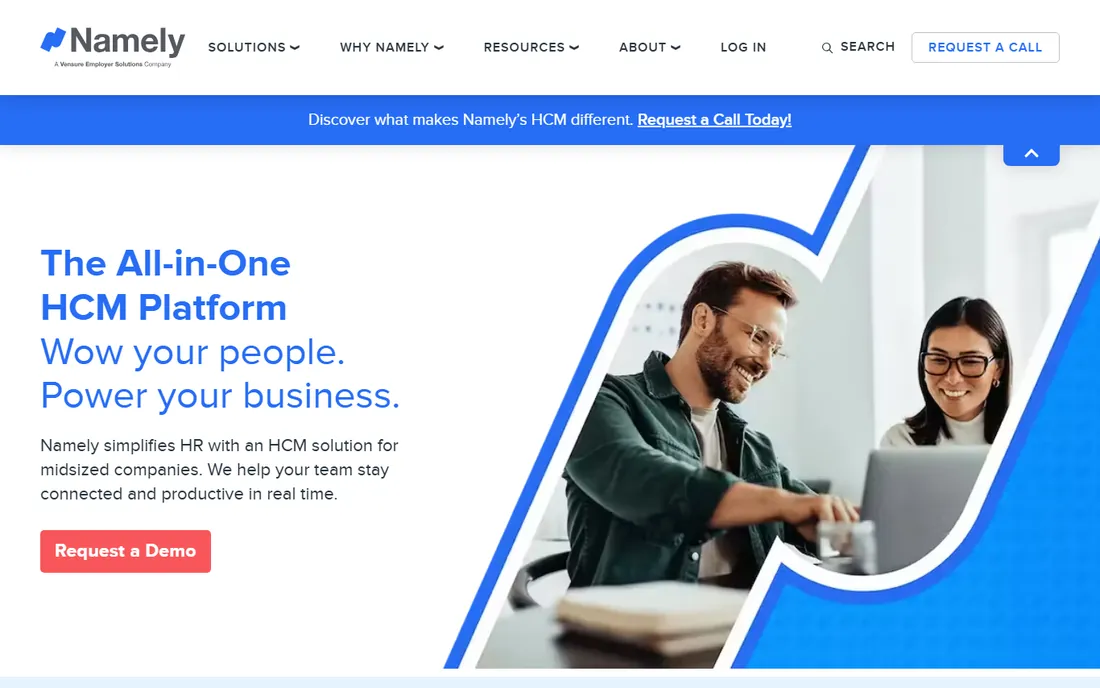
Namely handles offboarding the old-fashioned way: as part of a complete HCM where HR, payroll, benefits, and talent management share one record. When an employee departs, final pay calculates from the same time data, benefits continuation triggers from the same enrollment record, and compliance documents generate from the same file. No integrations to break, no data to re-enter.
The differentiator is managed services. Companies without a deep HR bench can have Namely's team handle payroll, benefits, and HR administration, which means offboarding gets professional execution even with a one-person HR department. Compliance support across states is a particular strength, with reviewers praising the guidance on varying state requirements.
The honest catch is that Namely is a platform commitment, not a quick purchase. Pricing is quote-only, implementation takes real effort, and the value proposition clicks for companies of roughly 50 to 1,000 employees. Smaller teams should look at BambooHR or Deel. But if you want one vendor accountable for the entire exit, from last paycheck to COBRA notice, Namely delivers.
What we like- Unified HCM with payroll, benefits, and talent in one system
- Managed services available for HR-light teams
- Strong compliance support
Watch out for- Quote-only pricing
- Implementation is heavier than point solutions
- Best fit starts around 50 employees
What to look for in offboarding software
Start with the workflow engine, because checklists are the whole product here. Every tool on this list can assign tasks, but the good ones trigger them automatically from the termination event, route them to the right people, and escalate when tasks stall. Ask each vendor to show you exactly what happens, step by step, when you mark someone as terminated. If the demo skips this, the product probably does too.
Next, verify the compliance coverage for every state and country where you employ people. Final pay timing rules, separation notice requirements, and benefits continuation obligations vary enormously. A tool that handles California and New York may know nothing about your obligations in Texas or Toronto. Get specifics in writing during evaluation, not after signing.
Do not forget the IT handoff
The most commonly botched part of offboarding is access revocation. Map every system a departing employee can touch: email, CRM, payroll, banking, social accounts, building access. Then confirm the tool either integrates with your identity provider or at minimum generates a complete, trackable revocation checklist. Orphaned accounts are a security incident waiting to happen.
Measure what exits teach you
Offboarding software should make you smarter about retention, not just tidier about paperwork. Look for exit survey automation, attrition analytics, and regretted-versus-non-regretted departure tracking. If the tool cannot tell you why people leave and whether it was preventable, you are buying half a product.
How we chose
We evaluated offboarding capabilities across HR platforms using vendor pricing pages, product documentation, and feature descriptions, cross-checked against public reviews on G2, Capterra, and TrustRadius, plus buyer discussions on Reddit and HR communities. We weighted automated exit workflows, compliance support, exit survey and analytics depth, e-signature and document handling, IT deprovisioning integrations, and pricing transparency. We favored tools serving small and mid-size US companies and included both all-in-one HRIS platforms and experience-focused specialists. We did not conduct hands-on testing; rankings reflect documented features, verified pricing, and reviewer consensus.
Offboarding mistakes that come back to haunt you
The costliest mistake is treating the last day as the end of the process. Final pay errors, missed benefits notices, and unrevoked system access all surface weeks later, when they are harder and more expensive to fix. Build your offboarding workflow to run at least 30 days past the departure date, with tasks scheduled for final payroll verification, access audits, and benefits follow-up.
The second mistake is skipping the exit interview or running it badly. A rushed, checkbox-style conversation with HR produces nothing. Structured digital surveys sent a few days after departure, when the person can be candid, generate far better insight. The tools with the strongest feedback analytics earn their keep here.
Finally, do not burn the bridge. Alumni refer candidates, become clients, and sometimes return as boomerang hires. A professional, well-organized exit is cheap employer branding. A chaotic one, where the departing employee chases their final paycheck for a month, is expensive in ways that never show up on a spreadsheet.
Frequently asked questions
What is offboarding software?
Offboarding software manages the employee exit process: task checklists for equipment return and access revocation, separation documents with e-signatures, final payroll coordination, exit interviews, and compliance filings. Most tools deliver it as part of a broader HR platform rather than a standalone product.
How much does offboarding software cost?
When bundled into an HRIS, expect $10 to $25 per employee per month for tools like BambooHR, with small-team minimums around $250 monthly. Deel offers core HRIS with offboarding workflows free for up to 200 employees. Enterprise and mid-market platforms like HiBob, Namely, and HR Cloud are quote-only.
What should an offboarding checklist include?
A complete checklist covers: resignation acceptance and documentation, knowledge transfer planning, equipment and asset collection, system access revocation, final payroll and benefits continuation, separation agreement signatures, the exit interview, and record retention per legal requirements. Automate the assignments so nothing depends on memory.
How long should the offboarding process take?
The active exit typically runs through the notice period, but the full process should extend about 30 days past the last day for final payroll verification, access audits, and benefits follow-up. Exit surveys often go out a few days after departure, when responses are most candid.
Can offboarding software handle international employees?
Some can. Deel is built for compliant exits across 150-plus countries, handling local notice periods and severance rules. Domestic HRIS platforms vary widely in international depth, so verify country-specific compliance during evaluation if you employ people abroad.
Sources we checked (8)
- https://www.bamboohr.com/
- https://www.deel.com
- https://www.hibob.com/
- https://lattice.com/
- https://hrcloud.com/
- https://www.talmundo.com/
- https://www.zavvy.io/
- https://namely.com/
Is your product missing or out of date?
We review this list regularly. Vendors can request a listing, send updated pricing or ask about featured placement.

Shihab Mia · Founder, Rankite
Shihab has 5+ years in B2B and SaaS SEO. He writes Rankite's software buying guides from pricing pages, documentation and public user reviews. More about Shihab.