How we make this list: we compare pricing pages, product documentation and public user reviews. Rankite is independent; if a vendor ever pays for a featured spot, that listing is clearly labeled Partner.
Key takeaways
- QGenda is the healthcare scheduling leader for hospitals and large systems.
- NurseGrid gives nurses and managers simple, modern shift management.
- ShiftWizard (now HealthStream) brings enterprise nurse scheduling depth.
- OnShift, SmartLinx and SnapSchedule cover long-term care and mid-size facilities.
- BookJane, ShiftKey and Nursa fill open shifts with on-demand clinicians.
- Deputy works for smaller clinics needing straightforward scheduling.
Quick comparison
| Tool | Best for | Starting price | Free plan |
|---|
 QGenda QGenda | Hospital workforce scheduling | See website | No |
 NurseGrid NurseGrid | Simple nurse shift management | Free | Yes |
 ShiftWizard ShiftWizard | Enterprise nurse scheduling | See website | No |
 SnapSchedule 365 SnapSchedule 365 | Flexible shift scheduling | See website | Free trial |
 OnShift OnShift | Long-term care scheduling | See website | No |
 SmartLinx SmartLinx | Workforce management suite | See website | No |
 BookJane BookJane | On-demand shift filling | See website | No |
 ShiftKey ShiftKey | Independent nurse marketplace | See website | No |
 Nursa Nursa | Per-diem nursing marketplace | See website | No |
 Deputy Deputy | Small clinic scheduling | See website | Free trial |
Is your product missing or out of date?
We review this list regularly. Vendors can request a listing, send updated pricing or ask about featured placement.
The best nurse scheduling software
Starting priceSee website
Free planNo
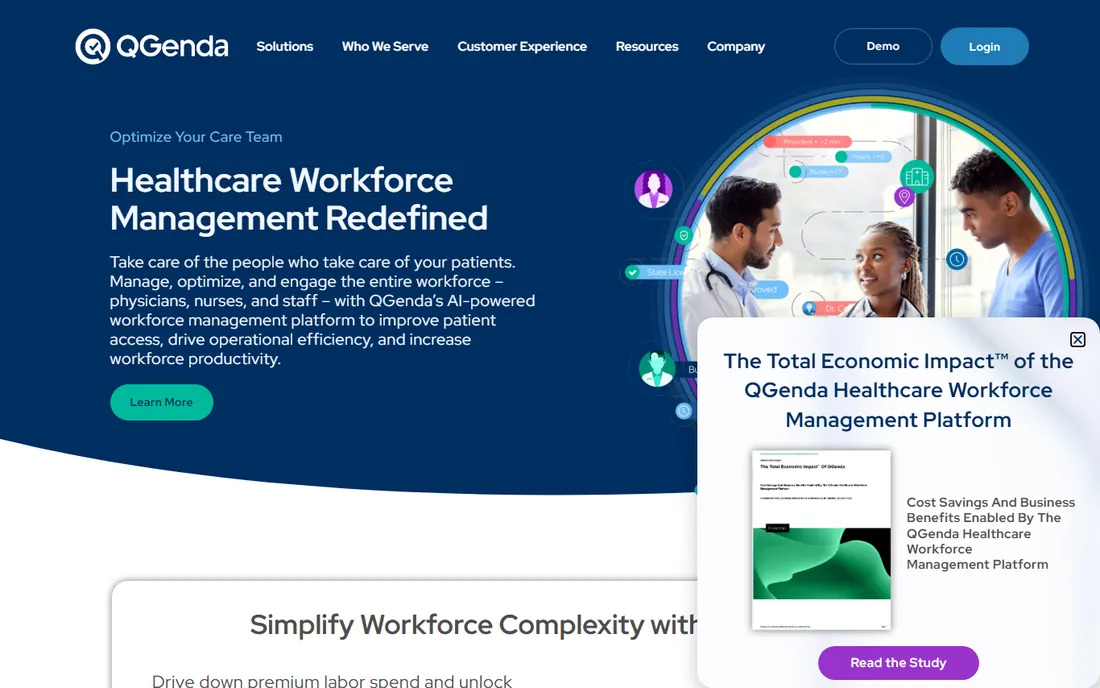
QGenda is the name in healthcare workforce scheduling: provider and nurse scheduling with credentialing, complex rules, time tracking and analytics for hospitals and health systems. The depth in healthcare-specific requirements, certifications, union rules, fatigue management, is unmatched.
It is enterprise software with enterprise cost and implementation. Small facilities drown. But for health systems where scheduling complexity is clinical as well as operational, QGenda is the standard.
QGenda's credentialing tracks licenses, certifications and competencies: assignments block when credentials lapse. The rules engine handles union contracts and fatigue policies. Analytics reveal staffing patterns and costs. For health systems, the clinical compliance integration is what justifies the enterprise investment.
QGenda's analytics optimize staffing: the patterns inform decisions. The compliance is built in. For the health system, the enterprise depth justifies.
QGenda's mobile app puts the schedule in every clinician's pocket: shift swaps and open shifts resolve without the staffing office. The predictive analytics forecast demand from historical patterns. For health systems, the reduction in premium labor costs funds the investment.
What we like- The healthcare scheduling standard
- Deep credentialing and rules
- Proven at health-system scale
Watch out for- Enterprise pricing and complexity
- Implementations are major
- Overkill for small clinics
Starting priceFree
Free planYes
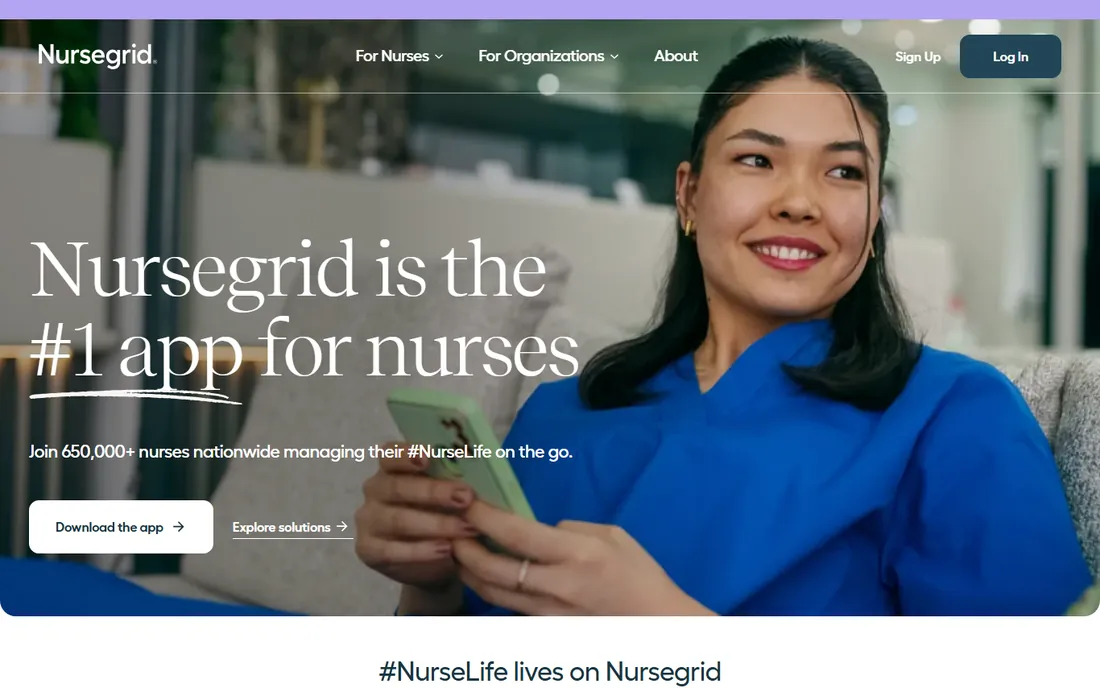
NurseGrid keeps nurse scheduling simple: post shifts, manage availability, communicate with the team, free. Nurses adopt it readily, and managers get organized without enterprise software. The mobile experience suits shift workers.
Enterprise depth, credentialing complexity and analytics trail the leaders. But for units and small facilities wanting simple scheduling nurses like, the free offering is excellent.
NurseGrid's simplicity drives adoption: nurses actually use it, which is the hardest part of scheduling software. The communication features reduce the phone tag. For units wanting basic scheduling done well and free, it works.
NurseGrid's communication reduces the phone tag: the coordination is easy. The simplicity drives use. For the unit, the free tool works.
NurseGrid's shift marketplace connects nurses across facilities: the extra shifts find willing staff. The free core keeps adoption high. For units, the grassroots tool solves the daily staffing puzzle.
What we like- Free and nurse-friendly
- Simple shift management
- Good mobile experience
Watch out for- Less depth than enterprise tools
- Smaller vendor
- Advanced features are thin
Starting priceSee website
Free planNo
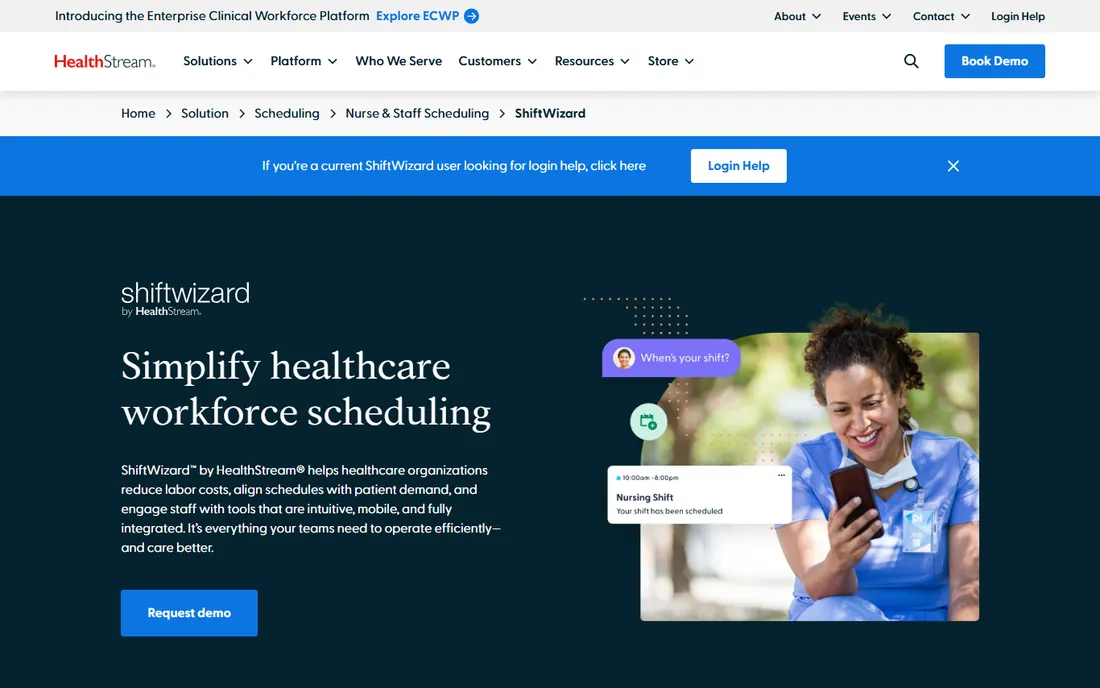
ShiftWizard, now part of HealthStream, provides enterprise nurse and staff scheduling: complex rules, self-scheduling, open shift management and analytics. The HealthStream ownership connects scheduling with the broader workforce platform.
The acquisition means evolving integration, and the enterprise focus brings complexity. But for large organizations wanting deep scheduling within the HealthStream ecosystem, it fits.
ShiftWizard's self-scheduling lets nurses pick shifts within rules: the autonomy improves satisfaction and retention. The open shift management fills gaps efficiently. HealthStream's ownership connects to the broader workforce platform. For large organizations, the depth handles complexity.
ShiftWizard's rules handle union complexity: the compliance is automatic. Nurses pick up shifts themselves. For the large organization, the depth handles it.
ShiftWizard's skill-based assignments match competencies to patient needs: the right nurse lands on the right unit. The fatigue rules prevent dangerous overwork. For large organizations, the safety compliance is as valuable as the scheduling.
What we like- Deep enterprise scheduling
- Now backed by HealthStream
- Good analytics
Watch out for- Enterprise complexity
- HealthStream integration still evolving
- Pricing is quote-based
Starting priceSee website
Free planFree trial
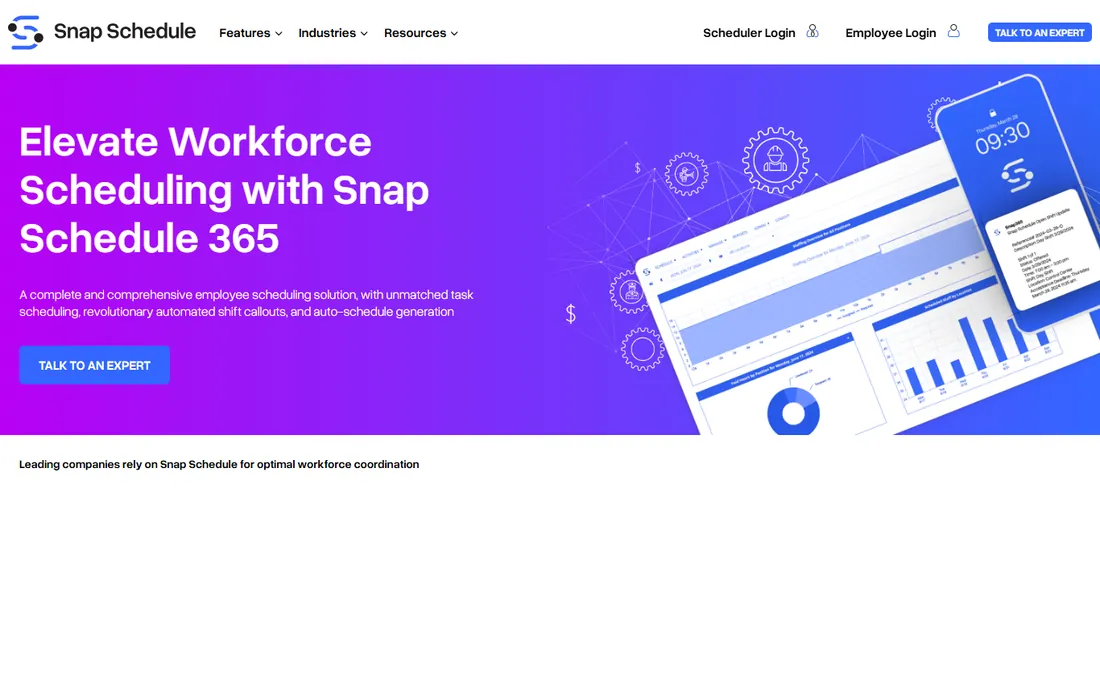
SnapSchedule 365 handles shift scheduling flexibly: drag-and-drop rosters, shift trades, time-off and reporting for healthcare and other shift operations. The affordability suits smaller facilities.
Nurse-specific depth like credentialing trails the healthcare specialists. But for straightforward shift scheduling done well, SnapSchedule delivers.
SnapSchedule's drag-and-drop rostering is fast to learn: managers build schedules in minutes. The shift trade features let staff swap shifts. Reporting covers the basics. For straightforward scheduling needs, the simplicity is the virtue.
SnapSchedule's speed builds rosters fast: the drag-and-drop is intuitive. The trades give staff flexibility. For the straightforward need, the simplicity wins.
SnapSchedule's copy-forward rostering builds new schedules from proven patterns: the weekly grind shrinks. The availability management respects staff preferences. For straightforward operations, the speed is the entire pitch.
What we like- Flexible scheduling for any shift operation
- Affordable
- Easy to learn
Watch out for- Healthcare-specific features are thinner
- Smaller vendor
- Less ecosystem
Starting priceSee website
Free planNo
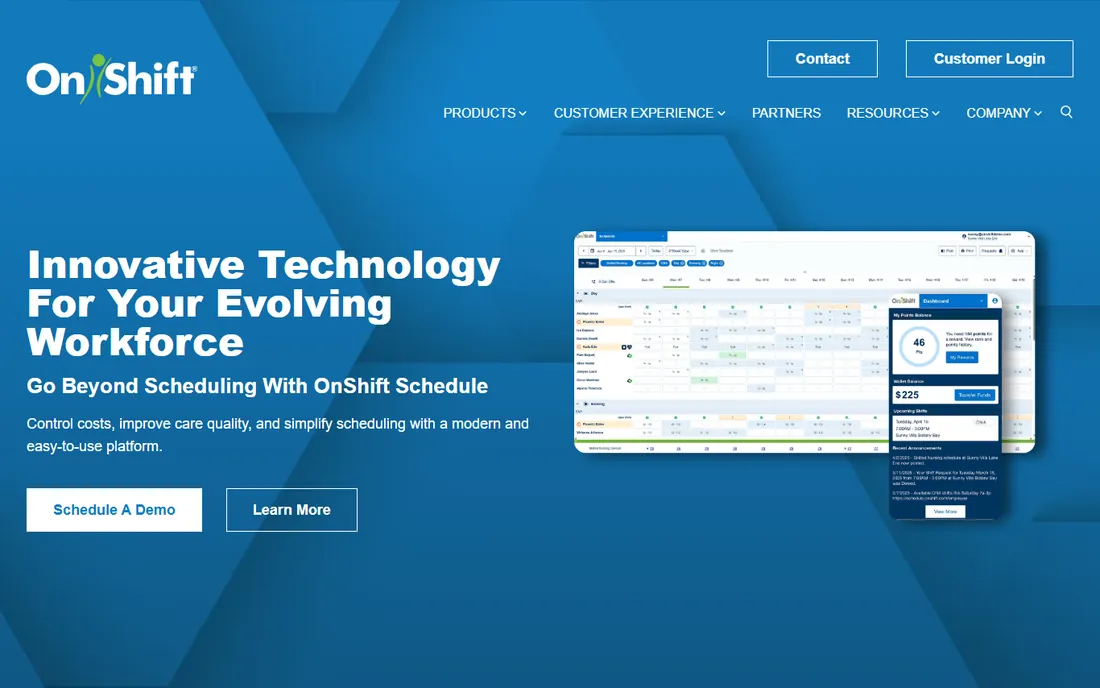
OnShift serves long-term care and senior living: scheduling, time tracking, hiring and engagement built for the LTC workforce reality. The industry focus shows in features like retention tools.
Hospitals need more clinical depth. But for LTC operators, OnShift's specialization beats generic healthcare tools.
OnShift's retention tools address the LTC staffing crisis: engagement surveys and recognition features. The hiring module sources candidates. Scheduling handles the shift complexity. For long-term care, the industry focus shows in every feature.
OnShift's industry focus shows: the LTC workflows fit. The retention tools address the crisis. For the long-term care facility, the specialization matters.
OnShift's wallet feature gives staff early wage access: the financial wellness perk aids retention. The survey tools surface engagement issues early. For long-term care, the retention focus addresses the real crisis.
What we like- Purpose-built for senior care
- Good engagement tools
- Strong in LTC market
Watch out for- LTC focus limits hospitals
- Pricing is quote-based
- Smaller than giants
Starting priceSee website
Free planNo
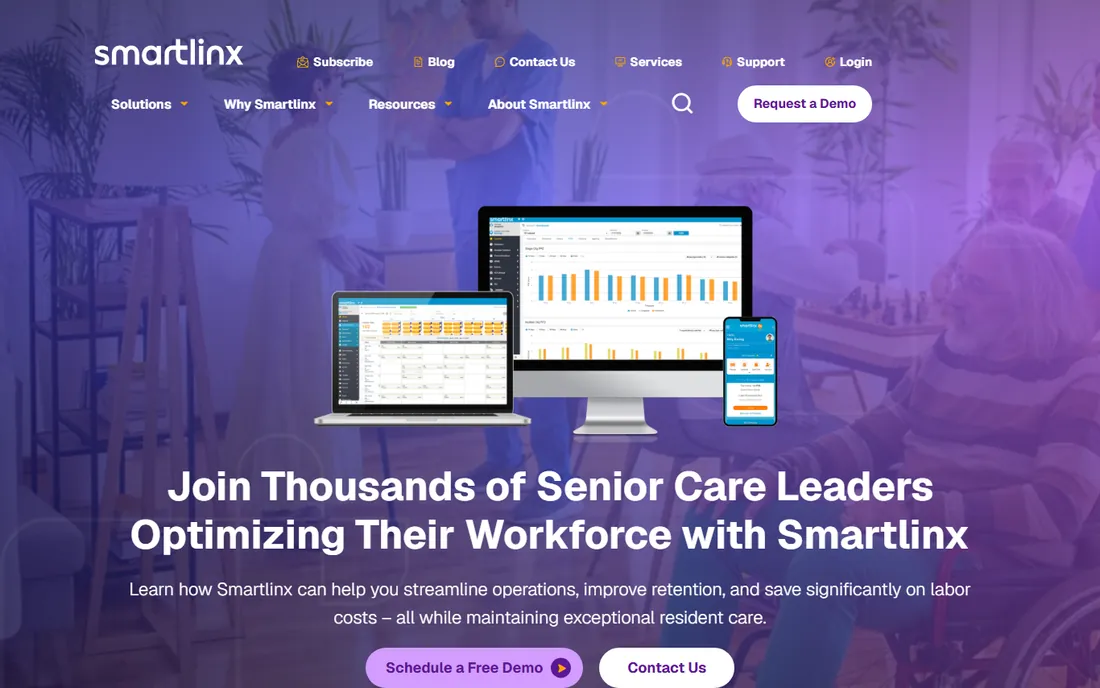
SmartLinx unifies scheduling, time and attendance, payroll and HR for healthcare: one system from shift to paycheck. The analytics help manage labor costs. Mid-size healthcare organizations get enterprise capability.
The suite brings complexity and implementation effort. But the unified workforce story suits organizations tired of disconnected systems.
SmartLinx' unified suite means schedule changes flow to payroll automatically: the integration eliminates reconciliation. The analytics optimize labor costs. For mid-size healthcare organizations, the single-system story is compelling.
SmartLinx' integration eliminates reconciliation: the payroll flows. The analytics optimize costs. For the mid-size organization, the single system compels.
SmartLinx' overtime alerts catch threshold breaches before they happen: the labor cost stays controlled. The schedule templates encode best practices. For mid-size healthcare, the proactive controls prevent budget surprises.
What we like- Full workforce suite: scheduling, time, payroll
- Good analytics
- Proven in healthcare
Watch out for- Suite complexity
- Pricing is quote-based
- Implementation needed
Starting priceSee website
Free planNo
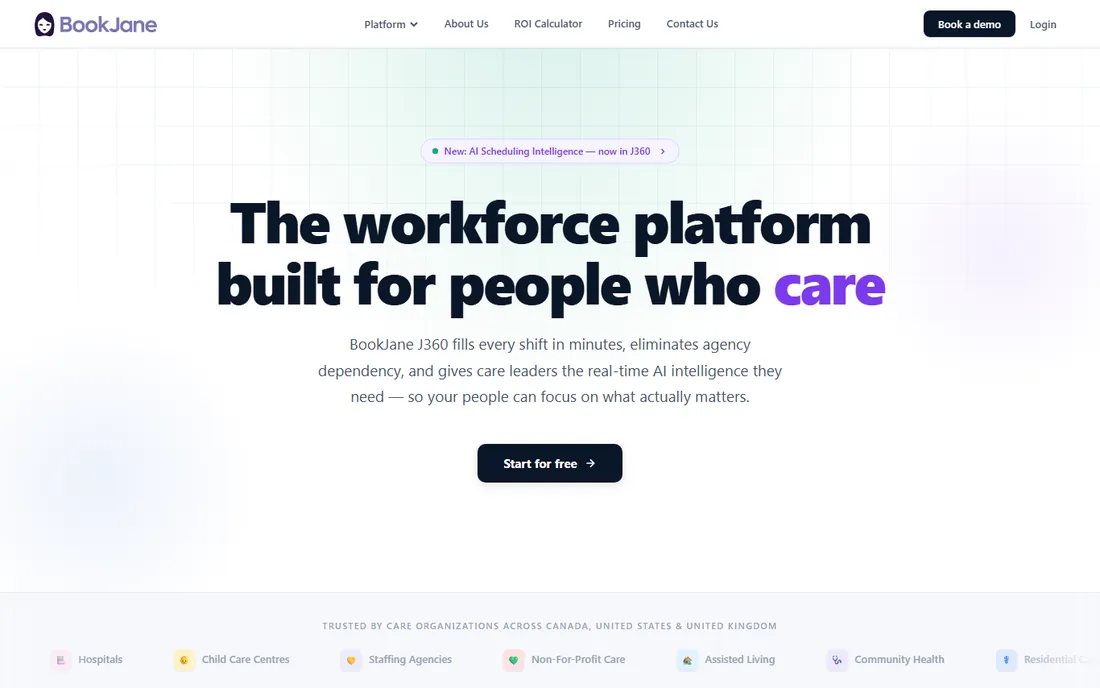
BookJane fills open shifts on demand: post the need, qualified nurses and caregivers claim it. Facilities reduce expensive agency reliance. The speed suits last-minute gaps.
Coverage varies by market, and the marketplace takes its cut. But for the perpetual open-shift problem, on-demand filling is transformative.
BookJane's speed fills the shifts that would otherwise go to expensive agencies: the cost savings are immediate. The quality ratings maintain standards. For facilities with chronic gaps, the on-demand model is transformative.
BookJane's marketplace fills gaps fast: the agency costs drop. The ratings maintain quality. For the chronic gaps, the model transforms.
BookJane's credential verification happens before the shift: the compliance is automatic. The rating system maintains care quality. For facilities, the speed-to-fill at lower cost is transformative.
What we like- Fills open shifts with qualified staff fast
- Reduces agency costs
- Easy to use
Watch out for- Marketplace model
- Availability varies by market
- Fees apply
Starting priceSee website
Free planNo
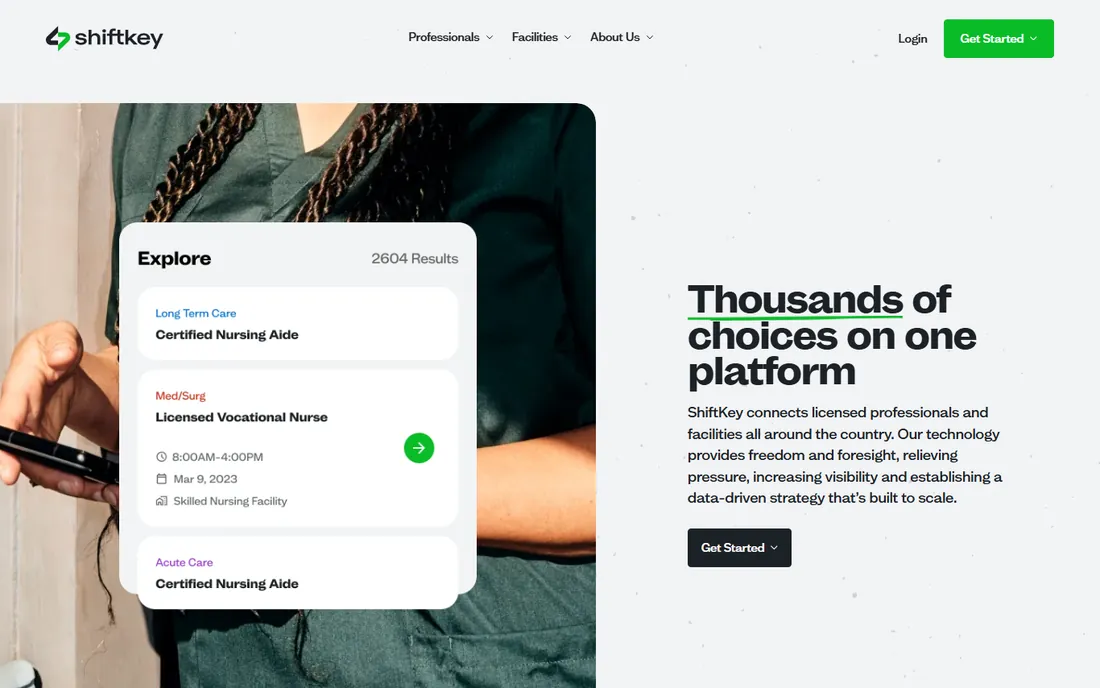
ShiftKey connects facilities with independent nurses and aides: post shifts, set your rate, clinicians bid. The marketplace model gives facilities control and professionals flexibility.
It is a marketplace, not a scheduling system; workforce management needs other tools. But for accessing flexible clinical labor, the scale works.
ShiftKey's marketplace dynamics let facilities set competitive rates: the pricing transparency beats agency opacity. The clinician quality varies, so screening matters. For flexible staffing, the scale works.
ShiftKey's transparency beats agency opacity: the rates are clear. The scale provides coverage. For the flexible need, the marketplace works.
ShiftKey's bidding lets clinicians name their price within facility ranges: the market finds equilibrium. The facility controls stay in charge. For flexible staffing, the transparency beats traditional agency relationships.
What we like- Large marketplace of independent clinicians
- Facilities set rates
- Flexible
Watch out for- Marketplace dynamics
- Quality varies
- Not a scheduling system
Starting priceSee website
Free planNo
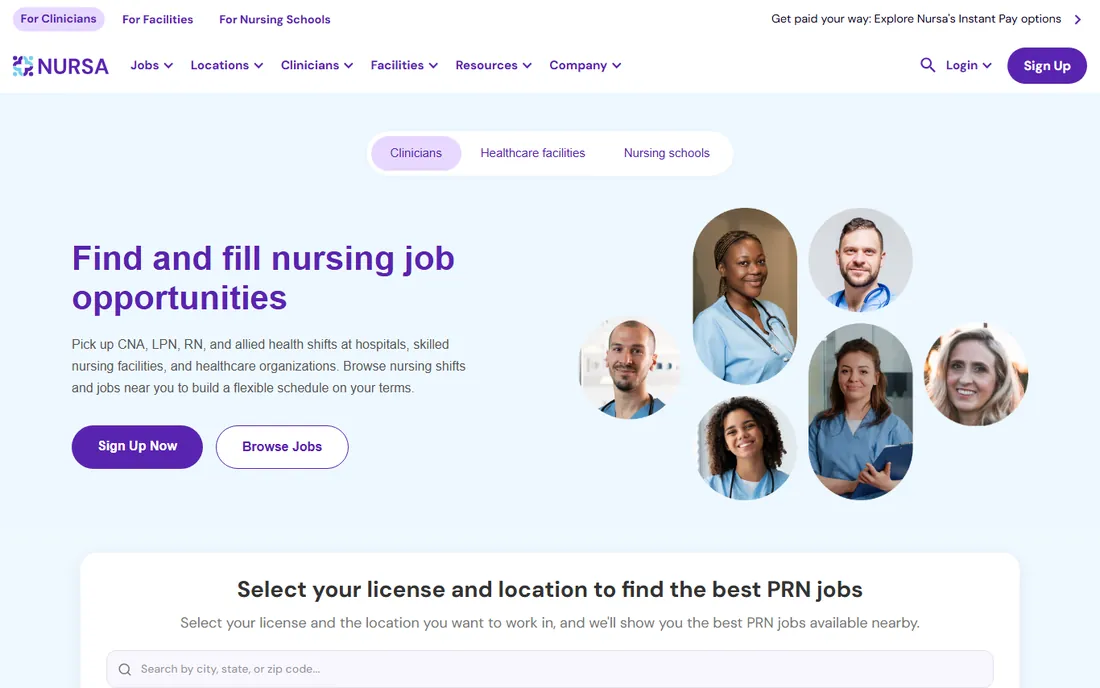
Nursa staffs per-diem shifts quickly: facilities post needs, local nurses pick them up through the app. Transparent pricing beats agency opacity. The speed helps chronic understaffing.
Per-diem costs exceed employed staff, and coverage varies. But as a release valve for staffing gaps, Nursa delivers.
Nursa's app experience is genuinely easy: posting and claiming shifts takes minutes. The transparent pricing shows the true cost. For per-diem needs, the speed is the value.
Nursa's app is genuinely easy: the shifts fill in minutes. The pricing is transparent. For the per-diem need, the speed is the value.
Nursa's instant pay options attract clinicians: the financial incentive fills hard shifts. The app simplicity drives adoption. For per-diem needs, the friction-free experience is the differentiator.
What we like- Fast per-diem staffing
- Transparent pricing
- Easy app experience
Watch out for- Per-diem focus
- Market coverage varies
- Premium over employed staff
Starting priceSee website
Free planFree trial
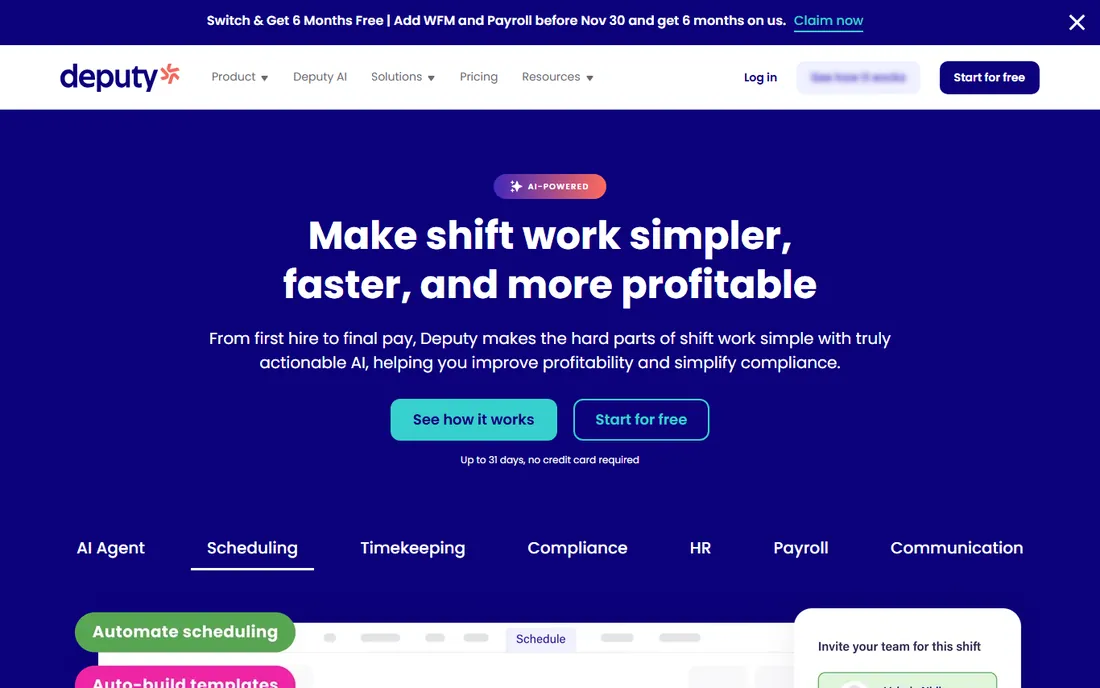
Deputy brings excellent general scheduling to small clinics: rosters, time clocks, messaging and compliance basics. Small practices get organized affordably.
Healthcare-specific needs like credentialing are absent. But for clinics whose scheduling is straightforward shifts, Deputy's quality exceeds healthcare tools costing more.
What we like- Excellent general scheduling
- Affordable
- Easy for small teams
Watch out for- Not healthcare-specific
- Credentialing is absent
- Limited clinical depth
How we chose
We selected tools with real healthcare scheduling adoption, from enterprise systems to shift marketplaces. We reviewed features and practitioner feedback, verified each vendor's current status, and noted ShiftWizard's place within HealthStream and ScheduleAnywhere's move to TCP Software.
Compliance and credentialing
Healthcare scheduling carries clinical weight: expired certifications, violated nurse-to-patient ratios and fatigued staff create real risk. Enterprise tools bake credentialing and rules in; simpler tools need manual processes alongside.
Verify the compliance features for your facility type and state during trial. The scheduling tool should prevent violations, not just record schedules.
Frequently asked questions
What is the best scheduling software for nurses?
QGenda for hospitals and health systems, NurseGrid for simple free scheduling, OnShift for long-term care. Match the tool to facility size and complexity.
How much does nurse scheduling software cost?
From free (NurseGrid) to affordable SaaS for small facilities, to enterprise contracts for health systems. Marketplaces charge per shift filled.
Can software handle nurse credentialing?
Enterprise tools like QGenda track certifications and block non-compliant assignments. Simpler tools need manual credential processes alongside.
How do I fill last-minute call-offs?
On-demand marketplaces (BookJane, ShiftKey, Nursa) fill gaps fast. Internal float pools managed in scheduling software help. Most facilities need both.
What about staff burnout?
Scheduling tools with fatigue rules, fair rotation and self-scheduling reduce burnout. The software enables good practices; management must implement them.
Do these integrate with payroll?
Most enterprise tools integrate with payroll and HR systems. Verify your specific payroll provider during evaluation.
Sources we checked (10)
- https://www.qgenda.com/
- https://nursegrid.com/
- https://www.healthstream.com/solution/scheduling/nurse-and-staff-scheduling/shiftwizard
- https://www.snapschedule.com/
- https://www.onshift.com/
- https://www.smartlinx.com/
- https://www.bookjane.com/
- https://www.shiftkey.com/
- https://nursa.com/
- https://www.deputy.com/
Is your product missing or out of date?
We review this list regularly. Vendors can request a listing, send updated pricing or ask about featured placement.

Shihab Mia · Founder, Rankite
Shihab has spent more than a decade helping SaaS and e-commerce brands grow through search. He writes Rankite's software buying guides from pricing pages, documentation and public user reviews. More about Shihab.