How we make this list: we compare pricing pages, product documentation and public user reviews. Rankite is independent; if a vendor ever pays for a featured spot, that listing is clearly labeled Partner.
Key takeaways
- The shortlist for most small nonprofits: Aplos ($79/month, built for fund accounting), QuickBooks ($38/month, using classes as a workaround) and Wave (free), which works for very small orgs.
- Grant-heavy nonprofits should shortlist MIP Fund Accounting and Sage Intacct; both track restricted funds and grants properly, but both hide their pricing behind quotes.
- Blackbaud Financial Edge NXT is the enterprise pick that pairs with Raiser's Edge NXT, with implementation budgets to match.
- QuickBooks, Xero, FreshBooks and Wave are for-profit accounting tools at heart: fine for simple operations, but none of them do real fund accounting.
Quick comparison
| Tool | Best for | Starting price | Free plan |
|---|
 Aplos Aplos | Small nonprofits that need true fund accounting without enterprise pricing | $79/month (Lite plan) | No (free trial) |
 QuickBooks QuickBooks | Nonprofits already running QuickBooks Online, or with an accountant who uses it | $38/month (Simple Start) | No (free trial) |
 Xero Xero | Small nonprofits wanting the cheapest cloud accounting on this list | $20/month (Early plan) | No (free trial) |
 Sage Intacct Sage Intacct | Midsize to large nonprofits, especially multi-entity orgs and foundations | See website (custom quote) | No |
 Blackbaud Financial Edge NXT Blackbaud Financial Edge NXT | Large nonprofits and educational institutions already on Blackbaud products | See website (custom quote) | No |
 Fund E-Z Fund E-Z | Small to midsize nonprofits wanting straightforward fund accounting on a budget | $140/month (cloud) | No |
 MIP Fund Accounting MIP Fund Accounting | Grant-heavy nonprofits, governments and school districts with complex reporting needs | See website (custom quote) | No |
 Wave Wave | Tiny nonprofits and volunteer-run orgs with zero software budget | Free | Yes (free plan) |
 FreshBooks FreshBooks | Small nonprofits that mostly send invoices, like consulting or fee-for-service programs | $23/month (Lite plan) | No (free trial) |
Is your product missing or out of date?
We review this list regularly. Vendors can request a listing, send updated pricing or ask about featured placement.
The best nonprofit accounting software
Your board treasurer just learned the hard way that regular accounting software cannot track a restricted grant. The donor gave $50,000 earmarked for the after-school program, and now nobody can prove where it went without digging through spreadsheets. That is the gap this list covers. The first five tools were built for fund accounting; the last four are general accounting tools that small nonprofits commonly use, with honest notes on what they cannot do.
#1
Aplos
Best for: Small nonprofits that need true fund accounting without enterprise pricing
Visit aplos.com
Starting price$79/month (Lite plan)
Free planNo (free trial)
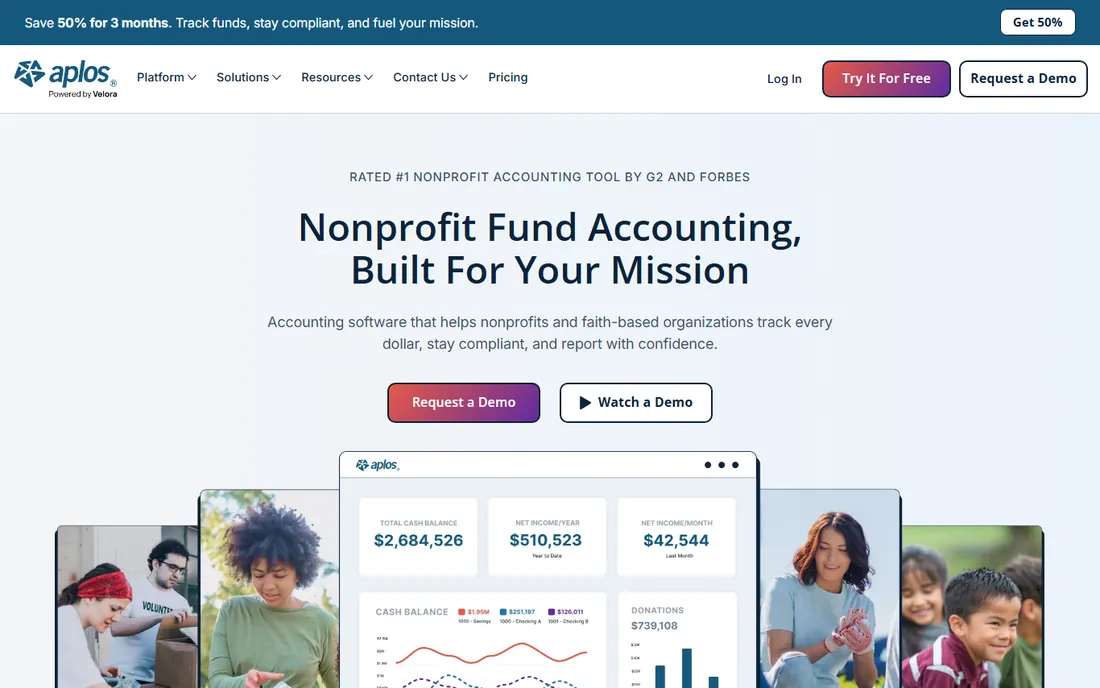
Aplos starts where most general accounting tools stop. Fund accounting is native, not a workaround, so you can track restricted and unrestricted funds side by side and produce the statement of financial position your auditor actually wants. Donor records, online giving and event registration live in the same system, which cuts down the export-import dance small nonprofits usually do between their accounting and fundraising tools.
The Lite plan at $79 per month is a genuine entry point, but read the tier limits before you sign. One user, limited reports, and the fancier donor tools sit one tier up. Even so, a small nonprofit with a few funds and one bookkeeper can run its full year-end on Aplos and hand clean reports to the board. If your organization lives on restricted grants, this is the cheapest tool here that handles them properly.
What we like- Built for nonprofits from the ground up, with fund accounting and donor management in one product
- 501(c)(3)-specific reports including IRS Form 990 support
- Published pricing with no quote process
Watch out for- Lite plan is limited to one user with basic reporting
- Donor features and payroll sit on higher tiers
- Add-ons stack up as you grow
Starting price$38/month (Simple Start)
Free planNo (free trial)
QuickBooks Online is the most common accounting tool inside small nonprofits, and usually for one reason: the accountant said so. Every bookkeeper in town knows the interface, and it connects to nearly everything, from Donorbox to Stripe to the payroll service you already use. Simple Start at $38 per month covers invoicing, expense tracking and bank feeds for a single user.
The honest catch is the classes workaround. QuickBooks has no fund dimension, so nonprofits tag transactions with classes to approximate fund tracking, then build reports on top. It works for simple cases and breaks down with complex restrictions or multi-year grants. Also note that Intuit no longer sells a nonprofit-specific product, so you are configuring a business tool for nonprofit rules. If you take mostly unrestricted donations and have simple books, this is fine. If grants pay your bills, look at the fund-accounting tools above it.
What we like- The accountant at your local CPA firm almost certainly knows it
- Huge integration library covers donor tools, payment processors and payroll
- Published monthly pricing with frequent new-signup discounts
Watch out for- No true fund accounting, so you track funds with classes as a workaround
- Restricted-grant reporting takes manual work
- Costs stack when you add payroll or extra users
#3
Xero
Best for: Small nonprofits wanting the cheapest cloud accounting on this list
Visit xero.com
Starting price$20/month (Early plan)
Free planNo (free trial)
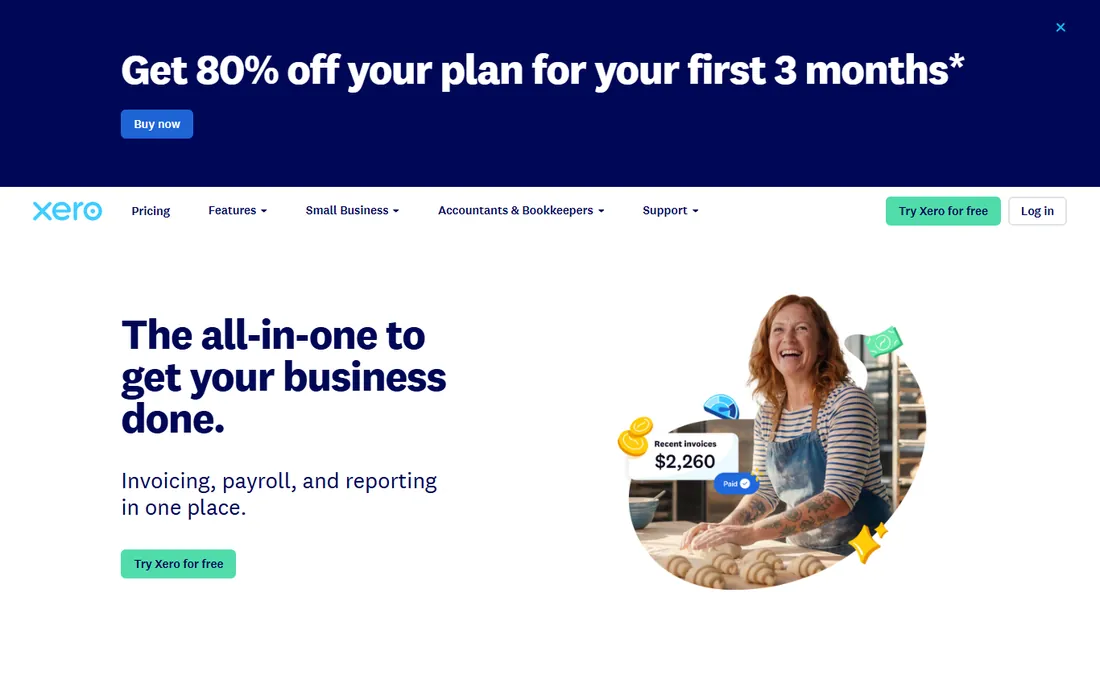
Xero is the budget cloud pick. At $20 per month the Early plan undercuts every other paid tool here, and it handles the basics well: invoicing, bill pay, bank feeds, expense claims and decent reporting. Multi-currency is included, which matters if your nonprofit takes donations or pays vendors in other currencies. The integration catalog is deep enough to connect your CRM and donation platform.
What it cannot do is fund accounting. Like QuickBooks, Xero users simulate funds with tracking categories, which produces workable reports for simple orgs and headaches for grant-heavy ones. The Early plan's transaction caps also mean growing nonprofits move to the $47 Growing plan quickly. Treat Xero as a cheap general ledger for a small nonprofit with simple revenue, not as a fund accounting system.
What we like- The lowest published starting price here
- Clean interface with strong bank reconciliation and multi-currency support
- Over 1,000 integrations including common donor platforms
Watch out for- No fund accounting at all, tracking categories are the workaround
- Early plan caps you at 20 invoices and 10 bills per month
- Phone support is limited to callbacks on some plans
#4
Sage Intacct
Best for: Midsize to large nonprofits, especially multi-entity orgs and foundations
Visit sage.com
Starting priceSee website (custom quote)
Free planNo
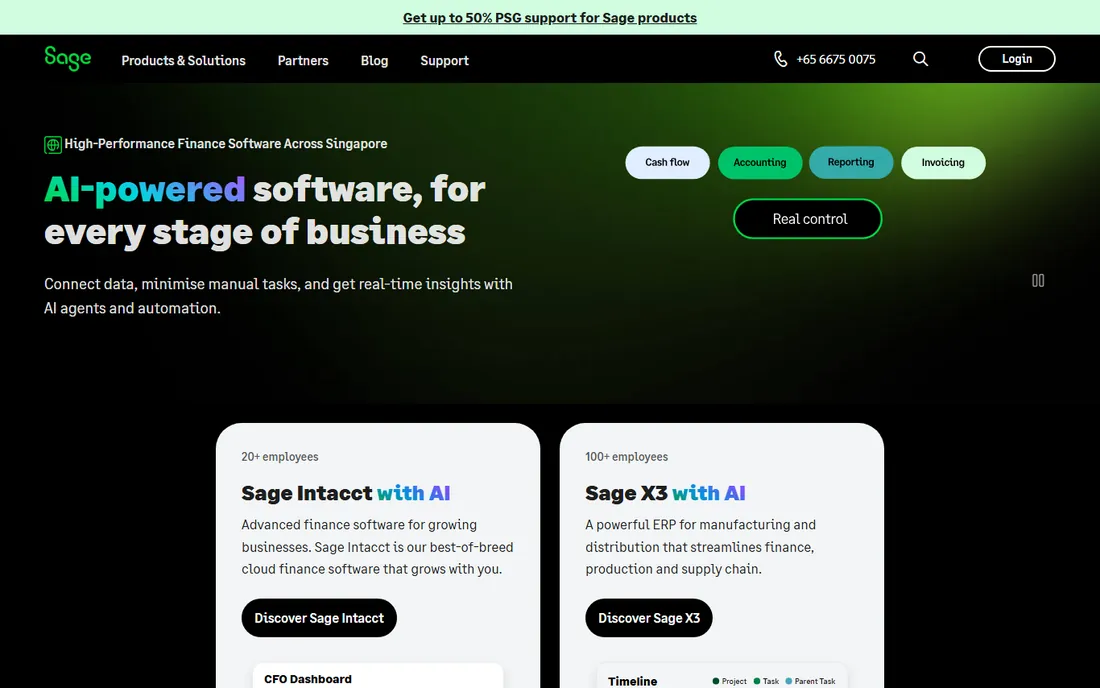
Sage Intacct is the finance-team tool on this list. Its dimensions replace the rigid chart of accounts, so you can slice every transaction by fund, grant, program and location without creating thousands of account codes. Encumbrance accounting, which lets you commit budget dollars before spending them, is built in. Multi-entity consolidation suits nonprofits running several chapters or affiliated orgs.
The commercial reality matches the power. Sage Intacct publishes no prices; every deal is a custom quote, and implementation realistically means paid onboarding. Small nonprofits will drown in it. But if your org has a finance department, an audit committee and multiple programs with restricted funding, this is the tool auditors and consultants recommend by name. Budget for the implementation, not just the subscription.
What we like- Real fund accounting with dimensional chart of accounts built for nonprofit reporting
- Strong grant tracking, encumbrance accounting and multi-entity consolidation
- Audit trails that satisfy serious finance committees
Watch out for- Pricing is fully custom, so budget an enterprise sales process
- Implementation takes weeks to months with consultant help
- Overkill for small shops
#5
Blackbaud Financial Edge NXT
Best for: Large nonprofits and educational institutions already on Blackbaud products
Visit blackbaud.com
Starting priceSee website (custom quote)
Free planNo
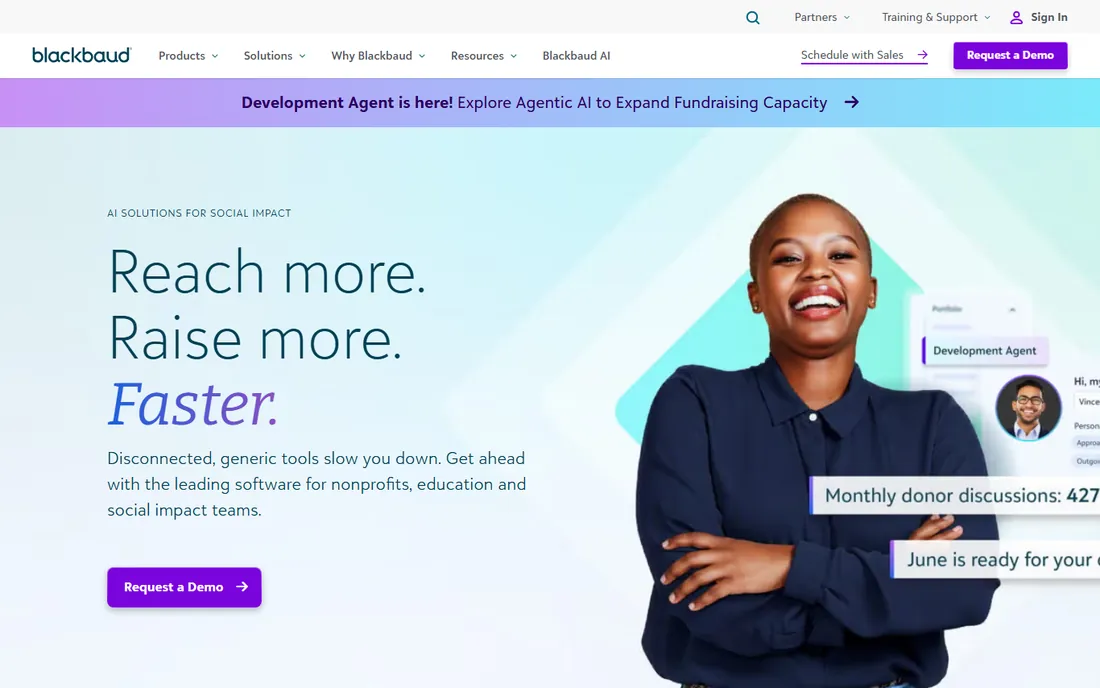
Financial Edge NXT is the heavyweight nonprofit option. It handles fund accounting, grant management, budgets and the FASB reporting nonprofits are required to produce, and it talks natively to Raiser's Edge NXT, which is why development offices push for it. Large nonprofits, schools and foundations run on it.
Everything about it is enterprise-scale, including the price. Blackbaud publishes nothing and quotes everything, and reviewers consistently describe long implementations with professional services attached. Reviewers also flag support as a weak spot. If your organization already lives in the Blackbaud ecosystem and has the budget, the integration value is real. If you are a 20-person nonprofit, this will swallow you.
What we like- Purpose-built for nonprofit finance with fund accounting, grant management and FASB-compliant reporting
- Native integration with Raiser's Edge NXT keeps fundraising and finance in one ecosystem
Watch out for- Custom-quoted pricing that lands at enterprise levels
- Implementation and training are major projects
- Support quality is a recurring reviewer complaint
#6
Fund E-Z
Best for: Small to midsize nonprofits wanting straightforward fund accounting on a budget
Visit fundez.com
Starting price$140/month (cloud)
Free planNo
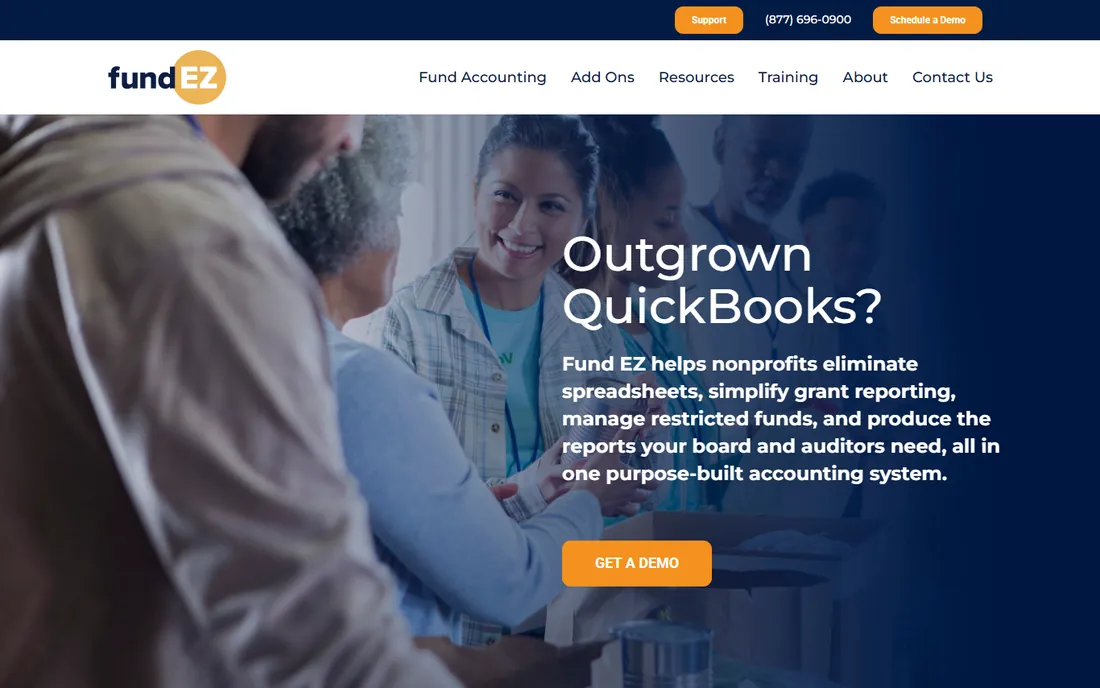
Fund E-Z has served nonprofits since the early nineties, and the cloud plan at $140 per month keeps things simple: general ledger, budgeting, bank reconciliation, payables, receivables and purchase orders, all organized around funds. Unlimited tech support is included, which is a real comfort for a volunteer treasurer who will need hand-holding at year end. There is also a $2,495 one-time server-based license if your board prefers owning software outright.
Set your expectations on the interface. This is not a modern web app; reviewers describe it as functional but dated, and integrations with donor platforms are thin. But the core job, tracking funds and producing nonprofit reports, is exactly what it was built to do. For a midsize nonprofit that wants real fund accounting without an enterprise sales cycle, it is one of the few honest options at this price.
What we like- Fund accounting designed specifically for nonprofits at a midrange price
- Unlimited tech support and nightly backups included in the cloud plan
- One-time server license ($2,495) available if you prefer to own the software
Watch out for- Interface feels dated compared to modern cloud tools
- Integration options are limited
- The company is small, so the product evolves slowly
#7
MIP Fund Accounting
Best for: Grant-heavy nonprofits, governments and school districts with complex reporting needs
Visit mip.com
Starting priceSee website (custom quote)
Free planNo
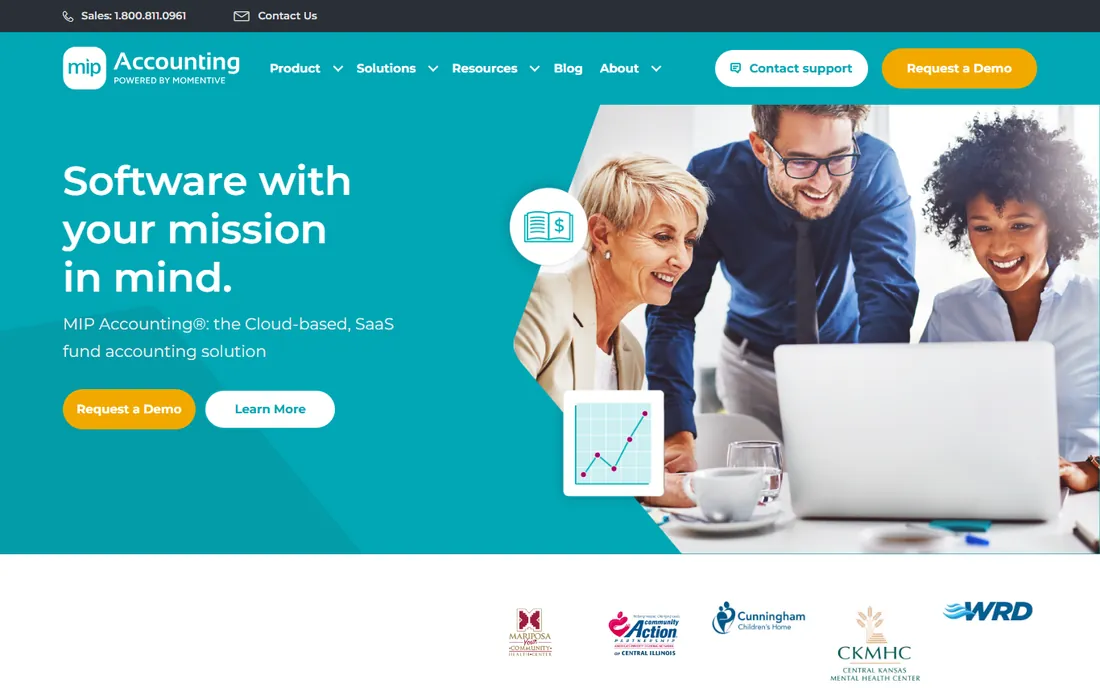
MIP Fund Accounting (formerly Abila MIP, now part of Community Brands) is built for organizations that live on grants. Grant management, encumbrances and the kind of fund-level reporting auditors demand are its core strengths, and governments and school districts use it for the same reason. The modular structure means you can add payroll, HR, purchasing and fixed-asset modules as the organization grows.
The pricing structure is the catch. Core fund accounting is the base, and payroll, HR, EFT, purchasing and advanced reporting arrive as add-ons, so the final quote can be far above the starting number. Reviewers also note that training is a paid extra and the interface shows its age. This is a strong fit for a midsize nonprofit with serious grant reporting requirements; it is a bad fit for a small shop that just needs clean books.
What we like- Deep grant management and fund accounting built for compliance-heavy reporting
- Modular design lets you add payroll, HR, purchasing and fixed assets
- Long track record with nonprofits and government agencies
Watch out for- No published pricing and a quote-only sales process
- Modules are sold separately, so costs stack
- Reviewers describe a dated interface and paid training
#8
Wave
Best for: Tiny nonprofits and volunteer-run orgs with zero software budget
Visit waveapps.com
Starting priceFree
Free planYes (free plan)
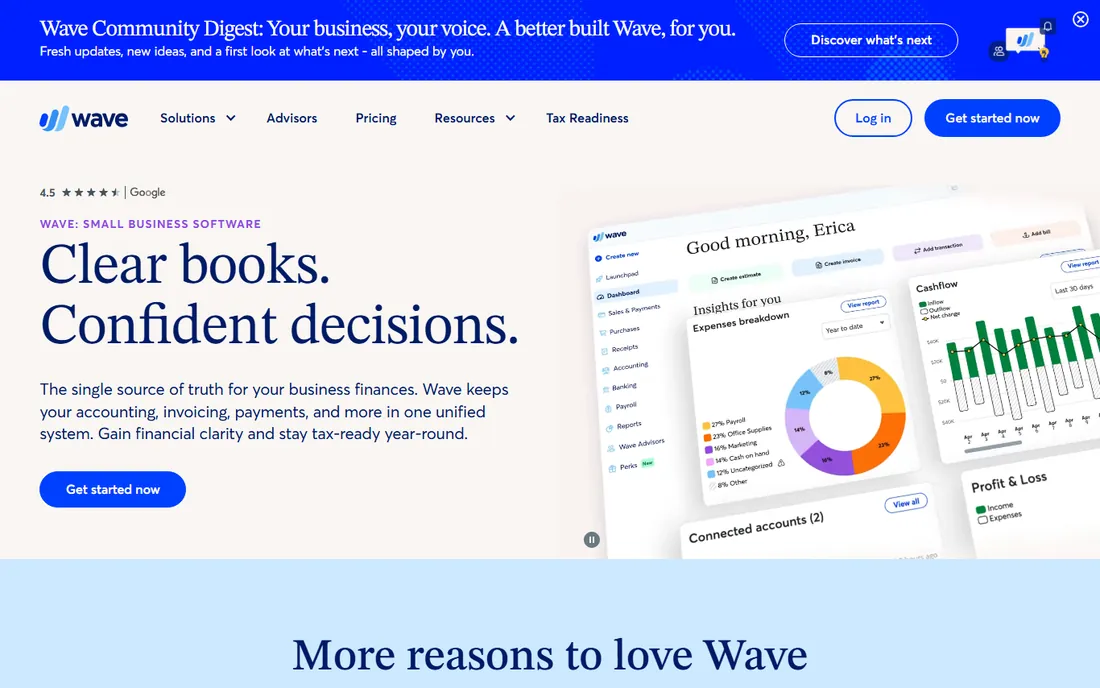
Wave is the only truly free tool on this list, which makes it the default answer when the budget is zero. The free plan covers accounting, invoicing and receipt scanning with real double-entry bookkeeping, not a toy version. A neighborhood association or a new nonprofit with a handful of donors can run its books here without spending a dollar.
Be clear about the limits. There is no fund accounting, no grant tracking and no donor management, so the moment you hold restricted funds you will be back in spreadsheets. Reporting is basic, and paid add-ons for payroll and card processing carry fees. Wave works for the smallest nonprofits with simple, mostly unrestricted income. Once grants enter the picture, it is time to move on.
What we like- Actually free accounting and invoicing with no trial clock
- Double-entry accounting with bank connections and receipts
- Simple enough for a volunteer treasurer to run
Watch out for- No fund accounting or donor-specific features at all
- Reporting is basic and US-centric
- Payroll and payment processing cost extra, and support is limited
#9
FreshBooks
Best for: Small nonprofits that mostly send invoices, like consulting or fee-for-service programs
Visit freshbooks.com
Starting price$23/month (Lite plan)
Free planNo (free trial)
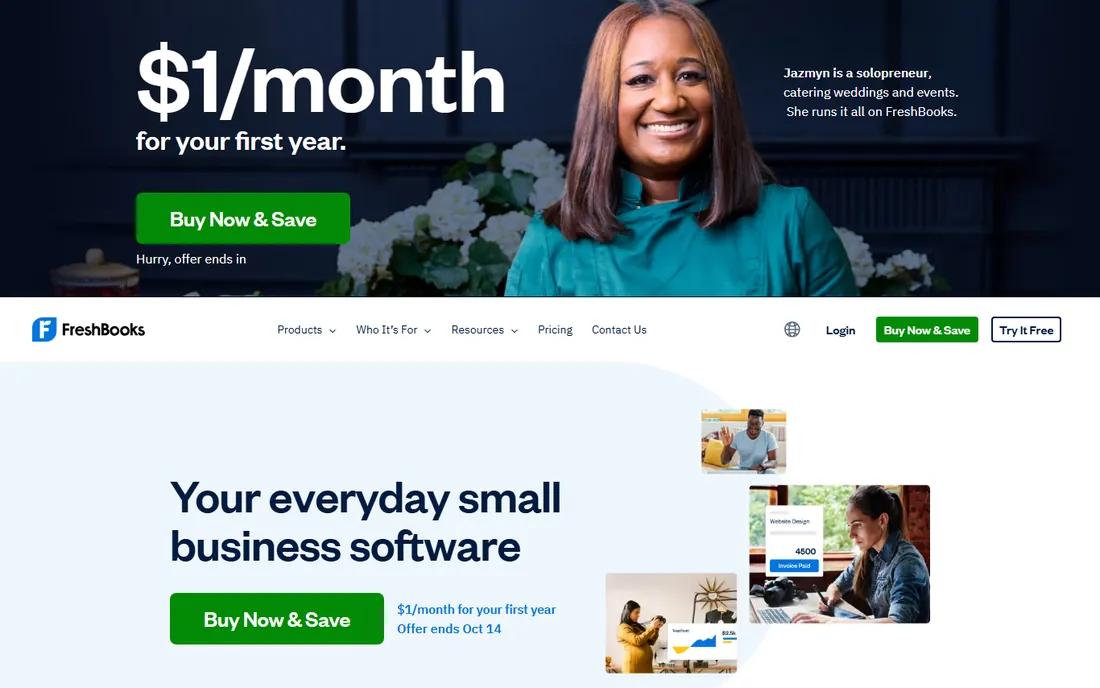
FreshBooks earns its spot for one type of nonprofit: the organization that sells services. Consulting programs, training fees, rental income, any nonprofit that invoices clients regularly will find FreshBooks the easiest invoicing tool here, with time tracking and recurring billing that just work. The Lite plan at $23 per month is cheap enough to try.
Everything else is a stretch. There is no fund accounting, no grant tracking and nothing built for nonprofit reporting, because FreshBooks is designed for freelancers and agencies. A nonprofit with restricted funds and donor reporting will hit walls fast. Use it if invoicing is your main activity and your revenue is simple; otherwise pick a fund-accounting tool.
What we like- The best invoicing and time-tracking experience on this list
- Simple interface with strong client billing and recurring invoices
- Affordable entry point for service-oriented orgs
Watch out for- No fund accounting and no nonprofit-specific reporting
- Built for freelancers and agencies, so grant workflows do not fit
- Per-client billing model can feel odd for a nonprofit
What to check before you buy nonprofit accounting software
Start with fund accounting, not features. Ask every vendor how the product tracks restricted versus unrestricted funds, and watch whether the answer is a built-in fund dimension or a workaround with classes and tags. Workarounds break down exactly when your books get complex, which is when you need them most.
Then price the whole year, not the headline. Monthly subscriptions here range from free to custom quotes, but the real cost includes per-user fees, payroll add-ons, payment processing percentages and implementation services. A $38-per-month tool with a $2,000 onboarding fee and per-user charges is not really $38 per month. Get the full fee schedule in writing before comparing.
Check the reports your board and auditor need. Ask for samples of the statement of financial position, the statement of activities and a fund-level budget report. If the vendor cannot produce FASB-compliant nonprofit reports out of the box, you will be building them by hand every quarter.
Finally, match the tool to your fundraising stack. If donations flow through Donorbox, Bloomerang or Raiser's Edge, confirm the integration exists and syncs at the level of detail your treasurer needs. And check who will run the software: a volunteer treasurer needs a simpler product and included support, while a finance team can handle Sage Intacct or MIP. The best accounting software for nonprofit organizations is the one your people can actually run.
Fund accounting vs. regular accounting: the one difference that matters
Regular accounting asks one question: did the business make or lose money. Fund accounting asks a different one: which pot of money is this, and what are we allowed to do with it. Nonprofits hold money with strings attached. A donor gives $50,000 for scholarships, and the law says it cannot pay for the new roof. Fund accounting keeps each restricted pot separate so you can prove compliance.
That is why QuickBooks, Xero, Wave and FreshBooks struggle here. They were built for businesses, where all revenue is equally spendable. Their workarounds, classes in QuickBooks, tracking categories in Xero, simulate fund separation on top of a business ledger. It works until you have multiple overlapping restrictions, multi-year grants or an auditor asking for a fund-level trail.
True fund accounting tools like Aplos, Sage Intacct, MIP, Fund E-Z and Blackbaud build funds into the ledger itself. Every transaction carries its fund, so restricted-grant reporting is a standard report instead of a spreadsheet project. If your nonprofit runs on restricted grants, that structural difference is the whole buying decision.
How we chose
We started with the categories buyers search: nonprofit accounting software, fund accounting software and best accounting software for nonprofit organizations. For each candidate we opened the vendor's own pricing page, checked prices against public reviews on G2 and Capterra and practitioner discussion on Reddit, and compared features, fund accounting depth, grant and donor tools, integrations and organization-size fit. Where a price could not be verified on the vendor's page we wrote "See website" rather than guessing.
Frequently asked questions
What is fund accounting and does my nonprofit need it?
Fund accounting tracks money by its restrictions: which dollars can be spent on what. If your nonprofit accepts restricted grants or donor-designated gifts, you need it, and your auditor will expect to see fund-level reports. If all your revenue is unrestricted, a simpler tool like QuickBooks or Wave can work.
Can nonprofits use QuickBooks?
Yes, and many do. QuickBooks Online has no true fund accounting, so nonprofits use classes to tag transactions by fund and build reports on top. It works for simple operations with mostly unrestricted revenue. For complex restricted grants, a fund-accounting tool like Aplos or MIP is the safer choice.
How much does nonprofit accounting software cost in 2026?
Xero starts at $20 per month and FreshBooks at $23. Aplos starts at $79, QuickBooks at $38, Fund E-Z at $140 for the cloud version, and Wave is free. Sage Intacct, Blackbaud Financial Edge NXT and MIP Fund Accounting are custom-quoted and run at enterprise levels, with implementation often costing as much as the first year's subscription.
Do we need new software if a volunteer treasurer keeps our books in spreadsheets?
Spreadsheets work until the audit. A treasurer can track simple books in Excel, but spreadsheets offer no audit trail, no access controls and no reliable fund separation. Once you hold restricted funds or file an independent audit, move to real software: Aplos for small budgets, Wave if the budget is zero.
What reports should nonprofit accounting software produce?
At minimum: the statement of financial position (the nonprofit balance sheet), the statement of activities (the nonprofit income statement), a statement of functional expenses, and fund-level budget reports showing actual versus budget per fund. True fund accounting tools generate these by fund automatically. General tools need custom report building.
Sources we checked (12)
- https://www.aplos.com
- https://quickbooks.intuit.com
- https://www.xero.com
- https://www.sage.com
- https://www.blackbaud.com
- https://www.fundez.com
- https://www.mip.com
- https://www.waveapps.com
- https://www.freshbooks.com
- https://www.capterra.com/p/27209/FUND-E-Z/pricing/
- https://www.g2.com/categories/nonprofit-accounting
- https://www.capterra.com/nonprofit-accounting-software/
Is your product missing or out of date?
We review this list regularly. Vendors can request a listing, send updated pricing or ask about featured placement.

Shihab Mia · Founder, Rankite
Shihab has spent more than a decade helping SaaS and e-commerce brands grow through search. He writes Rankite's software buying guides from pricing pages, documentation and public user reviews. More about Shihab.