How we make this list: we compare pricing pages, product documentation and public user reviews. Rankite is independent; if a vendor ever pays for a featured spot, that listing is clearly labeled Partner.

Key takeaways
- Writers wanting the simplest path to paid subscriptions should start with Substack ($0, 10% platform fee).
- Creators building a media business should compare Beehiiv (free to 2,500 subscribers) against Kit (free to 10,000 subscribers).
- Small businesses needing email plus landing pages should look at Mailchimp ($13/month) or MailerLite ($12/month).
- Publishers wanting a website, newsletter and paywall in one should look at Ghost ($18/month) with zero platform fees.
Quick comparison
| Tool | Best for | Starting price | Free plan |
|---|
 Substack Substack | Writers wanting to publish and monetize without building a website | $0 to start; 10% platform fee on paid subscriptions plus Stripe processing | Yes (free to publish; fees only on paid revenue) |
 Beehiiv Beehiiv | Creators building a media business, not just a newsletter | Free plan (2,500 subscribers); Lite from $59/month ($49/month annual) | Yes (2,500 subscribers, unlimited sends) |
 Kit Kit | Creators who will eventually sell products and need automation | Free Newsletter plan (10,000 subscribers); Creator $39/month ($33/month annual at 1K subs) | Yes (Newsletter plan, up to 10,000 subscribers) |
 Mailchimp Mailchimp | Small businesses needing email plus landing pages and basic CRM | Free plan (250 contacts); Essentials from $13/month (500 contacts) | Yes (250 contacts, 500 emails/month) |
 Ghost Ghost | Publishers wanting a website, newsletter and membership paywall in one | $18/month billed annually (Starter); free self-hosted option | No free hosted plan (14-day trial); self-hosted Ghost is free |
 Buttondown Buttondown | Technical writers wanting email as an API with a clean interface | Free (first 100 subscribers); paid from $9/month (up to 1,000 subscribers) | Yes (100 subscribers) |
 MailerLite MailerLite | Small businesses and nonprofits wanting premium features at low prices | Free plan (250 subscribers); Comfort from $12/month | Yes (250 subscribers, 2,500 emails/month) |
 Flodesk Flodesk | Creators and small brands prioritizing design and predictable pricing | Free plan (forms and landing pages only); Lite from $19/month annual ($25 monthly, up to 1,000 subscribers) | Partial (free for forms, no sending) |
Is your product missing or out of date?
We review this list regularly. Vendors can request a listing, send updated pricing or ask about featured placement.
Newsletter pricing is a math problem disguised as a product choice. Substack takes 10 percent of your revenue forever. Beehiiv charges a flat subscription and takes nothing. At $1,000 a month in paid subscriptions, Substack costs you $100 and Beehiiv costs you $59. At $10,000 a month, Substack costs $1,000 and Beehiiv still costs $59. Run the fee math for your revenue before you fall in love with anyone's editor. These eight platforms cover the real options.
#1
Substack
Best for: Writers wanting to publish and monetize without building a website
Visit substack.com
Starting price$0 to start; 10% platform fee on paid subscriptions plus Stripe processing
Free planYes (free to publish; fees only on paid revenue)
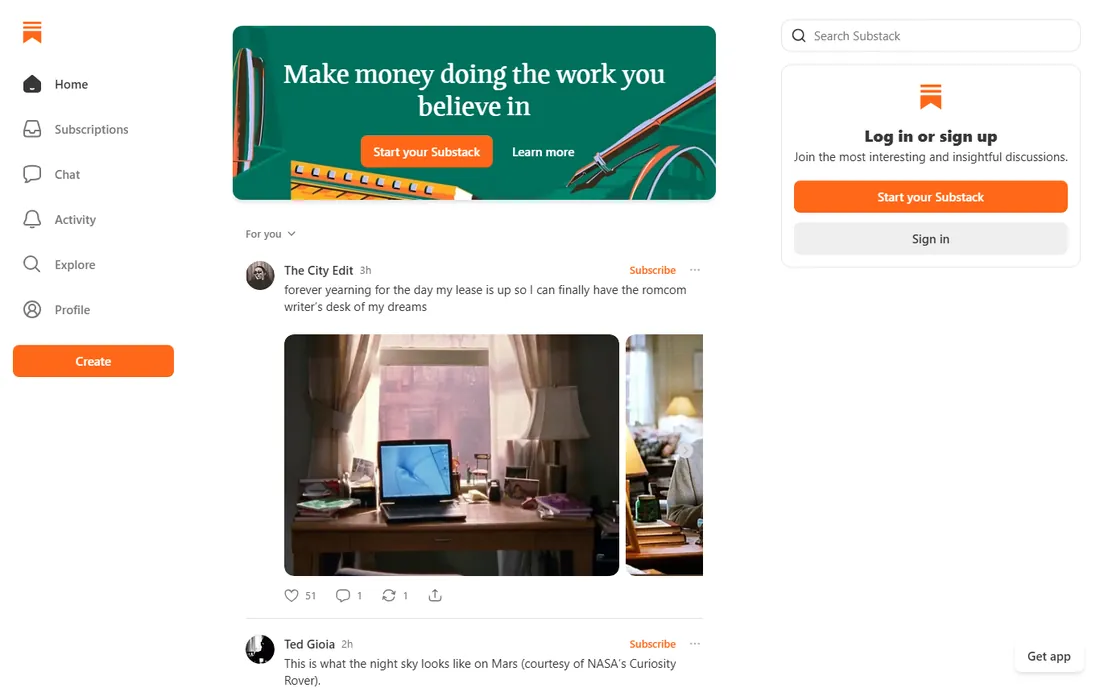
Substack's pitch is radical simplicity: write, publish, turn on paid subscriptions, done. No tiers, no subscriber counts, no setup. The discovery network means readers find you inside Substack, which is distribution most newsletters never get elsewhere.
The 10 percent fee is the whole story. At small revenue it is invisible; past a few thousand dollars a month it dwarfs every flat-rate tool on this list. Design and branding control are limited. Start on Substack to validate, and run the fee math quarterly; the day the fee exceeds Beehiiv's flat price is the day to move.
What we like- Zero upfront cost and no subscription tiers
- Built-in discovery network brings readers
- Simplest path to paid subscriptions
Watch out for- 10% cut is steep at scale
- Limited design and branding control
#2
Beehiiv
Best for: Creators building a media business, not just a newsletter
Visit beehiiv.com
Starting priceFree plan (2,500 subscribers); Lite from $59/month ($49/month annual)
Free planYes (2,500 subscribers, unlimited sends)
Beehiiv is infrastructure for a media business: newsletters plus an ad network, paid boosts, referral programs and analytics, with zero platform fee on subscriptions. The free tier covers 2,500 subscribers with unlimited sends, which is a real audience before you pay.
Watch the pricing trajectory. 2026 brought increases up to 52 percent on some tiers, so confirm current prices rather than trusting old guides. The website builder is basic. For a creator whose newsletter is the business, Beehiiv's monetization stack justifies the flat fee; for a casual writer, it is more than needed.
What we like- Zero platform fee on paid subscriptions
- Built-in ad network and boosts for monetization
- Strong analytics and referral program
Watch out for- Price increases in 2026 made higher tiers notably more expensive
- Website builder is basic
#3
Kit
Best for: Creators who will eventually sell products and need automation
Visit kit.com
Starting priceFree Newsletter plan (10,000 subscribers); Creator $39/month ($33/month annual at 1K subs)
Free planYes (Newsletter plan, up to 10,000 subscribers)
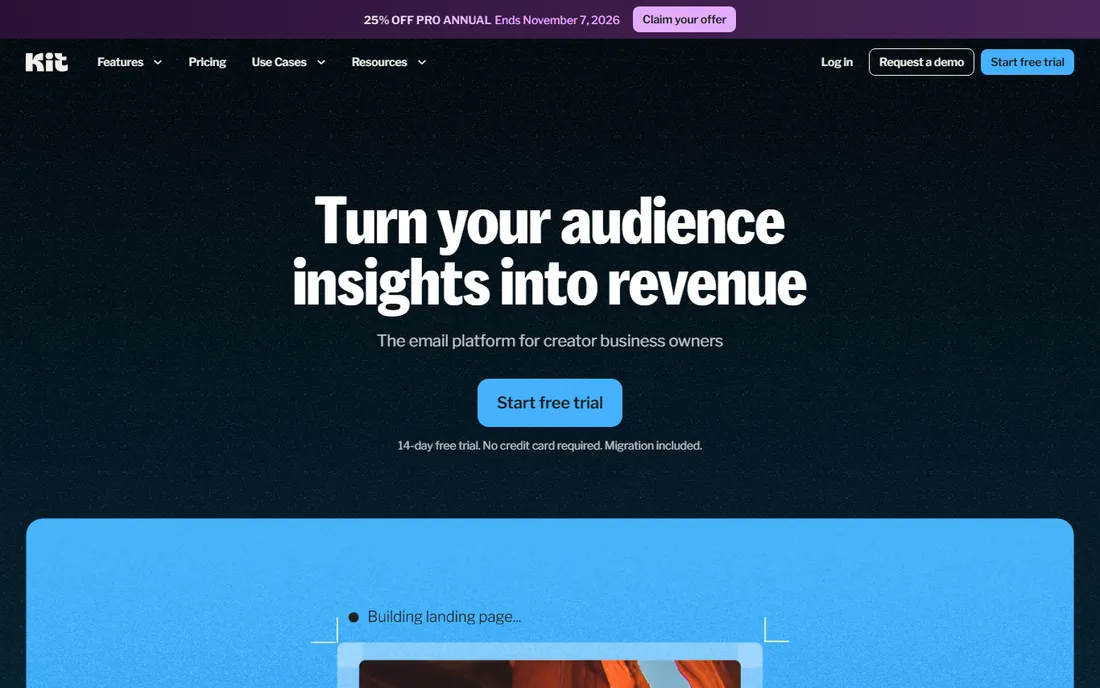
Kit (formerly ConvertKit) gives away the most generous free newsletter tier here: 10,000 subscribers at $0. The subscriber-centric model with visual automations and tagging suits creators who segment audiences and sell products, with commerce features built in rather than bolted on.
The price curve is the catch. Past the free tier, costs scale steeply with subscriber count, and templates are simpler than the design-first tools. Setup includes guided migration help. If your plan is newsletter first, products later, Kit's free tier plus automation is the natural home.
What we like- Generous free tier for pure newsletters
- Strong automation and tagging for creators
- Commerce features built in
Watch out for- Costs scale steeply with subscriber count
- Templates are simpler than Mailchimp or Flodesk
#4
Mailchimp
Best for: Small businesses needing email plus landing pages and basic CRM
Visit mailchimp.com
Starting priceFree plan (250 contacts); Essentials from $13/month (500 contacts)
Free planYes (250 contacts, 500 emails/month)
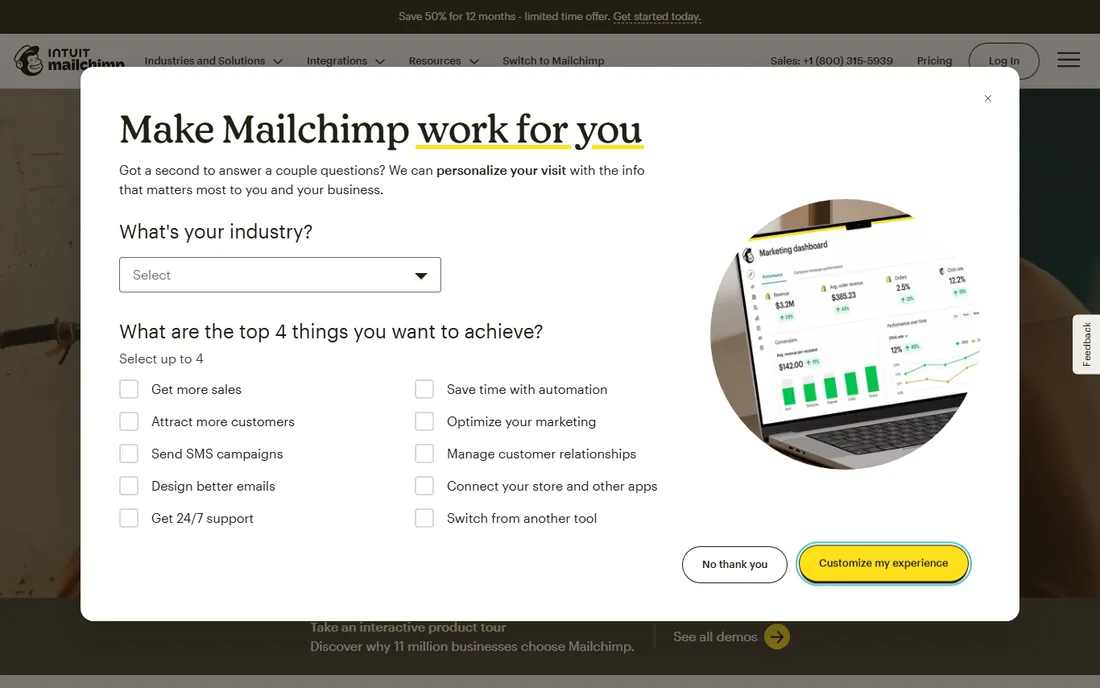
Mailchimp is the safe default: the biggest template library, integrations with everything, and enough features on paid tiers to run real email marketing. For a small business that needs newsletters plus landing pages and light CRM in one account, the breadth is the appeal.
Contact-based billing is the trap. Mailchimp counts unsubscribed contacts toward your bill, and pricing escalates quickly as the list grows. Audit your list before every tier jump. The free plan is small at 250 contacts. Buy Mailchimp for breadth and ecosystem; buy a creator tool for subscriber economics.
What we like- Most mature template and design library
- Huge integration ecosystem
- Generous feature set on paid tiers
Watch out for- Charges for unsubscribed contacts too
- Pricing escalates quickly with list size
#5
Ghost
Best for: Publishers wanting a website, newsletter and membership paywall in one
Visit ghost.org
Starting price$18/month billed annually (Starter); free self-hosted option
Free planNo free hosted plan (14-day trial); self-hosted Ghost is free
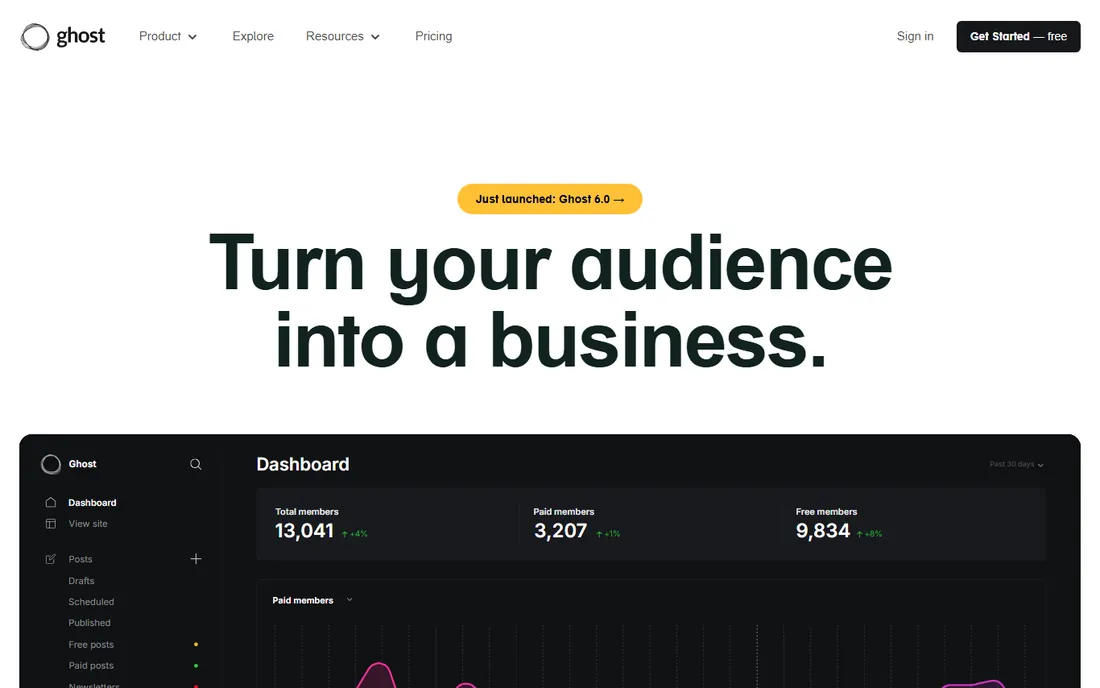
Ghost replaces three tools: the website, the newsletter, and the membership paywall, with zero platform fees on subscriptions. You own the audience, the content and the revenue. The reading experience is fast and clean, which matters for publications.
Customization needs skill or a paid theme, and paid subscriptions require the $29 per month Publisher tier, not the $18 Starter. Self-hosting is free but needs server work. For a publication rather than a newsletter, Ghost's ownership economics beat every hosted platform here.
What we like- Publishing platform plus newsletter plus paid memberships in one
- No platform fee on subscriptions
- Fast and clean reading experience
Watch out for- Paid subscriptions need the $29/month Publisher tier up
- Theming requires technical skill
#6
Buttondown
Best for: Technical writers wanting email as an API with a clean interface
Visit buttondown.com
Starting priceFree (first 100 subscribers); paid from $9/month (up to 1,000 subscribers)
Free planYes (100 subscribers)
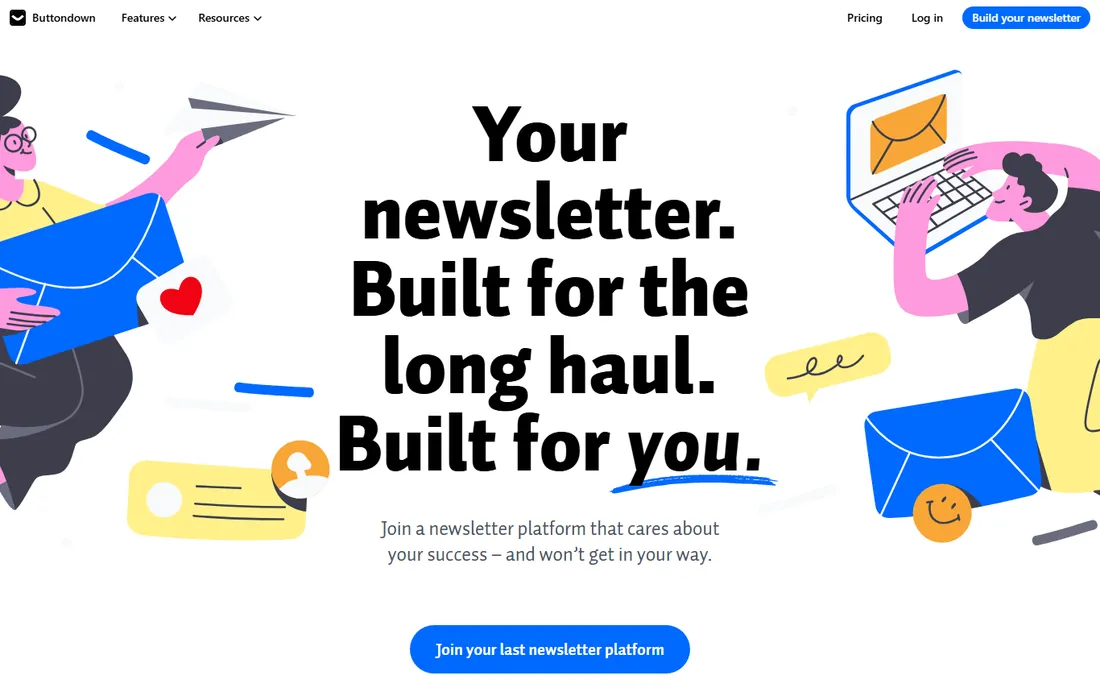
Buttondown is email for people who write in markdown and think in APIs. The writing interface stays out of the way, pricing scales linearly with subscribers from $9, and the API handles everything else. For a technical writer or developer newsletter, the simplicity is the feature.
Aesthetics cost extra effort: beautiful emails need manual HTML work, and analytics are basic next to Beehiiv. The free tier covers 100 subscribers. If you want power and polish, look elsewhere; if you want email that behaves like infrastructure, Buttondown is it.
What we like- Minimalist and developer-friendly with a great API
- Straightforward subscriber-based pricing
- Markdown-native writing
Watch out for- Design and template options are sparse
- Analytics are basic versus Beehiiv
#7
MailerLite
Best for: Small businesses and nonprofits wanting premium features at low prices
Visit mailerlite.com
Starting priceFree plan (250 subscribers); Comfort from $12/month
Free planYes (250 subscribers, 2,500 emails/month)
MailerLite delivers the most features per dollar in this set: a genuinely good editor, solid automations and fair pricing, plus a 30 percent nonprofit discount. For a small business or nonprofit that wants Mailchimp-class tools at half the price, this is the value pick.
The manual account review before your first send can delay launch by a day or two, so plan around it. Automation depth trails Kit for creator-style sequences. At $12 per month for the Comfort tier, the price is hard to argue with for what you get.
What we like- Excellent value on paid tiers
- Intuitive drag-and-drop editor
- 30% nonprofit discount
Watch out for- Approval process for new accounts can delay sending
- Automation depth trails Kit
#8
Flodesk
Best for: Creators and small brands prioritizing design and predictable pricing
Visit flodesk.com
Starting priceFree plan (forms and landing pages only); Lite from $19/month annual ($25 monthly, up to 1,000 subscribers)
Free planPartial (free for forms, no sending)
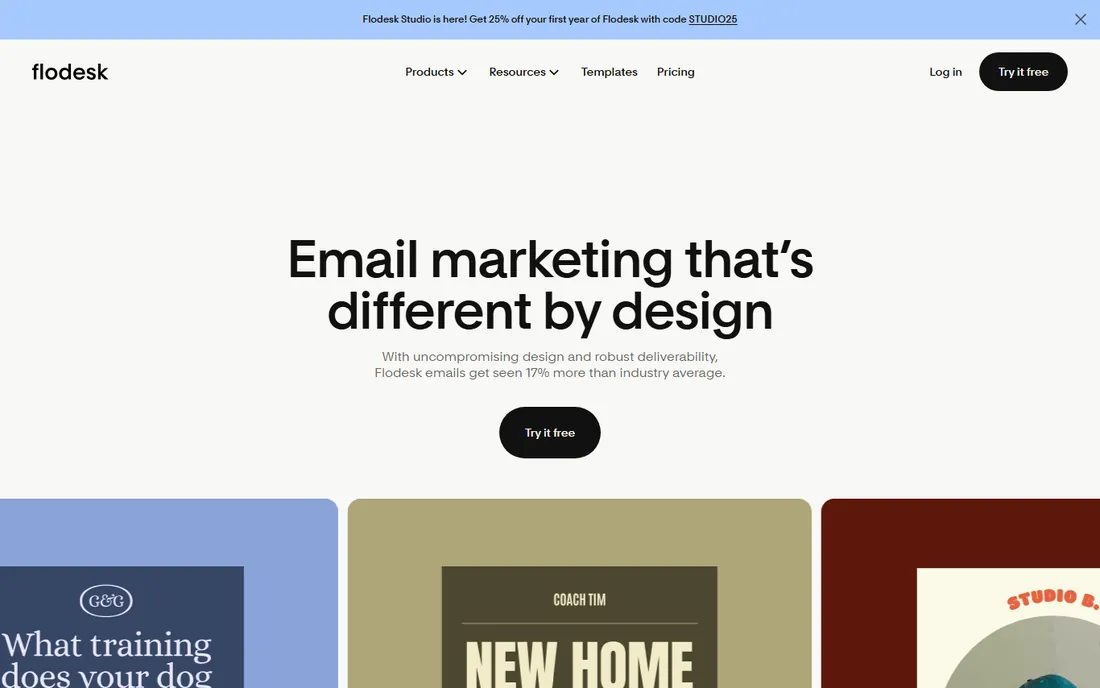
Flodesk's promise is that growth never raises the bill: flat-rate unlimited sends, so 1,000 subscribers cost the same as 50,000. The templates are famously beautiful, which matters for design-led brands. For a creator whose list is growing fast, the flat price is the whole pitch.
Power is the trade. Segmentation, ecommerce features and automation depth trail Mailchimp and Kit, and the free plan cannot send emails at all, only build forms. If design and predictable pricing matter more than automation muscle, Flodesk wins. If you need serious segmentation, look elsewhere.
What we like- Flat-rate unlimited sends on paid plans
- Famously beautiful templates
- Simple pricing that does not punish list growth
Watch out for- Ecommerce and automation depth trail Mailchimp
- Free plan cannot send emails
The fee math, worked out
Take a newsletter earning $5,000 a month from paid subscriptions. Substack takes $500 plus Stripe fees. Beehiiv Lite costs $59 and takes nothing. Kit Creator costs roughly $100-plus depending on subscriber count and takes nothing. Ghost Publisher costs $29 and takes nothing. The breakeven where Substack's 10 percent exceeds any flat fee arrives early, usually around $600 to $1,000 in monthly revenue. Below that, Substack's simplicity wins. Above it, every month on Substack is a donation to Substack. Do this math with your numbers before you commit to a platform.
Frequently asked questions
Which newsletter platform is best for beginners?
Substack: zero setup, zero cost, publishing in minutes. Kit's free tier is the best free option for creators who want automation later. MailerLite is the best free option for small businesses. Pick based on where you will be in a year, not where you are today.
How much does it cost to run a newsletter?
From $0 to about $60 a month for most creators: free tiers cover the start, then $9 to $19 for Buttondown or Flodesk, $29 to $59 for Ghost or Beehiiv. The real cost is platform fees on paid subscriptions: Substack's 10 percent dwarfs subscriptions once revenue grows. Model both.
Substack vs Beehiiv: which is better?
Substack for simplicity and discovery; Beehiiv for building a business. Substack wins under ~$1,000/month in paid revenue because 10 percent is still cheap. Beehiiv wins above that because the flat fee stops growing. Most successful newsletters start on Substack and migrate to Beehiiv or Ghost.
Can I migrate my newsletter to another platform?
Yes, and it is routine. All eight platforms offer import tools for subscribers, and most help with the move. The risk is deliverability during the switch: warm up the new sending domain, keep the old list engaged, and expect a small unsubscribe bump. Plan the migration; do not fear it.
Do I need a website as well as a newsletter?
Not at first. Substack, Beehiiv and Kit all host archives. You need a real website when SEO matters, when you sell products, or when the publication outgrows the platform's branding. Ghost is the answer when that day comes: site, newsletter and paywall in one.
How we chose
We started with the categories buyers search: newsletter platforms, best newsletter platforms, and best newsletter software. For each candidate we checked the vendor's own pricing pages, cross-checked capabilities and costs against public reviews on G2 and Capterra and practitioner discussion on Reddit, and compared fee structures, free tiers and monetization options. Where a price could not be verified on the vendor's page we wrote "See website" rather than guessing. The shortlist mixes creator platforms with email marketing tools, because a writer and a small business are not buying the same thing.
Sources we checked (9)
- https://substack.com/
- https://www.beehiiv.com/pricing/
- https://kit.com/pricing/
- https://mailchimp.com/pricing/
- https://ghost.org/pricing/
- https://buttondown.com/pricing/
- https://www.mailerlite.com/pricing/
- https://www.flodesk.com/pricing/
- https://www.g2.com/categories/email-marketing
Is your product missing or out of date?
We review this list regularly. Vendors can request a listing, send updated pricing or ask about featured placement.

Shihab Mia · Founder, Rankite
Shihab has spent more than a decade helping SaaS and e-commerce brands grow through search. He writes Rankite's software buying guides from pricing pages, documentation and public user reviews. More about Shihab.