How we make this list: we compare pricing pages, product documentation and public user reviews. Rankite is independent; if a vendor ever pays for a featured spot, that listing is clearly labeled Partner.
Key takeaways
- Dragon Medical One remains the gold standard for traditional medical dictation.
- DAX Copilot (Microsoft) leads the ambient AI scribe wave inside major EHRs.
- Abridge, Nabla and DeepScribe bring ambient documentation to practices of all sizes.
- The category is shifting from dictation you speak to AI that listens to the visit itself.
Quick comparison
| Tool | Best for | Starting price | Free plan |
|---|
 Dragon Medical One Dragon Medical One | Traditional medical dictation | See website | No |
 DAX Copilot DAX Copilot | Ambient AI inside EHRs | See website | No |
 DeepScribe DeepScribe | AI medical scribe | See website | No |
 Abridge Abridge | Ambient clinical documentation | See website | No |
 Nabla Nabla | Ambient AI copilot | See website | No |
 Ambience Healthcare Ambience Healthcare | Ambient AI for specialties | See website | No |
 Suki Suki | AI voice assistant for clinicians | See website | No |
 Dolbey Dolbey | Speech recognition plus coding | See website | No |
 Augmedix Augmedix | AI scribe with human support | See website | No |
Is your product missing or out of date?
We review this list regularly. Vendors can request a listing, send updated pricing or ask about featured placement.
The best medical voice recognition software
Starting priceSee website
Free planNo
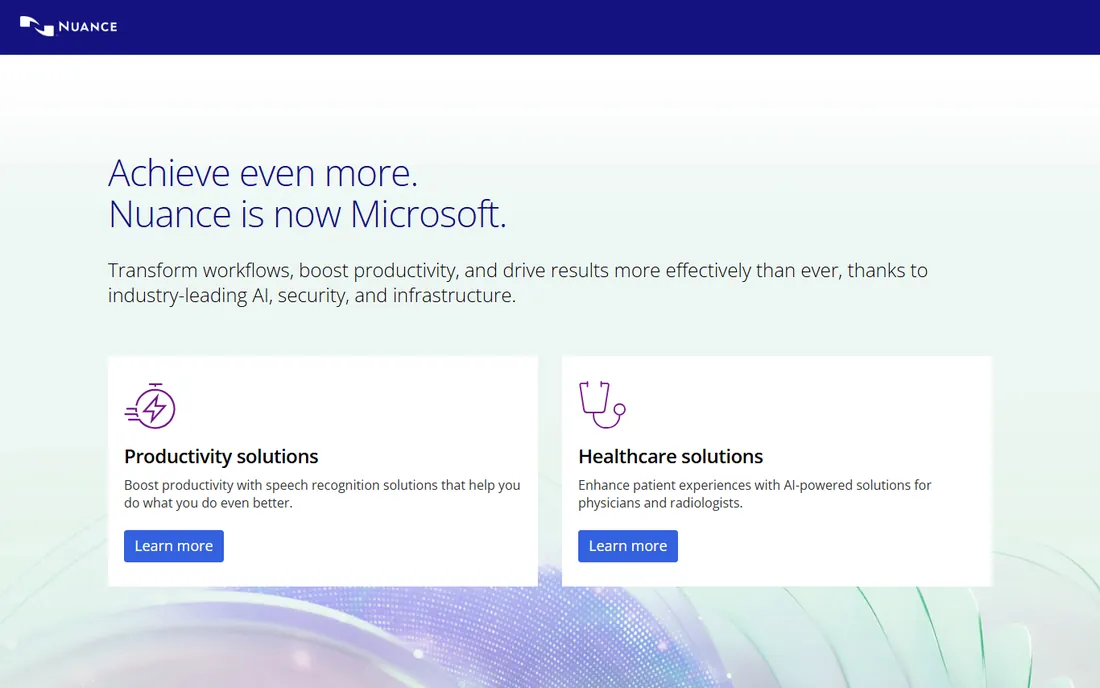
Dragon Medical One (Nuance, now Microsoft) is the medical dictation standard: cloud-based speech recognition with medical vocabularies trained on clinical language. Physicians dictate notes, navigate the EHR by voice and complete documentation faster than typing. Accuracy on medical terminology is the reason it dominates.
It is a dictation tool: you speak the note. Pricing is subscription-based per clinician. For physicians who think in dictated notes and want the proven accuracy leader, Dragon Medical One remains the choice.
What we like- Medical vocabulary accuracy
- Cloud-based
- Deep EHR integration
Watch out for- Subscription pricing
- Dictation model requires speaking notes
Starting priceSee website
Free planNo
DAX Copilot (Nuance/Microsoft) represents the category's future: ambient AI that listens to the patient visit and drafts the clinical note automatically. Physicians review and sign rather than dictate or type. Deep Epic integration puts the draft where clinicians work.
Pricing is enterprise and aimed at health systems. Smaller practices may find the entry cost steep. For health systems standardizing ambient documentation, DAX Copilot's EHR integration is the deepest available.
What we like- Ambient listening generates notes automatically
- Deep Epic integration
- Microsoft backing
Watch out for- Enterprise pricing
- Requires compatible EHR workflows
Starting priceSee website
Free planNo
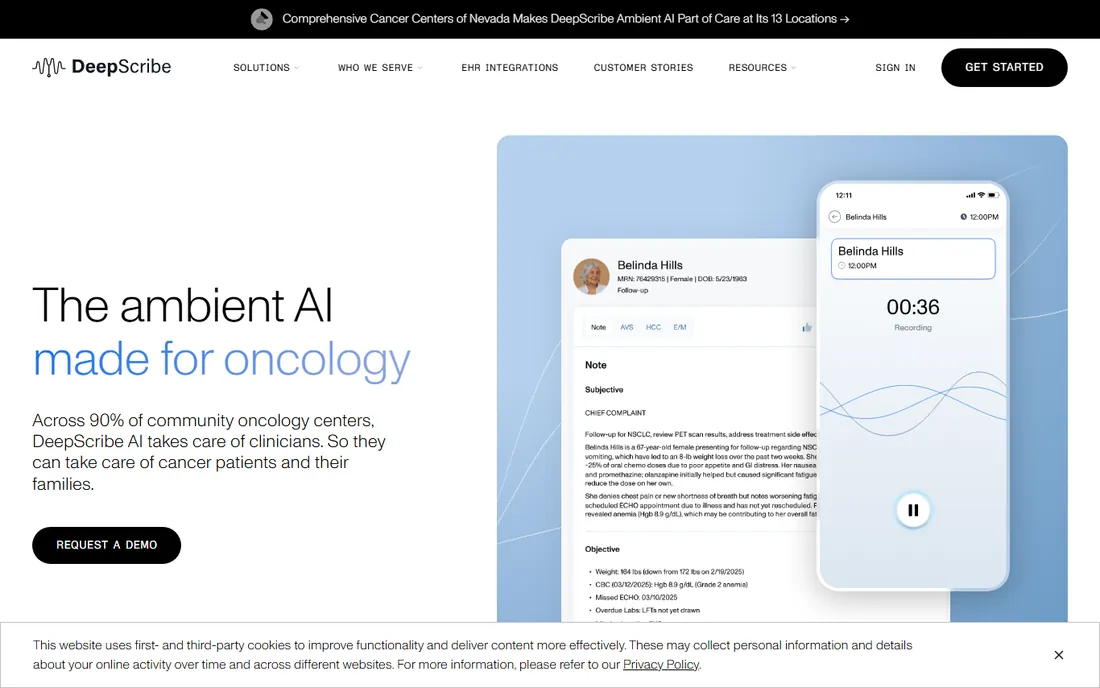
DeepScribe's ambient AI listens to visits and produces structured clinical notes, customized by specialty. The company focused early on making the AI output match how each specialty documents. Practices report meaningful reductions in after-hours charting.
Pricing requires a conversation. The company is younger than Nuance with a smaller install base. For practices wanting ambient scribing without enterprise infrastructure, DeepScribe's specialty focus stands out.
What we like- Ambient scribe purpose-built
- Specialty customization
- Growing EHR integrations
Watch out for- Quote-based
- Newer than Dragon
Starting priceSee website
Free planNo
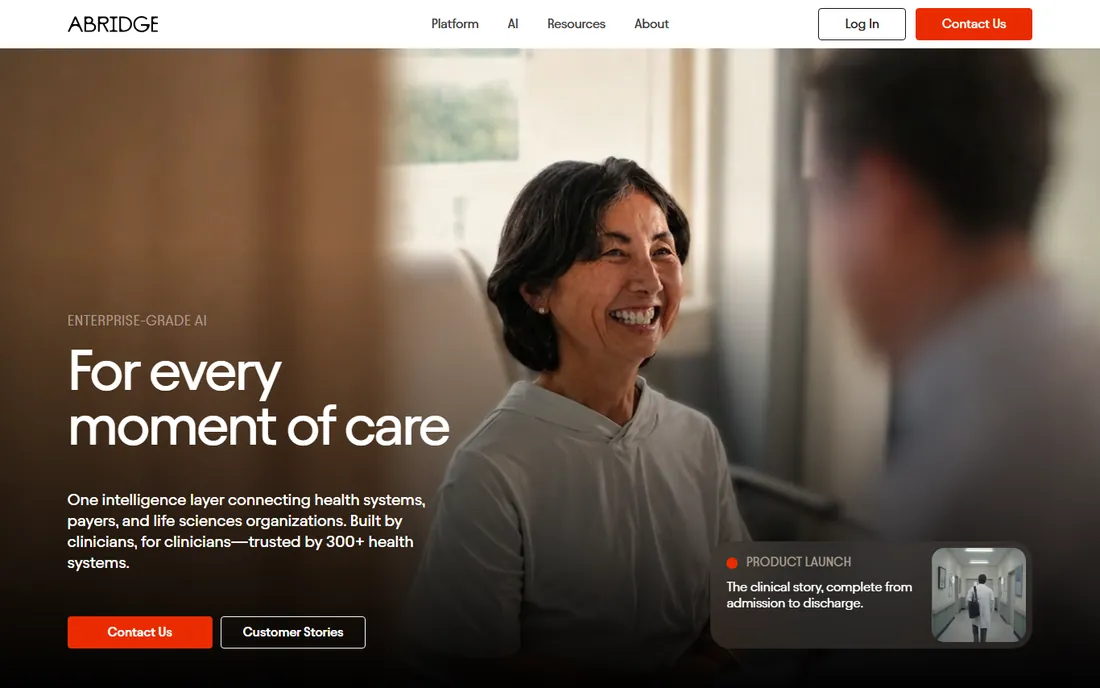
Abridge turns patient-clinician conversations into structured notes, and notably also generates patient-friendly summaries of the visit. Health system adoption has grown rapidly, and the AI handles the messiness of real conversations well.
Pricing is quote-based with an enterprise sales process. For health systems that want ambient documentation plus better patient communication, Abridge's dual output is distinctive.
What we like- Strong health system adoption
- Patient-friendly visit summaries
- Solid AI quality
Watch out for- Enterprise sales motion
- Quote-based pricing
Starting priceSee website
Free planNo
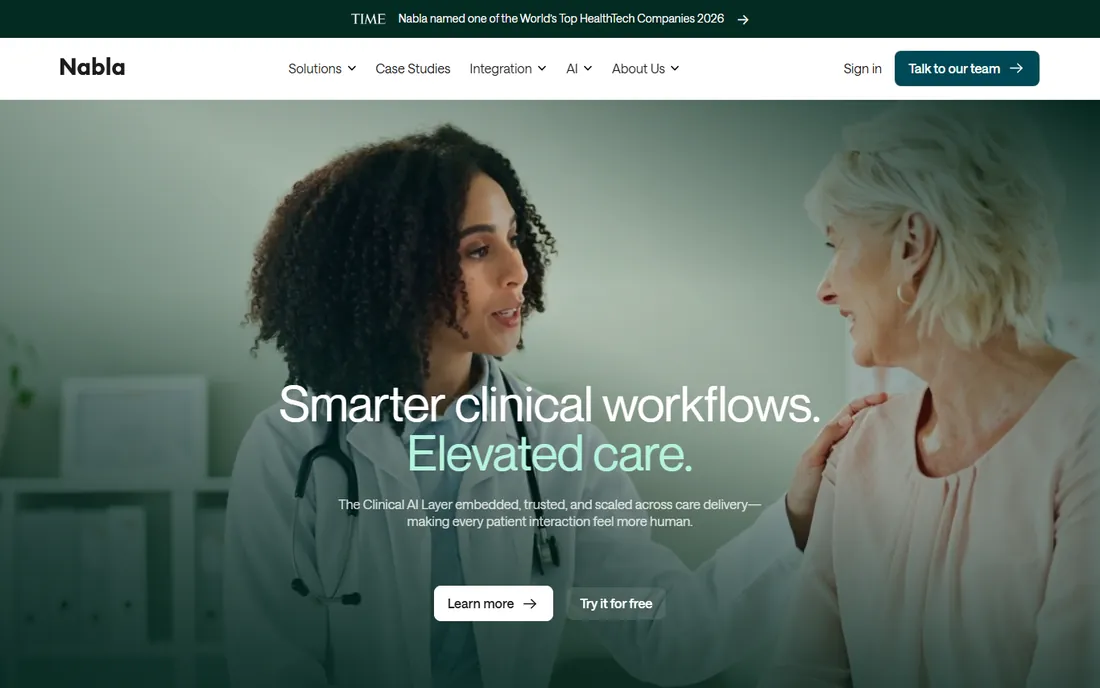
Nabla offers an ambient AI copilot that generates notes and assists beyond documentation: dictation mode for control plus ambient mode for automation. The European-rooted company has expanded into the US market with a product accessible to smaller practices.
The install base is smaller than Abridge or DAX. Pricing requires a conversation. For practices wanting both dictation control and ambient automation in one tool, Nabla's dual modes fit.
What we like- Ambient copilot beyond notes
- Dictation plus AI
- Good for smaller practices
Watch out for- Smaller US footprint
- Quote-based pricing
Starting priceSee website
Free planNo
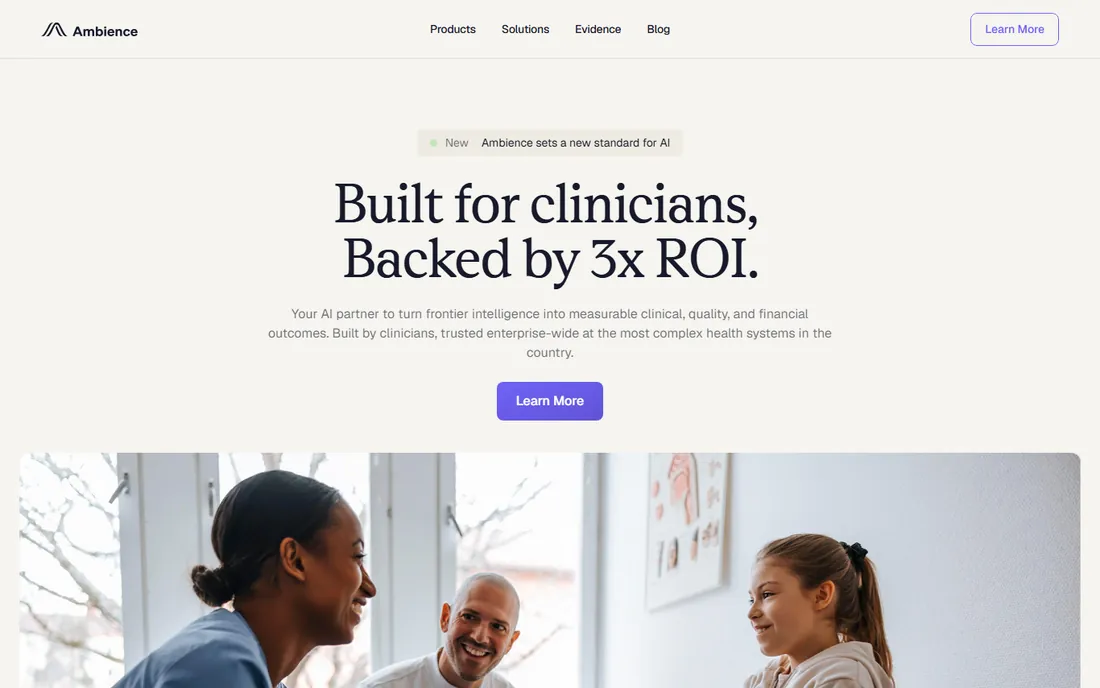
Ambience Healthcare builds ambient AI tuned for specialties: the AI understands what cardiology, orthopedics or primary care documentation requires. Full encounter notes, coding support and referral letters come from the visit conversation.
The vendor is newer with pricing by quote. For specialty practices where generic ambient AI misses the nuances, Ambience's specialty tuning matters.
What we like- Specialty-specific ambient models
- Full encounter documentation
- Strong backing
Starting priceSee website
Free planNo
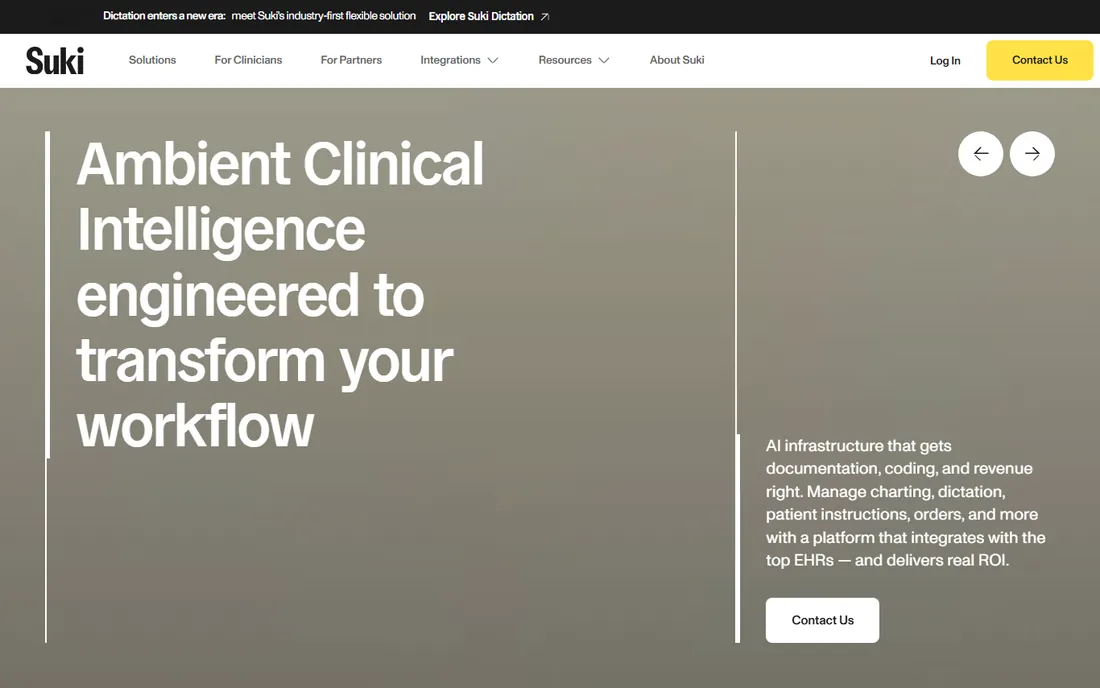
Suki is a voice-first AI assistant for clinicians: dictate notes, pull up patient information, complete EHR tasks and generate documentation through voice commands. It reduces clicks and typing across the clinical workflow, not just note creation.
The assistant model differs from pure ambient scribing; clinicians still direct it. Pricing is quote-based. For physicians who want a voice-driven EHR companion rather than a passive listener, Suki's approach fits.
What we like- Voice-first AI assistant
- EHR actions by voice
- Reduces clicks
Watch out for- Quote-based
- Assistant model differs from ambient scribes
Starting priceSee website
Free planNo
Dolbey combines front-end speech recognition with computer-assisted coding: Fusion Narrate for dictation and CAC products that suggest codes from documentation. The company has served healthcare documentation for decades.
Ambient AI marketing is quieter here than at Abridge or Nabla. For organizations that want speech recognition tied to coding and revenue cycle, Dolbey's combined offering is practical.
What we like- Speech recognition plus CAC
- Long healthcare track record
- Front and back end
Watch out for- Less ambient AI flash
- Traditional vendor feel
Starting priceSee website
Free planNo
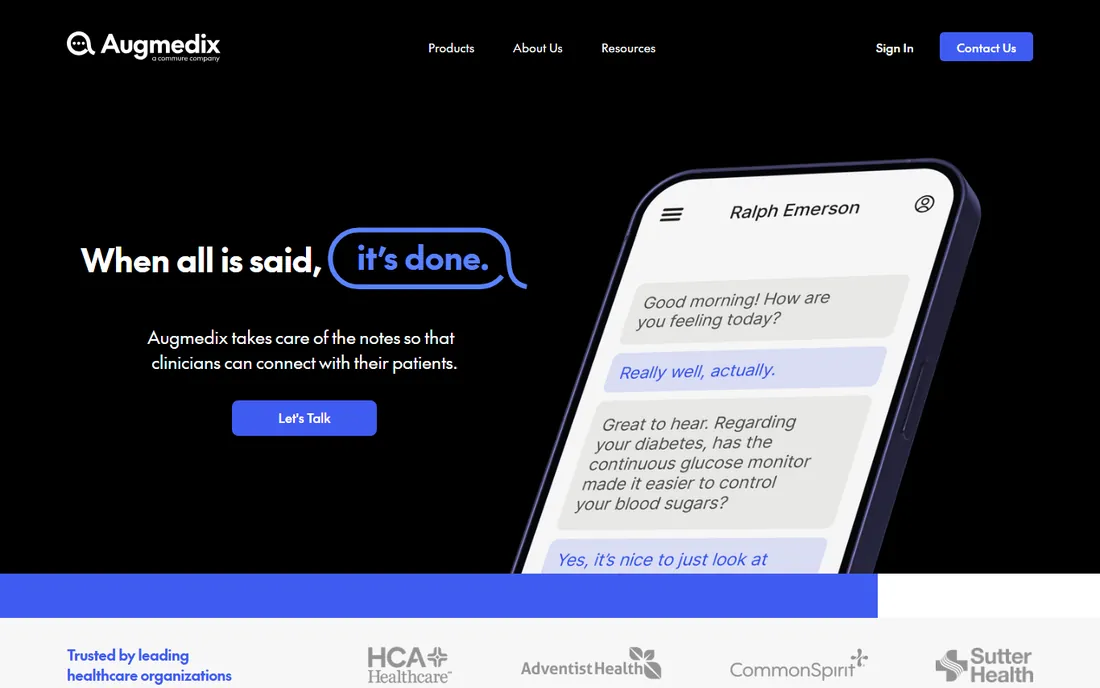
Augmedix pairs AI documentation with human medical documentation specialists who review and refine the output. The hybrid model gives practices AI speed with human accuracy assurance. Specialty coverage is broad and EHR integration is established.
The human component means pricing above pure-AI tools. For practices that want ambient documentation with a human safety net, Augmedix's hybrid approach balances cost and confidence.
What we like- AI plus human quality assurance
- Specialty coverage
- EHR integration
Watch out for- Service component costs more
- Quote-based pricing
Dictation vs ambient: the key decision
Traditional dictation (Dragon) means you speak the note: fast, controlled, proven. Ambient AI (DAX, Abridge, DeepScribe, Nabla) listens to the visit and drafts the note: less physician effort, but you review AI output. Most practices moving now choose ambient; physicians who dictate complex notes precisely often keep Dragon. Pilot both with the same physicians before deciding.
EHR integration matters most
The best recognition engine fails if the note lands in the wrong place. Confirm native integration with your EHR (Epic, Oracle Health, athenahealth, eClinicalWorks), how drafts appear in the workflow, and whether the physician signs inside the EHR. Ask for a live demo in your EHR, not a slide deck.
Documentation burden is the leading driver of physician burnout, and the numbers are stark: for every hour of patient care, physicians spend roughly two hours on EHR documentation and desk work, much of it after hours. "Pajama time" charting has become the norm, and it correlates directly with burnout, early retirement and reduced clinical hours. Voice recognition and ambient AI attack this problem at its root by shrinking the documentation tax on every encounter. Practices evaluating these tools should frame the decision in burnout terms, not just efficiency terms; the ROI includes retained physicians, which dwarfs any software cost.
Measure the baseline before implementing. Survey physicians on after-hours charting time, note closure lag (how long after the visit the note gets signed), and use a validated burnout instrument if the organization is serious. These numbers justify the investment and later prove its impact. Typical results from ambient AI deployments: note-writing time cut by half or more, same-day note closure rates doubled, and measurable reductions in after-hours EHR use. But the gains only materialize if workflows actually change. A physician who dictates into the old workflow, or who spends the saved time reviewing AI drafts line by line out of distrust, captures little benefit. Implementation must include workflow redesign, not just software installation.
Trust calibration is the psychological core of adoption. Physicians new to ambient AI typically distrust the drafts and over-review them, erasing the time savings. The solution is structured trust-building: start with low-risk note types, compare AI drafts against the physician's own notes for accuracy, and expand as confidence grows. Most physicians reach comfortable trust within four to six weeks when the quality is genuinely good. Forcing faster adoption backfires; skepticism about AI documentation is professionally responsible, not technophobia. Support the transition with peer champions (early adopters who share their experience) rather than administrative mandates.
Specialty variation matters enormously. Primary care visits with straightforward histories adapt beautifully to ambient documentation. Procedural specialties, psychiatry with its nuanced mental status exams, and encounters with complex medical decision-making need more physician input regardless of tool. Set expectations by specialty instead of promising uniform results. Also consider the patient relationship dimension: some physicians worry that ambient listening changes the visit dynamic. Evidence so far suggests patients generally accept it when informed, and many appreciate the physician making eye contact instead of typing. Frame it to patients as a tool that lets the doctor focus on them.
Sustain the gains with ongoing attention. Initial time savings erode if note bloat creeps in (AI drafts tend toward verbosity; train physicians to trim), if EHR updates break integrations, or if new physicians never get proper onboarding. Assign ownership of the documentation program, review metrics quarterly, and keep optimizing. Also watch for the rebound effect: time saved from documentation sometimes fills with more patient slots, which helps access but does not reduce burnout. Be deliberate about where the saved time goes. The goal is not just faster notes; it is physicians who finish their work during work hours and stay in medicine. That outcome is worth more than any efficiency metric.
Frequently asked questions
How accurate is medical voice recognition?
Dragon Medical One advertises very high accuracy on medical vocabulary after voice profile training. Ambient AI note quality varies by vendor and specialty; all require physician review before signing. No tool eliminates review.
Will ambient AI replace medical scribes?
For straightforward visits, largely yes, and many practices are making the switch. Complex encounters and physicians who prefer human scribes keep the role alive. The economics favor AI for high-volume routine documentation.
Is patient consent needed for ambient listening?
Requirements vary by state (one-party vs two-party consent) and institutional policy. Most deployments inform patients and offer opt-out. Check your state law and your organization's policy before going live.
How much does medical voice recognition cost?
Dragon Medical One is subscription per clinician. Ambient AI tools are quote-based, typically priced per clinician per month or per encounter, with enterprise health system deals. Budget for implementation and EHR integration work.
Does it work with our EHR?
Leading tools integrate with Epic, Oracle Health, athenahealth and other major EHRs. Depth varies: DAX Copilot's Epic integration is deepest. Confirm your specific EHR version during evaluation.
How long does implementation take?
Dictation tools deploy in weeks. Ambient AI pilots take 4 to 12 weeks including workflow integration, physician training and note quality validation. Plan for a pilot specialty before enterprise rollout.
How we chose
We compared the medical voice recognition tools clinicians actually use, from traditional dictation to ambient AI scribes. Pricing is subscription or quote-based across the category. We weighted recognition accuracy, EHR integration depth, specialty coverage and fit for different practice sizes. No hands-on testing was performed; assessments rest on documentation and public reviews.
Sources we checked (9)
- https://dragon.nuance.com/en-us/home
- https://www.microsoft.com/
- https://www.deepscribe.ai/
- https://www.abridge.com/
- https://www.nabla.com/
- https://www.ambiencehealthcare.com/
- https://www.suki.ai/
- https://www.dolbey.com/
- https://www.augmedix.com/
Is your product missing or out of date?
We review this list regularly. Vendors can request a listing, send updated pricing or ask about featured placement.

Shihab Mia · Founder, Rankite
Shihab has spent more than a decade helping SaaS and e-commerce brands grow through search. He writes Rankite's software buying guides from pricing pages, documentation and public user reviews. More about Shihab.