How we make this list: we compare pricing pages, product documentation and public user reviews. Rankite is independent; if a vendor ever pays for a featured spot, that listing is clearly labeled Partner.
Key takeaways
- Almost every DSP prices custom: you buy media spend, and the platform takes a fee or you pay a software license. None of these 10 publish prices, so get quotes in writing before comparing.
- The Trade Desk is the default enterprise pick, especially for connected TV. Google's Display & Video 360 is the practical choice if your team lives inside the Google Marketing Platform.
- Basis stands out for agencies that also want planning, billing and reconciliation in one place, while Simpli.fi and Viant are the specialists for localized and people-based (cookieless) buying.
- StackAdapt and Quantcast are the most accessible options for smaller advertisers, with self-serve onboarding instead of six-figure annual contracts.
Quick comparison
| Tool | Best for | Starting price | Free plan |
|---|
 The Trade Desk The Trade Desk | Enterprise advertisers and large agencies running omnichannel campaigns | See website (custom quote, media-spend-based fee) | No |
 Display & Video 360 Display & Video 360 | Marketing teams already running on Google Analytics 360 or Campaign Manager | See website (talk to sales) | No |
 Basis Basis | Agencies that want media buying plus planning, billing and workflow in one place | See website (custom quote) | No |
 StackAdapt StackAdapt | Mid-market advertisers that want real self-serve programmatic | See website (custom quote) | No |
 Simpli.fi Simpli.fi | Multi-location brands and agencies running localized campaigns | See website (custom quote) | No |
 Quantcast Quantcast | Advertisers that want audience buying without third-party cookies | See website (custom quote) | No |
 Adform Adform | European agencies and advertisers wanting a full ad tech stack | See website (custom quote) | No |
 Criteo Criteo | Retailers and ecommerce brands buying on commerce intent | See website (custom quote) | No |
 Viant Viant | CTV-led campaigns built on household identity | See website (custom quote) | No |
 MediaMath by Infillion MediaMath by Infillion | Technical programmatic teams that want API-level control | See website (custom quote) | No |
Is your product missing or out of date?
We review this list regularly. Vendors can request a listing, send updated pricing or ask about featured placement.
Buy media through a DSP and you are buying two things at once: the software that decides which impressions to bid on, and the pipes that actually place the bids. The ten platforms below cover the real media buying market in 2026, from enterprise giants that run billions in spend to self-serve tools a mid-size agency can start without a sales cycle.
#1
The Trade Desk
Best for: Enterprise advertisers and large agencies running omnichannel campaigns
Visit thetradedesk.com
Starting priceSee website (custom quote, media-spend-based fee)
Free planNo
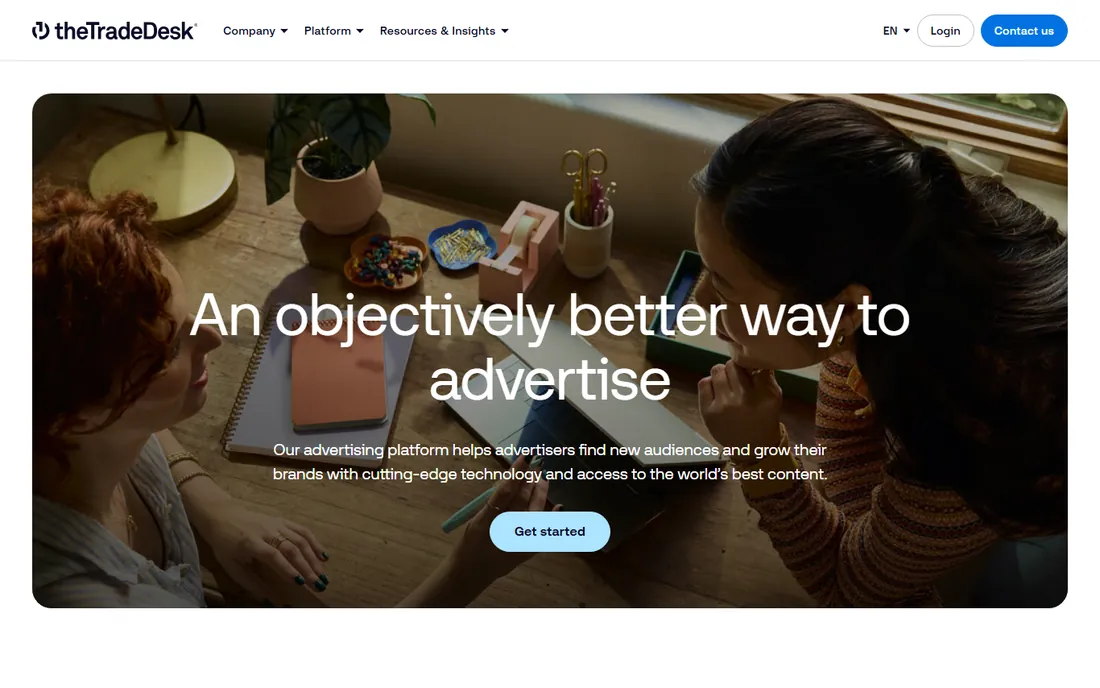
The Trade Desk is the default answer in media buying for a reason. It does not own media, so its only incentive is to make your spend work harder, and its positioning as the independent alternative to Google and the walled gardens is the core of its pitch. Coverage runs across CTV, audio, digital out-of-home, mobile, display, native and video, with measurement through an open marketplace of partners.
The honest catch is access. The Trade Desk sells to advertisers and agencies with real budgets; a small business cannot just sign up and run $500. Most SMBs reach it through an agency trading desk, which adds a management fee on top. If you spend enough to deal directly, the transparency and CTV reach are hard to beat. If you do not, the self-serve names below are more practical.
What we like- Largest independent DSP with the deepest CTV inventory
- Platform fee model with full transparency on media cost vs. fees
- Kokai interface with AI bidding and strong identity options including UID2
Watch out for- Effectively an enterprise product
- Smaller buyers usually access it through an agency or trading desk, not directly
- Onboarding takes time and needs trained traders
Starting priceSee website (talk to sales)
Free planNo
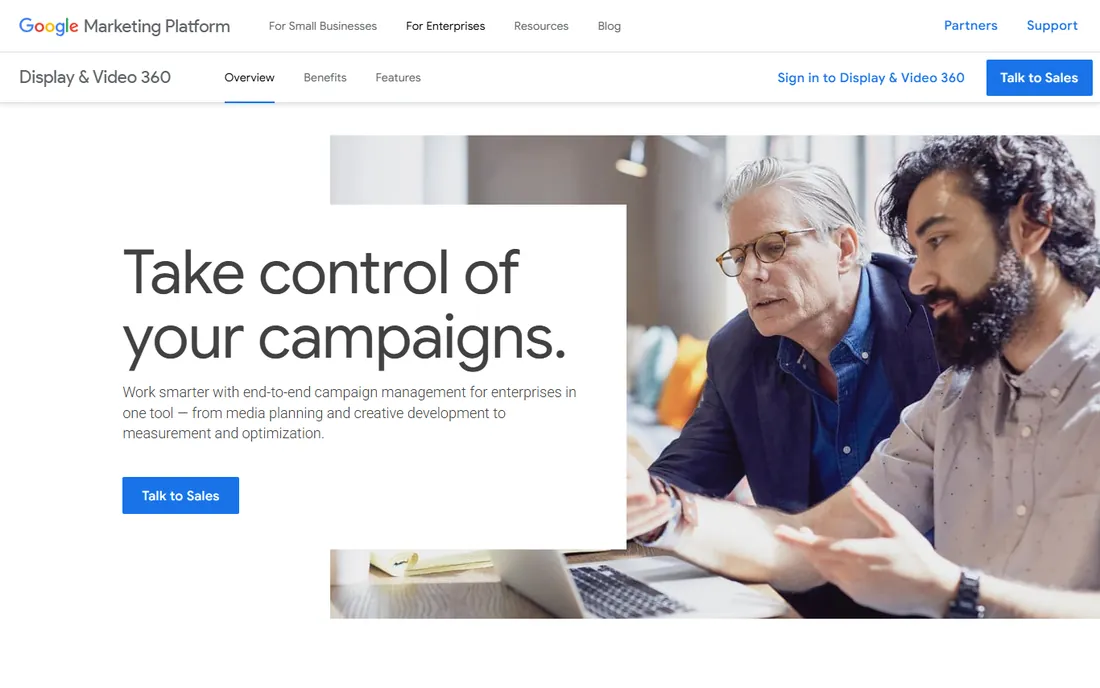
DV360 is the DSP for the Google ecosystem. If your audience data, measurement and reporting already live in Google Marketing Platform, buying through DV360 keeps everything in one place, with automated bidding fed by Google's signals. The exclusive pull is YouTube: premium YouTube inventory is easiest to buy here.
The tradeoff is the one everyone knows. Google both sells the platform and owns a huge share of the inventory, so buyers who want vendor neutrality go elsewhere. DV360 also requires an enterprise contract; you buy through Google directly or a partner. For agencies standardized on Google, it is the obvious pick. For independence-minded buyers, it is not.
What we like- Native access to YouTube inventory including Google Preferred, which independents cannot match
- Tight integration with Analytics 360, Campaign Manager and the rest of Google's stack
- Familiar buying workflows for teams trained on Google Ads
Watch out for- Google's inventory priorities can color recommendations
- Enterprise contracts only, with pricing you negotiate through a Google rep or a certified partner
#3
Basis
Best for: Agencies that want media buying plus planning, billing and workflow in one place
Visit basis.net
Starting priceSee website (custom quote)
Free planNo
Basis Technologies pitches itself as the operating system for media teams, not just a bidder. The practical difference: your planners, buyers and finance people work in one system, and Basis automates the billing reconciliation that eats agency ops time. Buying methods cover programmatic, vendor-direct, search and social across display, video, audio, native and CTV.
For a mid-size agency drowning in spreadsheets and monthly invoice wrangling, that workflow layer is the real selling point, with the DSP attached. For a pure enterprise buyer with its own tech and finance stack, the automation layer adds less. No pricing is published; expect a software license conversation rather than a pure media-spend fee.
What we like- Combines DSP with workflow automation, billing reconciliation and collaboration, cutting the admin overhead agencies complain about
- Omnichannel buying across programmatic, search, social and site-direct
- Well-reviewed onboarding for mid-size agencies
Watch out for- Smaller brand outside agency circles, so finding in-house talent experienced with it is harder
- Buying depth is geared to agencies, less to direct enterprise advertisers
#4
StackAdapt
Best for: Mid-market advertisers that want real self-serve programmatic
Visit stackadapt.com
Starting priceSee website (custom quote)
Free planNo
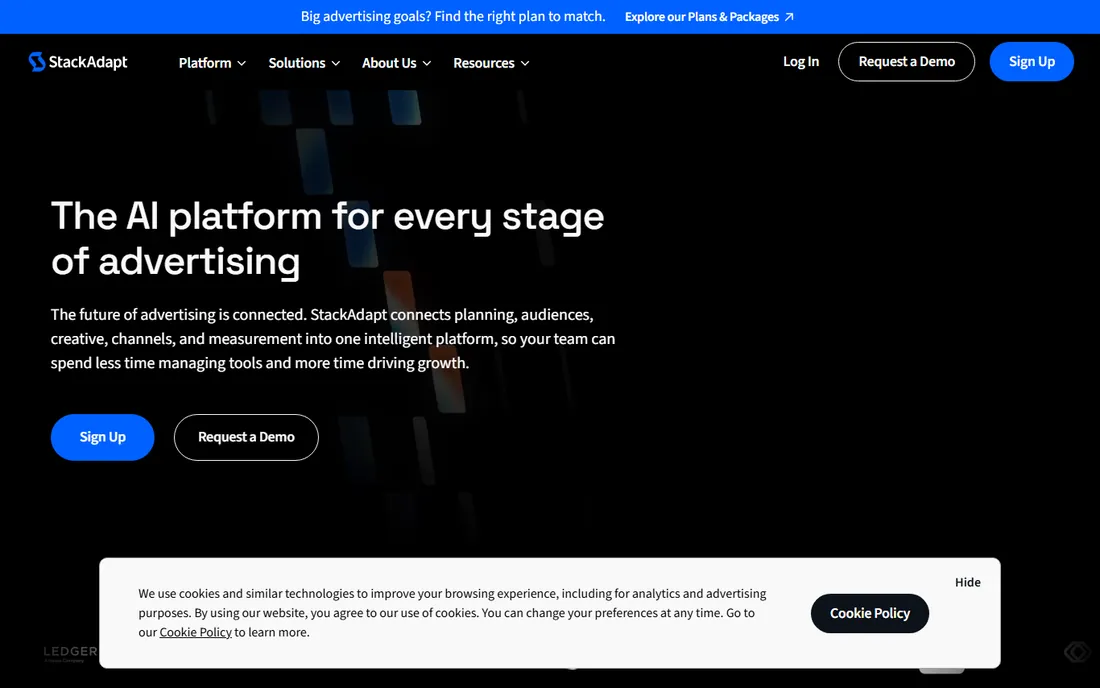
StackAdapt has built its reputation on being the DSP you can actually drive yourself. Campaigns launch across CTV, video, display, native, audio, digital out-of-home, email and direct mail from one platform, and the newer AI layer ties planning, audiences and measurement together. Reviewers on G2 repeatedly cite ease of use and customer support as the reasons they stay.
The realistic read: it sits between true enterprise DSPs and entry-level tools. A regional agency or a growing brand can run serious campaigns here without hiring programmatic specialists. If you need billion-impression scale or the deepest CTV inventory, The Trade Desk still wins. No published pricing; ask about minimums before planning a budget.
What we like- Genuinely usable self-serve interface that smaller teams can run without a trading desk
- Strong multi-channel reach including CTV, native, audio, digital out-of-home, email and direct mail
- Consistently high satisfaction scores from agency users on review sites
Watch out for- Smaller media footprint than the enterprise giants
- Minimum spend levels are not published, and serious volume still gets a sales conversation
#5
Simpli.fi
Best for: Multi-location brands and agencies running localized campaigns
Visit simpli.fi
Starting priceSee website (custom quote)
Free planNo
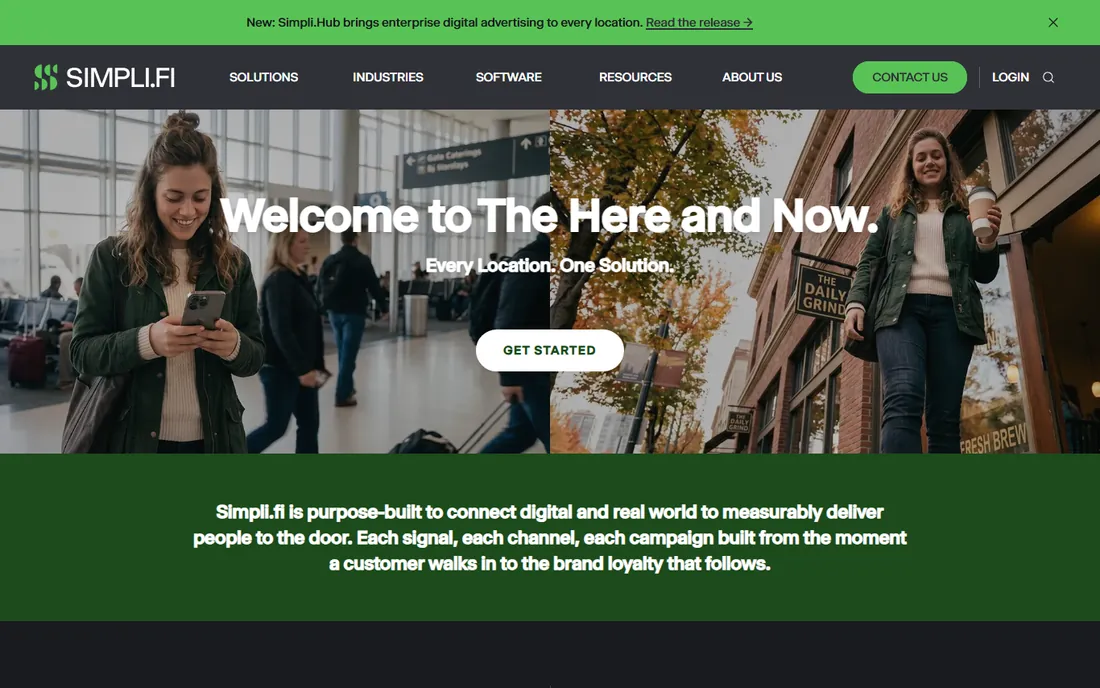
Simpli.fi owns the localized programmatic niche. Where most DSPs think in campaigns, Simpli.fi thinks in locations: a franchise brand can run one strategy with local targeting, creative and budgets per storefront, down to the address level. The platform executes well over 100,000 campaigns a month, so it is built for volume without the process breaking.
For national single-market buyers this specialization is overkill. For multi-location brands, dealer networks and franchise groups, it is the category leader. Pricing is custom, but the model is friendly to smaller budgets per location, which matters more than the platform fee.
What we like- Best-in-class geo-fencing and address-level targeting for localized campaigns
- Built to run tens of thousands of localized campaigns at once with per-location customization
- Works on budgets of all sizes, not just enterprise
Watch out for- Less known for national brand-awareness buys
- Managed-service heritage means some buyers still access it through account teams rather than pure self-serve
#6
Quantcast
Best for: Advertisers that want audience buying without third-party cookies
Visit quantcast.com
Starting priceSee website (custom quote)
Free planNo
Quantcast rebuilt itself around a simple idea: make open-web buying as easy as buying on a walled garden. The self-serve platform targets agencies and advertisers of all sizes rather than just enterprises, with targeting and measurement designed to work without third-party cookies. The pitch lands best with independent agencies that find legacy DSPs over-complex.
The honest catch is scale and depth. Quantcast does not match the biggest DSPs on inventory breadth or data partnerships. For a mid-size advertiser that wants audience-based buying without hiring programmatic staff, the ease of use is the reason to pick it. For power users, it can feel limited.
What we like- Cookieless-by-design targeting with its Ara machine learning engine
- Self-serve platform designed to be simpler than legacy DSPs, aimed at businesses of all sizes
- Strong audience insights from over 100 million destinations measured in real time
Watch out for- Shallower inventory and data scale than The Trade Desk
- The simplicity pitch means less granular control for advanced programmatic teams
#7
Adform
Best for: European agencies and advertisers wanting a full ad tech stack
Visit adform.com
Starting priceSee website (custom quote)
Free planNo
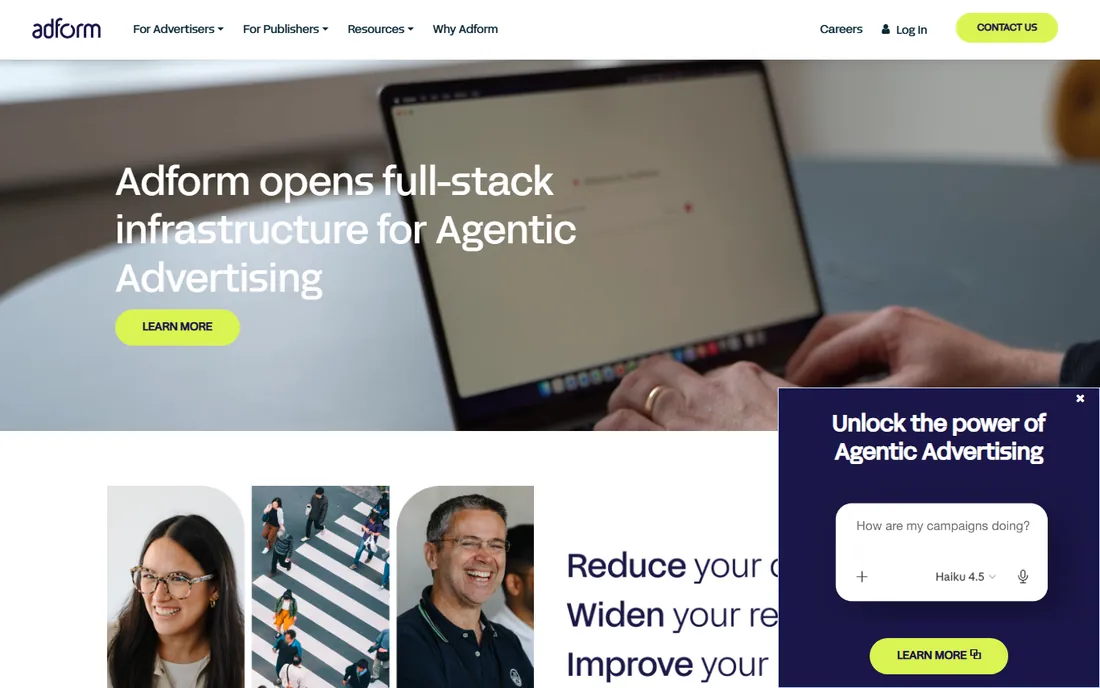
Adform is the European answer to the DSP question. Where US buyers default to The Trade Desk, many European agencies standardize on Adform, which bundles the DSP with an ad server, supply-side tools and a data platform. For buyers that also need ad serving, buying both from one vendor cuts integration work and fees.
The US footprint is smaller, so American buyers may find fewer local references and integrations. The ID Fusion identity approach is built for the post-cookie world. Pricing is custom. Consider Adform if you operate in Europe or want one vendor for buying and ad serving.
What we like- Full-stack platform: DSP, ad server, SSP and data management in one place, so you consolidate vendors
- Very strong in Europe with local offices and identity solutions built for cookieless buying
- Log-level data access for transparency-minded buyers
Watch out for- Weaker US presence than the other names here
- The breadth of the stack means a longer evaluation if you only need the DSP
#8
Criteo
Best for: Retailers and ecommerce brands buying on commerce intent
Visit criteo.com
Starting priceSee website (custom quote)
Free planNo
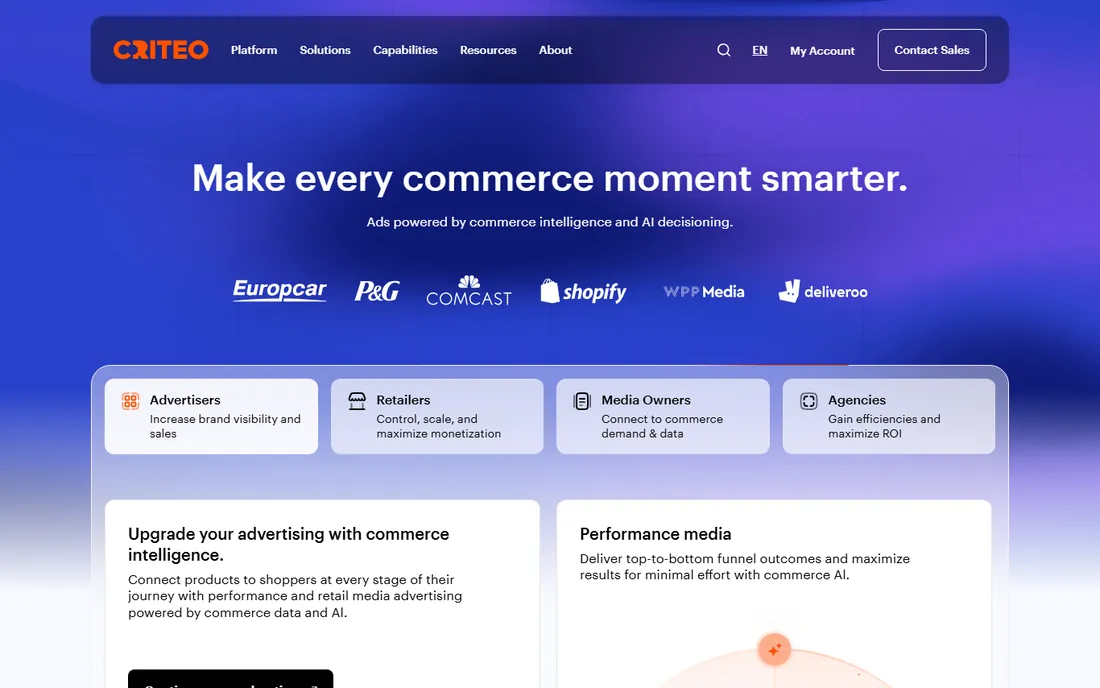
Criteo started in retargeting and grew into a commerce media platform. Its current pitch is commerce intelligence: targeting and measurement powered by shopper data across thousands of brands and retailers. For advertisers, that means performance media and retail media buying from one place; for retailers, it is a way to run retail media without building the tech.
Buyers outside commerce should look elsewhere: this is not a general DSP for CTV brand buys. Ecommerce advertisers, though, get retargeting and acquisition tools tuned on purchase intent, plus retail media access. Pricing is custom, typically tied to media spend.
What we like- Commerce data from over $1 trillion in yearly transactions, three times Amazon's transaction volume per the vendor
- Retail media platform with 200+ retailers in one place
- Dynamic retargeting that still performs for ecommerce
Watch out for- Less relevant outside retail and ecommerce
- Platform has consolidated around commerce, so it is not a general-purpose DSP for brand campaigns
Starting priceSee website (custom quote)
Free planNo
Viant is a CTV-first independent DSP. Its identity spine links households to devices, which lets advertisers connect a CTV ad to a purchase made on a phone in the same house without third-party cookies. The platform covers the omnichannel basics, but CTV is where the product and the company story both point.
For advertisers shifting budget from linear TV to streaming, Viant is a credible alternative to The Trade Desk with a stronger identity narrative. For buyers whose plans are mostly display and video across the open web, the differentiation is thinner. Custom pricing, enterprise-style contracts.
What we like- People-based identity linking US households across devices, built for cookieless CTV measurement
- Strong CTV and AI-led automation story with its ViantAI tools
- Public company with transparent operations
Watch out for- Smaller scale than The Trade Desk and DV360
- Most effective as part of a CTV-first strategy rather than a full omnichannel default
#10
MediaMath by Infillion
Best for: Technical programmatic teams that want API-level control
Visit mediamath.com
Starting priceSee website (custom quote)
Free planNo
MediaMath was an early DSP pioneer, went through bankruptcy in 2023, and now operates as MediaMath by Infillion. The product pitch is composability: API-first access, transparent AI optimization with visible signals, and curated supply across video, CTV, audio and display. Technical teams that want to build custom bidding workflows get the control they need.
The risk is vendor stability, which buyers should assess directly with Infillion. If the team is in-house and technical, the platform's transparency is genuinely attractive. If you want a safe, boring enterprise choice, pick The Trade Desk instead.
What we like- API-first architecture with the Brain optimization engine and log-level data for full transparency
- SOURCE ecosystem for supply path transparency
- Flexible models from managed to self-serve to agentic
Watch out for- Turburlent company history, including a 2023 bankruptcy before the Infillion acquisition
- Fewer local teams and case studies than the bigger names
No DSP on this list publishes prices, and that is normal for the category. Media buying software is priced in two parts: the media itself, which passes through to publishers, and the platform fee, usually a percentage of the media spend or a negotiated software license. Enterprise contracts commonly sit in the low single digits to the teens as a percentage of spend, plus any data or measurement fees.
Two costs surprise first-time buyers. First, minimums: most enterprise DSPs expect six-figure annual media commitments, either directly or through an agency partner. Self-serve platforms like StackAdapt and Quantcast have lower practical minimums, but ask before budgeting. Second, data fees: third-party audience segments cost extra per thousand impressions on almost every platform, and they add up fast on large buys.
The smart buying process is the same regardless of vendor. Get the platform fee in writing as a percentage of media, ask what is excluded (data, measurement, creative services), and confirm contract length and termination terms. A DSP that charges a low platform fee but requires expensive audience data is not cheaper than one with a higher flat fee and inclusive data.
Self-serve vs. managed service: which model fits you
Self-serve means your team runs the platform: you set targeting, budgets and bids. The Trade Desk, StackAdapt and DV360 all offer self-serve, but self-serve at The Trade Desk assumes you employ programmatic traders, while self-serve at StackAdapt assumes you employ marketers. Match the platform's complexity to your team's skills.
Managed service means the vendor or an agency runs campaigns for you, usually for a higher fee or a media-spend commitment. Simpli.fi grew up as a managed service for local advertisers; Criteo and Viant both run managed options. First-time programmatic buyers often get better results starting managed, then taking the wheel once they know what good looks like.
The middle path is a trading desk: an agency that runs one of these DSPs for you. Many SMBs get The Trade Desk's inventory and data without The Trade Desk's contract minimums this way. The fee is real, but so is the expertise. Choose based on budget, team skill and how fast you need results.
How we chose
We started with the searches buyers use: media buying software, demand-side platform, DSP for agencies, and programmatic advertising platform. For each candidate we opened the vendor's own homepage and product pages, checked pricing pages where they exist, read public reviews on G2 and Capterra, and looked at practitioner discussion on Reddit. Where a price could not be verified on the vendor's own page we wrote "See website" rather than guessing. We excluded platforms that have shut down and noted the MediaMath-to-Infillion transition where it affects buying confidence.
Frequently asked questions
What is the difference between a DSP and media buying software?
A DSP (demand-side platform) is a type of media buying software: it buys ad impressions programmatically in real-time auctions. Media buying software is the broader category and can also include planning tools, ad servers and workflow platforms like Basis. In practice, buyers use the terms interchangeably when comparing the tools on this list.
How much does media buying software cost?
The software fee is usually a percentage of your media spend, negotiated per contract, and none of the vendors on this list publish it. Plan on the platform fee plus your actual media budget plus data fees for third-party audiences. Ask each vendor for an all-in estimate at your spend level before comparing.
Can a small business use a DSP like The Trade Desk directly?
Usually not. Enterprise DSPs expect large media commitments and trained staff. Small and mid-size advertisers typically access The Trade Desk through an agency trading desk, or use self-serve platforms like StackAdapt or Quantcast that are built for smaller teams.
Do I still need an agency if I buy a DSP?
It depends on team skill. A DSP is a tool, not a strategy: someone has to plan audiences, build creative, set bids and read the reporting. Agencies add media planning, creative services and cross-platform buying. Many advertisers start with an agency on a DSP and bring buying in-house later.
What is the minimum budget for programmatic advertising?
There is no universal number. Self-serve platforms can start in the low thousands per month, while direct enterprise DSP contracts commonly assume six-figure annual spend. Your agency or trading desk can give you a realistic floor for the platforms you are considering.
Which DSP is best for connected TV advertising?
The Trade Desk and Viant are the strongest independent options for CTV, and DV360 leads if YouTube is central to your plan. All three buy streaming inventory programmatically; the differences are in identity and measurement approaches, so test with a pilot budget before committing.
Sources we checked (12)
- https://thetradedesk.com/
- https://stackadapt.com/
- https://basis.net/
- https://simpli.fi/
- https://www.mediamath.com
- https://quantcast.com/
- https://adform.com/
- https://criteo.com/
- https://viantinc.com/
- https://marketingplatform.google.com/about/display-video-360/
- https://www.g2.com/categories/demand-side-platform-dsp
- https://www.capterra.com/demand-side-platform-software/
Is your product missing or out of date?
We review this list regularly. Vendors can request a listing, send updated pricing or ask about featured placement.

Shihab Mia · Founder, Rankite
Shihab has spent more than a decade helping SaaS and e-commerce brands grow through search. He writes Rankite's software buying guides from pricing pages, documentation and public user reviews. More about Shihab.