How we make this list: we compare pricing pages, product documentation and public user reviews. Ratings come from G2, Capterra or Trustpilot, with the date we checked them.
Key takeaways
- Martech is a stack, not a single purchase: this guide picks one leading tool per job, from CRM and automation to data plumbing and measurement.
- HubSpot is the simplest centre of gravity for small and mid sized teams, while Marketo and Salesforce Marketing Cloud serve enterprise B2B and B2C programmes.
- Klaviyo owns ecommerce email and SMS, Mailchimp remains the beginner default, and ActiveCampaign delivers the deepest automation per dollar.
- Tools only amplify a strategy: none of these platforms guarantees leads, conversions, or revenue, and data quality limits every one of them.
Quick comparison
Is your product missing or out of date?
We review this list regularly. Vendors can request a listing, send updated pricing or ask about featured placement.

#1HubSpot Marketing Hub
Best for: CRM centred marketing for growing teams4.4/5 on
G2 (15,978 reviews, checked Oct 2026)
Visit hubspot.com
Starting price$20 per seat per month
Free planYes
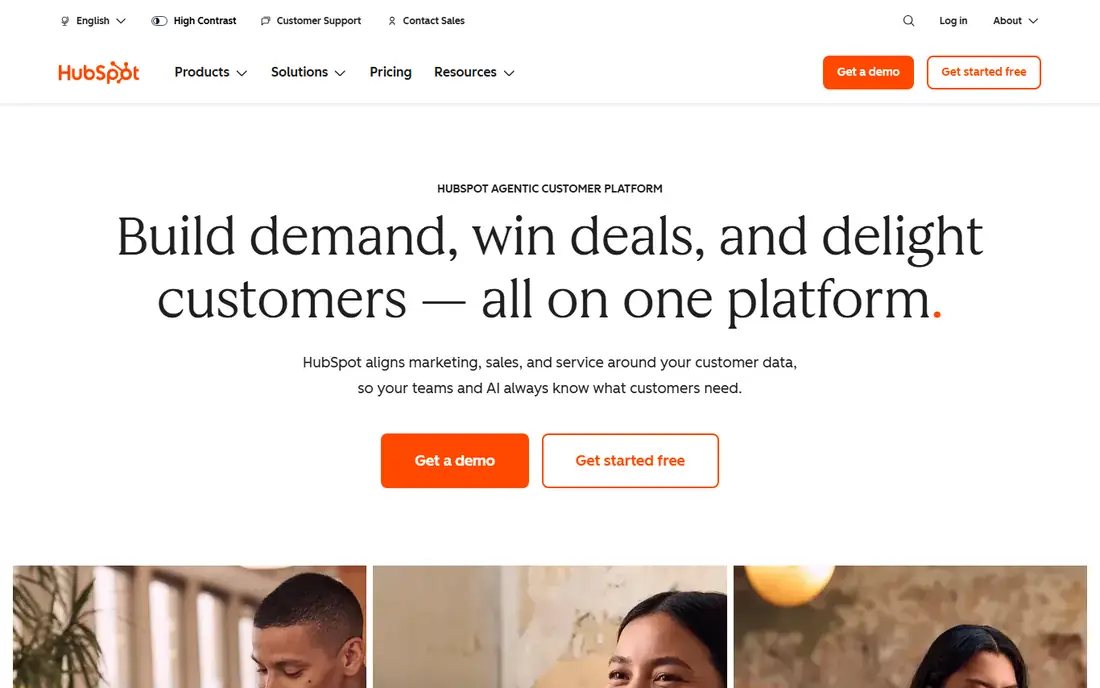
What we like- HubSpot puts marketing on top of a real CRM, so forms, email, landing pages, ads, and lead scoring all write to the same contact record your sales team uses. Free tools cover forms, basic email, and contact management for up to two users, and Starter at 20 dollars per seat per month adds automation for small teams. Its reporting ties campaigns to deals without an analyst, which is the feature mid sized teams feel first.
Watch out for- The price cliff is famous: Professional jumps to around 800 dollars a month plus a mandatory onboarding fee, with little in between. Costs also rise with marketing contact tiers, so a growing database inflates the bill even with the same seats. Starter automation is capped and thin beside ActiveCampaign at a similar outlay.

#2Adobe Marketo Engage
Best for: Enterprise B2B demand generation4.1/5 on
G2 (3,333 reviews, checked Oct 2026)
Visit business.adobe.com
Starting priceSee website
Free planNo
What we like- Marketo Engage is the enterprise B2B standard inside Adobe's stack, built for long buying journeys, account based marketing, lead scoring and routing at scale, and tight alignment with sales teams on Salesforce or Dynamics. Its nurture and cloning tools let global teams run hundreds of programmes without rebuilding them. For a large B2B organisation, the depth of its automation logic is the reason to buy.
Watch out for- Marketo publishes no list pricing, so every deal is a sales process. It needs dedicated operations staff to run well
- Small teams drown in its power. The interface and campaign build process feel dated beside HubSpot, and implementation through Adobe or a partner adds serious cost before the first email sends.

#3Salesforce Marketing Cloud
Best for: Enterprise consumer journeys at scale4.2/5 on
Capterra (532 reviews, checked Oct 2026)
Visit salesforce.com
Starting priceSee website
Free planNo
What we like- Marketing Cloud is Salesforce's enterprise engagement platform, orchestrating email, mobile, advertising, and web journeys for consumer brands sending at very large scale, driven by data from the Salesforce CRM estate. Its journey builder and personalisation tools serve complex multi brand, multi country programmes. For companies already deep in Salesforce, the shared data model is the argument.
Watch out for- Pricing is quote based and edition based, and total cost with implementation partners regularly dwarfs the licence. The product is really several acquired systems, and the seams show in setup and reporting. It is far more platform than any mid sized team needs, and it demands specialist staff in the same way Marketo does.

#4Klaviyo
Best for: Ecommerce email and SMS revenue4.6/5 on
G2 (1,368 reviews, checked Oct 2026)
Visit klaviyo.com
Starting price$20 per month
Free planYes
What we like- Klaviyo is the default revenue engine for online stores, integrating deeply with Shopify and other commerce platforms so flows trigger on browsing, cart, and purchase behaviour in near real time. Email starts at 20 dollars a month for 500 profiles, the free plan covers 250 profiles with limited sends, and its segmentation and flow library are the strongest in ecommerce. Reporting shows revenue per flow and campaign, which keeps the tool honest.
Watch out for- Pricing follows active profiles, so a growing list gets expensive fast, and dormant contacts cost money until you suppress them. Outside ecommerce, Klaviyo's advantages fade and general B2B teams get less from it. SMS pricing stacks on top of email, and heavy texting programmes need careful budget control.

#5Mailchimp
Best for: Beginner email and simple campaigns4.4/5 on
G2 (5,436 reviews, checked Oct 2026)
Visit mailchimp.com
Starting price$13 per month
Free planYes
What we like- Mailchimp remains the friendliest first email tool: a free plan for 250 contacts, Essentials from 13 dollars a month, templates and an editor a beginner can ship with on day one, and basic automations for welcome and abandoned cart emails. It has widened into websites, landing pages, and light CRM, which suits solo businesses that want one simple bill. Deliverability and reliability are proven at very large scale.
Watch out for- Mailchimp charges for unsubscribed and archived contacts in ways that surprise growing lists, and its automation depth is a clear step below ActiveCampaign and Klaviyo. Support quality on lower tiers draws steady complaints. Businesses that outgrow simple campaigns usually migrate within a couple of years, and export of automation logic does not travel with your contacts.

#6ActiveCampaign
Best for: Deep automation on a small budget4.4/5 on
G2 (14,789 reviews, checked Oct 2026)
Visit activecampaign.com
Starting price$15 per month
Free planNo
What we like- ActiveCampaign delivers the deepest automation builder in the small business price band, with conditional logic, lead scoring, site tracking, and a built in CRM, starting at 15 dollars a month for 1,000 contacts on annual billing. Its recipe library and split testing inside automations go beyond what Mailchimp or HubSpot Starter allow. Deliverability has a strong record, which is the quiet feature that decides whether automation matters at all.
Watch out for- There is no free plan, only a 14 day trial, and the interface's power comes with a learning curve for first time marketers. Prices step up with contacts and tiers, and the top automation features sit on higher plans. Design templates are serviceable rather than beautiful beside Mailchimp or Klaviyo.

#7Segment
Best for: Customer data plumbing between tools4.5/5 on
G2 (565 reviews, checked Oct 2026)
Visit segment.com
Starting priceSee website
Free planNo
What we like- Segment is the best known customer data platform: it collects events from your website, app, and servers once, then forwards clean, consistent data to your warehouse and to hundreds of marketing and analytics tools. That single collection layer fixes the mismatched numbers problem where every tool reports different conversions. Protocols and governance tools keep event naming disciplined as teams grow.
Watch out for- Segment is plumbing, not marketing: it sends no emails and runs no campaigns, so its value only appears alongside the tools it feeds. Pricing is by quote and scales with monthly tracked users, which gets expensive for consumer scale products. Implementation quality decides everything, and a rushed setup produces expensive, well organised bad data.
Starting priceFree
Free planYes
What we like- GA4 is the measurement layer almost every martech stack reports into, and the standard version is free at volumes that cover most businesses. It tracks web and app events in one model, connects natively to Google Ads for conversion based bidding, and exports raw data to BigQuery on the free tier, which analysts prize. Its audience exports feed remarketing across the Google ecosystem.
Watch out for- GA4 measures, it does not market, and its interface frustrates many users who learned the old Universal Analytics. Data sampling, thresholds, and retention limits apply on the free tier, and the paid Analytics 360 tier is priced for enterprises. Privacy rules and consent requirements increasingly limit what can be collected, so its numbers are a model of reality rather than a census.
How we chose
Because martech is a stack, we picked one leader per job rather than eight rivals for the same job: CRM centred marketing, enterprise B2B automation, enterprise consumer journeys, ecommerce messaging, beginner email, small business automation, customer data infrastructure, and measurement. For each we checked entry pricing, free tiers, and the constraint that drives total cost, usually contacts, seats, or tracked users. We excluded single purpose point tools such as standalone pop up or landing page builders, and we did not count vendor lift claims as evidence of results.
Build from the centre out. Most teams start with the system that holds contacts and sends campaigns: HubSpot if you want CRM and marketing together, ActiveCampaign or Mailchimp for email first on a budget, Klaviyo if you sell online. Add measurement early, since GA4 is free and retroactive data does not exist; the day you install it is the first day your history starts. Add data plumbing such as Segment only when mismatched data between tools becomes a weekly argument, because before that point it is cost without benefit.
Then watch the three traps. First, contact based pricing: clean your list and suppress the dead, or every platform bill grows while results do not. Second, migration cost: automations and templates do not move between platforms, so choose the platform you can stay on for three years. Third, consent and privacy law: email and tracking run under rules such as CAN-SPAM, GDPR, and state privacy laws, and the tools assume you collect consent properly and honour unsubscribes and data requests. No platform on this list guarantees leads or sales; they make a sound strategy faster and a weak one more expensive. Prices are October 2026 published figures where vendors publish them.
Frequently asked questions
What is martech, exactly?
Martech, short for marketing technology, is the software used to plan, run, and measure marketing: CRM systems, email and automation platforms, customer data platforms, advertising tools, and analytics. A martech stack is simply the set of these tools one company uses and the connections between them. This guide covers the core layers most companies buy first.
How much should a small business spend on martech?
A workable small business stack can run from free to a few hundred dollars a month: GA4 free, an email platform at 13 to 20 dollars a month, and a CRM centred tool as needs grow. Costs climb with contact counts and team size rather than features alone. Spend on the tool your team will actually use weekly; shelfware is the most common martech waste.
Do I need a customer data platform like Segment?
Not at first. A CDP pays off when you have several data sources, a warehouse, and multiple tools arguing about the same customer's events, usually at growth stage and beyond. Before that, native integrations between your main platforms do the job. Buying Segment early gives you organised data and nothing to act on it with.
Which tool is best for ecommerce marketing?
Klaviyo is the standard answer for stores, because its commerce integrations, flows, and revenue reporting are built for that job, with email from 20 dollars a month and a free tier to start. Mailchimp and ActiveCampaign serve stores too, but neither matches Klaviyo's depth on shopping behaviour. Pair it with GA4 for measurement beyond email revenue.
Can these tools guarantee more leads or sales?
No. Vendors advertise average lifts from selected customers, but your results depend on your offer, audience, data quality, and execution. What good martech does is remove manual work, speed up testing, and show you which campaigns earn money so you can stop the ones that do not. Treat any platform sold on guaranteed outcomes as a warning sign.
Sources we checked (0)
Is your product missing or out of date?
We review this list regularly. Vendors can request a listing, send updated pricing or ask about featured placement.

Shihab Mia · Founder, Rankite
Shihab has 5+ years in B2B and SaaS SEO. He writes Rankite's software buying guides from pricing pages, documentation and public user reviews. More about Shihab.
 Google Analytics 4