How we make this list: we compare pricing pages, product documentation and public user reviews. Rankite is independent; if a vendor ever pays for a featured spot, that listing is clearly labeled Partner.
Key takeaways
- For most SMBs, the choice is ActiveCampaign (from $15/month) for automation depth, Brevo (from $9/month) for large lists on a budget, or Mailchimp (from $13/month) for the fastest path to polished campaigns.
- Ecommerce stores should start with Omnisend (from $16/month) or Klaviyo-style flows: prebuilt cart and post-purchase automations beat generic tools.
- HubSpot Marketing Hub is the best free starting point, but the jump from Starter ($9/seat) to Professional ($800/month plus $3,000 onboarding) is the steepest cliff in marketing software.
- Contact-based billing punishes dirty lists: Mailchimp and ActiveCampaign now bill for unsubscribed contacts, so list hygiene directly affects your bill.
Quick comparison
| Tool | Best for | Starting price | Free plan |
|---|
 HubSpot Marketing Hub HubSpot Marketing Hub | Growing companies that want marketing automation tied directly to CRM | Free ($0, 2 users); Starter $9/seat/month (annual); Professional $800/month + $3,000 onboarding | Yes (Free tools) |
 Mailchimp Mailchimp | Small businesses sending broadcast and promotional email, especially on Shopify | Free ($0, 250 contacts); Essentials from $13/month; Standard from $20/month | Yes (Free) |
 ActiveCampaign ActiveCampaign | SMBs that want serious marketing automation without enterprise cost | $15/month (Starter, annual, 1,000 contacts); Plus $49/month | Free trial (14 days); no free plan |
 Constant Contact Constant Contact | Nonprofits, local businesses and event-driven organizations that value human support | $12/month (Lite, 500 contacts); Standard $35/month | Free trial (60 days, no card); no free plan |
 Brevo Brevo | Businesses with large contact lists and moderate send volumes | Free ($0, 300 emails/day); Starter from $9/month (5,000 emails) | Yes (Free, 300 emails/day, unlimited contacts) |
 GetResponse GetResponse | Course creators, coaches and marketers who run webinars | Free ($0, 500 contacts); Starter $19/month ($15.58 annual, 1,000 contacts) | Yes (Free); free trial (14 days, no card) |
 Keap Keap | Small service businesses wanting marketing automation wired to a real CRM | See website (custom quote) | Free trial (14 days); no free plan |
 Omnisend Omnisend | Ecommerce stores of any size wanting omnichannel automation without enterprise cost | Free ($0, 250 contacts); Standard from $16/month; Pro from $59/month | Yes (Free) |
Is your product missing or out of date?
We review this list regularly. Vendors can request a listing, send updated pricing or ask about featured placement.
Frequently asked questions
How much does a marketing platform cost?
From $0 to $800-plus a month. Brevo starts at $9, Mailchimp at $13, ActiveCampaign at $15, Omnisend at $16, GetResponse at $19, Constant Contact at $12. HubSpot Starter is $9 per seat, but Professional jumps to $800 a month plus a mandatory $3,000 onboarding. Every vendor except HubSpot and Omnisend scales price with contact count, so a 50,000-contact list costs multiples of the starting price.
What is the difference between a marketing platform and an email tool?
Email tools send campaigns and basic automations. Marketing platforms add CRM, lead scoring, attribution, landing pages and multi-channel orchestration (SMS, chat, ads). Mailchimp and Constant Contact are email-first; ActiveCampaign and Keap bridge the gap; HubSpot Professional is a full platform. Buy the platform when marketing drives revenue you need to attribute, not before.
Which platform is best for ecommerce?
Omnisend, built specifically for Shopify and WooCommerce with 28 prebuilt flows for carts, browse abandonment and post-purchase. Mailchimp is the runner-up with strong Shopify integration. Generic platforms can do ecommerce, but the prebuilt flows and product-data triggers in ecommerce-first tools save weeks of automation building.
Can I switch platforms without losing my list and automations?
Your list migrates easily; every platform imports CSVs and most offer free migration assistance. Automations do not migrate: workflows must be rebuilt, which is the real switching cost. Plan a week to rebuild core flows, run both platforms in parallel for one send cycle, and warm up the new sending domain before the cutover. The best time to switch is your quiet season.
Every marketing platform on this list has a free plan or a cheap starter tier, and every one of them gets expensive in exactly the way the pricing page downplays. The pattern is always the same: the starter price covers a small list with basic features, and the price you actually pay arrives when your list grows, you need real automation, or you discover the feature you wanted sits two tiers up. These eight platforms cover the real market for small businesses, with the pricing traps spelled out for each.
#1
HubSpot Marketing Hub
Best for: Growing companies that want marketing automation tied directly to CRM
Visit hubspot.com
Starting priceFree ($0, 2 users); Starter $9/seat/month (annual); Professional $800/month + $3,000 onboarding
Free planYes (Free tools)
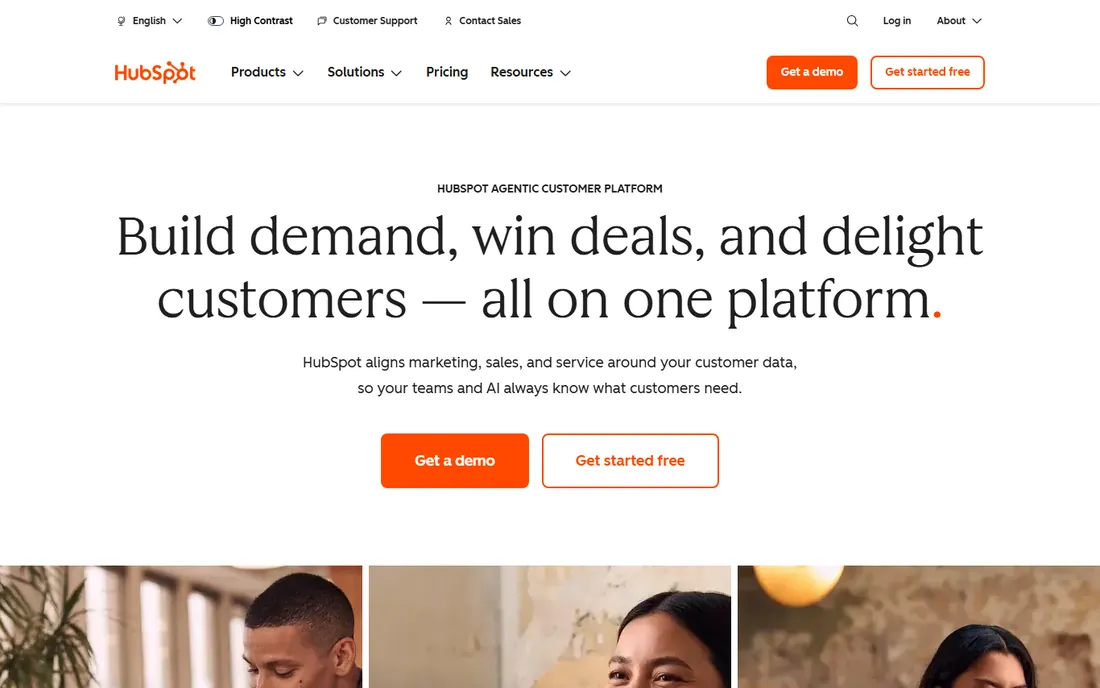
HubSpot's free tier is the best on-ramp in marketing software: a real CRM with email tools for $0, no card required. For a growing company, the unified data model is the selling point: every email, form and deal shares one contact record, so attribution actually works. Starter at $9 a seat extends the basics affordably.
Then comes the cliff. Professional at $800 a month plus mandatory $3,000 onboarding is a 90x jump from Starter, and costs scale with contacts, seats and add-ons in ways that surprise finance teams. Most SMBs should treat HubSpot as two products: the free-to-Starter range, which is excellent value, and Professional-plus, which is an enterprise purchase. Do not start free assuming you will grow into Professional cheaply.
What we like- Genuinely useful free CRM plus marketing tools to start
- Deep automation, attribution and reporting on Professional
- Native integration across sales, service and CMS hubs
Watch out for- Professional onboarding fees ($3,000) are mandatory
- Costs scale with contacts, seats and add-ons in hard-to-predict ways
#2
Mailchimp
Best for: Small businesses sending broadcast and promotional email, especially on Shopify
Visit mailchimp.com
Starting priceFree ($0, 250 contacts); Essentials from $13/month; Standard from $20/month
Free planYes (Free)
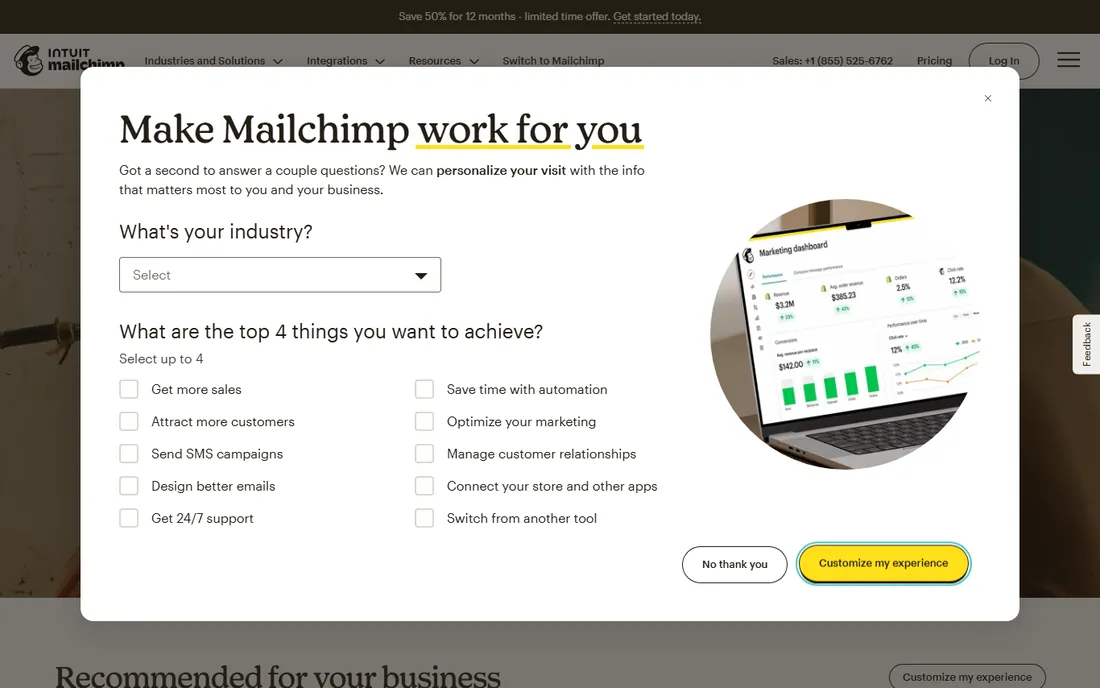
Mailchimp remains the easiest way to send a good-looking campaign this afternoon. The template builder is the best in the category for non-designers, and the Shopify integration with abandoned-cart automation covers the ecommerce basics out of the box. Essentials from $13 a month is priced for small lists getting started.
The billing quirks are the catch. Unsubscribed contacts count toward your tier until you archive them, so list hygiene directly affects the bill, and the free plan now covers only 250 contacts. Automation depth is gated: the workflows that make email marketing work sit on Standard and above. Setup takes under an hour. For broadcast email and promos, it is still the fastest option. For serious automation, ActiveCampaign does more per dollar.
What we like- Fastest path to polished campaigns with strong templates
- Built-in Shopify integration with abandoned-cart automation
- Predictive segmentation on Standard and above
Watch out for- Bills for unsubscribed contacts unless you archive them
- Free plan cut to 250 contacts and automation depth is gated by tier
Starting price$15/month (Starter, annual, 1,000 contacts); Plus $49/month
Free planFree trial (14 days); no free plan
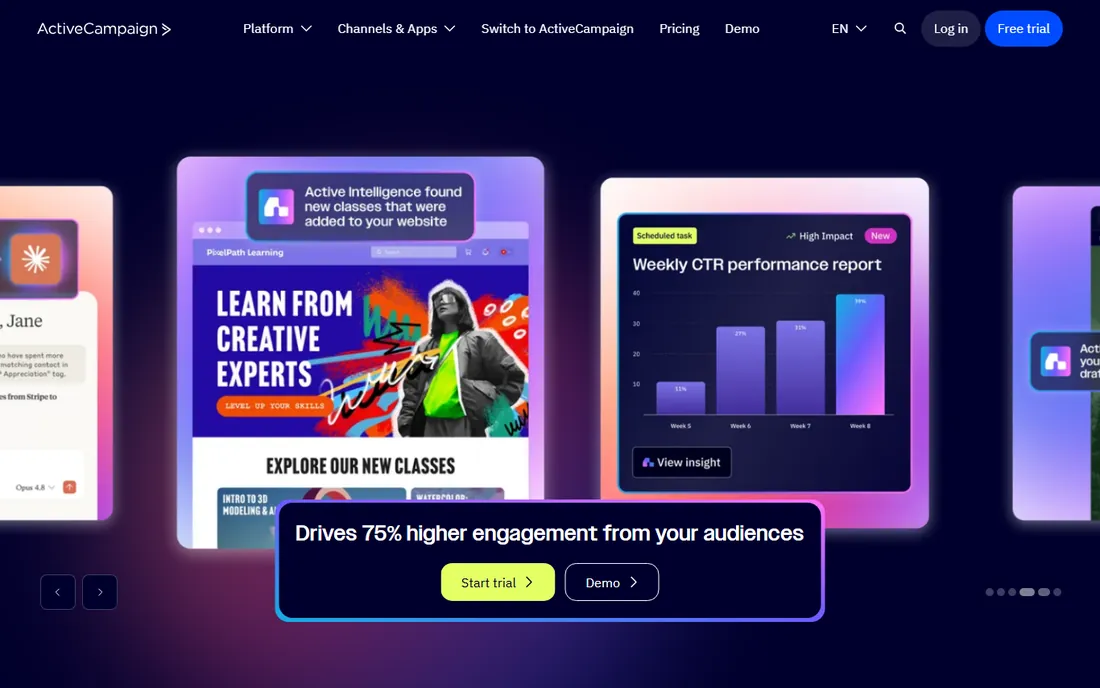
ActiveCampaign's automation builder rivals tools costing ten times more, which is why it dominates the SMB automation conversation. Visual workflows with conditional logic, a built-in CRM with lead scoring on Plus, and predictive sending on Pro cover everything a growing business needs. The $15 Starter price gets attention, but Plus at $49 is the real product: Starter caps automations at 5 actions.
Since late 2025, billing includes unsubscribed and bounced contacts, so the hygiene tax applies here too. Setup takes a few days of building automations properly. If marketing automation is a core growth lever for you, this is the best value on the list. If you just send newsletters, it is more tool than you need.
What we like- Best-in-class visual automation builder for the price
- Built-in CRM with lead scoring on Plus and above
- Predictive sending and conditional content on Pro
Watch out for- Starter caps automations at 5 actions, making Plus the real entry point
- Billing now includes unsubscribed and bounced contacts
#4
Constant Contact
Best for: Nonprofits, local businesses and event-driven organizations that value human support
Visit constantcontact.com
Starting price$12/month (Lite, 500 contacts); Standard $35/month
Free planFree trial (60 days, no card); no free plan
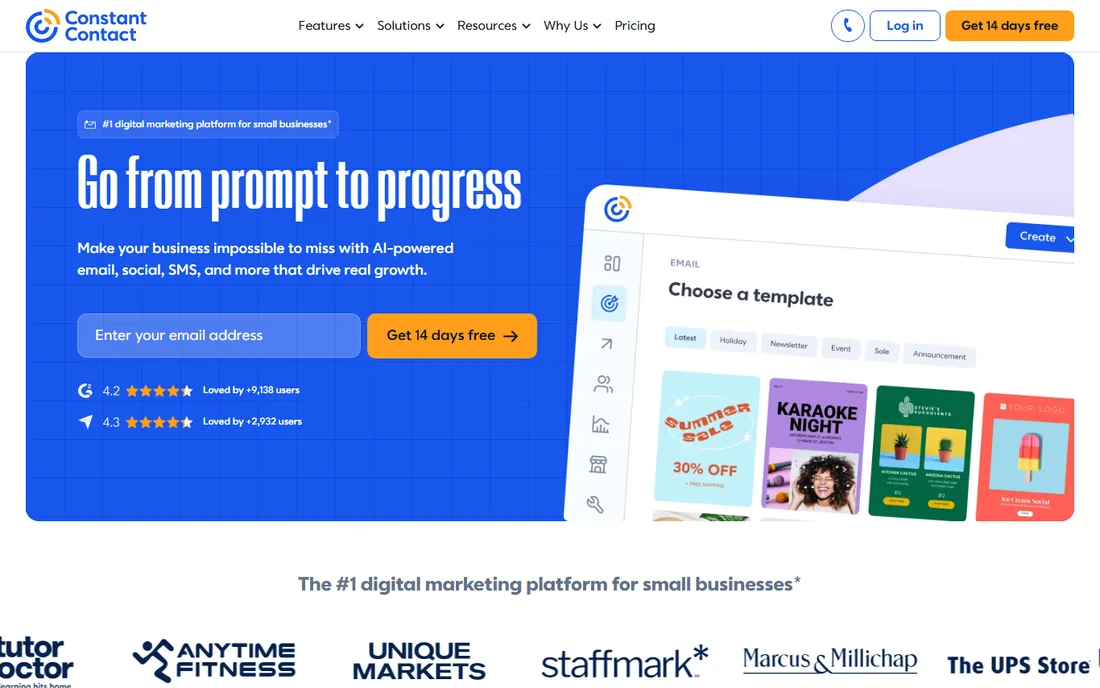
Constant Contact's pitch is human, not technical: real phone support six days a week on every paid plan, which nobody else offers at $12 a month. The editor is genuinely beginner-friendly, and the event management tools suit nonprofits and local organizations that run on events. The 60-day trial with no card is the most generous evaluation in the category.
The product itself trails on value. There is no free plan anymore, automation depth lags ActiveCampaign and Omnisend at similar prices, and costs climb steeply with list size. This is the right choice for an organization that will call support and values simplicity over power. For anyone comfortable with self-serve software, the competitors do more per dollar.
What we like- Phone support on all paid plans, rare at this price
- Beginner-friendly editor with event management tools
- Generous 60-day trial with no credit card
Watch out for- No free plan since June 2025
- Automation depth lags competitors at similar prices
#5
Brevo
Best for: Businesses with large contact lists and moderate send volumes
Visit brevo.com
Starting priceFree ($0, 300 emails/day); Starter from $9/month (5,000 emails)
Free planYes (Free, 300 emails/day, unlimited contacts)
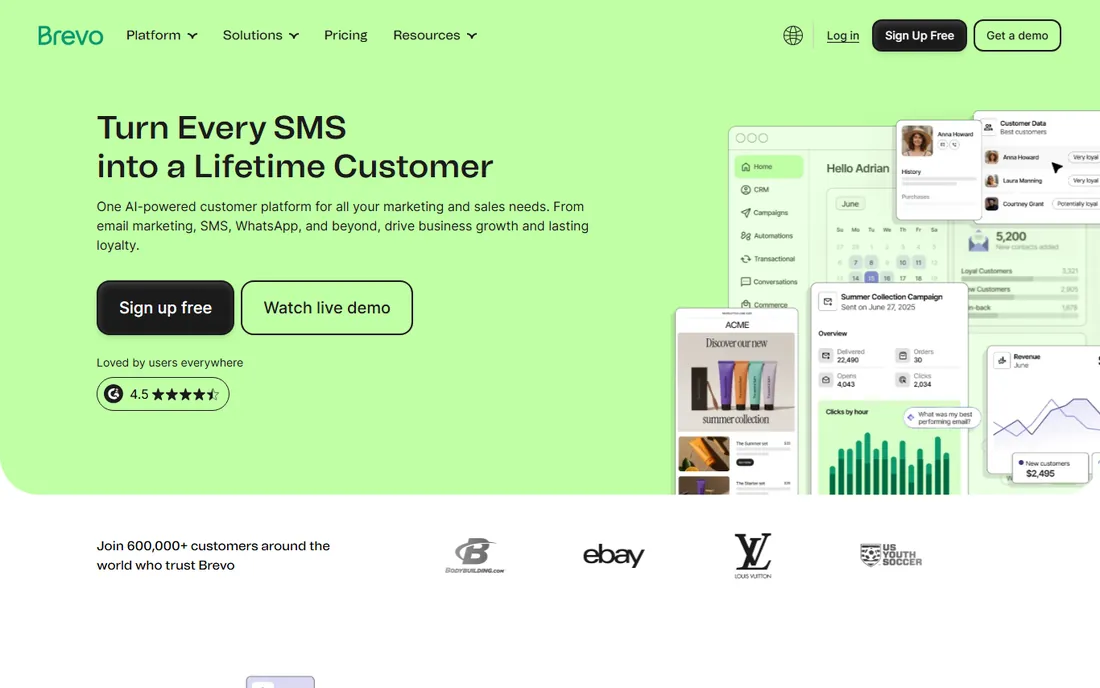
Brevo's pricing model is the opposite of everyone else's: unlimited contacts, billed by emails sent. A business with 100,000 contacts sending one newsletter a month pays $9, where contact-based vendors charge hundreds. The free plan includes automation and CRM, and the platform covers transactional email, SMS, WhatsApp and chat beyond marketing.
The gap in the middle is the problem. Growing senders jump from Standard at $18 to Professional at $499 with little in between, so mid-size senders should check the math carefully. Free-plan emails carry Brevo branding. Setup is self-serve and quick. If your list is large and your sends are infrequent, no other pricing model comes close.
What we like- Email-volume pricing favors large lists that send infrequently
- Generous free plan with automation and CRM included
- Transactional email, SMS, WhatsApp and chat in one platform
Watch out for- Brevo branding on free-plan emails
- Big jump from Standard ($18) to Professional ($499)
Starting priceFree ($0, 500 contacts); Starter $19/month ($15.58 annual, 1,000 contacts)
Free planYes (Free); free trial (14 days, no card)
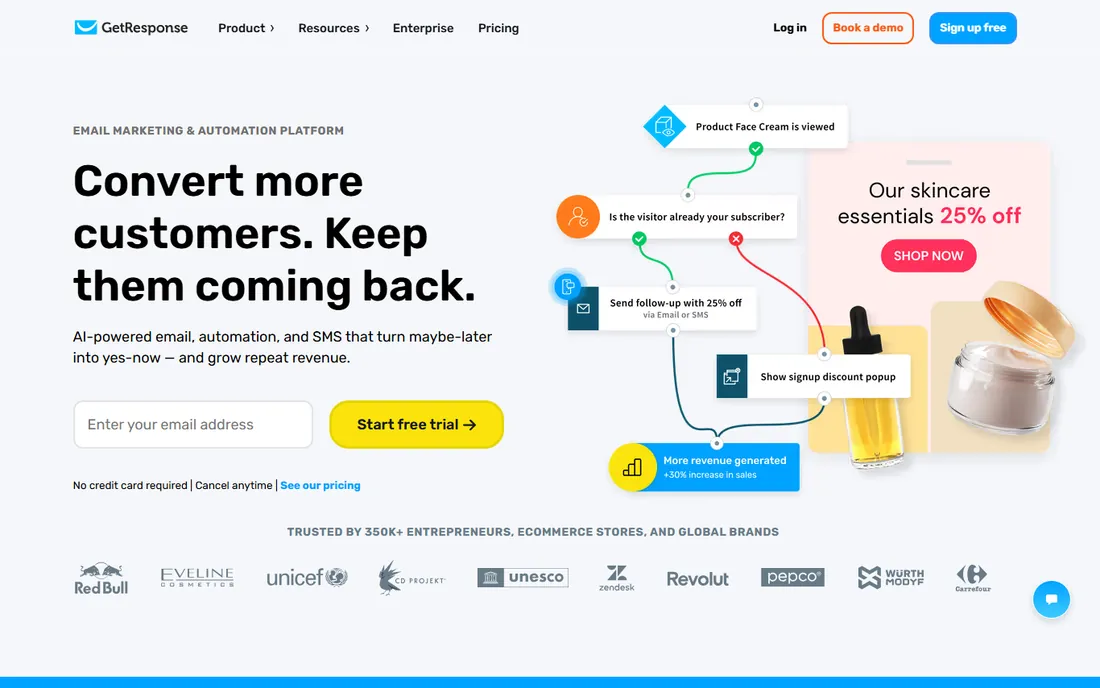
GetResponse bundles what course creators otherwise buy separately: email, webinars, funnels and courses under one subscription. Native webinar hosting on the Marketer tier removes a $50-plus monthly webinar bill, and unlimited sends on paid plans means heavy senders are not metered. The Creator tier adds an AI course builder and website builder.
Deliverability is the caveat. Independent audits show lower inbox placement than Klaviyo and ActiveCampaign, which matters more as your list grows; a webinar platform that lands in spam is an expensive problem. Confirm your region's pricing, as currency-specific lists differ. For creators running webinars, the bundle is compelling. For pure email performance, the deliverability leaders win.
What we like- Native webinar hosting on Marketer and Creator tiers
- Unlimited email sends on paid plans with contact-only pricing
- AI course creator and website builder on Creator
Watch out for- Deliverability scores trail top rivals in third-party audits
- Currency-specific price lists differ, so confirm your region's pricing
#7
Keap
Best for: Small service businesses wanting marketing automation wired to a real CRM
Visit keap.com
Starting priceSee website (custom quote)
Free planFree trial (14 days); no free plan
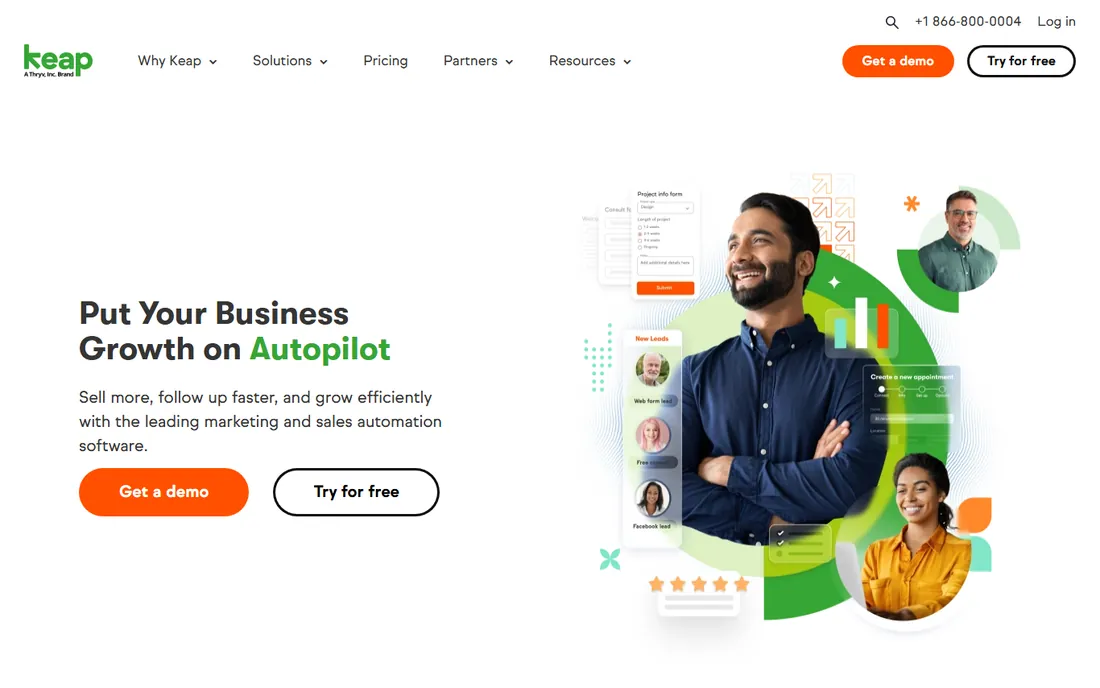
Keap's strength is follow-up wired to a CRM: lead capture to appointment to invoice in one system, built for coaches, agencies and home services. The visual campaign builder is approachable for owners who will never learn a complex automation tool, and text marketing on higher tiers suits businesses that book by phone.
As a pure email marketing platform it is pricier and less polished than ActiveCampaign or Brevo at similar prices, and the email builder feels dated. Pricing is quote-based with contact-driven scaling. Setup takes about a week. If your bottleneck is follow-up and you want it tied to a CRM, Keap fits. If your bottleneck is email marketing itself, the email-first platforms do it better for less.
What we like- CRM plus automation plus invoicing in one SMB-focused suite
- Visual campaign builder non-technical teams can run
- Text marketing included on higher tiers
Watch out for- Contact-based pricing means the bill grows with the list
- Email design tools feel dated versus email-first rivals
#8
Omnisend
Best for: Ecommerce stores of any size wanting omnichannel automation without enterprise cost
Visit omnisend.com
Starting priceFree ($0, 250 contacts); Standard from $16/month; Pro from $59/month
Free planYes (Free)
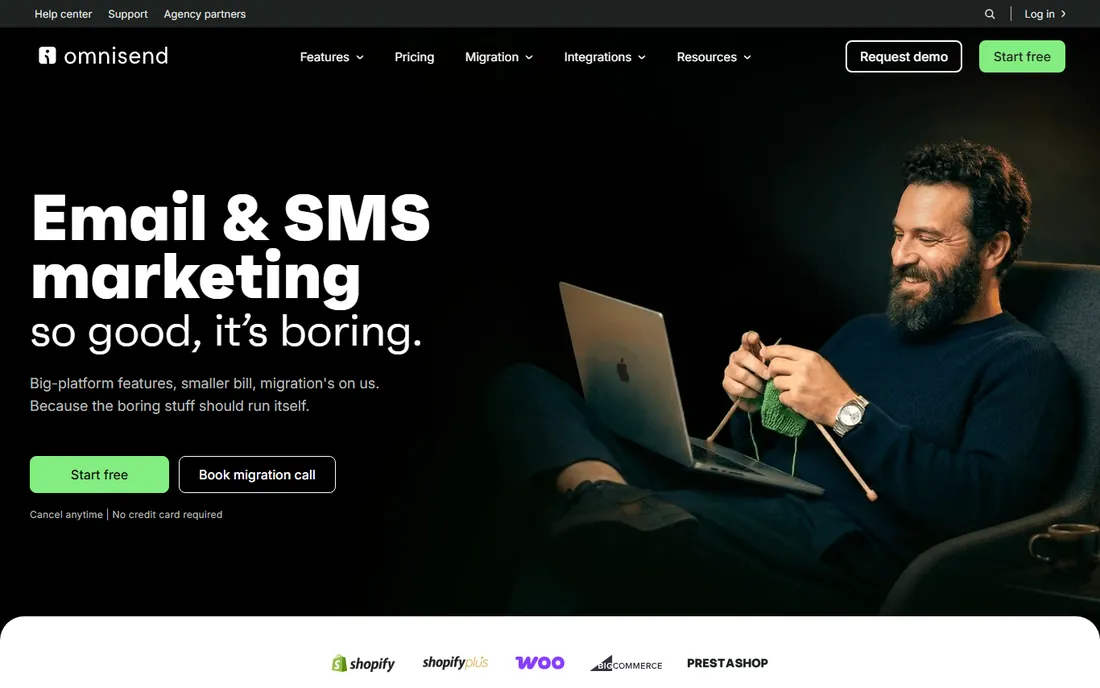
Omnisend is the ecommerce specialist: 28 prebuilt flows for carts, browse abandonment and post-purchase that generic platforms make you build from scratch. Email, SMS and web push run in one workflow builder, and remarkably, all features are available even on the free plan. Shopify setup is a few clicks, and there is no annual contract.
The specialization is also the limit. It is ecommerce-only in practice; service businesses should look elsewhere. SMS costs extra and requires Pro. The CRM functionality beyond ecommerce marketing is thin. But for a store doing email and SMS automation, Omnisend delivers enterprise-style flows at SMB prices, which is why it keeps winning the Shopify crowd.
What we like- Ecommerce-first with deep Shopify/WooCommerce integration and prebuilt flows
- Email, SMS and web push automation in one workflow builder
- All features available even on the free plan
Watch out for- SMS costs extra and only on Pro
- Limited CRM functionality beyond ecommerce marketing
Six of the eight platforms here charge by contacts, and two of them (Mailchimp and ActiveCampaign) now bill for unsubscribed and bounced contacts too. That turns list hygiene from a best practice into a billing strategy: every dead address on your list is a line item. A 50,000-contact list with 30% unsubscribed costs the same as a clean 50,000 list on most vendors, which means you are paying for the privilege of not emailing people.
The defenses are simple. Archive or delete unsubscribes and hard bounces quarterly. Prefer Brevo's volume-based pricing if your list is large and sends are infrequent. And when comparing vendors, price your clean list size, not your total contact count; the difference is routinely 20 to 40%. The vendors count on you not doing this math.
Ecommerce vs. everyone else
Marketing platforms split into two worlds that barely compete. Ecommerce tools (Omnisend, and Mailchimp at its best) trigger on product behavior: carts abandoned, products browsed, post-purchase sequences tied to SKUs. Everyone else triggers on contact behavior: forms filled, pages visited, lead scores changed. The prebuilt flows, integrations and reporting are built around whichever world the vendor chose.
Buying across the divide is the common mistake. A service business on Omnisend gets ecommerce flows it cannot use; a Shopify store on Keap rebuilds cart abandonment by hand. Match the vendor's home turf to your business model before comparing feature lists. The right specialist beats the better generalist every time in this category.
How we chose
We started with the categories buyers actually search: marketing platforms, email marketing platforms, and email platform for business. For each candidate we opened the vendor's own pricing page, checked plan names and prices against public reviews on G2 and Capterra and practitioner discussion on Reddit, and compared feature lists, automation depth and contact-based pricing. Where a price could not be verified on the vendor's page we wrote "See website" rather than guessing. The shortlist mixes email-first tools with CRM-tied platforms, because a newsletter sender and a growth team are not buying the same thing.
Sources we checked (10)
- https://www.hubspot.com/pricing/marketing
- https://www.mailchimp.com/pricing/
- https://www.activecampaign.com/pricing/
- https://www.constantcontact.com/pricing/
- https://www.brevo.com/pricing/
- https://www.getresponse.com/pricing/
- https://www.keap.com/pricing
- https://www.omnisend.com/pricing/
- https://www.g2.com/categories/marketing-automation
- https://www.capterra.com/marketing-automation-software/
Is your product missing or out of date?
We review this list regularly. Vendors can request a listing, send updated pricing or ask about featured placement.

Shihab Mia · Founder, Rankite
Shihab has spent more than a decade helping SaaS and e-commerce brands grow through search. He writes Rankite's software buying guides from pricing pages, documentation and public user reviews. More about Shihab.