How we make this list: we compare pricing pages, product documentation and public user reviews. Rankite is independent; if a vendor ever pays for a featured spot, that listing is clearly labeled Partner.
Key takeaways
- Market research platforms split into four jobs: surveys you run yourself, consumer panels you buy access to, audience intelligence data, and social listening.
- Small teams running frequent surveys start with SurveyMonkey or Typeform; both have real free tiers and need no research background.
- Enterprise research programs run on Qualtrics; fast consumer insights run on Attest; deep audience profiling runs on GWI.
- Statista covers secondary research (existing statistics and industry data); Brandwatch covers social listening and brand health.
- Pollfish buys you fast, targeted survey responses when you need answers from specific audiences this week.
Quick comparison
| Tool | Best for | Starting price | Free plan |
|---|
 SurveyMonkey SurveyMonkey | teams that need structured surveys running today | See website | Yes |
 Qualtrics Qualtrics | enterprise research and experience management programs | See website | No |
 Typeform Typeform | surveys people actually complete | See website | Yes |
 Attest Attest | consumer brands that need credible answers fast | See website | No |
 Pollfish Pollfish | fast surveys targeted at specific audiences | See website | No |
 GWI GWI | audience profiling and brand tracking at depth | See website | No |
 Statista Statista | fast secondary research and industry statistics | See website | Yes (limited) |
 Brandwatch Brandwatch | brand health monitoring and social sentiment at scale | See website | No |
Is your product missing or out of date?
We review this list regularly. Vendors can request a listing, send updated pricing or ask about featured placement.
Starting priceSee website
Free planYes
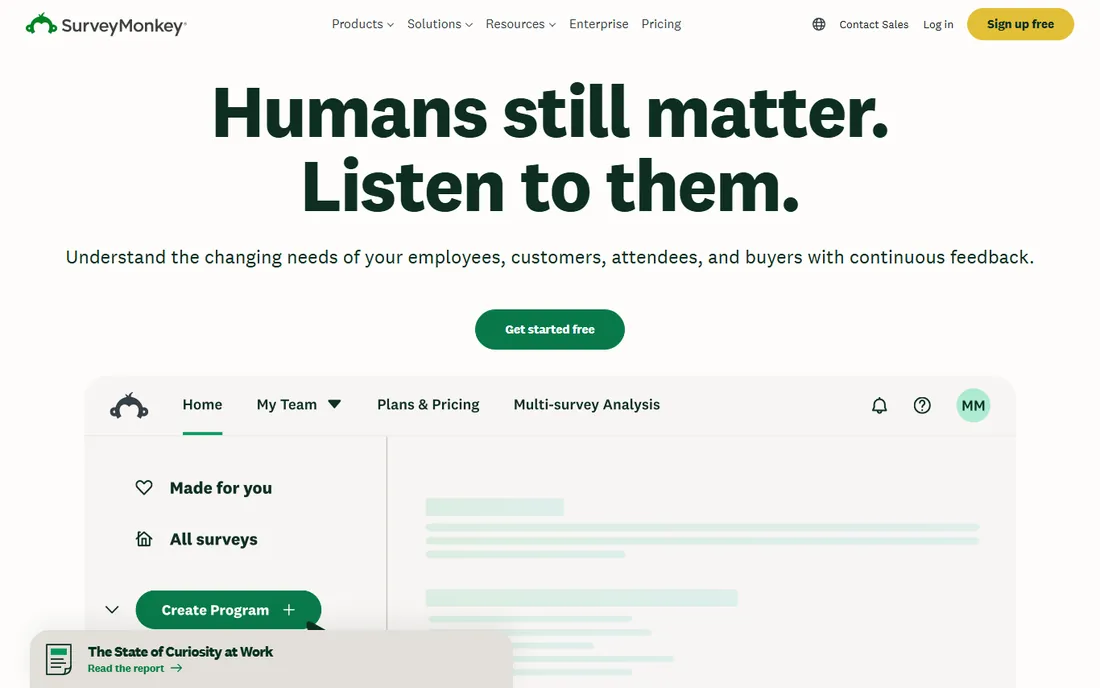
When a product manager needs to validate a pricing change by Friday, SurveyMonkey is the tool that gets the survey out by lunch. The builder is fast, templates cover the standard research needs, and the free tier handles basic surveys without a credit card. For quantitative surveys at any scale, it remains the default.
The free plan caps responses and features, and serious analysis needs the paid tiers. Pricing is published on the site with team plans. It will not replace Qualtrics for enterprise research programs, but for speed and simplicity it has no equal.
What we like- Fastest survey setup
- Huge template library
- Global respondent panel available
Watch out for- Advanced features need paid plans
- Analysis depth trails enterprise tools
#2
Qualtrics
Best for: enterprise research and experience management programs
Visit qualtrics.com
Starting priceSee website
Free planNo
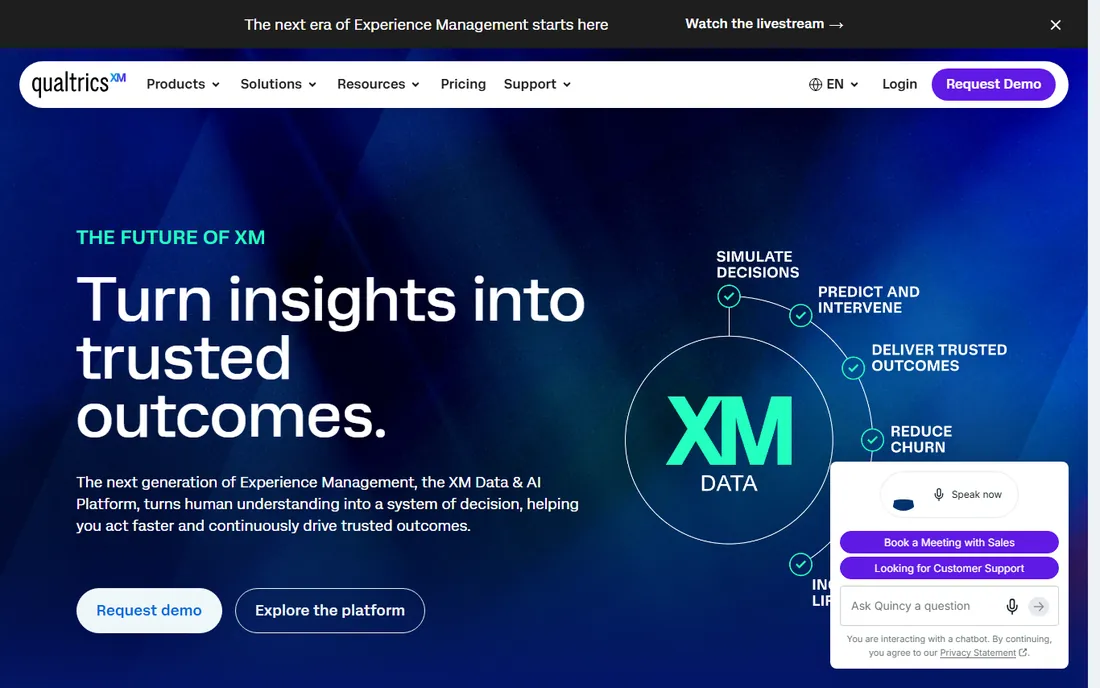
Qualtrics is what research looks like at enterprise scale: sophisticated survey logic, conjoint and MaxDiff methodologies, panel management, and experience management that connects customer, employee, product and brand feedback in one system. Large organizations run their entire insights function on it.
That power comes with enterprise pricing behind a sales process and a learning curve that demands trained researchers. There is no self-serve path for casual use. Buy Qualtrics when research is a program, not a task.
What we like- Deepest research methodology support
- Experience management across touchpoints
- Enterprise-grade everything
Watch out for- Quote-only pricing
- Overkill for simple surveys
Starting priceSee website
Free planYes
Typeform's insight is that survey design affects data quality. One question per screen, conversational flow, and polished design produce higher completion rates than the wall-of-questions format. For customer feedback, lead qualification and market validation surveys, that completion lift is the whole argument.
The free plan is limited, and advanced logic, integrations and response limits sit on paid tiers. Pricing is published. It will not run a conjoint study, but for attitudinal research where response rates matter, Typeform earns its place.
What we like- Conversational format lifts completion rates
- Beautiful design
- Easy to build
Watch out for- Limited free plan
- Advanced logic needs paid tiers
Starting priceSee website
Free planNo
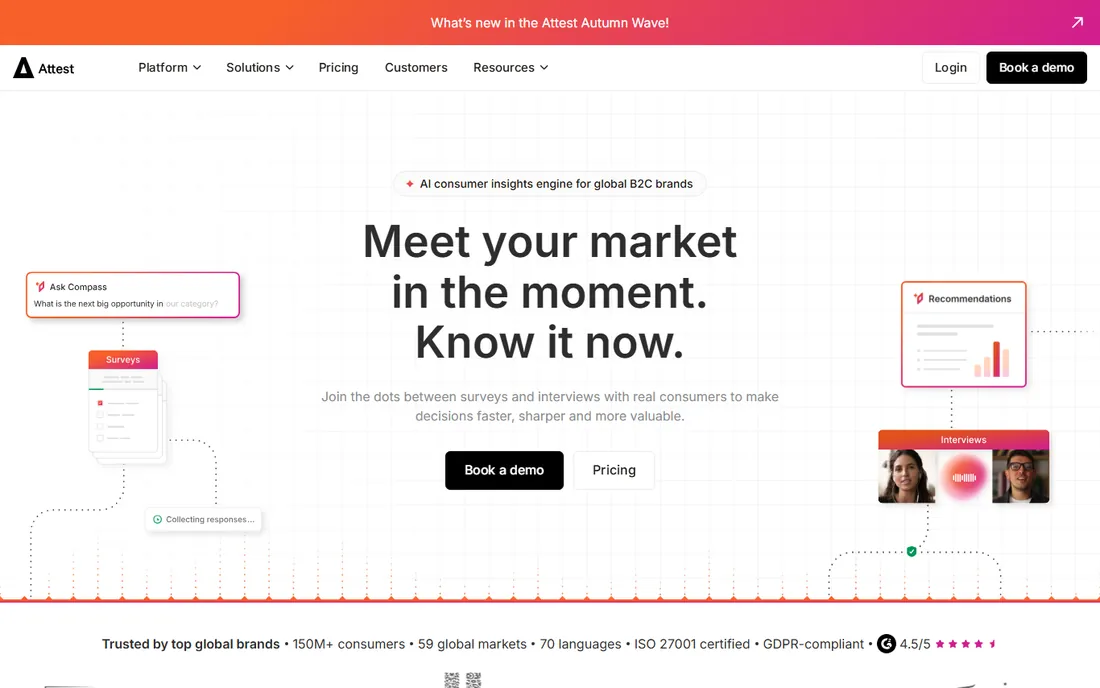
Attest combines quantitative surveys with AI-moderated qualitative interviews in one platform, aimed at consumer brands that need answers in days, not months. Concept testing, brand tracking, and campaign evaluation run on its consumer panels with analysis that lands ready to present.
Pricing is quote-based with no self-serve entry. The platform is built for B2C research; B2B audiences are thinner. For a consumer insights team under time pressure, Attest compresses the traditional research timeline dramatically.
What we like- End-to-end consumer research
- AI-moderated interviews plus surveys
- Fast turnaround
Watch out for- Quote-based pricing
- Best for B2C, less for B2B
Starting priceSee website
Free planNo
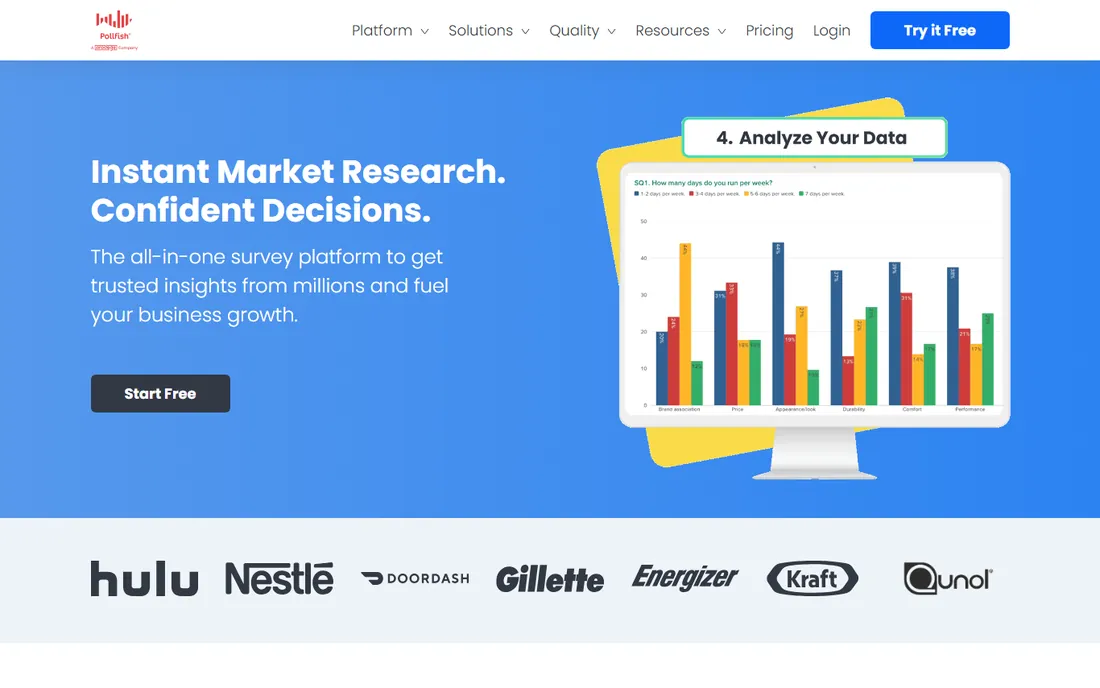
Pollfish sells speed: build a survey with AI assistance, target a specific audience, and get responses back fast. The mobile-first respondent pool suits brand awareness studies, customer feedback and concept tests where the audience is broad and the timeline is tight.
Pricing is project-based rather than subscription, which suits occasional research. For niche B2B audiences, vet the sample quality before trusting the results. For fast consumer reads, it is one of the quickest options available.
What we like- Quick turnaround on targeted surveys
- AI-assisted survey building
- Mobile-first respondents
Watch out for- Pricing per project
- Sample quality needs vetting for niche audiences
#6
GWI
Best for: audience profiling and brand tracking at depth
Visit gwi.com
Starting priceSee website
Free planNo
GWI maintains one of the deepest consumer datasets in the industry, covering attitudes, behaviors and media consumption across markets. Agencies, media companies and global brands use it for audience profiling, segmentation and brand tracking that would take months of primary research to replicate.
Access is enterprise-priced with no self-serve tier. It answers "who are these people" better than any survey tool, because the data already exists. If your research starts with understanding audiences rather than asking them questions, GWI is the reference.
What we like- Deep consumer data across markets
- Strong brand tracking
- Trusted by media and agencies
Watch out for- Enterprise pricing
- No self-serve option
Starting priceSee website
Free planYes (limited)
Every market sizing deck starts with secondary research, and Statista is where most of it comes from. Millions of statistics, industry reports, forecasts and dossiers cover markets, companies and consumer topics. The limited free tier answers quick questions; paid plans open up the full database.
It is secondary data, not custom research: useful for context and benchmarks, not for your specific product questions. Pricing is published with tiered plans. For the "how big is this market" question, start here before commissioning anything expensive.
What we like- Huge statistics database
- Industry reports and forecasts
- Quick to search
Watch out for- Paid plans needed for full access
- Data is secondary, not custom
Starting priceSee website
Free planNo
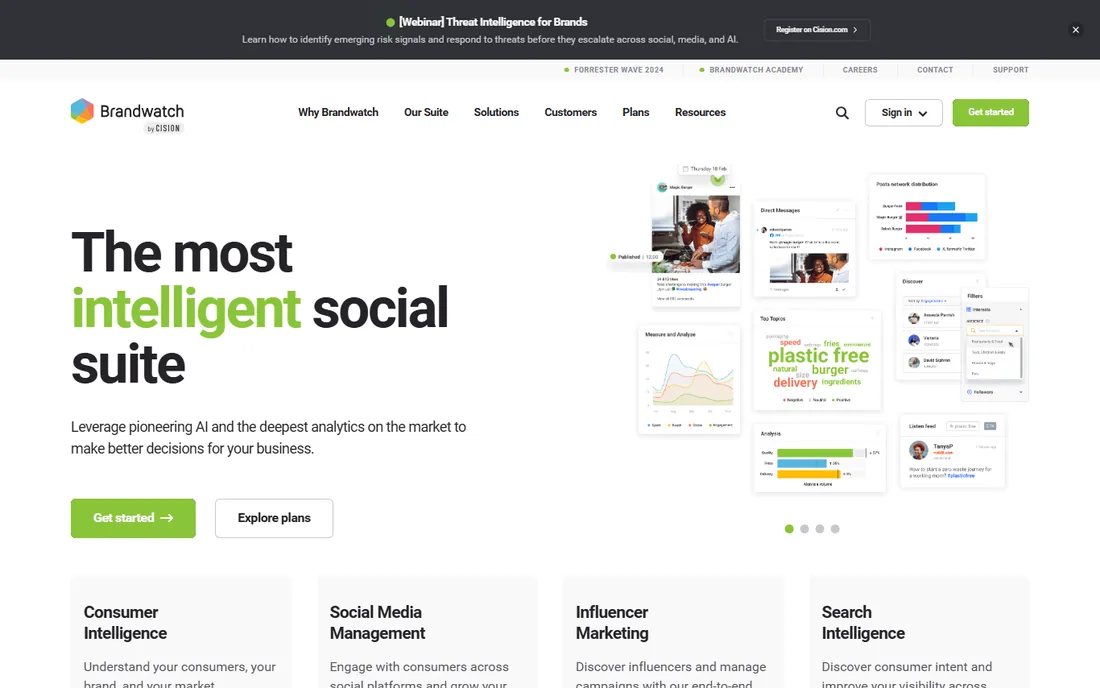
Brandwatch listens to the social web at scale: brand mentions, sentiment shifts, emerging trends and competitive benchmarking. Marketing and insights teams use it for brand health tracking, campaign measurement and crisis detection. The sentiment analysis and historical data depth are the differentiators.
Pricing is quote-based and enterprise-grade, with no self-serve entry. The platform needs analysts who know what to look for; without them, it is an expensive dashboard. For brands where social conversation moves the business, it is the listening standard.
What we like- Deep social listening
- Sentiment analysis
- Crisis monitoring and trend forecasting
Watch out for- Quote-only pricing
- Needs analysts to extract full value
Start with the question type. "What do our customers think?" is a survey job: SurveyMonkey, Typeform or Qualtrics depending on complexity. "Who is our audience?" is an intelligence job: GWI or Statista. "What are people saying?" is a listening job: Brandwatch. "What should we build?" might need Attest's combination of surveys and interviews.
Second, be honest about speed versus rigor. AI-native platforms compress timelines by design; traditional platforms add AI as an improvement layer without changing fieldwork. Fast answers from a consumer panel beat slow answers from a perfect methodology when the decision cannot wait.
Third, check the audience. B2C panels are deep and fast; B2B niche audiences are thin everywhere. If your respondents are CIOs at Fortune 500 companies, no consumer panel will reach them, and you need a specialist recruiter, not a platform.
Fourth, mind the free tier reality. Google Trends, Statista's free tier, SurveyMonkey's free plan and Typeform's free plan all deliver real value. Enterprise platforms require contracts. Start free where you can and spend where the question demands it.
Budgeting research like an investment
Market research fails when it is treated as a cost to minimize rather than an investment to direct. A $500 survey that kills a bad product idea is the best money a company ever spends. A $50,000 tracking study that nobody reads is waste. The difference is not the tool; it is whether the research question connects to a decision.
Before you spend, write down the decision the research will inform and what you will do with each possible answer. If you cannot name the decision, do not run the research. Then match the spend to the stakes: free tools for directional reads, paid panels for decisions that move real money, enterprise platforms for programs that run continuously. Research budgets go furthest when every project has a decision attached.
How we chose
We selected market research platforms that exist today and cover distinct research jobs: surveys, consumer panels, audience intelligence and social listening. Pricing facts come from vendor pages and documentation checked in October 2026; vendors that do not publish pricing are listed as See website. Free-tier facts reflect current vendor offerings. We favored platforms with transparent pricing pages and current public reviews over those hiding plans behind sales calls. Confirm live pricing with each vendor.
The workflow trap
Teams compare features and prices, then switch tools a year later because the workflow did not fit. The real decision is how your team runs research: who writes the survey, who finds respondents, who analyzes, who presents. A tool that fits that workflow beats a more powerful tool that fights it.
Before you buy, map one real project end to end in the candidate platform: from question to fielded survey to analyzed results to the decision it informed. The demo that follows your workflow instead of the vendor's script is the one that predicts success. Features are easy to compare; workflows are what you live with.
Frequently asked questions
What is a market research platform?
Software for gathering and analyzing market intelligence: surveys, consumer panels, audience data, social listening and secondary statistics. Different platforms specialize in different methods, so most insights teams use more than one.
How much do market research platforms cost?
Survey tools start free with paid tiers for advanced features. Consumer research platforms like Attest and audience data like GWI are quote-based and enterprise-priced. Statista publishes tiered plans. Budget for the research volume, not just the subscription.
What is the difference between SurveyMonkey and Qualtrics?
SurveyMonkey is the fast, self-serve survey tool for teams that need structured quantitative research quickly. Qualtrics is the enterprise research platform with deep methodology support, panel management and experience management. Small teams start with SurveyMonkey; enterprises standardize on Qualtrics.
Do I need a paid plan to do market research?
Not always. Google Trends, Statista's free tier, SurveyMonkey's free plan and Typeform's free plan cover a surprising amount. Paid plans matter when you need more responses, advanced logic, panels, or audience data.
Are AI research tools replacing traditional platforms?
They are compressing timelines, not replacing methods. AI-moderated interviews and AI-assisted analysis make research faster, but credible insights still need good questions, real respondents and human judgment. Use AI tools to move faster, not to skip the thinking.
How do I choose between primary and secondary research?
Secondary research (Statista, GWI) answers "what is known" quickly and cheaply. Primary research (surveys, interviews) answers "what we need to know about our specific question." Start secondary to frame the question, then run primary research to answer it.
Sources we checked (5)
- https://marketful.com/best-market-research-tools
- https://www.askattest.com/blog/articles/ai-market-research-tools
- https://www.quantilope.com/resources/best-market-research-tools
- https://alejandrorioja.com/top-market-research-tools-to-uncover-actionable-insights/
- https://www.surveysensum.com/blog/market-research-tools
Is your product missing or out of date?
We review this list regularly. Vendors can request a listing, send updated pricing or ask about featured placement.

Shihab Mia · Founder, Rankite
Shihab has spent more than a decade helping SaaS and e-commerce brands grow through search. He writes Rankite's software buying guides from pricing pages, documentation and public user reviews. More about Shihab.