How we make this list: we compare pricing pages, product documentation and public user reviews. Rankite is independent; if a vendor ever pays for a featured spot, that listing is clearly labeled Partner.
Key takeaways
- AWS SageMaker, Google Vertex AI and Azure Machine Learning win by cloud: choose the one matching your infrastructure.
- Databricks is the data-plus-AI platform for organizations where machine learning grows out of data engineering.
- DataRobot and H2O.ai serve teams that want AutoML and model operations without deep platform engineering.
- Weights & Biases, now part of CoreWeave, remains the experiment tracking standard for serious ML teams.
Quick comparison
| Tool | Best for | Starting price | Free plan |
|---|
 AWS SageMaker AWS SageMaker | ML on AWS infrastructure | See website | Free trial |
 Google Vertex AI Google Vertex AI | ML on Google Cloud | See website | Free trial |
 Azure Machine Learning Azure Machine Learning | ML on Microsoft Azure | See website | Free trial |
 Databricks Databricks | Data engineering plus ML in one | See website | Free trial |
 DataRobot DataRobot | Enterprise AutoML and MLOps | See website | Free trial |
 H2O.ai H2O.ai | Open-source-friendly AutoML | Free | Yes |
 Domino Domino | Governed data science at enterprise scale | See website | No |
 Weights & Biases Weights & Biases | Experiment tracking and model registry | Free | Yes |
 Paperspace Paperspace | Accessible GPU cloud for ML | See website | Free trial |
 Anaconda Anaconda | Python data science environments | Free | Yes |
Is your product missing or out of date?
We review this list regularly. Vendors can request a listing, send updated pricing or ask about featured placement.
Starting priceSee website
Free planFree trial
SageMaker is the everything store of machine learning on AWS: notebooks, training, tuning, deployment, monitoring and feature stores, all integrated with S3, EC2 and the rest of the AWS universe. Organizations standardized on AWS get ML where their data already lives, with the scale to train the largest models.
The complexity is real. SageMaker's sprawling console and pricing dimensions demand expertise and active cost management. But the capability ceiling is the highest here, and the integration with AWS data services removes the data movement tax. For AWS shops doing serious ML, SageMaker is the default.
What we like- Deepest service catalog
- Integrates with all of AWS
- Proven at massive scale
Watch out for- Complexity is legendary
- Costs need active management
- AWS lock-in
Starting priceSee website
Free planFree trial
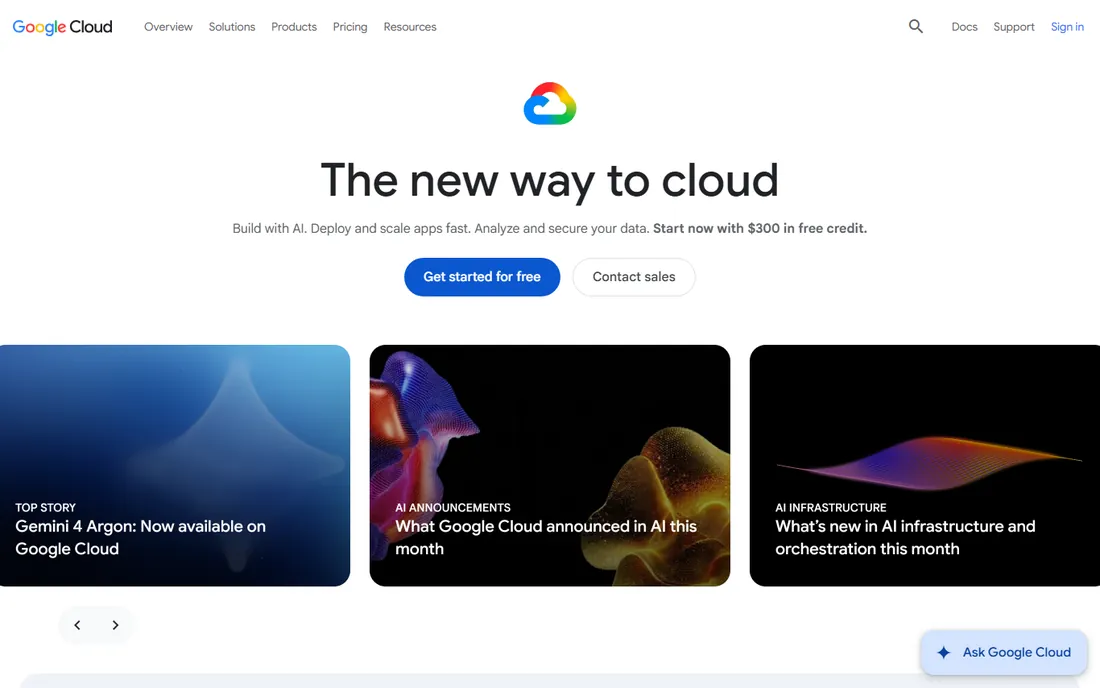
Vertex AI unified Google's ML offerings into one platform covering AutoML, custom training, pipelines and deployment. BigQuery integration makes data-to-model workflows natural, and Google's AI research pedigree shows in the tooling. The Gemini era strengthened its position for generative AI workloads.
Like its rivals, it anchors you to its cloud. Enterprise ML market share trails AWS, which matters for hiring and community. But Google Cloud shops get a genuinely unified platform, and the AutoML quality suits teams without deep ML engineering.
What we like- Unified ML platform with strong AutoML
- BigQuery integration
- Excellent for Gemini-era AI
Watch out for- Google Cloud lock-in
- Smaller enterprise ML share than AWS
- Pricing dimensions multiply
Starting priceSee website
Free planFree trial
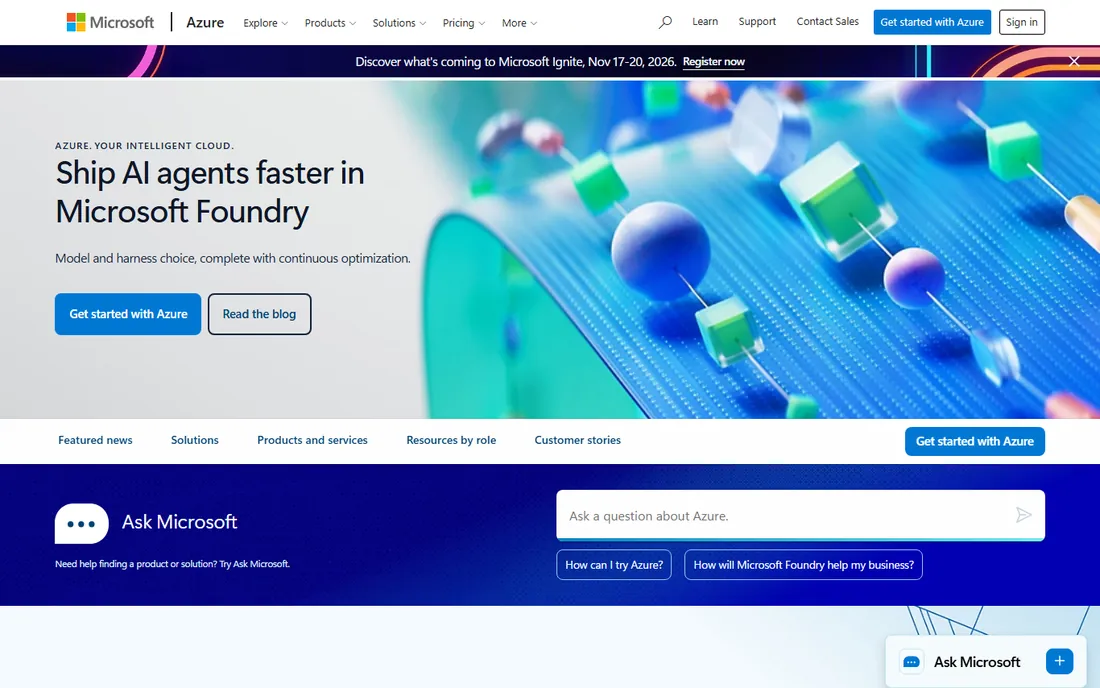
Azure Machine Learning serves the vast Microsoft enterprise base with a full ML lifecycle: designer, automated ML, pipelines and responsible AI dashboards. Integration with Azure data services and Microsoft identity suits regulated enterprises. The responsible AI tooling for fairness and interpretability is genuinely good.
The Azure portal sprawl affects ML too, and the community is smaller than AWS's. But Microsoft-centric organizations, which are most large enterprises, get ML that fits their existing cloud, security and procurement. The enterprise comfort factor is high.
What we like- Strong for Microsoft-centric enterprises
- Responsible AI tooling
- Good MLOps
Watch out for- Azure lock-in
- Interface sprawls
- Community smaller than AWS
Starting priceSee website
Free planFree trial
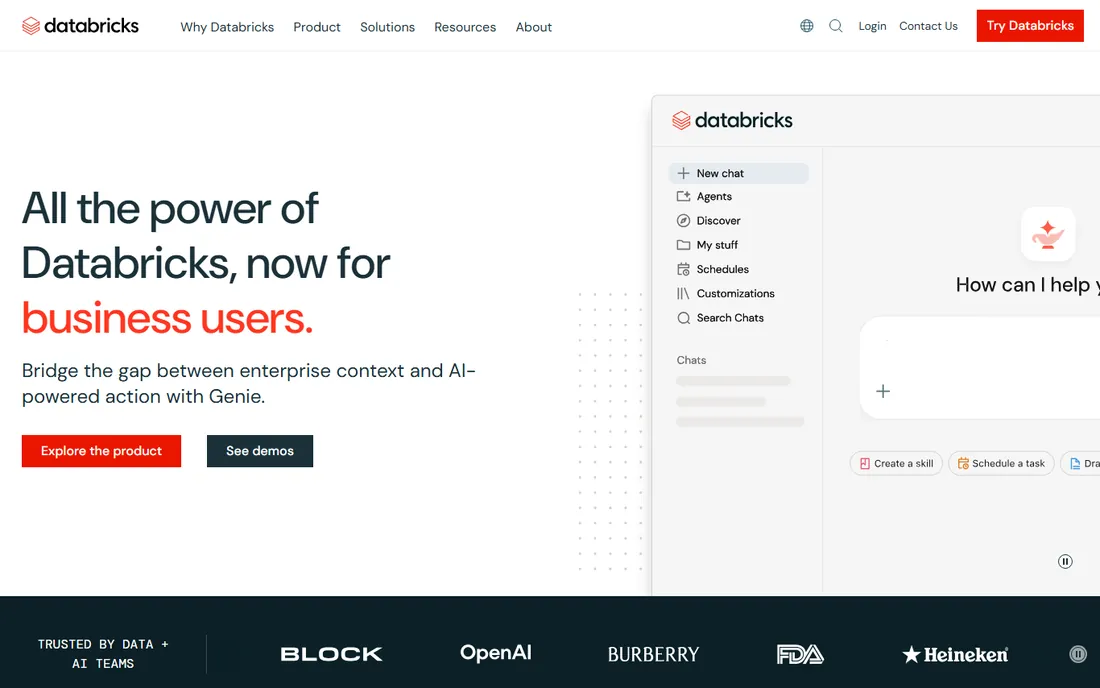
Databricks built the lakehouse: data engineering and machine learning on one platform over open formats. ML workloads grow naturally from the data pipelines, notebooks collaborate at scale, and MLflow, which Databricks created, handles experiment tracking and model registry. For organizations where ML follows data engineering, the unity is powerful.
Compute costs need management at scale, and small teams may find it heavy. But the trajectory is clear: data and AI converging, and Databricks sits at that convergence. Data-heavy organizations choosing an ML platform usually shortlist it first.
What we like- Lakehouse unifies data and ML
- Excellent for large-scale workloads
- Strong open-source roots
Watch out for- Costs scale with compute
- Complexity for small teams
- Databricks-centric patterns
Starting priceSee website
Free planFree trial
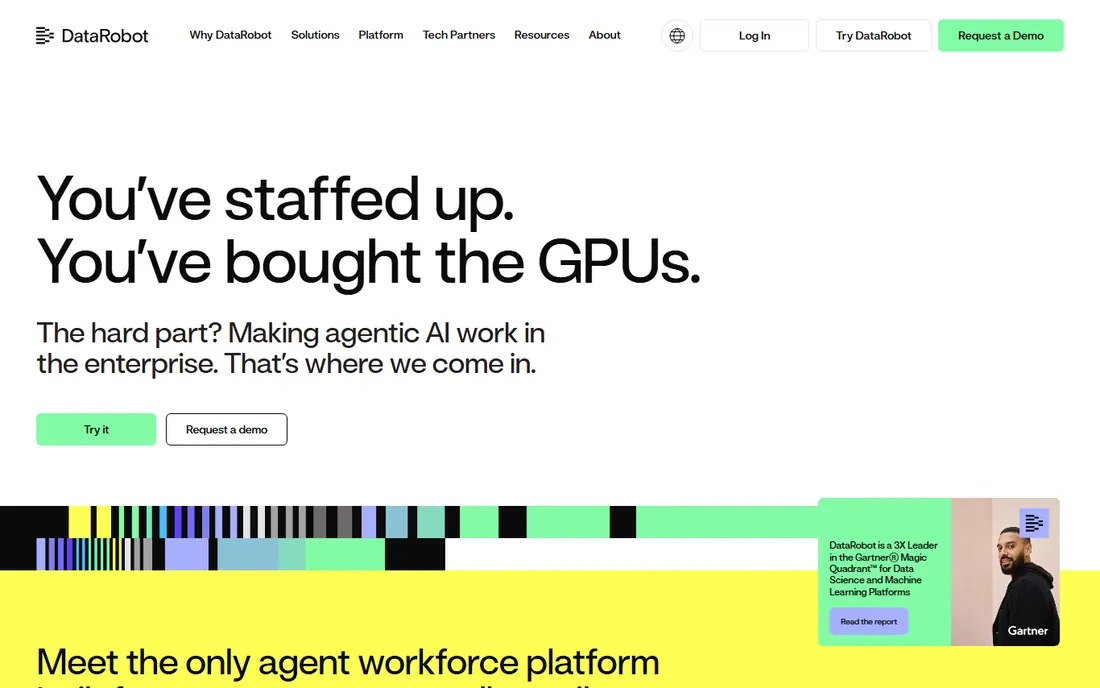
DataRobot pioneered enterprise AutoML: upload data, get competitive models with explanations, deploy with monitoring and governance. Business analysts and domain experts build models without deep ML expertise, while MLOps features satisfy IT and compliance. The governance story suits regulated industries.
It is enterprise-priced and less flexible than code-first platforms; experienced data scientists sometimes prefer building directly. But for organizations that need many models built by many people with proper oversight, DataRobot's automation-plus-governance formula works.
What we like- Leading AutoML for business users
- Strong MLOps and governance
- Proven enterprise deployments
Watch out for- Enterprise pricing
- Less flexible than code-first platforms
- Data scientists may chafe
Starting priceFree
Free planYes
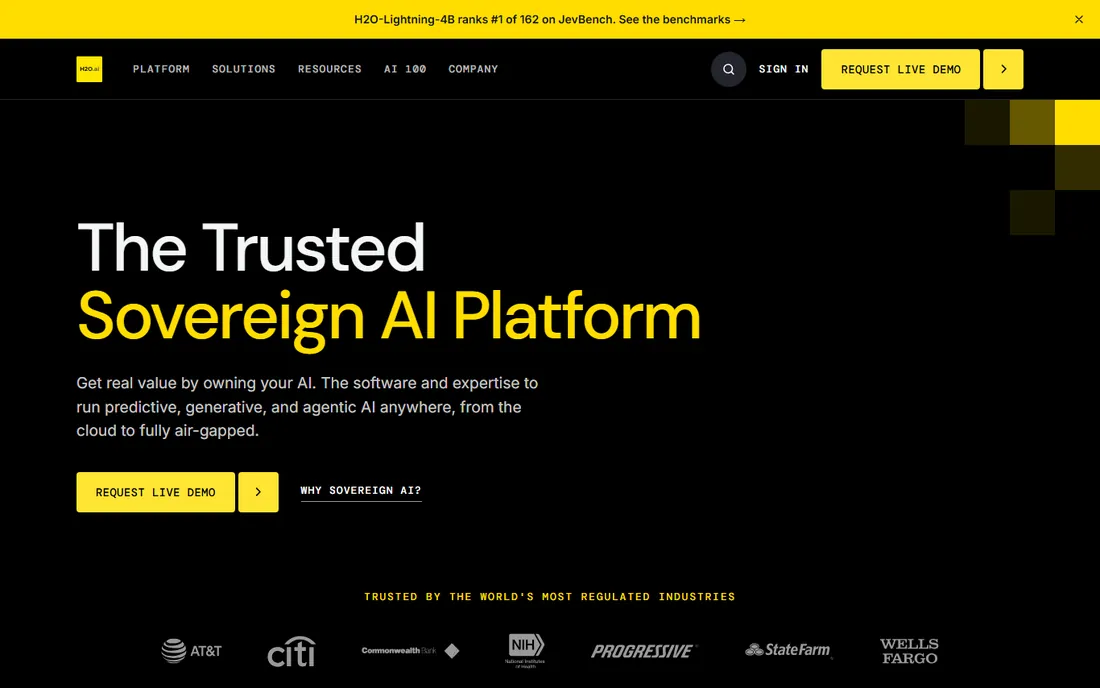
H2O.ai built its name on open-source AutoML that anyone can run. H2O-3 and related libraries remain free and capable, with an active community. The paid cloud adds enterprise features, but the open core means no lock-in for the fundamentals.
Enterprise support, security and scale features sit behind the commercial offering. The vendor is smaller than the cloud giants. But for teams that value open source and want AutoML without platform commitment, H2O.ai's free core is genuinely useful.
What we like- Strong open-source AutoML
- No vendor lock-in for the core
- Active community
Watch out for- Enterprise features need the paid cloud
- Support is tiered
- Smaller vendor
#7
Domino
Best for: Governed data science at enterprise scale
Visit domino.ai
Starting priceSee website
Free planNo
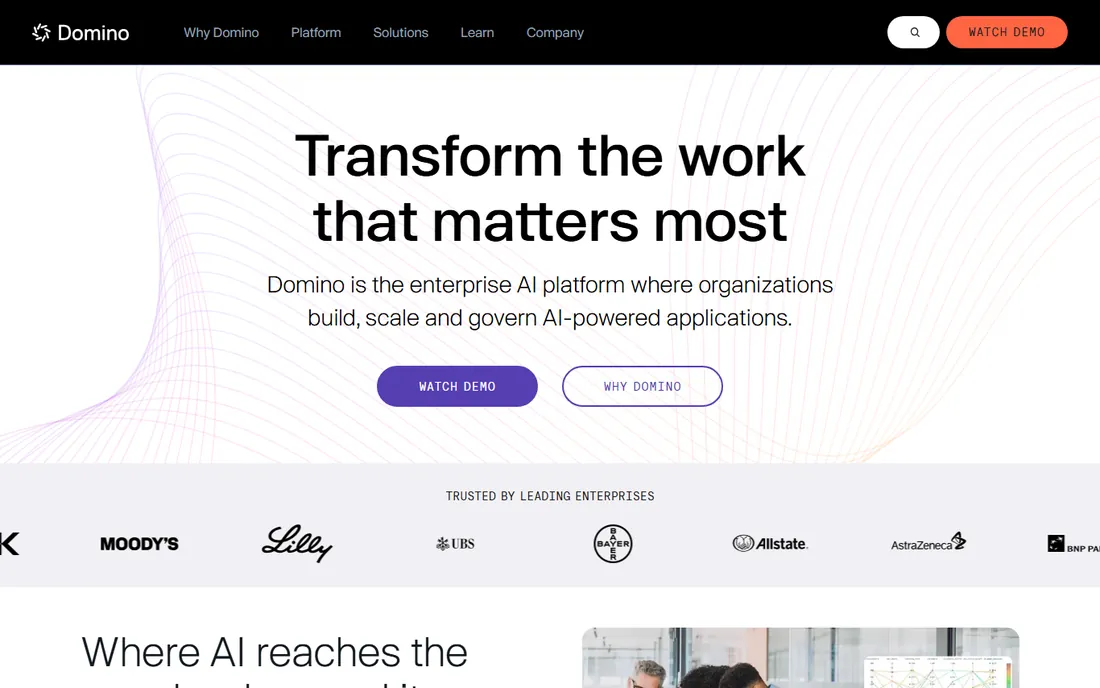
Domino, formerly Domino Data Lab, serves enterprises where data science must be governed: reproducible experiments, audited models, controlled compute across clouds. Pharma and finance companies with regulatory obligations value the control plane it provides over diverse data science work.
Pricing and sales are enterprise, and it assumes a mature data science function. The platform is narrower than full cloud ML suites. But for regulated enterprises running serious data science, Domino's governance-first design addresses the compliance reality that pure capability cannot.
What we like- Strong governance for regulated data science
- Flexible compute
- Proven in pharma and finance
Watch out for- Enterprise pricing and sales
- Narrower than cloud platforms
- Needs data science maturity
Starting priceFree
Free planYes

Weights & Biases became the experiment tracking standard by making ML experiments visible and comparable: metrics, hyperparameters, visualizations and model versions in one dashboard. Now part of CoreWeave, it continues as the system of record for model development. The free tier covers individual and academic use generously.
The CoreWeave acquisition raises the usual roadmap questions, though the product continues. It is tracking and registry, not a full training platform. But for the specific job of knowing what was tried and what worked, it remains the tool ML teams reach for first.
What we like- The standard for experiment tracking
- Beautiful visualizations
- Generous free tier
Watch out for- Now part of CoreWeave, adding roadmap questions
- Full MLOps needs more
- Pricing scales with team
Starting priceSee website
Free planFree trial
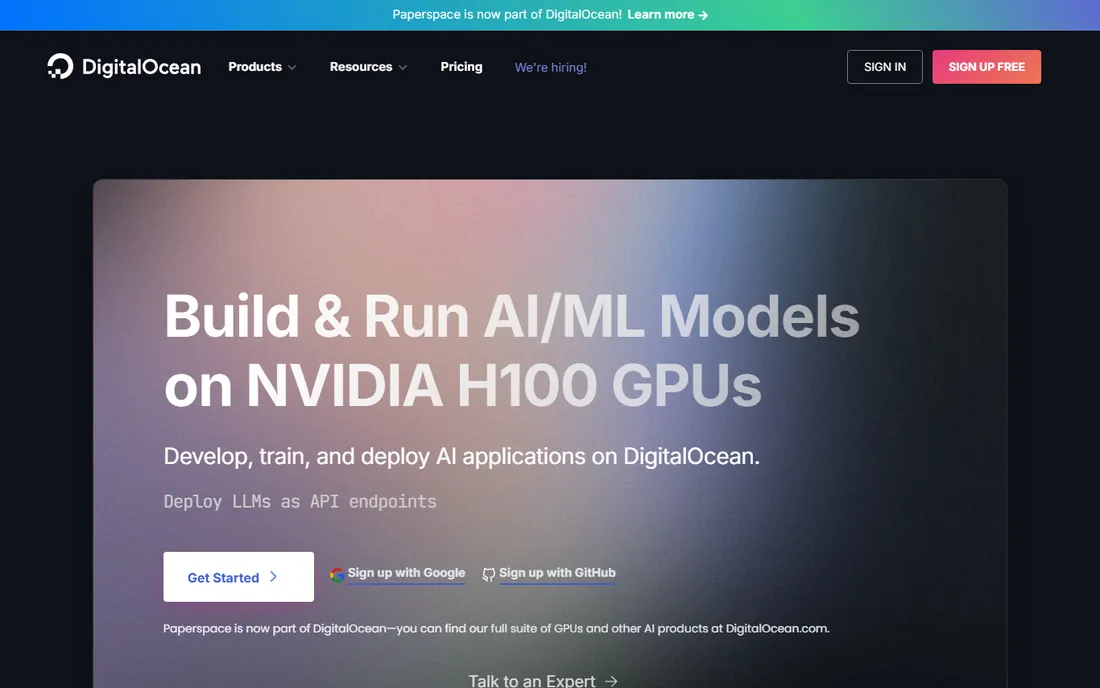
Paperspace, now part of DigitalOcean, made GPU cloud accessible before it was fashionable. Simple gradient notebooks, affordable GPU instances and straightforward pricing suit individuals, startups and teams that need compute without cloud complexity. The DigitalOcean backing adds stability.
It cannot match the managed ML services of the big three clouds, and the ecosystem is thinner. But the job it does, GPUs without hassle, it does well and affordably. For training and experimentation where managed platforms are overkill, Paperspace is the pragmatic compute choice.
What we like- Simple GPU access
- Affordable for individuals and teams
- Now backed by DigitalOcean
Watch out for- Smaller than the big clouds
- Fewer managed ML services
- Ecosystem is thinner
Starting priceFree
Free planYes
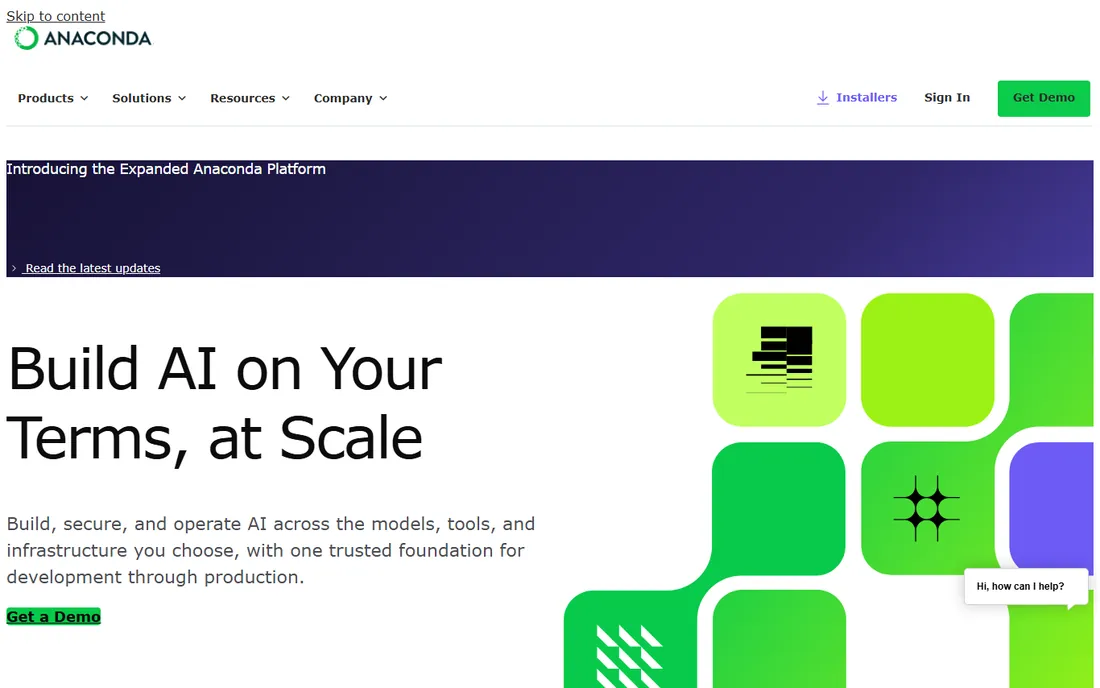
Anaconda is where most data science starts: the Python distribution with the packages, environments and dependency management the ecosystem runs on. Conda solved the packaging pain that plagued data science, and the community is enormous. Individual use remains free.
It is a foundation, not a full ML platform; training infrastructure, deployment and MLOps come from elsewhere. Larger organizations need commercial licensing. But as the starting layer of the Python ML stack, Anaconda's position is foundational and unthreatened.
What we like- Standard Python distribution for data science
- Package management solved
- Huge community
Watch out for- Not a full ML platform
- Commercial licensing for larger orgs
- Cloud features are newer
How we chose
We covered cloud ML platforms, data-plus-AI platforms, AutoML vendors and essential tooling. Each product was verified as currently offered, noting Weights & Biases' move under CoreWeave and Domino's shift to domino.ai. Pricing is usage-based and quote-driven across most of this category, so we marked it honestly. We weighed capability breadth, ease of use, governance, ecosystem and value. No vendor paid for placement and we claimed no hands-on testing.
The cloud decision comes first
For most organizations, the ML platform follows the cloud, not the other way around. Data gravity, existing contracts, security posture and team skills make the cloud choice first, and SageMaker, Vertex AI and Azure ML each reward staying in their ecosystem. Cross-cloud ML is possible but pays a tax in data movement and duplicated skills.
The exceptions are workload-driven. Databricks suits data-engineering-led organizations regardless of cloud. DataRobot and H2O.ai suit AutoML needs. Weights & Biases and Anaconda are cloud-agnostic tooling. But the platform decision usually starts with where the data and the engineers already are.
What to check before you choose
Estimate total cost realistically, including compute, storage, data transfer and the human cost of platform expertise. Cloud ML bills surprise newcomers; run a representative workload and project it before committing. The cheapest platform is the one your team already knows.
Check governance against your industry's requirements. Model documentation, reproducibility, bias testing and audit trails are knockout criteria in regulated sectors. And verify the hiring market: platforms with larger communities are easier to staff, which matters more than feature differences over a multi-year horizon.
Frequently asked questions
What is the best machine learning platform?
AWS SageMaker, Google Vertex AI and Azure Machine Learning lead, with the best choice usually matching your cloud. Databricks leads for data-plus-AI workloads. DataRobot leads enterprise AutoML. The right platform depends on cloud, team skills and use case.
How much does machine learning cost?
Cloud ML pricing is usage-based across compute, storage and API calls, making total cost workload-dependent. Small experiments cost little; large training runs cost significantly. Always run a representative workload and project costs before committing, and set billing alerts.
What is the difference between SageMaker and Vertex AI?
Both are full ML platforms on their respective clouds with similar capabilities: notebooks, AutoML, training, deployment and MLOps. The practical difference is the cloud ecosystem around them. Choose based on where your data, engineers and contracts already are.
Do I need a data science team to use AutoML?
AutoML tools like DataRobot and H2O.ai let domain experts build models without deep ML expertise. But production ML still needs data engineering, validation and monitoring. AutoML lowers the modeling barrier; it does not remove the need for ML judgment.
What is MLOps?
Machine learning operations: the practices for deploying, monitoring and maintaining models in production. It covers model versioning, performance monitoring, retraining pipelines and governance. Platforms increasingly bundle MLOps because models decay without it.
Sources we checked (10)
- https://aws.amazon.com
- https://cloud.google.com
- https://azure.microsoft.com/en-us
- https://www.databricks.com
- https://www.datarobot.com
- https://h2o.ai
- https://domino.ai
- https://forge.coreweave.com/wandb
- https://www.paperspace.com
- https://www.anaconda.com
Is your product missing or out of date?
We review this list regularly. Vendors can request a listing, send updated pricing or ask about featured placement.

Shihab Mia · Founder, Rankite
Shihab has spent more than a decade helping SaaS and e-commerce brands grow through search. He writes Rankite's software buying guides from pricing pages, documentation and public user reviews. More about Shihab.