How we make this list: we compare pricing pages, product documentation and public user reviews. Ratings come from G2, Capterra or Trustpilot, with the date we checked them.
Key takeaways
- The three cloud giants, AWS, Google Cloud, and Microsoft, are the default shortlist: pick the one that matches the cloud your data already lives in.
- Databricks is the strongest independent platform where machine learning grows out of large scale data engineering.
- OpenAI and Anthropic sell frontier models by API, the fastest route to production AI features without building training infrastructure.
- Scale AI and DataRobot cover the two specialist needs enterprises keep hitting: high quality training data and governed automated machine learning.
Quick comparison
| Tool | Best for | Starting price | Free plan |
|---|
 Amazon Web Services | Machine learning on AWS infrastructure | See website | No |
 Google Cloud | Managed ML and Gemini on Google Cloud | See website | No |
 Microsoft | Enterprise ML in Microsoft estates | See website | No |
 Databricks | Data engineering plus ML in one platform | See website | No |
 OpenAI | Frontier model APIs | See website | No |
 Anthropic | Claude models for enterprise workloads | See website | No |
 Scale AI | Training data and model evaluation | See website | No |
 DataRobot | AutoML with governance | See website | No |
Is your product missing or out of date?
We review this list regularly. Vendors can request a listing, send updated pricing or ask about featured placement.
The best machine learning companies
Starting priceSee website
Free planNo
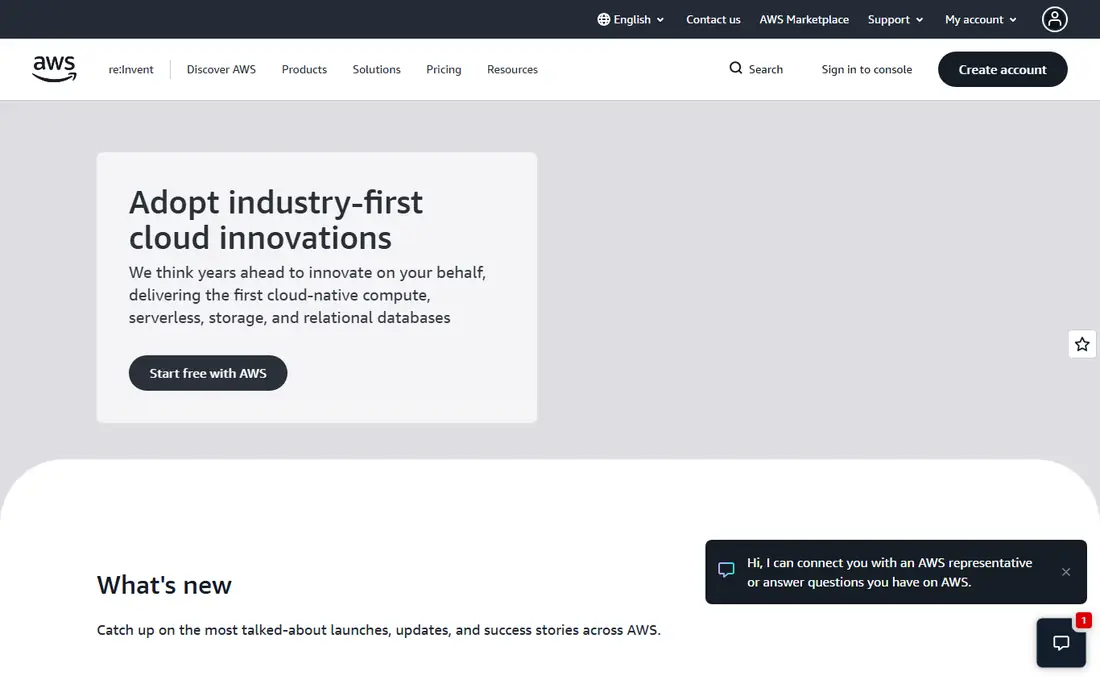
What we like- AWS SageMaker covers the full machine learning lifecycle on the world's largest cloud: data preparation, training at scale with managed infrastructure, deployment, and monitoring, with deep integration into AWS identity, storage, and networking controls. Its breadth of specialised hardware and inference options suits teams running models in serious production. If your data already sits in AWS, no rival removes as much friction.
Watch out for- SageMaker assumes real AWS expertise, and its many services and pricing dimensions make bills hard to predict without discipline. The learning curve is the steepest of the three clouds. Costs are usage based and negotiated at enterprise scale, so budgeting belongs in a proper cloud cost model, not a brochure.
Starting priceSee website
Free planNo
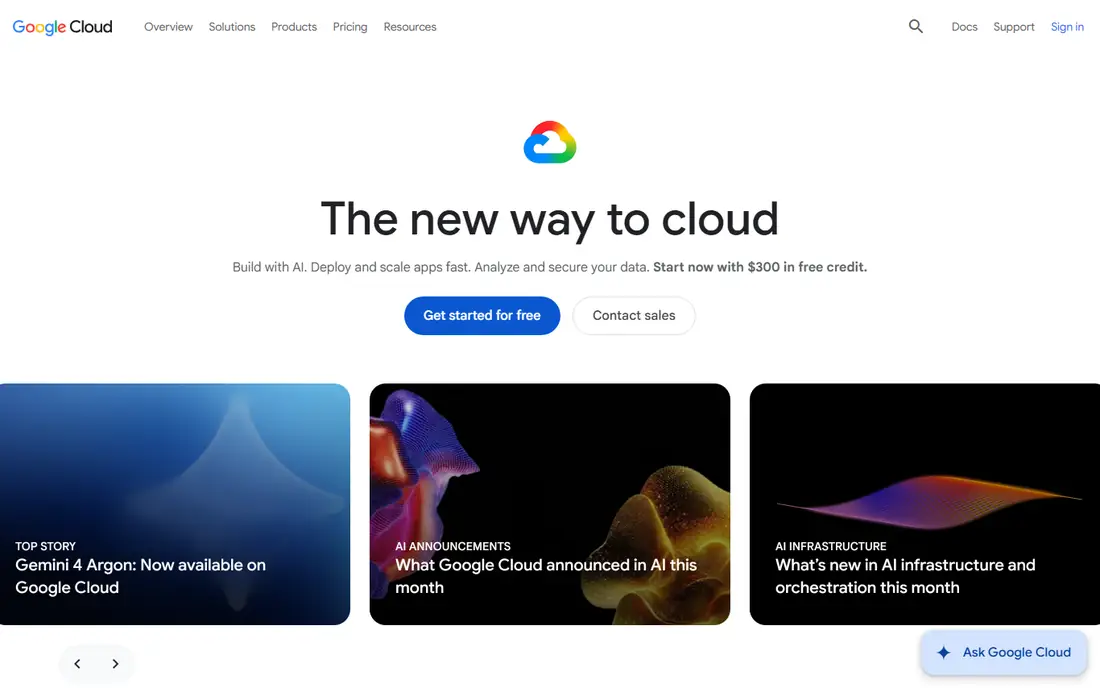
What we like- Google Cloud's Vertex AI unifies classic machine learning and generative AI in one managed platform, with its Model Garden offering Gemini alongside open and partner models, and tight links to BigQuery for teams whose data lives there. Google's research heritage shows in strong multimodal and long context options. Managed pipelines and AutoML lower the platform engineering burden compared with a build it yourself stack.
Watch out for- Vertex AI gives its best value inside the Google estate
- AWS centric organisations gain less. Pricing is pay as you go across many meters, which rewards cost engineering and punishes neglect. Some advanced features arrive on Google Cloud first and other clouds never, which cuts both ways for multi cloud strategies.
Starting priceSee website
Free planNo
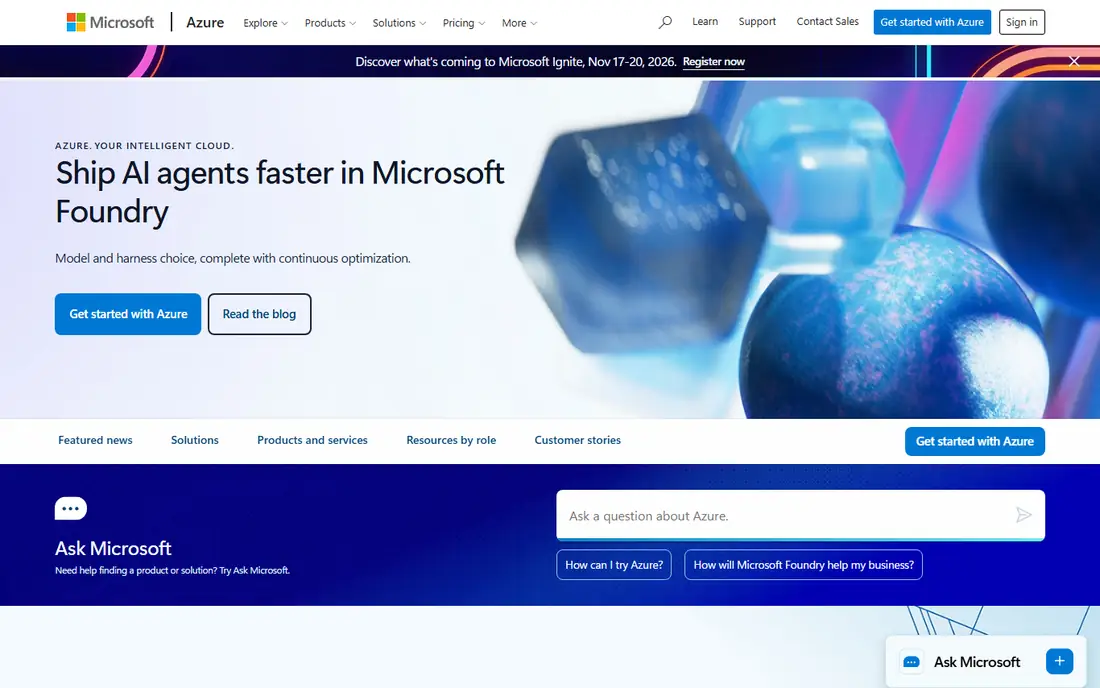
What we like- Azure Machine Learning, together with Azure OpenAI Service and the wider Fabric and Copilot stack, is the default for Microsoft aligned enterprises, with enterprise identity, governance, and compliance tooling woven through it. It offers strong MLOps, responsible AI dashboards, and AutoML for teams that need models without a large specialist staff. Existing Microsoft agreements often make it the commercially simplest route.
Watch out for- The value is in the ecosystem: the further your estate sits from Microsoft, the thinner the case. The platform's many moving parts, across Azure ML, Fabric, and Foundry branding, can confuse buyers comparing like for like. Pricing is pay per compute plus per service charges, quoted through enterprise agreements.
#4Databricks
Best for: Data engineering plus ML in one platform4.6/5 on
G2 (1,383 reviews, checked Oct 2026)
Visit databricks.com
Starting priceSee website
Free planNo
What we like- Databricks built the lakehouse: one platform where data engineering, warehousing, and machine learning share the same governed data, with MLflow for experiment tracking and model management, and its Mosaic AI tooling for building and serving models including generative AI applications. Unity Catalog gives centralised governance and lineage that regulated enterprises ask for first. It runs across AWS, Azure, and Google Cloud, softening cloud lock in.
Watch out for- Databricks pricing is consumption based on its own compute units, and costs climb with heavy workloads unless teams govern them. It is a platform for organisations with serious data estates
- Small teams will not use most of it. It does not sell frontier models of its own at the level of OpenAI or Anthropic, so many customers buy both.
Starting priceSee website
Free planNo
What we like- OpenAI sells access to its frontier models through APIs that product teams can ship in days, covering reasoning, coding, multimodal understanding, and voice, with enterprise tiers adding security reviews, data controls, and dedicated capacity. For many businesses, buying model capability beats building it by years and by tens of millions. Its ecosystem of tooling and developer familiarity is the largest in the model market.
Watch out for- API pricing is per token, so costs scale with success and need active management, caching, and model routing to stay sane. Depending on a single model vendor carries roadmap and pricing risk outside your control. OpenAI does not sell you a data platform or classic AutoML
- It is the model layer, and the rest of the stack remains yours to build.
#6Anthropic
Best for: Claude models for enterprise workloads4.6/5 on
G2 (147 reviews, checked Oct 2026)
Visit anthropic.com
Starting priceSee website
Free planNo
What we like- Anthropic's Claude models are widely adopted for coding, document heavy work, and agentic tasks, with a public emphasis on safety research that regulated buyers weigh seriously. Claude is available through its own API and through major clouds including AWS and Google Cloud, which eases procurement inside existing cloud agreements. Long context handling suits legal, research, and support workloads built on large document sets.
Watch out for- Like OpenAI, Anthropic sells the model layer only, priced per token, with enterprise terms by negotiation. Model behaviour and pricing change across versions, so applications need evaluation harnesses rather than blind upgrades. Organisations wanting one throat to choke for data, platform, and models will still need a cloud or Databricks underneath.
Starting priceSee website
Free planNo
What we like- Scale AI supplies the data layer behind model development: large scale annotation, human feedback for fine tuning, and model evaluation and benchmarking used by major AI labs, enterprises, and government customers. Its premise is the one projects most often learn the hard way, that model quality is capped by data quality. For organisations training or fine tuning their own models, Scale is the default specialist to evaluate.
Watch out for- Scale is a services and platform business priced by programme, not a self serve tool, and engagements suit organisations with real training budgets. If you are simply consuming models through an API, you do not need it. Government and defence work is a large part of its business, which some buyers weigh in vendor selection.
#8DataRobot
Best for: AutoML with governance4.4/5 on
G2 (54 reviews, checked Oct 2026)
Visit datarobot.com
Starting priceSee website
Free planNo
What we like- DataRobot focuses on automated machine learning for business led teams: it builds, compares, and deploys predictive models with far less hand coding, wrapped in the governance, monitoring, and audit features regulated industries require. It runs across clouds and on premises setups, which helps organisations that cannot standardise on one cloud. For classic predictive use cases such as churn, fraud, and forecasting, it shortens the path from data to a working model.
Watch out for- DataRobot is a subscription platform priced by quote, aimed at enterprises rather than small teams. Generative AI has shifted attention toward the model companies, and DataRobot's centre of gravity remains predictive modelling, so check its current AI agent and generative offerings against your roadmap. Deep custom model work still belongs with data science teams on the cloud platforms.
How we chose
We selected the companies that enterprise buyers in 2026 consistently shortlist, across the three layers of the market: cloud platforms, frontier model providers, and specialists in data and automated modelling. We checked each company's published platform documentation and current enterprise comparisons for lifecycle coverage, governance, deployment options, and pricing model. Because no vendor here publishes enterprise list prices, we marked every price see website and described the meter that drives cost instead. We excluded consultancies and dev agencies, since this guide covers product companies whose platforms and models you build on, and we excluded pure chip and hardware vendors.
How to choose the right machine learning company
Start from your data. Machine learning follows data gravity: the platform that sits where your data already lives, usually one of the three clouds or Databricks, will cost less and ship faster than any technically superior rival that requires moving petabytes. If your organisation has no training ambition and needs working AI features this quarter, skip the platform question and buy model APIs from OpenAI or Anthropic through your existing cloud where possible, since procurement and data terms are already in place.
Then separate build from buy honestly. Training or fine tuning your own models makes sense when you hold distinctive data, face strict data residency rules, or run inference volumes where API bills outgrow infrastructure costs, and that is where Scale's data services and the cloud training stacks earn their keep. For standard predictive problems inside a business team, DataRobot style AutoML reaches production faster than a hand built pipeline. Whichever route you take, budget for the unglamorous parts: evaluation, monitoring, retraining, and governance usually outlast the launch project, and the vendor whose tooling covers them will look cheaper by year two. Insist on an exit view too: exported models, portable data formats, and contract terms that let you move if pricing or roadmaps turn against you.
Frequently asked questions
Which machine learning company is best for a typical enterprise?
Start with your cloud. AWS SageMaker for AWS estates, Vertex AI for Google Cloud, and Azure Machine Learning for Microsoft shops cover the full lifecycle with the least integration work. Add Databricks when data engineering is the bottleneck, and model APIs from OpenAI or Anthropic for generative features.
How much does enterprise machine learning cost?
There is no list price. Cloud platforms bill by compute, storage, and requests, model APIs by token volume, and specialists by programme. Small production workloads can run in the low thousands a month; serious training and high volume inference reach six or seven figures a year. Model your own volumes before signing anything.
Should we build our own models or use APIs?
Use APIs when the task is general, such as summarising, drafting, coding help, or document questions. Build or fine tune when your data is your advantage, when regulation keeps data in house, or when call volumes make per token pricing the most expensive option on the table.
What does a company like Scale AI actually sell?
The data layer: labelled training data at scale, human feedback to fine tune models, and evaluation services that measure how a model performs before and after changes. Organisations training their own models buy it because data quality limits model quality.
How do we avoid vendor lock in?
Keep data in open formats in your own storage, prefer portable model formats where you train your own, abstract model API calls behind your own gateway so providers can be swapped, and negotiate data export and deletion terms at signing rather than at exit.
Sources we checked (0)
Is your product missing or out of date?
We review this list regularly. Vendors can request a listing, send updated pricing or ask about featured placement.

Shihab Mia · Founder, Rankite
Shihab has 5+ years in B2B and SaaS SEO. He writes Rankite's software buying guides from pricing pages, documentation and public user reviews. More about Shihab.