How we make this list: we compare pricing pages, product documentation and public user reviews. Rankite is independent; if a vendor ever pays for a featured spot, that listing is clearly labeled Partner.
Key takeaways
- The wrong ML platform burns money two ways: idle GPUs that bill by the second, and a team stuck re-engineering pipelines when the platform cannot scale past the prototype.
- Amazon SageMaker, Google Vertex AI, and Azure Machine Learning are the safest bets if your company already runs on AWS, Google Cloud, or Azure.
- Databricks and Domino Data Lab suit data teams that want analytics and ML on one governed platform, while DataRobot and H2O.ai target enterprises that need managed AutoML and governance.
- Paperspace offers the cheapest path to raw GPU compute, which matters for startups training models on a budget.
Quick comparison
| Tool | Best for | Starting price | Free plan |
|---|
 Amazon SageMaker Amazon SageMaker | teams standardized on AWS | See website | No |
 Google Vertex AI Google Vertex AI | Google Cloud teams building agents and generative AI | See website | Free trial |
 Azure Machine Learning Azure Machine Learning | enterprises running on Microsoft | See website | No |
 Databricks Databricks | data teams unifying analytics and ML | See website | Free trial |
 DataRobot DataRobot | enterprises deploying agentic AI at scale | See website | No |
 H2O.ai H2O.ai | regulated industries that must control their AI | See website | No |
 Paperspace Paperspace | startups that need cheap GPU compute | See website | No |
 Domino Data Lab Domino Data Lab | enterprises that need governed data science at scale | See website | No |
Is your product missing or out of date?
We review this list regularly. Vendors can request a listing, send updated pricing or ask about featured placement.
Machine learning projects die in two places: the prototype that never reaches production, and the cloud bill nobody forecasted. The platform you pick decides both. A weak MLOps story means models trained in notebooks never get deployed reliably. Usage-based pricing without cost controls means a forgotten training job burns through budget overnight. Choose the platform that fits your cloud, your team, and your governance needs, not just the one with the flashiest demo.
Starting priceSee website
Free planNo
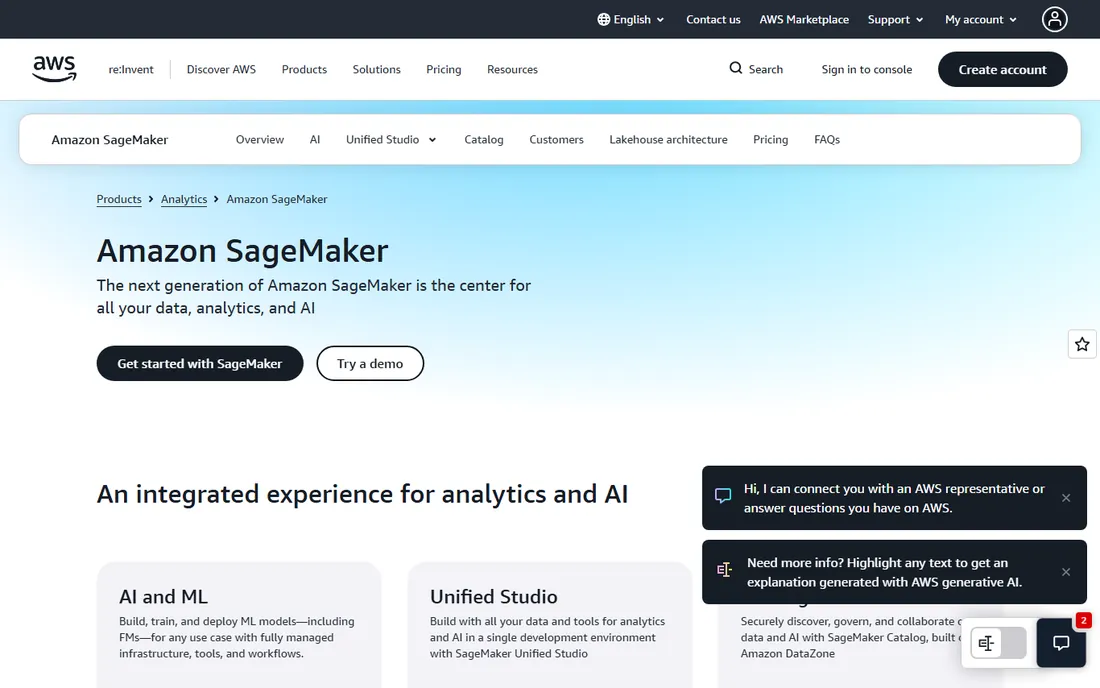
Amazon SageMaker is the most complete ML platform on this list. It covers the entire lifecycle: data preparation, distributed training, model tuning, deployment, inference, monitoring, and governance. The newer SageMaker Unified Studio brings analytics, SQL, and generative AI development into the same workspace, and the lakehouse architecture unifies S3 data lakes with Redshift warehouses.
For AWS shops, the integration argument is decisive. Models train against data already in S3, deploy to endpoints in your VPC, and inherit your existing IAM and compliance posture. Built-in governance covers data classification, guardrails, and lineage, which regulated teams need.
The honest catch is complexity and cost. SageMaker's pricing is usage-based across many dimensions, and bills surprise teams that do not set budgets and alerts. The platform's sheer breadth means a learning curve. But if your infrastructure is AWS, no third-party platform integrates this deeply.
What we like- Full ML lifecycle from training to inference
- Deep integration with S3, Redshift, and AWS services
- SageMaker Unified Studio for analytics and AI in one place
Watch out for- Pricing is complex and usage-based
- The service surface is enormous and takes time to learn
Starting priceSee website
Free planFree trial
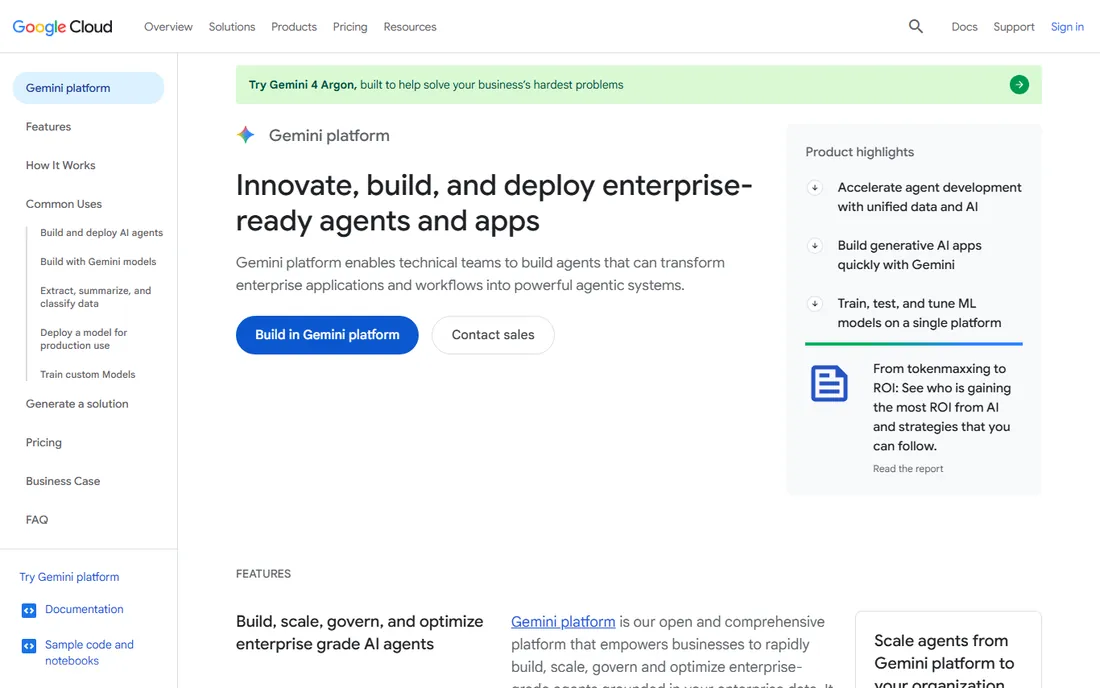
Google has folded Vertex AI into its Gemini platform, positioning it as the place to build enterprise AI agents as well as classic ML models. The platform covers custom training, tuning, deployment, and MLOps: pipelines, feature store, model registry, and monitoring for drift. Model Garden offers more than 200 Google, third-party, and open models to start from.
The BigQuery integration is the standout for data teams. Notebooks, training, and prediction sit on the same surface as your warehouse, which shortens the path from data to deployed model. New customers get $300 in free credits, and there is a continuing free tier for agent runtimes.
Pricing is pay-as-you-go across models, compute, and storage, so cost discipline matters. The recent rebranding from Vertex AI to Gemini platform also means documentation and naming are in flux; confirm exactly which services a proposal covers. For Google Cloud teams, it remains the natural home for ML.
What we like- Unified platform for predictive and generative AI
- 200+ models in Model Garden
- $300 in free credits for new customers
Watch out for- Usage-based pricing with many dimensions
- The Vertex AI to Gemini platform rebrand may confuse buyers
Starting priceSee website
Free planNo
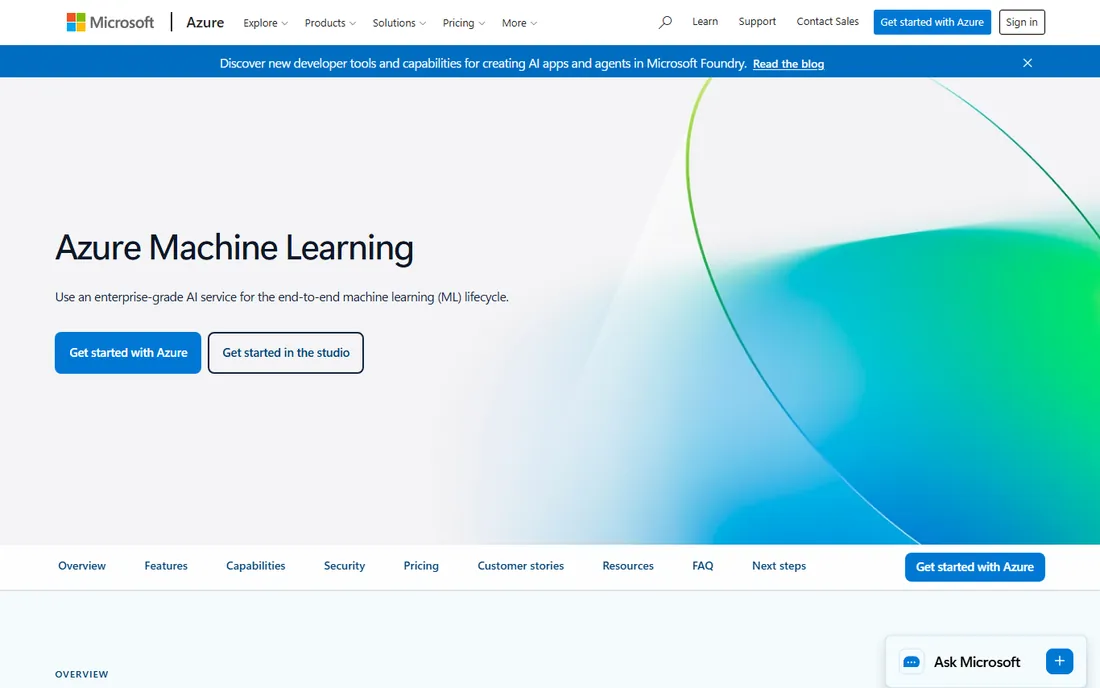
Azure Machine Learning brings managed ML to Microsoft-centric organizations. It handles training, deployment, and MLOps inside the Azure boundary, with the compliance certifications and identity integration that enterprise IT expects. Companies already running on Azure get a platform their security teams already understand.
The platform supports the full workflow from experimentation to production, with managed compute, pipeline orchestration, and model management. Integration with the rest of Azure, from data services to DevOps tooling, keeps the ML lifecycle inside one cloud.
The catch is the same as with any hyperscaler platform: pricing is usage-based and hard to predict without a proper estimate, and the value proposition weakens outside Azure. Teams on AWS or Google Cloud should look at those clouds' native options first. For Microsoft shops, this is the path of least resistance to production ML.
What we like- ML as a service inside the Azure ecosystem
- Strong enterprise security and compliance
- Works with Microsoft's AI infrastructure
Watch out for- Pricing is usage-based and opaque until you estimate
- Best value only inside Azure
Starting priceSee website
Free planFree trial
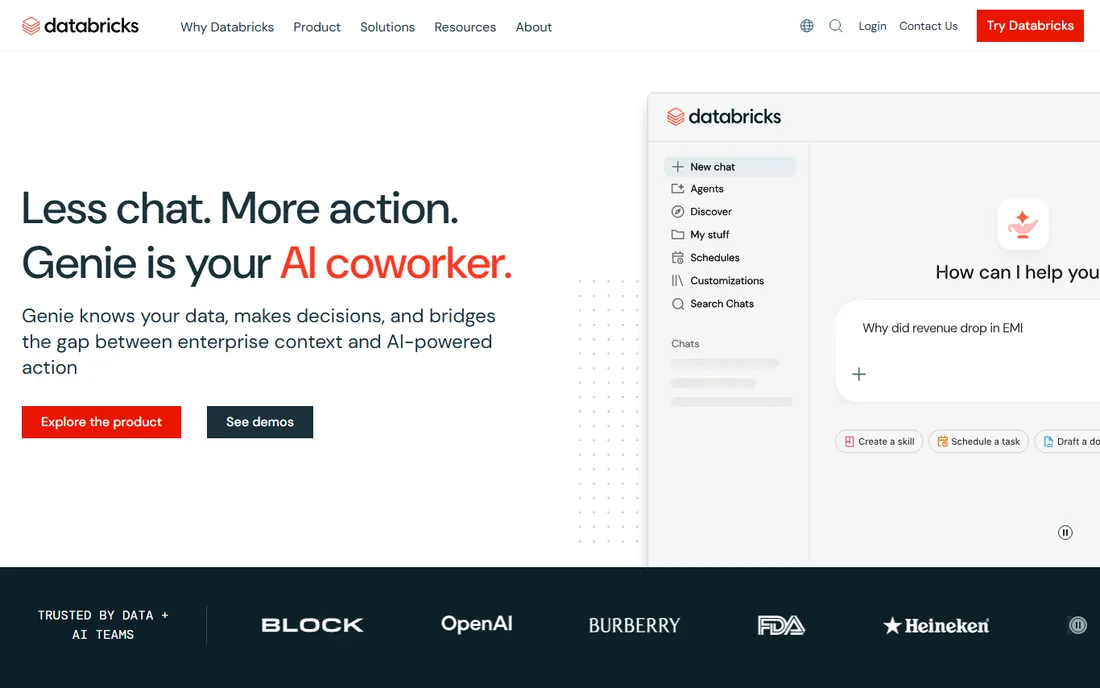
Databricks built its name on the lakehouse: one platform where data engineering, SQL analytics, and machine learning share the same data and governance. That matters because most ML projects stall on data plumbing, not modeling. With Databricks, the team that builds the pipelines and the team that trains the models work in one place.
The platform now spans AI agents, apps, and natural language analytics on top of the same foundation. Governance through Unity Catalog covers data, models, and AI assets, and the customer base, over 60% of the Fortune 500, gives it the deepest enterprise proof of any independent vendor here.
Pricing is usage-based on Databricks Units, and costs scale with compute, so budgets and autoscaling policies need attention. Small teams doing pure ML experiments may find a simpler platform cheaper. For organizations where analytics and ML must live together under one governance model, Databricks is the leader.
What we like- Lakehouse unifies data engineering, analytics, and ML
- Used by 60%+ of the Fortune 500
- Strong governance with Unity Catalog
Watch out for- Usage-based DBU pricing needs monitoring
- Can be overkill for pure ML experiments
Starting priceSee website
Free planNo
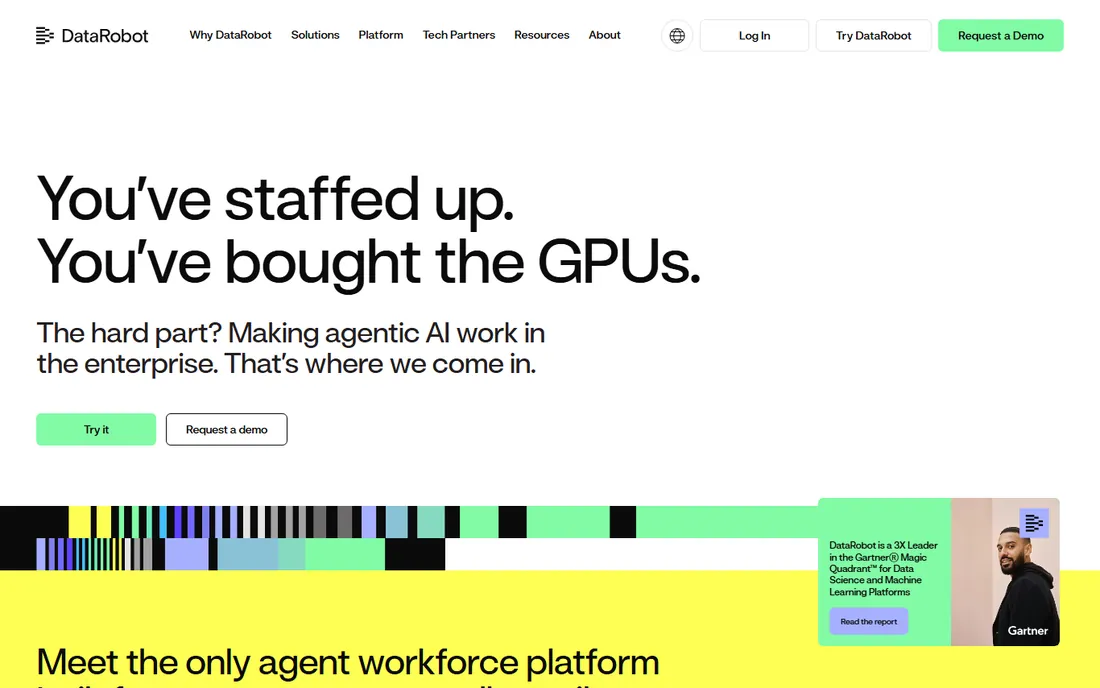
DataRobot started in AutoML and has grown into a full enterprise AI platform, now centered on an agent workforce: building, operating, and governing AI agents across the business. It supports predictive models, generative AI, and agents in one place, with deployment options spanning on-prem, hybrid, and cross-cloud.
Governance is the differentiator. DataRobot tracks assets and activity across the AI lifecycle, enforces controls for compliance, and generates audit documentation. Regulated enterprises that need to prove how their AI behaves find this compelling. The company is a multi-year leader in analyst rankings for data science and ML platforms.
This is enterprise software sold through sales with pricing to match, and the platform's breadth means implementations are real projects. Smaller teams will find simpler tools. For large organizations that need governed AI at scale, DataRobot is purpose-built for the job.
What we like- Unified platform for agents, predictive, and generative AI
- Strong governance and compliance tooling
- Runs on-prem, hybrid, or any cloud
Watch out for- Enterprise pricing through sales
- Broad platform takes effort to adopt fully
#6
H2O.ai
Best for: regulated industries that must control their AI
Visit h2o.ai
Starting priceSee website
Free planNo
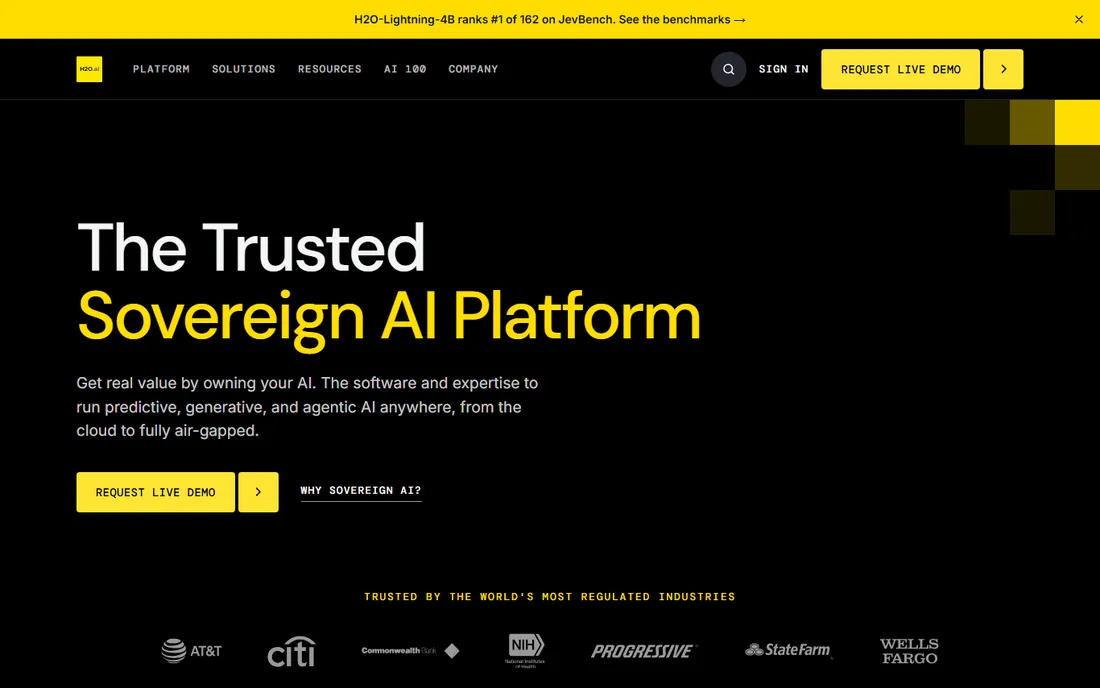
H2O.ai takes a different stance from the cloud giants: sovereign AI. Your models, data, and results stay inside your environment, on-premises, in your private cloud, or fully air-gapped, with SOC 2, HIPAA, and FedRAMP High compliance. Banks, telecoms, and government agencies that cannot send data to public clouds are the core audience.
The platform covers predictive, generative, and agentic AI with observability built in, orchestrated by what the company calls an AI Super Agent. It is model- and LLM-agnostic, so teams can swap models without replatforming. Pricing is one annual license based on compute and memory, which gives finance teams predictable costs instead of per-token bills that spike with usage.
The tradeoff is ecosystem. H2O.ai cannot match the breadth of AWS or Google Cloud services, and pricing is quote-based. But for regulated organizations where data control is non-negotiable, few platforms compete on these terms.
What we like- Sovereign AI runs on-prem or air-gapped
- Model-agnostic with no lock-in
- Predictable annual licensing instead of per-token pricing
Watch out for- Annual license pricing is quote-based
- Smaller ecosystem than hyperscaler platforms
Starting priceSee website
Free planNo
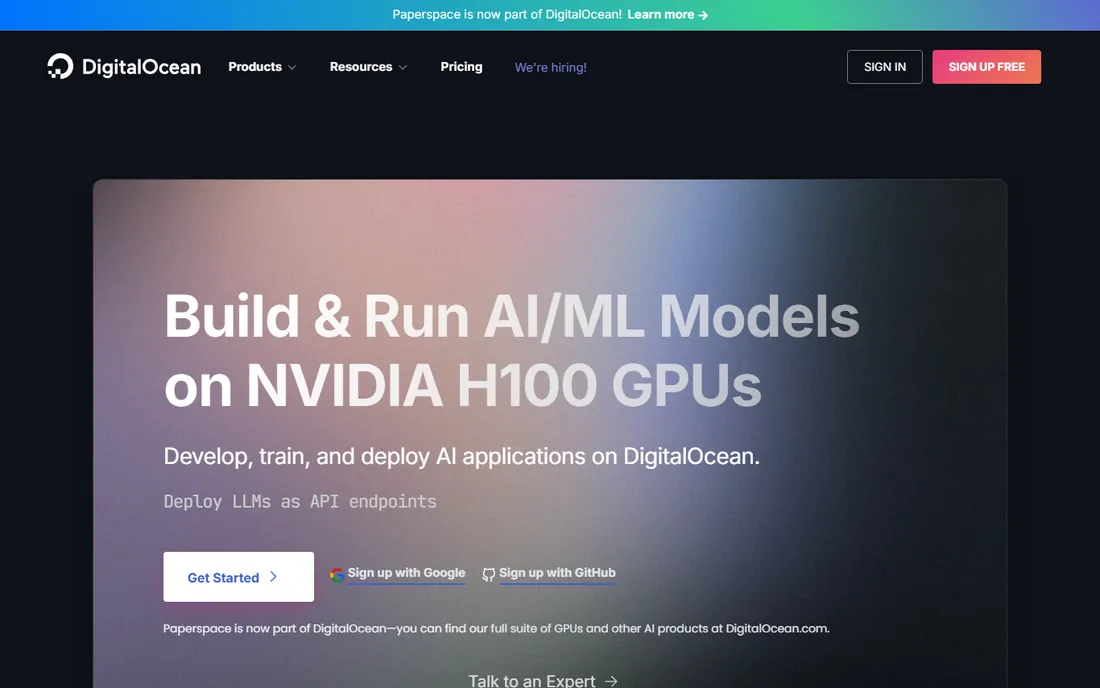
Paperspace built its reputation on one thing: affordable cloud GPUs. Per-second billing, no commitments, and prices well below the major public clouds made it the go-to for startups and researchers training models on tight budgets. The Gradient platform adds managed ML workflows on top of the raw compute.
For a small team that needs H100s without an enterprise contract, the value proposition is straightforward. You pay only for what you use, change instance types freely, and cancel anytime. That simplicity contrasts with the pricing mazes of the hyperscalers.
The honest catch is the transition. Paperspace has joined DigitalOcean, and its GPUs and AI products are moving under the DigitalOcean umbrella, so buyers should confirm the current offering and roadmap before committing. It is also a compute platform first, not a full MLOps suite. For cheap, flexible GPU access, it still deserves a look.
What we like- Low-cost GPUs with per-second billing
- Simple on-demand pricing with no commitments
- Purpose-built for ML workflows
Watch out for- Now part of DigitalOcean, so the product future is in transition
- Narrower platform than hyperscalers
Starting priceSee website
Free planNo
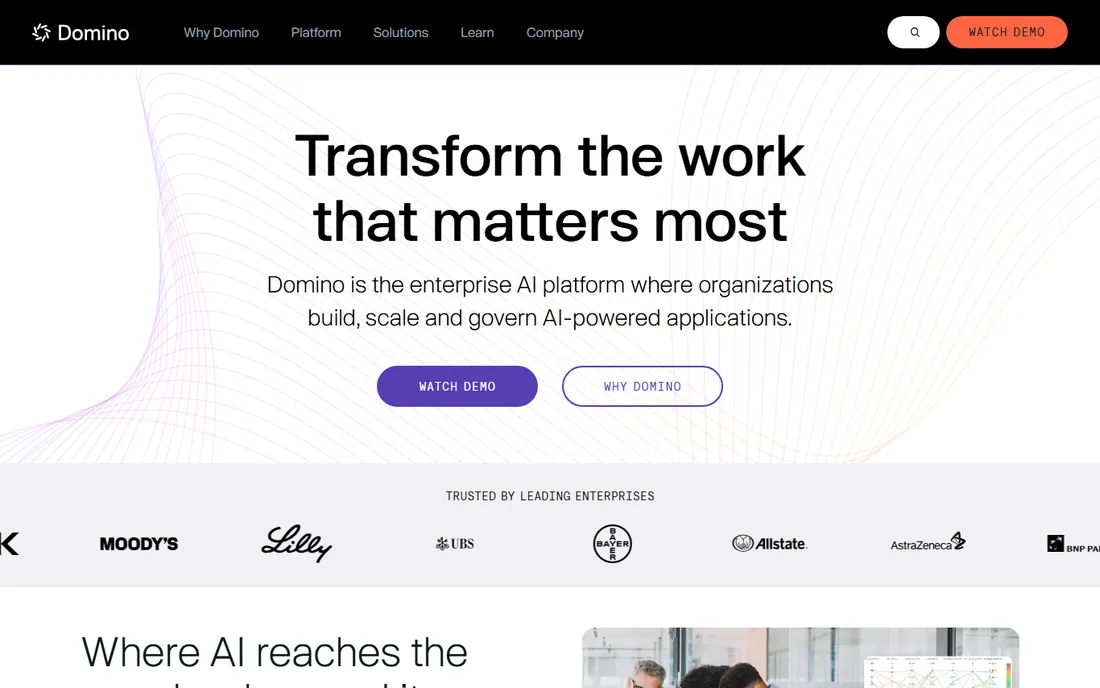
Domino Data Lab gives enterprise data science teams one governed place to build, deploy, and manage models. Data scientists get self-service access to data, tools, and compute across environments, while IT keeps security and compliance controls. The emphasis on reproducibility and best practices helps organizations scale from a few models to hundreds.
The platform serves three audiences at once: data scientists who want freedom from infrastructure friction, data science leaders who need visibility across projects, and IT leaders who need governance. That balance is hard to find, and it is why regulated enterprises in finance, pharma, and manufacturing adopt it.
Domino is enterprise software with quote-based pricing, and it is designed for teams, not individual experimenters. Smaller organizations will find cheaper paths. For companies where data science must scale under IT governance, Domino is one of the most mature options.
What we like- Unified environment for data science teams with strong governance
- Works across any infrastructure
- Built for collaboration and reproducibility
Watch out for- Enterprise pricing through sales
- Aimed at larger teams, not solo practitioners
How we chose
We mapped the machine learning platform market across three archetypes: hyperscaler platforms (AWS, Google Cloud, Azure), independent data and AI platforms (Databricks, DataRobot, H2O.ai, Domino), and GPU compute specialists (Paperspace). For each we verified the current product positioning on the vendor's own site, checked pricing models from official pricing pages, and cross-referenced enterprise adoption with public reviews on G2 and analyst coverage. We excluded vendors whose homepages we could not open and confirm. We did not run hands-on benchmarks; ML platform choices deserve a proof of concept on your own workloads.
Estimating the true cost before you commit
ML platform pricing punishes the unprepared. Every vendor here charges primarily for compute, which means your bill depends on how your team works, not just the price list.
Model your heaviest month, not your average
Training runs spike. A team that experiments lightly for three weeks then trains a large model for three days will pay for those three days many times over. Ask each vendor to estimate your heaviest realistic month, including training, inference, and storage, before you sign anything.
Set budgets and alerts on day one
Every hyperscaler and usage-based platform supports budget alerts and spending caps. Configure them during setup, not after the first surprise bill. Assign one person to review spend weekly during the first quarter. Idle notebooks and forgotten endpoints are the most common sources of waste.
Compare total cost, not unit prices
A cheaper GPU hour means nothing if the platform needs twice the engineering time to operate. Factor in the cost of MLOps labor, data pipeline work, and governance overhead. Managed platforms cost more per compute unit but can cost less overall when they save your team weeks of infrastructure work.
Why MLOps maturity decides production success
Most ML projects fail between the notebook and production. The platform's MLOps capabilities determine whether your models actually ship and keep working.
Look for experiment tracking, model registries, pipeline orchestration, and monitoring for drift and performance decay. These sound like nice-to-haves until your first model degrades silently in production and nobody notices for a month. Ask each vendor to walk through a full deployment and rollback during the demo, not just training.
Reproducibility matters just as much. Your team should be able to retrain any model from the same code and data a year later, for audits or debugging. Platforms that version data, code, and environments together save enormous pain when regulators or customers ask questions.
Frequently asked questions
What is the best cloud machine learning platform?
It depends on your cloud and team. Amazon SageMaker, Google Vertex AI, and Azure Machine Learning are the natural choices inside their respective clouds. Databricks leads for unified data and AI, DataRobot and H2O.ai for governed enterprise AI, and Paperspace for low-cost GPU compute.
How much does a machine learning platform cost?
Most platforms charge for the compute you use, so costs scale with training and inference workloads. Hyperscalers bill per second or per hour for training instances plus storage and API calls. Managed vendors like DataRobot, H2O.ai, and Domino typically price through annual contracts. Always estimate your heaviest month before committing.
What is the difference between SageMaker, Vertex AI, and Azure ML?
They are the managed ML platforms of AWS, Google Cloud, and Azure respectively, each deeply integrated with its own cloud's data, identity, and compliance services. Capabilities overlap heavily; the deciding factor is usually which cloud your company already runs on.
Do I need a full ML platform or just GPU compute?
If your team only needs to train models and handles deployment itself, raw GPU compute from a provider like Paperspace or a hyperscaler's VM offering is cheaper. If you need experiment tracking, deployment pipelines, monitoring, and governance, a full platform like SageMaker, Vertex AI, or Databricks pays for itself.
What is MLOps and why does it matter?
MLOps is the practice of deploying and maintaining ML models reliably in production: versioning, testing, monitoring for drift, and rolling back when things break. Without it, models trained in notebooks rarely survive contact with real data. Every serious platform on this list includes MLOps tooling.
Which platform is best for a startup on a budget?
Paperspace offers the cheapest path to GPU compute with simple on-demand pricing. Google Cloud's $300 in new-customer credits makes Vertex AI attractive for early experiments. Start with the cheapest option that meets your needs and move to a fuller platform when MLOps and governance become the bottleneck.
Sources we checked (8)
- https://aws.amazon.com/sagemaker/
- https://cloud.google.com/vertex-ai
- https://azure.microsoft.com/en-us/products/machine-learning/
- https://www.databricks.com
- https://datarobot.com/
- https://h2o.ai
- https://paperspace.com/
- https://dominodatalab.com/
Is your product missing or out of date?
We review this list regularly. Vendors can request a listing, send updated pricing or ask about featured placement.

Shihab Mia · Founder, Rankite
Shihab has spent more than a decade helping SaaS and e-commerce brands grow through search. He writes Rankite's software buying guides from pricing pages, documentation and public user reviews. More about Shihab.