How we make this list: we compare pricing pages, product documentation and public user reviews. Ratings come from G2, Capterra or Trustpilot, with the date we checked them.
Key takeaways
- Duolingo leads on daily habit building, with short gamified lessons that keep beginners coming back.
- ELSA Speak leads on pronunciation, with AI feedback on individual sounds, stress, and intonation.
- Cambly leads on live speaking practice with real tutors, which AI chat alone cannot fully replace.
- HelloTalk leads on real conversation with native speakers, through text, voice, and correction tools.
- Babbel and Busuu suit learners who want structured courses with grammar, while Memrise suits vocabulary building.
- No app alone makes you fluent: pair daily app practice with real speaking, reading, and listening each week.
Quick comparison
| Tool | Best for | Starting price | Free plan |
|---|
 Duolingo | Daily habit and beginners | Free app | Free |
 ELSA Speak | Pronunciation feedback | See website | Free plan |
 Babbel | Structured courses | See website | No |
 Rosetta Stone | Immersion learning | See website | No |
 Cambly | Live tutor speaking | See website | Free trial |
 HelloTalk | Native speaker exchange | Free app | Free |
 Busuu | Structured courses plus community | See website | Free plan |
 Memrise | Vocabulary and phrases | See website | Free plan |
Is your product missing or out of date?
We review this list regularly. Vendors can request a listing, send updated pricing or ask about featured placement.
The best ai apps for learning english
AI changed English learning by giving every learner a practice partner that never gets tired. Modern apps listen to your speech, correct your pronunciation, adapt lesson difficulty, and hold conversations on demand. The eight apps below cover the full range, from gamified daily lessons to live tutor sessions, and the right pick depends on your level, your weakest skill, and how much speaking practice you actually do.
How we chose
We started from the apps English learners actually use at scale, drawing on store rankings, learner guides, and vendor feature pages. We favored apps with speech recognition, adaptive lessons, and real speaking opportunities, and we excluded phrasebook-only apps with no practice or feedback. Prices in this category vary by billing period and region, so where a figure is not confirmed on a vendor page, we use "See website" and flag the gap.
Buying guide
Start with your weakest skill. If pronunciation holds you back, pick an app with speech feedback such as ELSA Speak. If you understand English but cannot speak it, pick live practice such as Cambly or exchange such as HelloTalk. If you are a beginner, pick a habit-forming app such as Duolingo and add speaking later.
Next, test the free tier for two weeks before paying. Daily streaks, lesson length, and feedback quality matter more than feature lists, and you will only learn them by using the app. Then check the total yearly cost, since monthly prices look small but annual plans vary widely, and some apps charge extra for tutor minutes or premium content.
Finally, plan real practice outside the app. Watch shows with English subtitles, read short articles daily, and speak at least twice a week with a tutor, a partner, or a language exchange. Apps build the foundation, but real conversation builds fluency. One habit ties it all together: keep a small notebook, physical or digital, for phrases you actually needed and did not know. Review that notebook each Sunday and drill the phrases in your app the following week. Learners who study their own gaps improve faster than learners who only follow a preset course, because the words they learn are the words they will use again.
Frequently asked questions
Can an AI app make me fluent in English?
No app alone makes you fluent. Apps build vocabulary, grammar, and pronunciation habits, but fluency needs real speaking, listening, and reading practice with real people and real content alongside the app.
Which app is best for pronunciation?
ELSA Speak leads on pronunciation, with AI analysis of individual sounds, word stress, and intonation, plus targeted drills for the sounds each learner gets wrong. Duolingo and Babbel include speaking practice, but their feedback is less detailed.
Is Duolingo enough for serious learners?
Duolingo is a strong start and a great habit builder, but serious learners usually outgrow it. Pair it with a structured course such as Babbel or Busuu, plus live speaking practice, once you reach an intermediate level.
Are AI tutors as good as human tutors?
AI tutors are always available, patient, and cheap, which makes them great for daily practice. Human tutors are better for nuanced feedback, cultural context, and natural conversation flow. Most learners benefit from both.
How much time should I spend on an English app each day?
Twenty to thirty minutes a day beats two hours once a week. Short daily sessions build memory and habit, while longer weekly sessions suit live tutoring and conversation practice.
Sources
- App store rankings and learner guides for English learning apps in 2026
- Vendor feature and pricing pages for Duolingo, ELSA Speak, Babbel, Rosetta Stone, Cambly, HelloTalk, Busuu, and Memrise
- Third-party comparisons of AI language learning tools
#1Duolingo
Best for: Daily habit and beginners4.5/5 on
G2 (145 reviews, checked Oct 2026)
Visit duolingo.com
Starting priceFree app
Free planFree
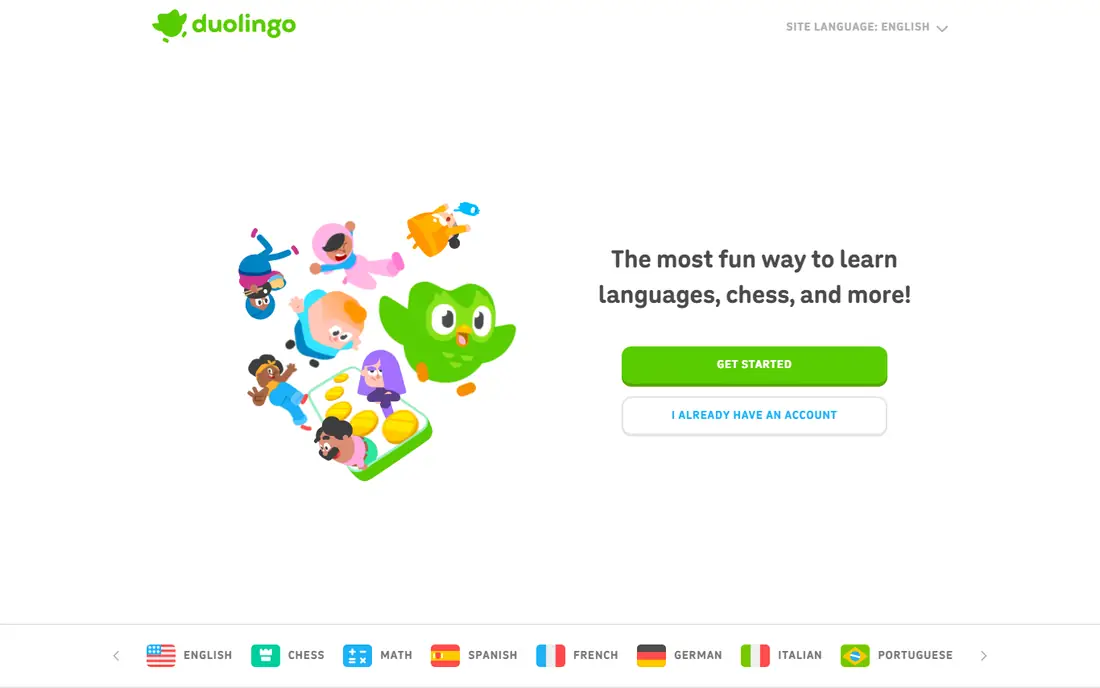
Duolingo is the most popular language app in the world for a reason: it turns practice into a daily game. Short lessons, streaks, leagues, and rewards keep beginners coming back, and the English course covers reading, listening, writing, and basic speaking from the first lesson. The free tier is genuinely usable, though ads and a hearts system limit mistakes per session.
The limits appear at higher levels. Speaking feedback is basic, grammar explanations are thin, and advanced learners find the content too easy. Duolingo suits beginners and casual learners who need a habit first, and it works best paired with a speaking app once you can hold simple conversations.
What we like- Gamified streaks keep beginners practicing
- Short lessons fit busy days
- Huge English course
Watch out for- Speaking feedback is basic
- Advanced learners outgrow it
- Ads and hearts limit free use
Starting priceSee website
Free planFree plan
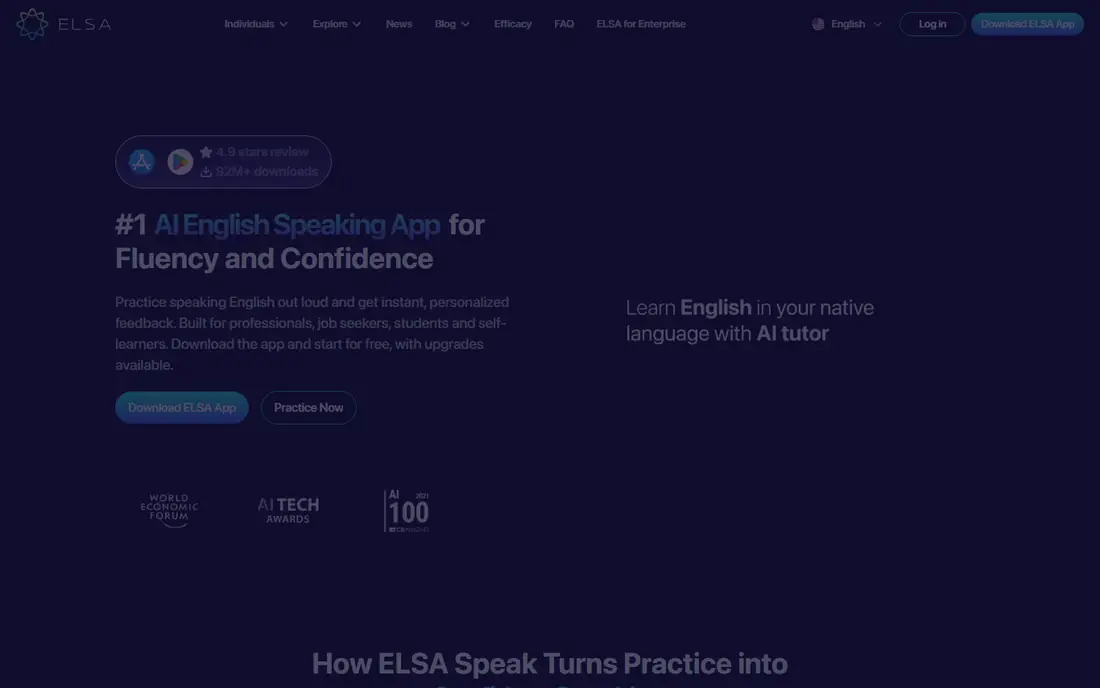
ELSA Speak is the pronunciation specialist. Its AI listens to your speech and scores individual sounds, word stress, and intonation, then builds drills for the exact sounds you get wrong. Learners whose first language lacks certain English sounds, such as the "th" sounds or the difference between "l" and "r", get targeted practice that general apps do not offer.
The focus is narrow by design. ELSA Speak does not teach full grammar courses or hold open conversations, so it works best alongside a course app. It suits learners who are understood poorly despite good vocabulary, and professionals preparing for interviews or presentations in English.
What we like- Detailed AI pronunciation scoring
- Targeted drills for problem sounds
- Accent-specific training
Watch out for- Focus is narrow, mostly pronunciation
- Full features need a subscription
- Less grammar content
Starting priceSee website
Free planNo
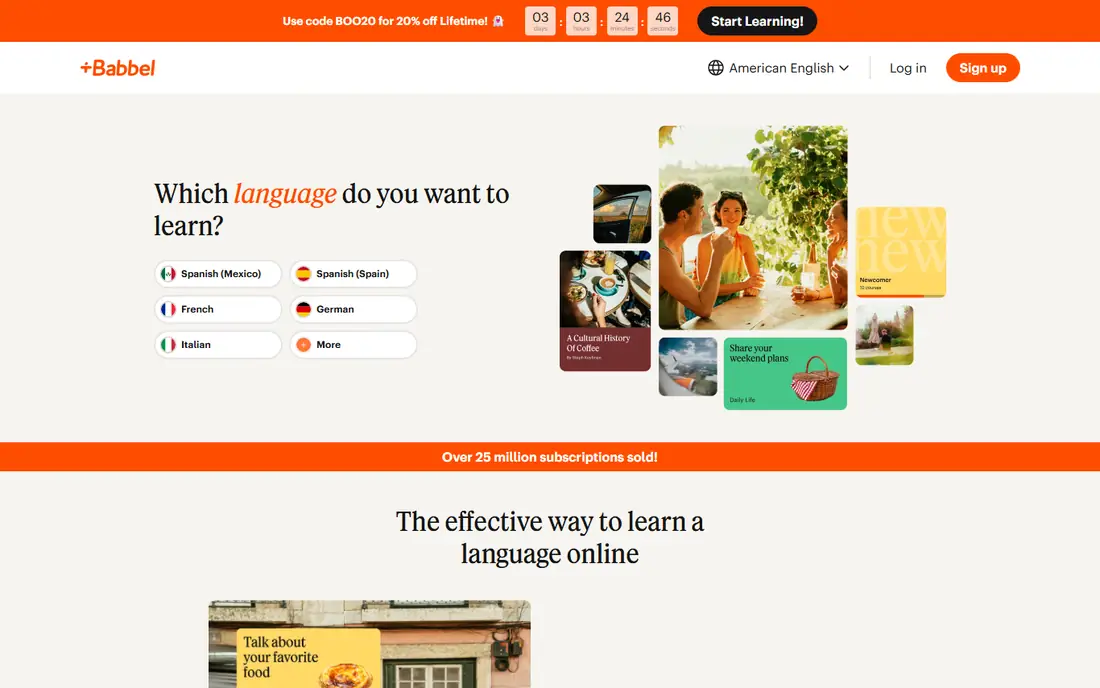
Babbel takes a classroom approach in app form, with structured courses that teach grammar through real-life dialogues rather than isolated drills. Lessons cover travel, work, and daily life, and a review system brings back words before you forget them. The speech recognition gives basic pronunciation feedback on key phrases.
There is no real free tier beyond a first lesson, so you pay before you know if the style fits. Speaking practice is also limited compared with tutor apps. Babbel suits learners who want a clear course path and who like grammar explained, not just practiced.
What we like- Structured grammar-led courses
- Real-life dialogues
- Review system for memory
Watch out for- No free tier beyond a first lesson
- Speaking practice is limited
- Content suits beginners to intermediate
Starting priceSee website
Free planNo
Rosetta Stone teaches by immersion: pictures, audio, and context replace translations, so learners build direct links between English words and meanings. Its TruAccent pronunciation tool gives feedback on spoken words, and a lifetime purchase option appeals to learners who dislike subscriptions.
The method is slow for learners who want quick grammar explanations, and advanced content is thinner than beginner content. Pricing runs higher than most rivals. Rosetta Stone suits patient beginners who like visual immersion and who plan to learn over a long period.
What we like- Immersion method with no translations
- Strong pronunciation tool
- Lifetime option
Watch out for- Expensive compared with rivals
- Slow for learners who want grammar rules
- Less content for advanced levels
Starting priceSee website
Free planFree trial
Cambly is the live practice pick. Learners book video lessons with native English tutors, talk about real topics, and get corrections in real time, with lessons recorded for later review. Scheduling is flexible, with tutors available around the clock, which suits shift workers and learners in any time zone.
Cost is the main drawback. Live tutoring costs far more per hour than any AI app, and tutor quality varies, so trying several tutors matters. Cambly suits learners who understand English but cannot speak it confidently, and who are ready to pay for real conversation.
What we like- Live video lessons with native tutors
- Flexible scheduling
- Lessons recorded for review
Watch out for- Most expensive option here
- Tutor quality varies
- Needs a stable connection
Starting priceFree app
Free planFree
HelloTalk connects learners with native speakers for language exchange: you help them with your language, they help you with English, through text, voice messages, and calls. Built-in correction tools let partners fix your sentences, and translation helps when you get stuck. The core app is free, which makes it the cheapest way to get real conversation.
Partner quality varies, and conversations need effort to keep going. Safety also needs care: use the app's reporting and blocking tools, and never share personal details with strangers. HelloTalk suits social learners who enjoy chatting and who want real practice without tutor prices.
What we like- Real conversations with native speakers
- Built-in corrections and translations
- Free core app
Watch out for- Partner quality varies
- Safety needs care
- Conversations can stall without effort
#7Busuu
Best for: Structured courses plus community4.4/5 on
G2 (71 reviews, checked Oct 2026)
Visit busuu.com
Starting priceSee website
Free planFree plan
Busuu mixes structured courses with a community of native speakers who correct your writing and speaking exercises. That combination gives learners both a course path and human feedback, and completion certificates from course levels add a credential for job seekers. Offline lessons help learners with limited data.
The free tier is limited, and speaking practice is thinner than live tutoring. Some courses also feel short at higher levels. Busuu suits learners who want a structured course plus community feedback, and who value certificates for work or study.
What we like- Structured courses with community corrections
- Official certificates
- Offline lessons
Watch out for- Free tier is limited
- Speaking practice is thinner than Cambly
- Some courses feel short
Starting priceSee website
Free planFree plan
Memrise built its name on spaced repetition, the technique of reviewing words just before you forget them, and it applies that to English vocabulary and phrases with videos of native speakers using them in real contexts. That video-first approach helps learners connect words with natural pronunciation and usage.
Grammar teaching is light, and the newer AI conversation features are less proven than its vocabulary system. Memrise suits learners who want to build vocabulary fast, especially before travel or a job change, and it pairs well with a grammar course or tutor.
What we like- Strong spaced repetition for vocabulary
- Real native speaker videos
- Useful phrase courses
Watch out for- Grammar teaching is light
- AI conversation is newer
- Full content needs a subscription
Is your product missing or out of date?
We review this list regularly. Vendors can request a listing, send updated pricing or ask about featured placement.

Shihab Mia · Founder, Rankite
Shihab has 5+ years in B2B and SaaS SEO. He writes Rankite's software buying guides from pricing pages, documentation and public user reviews. More about Shihab.