How we make this list: we compare pricing pages, product documentation and public user reviews. Rankite is independent; if a vendor ever pays for a featured spot, that listing is clearly labeled Partner.
Key takeaways
- LIS (clinical labs) and LIMS (research, pharma, industrial labs) solve different problems; buying the wrong category is the most expensive mistake in lab informatics.
- Enterprise LIMS (LabWare, STARLIMS, LabVantage, SampleManager) is quote-only with implementations measured in months; budget for services, not just licenses.
- LabCollector ($35/user/month) and Labguru are the accessible options for smaller labs that cannot fund an enterprise rollout.
- For pathology specifically, NovoPath's cloud LIS with built-in digital pathology (launched September 2026) is the modern alternative to legacy on-premise systems.
Quick comparison
| Tool | Best for | Starting price | Free plan |
|---|
 LabWare LIMS LabWare LIMS | large enterprises needing maximum configurability | See website | No |
 STARLIMS STARLIMS | regulated labs wanting a proven enterprise platform | See website | No |
 LabVantage LabVantage | pharma and biotech labs needing deep compliance | See website | No |
 Thermo Scientific SampleManager Thermo Scientific SampleManager | labs standardized on Thermo Fisher instruments | See website | No |
 LabLynx LabLynx | clinical and environmental labs wanting web-native LIMS | See website | No |
 CloudLIMS CloudLIMS | labs wanting pure SaaS LIMS without infrastructure | See website | No |
 LabCollector LabCollector | small labs needing modular, affordable LIMS | $35/user/month | No |
 Labguru Labguru | research labs wanting ELN plus LIMS in one | See website | No |
 Clinisys (Orchard LIS) Clinisys (Orchard LIS) | clinical labs needing a proven LIS with outreach | See website | No |
 NovoPath NovoPath | pathology labs moving to cloud and digital pathology | See website | No |
Is your product missing or out of date?
We review this list regularly. Vendors can request a listing, send updated pricing or ask about featured placement.
The best LIS software
#1
LabWare LIMS
Best for: large enterprises needing maximum configurability
Visit labware.com
Starting priceSee website
Free planNo
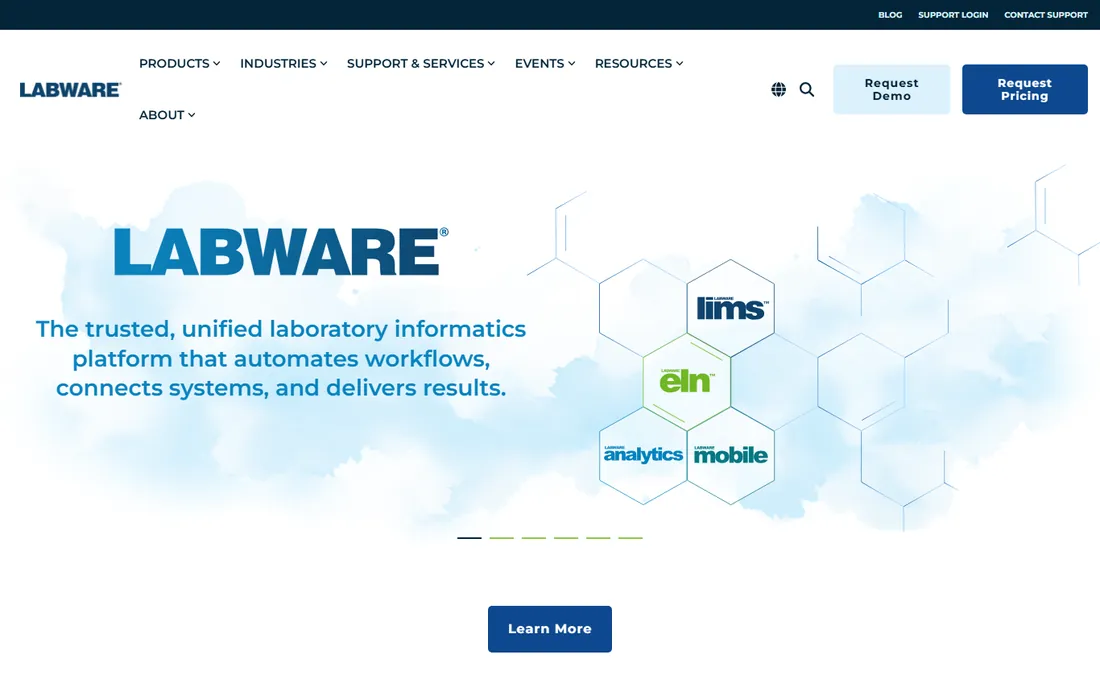
LabWare is the LIMS that enterprise labs buy when they have decided that configurability matters more than simplicity. Founded in 1986, the company built its reputation on a platform that can be shaped to almost any laboratory workflow, from pharmaceutical manufacturing and stability testing to clinical research and environmental analysis.
That flexibility is the product. LabWare offers both a fully-validated SaaS LIMS with best-practice workflows for labs that want to deploy in days, and a fully customizable enterprise platform, self-hosted or cloud, for organizations with complex requirements. Features like lot management, instrument interfacing, barcode handling, certificates of analysis and audit trails come standard. Reviewers consistently praise its configurability and support quality.
The price of flexibility is complexity and cost. Pricing is quote-only and sits firmly at enterprise levels; reviewers note it is costly for small companies. Implementations of the full platform are measured in months and need skilled administrators. LabWare is the best lims software choice when your workflows are too specific for a template product. If they are not, you will pay for configurability you never use.
What we like- Among the most configurable LIMS platforms available
- Deployments across pharma, clinical research and environmental testing
- SaaS option with validated workflows
Watch out for- Quote-only pricing with enterprise-level costs
- Configurability means long implementations
#2
STARLIMS
Best for: regulated labs wanting a proven enterprise platform
Visit starlims.com
Starting priceSee website
Free planNo
STARLIMS has been around since 1986, and Abbott's ownership since 2014 gave it the resources to stay there. It remains one of the most widely deployed LIMS platforms in regulated industries, with a footprint spanning pharmaceutical quality control, clinical laboratories and food safety testing.
The platform's strength is breadth with compliance baked in. It handles the full laboratory workflow from sample login through testing, review and reporting, with the audit trails, electronic signatures and data integrity controls that FDA-regulated environments demand. Multi-industry support means a food safety lab and a pharma QC lab can both run on it without compromise.
The buying experience is classic enterprise: custom quotes, sales-led evaluations and implementations that run for months with professional services. There is no public pricing and no trial. STARLIMS suits large organizations that want a vendor with decades of regulated-industry proof and the balance sheet to be around for decades more. Smaller labs should look at CloudLIMS or LabCollector instead.
What we like- Decades-long track record in regulated industries
- Strong multi-industry support (pharma, clinical, food safety)
- Abbott backing since 2014
Watch out for- Quote-only enterprise pricing
- Implementations are lengthy and services-heavy
Starting priceSee website
Free planNo
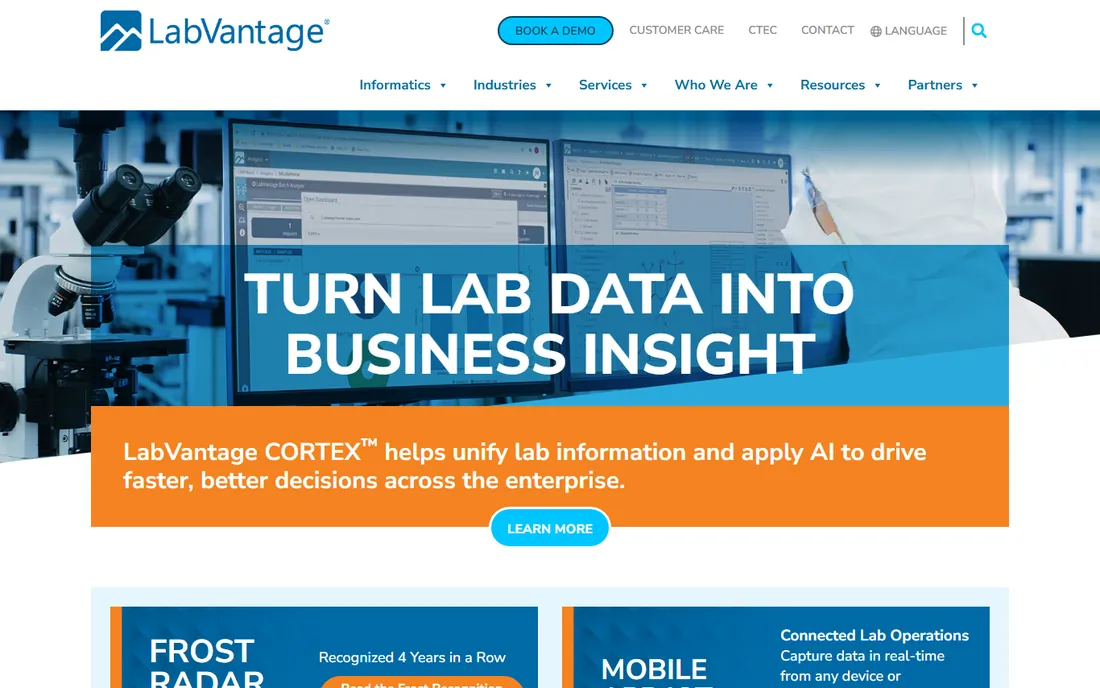
LabVantage is the pharma industry's comfort choice, with four decades of deployments in regulated environments. Founded in 1981, it grew up alongside the FDA's electronic records regulations, and compliance is in its DNA: 21 CFR Part 11, GMP and GLP support are core features, not add-ons.
The platform covers the full lab informatics stack with integrated ELN and business intelligence, plus an SDK for custom integrations. LabVantage OnDemand offers the platform as a cloud-native SaaS for labs that want to avoid infrastructure. For pharmaceutical and biotech QC labs where auditors scrutinize everything, that pedigree matters.
The honest complaints come from users, not competitors. Reviewers describe LabVantage as expensive and difficult to configure, with complex setup and slow performance in places. It is a powerful platform that demands investment to implement well. If regulatory compliance is your primary requirement and you have the budget for a proper implementation, LabVantage belongs on the shortlist. If usability matters more, LabWare and STARLIMS generally review better.
What we like- Purpose-built for GMP/GLP and 21 CFR Part 11 environments
- Cloud-native OnDemand option
- Four decades of pharma deployments
Watch out for- Reviewers call it expensive and hard to configure
- Complex setup and dated areas of the interface
#4
Thermo Scientific SampleManager
Best for: labs standardized on Thermo Fisher instruments
Visit thermofisher.com
Starting priceSee website
Free planNo
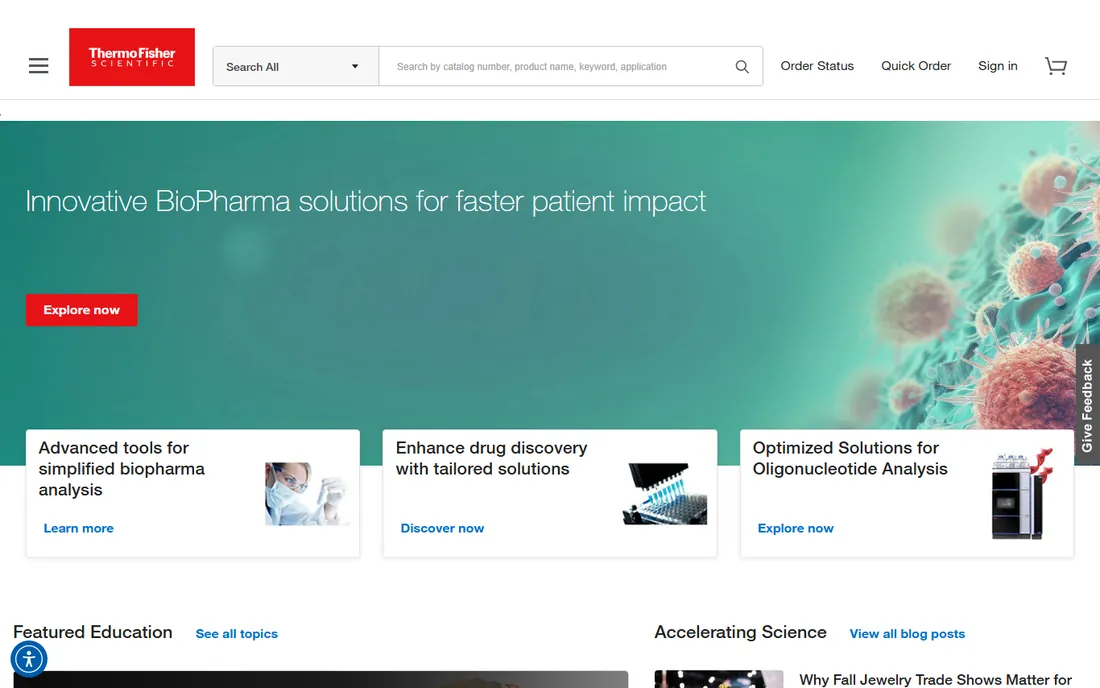
Thermo Fisher's SampleManager benefits from an unfair advantage: the same company makes the instruments. For labs running Thermo chromatography, mass spectrometry and spectroscopy systems, the integration between instrument software and LIMS is tighter than any third-party vendor can offer.
SampleManager is more than a LIMS. It bundles laboratory information management, scientific data management (SDMS), lab execution (LES) and electronic lab notebook capabilities in one platform, which reduces the integration work between separate systems. Thirty-plus years of deployments mean it handles standards like 21 CFR Part 11, GMP and ISO 17025 routinely. Configuration, rather than custom code, adapts it to different workflows.
The catch is ecosystem gravity. You get the most value when your instruments, software and service contracts all come from Thermo Fisher, which is a strategic commitment, not just a software purchase. Pricing is quote-only and enterprise-grade. For Thermo-standardized labs, SampleManager is the natural choice. For mixed-instrument labs, verify the third-party integrations before committing.
What we like- Deep integration with Thermo Fisher's instrument portfolio
- Combines LIMS, SDMS, LES and ELN in one
- 30-plus years of deployments
Watch out for- Quote-only pricing
- Strongest value requires buying into the Thermo ecosystem
#5
LabLynx
Best for: clinical and environmental labs wanting web-native LIMS
Visit lablynx.com
Starting priceSee website
Free planNo
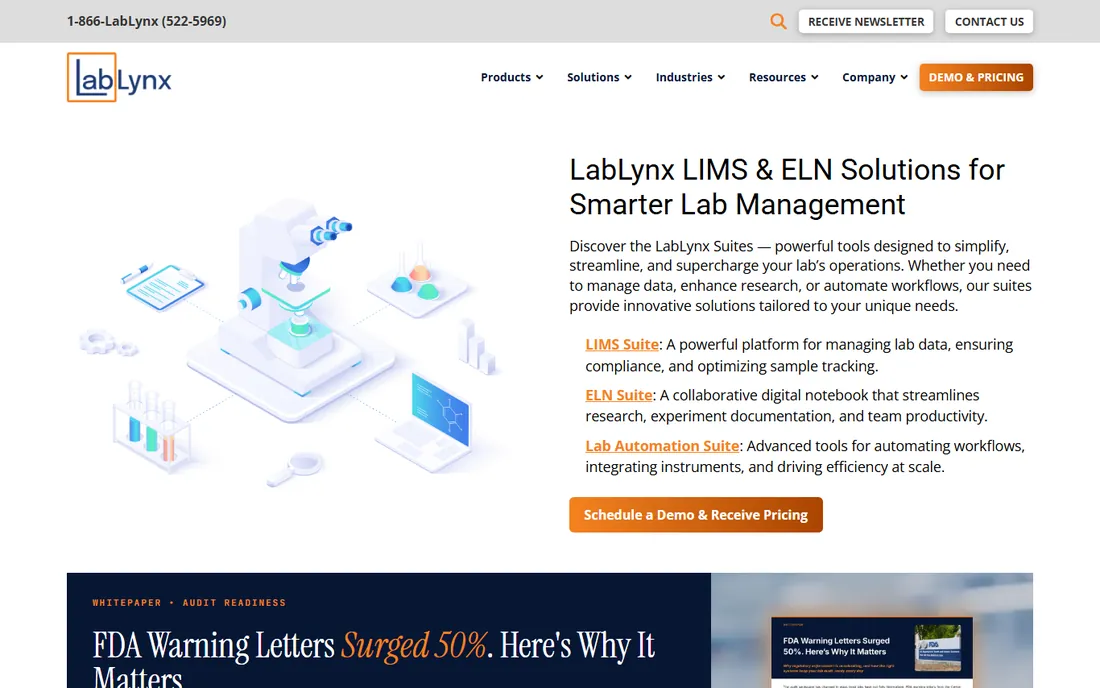
LabLynx shipped one of the first browser-based LIMS products in 1997, before browser-based was a selling point. The Georgia company, founded in 2000, has spent decades serving laboratories that the big enterprise vendors sometimes overlook: clinical diagnostics, environmental testing, forensics, agriculture and public health.
The product lineup centers on web-based LIMS (webLIMS and ELab) that runs entirely in the browser, which was radical in the nineties and is simply expected now. That history means the architecture never had to be retrofitted for the web. The company serves government agencies as well as commercial labs, suggesting the security and compliance posture holds up under scrutiny.
As a mid-size vendor, LabLynx does not have the global services army of LabWare or Thermo Fisher, and pricing is quote-based. But for clinical and environmental labs that want a web-native system from a vendor that understands their workflows, it is a credible alternative to the enterprise giants, often with more attentive service.
What we like- Genuine web-native architecture from the early days
- Serves clinical, environmental, forensics and agriculture labs
- US-based with decades of experience
Watch out for- Quote-only pricing
- Smaller vendor than the enterprise giants
Starting priceSee website
Free planNo
CloudLIMS does exactly what the name promises: LIMS delivered as pure SaaS, with none of the infrastructure baggage. Founded in 2013, the company bet that laboratories, like everyone else, would rather subscribe to software than install and maintain it.
The appeal is operational simplicity. No servers to provision, no upgrades to schedule, no database administrators to hire. Deployment is faster than traditional on-premise LIMS, and the subscription model turns a capital purchase into an operating expense. For small and mid-size labs without IT departments, that trade is attractive.
The limitations are the usual SaaS ones. Pricing is not published, customization depth does not match LabWare or STARLIMS, and labs with strict data-residency requirements need to verify hosting details. CloudLIMS fits labs that want a modern, low-overhead LIMS and do not have exotic workflow requirements. Complex regulated enterprises will likely outgrow it.
What we like- True SaaS delivery with no infrastructure to manage
- Faster deployment than on-premise platforms
- Modern interface
Watch out for- Pricing not published
- May lack the depth of enterprise platforms for complex workflows
Starting price$35/user/month
Free planNo
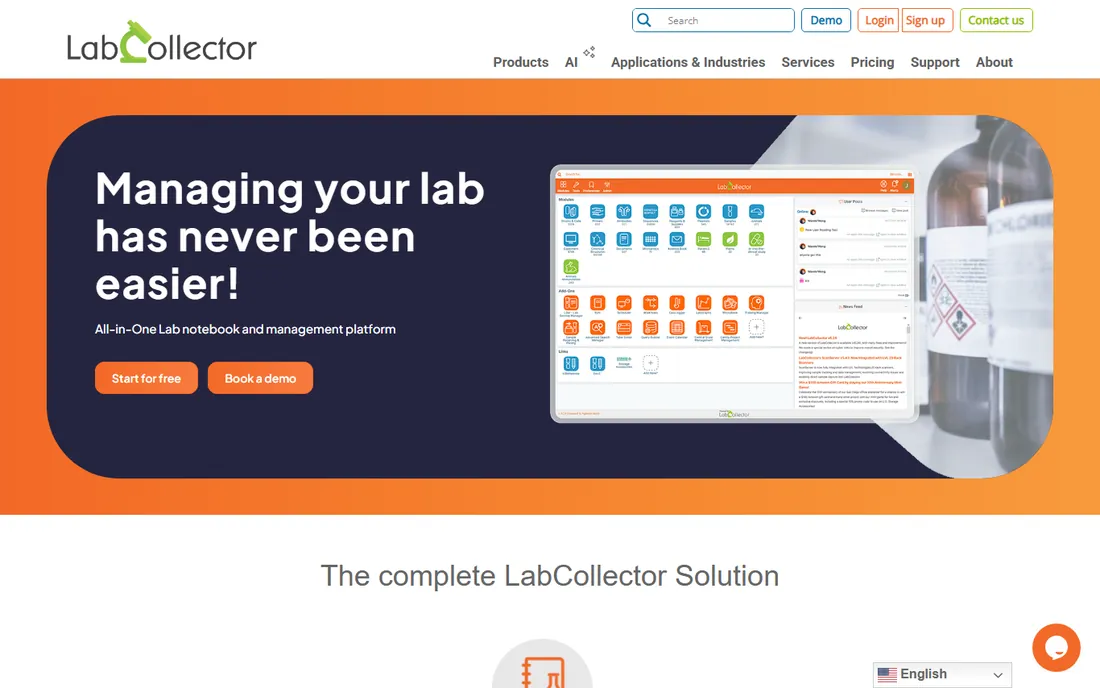
LabCollector is the modular, budget-friendly option from French-American vendor AgileBio, founded in 2002. Instead of selling a monolithic enterprise platform, it offers LIMS, ELN and lab management as modules you combine to fit, which keeps costs down for labs that do not need everything.
Pricing is refreshingly public at $35 per user per month, with an annual figure around $4,500 per year for typical configurations. That puts it within reach of academic labs, startups and small biotechs that could never fund a LabWare implementation. The platform covers sample tracking, workflows, storage management and compliance basics, with an API for integrations.
The trade-off is ceiling. LabCollector does not match the enterprise platforms for complex regulated manufacturing or multi-site pharma deployments, and the vendor's support operation is smaller. But for research labs, core facilities and small testing labs, it hits a sweet spot: real LIMS functionality at a price that does not require a capital committee.
What we like- Published pricing from $35/user/month
- Modular design lets you buy only what you need
- Serves academic and biotech labs well
Watch out for- Less depth than enterprise platforms for regulated manufacturing
- Support is smaller-scale than the giants
Starting priceSee website
Free planNo
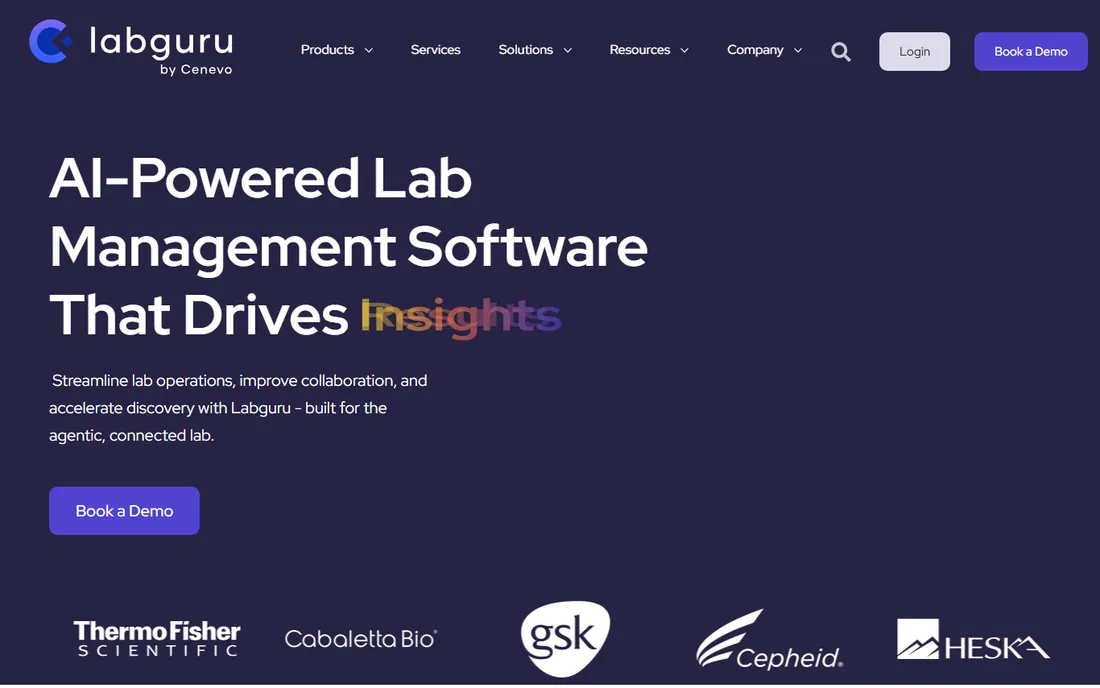
Labguru comes at the problem from the researcher's bench rather than the QA manager's office. The BioData product, now backed by Battery Ventures, combines an electronic lab notebook, LIMS and inventory management in one cloud platform built for life science R&D.
That origin shapes the product. Experiment planning, protocol management, sample tracking and equipment scheduling live together, so a researcher does not switch systems between designing an experiment and logging its samples. More than 750 customers, from national research institutes to global pharma and startups, use it to centralize research data. The interface is consistently praised for usability.
The boundary is the lab type. Labguru is built for research and development, not for clinical diagnostics running patient samples or manufacturing QC under GMP. Pricing is not published. For biotech R&D labs, academic core facilities and pharma discovery groups, it is one of the best lims software options for unifying the bench workflow. Clinical and QC labs should look elsewhere.
What we like- Unified ELN, LIMS and inventory in one platform
- Designed by scientists for bench workflows
- 750-plus customers including pharma and academia
Watch out for- Research-focused, not a fit for clinical diagnostics or manufacturing QC
- Pricing not published
#9
Clinisys (Orchard LIS)
Best for: clinical labs needing a proven LIS with outreach
Visit clinisys.com
Starting priceSee website
Free planNo
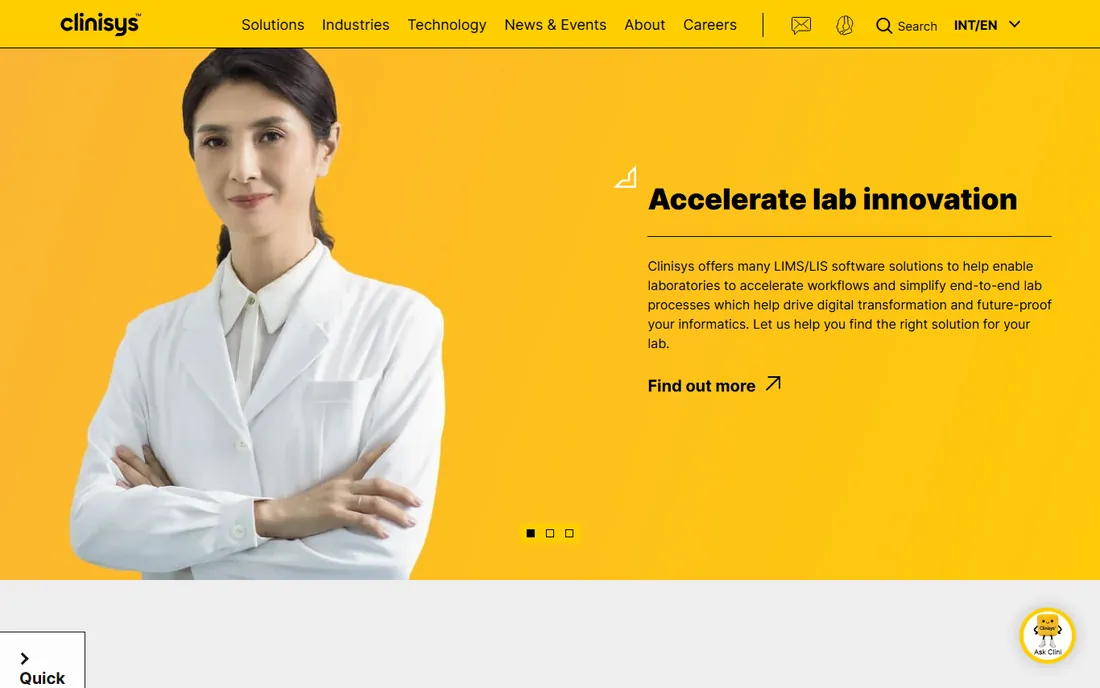
Orchard Software's LIS now lives under the Clinisys name, but the product's reputation was built over three decades. Orchard, founded in 1993 in Carmel, Indiana, became one of the most widely deployed LIS vendors in the US, with systems in hundreds of hospital, reference, physician-office and public health laboratories. The orchardsoft.com domain now redirects to clinisys.com, reflecting the acquisition.
The product strengths carry over. Orchard Harvest LIS was designed by laboratorians for the realities of clinical workflows: toxicology, microbiology, molecular and anatomic pathology, with a rules engine for workflow automation. Integration is the calling card, with deep instrument, billing, EMR/EHR and reference lab interfaces, plus outreach modules (Copia, Webstation) for remote order entry and results delivery.
The wrinkle is the transition. Evaluating "Orchard" now means evaluating Clinisys, and product roadmaps under new ownership deserve direct questions. Pricing is quote-only. For clinical labs that want a proven LIS with deep outreach and interfacing experience, the Orchard lineage remains a strong credential.
What we like- Decades of clinical LIS expertise via the Orchard acquisition
- Strong instrument, billing and EMR interfaces
- Outreach modules for reference labs
Watch out for- The Orchard brand now lives under Clinisys, which complicates evaluation
- Quote-only pricing
#10
NovoPath
Best for: pathology labs moving to cloud and digital pathology
Visit novopath.com
Starting priceSee website
Free planNo
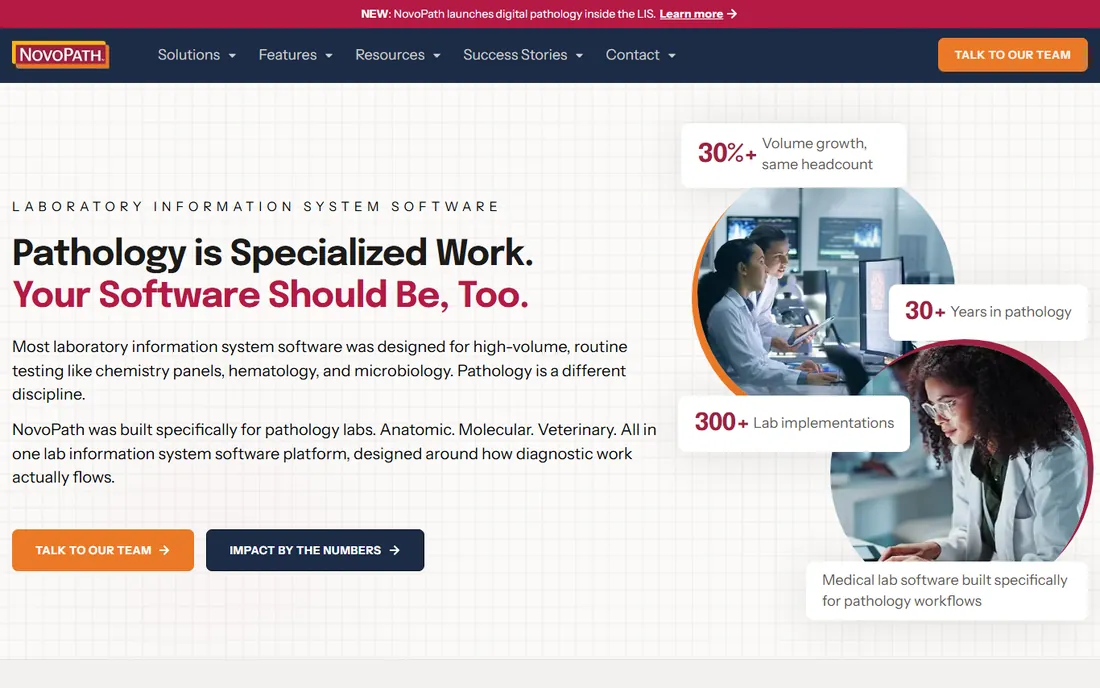
NovoPath is the cloud-native challenger in pathology, and its September 2026 launch put digital pathology inside the LIS itself. Instead of bolting an image management system onto the LIS with interfaces between separate databases, the new NovoPath 360 platform keeps the case, the slides, the report and the lab workflow in one system.
That matters because pathology is going digital and the software has lagged. Roughly one in ten US labs has adopted digital pathology, and the add-on architecture means pathologists read in one system and report in another. NovoPath's built-in approach removes that friction, with one source of truth for pathologists, the lab and the business. The Bridgewater, New Jersey company serves more than 300 laboratories and delivers the platform as SaaS with interoperability to 150-plus EMRs.
The scope is deliberately narrow: this is anatomic and molecular pathology, not a general clinical LIS. Pricing is quote-only. For pathology groups planning a digital transition, NovoPath is the modern alternative to legacy on-premise systems. For general clinical labs, the broader LIS vendors above fit better.
What we like- Cloud-native LIS built for pathology
- Digital pathology workflow built in (September 2026)
- Used by 300-plus laboratories
Watch out for- Pathology-focused, not a general clinical LIS
- Quote-only pricing
- Younger vendor than legacy competitors
How we chose
We researched vendor documentation, product materials and pricing pages in October 2026, and cross-referenced public reviews and lab informatics comparisons for the gaps vendors omit. Every price above comes from the vendor's own site; the enterprise LIMS and LIS market is overwhelmingly quote-based, so where vendors do not publish pricing we say so rather than repeating estimates. We covered both LIS (clinical diagnostic labs) and LIMS (research, pharma, industrial labs) because buyers frequently confuse the two, and included affordable options alongside enterprise platforms since lab budgets vary enormously.
LIS vs LIMS: which one do you actually need
A laboratory information system (LIS) manages the clinical testing workflow: orders arrive from physicians and EHR systems via HL7, the LIS routes them to instruments, applies reference ranges, flags abnormal values and returns verified results to the patient record. It is built for high-volume standardized testing on patient samples. A laboratory information management system (LIMS) manages samples, tests and data in research, pharmaceutical, environmental and industrial labs, with heavier emphasis on configurable workflows, regulatory documentation and instrument integration.
Most large organizations need both, connected by an interface that passes result data from LIMS to LIS. If you run a hospital or reference lab processing patient samples, shortlist the LIS vendors (Clinisys/Orchard, NovoPath for pathology). If you run a research, QC or testing lab, shortlist the LIMS vendors (LabWare, STARLIMS, LabVantage, SampleManager, LabLynx, CloudLIMS, LabCollector, Labguru). Buying a LIMS for a clinical lab, or an LIS for a research lab, is the most expensive mistake in this category.
Also confirm the compliance bar early. Clinical labs need HIPAA and CLIA-friendly controls; pharma and food labs need 21 CFR Part 11, GMP or ISO 17025. Every vendor on this list claims compliance, but the depth varies enormously. Ask for the validation documentation and customer references in your specific regulatory environment before shortlisting.
How lab software implementations go wrong
The first failure mode is underestimating services. Enterprise LIMS and LIS implementations are measured in months and the services bill often rivals the license cost. Vendors quote software; the real project includes workflow analysis, configuration, instrument interfacing, validation, training and go-live support. Get the services estimate in writing during evaluation.
The second failure mode is interface optimism. Lab software lives or dies by its connections to instruments, EHRs and billing systems. Every vendor lists HL7, ASTM and API support, but the quality of specific interfaces varies. Ask for the exact interface list for your instruments and EHR, with reference customers running the same combinations. A missing or flaky interface can stall a go-live for months.
The third failure mode is buying for today. Labs consolidate, add test menus and acquire other labs. A system that fits a single site may not handle multi-site operations, outreach billing or molecular testing added later. Ask vendors how their customers grew on the platform and what the upgrade path looks like. The cheapest system that fits today is often the most expensive one over five years.
Frequently asked questions
What is the difference between LIS and LIMS software?
LIS (laboratory information system) software manages clinical diagnostic workflows: test orders, specimen tracking, instrument interfacing and results reporting for patient samples, usually integrated with EHR systems. LIMS (laboratory information management system) software manages samples, tests and data in research, pharmaceutical, environmental and industrial labs with configurable workflows and regulatory documentation. Clinical labs need LIS; research and QC labs need LIMS.
How much does LIS and LIMS software cost?
Enterprise LIMS and LIS platforms (LabWare, STARLIMS, LabVantage, SampleManager) are quote-only, typically running into six figures for licenses plus comparable services fees. Mid-market options like LabCollector publish pricing from $35 per user per month. Cloud and SaaS options reduce infrastructure costs but not implementation effort. Always get services estimates in writing, since they often match or exceed the license cost.
What is the best LIMS software for a small lab?
For small labs, LabCollector ($35/user/month) and Labguru offer real LIMS functionality without enterprise budgets or implementations. CloudLIMS provides pure SaaS delivery for labs without IT staff. Research labs should also consider Benchling. The enterprise platforms are overkill below a certain scale; the implementation alone would exceed a small lab's entire software budget.
How long does a LIMS implementation take?
It depends on the platform and complexity. SaaS products like LabCollector, Labguru or CloudLIMS can be live in weeks. Enterprise platforms (LabWare, STARLIMS, LabVantage, SampleManager) typically take 6 to 18 months including workflow analysis, configuration, instrument interfacing, validation and training. Clinical LIS implementations fall in a similar range. The interfacing and validation work, not the software installation, consumes most of the timeline.
Can LIMS software integrate with our instruments and EHR?
Yes, but verify the specifics. Most platforms support HL7 and ASTM interfaces for clinical systems and offer instrument drivers or APIs for lab equipment. The quality varies by vendor and by instrument: ask for the exact interface list covering your instruments and EHR, plus reference customers running the same combinations. Thermo Fisher's SampleManager has the deepest integration with Thermo instruments; for mixed environments, confirm third-party driver availability during evaluation.
Sources we checked (10)
- https://www.labware.com/
- https://www.starlims.com/
- https://www.labvantage.com/
- https://www.thermofisher.com/
- https://www.lablynx.com/
- https://cloudlims.com/
- https://labcollector.com/pricing
- https://www.labguru.com/
- https://www.clinisys.com/
- https://www.novopath.com/
Is your product missing or out of date?
We review this list regularly. Vendors can request a listing, send updated pricing or ask about featured placement.

Shihab Mia · Founder, Rankite
Shihab has spent more than a decade helping SaaS and e-commerce brands grow through search. He writes Rankite's software buying guides from pricing pages, documentation and public user reviews. More about Shihab.