How we make this list: we compare pricing pages, product documentation and public user reviews. Rankite is independent; if a vendor ever pays for a featured spot, that listing is clearly labeled Partner.
Key takeaways
- FiscalNote and Bloomberg Government lead for federal-heavy operations with budget for premium intelligence, while Quorum is the all-rounder for advocacy plus tracking.
- Plural is the modern choice for state-level tracking at scale, and its OpenStates acquisition added a free data tier.
- LegiScan and BillTrack50 serve buyers who want affordable, data-focused tracking without an enterprise platform.
- FastDemocracy and Muster fit advocacy-driven organizations that need tracking connected to grassroots action.
Quick comparison
| Tool | Best for | Starting price | Free plan |
|---|
 FiscalNote FiscalNote | Federal policy teams with serious budgets | See website | No |
 Quorum Quorum | Organizations combining tracking with advocacy | See website | No |
 Plural Plural | Modern state-level legislative tracking | See website | No |
 Bloomberg Government Bloomberg Government | Federal affairs professionals and contractors | See website | No |
 LegiScan LegiScan | Affordable legislative data and API access | See website | No |
 BillTrack50 BillTrack50 | Straightforward multi-state bill tracking | See website | No |
 FastDemocracy FastDemocracy | Advocacy organizations and nonprofits | See website | No |
 Muster Muster | Grassroots advocacy with legislative context | See website | No |
Is your product missing or out of date?
We review this list regularly. Vendors can request a listing, send updated pricing or ask about featured placement.
The best legislative tracking software
Starting priceSee website
Free planNo
FiscalNote built its name on applying data science to federal policymaking: tracking bills, regulations and legislators, then predicting outcomes and recommending action. For corporate government affairs teams and large associations focused on Washington, the combination of data, workflow tools and human analysts is the most complete package in the market.
The pricing reflects that positioning, with enterprise contracts as the norm. State-level coverage exists but is not the product's strongest suit compared with state specialists like Plural. If your world is Congress and federal agencies, FiscalNote is the benchmark everything else is measured against.
What we like- Deepest federal policy data and analysis
- Predictive analytics
- Strong analyst support
Watch out for- Enterprise pricing
- State coverage is thinner than specialists
#2
Quorum
Best for: Organizations combining tracking with advocacy
Visit quorum.us
Starting priceSee website
Free planNo
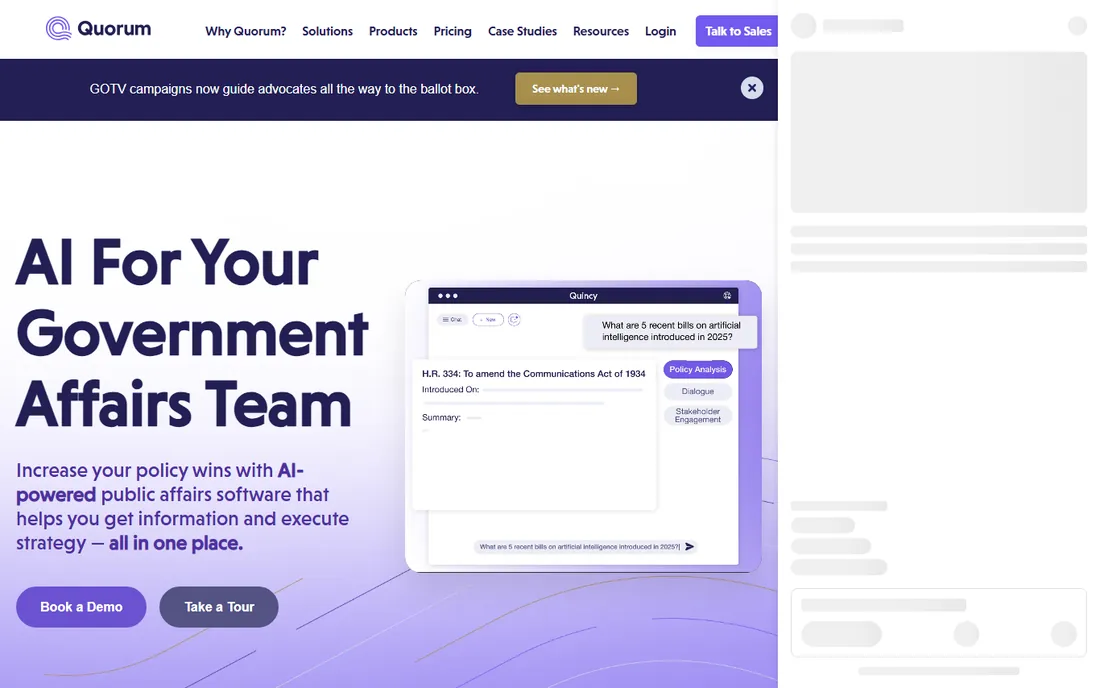
Quorum's argument is that tracking bills is only half the job; the other half is acting on them. The platform combines legislative monitoring with grassroots advocacy, stakeholder engagement and PAC management, so the alert about a bill and the campaign to influence it live in one system. The legislator database, enriched by the GovPredict acquisition, is a genuine asset.
Pricing is quoted per organization. For pure federal intelligence depth, FiscalNote still leads. But for associations, nonprofits and companies that run advocacy campaigns, not just monitoring, Quorum's unified approach saves the integration work of stitching separate tools together.
What we like- Tracking, grassroots and PAC tools in one
- Strong legislator contact data
- Modern UX
Watch out for- Quote-based pricing
- Federal depth trails FiscalNote
Starting priceSee website
Free planNo
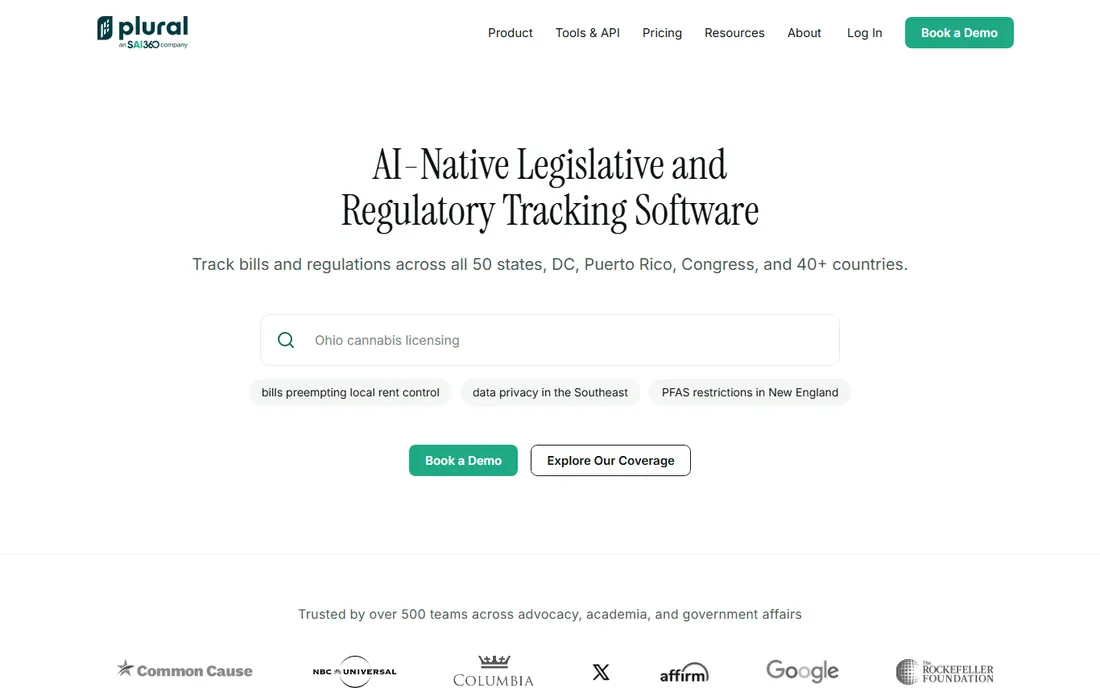
Plural took the state legislatures seriously before most competitors did, and it shows in the coverage: all fifty states with clean data, fast alerts and an interface that does not feel like a government database from 2004. Policy teams tracking legislation across many states get consistent data and workflows instead of fifty different experiences.
The acquisition of OpenStates added an open-data tier to the ecosystem, which is good for the whole field. Federal tracking is present but less deep than the Washington specialists. For multi-state monitoring, Plural is the most modern and most pleasant tool available.
What we like- Excellent state coverage
- Clean modern interface
- OpenStates open data project
Watch out for- Federal features are newer
- Pricing requires a sales call
#4
Bloomberg Government
Best for: Federal affairs professionals and contractors
Visit bgov.com
Starting priceSee website
Free planNo
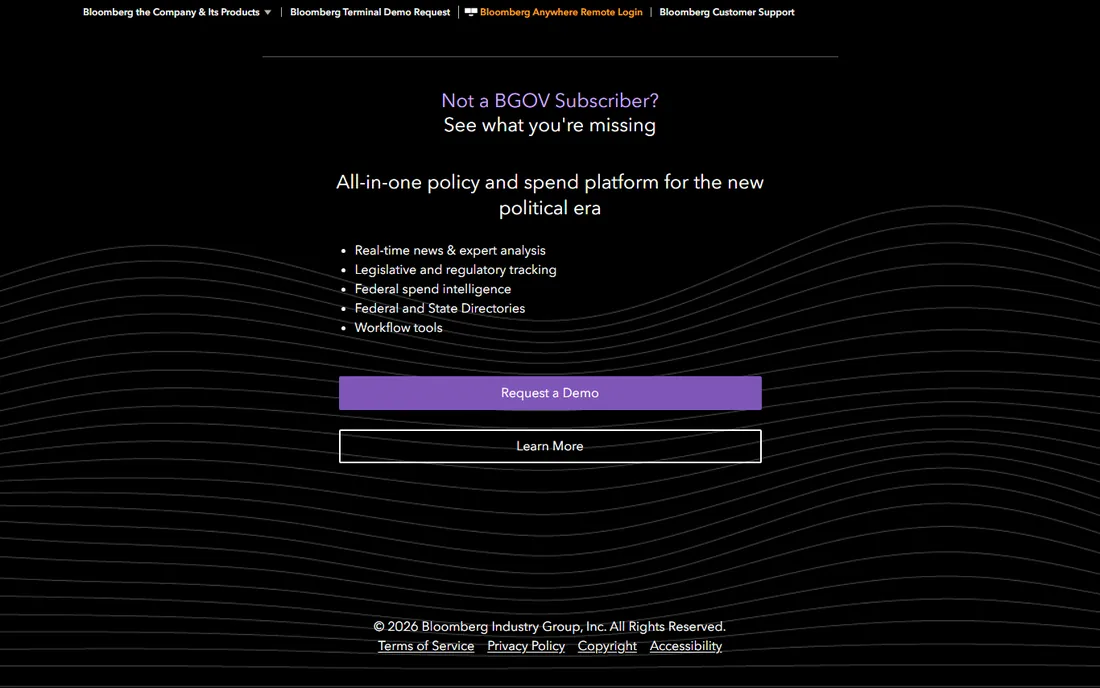
Bloomberg Government brings Bloomberg's formidable newsroom and data operation to government affairs. Beyond bill tracking, it covers federal contracting opportunities, agency spending and regulatory developments, with analysts available to brief your team. For government contractors and federal-focused associations, the contracting intelligence alone can justify the subscription.
This is premium-priced software for federal workflows. State and local tracking is not the focus. Organizations whose government affairs begin and end in Washington, especially those chasing federal contracts, get the most value.
What we like- Bloomberg's news and data machine behind it
- Strong federal contracting intelligence
- Analyst access
Watch out for- Premium pricing
- Built for federal, not state, workflows
Starting priceSee website
Free planNo
LegiScan is the data layer of legislative tracking. Instead of a polished advocacy suite, it offers comprehensive bill data, status updates and documents across federal and state governments, with an API that developers actually like using. Organizations that want to build their own dashboards or feed legislative data into internal systems start here.
The trade-off is workflow. There is no grassroots module, no stakeholder CRM, no campaign tooling. The web interface is functional. But for the price, the data quality and coverage are hard to beat, and many larger platforms sit on data pipelines not much better than this.
What we like- Low-cost data access
- Well-documented API
- National coverage
Watch out for- Data-first, not workflow-first
- Interface is utilitarian
Starting priceSee website
Free planNo
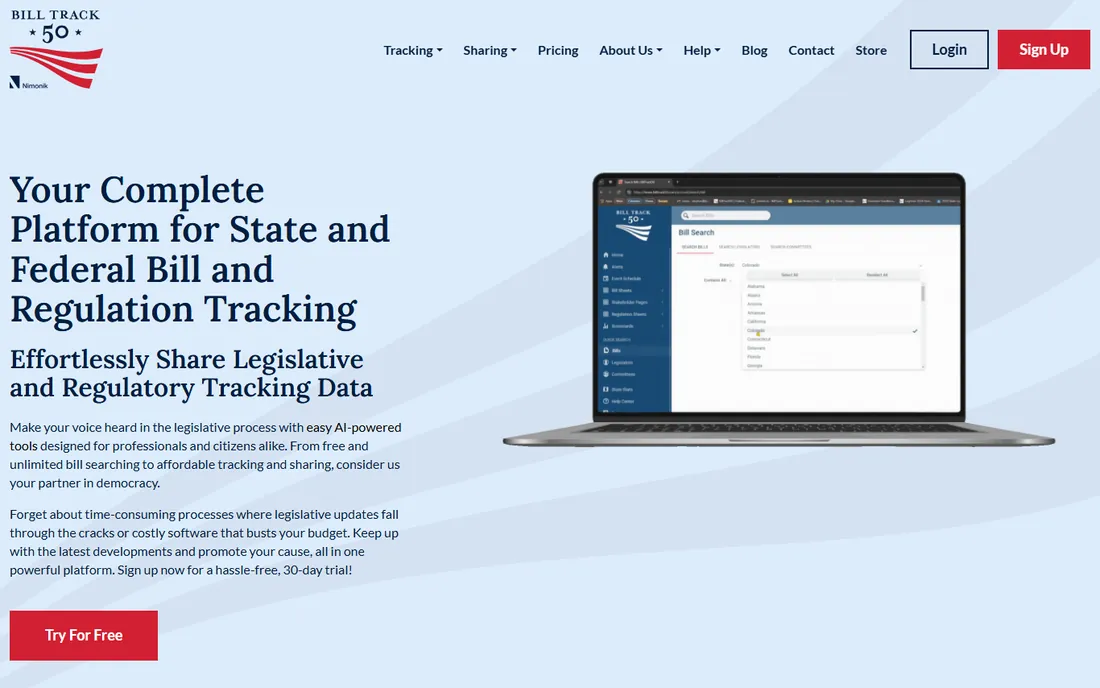
BillTrack50 does the core job without ceremony: track bills across all fifty states and Congress, get alerts when they move, read the texts and summaries. Small associations, law firms and companies with a focused issue set appreciate that it does not require training to use or an enterprise contract to buy.
Advanced features like predictive analytics and advocacy campaigning live elsewhere. The reporting is solid for the basics. For buyers who want reliable tracking at a reasonable price without the platform weight, BillTrack50 is the honest choice.
What we like- Simple to use
- All fifty states
- Affordable positioning
Watch out for- Fewer advanced analytics
- Smaller feature set than enterprise tools
Starting priceSee website
Free planNo
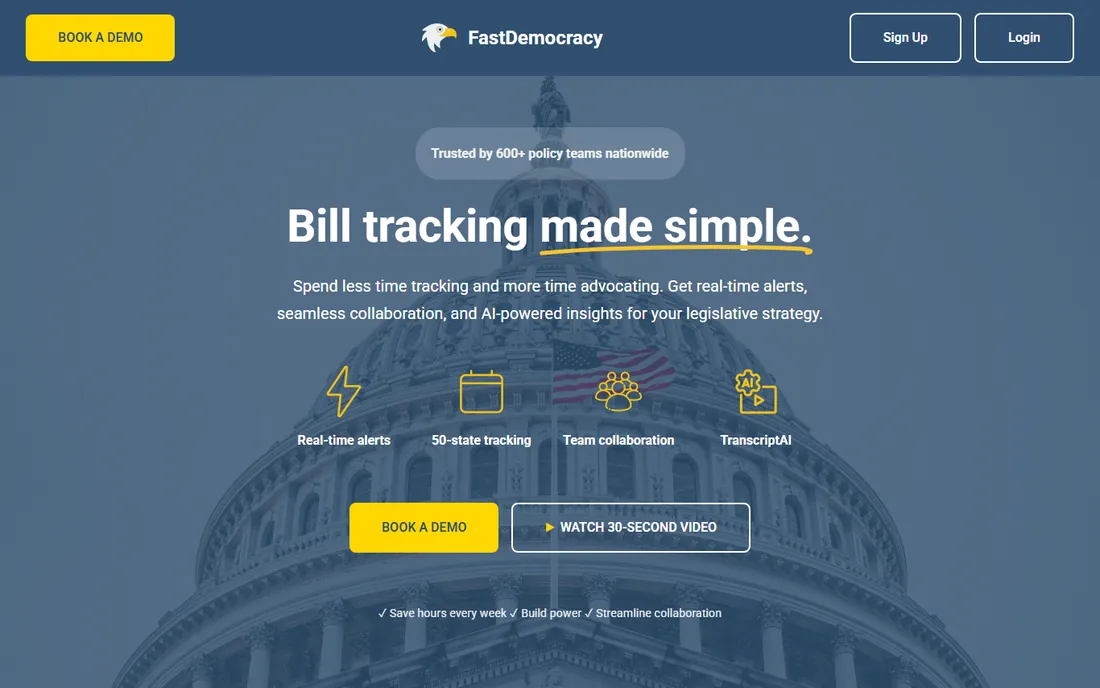
FastDemocracy comes from the advocacy world rather than the corporate government affairs world. Bill tracking connects directly to legislator targeting and campaign tools, so a nonprofit can spot a relevant bill and mobilize supporters around it without changing systems. The pricing is positioned for organizational budgets, not enterprise ones.
Corporate government affairs teams with complex federal needs will find it lighter than FiscalNote or Bloomberg Government. But for advocacy organizations where tracking serves campaigning, the workflow fit is better than the bigger platforms' feature lists suggest.
What we like- Built for advocacy workflows
- Bill tracking with legislator targeting
- Accessible pricing
Watch out for- Less depth for corporate government affairs
- Smaller data operation
#8
Muster
Best for: Grassroots advocacy with legislative context
Visit muster.com
Starting priceSee website
Free planNo
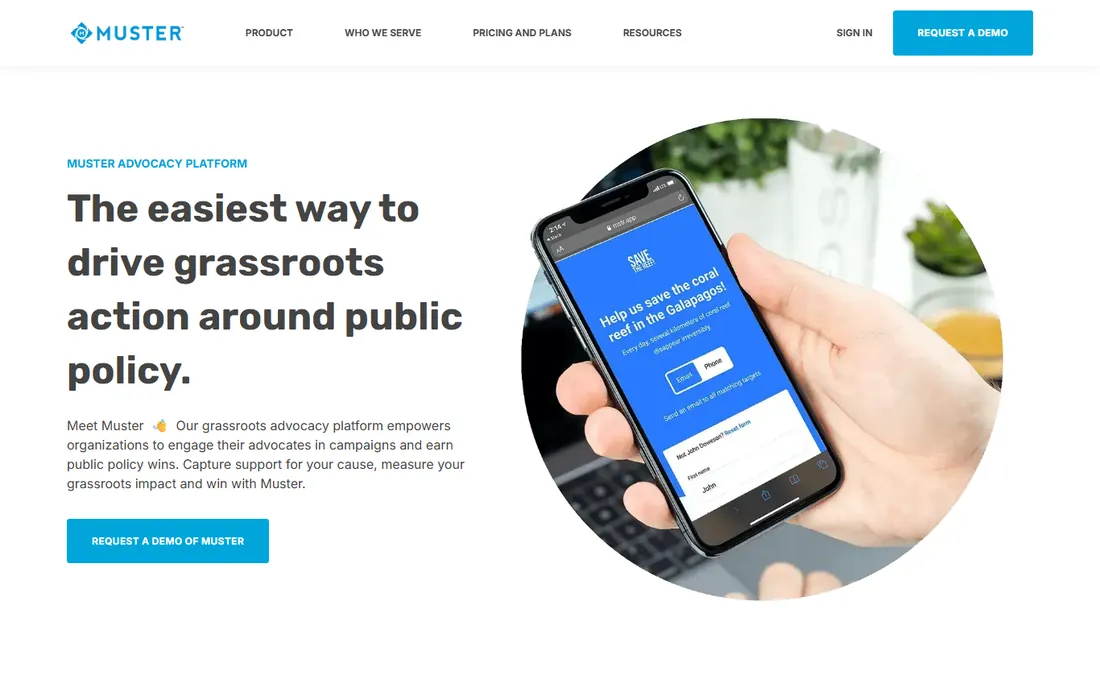
Muster leads with grassroots: mobilizing supporters, matching them to their legislators and measuring campaign impact. Legislative tracking provides the context that makes those campaigns timely, with bill alerts feeding directly into action centers. Associations with large memberships get the most from the combination.
If your primary need is monitoring hundreds of bills across many jurisdictions, the pure tracking specialists go deeper. Muster's strength is what happens after the alert: turning awareness into constituent contacts. For member-driven organizations, that is usually the more valuable half.
What we like- Strong grassroots mobilization tools
- Legislator matching
- Campaign analytics
Watch out for- Tracking depth is secondary to advocacy
- Quote-based pricing
How we chose
We looked for software that actively tracks legislation in 2026 across federal and state governments, with real customers in government affairs, advocacy and related fields. We checked vendor documentation and industry coverage, and favored tools with verifiable current offerings. Pricing in this category is almost entirely quote-based, so we compared on coverage, workflow fit and audience. Data providers, workflow platforms and advocacy tools are all represented because buyers mix them.
Start with your jurisdiction. A federal-only operation and a fifty-state operation need different tools, and few products do both equally well. List the legislatures you actually need to watch before looking at features. Then list what happens after the alert: does someone need to brief an executive, mobilize members, or file a comment? The answer decides whether you need a data tool, a workflow platform or an advocacy suite.
Consider who does the watching. A dedicated government affairs team can run a complex platform; a policy director splitting time across five jobs needs alerts that arrive pre-prioritized. Finally, check the legislator and staff contact data quality for your states. Stale contact data silently kills advocacy, and data freshness varies more than vendors admit.
Ask for a trial built around your real issues, not the vendor's demo script. Give them five bills you care about and see how the alerts, summaries and legislator profiles look for those specific items. The quality of the product on your issues, in your states, is the only evaluation that matters. A platform that shines on federal tax policy may be mediocre on state occupational licensing, and you will only learn that from your own test.
The consolidation trend
This market keeps consolidating. Quorum absorbed GovPredict, Plural absorbed OpenStates, and the big platforms keep adding modules. Consolidation brings integrated workflows, but it also means fewer independent choices and pricing power concentrated in fewer vendors.
For buyers, the practical advice is to avoid over-buying the suite. A small nonprofit does not need an enterprise advocacy platform, and a federal contractor does not need grassroots tools. Buy the tracking depth your jurisdictions require and the workflow your team will actually use. The all-in-one pitch is only valuable if you use all of it.
Frequently asked questions
What is legislative tracking software?
It is software that monitors bills, regulations and legislative activity across governments, alerting you when relevant items move. Advanced platforms add legislator data, analytics, stakeholder management and advocacy tools. Users include corporate government affairs teams, associations, nonprofits and law firms.
How much does legislative tracking software cost?
Most enterprise platforms are priced by quote based on organization size and coverage needs. Data-focused tools like LegiScan and BillTrack50 are positioned more affordably. Expect annual contracts. Always ask exactly which jurisdictions and how many users the quote covers.
Do I need federal and state tracking?
It depends on where your issues live. Regulated industries often need both. Many organizations start with the level where most of their risk sits, then expand. Few tools do both equally well, so be honest about which matters more.
What is the difference between tracking and advocacy software?
Tracking software monitors what legislatures do. Advocacy software helps you influence it: mobilizing supporters, contacting legislators, running campaigns. Platforms like Quorum, FastDemocracy and Muster combine both; data tools like LegiScan focus on tracking alone.
Can small nonprofits afford these tools?
Yes, with the right tier. BillTrack50, FastDemocracy and LegiScan are positioned for organizational budgets. Enterprise platforms offer nonprofit pricing in some cases, but the sales process still takes time. Start with your jurisdiction list and get quotes from two affordable options before talking to the enterprise vendors.
How do alerts work?
You define search terms, bill numbers, committees or issue areas, and the system notifies you when matching items are introduced, amended, scheduled or voted on. Alert quality, meaning relevance without noise, is one of the biggest differences between platforms and is worth testing during a trial.
Sources we checked (8)
- https://fiscalnote.com
- https://www.quorum.us
- https://pluralpolicy.com
- https://www.bgov.com
- https://legiscan.com
- https://www.billtrack50.com
- https://fastdemocracy.com
- https://www.muster.com
Is your product missing or out of date?
We review this list regularly. Vendors can request a listing, send updated pricing or ask about featured placement.

Shihab Mia · Founder, Rankite
Shihab has spent more than a decade helping SaaS and e-commerce brands grow through search. He writes Rankite's software buying guides from pricing pages, documentation and public user reviews. More about Shihab.