How we make this list: we compare pricing pages, product documentation and public user reviews. Rankite is independent; if a vendor ever pays for a featured spot, that listing is clearly labeled Partner.

Key takeaways
- OptinMonster is the pick for marketers who want the deepest targeting and behavior rules, while Thrive Leads is the only WordPress-native plugin on this list.
- Poptin is the friendliest budget option with a real free plan for up to 1,000 visitors a month, and it also covers basic email marketing.
- Privy and Justuno are built around ecommerce list growth, with Privy pairing popups with email and SMS, and Justuno adding AI timing and visitor identification.
- Trial lengths range from 14 to 15 days, so you can test two or three tools on real traffic before paying anything.
Quick comparison
| Tool | Best for | Starting price | Free plan |
|---|
 OptinMonster OptinMonster | Marketers and content sites that want behavior-driven popups | From $7/month | No (14-day money-back guarantee) |
 Poptin Poptin | Small businesses that want a genuine free plan plus email marketing | See website | Yes (up to 1,000 visitors/month) |
 Thrive Leads Thrive Leads | WordPress sites that want a native plugin instead of a cloud tool | See website | No (30-day money-back guarantee) |
 Privy Privy | Shopify and other ecommerce stores growing email and SMS lists | $30/month | Free trial (15 days) |
 Justuno Justuno | Growing brands that want AI-timed popups plus hands-on agency services | $59/month | Free trial (14 days) |
 Sleeknote Sleeknote | Ecommerce teams that want polished design and gamification | See website | Free trial (14 days) |
 Personizely Personizely | Marketers who want widgets beyond popups, like bars and product recommendations | See website | See website |
 Getsitecontrol Getsitecontrol | Small sites that want popups, promo bars, surveys, and forms in one app | See website | See website |
Is your product missing or out of date?
We review this list regularly. Vendors can request a listing, send updated pricing or ask about featured placement.
Lead capture software, head to head
Starting priceFrom $7/month
Free planNo (14-day money-back guarantee)
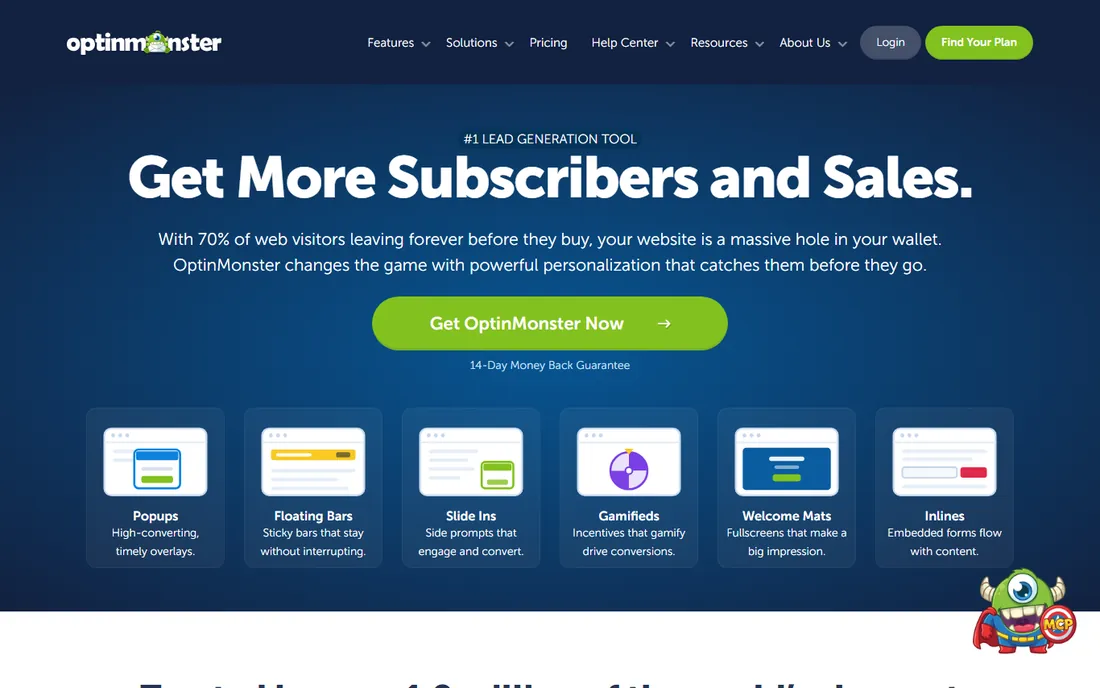
OptinMonster earns the top spot because its display rules go deeper than most competitors bother to. You can trigger campaigns by exit intent, scroll depth, time on page, referral source, geolocation, cart contents, visit history, and whether the visitor is already subscribed. The product covers popups, floating bars, slide-ins, full-screen welcome mats, gamified wheels, and inline forms, so one account can run every capture format a site needs.
The standout feature for store owners is revenue attribution, which connects each campaign to real sales instead of just email signups. That makes it easier to justify the subscription when the renewal comes up. The tradeoff is the pricing model: you pay by campaign impressions rather than pageviews, and annual billing is the default. Still, for marketers who live in their data, it is the most complete option here.
What we like- Patented exit-intent technology, highly detailed display rules, revenue attribution ties campaigns to sales
Watch out for- No free plan, plans bill annually by default, pricing is based on campaign impressions
#2
Poptin
Best for: Small businesses that want a genuine free plan plus email marketing
Visit poptin.com
Starting priceSee website
Free planYes (up to 1,000 visitors/month)
Poptin is the only tool on this list that combines popups with its own email marketing builder, which is convenient for small teams that do not want two subscriptions. The free account covers up to 1,000 monthly visitors and includes the drag-and-drop popup editor, exit-intent triggers, A/B testing, and advanced targeting rules. You can sign up without a credit card, so testing it costs nothing but setup time.
Beyond popups, you get contact management with segments, website visitor tracking, email campaigns with a drag-and-drop builder, and workflow automations. The 70+ native integrations cover the major email platforms and CRMs. The catch is that the paid Growth plan price is not displayed on the pricing page without starting the signup flow, so budget planning takes an extra step. For lean teams that want popups and follow-up email in one place, Poptin is a strong value pick.
What we like- Free plan with no credit card required, 70+ native integrations, built-in email builder and automations
Watch out for- Paid plan pricing is not shown on the pricing page, advanced features are gated to higher tiers, visitor-based limits scale fast
#3
Thrive Leads
Best for: WordPress sites that want a native plugin instead of a cloud tool
Visit thrivethemes.com
Starting priceSee website
Free planNo (30-day money-back guarantee)
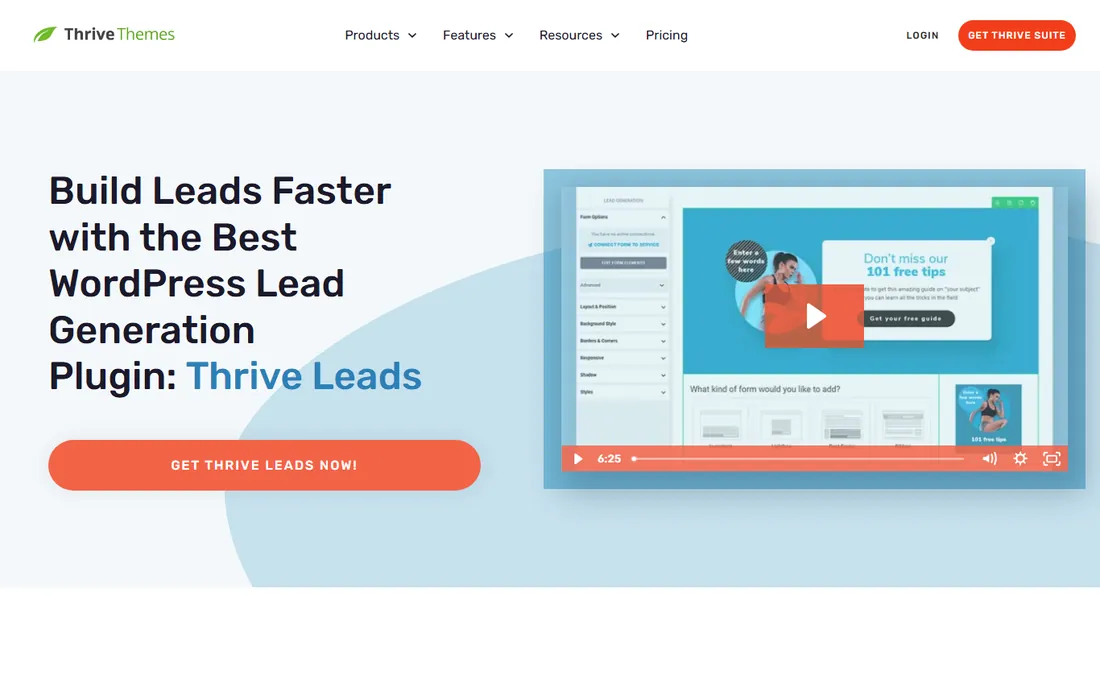
Every other tool on this list is a cloud service that injects code into your site. Thrive Leads is different: it is a WordPress plugin that lives in your own dashboard. That matters if you prefer your lead data to flow through your own server first, and it means no monthly impression limits to worry about. It ships every form type you would expect, including popups, sticky ribbons, inline forms, two-step opt-ins, slide-ins, sidebar widgets, full-screen overlays, content locks, and scroll mats.
Two features stand out for publishers. SmartLinks lets you hide forms from people who already subscribed, so existing readers see a different offer. SmartExit detects exit intent for desktop visitors. A/B testing and detailed reporting are built in, and direct API integrations cover ActiveCampaign, ConvertKit, Mailchimp, HubSpot, and many more. The plugin is WordPress-only, which is a hard limit for Shopify or Wix sites, but for a WordPress site it is the most native-feeling option here.
What we like- Runs inside WordPress with a drag-and-drop editor, SmartLinks and SmartExit personalize offers, works with dozens of email services via direct API
Watch out for- WordPress only, no hosted dashboard outside wp-admin, pricing requires visiting the Thrive Themes site
#4
Privy
Best for: Shopify and other ecommerce stores growing email and SMS lists
Visit privy.com
Starting price$30/month
Free planFree trial (15 days)
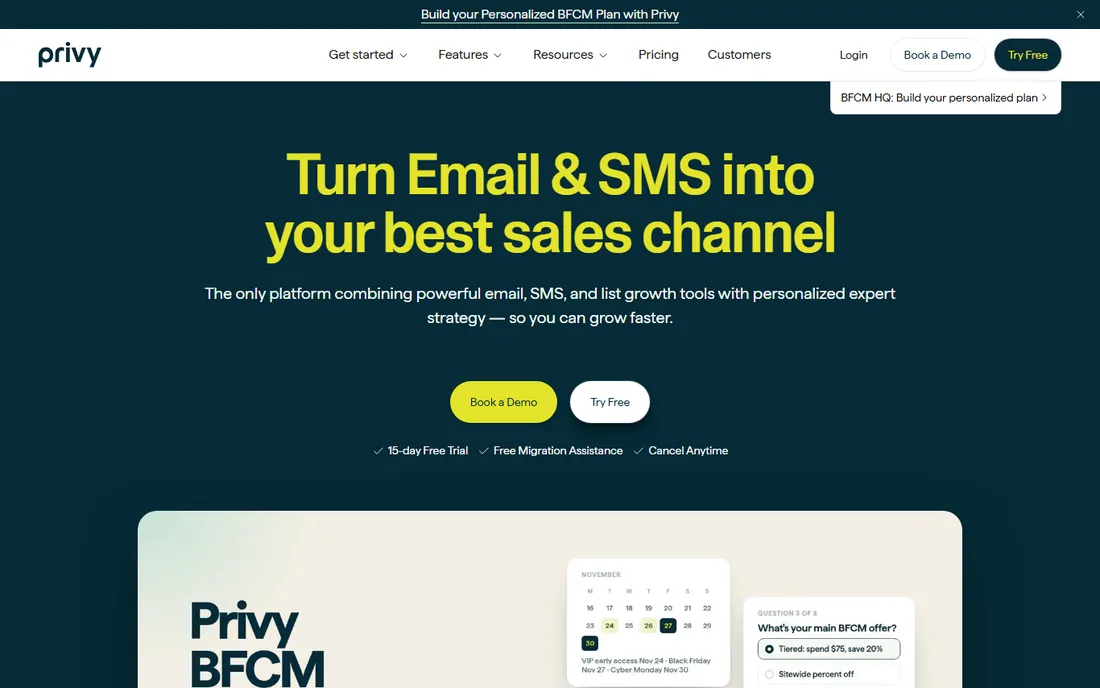
Privy positions itself as a full customer-journey platform for ecommerce, and list growth is where it starts. The popup tools include exit-intent offers, spin-to-win games, cart savers, cross-sell popups, multi-step forms, and embedded forms, with targeting and A/B testing included. Collected contacts sync automatically to your Shopify, BigCommerce, or Wix account, and selected third-party platforms like Klaviyo.
What separates Privy from a pure popup tool is that the same account sends the follow-up: email campaigns and automations plus SMS with credits included in the entry plan. Pricing starts at $30 per month based on mailable contacts, with unlimited email sends and no annual contract required. The downside is that contact-based pricing gets expensive as your list grows, and publishers or lead-gen sites will find the ecommerce-first design less relevant. For stores that want capture and follow-up under one roof, it is a coherent package.
What we like- Popups, email, and SMS in one platform, built for ecommerce from the start, 15-day free trial with no credit card
Watch out for- Pricing scales with mailable contacts, the focus is clearly ecommerce rather than publishers
#5
Justuno
Best for: Growing brands that want AI-timed popups plus hands-on agency services
Visit justuno.com
Starting price$59/month
Free planFree trial (14 days)
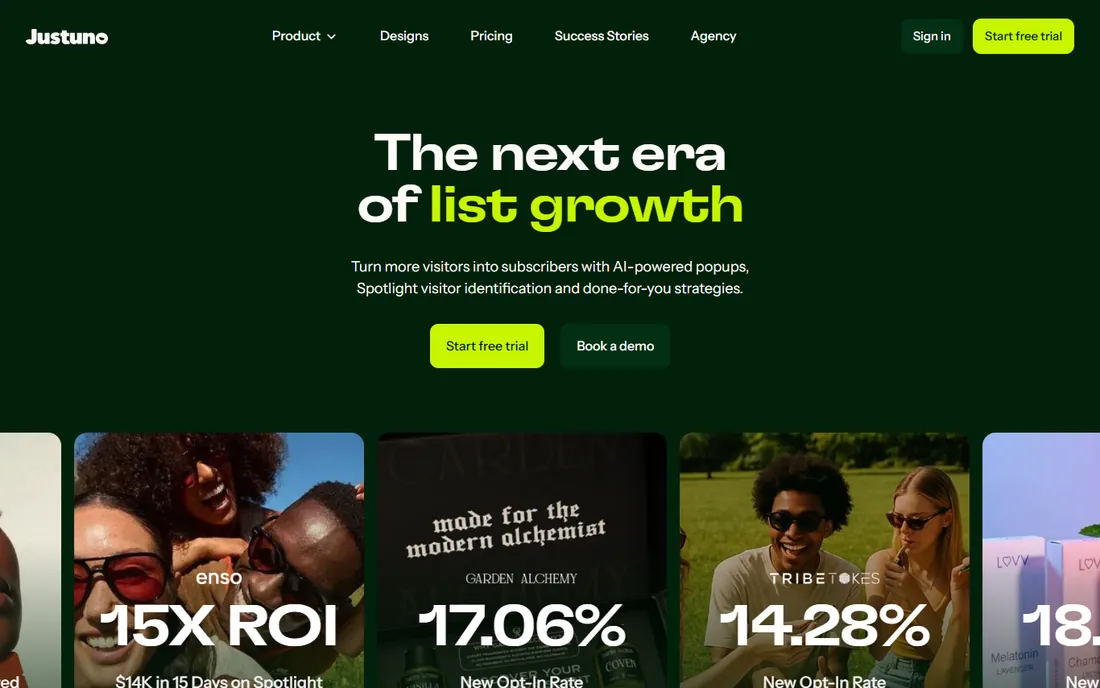
Justuno markets itself as a list growth platform rather than a popup plugin, and the difference shows in the feature set. AI Smart Timing watches real-time visitor behavior and fires popups when shoppers are most likely to engage, rather than on fixed timers. The platform also includes visitor identification, which pairs with the popup tools so more of your traffic turns into reachable contacts. Multivariate testing, custom segments, and visitor profiles come standard.
The plans are priced by monthly visitors, starting at $59 per month for up to 10,000 visitors, with a 14-day free trial. There is also a $299-per-month done-for-you tier where Justuno experts run your retention strategy for you. That is the highest entry price on this list, so Justuno makes the most sense for stores already doing real revenue, where a small lift in opt-in rate pays for the subscription quickly.
What we like- AI Smart Timing launches popups when visitors are most likely to engage, visitor identification pairs with popups, white-glove onboarding included
Watch out for- Highest starting price on this list, pricing is based on monthly visitors, done-for-you service tier costs $299/month
#6
Sleeknote
Best for: Ecommerce teams that want polished design and gamification
Visit sleeknote.com
Starting priceSee website
Free planFree trial (14 days)
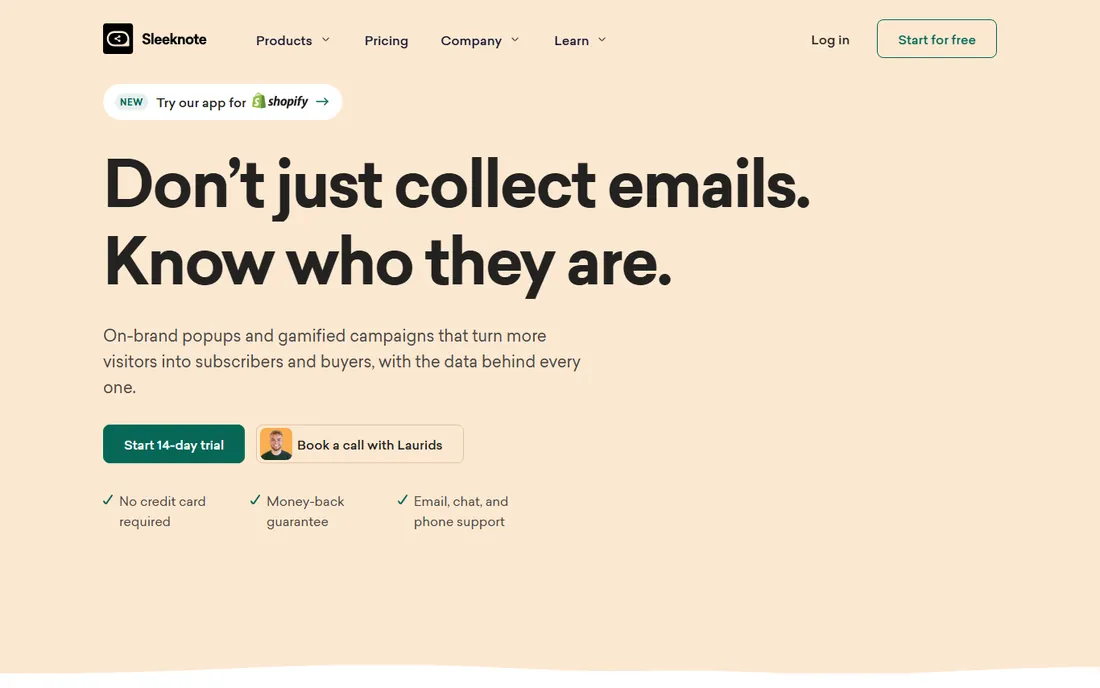
Sleeknote is the design-conscious entry on this list. The pitch is simple: pick from more than 120 templates that have been tested across billions of sessions, match them to your brand with drag-and-drop editing, and launch the same day without a designer or developer. Gamification formats like spin-to-win and pick-a-gift are built in, which fits stores that use playful campaigns for first-order discounts.
Targeting covers exit intent, geolocation, scheduling, page rules, and hiding campaigns from existing subscribers. Analytics go deeper than a conversion count, with performance charts, conversion goals, device-specific data, and events you can send to Google Tag Manager. The pricing page describes visitor-based plans and a 20% annual discount but does not display the numbers, so you have to start a trial or contact the team. The 14-day free trial carries everything you collect into the paid plan if you convert.
What we like- 120+ tested popup templates, built-in gamification formats, advanced analytics with A/B split testing
Watch out for- No free plan, pricing is not displayed on the pricing page, plans are measured by visitors
#7
Personizely
Best for: Marketers who want widgets beyond popups, like bars and product recommendations
Visit personizely.net
Starting priceSee website
Free planSee website
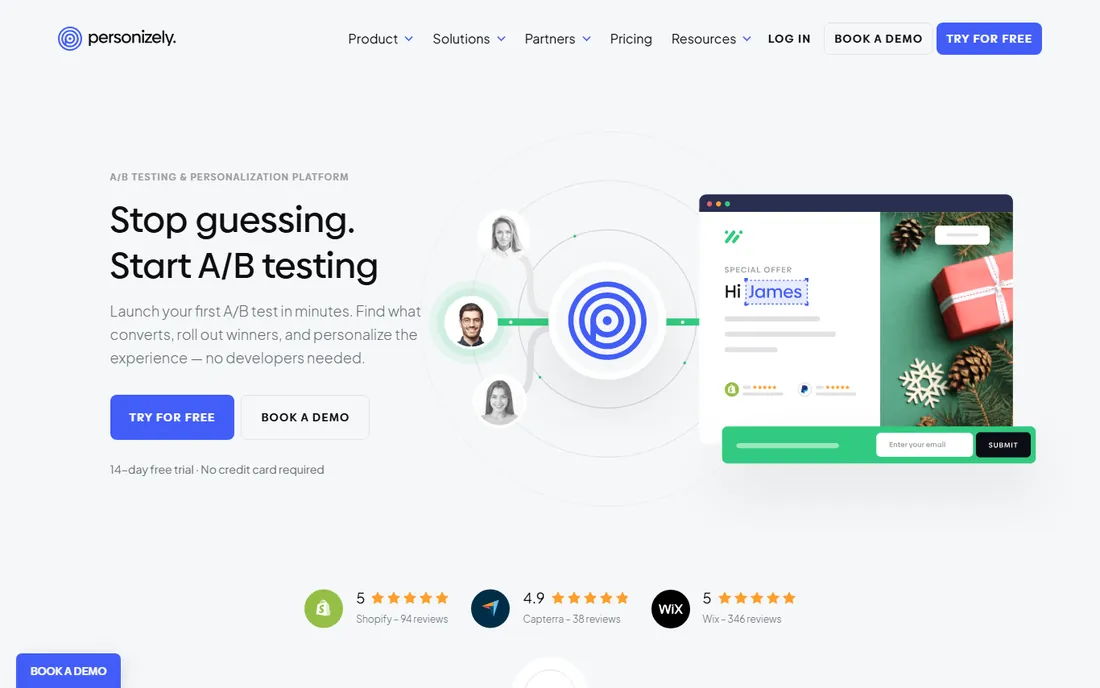
Personizely takes the lead capture idea and stretches it into a broader conversion widget kit. Alongside popups and slide-ins, it offers smart bars, embedded forms, product recommendations, and upsell or cross-sell widgets, so the same platform can handle both list growth and on-site merchandising. That makes it interesting for stores that want to test many small persuasion elements without installing a separate app for each one.
The popup tools include exit-intent triggers and audience targeting, and the analytics show how each widget performs. Because the company does not publish pricing or free plan details on its public pages, you will need to sign up or contact them to see what fits your traffic. If you want one lightweight tool that covers popups plus merchandising widgets, Personizely deserves a trial slot.
What we like- One tool covers popups, announcement bars, upsells, and product recommendations, CRO-focused widget set, built-in analytics
Watch out for- Pricing and free plan details are not publicly documented, smaller integration catalog than the leaders
#8
Getsitecontrol
Best for: Small sites that want popups, promo bars, surveys, and forms in one app
Visit getsitecontrol.com
Starting priceSee website
Free planSee website
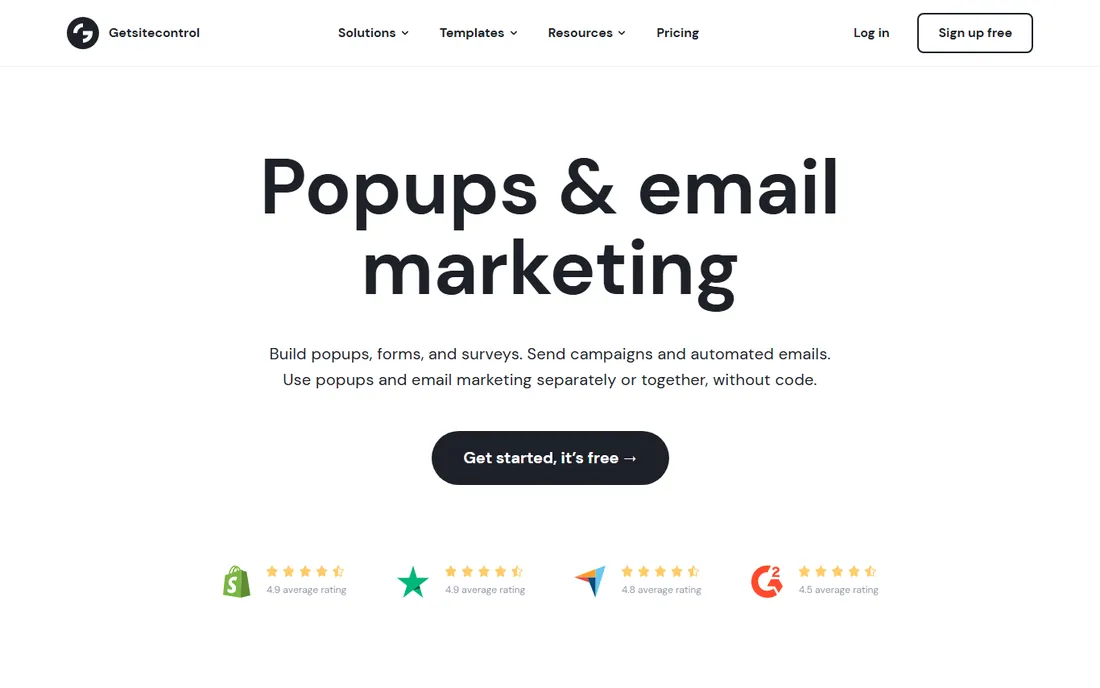
Getsitecontrol, from the team behind GetResponse, bundles several on-site widgets into a single lightweight app. You get popups, slide-ins, promo bars, contact and survey forms, and subscribe widgets, each with its own templates and targeting controls. For a small site that wants an exit-intent popup, a holiday promo bar, and a customer survey without three different subscriptions, that breadth is the appeal.
The interface is deliberately simple, which suits site owners who are not full-time marketers. Targeting includes standard options like page rules, timing, and device targeting, though the display rules are not as deep as OptinMonster or Poptin. Like Personizely, Getsitecontrol does not publish its pricing or free plan terms on its public pages, so plan on a conversation with their team. For lean teams that want one small app to do many small jobs, it is worth a look.
What we like- Seven widget types including surveys and promo bars, simple interface suited to non-marketers, built by the GetResponse team
Watch out for- Pricing is not publicly documented, fewer advanced targeting rules than the leaders
How we chose
We picked these eight tools by looking for products whose core job is capturing leads on a website, not email sending or full marketing suites with popups bolted on. Each one had to offer real targeting controls, at least one testing feature or analytics view, and integrations with major email platforms. We read each vendor's homepage, pricing page, and feature documentation to record plan names, starting prices, and free or trial terms exactly as stated. For public sentiment, we checked G2, Capterra, and Reddit threads about popup tools to see which products SMB owners actually recommend and complain about. We did not take any vendor's conversion statistics at face value; the percentages on their homepages are marketing claims, not independent test results.
Exit intent gets the headlines, but it is only one trigger. Timed popups work on long content pages where readers signal engagement by staying. Scroll-triggered forms fire at the point where a reader has shown interest, such as halfway through a buying guide. Page-level targeting shows different offers on the pricing page versus the blog, which is where most of the conversion lift actually comes from. Gamified formats like spin-to-win consistently outperform plain newsletter boxes on ecommerce sites because the discount feels earned. Whatever tool you pick, plan to run at least an exit-intent campaign and a scroll-triggered one before deciding the tool does not work.
What to check before you pay
Start with traffic fit. Tools priced by visitors or impressions get expensive fast on high-traffic sites, while contact-based pricing punishes fast list growth. Next, confirm the integrations you actually use: every tool here connects to the big email platforms, but check your specific CRM or SMS provider before signing up. Test the mobile experience yourself, since more than half of most sites' traffic is mobile and some popup builders make mobile editing an afterthought. Finally, use the trial on real traffic and watch two numbers: the opt-in rate per campaign and the unsubscribe or complaint rate. A popup that grows your list but trains visitors to distrust your brand is a bad trade.
Frequently asked questions
Do popups hurt SEO?
Google has penalized intrusive interstitials on mobile since 2017, specifically popups that cover the main content right when a page loads from search. Well-timed popups, like exit intent or scroll-triggered ones, do not fall into that category. Keep mobile campaigns small and dismissible, and avoid full-screen overlays on entry.
Will popups annoy my visitors?
Only if they are badly timed or irrelevant. Campaigns triggered by exit intent or deep scroll perform well because they target visitors who are already leaving or already engaged. The annoyance comes from instant full-screen popups and from showing the same offer to people who already subscribed, which is why frequency capping and subscriber exclusion matter.
What is the difference between exit intent and exit overlays?
Exit intent is the detection technology: it watches mouse movement toward the browser chrome to guess when a desktop visitor is about to leave. An exit overlay is simply the popup format that gets shown at that moment. Mobile devices have no cursor, so most tools substitute scroll-up or back-button detection on phones.
How many popups should I run at once?
One or two per visitor session is the practical limit. A common setup is a welcome or content offer for new visitors plus an exit-intent cart saver for shoppers. Running five campaigns at once with overlapping rules confuses visitors and makes your analytics useless.
Can I use these tools without an email platform?
Yes, most of them store the captured contacts in a built-in list and can export to CSV. But the value of a lead is in the follow-up, so connecting an email tool before you launch is the move that turns captures into revenue.
Sources we checked (0)
Is your product missing or out of date?
We review this list regularly. Vendors can request a listing, send updated pricing or ask about featured placement.

Shihab Mia · Founder, Rankite
Shihab has spent more than a decade helping SaaS and e-commerce brands grow through search. He writes Rankite's software buying guides from pricing pages, documentation and public user reviews. More about Shihab.