How we make this list: we compare pricing pages, product documentation and public user reviews. Ratings come from G2, Capterra or Trustpilot, with the date we checked them.
Best language learning apps for Spanish at a glance
Duolingo is the best free starting point for Spanish, with a full course at no cost and Super from $12.99 per month. Babbel suits learners who want structured grammar and real conversation, while Pimsleur suits commuters who learn by listening. Rosetta Stone fits visual learners who want immersion, and LingQ fits readers who want real Spanish content.
Key takeaways
- Duolingo is the only app here with a genuinely free full course, and its Spanish course is one of the most complete on the platform.
- Babbel and Pimsleur are the strongest paid picks for most learners: Babbel for structured grammar, Pimsleur for speaking by ear.
- Monthly prices run from free to about $24.99, and annual billing cuts most subscriptions by roughly half, so check the yearly price before you commit.
- No single app covers everything, so pair a course app with a reading or speaking app for faster progress.
- Prices here are third-party reported, checked 13 Nov 2026, because no vendor pricing page was opened directly for this guide. Confirm current figures with each vendor before you subscribe.
Best language learning apps for Spanish compared
| Tool | Best for | Starting price | Free plan |
| Duolingo | Free daily habit building | Free; Super from $12.99 per month | Yes |
| Babbel | Structured grammar and conversation | From $17.95 per month | First lesson free |
| Rosetta Stone | Immersion with no translations | From $11.99 per month | Free trial |
| Pimsleur | Audio learning on the move | From $19.95 per month | Free trial |
| Busuu | Feedback from native speakers | From $13.95 per month | Yes |
| Memrise | Vocabulary with real videos | From $24.99 per month | Yes |
| LingQ | Reading and listening to real content | From $14.99 per month | Yes |
| Mondly | Short daily conversation lessons | From $15.90 per month | Free trial |
Why do learners pick an app for Spanish instead of a class?
An app fits a schedule a class cannot match. Ten minutes on a train, in a lunch break or before bed adds up to hours of Spanish each week, and the cost is a fraction of a tutor or an evening class. Apps also let a learner repeat a lesson as many times as needed without holding up a group, which matters for pronunciation and verb forms. Spanish is the most studied language on several of these platforms, so the Spanish courses get the most content, the most updates and the most polish. Streaks and reminders replace the accountability a class provides. An app also cannot correct your speech the way a tutor can, which is why the best results come from pairing an app with real conversation practice once you reach a basic level.
What should you check before you pay for a Spanish app?
Check the Spanish course depth first, because a big language count on the marketing page does not mean every language gets equal treatment. Spanish is well covered on all eight apps here, but the depth still differs: Duolingo and Babbel go furthest for beginners, while LingQ and Pimsleur serve intermediate learners better. Check whether the app teaches Latin American or European Spanish, or both, since pronunciation and some vocabulary differ. Check the speaking practice: speech recognition, recorded prompts and live tutors are very different things, and only some apps score your pronunciation. Check the free tier carefully, since several apps here advertise a free plan that covers only the first lesson or a small set of features. Check billing terms, since monthly prices often double the annual rate.
How much do Spanish learning apps cost?
The range is wide. Duolingo is free, with Super from $12.99 per month or about $7 to $8 per month on the annual plan. Babbel lists $17.95 per month on monthly billing and about $89.99 per year. Rosetta Stone starts near $11.99 per month on longer plans, with lifetime plans often listed near $199. Pimsleur Premium is $19.95 per month for one language and All Access is $20.95 per month. Busuu Premium starts near $13.95 per month, or about $72.99 per year. Memrise Pro is the priciest monthly plan here at $24.99 per month, though the annual plan drops to $61.99 per year. LingQ Premium is $14.99 per month or $119.99 per year. Mondly Premium is about $15.90 per month, or about $6.24 per month billed annually.
Which Spanish app is best for speaking?
Pimsleur is the best pick for speaking, because its whole method is built around hearing and repeating Spanish from the first lesson, with no reading to fall back on. Babbel comes next, with conversation lessons built around real situations such as ordering food, asking directions and small talk, plus speech recognition on pronunciation. For speaking, pick Pimsleur for daily practice and add a tutor once you can hold a basic exchange.
How long does it take to hold a conversation in Spanish with an app?
Most learners reach a simple conversation after three to six months of daily practice of 15 to 30 minutes, provided the app includes speaking and not only matching exercises. Apps that drill listening and speaking, such as Pimsleur and Babbel, get you there faster than apps that focus on reading and vocabulary. Reaching a comfortable conversational level usually takes a year or more of steady study. Pair one course app with weekly speaking practice for the fastest progress.
Quick comparison
| Tool | Best for | Starting price | Free plan |
|---|
 Duolingo | Free daily habit building with a full Spanish course | Free; Super from $12.99 per month, third-party reported, checked 13 Nov 2026 | Yes |
 Babbel | Structured grammar and real conversation for serious beginners | From $17.95 per month; about $89.99 per year, third-party reported, checked 13 Nov 2026 | First lesson free |
 Rosetta Stone | Visual learners who want immersion with no translations | From $11.99 per month, third-party reported, checked 13 Nov 2026 | Free trial |
 Pimsleur | Audio learning and speaking practice on the move | Premium $19.95 per month for one language; All Access $20.95 per month, third-party reported, checked 13 Nov 2026 | 7-day free trial |
 Busuu | Structured courses with feedback from native Spanish speakers | Premium from $13.95 per month; about $72.99 per year, third-party reported, checked 13 Nov 2026 | Yes, limited |
 Memrise | Vocabulary building with videos of real Spanish speakers | Pro $24.99 per month; $61.99 per year, third-party reported, checked 13 Nov 2026 | Yes, limited |
 LingQ | Reading and listening to real Spanish content at your level | Premium $14.99 per month; $119.99 per year, third-party reported, checked 13 Nov 2026 | Yes, limited |
 Mondly | Short daily conversation lessons across many languages | From $15.90 per month; about $6.24 per month billed annually, third-party reported, checked 13 Nov 2026 | Free trial with daily lessons |
Is your product missing or out of date?
We review this list regularly. Vendors can request a listing, send updated pricing or ask about featured placement.
The 8 best language learning apps for Spanish compared
#1Duolingo
Best for: Free daily habit building with a full Spanish course4.5/5 on
G2 (145 reviews, checked Oct 2026)
Visit duolingo.com
Starting priceFree; Super from $12.99 per month, third-party reported, checked 13 Nov 2026
Free planYes
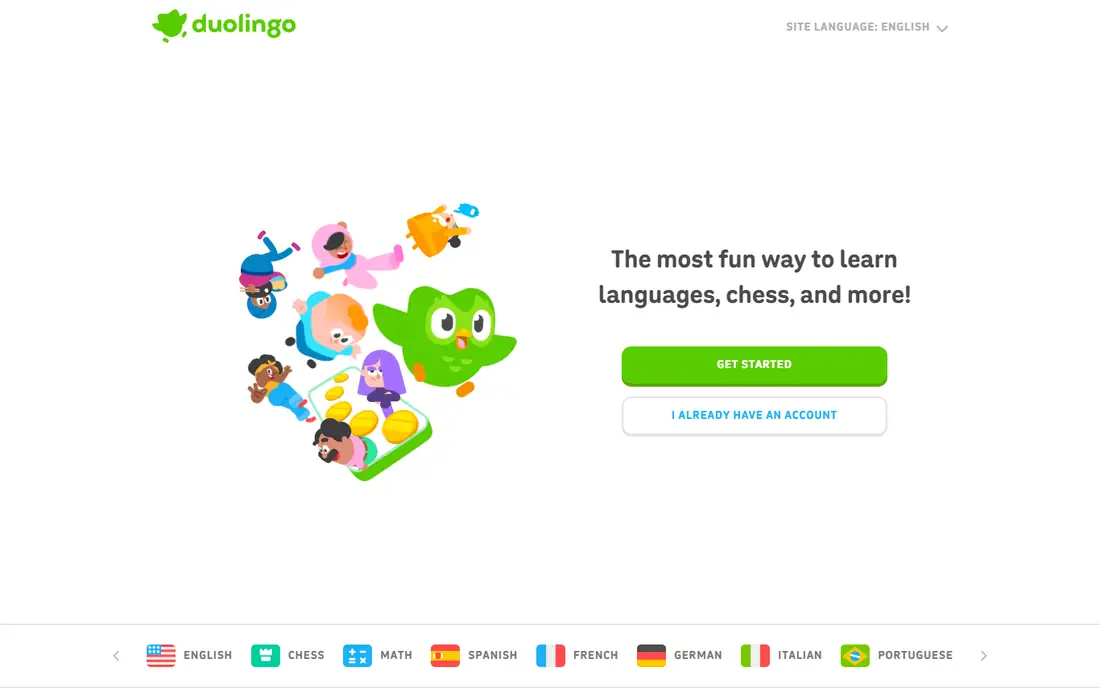
Duolingo is the easiest place to start learning Spanish, because the whole core course is free and the Spanish track is one of the deepest on the platform. Lessons are short, game-like and built around streaks, which keeps daily practice going for people who have failed with textbooks. Stories and podcasts serve intermediate learners. Super removes ads and the energy cap for about $12.99 a month, or about $7 to $8 a month on the annual plan. The weakness is grammar: rules are rarely explained, so learners who want to understand why a sentence works need a second resource. Pick Duolingo when you want a free daily habit and a course you can start in five minutes.
What we like- Full Spanish course free, gamified streaks keep daily practice going, Spanish is one of the most complete courses on the platform
Watch out for- Free tier caps practice with an energy system and shows ads, and grammar explanations are thin
#2Babbel
Best for: Structured grammar and real conversation for serious beginners4.4/5 on
Trustpilot (33,184 reviews, checked Oct 2026)
Visit babbel.com
Starting priceFrom $17.95 per month; about $89.99 per year, third-party reported, checked 13 Nov 2026
Free planFirst lesson free
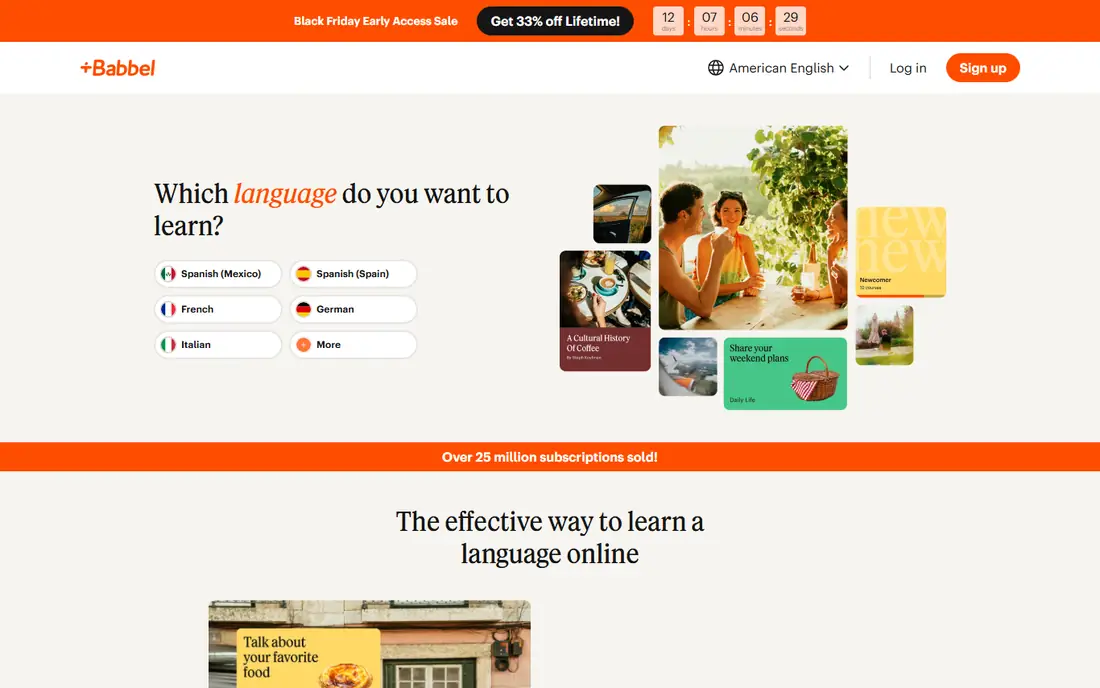
Babbel is the strongest structured course for Spanish, with lessons built around real-life conversation and clear grammar explanations in English. The Spanish course runs from beginner to intermediate, with review sessions that space repetition sensibly and dialogues that teach phrases you actually use, such as ordering, directions and introductions. Speech recognition checks your pronunciation. Pricing is $17.95 a month on monthly billing, or about $89.99 a year, so the annual plan is the sensible buy. The trade-off is the lack of a free tier: only the first lesson of each course is free. Pick Babbel when you want a proper course with grammar explained, not just matching games.
What we like- Clear grammar explanations in English, lessons built around real situations, speech recognition for pronunciation
Watch out for- No free tier beyond the first lesson, and the monthly price is high unless you pay annually
#3Rosetta Stone
Best for: Visual learners who want immersion with no translations4.2/5 on
G2 (113 reviews, checked Oct 2026)
Visit rosettastone.com
Starting priceFrom $11.99 per month, third-party reported, checked 13 Nov 2026
Free planFree trial
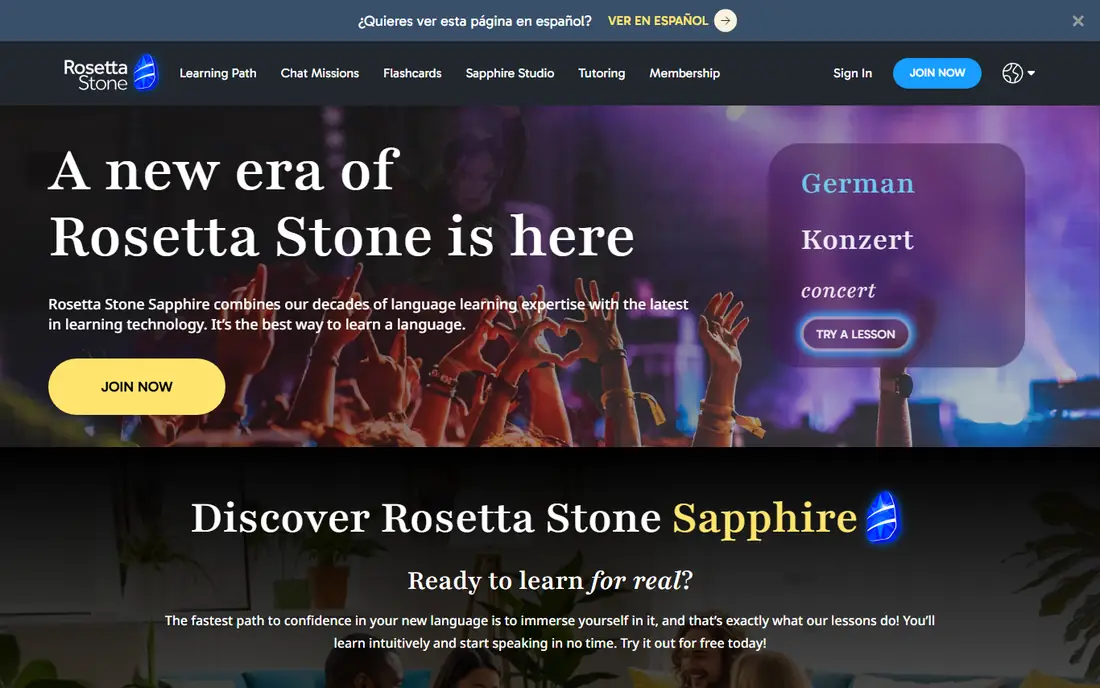
Rosetta Stone uses no-translation immersion, forcing learners to think in Spanish from day one, with vocabulary built by association with images. Every prompt is in Spanish, which builds strong listening skills. TruAccent scores your pronunciation word by word, which is more precise than the speech checks in most rivals. Pricing runs about $11.99 to $15.99 a month on longer plans, with a lifetime option for all languages often listed near $199. The trade-off is the lack of translation: beginners who want a quick English explanation will struggle, and the course moves slowly for people who already know some Spanish. Pick Rosetta Stone when you learn best by pictures and sound rather than by rules and translations.
What we like- No-translation immersion method, TruAccent speech recognition, lifetime plan option for all languages
Watch out for- No English explanations can frustrate absolute beginners, and the price varies a lot by channel and promotion
#4Pimsleur
Best for: Audio learning and speaking practice on the move4.3/5 on
G2 (2 reviews, checked Oct 2026)
Visit pimsleur.com
Starting pricePremium $19.95 per month for one language; All Access $20.95 per month, third-party reported, checked 13 Nov 2026
Free plan7-day free trial
Pimsleur suits audio learners who study while commuting, walking or doing chores. Lessons are audio-only, with speaking from the first lesson and a strong pronunciation focus, so you learn to say Spanish before you learn to read it. Graduated recall brings words back at increasing intervals. Premium for one language costs about $19.95 a month, and All Access is $20.95 a month, with a 7-day trial. The trade-off is scope: there is almost no reading or writing, and the vocabulary grows slowly compared with Babbel or Duolingo. Pick Pimsleur when your study time happens away from a screen and speaking matters more than reading.
What we like- Speaking from the first lesson, hands-free audio lessons for commuting, strong pronunciation focus
Watch out for- Audio-only method gives little reading and writing practice, and it is one of the priciest subscriptions here
#5Busuu
Best for: Structured courses with feedback from native Spanish speakers4.4/5 on
G2 (71 reviews, checked Oct 2026)
Visit busuu.com
Starting pricePremium from $13.95 per month; about $72.99 per year, third-party reported, checked 13 Nov 2026
Free planYes, limited
Busuu combines structured courses with a community of native speakers who correct your written and spoken exercises, which is its main difference from Duolingo and Babbel. The Spanish course follows CEFR levels from A1 to B2, with grammar review, vocabulary drills and certificates when you finish a level. Premium starts near $13.95 a month, or about $72.99 a year, and the free plan covers a useful slice of the course. The trade-off is depth: advanced Spanish content is thinner than the beginner material, and the AI conversation practice needs Premium Plus. Pick Busuu when you want real human feedback on your Spanish without paying for a tutor.
What we like- Native speakers correct your exercises, clear CEFR levels from A1 to B2, certificates on completion
Watch out for- Spanish course depth is thinner than Babbel at higher levels, and AI conversation features sit in the higher Premium Plus tier
#6
Memrise
Best for: Vocabulary building with videos of real Spanish speakers
Visit memrise.com
Starting pricePro $24.99 per month; $61.99 per year, third-party reported, checked 13 Nov 2026
Free planYes, limited
Memrise is built for vocabulary, with thousands of short videos of real Spanish speakers using words in context, which helps learners hear natural speed and accent. Its spaced repetition system is strong, and Pro adds AI speaking practice with a chatbot that holds simple conversations. The free plan covers basic vocabulary learning, while Pro costs $24.99 a month or $61.99 a year, so the annual plan is far better value. The trade-off is grammar: Memrise teaches words and phrases well but explains little about how sentences fit together, so it works best beside a course app. Pick Memrise when your Spanish vocabulary is the bottleneck and you want to hear real speakers every day.
What we like- Thousands of videos of native speakers, strong spaced repetition for vocabulary, AI speaking practice in Pro
Watch out for- Monthly price is the highest in this list, and grammar teaching is weak
#7
LingQ
Best for: Reading and listening to real Spanish content at your level
Visit lingq.com
Starting pricePremium $14.99 per month; $119.99 per year, third-party reported, checked 13 Nov 2026
Free planYes, limited
LingQ is the pick for learners who already know some Spanish and want to read and listen to real content instead of textbook dialogues. You import books, podcasts, news articles and YouTube transcripts, click any unknown word to see its meaning, and save it to a personal vocabulary list for review. Graded content lets beginners start with simple stories. Premium costs $14.99 a month or $119.99 a year, while the free plan caps saved words. The trade-off is the learning curve: the interface packs a lot in, and total beginners will find it confusing before they know some basics. Pick LingQ when you can already read simple Spanish and want real material.
What we like- Huge library of real Spanish books, podcasts and news, click any word to save it, strong for intermediate learners
Watch out for- Interface feels cluttered for beginners, and the free plan caps the number of words you can save
#8
Mondly
Best for: Short daily conversation lessons across many languages
Visit mondly.com
Starting priceFrom $15.90 per month; about $6.24 per month billed annually, third-party reported, checked 13 Nov 2026
Free planFree trial with daily lessons
Mondly keeps lessons short and conversation-first, with speech recognition and a chatbot that rehearses common situations such as greetings, travel and shopping. It covers 41 languages, so it suits households learning more than one. Premium is about $15.90 a month, or about $6.24 a month billed annually, and a free version covers daily lessons and the first unit. The trade-off is depth: the course stays near beginner level and teaches little grammar, so intermediate learners outgrow it fast. Pick Mondly when you want a light daily conversation habit and a low annual price rather than a full course.
What we like- Short conversation-first lessons, speech recognition, chatbot practice for common situations
Watch out for- Lessons stay at beginner level, and grammar depth is limited
How we picked these apps
We compared apps on Spanish course depth, grammar coverage, speaking practice, free tier value and pricing, using vendor pages and published comparisons from September to November 2026. Prices are third-party reported and were checked 13 Nov 2026, because no vendor pricing page was opened directly for this guide. We did not claim hands-on testing, and prices vary by plan and region, so verify before subscribing.
Frequently asked questions
Is Duolingo enough to learn Spanish on its own?
Duolingo is enough to build a daily habit and a basic vocabulary, but it is not enough on its own for fluency. Its grammar explanations are thin and its speaking practice is limited, so most learners plateau at a basic level. Pair it with Babbel for grammar, Pimsleur for speaking, or real conversation practice once you can handle simple exchanges.
Which app is best for learning Spanish for travel?
Babbel is the best pick for travel, because its lessons are built around real situations such as hotels, restaurants, directions and small talk. Pimsleur is a strong second choice, since its audio lessons teach the phrases you need to say out loud. Duolingo works too if you start months ahead, but Babbel gets you usable phrases faster.
How much does it cost to learn Spanish with an app per year?
A single paid app costs roughly $60 to $120 per year on annual billing, with Duolingo Super near $84 to $96, Babbel near $90, Memrise at $62 and LingQ at $120. Monthly billing costs far more, often double the annual rate. A free plan plus one annual subscription is the cheapest route that still gives a full course.
Do these apps teach Latin American or European Spanish?
Most of these apps teach Latin American Spanish by default, with some offering a European Spanish option in settings or as a separate course. Babbel and Rosetta Stone cover both variants in different courses, while Duolingo leans toward Latin American usage. Check the course settings before you subscribe if the variant matters to you.
Can I become fluent in Spanish using only an app?
An app alone rarely makes a fluent speaker, because fluency needs live conversation, listening to fast natural speech, and producing sentences without a prompt. Apps build the vocabulary and grammar that fluency rests on, and the fastest path is to combine one course app with weekly speaking practice, whether with a tutor, a language partner or the speaking features in Pimsleur and Busuu.
Sources we checked (12)
- https://www.duolingo.com
- https://www.babbel.com
- https://www.rosettastone.com
- https://www.pimsleur.com
- https://www.busuu.com
- https://www.memrise.com
- https://www.lingq.com
- https://www.mondly.com
- https://www.hellonabu.com/blog/en/how-much-do-language-learning-apps-cost/
- https://www.lingq.com/blog/best-language-learning-app/
- https://learnenglish.life/reviews/memrise/
- https://startupstash.com/alternatives/duolingo/
Is your product missing or out of date?
We review this list regularly. Vendors can request a listing, send updated pricing or ask about featured placement.

Shihab Mia · Founder, Rankite
Shihab has 5+ years in B2B and SaaS SEO. He writes Rankite's software buying guides from pricing pages, documentation and public user reviews. More about Shihab.