How we make this list: we compare pricing pages, product documentation and public user reviews. Rankite is independent; if a vendor ever pays for a featured spot, that listing is clearly labeled Partner.
Key takeaways
- Enterprise LIMS (LabWare, STARLIMS, LabVantage) suit large regulated labs with validation budgets; modern cloud platforms (Benchling, SciNote, Labguru, CloudLIMS, QBench) suit smaller labs that need to go live in weeks.
- None of the eight publish list prices: every enterprise LIMS here is quote-based, so budget for the implementation, not just the license.
- If you run a testing lab (cannabis, environmental, clinical), shortlist CloudLIMS and QBench first; if you run biotech R&D, shortlist Benchling and SciNote.
- Compliance support (21 CFR Part 11, ISO 17025, HIPAA, CLIA) is table stakes on paper; ask each vendor which of your specific regulations their validation package covers.
Here is the uncomfortable truth about lab software: most buyers guides pretend these eight products are interchangeable, and they are not. Three of them are enterprise platforms built for pharmaceutical giants with validation teams and seven-figure budgets. Five are modern cloud products built for labs that need to be live this quarter. Buying the wrong category wastes more money than buying the wrong product inside the right category. So this list is split on purpose: the heavyweights first, then the cloud-native options that smaller labs actually implement, with an honest read on who each one fits.
The best lab software

#1
LabWare LIMS
Best for: Large regulated labs needing an enterprise laboratory informatics platform
Visit labware.com
Starting priceSee website (quote-based)
Free planNo
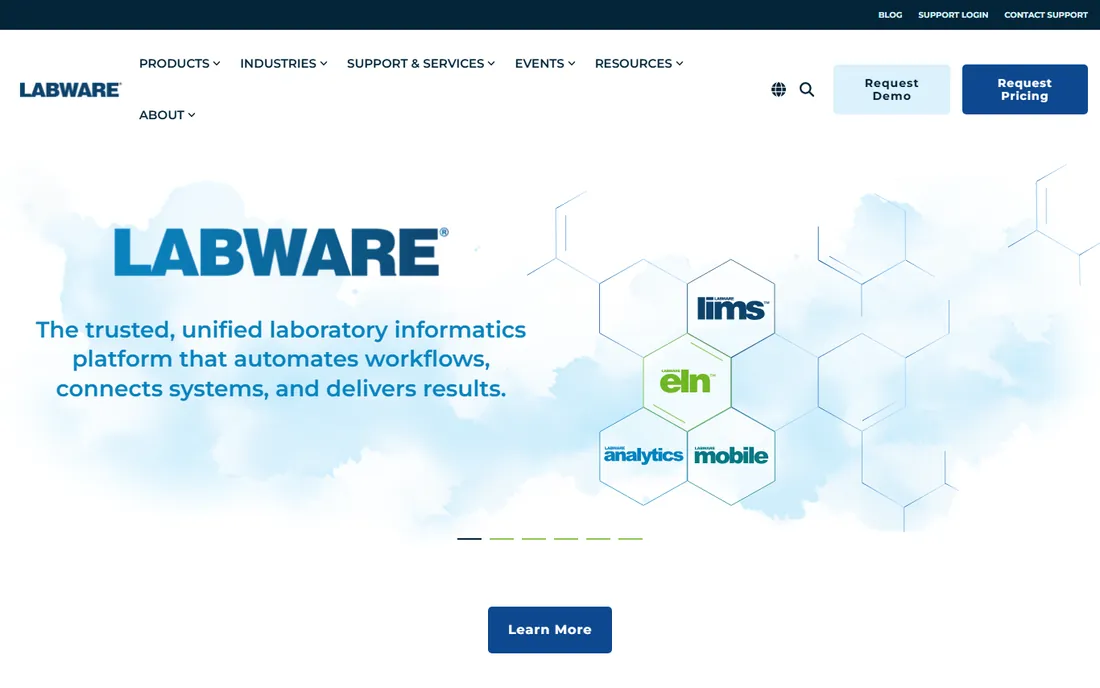
LabWare is the reference implementation of an enterprise LIMS: a unified platform covering LIMS, electronic lab notebooks and mobile, built to automate workflows and connect instruments across global organizations. It is the product large pharmaceutical, food and manufacturing labs buy when they need one validated system of record that will still be supported in fifteen years. The configurability is genuine, and the installed base in regulated QA/QC is the deepest here.
The honest catch is that you buy an enterprise program, not a product. Pricing is quote-based, implementations run for months, and you will need internal staff or consultants to get full value. A ten-person testing lab does not need this and should not pay for it. LabWare fits organizations with validation requirements, multi-site operations and the budget to match. Everyone else should look at the cloud options below.
What we like- Unified LIMS, ELN and mobile on one platform with decades of deployments
- Deep instrument integration for complex lab environments
- Strong track record in regulated QA/QC
Watch out for- Enterprise pricing and implementation timelines
- Complexity that small labs will never fully use

#2
STARLIMS
Best for: Quality, manufacturing and public health labs needing proven LIMS
Visit starlims.com
Starting priceSee website (quote-based)
Free planNo
STARLIMS has been selling LIMS since the 1980s and it shows in the customer list: quality control, manufacturing, public health and clinical diagnostics labs across dozens of countries. The portfolio now spans LIMS, the Labstep cloud ELN, laboratory execution, scientific data management and analytics, and the 2026 acquisition of Lonza's MODA platform pushed it deeper into manufacturing quality operations. It is a credible alternative to LabWare for regulated environments.
Like LabWare, it is sold and priced as an enterprise engagement, with implementations to match. The breadth is a strength for organizations that want one vendor across R&D and manufacturing, and a burden for labs that only need sample tracking. Shortlist STARLIMS when you have complex quality workflows and a validation budget. Skip it when a configurable cloud LIMS would do the job in a tenth of the time.
What we like- Long history across pharma, food and beverage, oil and gas and public health
- Integrated ELN (Labstep), LES, SDMS and analytics in one portfolio
- Recent expansion into manufacturing QC
Watch out for- Quote-based enterprise pricing
- The broad portfolio can mean a longer, heavier implementation

#3
LabVantage
Best for: Pharma and biotech labs wanting a pre-configured, validated LIMS
Visit labvantage.com
Starting priceSee website (quote-based)
Free planNo
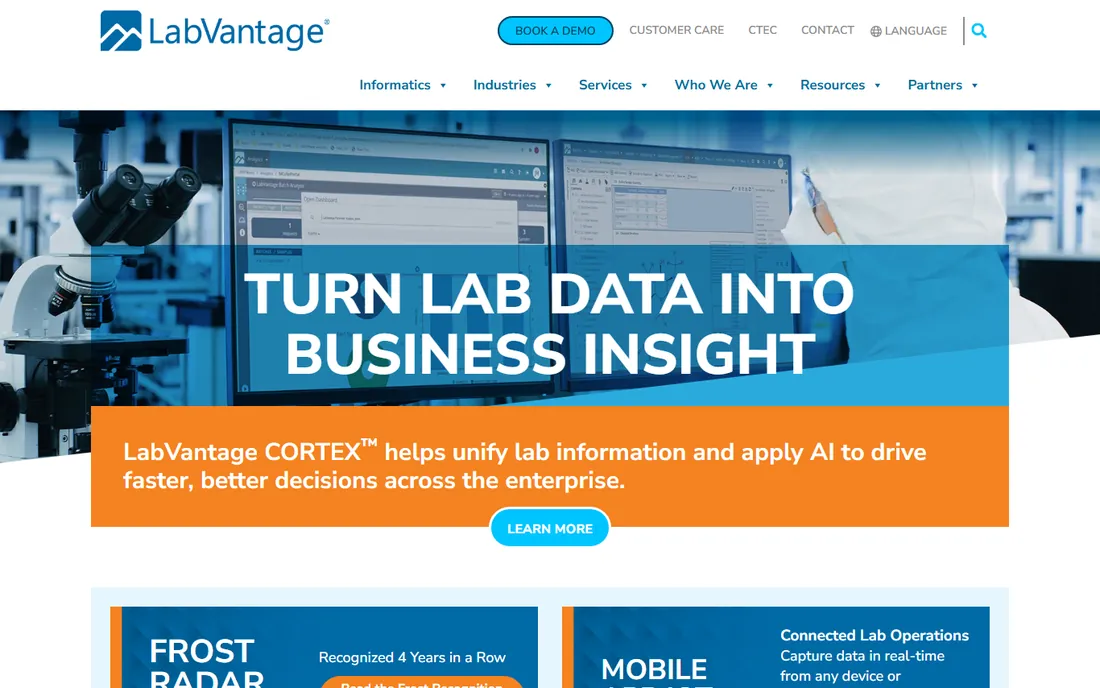
LabVantage's differentiator is focus: a LIMS platform purpose-built for life sciences, with pre-configured and pre-validated pharma editions designed to cut deployment time and cost versus a from-scratch implementation. The platform is fully browser-based, runs as SaaS or on-premise, and bundles LIMS, ELN, laboratory execution and scientific data management with analytics on a single architecture. For pharmaceutical QC and biobanking, it is one of the most complete packages here.
The trade-off is the enterprise buying motion: demos, scoping calls and custom quotes, with pricing that reflects the validation work baked in. Smaller labs can find the evaluation process heavy relative to the problem they are solving. LabVantage fits regulated life-science labs that want validation handled by the vendor. Research labs without GxP requirements will find it more than they need.
What we like- Pre-validated pharma configurations that cut deployment time
- 100% browser-based platform with SaaS or on-premise options
- LIMS, ELN, LES and SDMS on one architecture
Watch out for- Enterprise sales process with quote-only pricing
- The platform's breadth adds evaluation complexity

#4
Benchling
Best for: Biotech R&D teams from discovery through process development
Visit benchling.com
Starting priceSee website (quote-based)
Free planNo
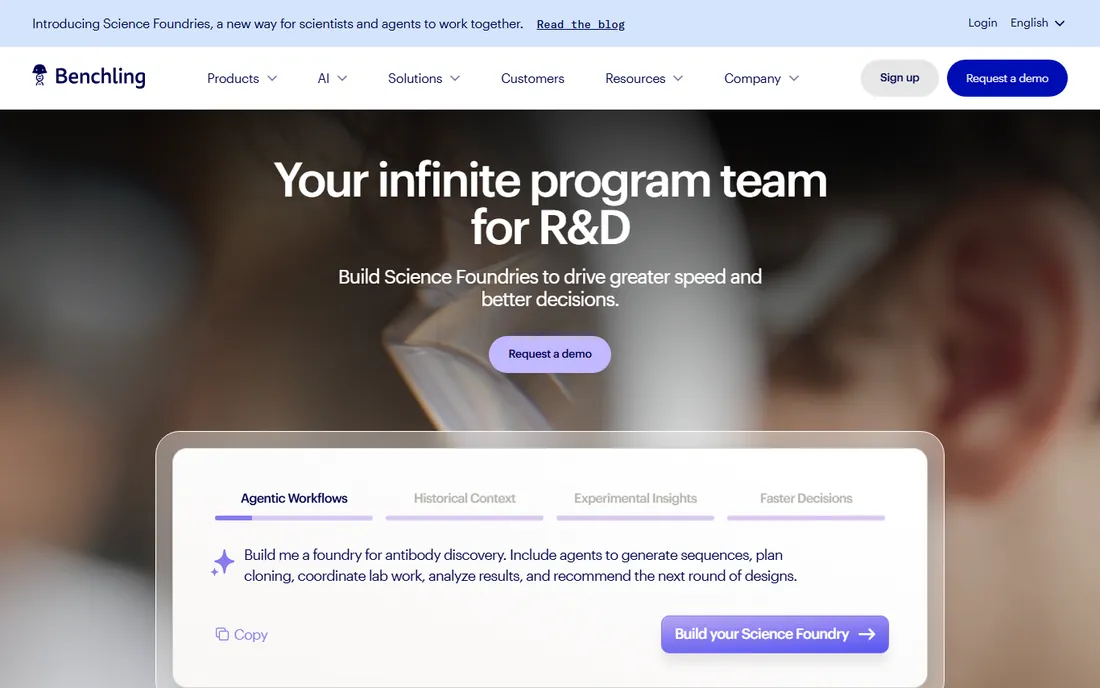
Benchling is what happens when software people build for scientists instead of porting an enterprise template: a cloud platform combining an electronic notebook, molecular biology tools, sample registry, inventory and workflow management, now with AI features woven through. It is designed for biotech R&D, from discovery biology through process development, and its data model handles sequences, cell lines and biologics as first-class objects rather than generic records.
It is not a testing-lab LIMS and does not pretend to be. Pricing is quote-based with no public tiers, and the sales motion targets R&D organizations, not single labs. Routine QA/QC, cannabis testing and environmental labs should look elsewhere. For biotech companies running research programs, it is the most modern option on this list and the one your scientists will actually enjoy using.
What we like- Purpose-built for biology with molecular biology tools, registry and inventory in one platform
- Strong workflow automation and a growing AI layer
- Designed for how research teams actually work
Watch out for- Quote-based pricing with no public tiers
- Overkill for routine testing labs that just need sample tracking

#5
SciNote
Best for: Research labs needing an affordable ELN with inventory and compliance
Visit scinote.net
Starting priceSee website (quote-based)
Free planNo
SciNote takes the opposite approach from the enterprise vendors: an electronic lab notebook designed to be easy to learn, with project and experiment organization, protocol templates, inventory management and compliance tooling (electronic signatures, audit trails, timestamps) for labs working under GLP, GMP or 21 CFR Part 11. The mobile apps let researchers check off protocol steps and upload results at the bench. It positions itself as the ELN a lab can roll out without a consultant.
The honest limits are scope and pricing transparency. It is an ELN with inventory, not a full testing LIMS: high-throughput QA labs will outgrow it. And despite the accessible positioning, paid plans are quote-based rather than buy-online. SciNote fits academic, government and industry research labs that need compliant digital notebooks without enterprise overhead. Testing labs with heavy sample throughput should evaluate CloudLIMS or QBench instead.
What we like- Projects, experiments and tasks structure that mirrors real research
- Electronic signatures, audit trails and 21 CFR Part 11 support
- Mobile apps for bench work
Watch out for- Pricing is quote-based rather than self-serve
- The inventory module is solid but less deep than a dedicated LIMS

#6
Labguru
Best for: Academic and biotech labs wanting ELN, LIMS and inventory in one cloud platform
Visit labguru.com
Starting priceSee website (quote-based)
Free planNo
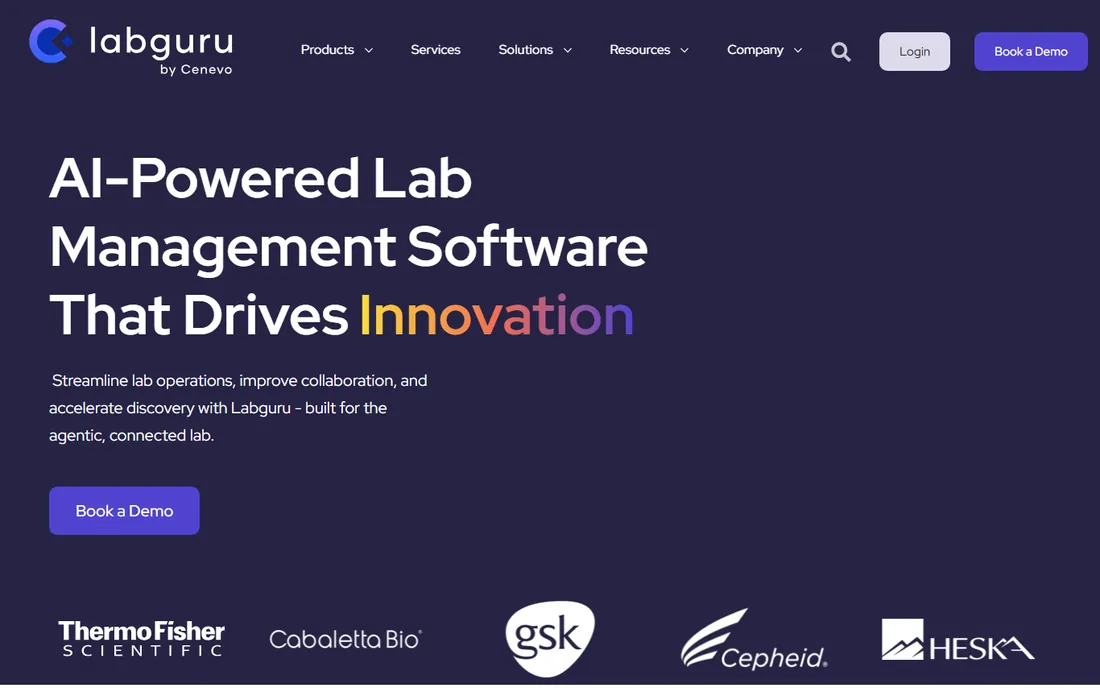
Labguru (from BioData, now backed by Battery Ventures) is the all-in-one lab platform: electronic lab notebook, LIMS, inventory management, automation workflows and informatics in a single cloud interface. Researchers plan experiments, document work, track samples and manage stocks without switching systems, with compliance features for regulated work and integrations across lab instruments and software. It has found particular traction in academic labs and biotech startups that want one system instead of three.
The all-in-one design is both the appeal and the caveat: individual modules are capable but not the deepest in their categories, and pricing is quote-based. Labs that need a world-class ELN or a high-volume testing LIMS specifically may prefer specialists. Labguru fits labs that value having everything in one searchable place over having the best point solution for each job.
What we like- ELN, LIMS, inventory, automation and informatics unified in one interface
- Strong experiment planning and protocol tools
- 21 CFR Part 11 compliant signing and witnessing
Watch out for- Quote-based pricing
- The all-in-one breadth means some modules are shallower than best-of-breed

#7
CloudLIMS
Best for: Testing labs wanting SaaS LIMS with zero upfront cost
Visit cloudlims.com
Starting priceSee website (quote-based)
Free planNo
CloudLIMS is a SaaS LIMS aimed squarely at testing laboratories, with pre-configured editions for biobanks, cannabis testing, clinical diagnostics, environmental, food and beverage, genomics and other lab types. The commercial model is subscription with zero upfront cost, bundling workflow configuration, instrument integration, report templates, data migration, training and support into the package. Built-in quality management, document control and client or patient portals round out the compliance story for regulated testing.
Because pricing is not public, you cannot budget without talking to sales, which is frustrating for a product marketed on simplicity. The many industry editions also deserve scrutiny: confirm the edition for your lab type has the workflows and compliance mappings you need rather than assuming. CloudLIMS fits testing labs that want to be live quickly on a subscription without capital expense. Enterprise QA organizations with complex validation needs should compare LabWare and LabVantage first.
What we like- Purpose-built editions for biobanking, cannabis, clinical, environmental, food and more
- Zero upfront cost with configuration and training bundled
- Built-in QMS plus patient and client portals
Watch out for- No public pricing, so budgeting requires a sales conversation
- The broad industry coverage means vetting your specific edition carefully

#8
QBench
Best for: Testing labs wanting a modern, configurable LIMS without a long implementation
Visit qbench.com
Starting priceSee website (quote-based)
Free planNo
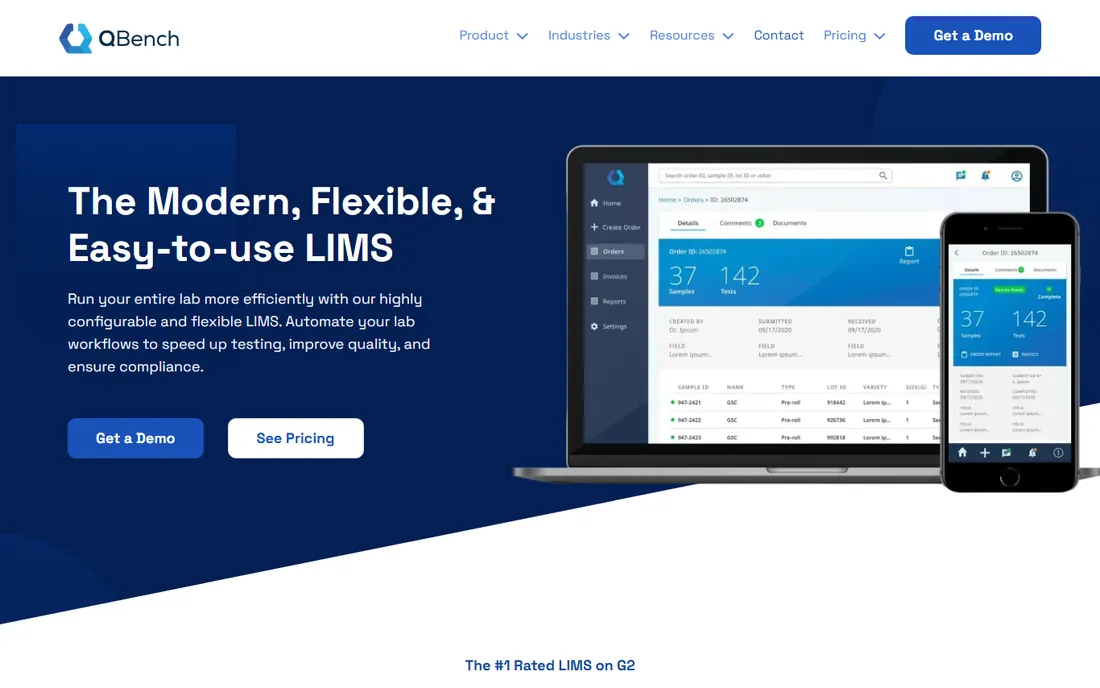
QBench pitches itself as the anti-legacy LIMS: cloud-based, configurable without custom code, and implementable in weeks rather than the better part of a year. Sample tracking, custom fields, automated reporting with a no-code report editor, and a modern REST API cover the core testing-lab workflows, while compliance support spans ISO 17025, HIPAA, 21 CFR Part 11 and CLIA certification. The configurability means lab managers can adapt workflows themselves instead of filing change requests with a vendor.
The caveats are the usual ones for a younger vendor: a shorter track record than LabWare or STARLIMS, and quote-based pricing that keeps the real cost hidden until late in the process. For independent testing labs that find the enterprise vendors slow and expensive, QBench is one of the most credible modern alternatives. Large regulated organizations that need decades of validation history will still lean toward the incumbents.
What we like- No-code configuration that shortens implementation versus legacy LIMS
- Modern interface with workflow automation and a REST API
- Compliance coverage for ISO 17025, HIPAA, 21 CFR Part 11 and CLIA
Watch out for- Quote-based pricing with no public tiers
- A younger vendor than the enterprise incumbents
Quick comparison
| Tool | Best for | Starting price | Free plan |
|---|
| LabWare LIMS | Large regulated labs needing an enterprise laboratory informatics platform | See website (quote-based) | No |
| STARLIMS | Quality, manufacturing and public health labs needing proven LIMS | See website (quote-based) | No |
| LabVantage | Pharma and biotech labs wanting a pre-configured, validated LIMS | See website (quote-based) | No |
| Benchling | Biotech R&D teams from discovery through process development | See website (quote-based) | No |
| SciNote | Research labs needing an affordable ELN with inventory and compliance | See website (quote-based) | No |
| Labguru | Academic and biotech labs wanting ELN, LIMS and inventory in one cloud platform | See website (quote-based) | No |
| CloudLIMS | Testing labs wanting SaaS LIMS with zero upfront cost | See website (quote-based) | No |
| QBench | Testing labs wanting a modern, configurable LIMS without a long implementation | See website (quote-based) | No |
Is your product missing or out of date?
We review this list regularly. Vendors can request a listing, send updated pricing or ask about featured placement.
Start by classifying your lab, because the category decides the shortlist. A regulated pharmaceutical QC lab needs validation documentation, audit trails and 21 CFR Part 11; a cannabis testing lab needs state compliance reporting and fast turnaround; a university research group needs an ELN people will actually open. Write down your must-have regulations before looking at any demo, and disqualify vendors whose validation package does not name them.
Then price the whole project, not the license. Enterprise LIMS quotes cover software, but implementation services, validation, instrument integration, data migration and training routinely multiply the first-year cost. Ask each vendor for a fixed-scope implementation estimate with milestones, and ask for two reference customers in your lab type that you can call. Finally, run a pilot with your real workflows: import a month of actual samples, connect one instrument, and generate one certificate of analysis. The vendors confident in their product will say yes; the demo is where weak configurability hides.
How we chose
We started with the categories lab buyers search: LIMS, laboratory information management system, electronic lab notebook and lab informatics platform. For each candidate we opened the vendor's official homepage, confirmed the product is current and actively sold, reviewed the vendor's own product and compliance pages, and checked public reviews on G2 and Capterra and practitioner discussion on Reddit for recurring complaints about implementations, support and pricing transparency. Where a price could not be verified on the vendor's own pricing page we wrote "See website" rather than guessing. We did not run trial deployments, and nothing here is sponsored placement.
ELN vs LIMS vs LES vs SDMS: what each acronym actually covers
The alphabet soup is the industry's fault, so here is the plain version. An ELN (electronic lab notebook) replaces paper notebooks: researchers document experiments, protocols and results. A LIMS (laboratory information management system) manages samples: login, tracking, testing workflows, results and reporting, built for throughput and compliance. An LES (laboratory execution system) guides analysts step by step through procedures at the bench, enforcing the method. An SDMS (scientific data management system) collects and archives raw data from instruments.
Most labs need one primary system and borrow from the others. Research labs live in an ELN (Benchling, SciNote, Labguru's notebook). Testing labs live in a LIMS (CloudLIMS, QBench, LabWare, STARLIMS). The enterprise platforms bundle all four, which is why their demos look impressive and their implementations take months. Buy the system that matches the work your lab does most, and treat the other acronyms as checkboxes, not decision criteria.
Frequently asked questions
How much does lab software cost?
Enterprise LIMS (LabWare, STARLIMS, LabVantage) typically runs into six figures for license plus implementation, though none publish prices. Modern cloud options (Benchling, SciNote, Labguru, CloudLIMS, QBench) are subscription-based and cost far less, but still require a quote. Always ask for the implementation and validation estimate alongside the license: services often exceed the software cost in year one.
Should we choose cloud or on-premise deployment?
Cloud (SaaS) means faster deployment, no servers to maintain and automatic updates; LabVantage, CloudLIMS and QBench all offer it. On-premise suits labs with strict data residency rules or validated environments that cannot change under them. Most new purchases in 2026 are cloud unless a regulation says otherwise.
What is 21 CFR Part 11 and do we need it?
It is the FDA rule governing electronic records and signatures: audit trails, user authentication, and controls that make digital records as trustworthy as paper. You need it if your lab's data supports FDA-regulated products. Every vendor here claims support, but ask for their validation documentation package and confirm it covers your specific workflows.
How long does a LIMS implementation take?
Enterprise LIMS implementations typically take six to eighteen months including validation. Modern cloud LIMS vendors claim weeks to a few months for standard testing-lab configurations. The biggest schedule risks are data migration from legacy systems and instrument integration, so ask vendors to commit to both in writing.
What is the difference between a LIMS and an ELN?
A LIMS tracks samples through testing workflows and is built for throughput, compliance and reporting. An ELN documents experiments and is built for researchers recording methods and results. Testing labs usually need a LIMS; research labs usually need an ELN. Products like Labguru and Benchling blur the line, but buy for your primary workflow.
Can we migrate data from our current system?
Every vendor here offers data migration services, and CloudLIMS explicitly bundles legacy data migration. The difficulty depends on how clean your current data is: spreadsheet-based labs migrate easily, while labs on a legacy LIMS with custom fields should budget for mapping and validation work. Get the migration scope in the contract, not in a verbal promise.
Sources we checked (10)
- https://labware.com/
- https://starlims.com/
- https://labvantage.com/
- https://www.benchling.com/
- https://scinote.net/
- https://labguru.com/
- https://cloudlims.com/
- https://qbench.com/
- https://www.g2.com/categories/laboratory-information-management-system
- https://www.capterra.com/lims-software/
Is your product missing or out of date?
We review this list regularly. Vendors can request a listing, send updated pricing or ask about featured placement.

Shihab Mia · Founder, Rankite
Shihab has spent more than a decade helping SaaS and e-commerce brands grow through search. He writes Rankite's software buying guides from pricing pages, documentation and public user reviews. More about Shihab.