How we make this list: we compare pricing pages, product documentation and public user reviews. Rankite is independent; if a vendor ever pays for a featured spot, that listing is clearly labeled Partner.
Key takeaways
- Grin and CreatorIQ lead for established e-commerce and enterprise programs with deep Shopify and revenue attribution.
- Heepsy is the value pick: full workflow from $69 a month with a free plan, no annual lock-in.
- HypeAuditor and Modash are the strongest for vetting and fraud detection before you spend a dollar.
- Aspire, Upfluence and Later suit teams running always-on ambassador and affiliate programs.
- Pick the platform around your bottleneck: discovery, vetting, payments or reporting, because no tool is best at all four.
Quick comparison
| Tool | Best for | Starting price | Free plan |
|---|
 Grin Grin | DTC brands running always-on gifting and affiliates | See website | Free tier (limited) |
 Upfluence Upfluence | E-commerce teams scaling creator outreach | See website | No |
 CreatorIQ CreatorIQ | Enterprise programs with deep reporting | See website | No |
 Aspire Aspire | Ambassador and affiliate programs at scale | See website | No |
 Later Later | Social teams already managing content in Later | See website | No |
 Traackr Traackr | Global brands needing market-level intelligence | See website | No |
 Heepsy Heepsy | Affordable end-to-end campaigns for small teams | $69/month (billed annually) | Yes |
 Modash Modash | Fast creator vetting and discovery | See website | Free trial |
 HypeAuditor HypeAuditor | Fraud detection and audience authenticity analytics | See website | Limited free version |
 Influencity Influencity | Agencies managing many client campaigns | See website | Free trial |
Is your product missing or out of date?
We review this list regularly. Vendors can request a listing, send updated pricing or ask about featured placement.
The best influencer software
#1
Grin
Best for: DTC brands running always-on gifting and affiliates
Visit grin.co
Starting priceSee website
Free planFree tier (limited)
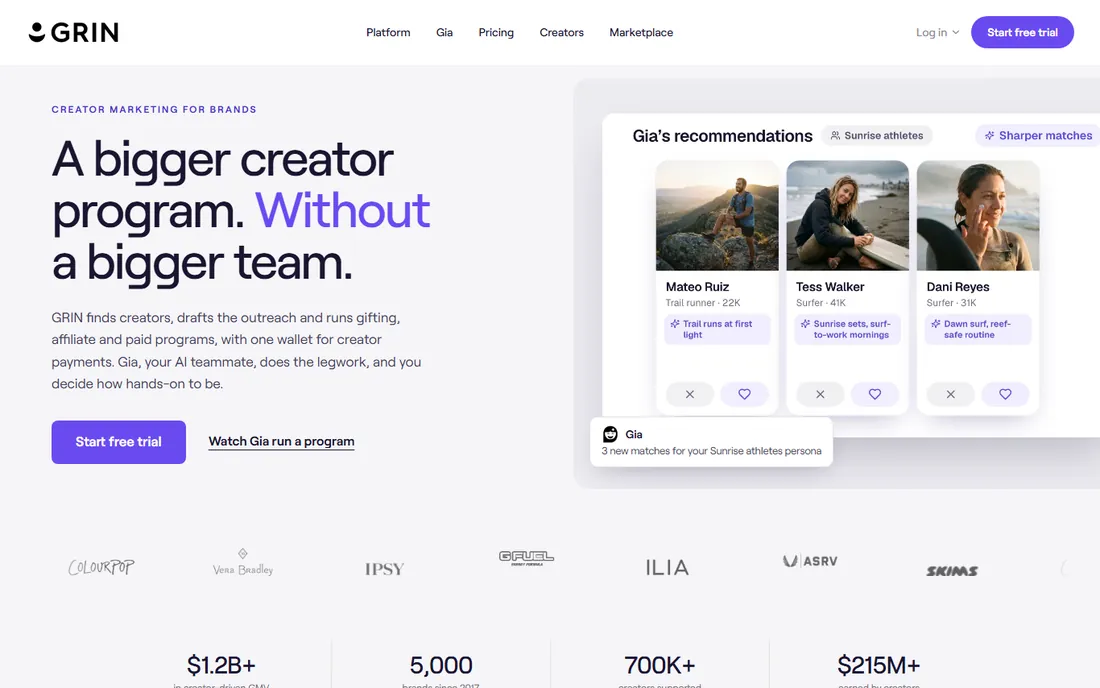
Grin is the default answer for direct-to-consumer brands that treat creators as a always-on sales channel rather than a one-off campaign. Product seeding, discount codes, affiliate payouts and whitelisted ads all run through the same system, and the Shopify integration ties creator activity back to actual revenue. That attribution is what separates it from discovery databases: you can see which creators drove sales, not just impressions.
The pricing is the catch. The free tier covers AI-assistant credits only, and the full workspace starts on quote-based plans that reviewers place around $500 a month and up. It is priced for established programs, not experiments. Brands outside e-commerce will also find the feature set tilted toward product-based workflows. If you ship physical products and run creator programs year-round, Grin is worth the money. If you run two campaigns a year, it is overkill.
What we like- Deep Shopify and WooCommerce integration with revenue attribution
- Purpose-built for e-commerce creator programs
- Manages gifting, codes and affiliates in one place
Watch out for- Full workspace pricing is quote-based and starts high
- Creator search and data quality need extra manual effort
- Less useful outside e-commerce
Starting priceSee website
Free planNo
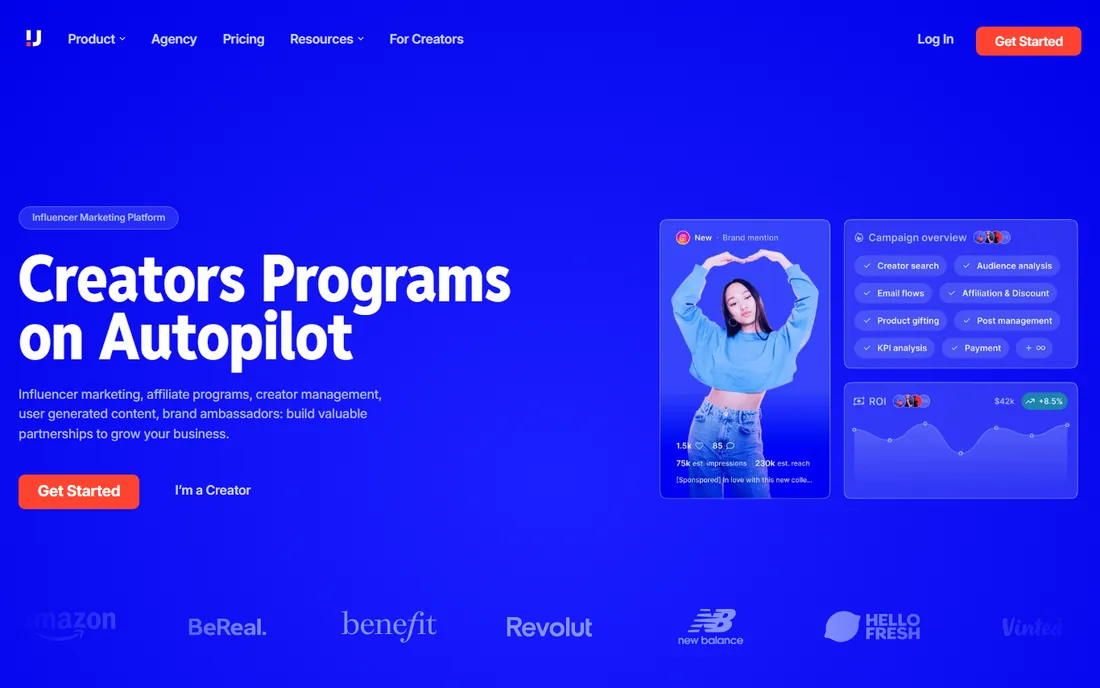
Upfluence combines a large influencer database with the campaign tools to actually run programs: outreach, contracts, product seeding, payments and performance tracking. The database refreshes continuously from live social data, which matters because follower counts and engagement rates go stale fast in static lists. E-commerce integrations with Shopify, WooCommerce and others let teams manage gifting at scale.
It is firmly a mid-market product with sales-led pricing, so small brands will find the entry cost steep. The breadth of features also means a learning curve; teams that just want to find ten creators and send them product will be paying for machinery they do not use. Where Upfluence wins is the middle ground: brands doing real volume that need discovery, outreach and measurement without hiring an agency to run it.
What we like- Large creator database with live social data
- Strong e-commerce integrations
- Campaign management plus affiliate tracking in one platform
Watch out for- Pricing is quote-based and aimed at mid-market budgets
- Interface can feel dense for first-time users
- Onboarding takes commitment
Starting priceSee website
Free planNo
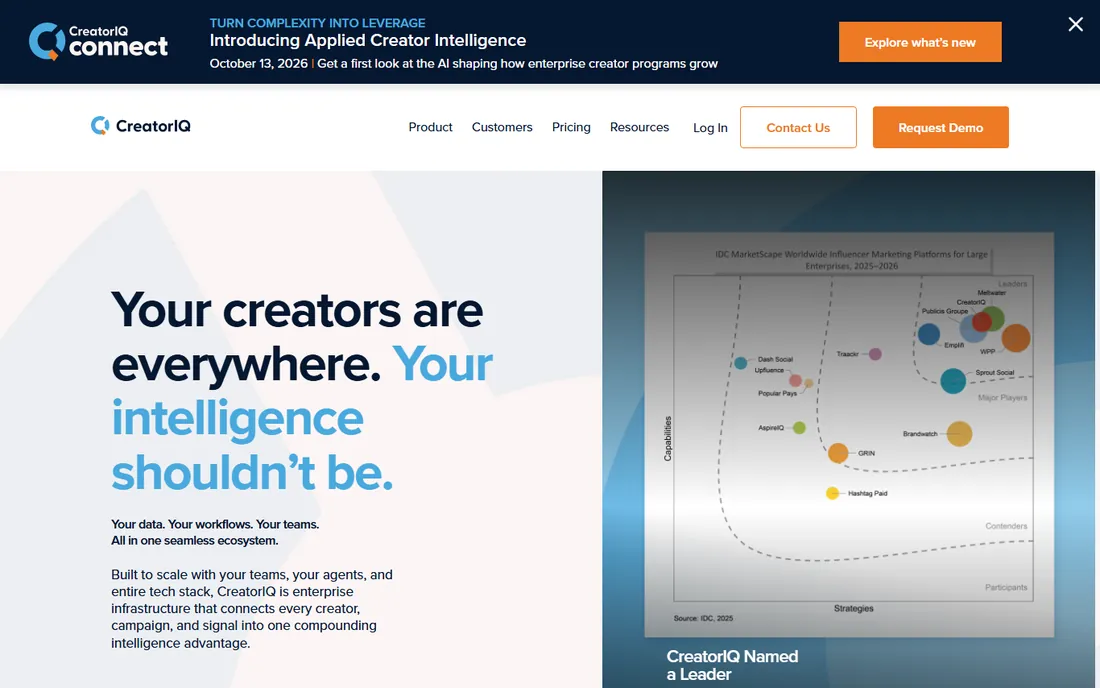
CreatorIQ is the platform large brands choose when influencer marketing is a real budget line with compliance requirements. It offers deep analytics, competitive benchmarking, brand safety controls and the kind of reporting a CMO can take to the board. Global teams can run multi-market programs with consistent measurement and approval workflows.
None of that comes cheap or fast. Pricing is enterprise and quote-based, sales cycles are long, and you will need someone internal to own the implementation. Small and mid-size brands get 90 percent of what they need from cheaper tools. But if you manage dozens of creators across markets, need audit trails and legal approvals, or report influencer ROI alongside other media, CreatorIQ is built for exactly that.
What we like- Enterprise-grade reporting and data governance
- Strong brand safety and compliance controls
- Handles complex global programs
Watch out for- Enterprise pricing and long sales cycles
- Overkill for small teams
- Implementation needs dedicated resources
#4
Aspire
Best for: Ambassador and affiliate programs at scale
Visit aspire.io
Starting priceSee website
Free planNo
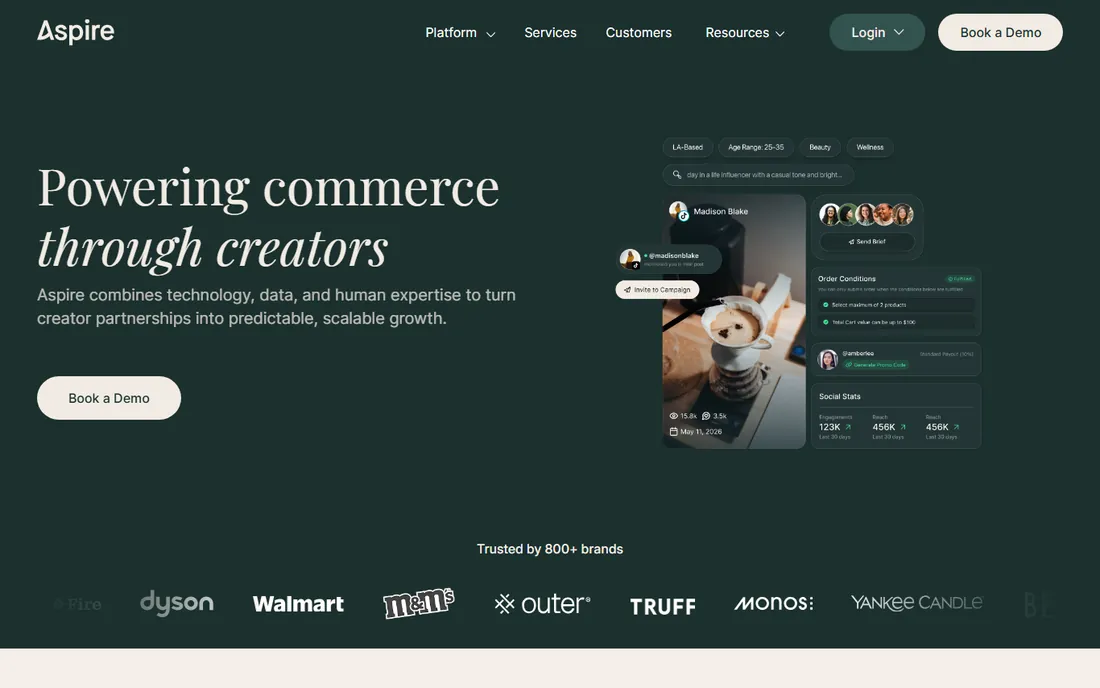
Aspire, formerly AspireIQ, focuses on the relationship side of creator marketing: long-term ambassadors, affiliates and user-generated content rather than single sponsored posts. Its marketplace lets creators apply to your campaigns, which flips the usual outbound grind. The content library collects everything creators produce so your team can repurpose it across ads and social.
Pricing is quote-based and the platform is tuned for ongoing programs, so a brand running one holiday campaign will not get the value. Discovery is solid but not the deepest on this list; pair it with a vetting tool if fraud is a concern in your niche. For brands building a roster of creators who post month after month, the relationship management and affiliate tracking justify the platform.
What we like- Strong creator marketplace with inbound applications
- Good affiliate and ambassador workflows
- Visual content library for repurposing creator posts
Watch out for- Quote-based pricing
- Some users report the search filters feel limited next to pure discovery tools
- Best for ongoing programs, not one-offs
#5
Later
Best for: Social teams already managing content in Later
Visit later.com
Starting priceSee website
Free planNo
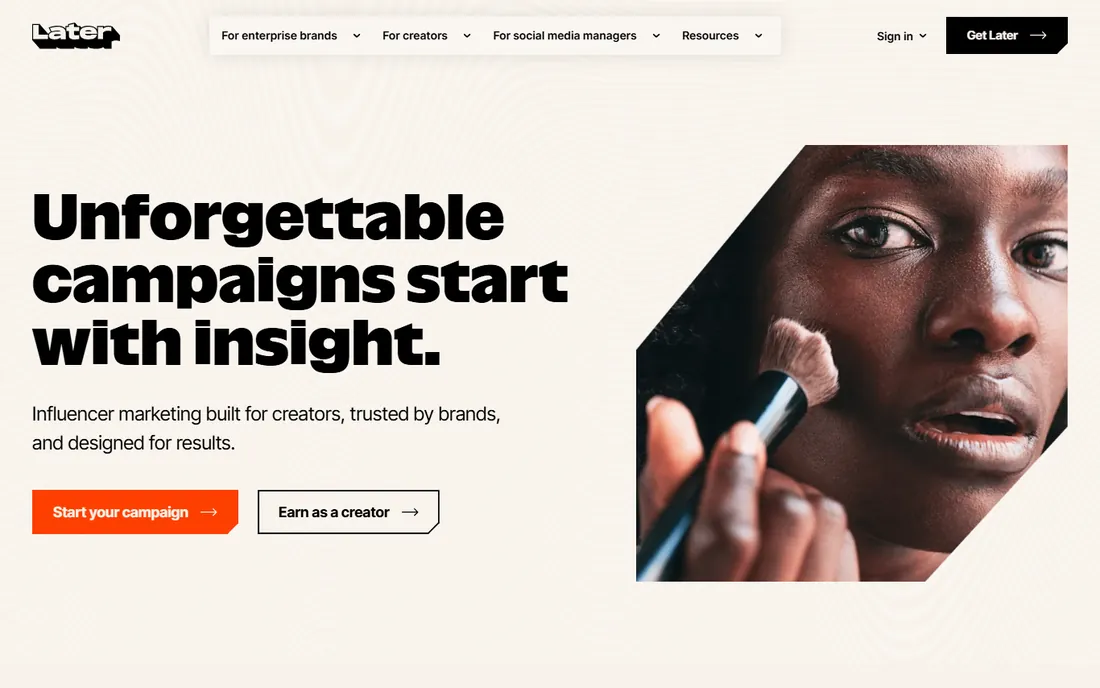
Later started as a social media scheduler and added influencer marketing, originally through the Mavrck acquisition, into the same workspace. For a small social team that already plans content in Later, running creator campaigns in the same tool removes a subscription and a learning curve. Discovery, outreach and campaign tracking cover the basics well.
Specialist platforms beat it on depth: the creator database is smaller, vetting analytics are thinner, and global enterprise programs will outgrow it. But depth is not what every team needs. If your influencer work is ten creators a quarter managed by the same person who schedules your Instagram, Later keeps everything in one place at a reasonable price. Teams running influencer as a standalone growth channel should look at Grin or Upfluence instead.
What we like- Influencer tools sit alongside social scheduling
- Easy for lean teams to adopt
- Good campaign organization for the price tier
Watch out for- Influencer features are less deep than specialists
- Discovery database is smaller
- Enterprise reporting is limited
#6
Traackr
Best for: Global brands needing market-level intelligence
Visit traackr.com
Starting priceSee website
Free planNo
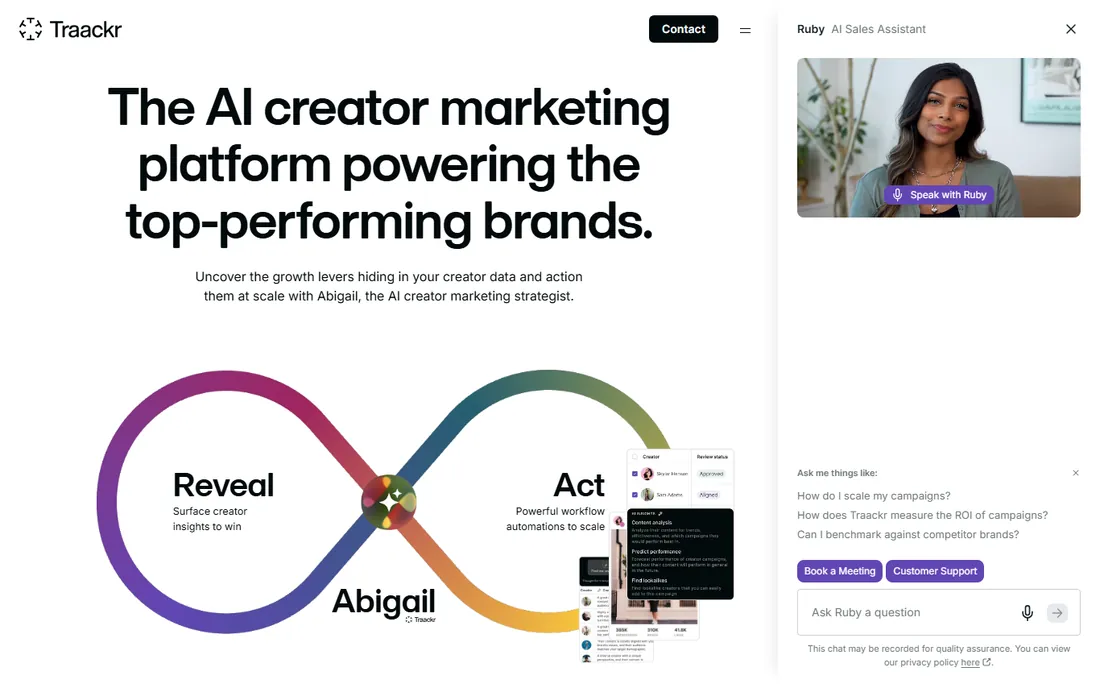
Traackr's strength is market intelligence: which creators talk about your category, how your brand's share of voice compares to competitors, and where the whitespace is. That makes it a strategist's tool as much as a campaign tool. Campaign management, payments and reporting are all present, but the benchmarking and competitive data are the reason brands choose it.
It is priced for enterprises and the buying process is sales-led. The discovery experience is not as slick as newer competitors, and some users find the interface dated. If your question is "who should we work with and why," a discovery-first tool serves you better. If your question is "how are we doing against competitors across the whole creator market," Traackr answers it better than anyone on this list.
What we like- Strong influencer market benchmarking and share-of-voice data
- Good for competitive intelligence
- Solid campaign management
Watch out for- Enterprise pricing
- Interface feels dated to some users
- Discovery is weaker than analytics
#7
Heepsy
Best for: Affordable end-to-end campaigns for small teams
Visit heepsy.com
Starting price$69/month (billed annually)
Free planYes
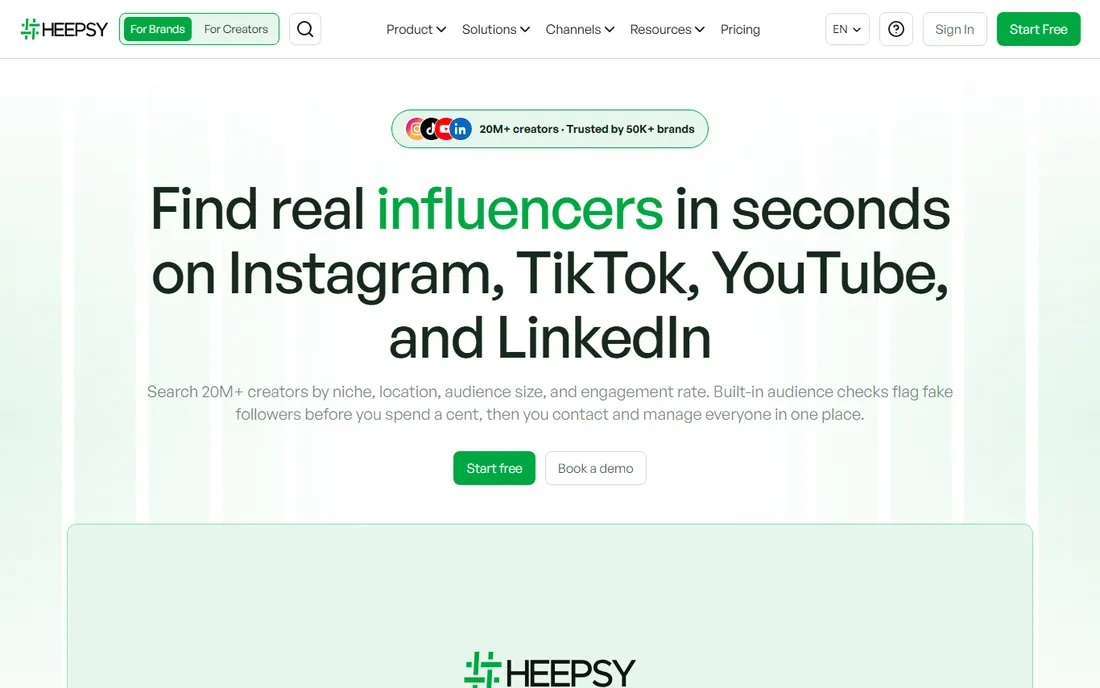
Heepsy is the rare tool that runs the whole campaign, discovery, vetting, outreach, payments and reporting, at a price a small brand can approve without a meeting. Paid plans start at $69 a month billed annually, flat with no credits to ration, and the free plan lets you start searching without talking to sales. The database covers over 20 million creators across Instagram, TikTok, YouTube and LinkedIn, with authenticity analysis showing genuine versus suspicious followers on every profile.
The tradeoff for the price is depth. The database and analytics are not as extensive as the enterprise platforms, and teams running complex global programs will hit limits. But for small and mid-size brands, the value equation is hard to argue with: you get fraud checks, outreach, in-platform payments with escrow-style protection, and Shopify or WooCommerce tracking for less than most tools charge for discovery alone. Start here if budget matters and upgrade when your program outgrows it.
What we like- Full workflow from discovery to payment at a low flat price
- Free plan with no card required
- AI and lookalike search plus authenticity checks built into results
Watch out for- Database is smaller than enterprise platforms
- Advanced features are thinner than Grin or CreatorIQ
- Support is self-serve on lower tiers
Starting priceSee website
Free planFree trial
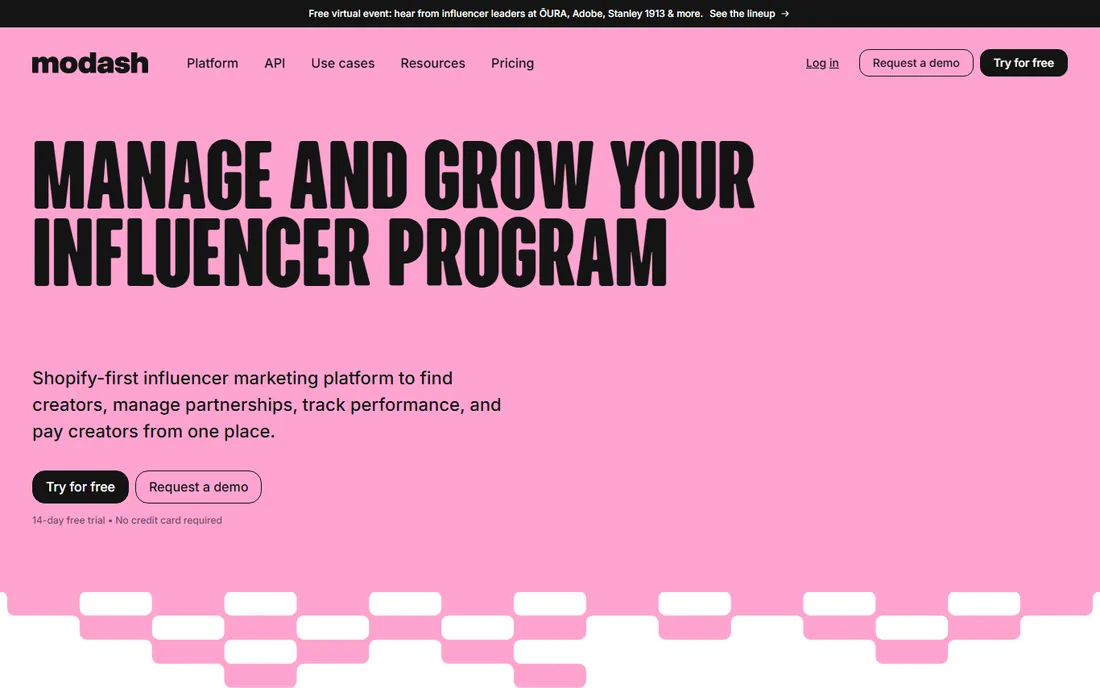
Modash built its reputation on doing one job well: telling you quickly whether a creator is worth your money. Search is fast, profiles show engagement quality and audience authenticity without digging, and you can vet a shortlist in an afternoon. For teams burned by creators with bought followers, that speed is the whole pitch.
It is not a full campaign suite. Outreach, contracts and payments exist but are lighter than what Grin or Aspire offer, so many teams use Modash for discovery and vetting alongside another tool for management. Pricing is tiered by usage, which suits teams with variable volume. If your workflow is "find good creators, check they are real, then manage the relationship elsewhere," Modash is one of the most efficient ways to do the first two steps.
What we like- Quick, no-nonsense creator search and analytics
- Strong fake-follower detection
- Easy to get started without a sales call
Watch out for- Campaign management is lighter than full-suite tools
- Pricing tiers gate higher usage
- Smaller brand recognition than incumbents
Starting priceSee website
Free planLimited free version
HypeAuditor is the forensic accountant of influencer marketing. Its audience quality scores, fraud detection and authenticity analytics are the industry reference point, and agencies use its reports to justify creator choices to clients. When a creator's engagement looks too good to be true, HypeAuditor is where you check.
It is priced accordingly: usage-based plans reported from around $299 a month, with costs rising as you run more reports. The platform has added campaign features, but analytics remains the core and the reason to buy. Brands that need an end-to-end workflow usually pair it with a management tool. Buy HypeAuditor when vetting rigor is the priority, when you are spending serious money with creators and cannot afford fakes, or when you need credible third-party data for client reporting.
What we like- Best-known name in influencer fraud analytics
- Deep audience quality and authenticity scoring
- Useful market research reports
Watch out for- Usage-based pricing gets expensive fast
- Campaign management is secondary
- Advanced discovery filters sit on higher tiers
Starting priceSee website
Free planFree trial
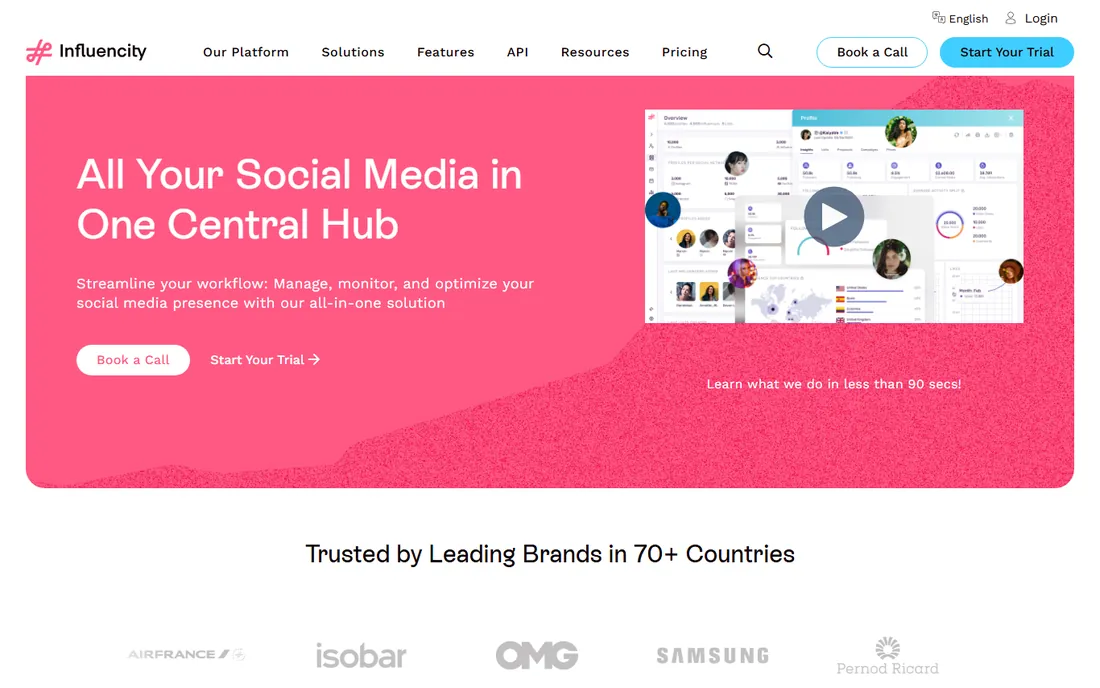
Influencity is built with agencies in mind: manage multiple brands' campaigns from one dashboard, keep client data separate, and report per client without spreadsheet gymnastics. Discovery, influencer relationship management, campaign tracking and reporting cover the full workflow, and the pricing tiers scale with usage.
It is a Spanish company with a strong European footprint and growing US presence, which means the integration ecosystem is smaller than the American incumbents'. The interface packs a lot in and can feel busy on first use. Pricing is not published, so expect a sales conversation. For agencies juggling ten client programs, the multi-brand workflow is the deciding feature. For single brands, the generalist tools above usually fit better.
What we like- Multi-client campaign management in one dashboard
- Solid discovery and reporting
- Workflow suits agency processes
Watch out for- Pricing not published
- Interface can feel busy
- Smaller ecosystem of integrations than US leaders
How we chose
We evaluated these platforms against the actual influencer workflow: discovery, vetting, outreach, contracting, payments and reporting. We checked vendor pricing pages and documentation, public reviews on G2 and Capterra, and agency discussions about data quality and support. Every tool here is in active development with real brand customers. We favored platforms that cover the full campaign path while keeping specialists like HypeAuditor and Modash for the vetting job they do best.
Reading the pricing models before you buy
Influencer software pricing falls into three buckets, and the bucket matters more than the headline number. Flat subscriptions like Heepsy's charge one price for the plan; you always know the bill. Credit or usage-based models like Grin's and HypeAuditor's scale with how much you use, which is fair until a busy month surprises you. Quote-based enterprise pricing, which covers CreatorIQ, Traackr, Aspire and Upfluence, means the price depends on your team size and usage, so budget a negotiation.
The practical move is to match the model to your volume. Running two campaigns a year? A flat low-cost plan or pay-as-you-go vetting beats an annual enterprise contract. Running always-on programs? Quote-based platforms with revenue attribution usually pay for themselves, but get the renewal terms in writing. And whatever the model, ask what counts as a "user" or a "report," because that definition is where surprise bills come from.
What to check before you commit
Start with a trial on your real shortlist, not the vendor's demo data. Run five creators you are actually considering through the vetting tools and see whether the fraud scores match your instincts. Check the database coverage in your niche specifically: a platform with 100 million creators can still be thin in B2B SaaS or regional markets.
Then verify the unglamorous parts. Can you export your creator lists and campaign data if you leave. How do payments work, and who holds the money if a creator ghosts. Does the platform support the networks you actually use; LinkedIn coverage matters for B2B, TikTok Shop integrations matter for commerce. Finally, read recent reviews about support responsiveness, because when a campaign launches Friday, a 48-hour support SLA is a real problem.
Frequently asked questions
What does influencer software actually do?
It covers the creator marketing workflow end to end: finding creators, checking their audiences are real, reaching out, managing contracts and content, paying them, and reporting results. Some tools do all of this; specialists focus on one part, like HypeAuditor on fraud detection.
How much does influencer marketing software cost?
From $69 a month for Heepsy's full workflow to quote-based enterprise plans that run into thousands monthly. Usage-based vetting tools start around $299 a month. Most serious platforms sit between $300 and $1,000 a month for mid-size brands.
Can I just use Instagram search instead of paying for software?
For your first five creators, yes. Software earns its keep on vetting at scale, managing outreach to dozens of creators, tracking payments and codes, and proving ROI. The fraud detection alone usually justifies the cost once real budget is involved.
What is the difference between Grin and Upfluence?
Both serve e-commerce brands, but Grin is deeper on the owned-program side: gifting, affiliates and revenue attribution inside your store. Upfluence leans more toward discovery and outreach at scale. Brands running always-on creator programs tend to pick Grin; teams prospecting many new creators tend to pick Upfluence.
Do I need HypeAuditor if my platform has fraud checks?
If your spend per creator is small, probably not; built-in authenticity scores from Heepsy or Modash are enough. If you are paying thousands per post or reporting to clients, HypeAuditor's deeper forensic analysis is worth the separate subscription.
Which networks do these tools cover?
Nearly all cover Instagram, TikTok and YouTube. LinkedIn coverage matters for B2B and is a Heepsy strength; X coverage is a HypeAuditor strength. Check your specific networks before buying, especially for emerging platforms.
Sources we checked (11)
- https://grin.co/
- https://www.upfluence.com/
- https://www.creatoriq.com/
- https://www.aspire.io/
- https://later.com/
- https://www.traackr.com/
- https://heepsy.com/
- https://www.heepsy.com/
- https://www.modash.io/
- https://hypeauditor.com/
- https://influencity.com/
Is your product missing or out of date?
We review this list regularly. Vendors can request a listing, send updated pricing or ask about featured placement.

Shihab Mia · Founder, Rankite
Shihab has spent more than a decade helping SaaS and e-commerce brands grow through search. He writes Rankite's software buying guides from pricing pages, documentation and public user reviews. More about Shihab.