How we make this list: we compare pricing pages, product documentation and public user reviews. Ratings come from G2, Capterra or Trustpilot, with the date we checked them.
Key takeaways
- Home equity investments give you cash now in exchange for a share of your home's future value, with no monthly payments in most cases.
- Hometap and Point are the most established providers, with the widest state coverage and clearest terms.
- Unison suits homeowners who want a longer term and a partner that shares both gains and losses.
- Unlock and Splitero suit homeowners who want smaller investments or specific state coverage.
- This is not financial advice, and the total cost depends on how much your home appreciates, so compare the effective cost carefully.
A home equity investment, sometimes called a home equity agreement, is different from a loan. A company gives you a lump sum now, and in return it takes a share of your home's future appreciation, repaid when you sell, refinance or reach the end of a term, usually 10 to 30 years. There are usually no monthly payments and no interest in the traditional sense, which appeals to homeowners who are house-rich but cash-tight.
The cost is the share of appreciation you give up. If your home rises sharply, the company takes a large amount. If it falls, some agreements share the loss, while others do not. The six dedicated home equity investment companies below are joined by two adjacent options, a HELOC lender and a sale-leaseback provider, clearly marked as different models, so you can compare the full range. This is not financial advice, and terms vary by state and provider, so read the agreement before signing.
Quick comparison
| Tool | Best for | Starting price | Free plan |
|---|
 Hometap | Established all-round option | See website | No |
 Point | Wide coverage and clarity | See website | No |
 Unison | Shared gains and losses | See website | No |
 Unlock | Flexible terms | See website | No |
 Splitero | Smaller investments | See website | No |
 HomePace | Newer flexible option | See website | No |
 Figure | HELOC alternative | See website | No |
 EasyKnock | Sale-leaseback alternative | See website | No |
Is your product missing or out of date?
We review this list regularly. Vendors can request a listing, send updated pricing or ask about featured placement.
The best home equity investment companies
Starting priceSee website
Free planNo
Hometap is one of the pioneers of home equity investments, offering lump sums in exchange for a share of future appreciation over a 10-year term in most cases. Homeowners use the cash for debt payoff, renovations, education or retirement needs, with no monthly payments during the term. The company explains its share calculation upfront, and repayment happens on sale, refinance or term end.
The cost depends on appreciation. A home that gains strongly leaves a large repayment, which surprises some homeowners. State availability also varies. For a homeowner who wants an established provider with clear terms, Hometap is the most proven starting point.
What we like- One of the longest-running providers
- Clear term lengths
- Wide state availability
Watch out for- Share of appreciation can be large if values rise fast
- Not available in every state
#2Point
Best for: Wide coverage and clarity4.7/5 on
G2 (84 reviews, checked Oct 2026)
Visit point.com
Starting priceSee website
Free planNo

Point offers home equity investments with terms up to 30 years, giving homeowners a long horizon before repayment. Online tools estimate the investment amount and the share of appreciation, which helps comparison shopping. The company is one of the largest in the field, with funding for a wide range of home values.
Fees sit on top of the appreciation share, and the total cost grows if the home appreciates strongly. For a homeowner who wants a long term and a clear estimate process, Point is a strong choice.
What we like- Large provider with broad state coverage
- Clear online estimate tools
- 30-year term option
Watch out for- Effective cost rises with appreciation
- Fees apply on top of the share
Starting priceSee website
Free planNo
Unison's model shares both directions: the company takes a share of appreciation when values rise, and absorbs a share of depreciation when values fall, under the terms of its agreements. That downside sharing distinguishes it from some rivals that only share gains. Terms run long, and the company has operated in this market for years.
The agreements are complex, with caps, adjustments and fees that need careful reading. State availability varies. For a homeowner worried about a market downturn as well as a boom, Unison's shared-risk design is appealing.
What we like- Shares downside as well as upside in many agreements
- Long terms
- Established provider
Watch out for- Terms are complex
- Availability varies by state
Starting priceSee website
Free planNo
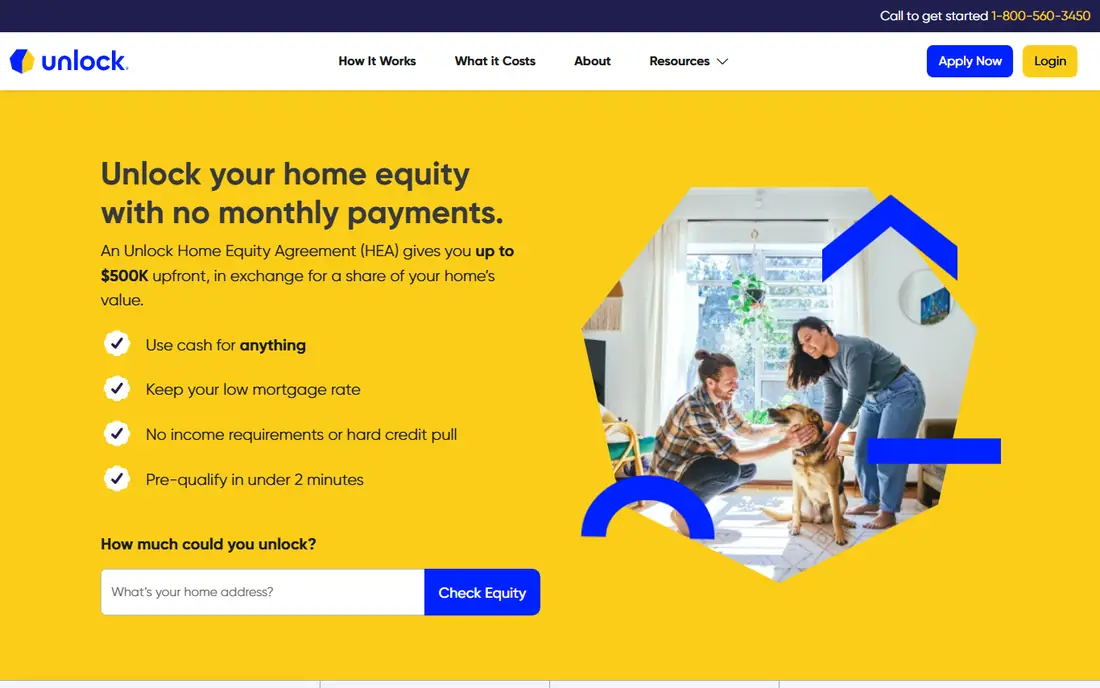
Unlock offers home equity agreements with flexible amounts and a technology-driven application process. Homeowners apply online, receive an estimate, and complete the process digitally in many cases. The model suits owners who want a smaller or mid-size investment without the paperwork weight of older providers.
The company is newer than Hometap or Point, so its long-term track record is shorter, and state coverage is narrower. For a homeowner in a covered state who wants a smooth digital process, Unlock is worth comparing.
What we like- Flexible investment amounts
- Clear online process
- Newer technology-driven experience
Watch out for- Newer provider with a shorter track record
- State coverage is narrower
Starting priceSee website
Free planNo
Splitero focuses on home equity investments with amounts that suit homeowners who need a smaller lump sum rather than a maximum draw. Terms are explained plainly, and the company serves several large states. The model follows the standard pattern: cash now, a share of appreciation later, no monthly payments.
State availability is the main limit, since coverage is narrower than Point or Hometap. For a homeowner in a covered state who wants a modest investment, Splitero is a focused option.
What we like- Options for smaller investment amounts
- Clear terms
- Serves several major states
Watch out for- Limited state availability
- Newer provider
Starting priceSee website
Free planNo
HomePace is a newer entrant in home equity sharing, offering lump sums for a share of future home value with flexible terms. The application process is modern and online-first, and the company positions itself as a flexible alternative to larger providers. Homeowners use funds for debt, renovations or life expenses.
As a newer provider, its track record and state coverage are limited compared with Hometap or Point. For a homeowner in a covered state comparing newer options, HomePace deserves a look alongside the established names.
What we like- Flexible terms and amounts
- Modern application process
- Home equity sharing model
Watch out for- Newer provider
- Limited state coverage and track record
Starting priceSee website
Free planNo
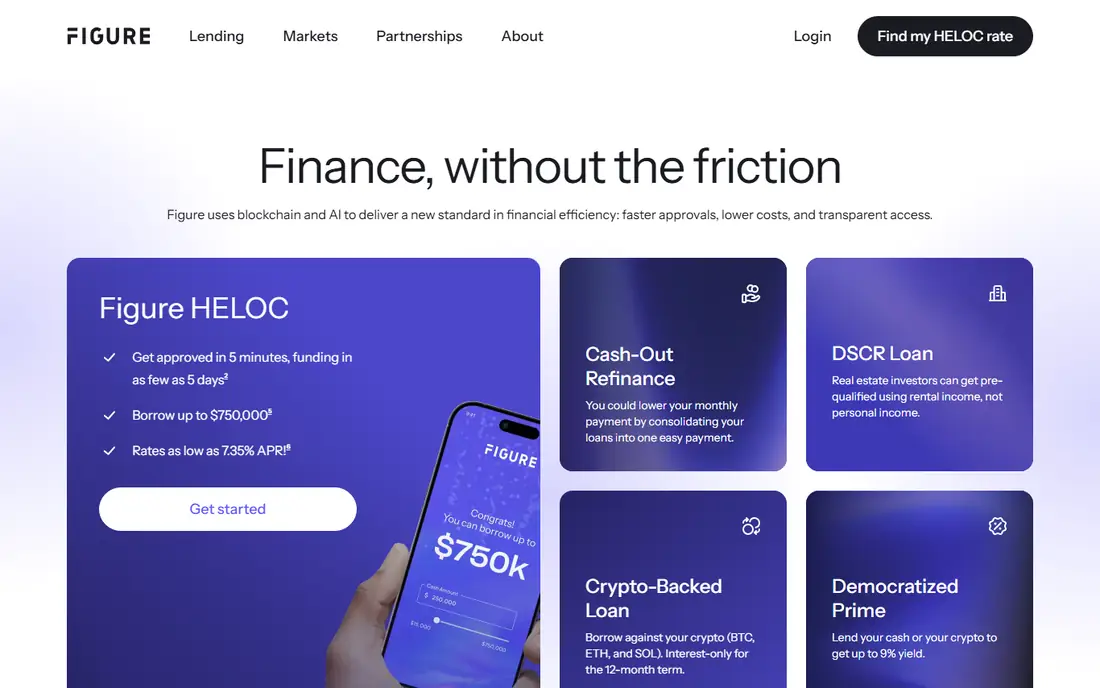
Figure is included as a different model, not a home equity investment. Its home equity line of credit (HELOC) lends against your equity with monthly payments and interest, but you keep all future appreciation. Approval and funding are fast and digital, and the credit line can be drawn as needed rather than as one lump sum.
The trade-off is payments and interest, plus the risk of a variable rate rising. For a homeowner who wants cash but prefers to keep all appreciation and can handle monthly payments, a HELOC from Figure is the main alternative to an equity-sharing agreement.
What we like- Fast HELOC approval and funding
- You keep all appreciation
- Interest may be tax deductible in some cases
Watch out for- This is a loan, not an investment, so monthly payments apply
- Variable rates are common
Starting priceSee website
Free planNo

EasyKnock is also a different model: sale-leaseback. You sell your home to EasyKnock, receive cash, and stay in the home as a tenant paying rent, with an option to repurchase in many programmes. There is no loan payment, but you no longer own the home, and rent replaces a mortgage payment.
The long-term cost can exceed an equity investment or HELOC, since rent continues indefinitely if you stay. For a homeowner who needs a large cash amount, cannot qualify for a loan, and accepts renting, EasyKnock is a distinct path worth understanding before choosing.
What we like- Converts equity to cash while you stay in the home as a renter
- No loan payments in the traditional sense
Watch out for- You sell your home and pay rent, which changes ownership
- Long-term cost can exceed other options
How we chose
We compared providers on their published terms, state availability, fee disclosures and public reviews from homeowners. We favoured providers with clear share calculations, established operations and transparent fees. Prices were marked "See website" because investment amounts, shares and fees depend on home value, location and term. We did not claim hands-on testing, and this guide is not financial advice.
Comparing the true cost
The key comparison is the effective cost: what you repay versus what you received, under different appreciation scenarios. Ask each provider for a worked example at 0 percent, 3 percent and 5 percent annual appreciation, and compare the repayment in each case. Include fees, which sit on top of the share, and check whether the share is capped.
Also check the term, the repayment triggers, and what happens if you want to buy out early. Some agreements allow early buyout at a formula price, while others restrict it. Finally, confirm state availability and whether your home type qualifies, since condos, multi-unit properties and rural homes face different rules.
A home equity investment deserves the same scrutiny as a mortgage. Get written estimates from at least three providers for the same home value and amount, and compare the effective cost if you sell in five, ten and twenty years, since the share of appreciation you give up grows with time and rising prices. Read the settlement terms carefully, including what happens if you renovate, refinance, or cannot settle by the deadline, because forced-sale clauses and extension fees change the deal dramatically. Talk to a tax adviser before signing, since tax treatment of these agreements varies and surprises at settlement are common. Keep an emergency fund separate from the investment proceeds, because spending the full amount on one project leaves no buffer if the project overruns.
Frequently asked questions
What is a home equity investment?
A home equity investment, or home equity agreement, gives you a lump sum now in exchange for a share of your home's future appreciation, repaid when you sell, refinance or reach the term end. Most agreements have no monthly payments and no interest in the traditional sense. The cost is the share of appreciation you give up.
How is this different from a HELOC?
A HELOC is a loan secured by your home, with monthly payments and interest, while you keep all appreciation. A home equity investment has no monthly payments but takes a share of appreciation. The right choice depends on whether you prefer payments or sharing future value.
What happens if my home loses value?
It depends on the agreement. Some providers, such as Unison in many agreements, share downside as well as upside, reducing what you repay. Others cap the downside or require a minimum repayment. Read the depreciation terms carefully before signing.
How long do home equity agreements last?
Terms commonly run 10 to 30 years, depending on the provider. Repayment is usually triggered by a sale, refinance or the end of the term, whichever comes first. Some agreements allow early buyout at a formula price, so check the buyout terms.
Do I need good credit for a home equity investment?
Requirements are usually lighter than for a mortgage or HELOC, since the provider's return comes from appreciation rather than payments. Credit, income and home value still matter, and terms vary by provider and state. Check eligibility on the provider's site before applying.
Is a home equity investment a good idea?
It suits homeowners who need cash, cannot or do not want monthly payments, and accept sharing future appreciation. It costs more than a low-rate loan if the home appreciates strongly. Compare the effective cost under several appreciation scenarios and consider a HELOC or loan first.
Sources we checked (8)
- https://www.hometap.com
- https://point.com
- https://www.unison.com
- https://www.unlock.com
- https://www.splitero.com
- https://www.homepace.com
- https://www.figure.com
- https://www.easyknock.com
Is your product missing or out of date?
We review this list regularly. Vendors can request a listing, send updated pricing or ask about featured placement.

Shihab Mia · Founder, Rankite
Shihab has 5+ years in B2B and SaaS SEO. He writes Rankite's software buying guides from pricing pages, documentation and public user reviews. More about Shihab.