How we make this list: we compare pricing pages, product documentation and public user reviews. Ratings come from G2, Capterra or Trustpilot, with the date we checked them.
Key takeaways
- Khan Academy and Wikipedia give a strong free start, while paid apps add structure, quizzes, and video.
- History Hit is the pick for documentary and podcast fans who want long-form stories rather than short lessons.
- World History Encyclopedia and Google Arts and Culture suit readers and museum lovers who like to browse by era, place, or object.
- Check the price before you commit, because several apps charge through app stores and rates vary by plan and region.
Quick comparison
Is your product missing or out of date?
We review this list regularly. Vendors can request a listing, send updated pricing or ask about featured placement.
The best history apps

#1Khan Academy
Best for: Free structured history courses4.5/5 on
G2 (177 reviews, checked Oct 2026)
Visit khanacademy.org
Starting price$0
Free planYes
Khan Academy organizes history into courses and units, so a learner can move from early civilizations to modern America in a set order. Short videos pair with practice questions and reading, which helps when a topic feels dense at first. The nonprofit model keeps the core material free, and that matters for families and classrooms with tight budgets.
The catch is scope. Khan Academy covers major periods and themes well, but it is not a deep archive for specialist topics or for recent scholarship. Readers who want long essays, primary sources, or expert interviews will need a second source. Still, as a first stop for building a foundation, it is hard to beat on price and clarity.
What we like- Free courses
- Clear progression
- Useful for students and self-learners
Watch out for- Less depth on some niche topics
- No documentary library
Starting price$7.99 per month
Free planFree trial
History Hit works more like a history channel than a classroom. Its library holds original documentaries, interviews with historians, and a set of podcasts that cover ancient history through the twentieth century. Fans of storytelling will enjoy the production quality, and offline downloads make it useful for travel or commutes.
The trade-off is learning structure. There are no lessons in a fixed order, no tests, and no progress tracking for a curriculum. Coverage also leans toward British and European subjects, so readers interested in other regions may find gaps. For watching and listening, though, it is one of the most focused history apps available.
What we like- Original documentaries
- Ad-free podcasts
- New programs added regularly
Watch out for- Strong focus on British and European history
- No quizzes or structured courses
Starting price$0
Free planYes
World History Encyclopedia publishes detailed articles, definitions, maps, and timelines written for general readers. A single entry often explains context, key people, and why an event mattered, which helps when a short summary leaves questions unanswered. The nonprofit site is free to read, with optional memberships for supporters.
Reading is the main activity here. There are no guided courses, video lessons, or interactive drills, so self-directed readers get the most value. Navigation by period helps, but finding a clear path through a whole era takes some planning. For research and curiosity, the depth is a real strength.
What we like- Long expert-reviewed articles
- Maps and timelines
- Free to read
Watch out for- Text-heavy format
- No video courses or quizzes
Starting price$0
Free planYes
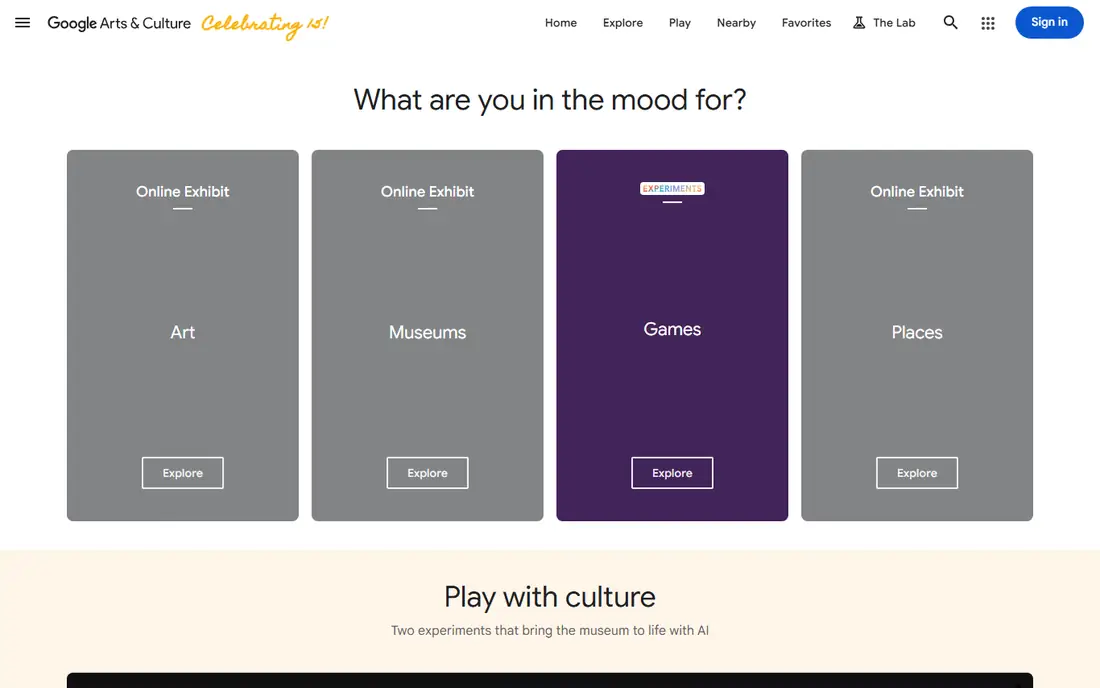
Google Arts and Culture gathers exhibits, artworks, artifacts, and stories from museums and archives around the world. A user can zoom into a painting, explore a virtual gallery, or follow a themed story about an era, a place, or a movement. For visual learners, seeing an object up close often sticks better than reading a paragraph alone.
The site is a collection, not a curriculum. Some topics have rich exhibits and others have only a few items, depending on partner museums. Search works well, but a beginner may need a course or a book to supply the order and context. As a free companion to other history study, it adds a great deal.
What we like- Huge museum partner collections
- High-resolution images
- Free exhibits
Watch out for- History coverage varies by partner
- Not a course platform
Starting priceSee website
Free planYes
HISTORY brings the television channel to the web and to apps, with shows, clips, and articles on topics from ancient engineering to modern events. Its This Day in History feature gives a quick daily entry point, and short reads suit readers who have only a few minutes. The brand recognition also helps families find content they already trust.
Depth is the limit. Many articles are short introductions rather than full lessons, and watching full episodes can require a cable login or a separate streaming deal. Readers who want a full course should pair HISTORY with a structured app. For casual discovery and TV-style storytelling, it works well.
What we like- Familiar TV brands
- Short articles
- Daily history features
Watch out for- Full shows may need a TV provider
- Articles are often brief
Starting priceSee website
Free planNo
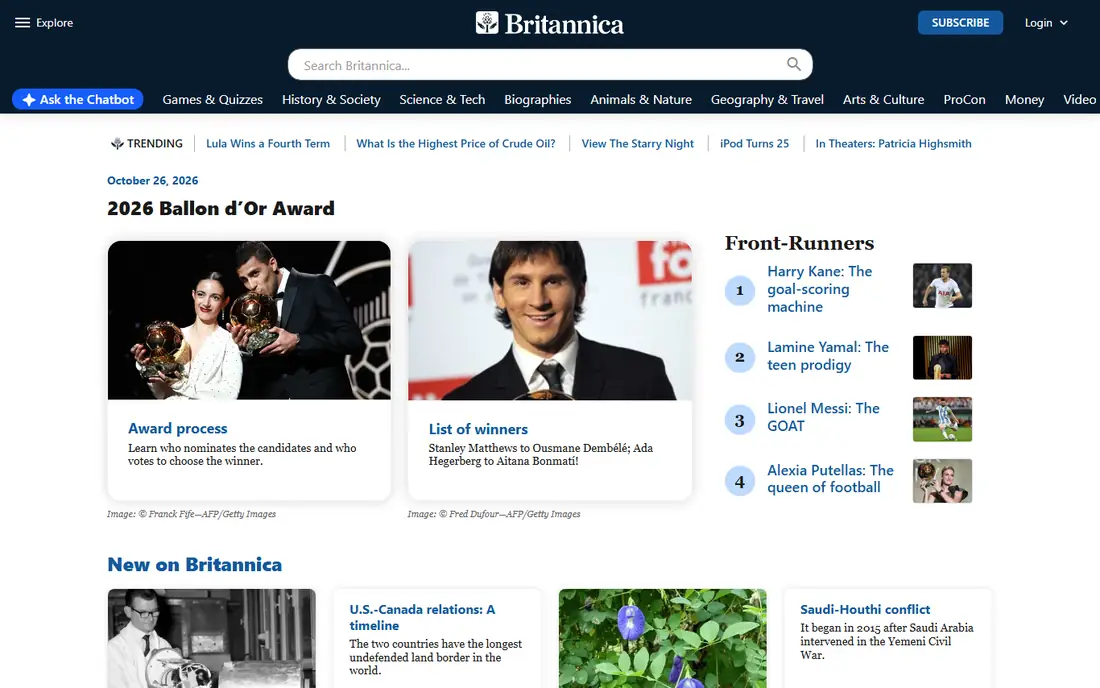
Britannica has long served as a reference first stop, and its online entries keep that role. Articles give concise, edited summaries of people, events, and ideas, with links to related topics for deeper reading. Students writing essays and readers checking a fact will find the tone steady and the sourcing clearer than on open-edit sites.
The style is reference, not narrative. Entries inform rather than entertain, and full access sits behind a subscription in many cases. That makes Britannica a checking tool and a background source more than a daily learning habit. Used that way, it earns its place beside more story-driven apps.
What we like- Edited reference entries
- Reliable summaries
- Broad coverage
Watch out for- Paid access for full content
- Drier style than story-led apps
Starting price$0
Free planYes
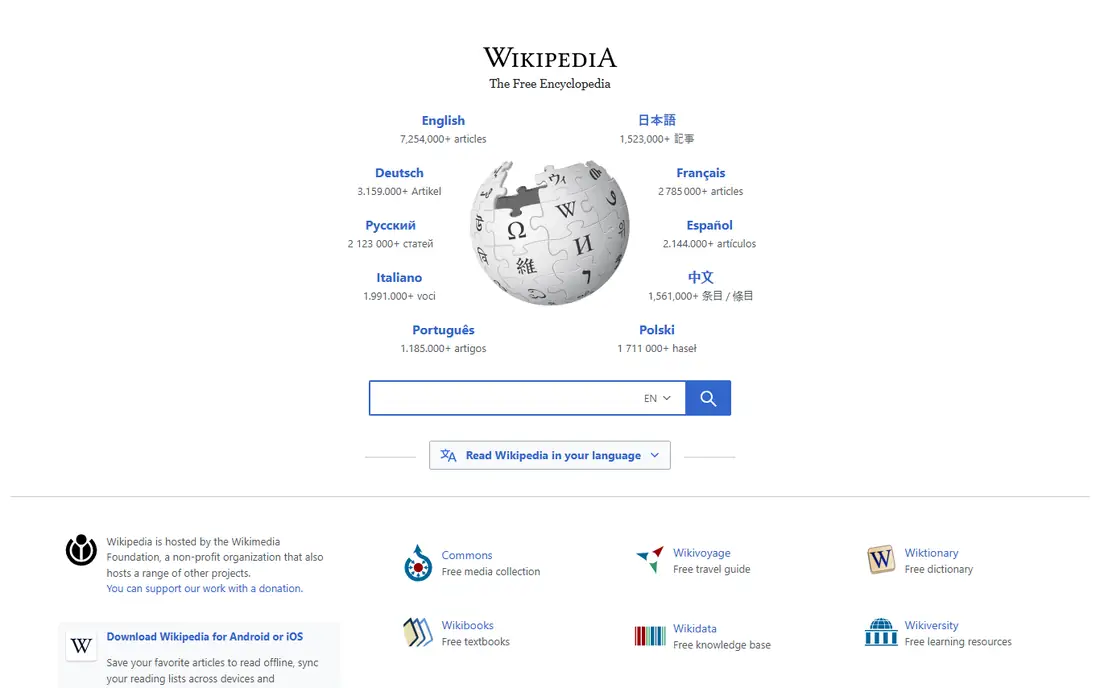
Wikipedia covers history at a scale no single publisher can match, from major wars to small towns and minor figures. Each article usually links to sources, timelines, and related entries, so a curious reader can follow a thread for hours. The app also supports saved lists and offline reading on mobile.
Quality is uneven, because articles depend on volunteer editors and available sources. Newer or contested topics need cross-checking, and there is no course order to guide a beginner. Still, for fast background and for finding primary and secondary sources, Wikipedia remains a practical tool in any history toolkit.
What we like- Enormous coverage
- Free
- Useful references at the foot of articles
Watch out for- Quality varies by article
- No structured learning path
How we chose
We compared pricing pages, product documentation, and public reviews on G2, Capterra, and Reddit, and we checked features, integrations, and fit for different learners. We favored apps that are still maintained, that cover history as a main focus, and that offer a clear free or paid path. We did not claim hands-on testing, and we left out apps with unclear ownership, dead links, or only a thin history section.
Choosing the right history app for your goal
Start with the outcome you want. If you need a course for school or self-study, pick a structured option first and use reference apps for background. If you want entertainment and stories, a documentary or podcast app will hold your attention longer than a textbook-style course. Readers often do best with two apps: one for order and one for depth.
Check the details before paying. Look at whether a plan is monthly or annual, whether offline access is included, and whether a family or classroom plan exists. App store prices can differ from web prices, and free trials renew automatically if you forget to cancel. A short trial with a clear calendar reminder is a safer way to judge an app than a full year paid up front.
Think about how you will actually use the app week by week. A documentary app works best if you set aside an evening slot for longer viewing, while a short-lesson app works best in small daily gaps. Reference apps work best when you have a question in mind, such as a name, a battle, or a period you want to understand. If an app sits unused for two weeks, pause the subscription and return to the free tools, then restart only when a specific topic draws you back. Keeping a short list of topics you want to cover next also helps, because it turns browsing into a plan and makes it easier to judge whether a paid app is earning its price.
Frequently asked questions
What is the best free history app?
Khan Academy is the strongest free structured option, with courses, videos, and practice. Wikipedia and World History Encyclopedia add free reading and reference, while Google Arts and Culture adds museum exhibits at no cost. Together, they cover courses, reference, and visual history without a subscription.
Are history apps good for kids?
Yes, with adult guidance on content and screen time. Khan Academy suits school-age learners, while Google Arts and Culture works well for exploring museums together. History Hit and HISTORY include adult topics, so parents should preview shows and episodes before sharing them with younger children.
Do I need a paid history app to learn history well?
No. Free courses, reference sites, and library resources cover most general history topics. Paid apps help when you want original documentaries, magazine features, or a guided path with less searching. Start free, find the gaps in your learning, and pay only for the format you actually use.
Which history app is best for documentaries?
History Hit is the most focused choice, with original documentaries and ad-free podcasts made for history fans. HISTORY offers TV shows and clips, but full episodes may need a provider login. For film-style history, start with a trial of History Hit and check its catalog for your favorite periods.
Can history apps replace a history book?
They can complement a book, but they rarely replace one for depth. Apps excel at short lessons, timelines, images, and audio, while books give sustained argument and detail. Many readers use an app to find a topic, then read a book for the full story.
Sources we checked (8)
- https://www.historyhit.com
- https://www.khanacademy.org
- https://www.worldhistory.org
- https://artsandculture.google.com
- https://www.history.com
- https://www.britannica.com
- https://www.wikipedia.org
- https://www.historyextra.com
Is your product missing or out of date?
We review this list regularly. Vendors can request a listing, send updated pricing or ask about featured placement.

Shihab Mia · Founder, Rankite
Shihab has 5+ years in B2B and SaaS SEO. He writes Rankite's software buying guides from pricing pages, documentation and public user reviews. More about Shihab.
 History Hit
 World History Encyclopedia
 Google Arts and Culture
 HISTORY
 Britannica
 Wikipedia
 History Extra