How we make this list: we compare pricing pages, product documentation and public user reviews. Ratings come from G2, Capterra or Trustpilot, with the date we checked them.
Key takeaways
- commercetools, Elastic Path, Spryker and Fabric are the enterprise composable platforms; buy them when you need modular APIs and have the developers to assemble them.
- BigCommerce and Shopify are the SaaS route to headless: familiar platforms with headless APIs and frameworks, priced from $39 per month, and far less to build from scratch.
- Swell, Crystallize and Nacelle serve the middle: developer-first platforms with published pricing or free tiers, good for teams that want headless without enterprise contracts.
- Every platform here is quote-based except the SaaS options; expect a sales process and implementation project on the enterprise side.
Quick comparison
| Tool | Best for | Starting price | Free plan |
|---|
 commercetools commercetools | Enterprises building fully composable commerce | See website (custom quote) | No (demo available) |
 BigCommerce BigCommerce | Mid-market brands that want SaaS simplicity with headless freedom | $39/month Core ($29 billed annually, per 2026 plan structure) | Free trial (15 days) |
 Shopify Shopify | Stores that want headless without leaving the Shopify ecosystem | $39/month Basic ($29 billed annually; Hydrogen and Oxygen included free on paid plans) | Free trial (3 days, then $1/month for 3 months on most plans) |
 Elastic Path Elastic Path | Complex catalogs and multi-brand commerce operations | See website (custom quote) | Free trial |
 Spryker Spryker | B2B commerce, marketplaces and complex business models | See website (custom quote) | No (demo available) |
 Fabric Fabric | Retailers modernizing without a full replatform | See website (custom quote) | No (demo available) |
 Swell Swell | Developers who want headless with native subscriptions | $29/month Starter (up to $50K annual sales, per vendor pricing) | Free trial |
 Crystallize Crystallize | Content-rich commerce with a free starting tier | $949/month Atom plan (plus metering; free Particle tier available, per vendor-cited pricing) | Yes (free Particle tier) |
 Nacelle Nacelle | Teams that need a fast data layer between backend and storefront | See website (custom quote) | No (demo available) |
Is your product missing or out of date?
We review this list regularly. Vendors can request a listing, send updated pricing or ask about featured placement.
Headless commerce went mainstream the day the frameworks became free. Shopify now bundles Hydrogen and Oxygen at no extra charge on every paid plan, and paid plans start at $39 a month. That single fact tells you the market has moved: headless is no longer a science project for enterprises with seven-figure budgets. It is a spectrum, from SaaS platforms with headless APIs to pure composable suites you assemble like Lego. The nine platforms below cover that spectrum, and the right choice depends almost entirely on how much you want to build versus buy.
Starting priceSee website (custom quote)
Free planNo (demo available)
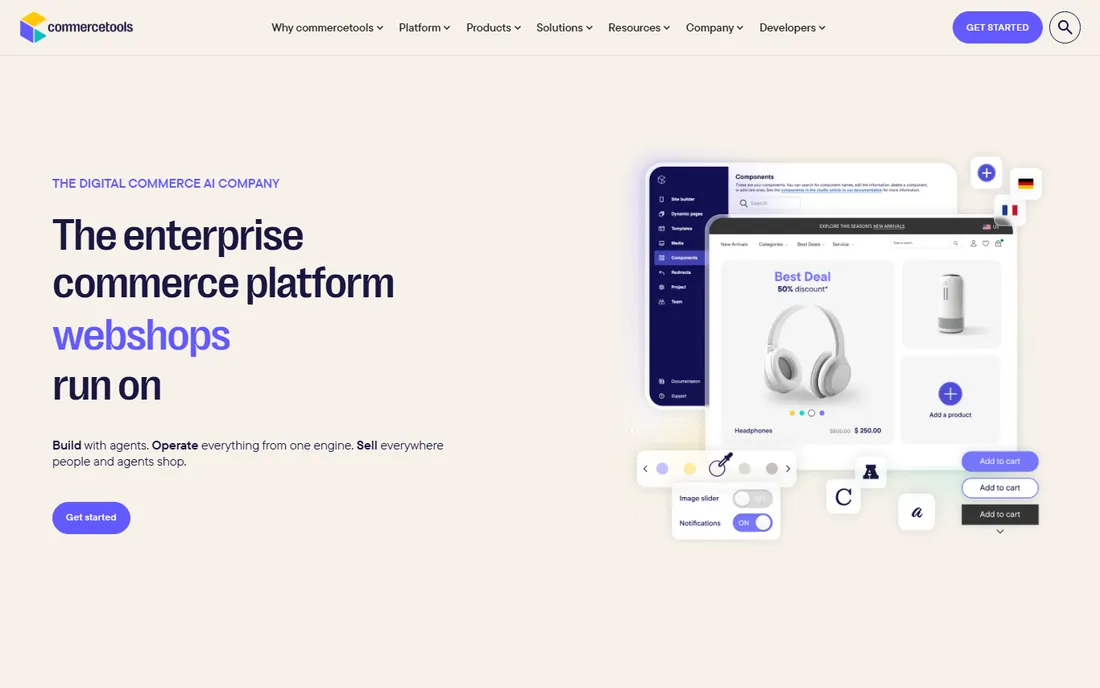
commercetools invented the category language everyone else now uses. Its platform is a set of independent APIs for carts, products, orders, customers and promotions, which your team composes into whatever experience the business needs. For large enterprises running multiple brands, regions and business models on one backbone, that modularity is the whole argument.
The honest catch is that composable means you compose. There is no storefront included, no theme to install, and the development bill is the real price of the platform. Companies without a strong engineering team, or without one they can hire, should look at the SaaS options below instead.
What we like- The reference implementation of composable commerce, with 300+ APIs
- MACH Alliance founding member with a mature partner ecosystem
- Proven at very large enterprise scale
Watch out for- Quote-based enterprise pricing
- You are buying building blocks, so budget serious development
- Overkill for standard B2C storefronts
#2
BigCommerce
Best for: Mid-market brands that want SaaS simplicity with headless freedom
Visit bigcommerce.com
Starting price$39/month Core ($29 billed annually, per 2026 plan structure)
Free planFree trial (15 days)
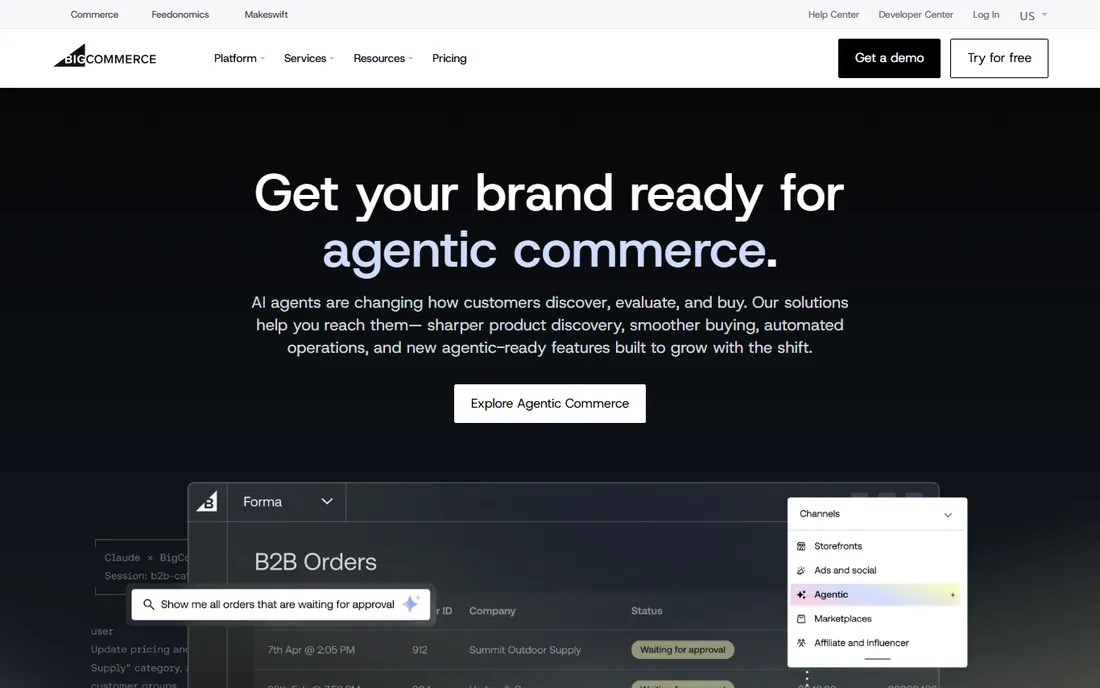
BigCommerce has spent years positioning as the open SaaS alternative, and headless is where that openness pays off. The platform exposes its catalog, cart and checkout through APIs, supports headless storefronts on any framework, and keeps the managed SaaS benefits: hosting, security and updates handled for you. Pricing starts at $39 per month for Core, which makes headless experimentation cheap.
The honest catch is the ceiling between SaaS and composable. You get freedom at the frontend, but the backend is still BigCommerce's, with its data model and limits. For most mid-market brands that is a feature, not a bug. Just confirm the current plan names before you buy, since the June 2026 rename shuffled the lineup.
What we like- Open APIs and headless-ready architecture on a managed SaaS platform
- Published pricing from $39 per month
- Strong B2B functionality for a SaaS platform
Watch out for- The cheapest plans are still SaaS plans, not composable suites
- Advanced headless builds need developer partners
- Plan names and pricing changed in June 2026, so verify current tiers
#3
Shopify
Best for: Stores that want headless without leaving the Shopify ecosystem
Visit shopify.com
Starting price$39/month Basic ($29 billed annually; Hydrogen and Oxygen included free on paid plans)
Free planFree trial (3 days, then $1/month for 3 months on most plans)

Shopify's headless story is simple: keep the backend you trust, rebuild the frontend however you want. Hydrogen is Shopify's own React framework for custom storefronts, Oxygen hosts it on Shopify's edge network, and both are free on any paid plan starting at $39 per month. For the millions of stores already on Shopify, that removes the platform-migration question entirely.
The honest catch is that the framework is free but the build is not. A proper Hydrogen storefront is a custom development project, and agencies quote accordingly. Teams that expect headless to cost the same as a theme will get a shock. Buy this when you love Shopify's backend but have outgrown its themes.
What we like- Hydrogen framework and Oxygen hosting included free on paid plans
- The largest app and partner ecosystem in commerce
- Keeps checkout, payments and admin you already know
Watch out for- Headless means custom development, and Shopify expertise at that level is expensive
- The backend remains Shopify's opinionated data model
- Plus pricing starts around $2,300 per month
Starting priceSee website (custom quote)
Free planFree trial
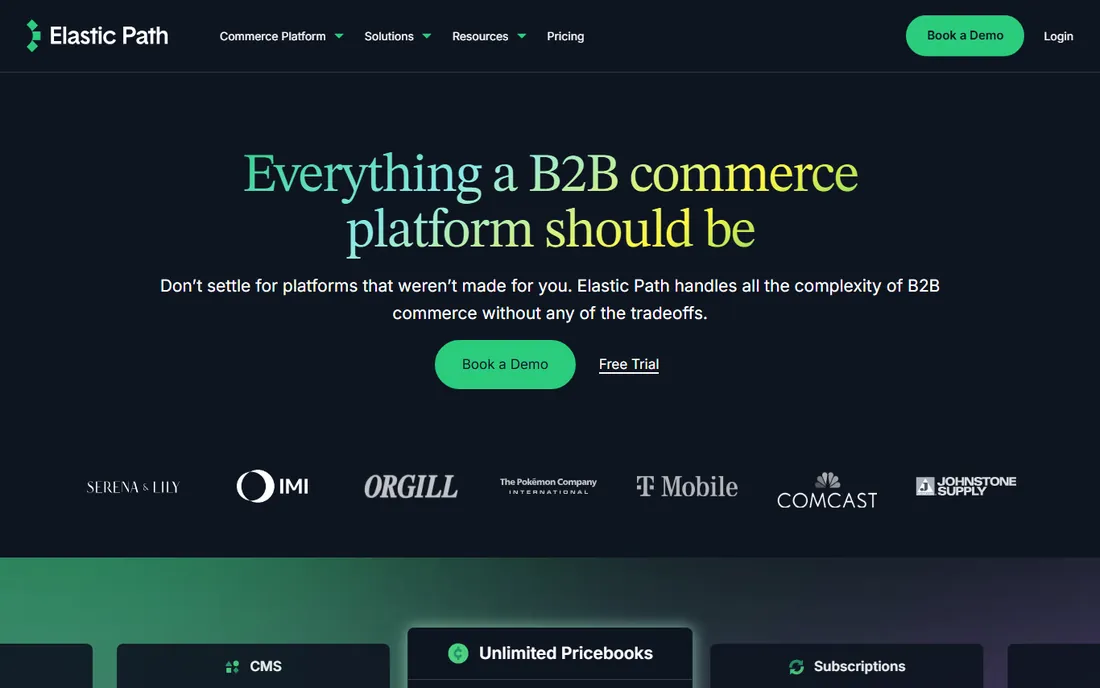
Elastic Path has been doing API-first commerce since before it had a trendy name. Its strength is in the hard parts: complex product catalogs, intricate pricing, and multi-brand or multi-region operations that break simpler platforms. The composable approach lets enterprises adopt it module by module rather than replatforming everything at once.
The honest catch is the enterprise motion. Pricing is quoted, implementation needs experienced partners, and the evaluation will feel like buying enterprise software because that is what it is. Mid-market teams without complex catalog requirements will find simpler options on this list.
What we like- Composable architecture with strong product and catalog modeling
- Handles complex B2B and multi-brand scenarios well
- Long enterprise track record
Watch out for- Quote-based pricing with no public numbers
- Implementation is a significant project
- Brand recognition trails commercetools in the composable conversation
#5
Spryker
Best for: B2B commerce, marketplaces and complex business models
Visit spryker.com
Starting priceSee website (custom quote)
Free planNo (demo available)

Spryker built its name on the transactions other platforms find hard: B2B buying with approval workflows, marketplaces with multiple sellers, and businesses that mix B2B and B2C. The platform is modular by design, so you assemble the commerce capabilities your model needs. For companies whose business model is the complexity, that fit matters more than any feature list.
The honest catch is focus. Spryker is not trying to be the simple choice, and its pricing and implementation reflect enterprise B2B deals. A standard D2C brand will find this to be too much platform. Evaluate it when your requirements read like a list of exceptions.
What we like- Modular architecture designed for B2B and marketplace models
- Strong in complex transactional scenarios
- European engineering with global enterprise customers
Watch out for- Quote-based enterprise pricing
- The modular approach demands development resources
- Smaller partner ecosystem in North America than the leaders
#6
Fabric
Best for: Retailers modernizing without a full replatform
Visit fabric.inc
Starting priceSee website (custom quote)
Free planNo (demo available)
Fabric's pitch is aimed at a specific pain: the retailer that knows its monolith is holding it back but cannot afford a two-year replatform. Its modular APIs for product information, orders, loyalty and subscriptions can be adopted piece by piece, modernizing the stack incrementally. The company's own materials claim customers going live in weeks rather than months.
The honest catch is that "weeks not months" depends heavily on your starting point. A tangled legacy stack still needs untangling, and the quote-based pricing means budgeting requires a sales conversation. That said, for teams that need commerce modernization without a big-bang migration, the incremental model is genuinely appealing.
What we like- Modular commerce APIs that layer onto existing stacks
- Positioning around avoiding painful replatforms
- Covers PIM, order management, loyalty and subscriptions
Watch out for- Quote-based pricing
- Younger than the established composable vendors
- The modular story needs validation against your specific stack
#7
Swell
Best for: Developers who want headless with native subscriptions
Visit swell.is
Starting price$29/month Starter (up to $50K annual sales, per vendor pricing)
Free planFree trial
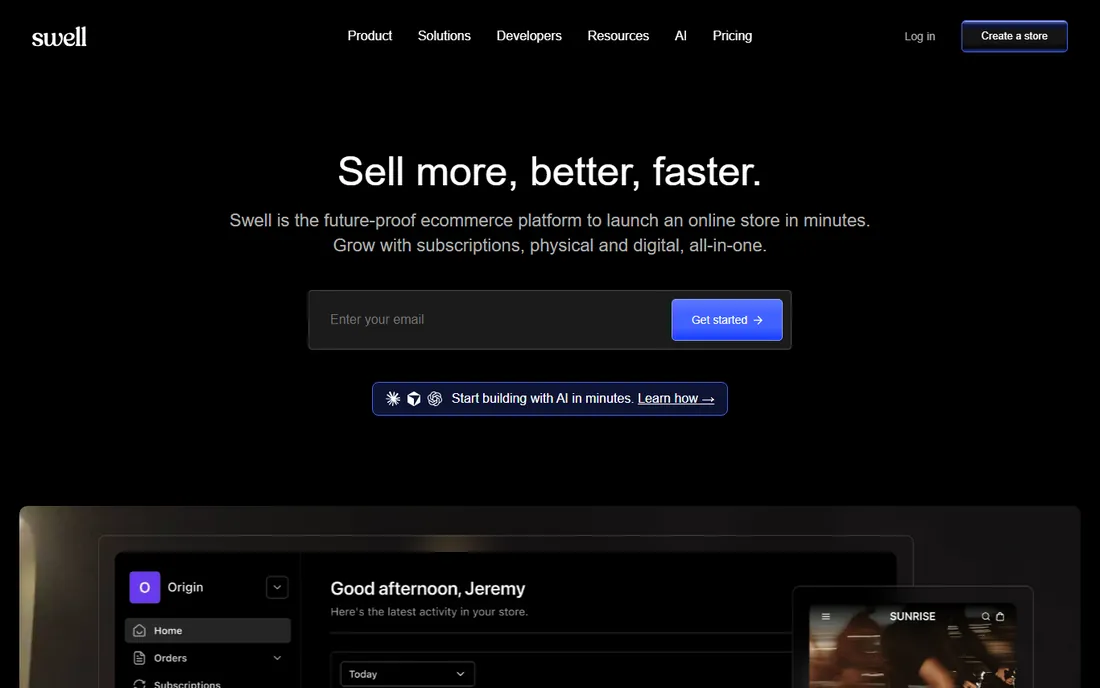
Swell is the developer's headless platform that does not pretend to be enterprise software. Pricing is published and starts at $29 per month, the API covers products, carts, subscriptions and content, and you can run multiple storefronts from one backend. The native subscription engine is a real differentiator; most platforms make you bolt on a third-party app for recurring billing.
The honest catch is scale in both directions. The Starter tier caps annual sales at $50K, so growing stores graduate to higher tiers quickly, and the ecosystem of agencies and apps is a fraction of Shopify's. But for a developer-led team that wants to build, not buy, the value is hard to argue with.
What we like- Published pricing starting at $29 per month
- Native subscription and recurring billing engine
- API-first with multi-storefront support from one backend
Watch out for- Smaller vendor with a smaller ecosystem
- The low tiers cap annual sales volume
- Fewer enterprise references than the big names
Starting price$949/month Atom plan (plus metering; free Particle tier available, per vendor-cited pricing)
Free planYes (free Particle tier)
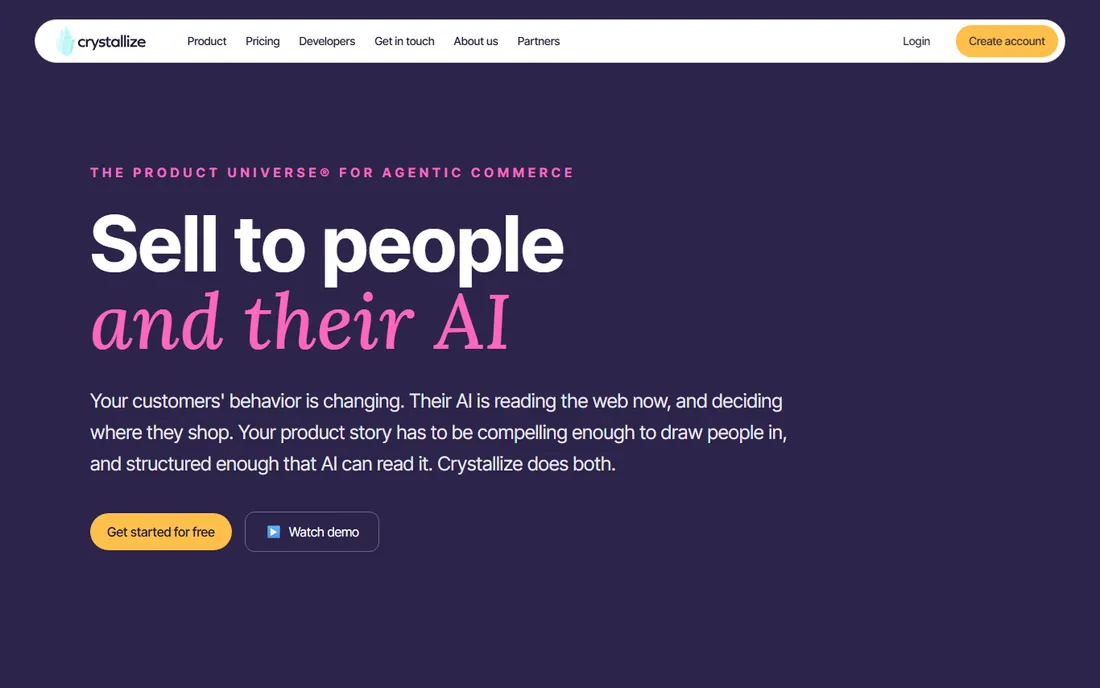
Crystallize is the rare headless platform with a free tier worth mentioning. The Particle tier lets small projects run real headless commerce at no cost, which makes it the cheapest way to learn the architecture hands-on. Its content modeling treats editorial content as a first-class citizen, which suits brands where storytelling sells.
The honest catch is the jump to paid. The Atom plan is priced for serious projects, and metering adds a variable component you need to model against your traffic. Verify the current numbers with the vendor, since headless pricing moves often. This is a platform for teams that value the architecture and the free on-ramp, not for bargain hunters.
What we like- Free tier that is actually usable for small projects
- Strong content modeling alongside commerce
- Headless-first with GraphQL APIs
Watch out for- Paid plans start high relative to SaaS options
- Metering on top of the base price needs modeling
- Smaller community than the mainstream platforms
#9
Nacelle
Best for: Teams that need a fast data layer between backend and storefront
Visit nacelle.com
Starting priceSee website (custom quote)
Free planNo (demo available)
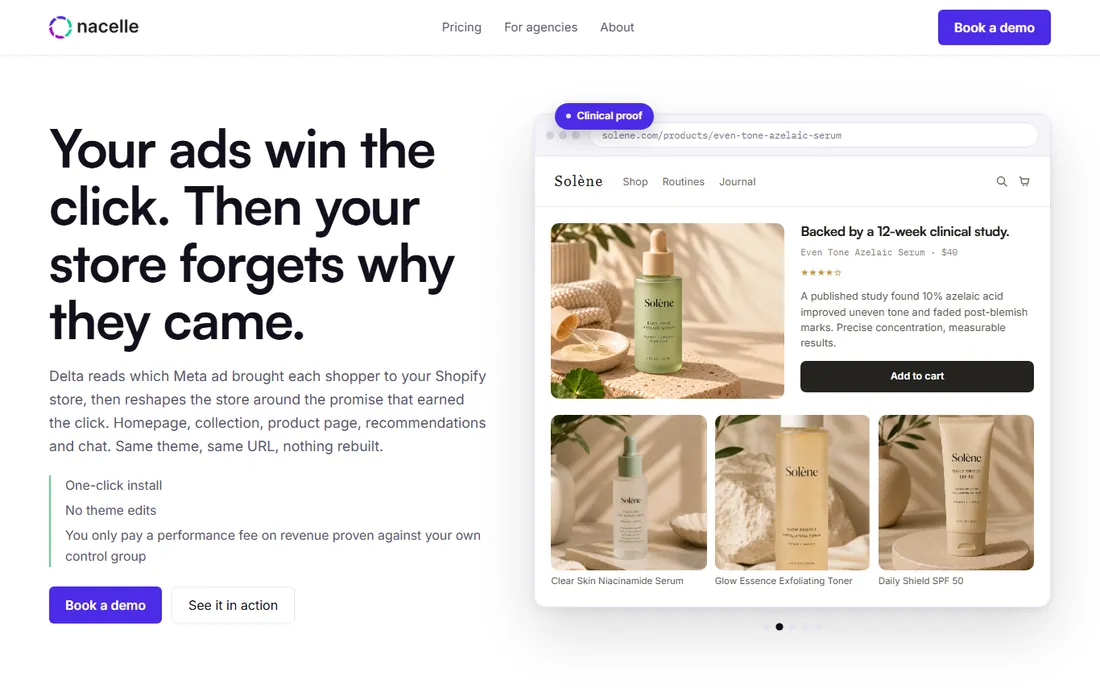
Nacelle solves one problem well: the slow, fragile connection between your commerce backend and your headless frontend. It ingests data from your existing platform, maintains a fast commerce-specific index, and serves it through a unified API to whatever storefront you build. For teams going headless on top of Shopify or Magento, it removes a whole category of integration pain.
The honest catch is understanding what you are buying. Nacelle is infrastructure for your headless build, not a commerce platform by itself; you still need the backend and the storefront. Pricing is quoted. Evaluate it when the integration layer is your bottleneck, not when you need an all-in-one platform.
What we like- Purpose-built data orchestration for headless storefronts
- Connects Shopify, Magento and custom backends to fast frontends
- Event-driven architecture for real-time updates
Watch out for- Quote-based pricing
- It is a data layer, not a full commerce platform, so you still need a backend
- Narrower scope than the suites above
How we chose
We started with the searches buyers actually run: headless commerce platform, composable commerce, headless Shopify alternatives. For each candidate we read the vendor's own pricing page and documentation, checked public reviews and practitioner discussions, and compared architecture, integration options and company-size fit. Prices appear only when published by the vendor; where pricing is quote-based we say so rather than repeating third-party estimates. We mixed enterprise composable suites, SaaS platforms with headless options, and developer-first tools because "headless" spans all three.
The most expensive mistake in headless commerce is replatforming when you only needed a new frontend. If your backend handles products, orders and payments fine, and the complaint is about the storefront experience, you need a headless frontend on your current platform: Hydrogen on Shopify, a custom frontend on BigCommerce's APIs, or Nacelle as the data layer. That is a frontend project, not a platform migration.
Full replatforming to a composable suite makes sense in narrower cases: multiple brands or regions on one backbone, B2B complexity your current platform cannot model, or a monolith whose every change needs a release train. Those are the buyers commercetools, Elastic Path, Spryker and Fabric are built for. Be honest about which situation you are in, because the price difference between a frontend project and a replatform is roughly tenfold.
There is also a middle path the vendors do not advertise loudly: adopt headless for one brand, region or product line first. It limits the blast radius, proves the architecture with your team, and gives you real numbers before you commit the whole business. Every vendor on this list will support a phased approach if you ask; the ones that push all-or-nothing are telling you about their sales targets, not your needs.
What to check before you buy
Start with total cost of ownership, because the license is the smallest line item in headless. A composable build needs frontend developers, integration work and ongoing maintenance; budget the team, not just the platform. For SaaS options, price the apps and the agency build alongside the subscription. Ask each vendor for reference customers at your revenue level and call them.
Then check the checkout question. Some headless setups keep the platform's native checkout, others go custom, and the difference affects conversion, payment options and compliance scope. Know which one you are getting. Also verify content management: a headless storefront still needs somewhere for marketers to edit pages without filing a ticket with engineering.
Finally, confirm the exit. Composable architectures are supposed to prevent lock-in, but custom integrations create their own gravity. Ask what happens to your data, your integrations and your storefront if you leave in three years. The platforms confident in their answer will give it straight.
Frequently asked questions
What is headless commerce?
It is an architecture that separates the storefront (the "head") from the commerce backend. The backend manages products, carts, orders and payments through APIs, while the frontend can be any website, app or device experience. This lets teams redesign the customer experience without touching the commerce logic.
How much does a headless commerce platform cost?
SaaS options publish pricing: BigCommerce and Shopify start at $39 per month, Swell at $29 per month. Enterprise composable platforms like commercetools, Elastic Path, Spryker, Fabric and Nacelle are quote-based and typically run into five or six figures annually. The build itself often costs more than the license, so budget development separately.
Is headless commerce worth it for a small store?
Usually not. A small store gets more value from a good theme on Shopify or BigCommerce than from a custom headless build. Headless pays off when you need custom experiences across multiple touchpoints, have complex business requirements, or operate at a scale where frontend performance directly moves revenue.
What is the difference between headless and composable commerce?
Headless separates the frontend from the backend. Composable goes further: the backend itself is assembled from independent best-of-breed services (search, payments, CMS, promotions) connected by APIs. All composable commerce is headless, but not all headless setups are composable; Shopify with a Hydrogen frontend is headless but not fully composable.
Do I need developers to run a headless store?
Yes. Headless storefronts are custom-built and custom-maintained, which means frontend developers on staff or on retainer. The SaaS platforms reduce the backend burden, but nobody has built a headless store that marketers run entirely alone. If you cannot staff or hire development, stay with traditional themes.
Can I go headless without leaving Shopify or BigCommerce?
Yes, and that is the most common path. Both platforms expose their backends through APIs and support custom storefronts: Shopify with its Hydrogen framework, BigCommerce with any frontend framework. You keep the admin, checkout and app ecosystem while rebuilding only the customer-facing experience.
Sources we checked (9)
- https://www.commercetools.com
- https://www.bigcommerce.com
- https://www.shopify.com
- https://www.elasticpath.com
- https://spryker.com
- https://fabric.inc
- https://www.swell.is
- https://crystallize.com
- https://www.nacelle.com
Is your product missing or out of date?
We review this list regularly. Vendors can request a listing, send updated pricing or ask about featured placement.

Shihab Mia · Founder, Rankite
Shihab has 5+ years in B2B and SaaS SEO. He writes Rankite's software buying guides from pricing pages, documentation and public user reviews. More about Shihab.