How we make this list: we compare pricing pages, product documentation and public user reviews. Ratings come from G2, Capterra or Trustpilot, with the date we checked them.
Key takeaways
- Unity and Unreal dominate commercial development, but their pricing models differ sharply: Unity charges per seat above $200,000 in revenue or funding, while Unreal takes 5 percent royalty above $1 million per title.
- Godot is the only major engine that is completely free forever under the MIT license, with no seats, no royalties, and no revenue thresholds.
- GameMaker at $99.99 one-time is the cheapest commercial 2D route, while Construct 3 and GDevelop suit beginners who want event-based logic without code.
- Console shipping is the hidden constraint: Godot needs third-party porting partners, while Unity Pro and Unreal include console paths, and GameMaker needs Enterprise for consoles.
Quick comparison
| Tool | Best for | Starting price | Free plan |
|---|
 Unity | Mobile and cross-platform | Free | Yes |
 Unreal Engine | High-fidelity 3D and consoles | Free | Yes |
 Godot | Free open source 2D and 3D | Free | Yes |
 GameMaker | Commercial 2D games | Free | Yes |
 Construct 3 | No-code browser 2D | Free | Yes |
 GDevelop | Beginner event-based games | Free | Yes |
 Defold | Lightweight mobile 2D | Free | Yes |
 CryEngine | High-end open-world visuals | Free | Yes |
Is your product missing or out of date?
We review this list regularly. Vendors can request a listing, send updated pricing or ask about featured placement.
The best game development software
#1Unity
Best for: Mobile and cross-platform4.5/5 on
G2 (364 reviews, checked Oct 2026)
Visit unity.com
Starting priceFree
Free planYes
Unity 6 is the most versatile commercial engine, with C# scripting, visual scripting, and deployment to mobile, PC, consoles, WebGL, and VR from one project. Its Asset Store is the deepest in the industry, which speeds prototyping, and its mobile tooling is best in class for iOS and Android. Personal is free under about $200,000 in annual revenue or funding, with Pro at roughly $2,310 per seat per year.
Funding counts toward the threshold, so a well-raised startup that has not shipped still pays Pro, which surprises some teams. Unity also damaged developer trust with its since-reversed runtime fee plan, though current terms carry no runtime fee. For mobile and cross-platform teams, Unity remains the default commercial choice.
What we like- Widest platform reach
- Largest asset marketplace
- Strong mobile and 2D plus 3D support
Watch out for- Pro at about $2,310 per seat per year
- Funding counts toward the free-tier threshold
- Runtime fee history hurt trust
#2Unreal Engine
Best for: High-fidelity 3D and consoles4.5/5 on
G2 (151 reviews, checked Oct 2026)
Visit unrealengine.com
Starting priceFree
Free planYes
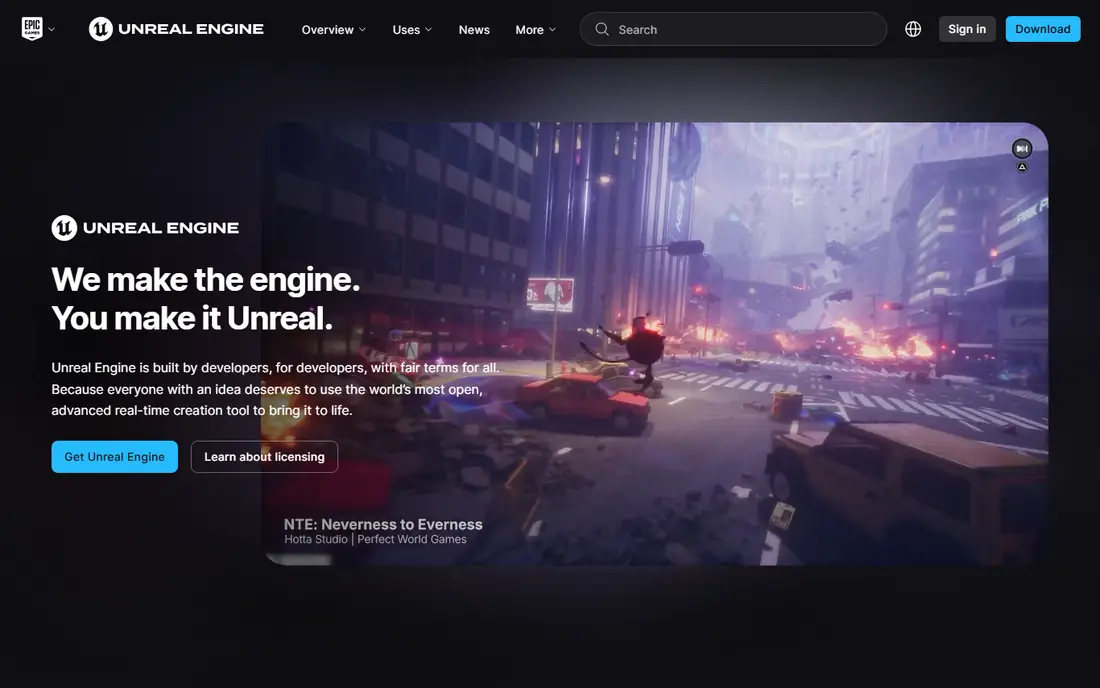
Unreal Engine 5 sets the visual standard for PC and console games, with Nanite virtualized geometry and Lumen global illumination producing trailer-quality graphics in real time. Blueprints visual scripting lets designers build gameplay without C++, while full C++ access serves large teams, and console support is first-class. The engine is free to download with full features.
The cost comes on success: 5 percent of worldwide gross revenue above the first $1 million per title, or 3.5 percent while qualifying for the Launch Everywhere program with Epic. Seats for non-game work start around $1,850 per seat per year in guides. The learning curve is steep, and Unreal is heavyweight for simple mobile games. For AAA-quality 3D, nothing else here matches it.
What we like- Industry-leading visuals with Nanite and Lumen
- Blueprints visual scripting
- Strong console support
Watch out for- 5 percent royalty above $1 million gross per title
- Steep learning curve
- Heavyweight for mobile
Starting priceFree
Free planYes
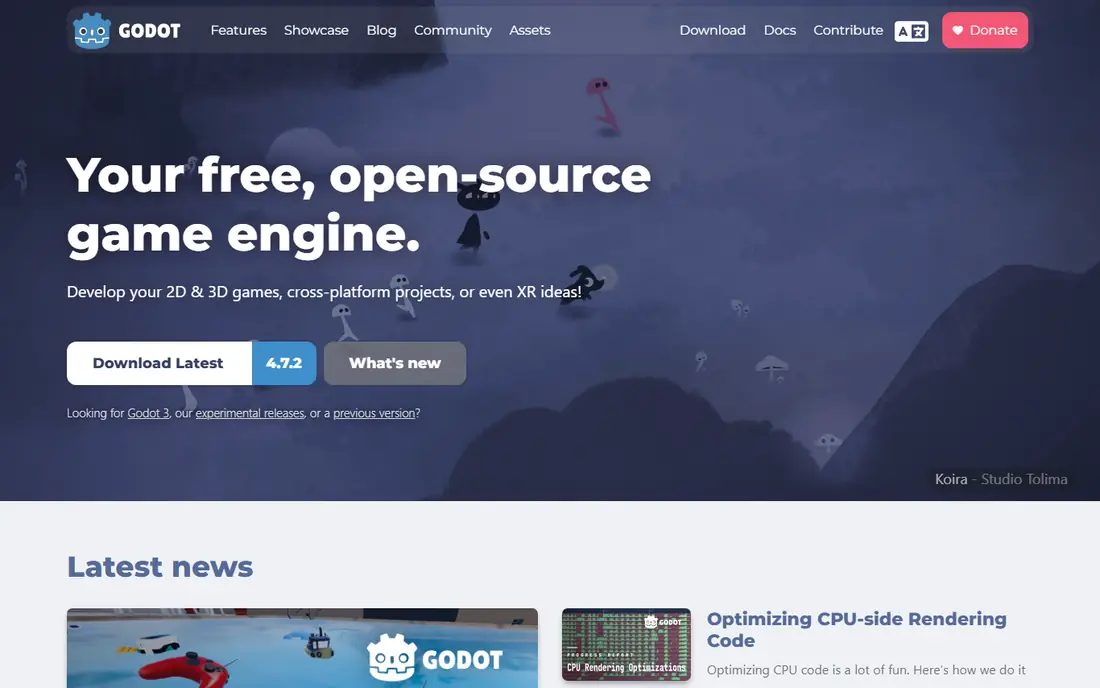
Godot 4.x is the free, open source path to game development, with no fees, no royalties, and no revenue thresholds ever, under the permissive MIT license. Its dedicated 2D pipeline is excellent, its editor is self-contained and lightweight, and GDScript is easy to learn, with C# and C++ support for larger projects. A solo developer pays zero over a three-year project regardless of revenue.
Console shipping is the main gap, since Godot has no built-in console export and needs third-party porting partners, and 3D capabilities trail Unity and Unreal for high-end visuals. The hiring pool is growing but smaller. For indie 2D games and prototyping, Godot offers the best value in this list by a wide margin.
What we like- Completely free under MIT license
- No seats or royalties
- Dedicated 2D pipeline
- GDScript and C#
Watch out for- Console shipping needs third-party porting partners
- 3D trails Unity and Unreal
- Smaller hiring pool
Starting priceFree
Free planYes
GameMaker remains the strongest dedicated 2D engine for developers who want fast 2D prototyping without a node architecture. Its GML scripting language is immediately accessible, drag-and-drop GML Visual covers beginners, and classics like Undertale and Hotline Miami were built in it. The engine is free for non-commercial projects, with Professional at $99.99 one-time enabling commercial release on PC, mobile, and web.
Console export needs Enterprise from $79.99 per month plus registered developer status, so a surprise Switch port is not $99.99. 3D support is minimal. For commercial 2D games on a tight budget, GameMaker offers the cheapest paid route to market.
What we like- Purpose-built 2D engine
- GML language is accessible
- One-time $99.99 Professional license
Watch out for- Free tier is non-commercial only
- Consoles need Enterprise from $79.99 per month
- Minimal 3D
Starting priceFree
Free planYes
Construct 3 runs entirely in the browser, with event-sheet logic that lets beginners build polished 2D games without writing code, plus optional JavaScript for deeper control. It suits classrooms, game jams, and solo developers who want quick results, with export to web, desktop, Android, and iOS on paid plans. Personal plans list at $129.99 per year, or about $15.99 per month.
The free tier caps at 50 events with web export only, so real projects need a subscription, and Construct 2 is retired, so new work belongs in Construct 3. For no-code 2D development in a browser, Construct 3 is the most polished option here.
What we like- Runs in the browser
- Event-sheet logic needs no code
- Strong classroom and classroom-adjacent use
Watch out for- Free tier limited to 50 events and web export
- Personal at $129.99 per year
- Subscription, not one-time
Starting priceFree
Free planYes
GDevelop gives beginners a full engine for free, with event-based logic, a browser editor, and export to web, Android, desktop, and iOS. The free tier covers the complete engine with daily build limits, while Silver, Gold, and Pro tiers raise limits and add iOS export and cloud features. It is the easiest first engine for a complete beginner.
Daily build limits can frustrate active developers, and the asset ecosystem is smaller than Unity or GameMaker. GDevelop will not carry a large commercial 3D project, but for first 2D or simple 3D games, it removes every cost and coding barrier.
What we like- Full engine free with daily build limits
- Event logic needs no code
- Browser-based editor
Watch out for- Daily build limits on free tier
- IOS export needs Gold tier and above
- Smaller asset ecosystem
Starting priceFree
Free planYes
Defold is a free, open source engine built for lightweight 2D games with fast builds and small install sizes, which suits mobile developers who care about performance on low-end devices. Lua scripting is easy to learn, and the engine supports PC, mobile, HTML5, and consoles. King, the Candy Crush maker, originally built Defold, which shows its mobile pedigree.
The community is smaller than Unity or Godot, scripting is Lua only, and 3D support is minimal. For mobile 2D games where build size and iteration speed matter, Defold is a strong, completely free alternative to heavier engines.
What we like- Free and open source
- Lightweight with fast builds
- Lua scripting
- Mobile and console support
Watch out for- Smaller community
- Lua only for scripting
- Minimal 3D
Starting priceFree
Free planYes
CryEngine offers visual fidelity comparable to Unreal for open-world environments, with powerful terrain, vegetation, and level design tools built for large outdoor worlds. Its license structure is royalty-free by default, with a 5 percent royalty only if you choose revenue sharing, which suits studios that prefer upfront terms.
The community is smaller than Unity or Unreal, third-party plugins are fewer, and the learning curve is steep, so small teams may struggle without experienced engineers. For open-world games where terrain and atmosphere matter most, CryEngine remains a credible high-end alternative.
What we like- Near-photorealistic rendering
- Powerful terrain and level tools
- Royalty-free license structure
Watch out for- Smaller community and fewer plugins
- Steep learning curve
- 5 percent royalty option on revenue sharing
How we chose
We compared October 2026 engine pricing guides and vendor terms for each tool, checking free tiers, paid prices, royalty terms, platform support, and learning curves. We favored engines with current availability and a distinct use case, and we flagged pricing conflicts where guides disagreed, since engine pricing changed several times in recent years. We did not claim hands-on testing, and royalty figures here are guide figures from published terms.
Picking an engine by project type
Match the engine to the game, not to popularity. Mobile and cross-platform games favor Unity, high-fidelity PC and console games favor Unreal, 2D indie games favor Godot or GameMaker, and no-code browser games favor Construct 3 or GDevelop. A 2D pixel-art game built in Unreal wastes effort, while a AAA 3D game built in GameMaker hits engine limits fast.
The three-year cost test
Run pricing over three years, not one. A solo Unity Pro seat costs roughly $6,930 over three years once revenue clears the threshold, while GameMaker Pro costs $99.99 total as a one-time purchase, Construct 3 Personal costs about $390 over three years, and Godot stays at zero. Unreal costs nothing until a title passes $1 million gross, then 5 percent of revenue above that line, which can exceed any seat license on a hit game. Model your likely revenue before choosing.
Team skills and hiring
Hiring pools differ sharply. Unity developers are the easiest to hire, Unreal developers skew toward AAA and 3D, and Godot developers are growing but scarcer. If your team already knows C#, Unity or Godot with C# fits fastest, while C++ teams fit Unreal or CryEngine. Beginners should start with GDevelop or Construct 3 and move to Godot once coding feels comfortable.
Frequently asked questions
Which game engine is best for beginners?
GDevelop and Construct 3 are best for complete beginners, since event-based logic needs no code and both run in a browser. Godot is the best next step once you want to learn scripting, with GDScript designed for readability.
Is Unity or Unreal better for mobile games?
Unity is better for most mobile games, with best-in-class mobile tooling, smaller build sizes, and broader device support. Unreal suits high-end mobile titles where visuals justify its weight, but most mobile teams choose Unity or Godot.
Does Godot really cost nothing?
Yes. Godot is free under the MIT license with no seats, no royalties, and no revenue thresholds, funded by donations and grants. Console porting through third-party partners is the only major cost, and it applies only if you ship on consoles.
What royalty does Unreal Engine charge?
Unreal charges 5 percent of worldwide gross revenue above the first $1 million per title, or 3.5 percent while qualifying for the Launch Everywhere program. The engine itself is free to download with full features.
Can I switch engines mid-project?
Technically yes, but practically it is expensive, since code, assets, and workflows rarely transfer cleanly. Choose carefully at the start, prototype in two engines for a week if unsure, and commit before production scales.
Sources we checked (10)
- https://unity.com
- https://www.unrealengine.com
- https://godotengine.org
- https://gamemaker.io
- https://www.construct.net
- https://gdevelop.io
- https://defold.com
- https://www.cryengine.com
- https://tech-insider.org/best-game-engines-for-indie-devs-2026/
- https://visualmodo.com/online-game-development-software-tools/
Is your product missing or out of date?
We review this list regularly. Vendors can request a listing, send updated pricing or ask about featured placement.

Shihab Mia · Founder, Rankite
Shihab has 5+ years in B2B and SaaS SEO. He writes Rankite's software buying guides from pricing pages, documentation and public user reviews. More about Shihab.