How we make this list: we compare pricing pages, product documentation and public user reviews. Rankite is independent; if a vendor ever pays for a featured spot, that listing is clearly labeled Partner.
Key takeaways
- Republic, Wefunder, StartEngine and Netcapital let startups raise equity from everyday investors under SEC Regulation Crowdfunding.
- Wefunder stands out for private rounds and community raises, with AI tools and SPV structures that keep the cap table clean.
- Kickstarter and Indiegogo are rewards-based: better for pre-selling a product than for selling equity.
- MicroVentures serves later-stage and accredited investors, acting more like an investment bank for private shares.
Quick comparison
| Tool | Best for | Starting price | Free plan |
|---|
 Republic Republic | Curated equity raises with big reach | See website | No |
 Wefunder Wefunder | Community rounds and private raises | See website | No |
 StartEngine StartEngine | Equity crowdfunding for consumers | See website | No |
 Netcapital Netcapital | Simple Reg CF raises | See website | No |
 MicroVentures MicroVentures | Late-stage private shares | See website | No |
 Kickstarter Kickstarter | Rewards-based product launches | See website | No |
 Indiegogo Indiegogo | Flexible rewards crowdfunding | See website | No |
Is your product missing or out of date?
We review this list regularly. Vendors can request a listing, send updated pricing or ask about featured placement.
Starting priceSee website
Free planNo
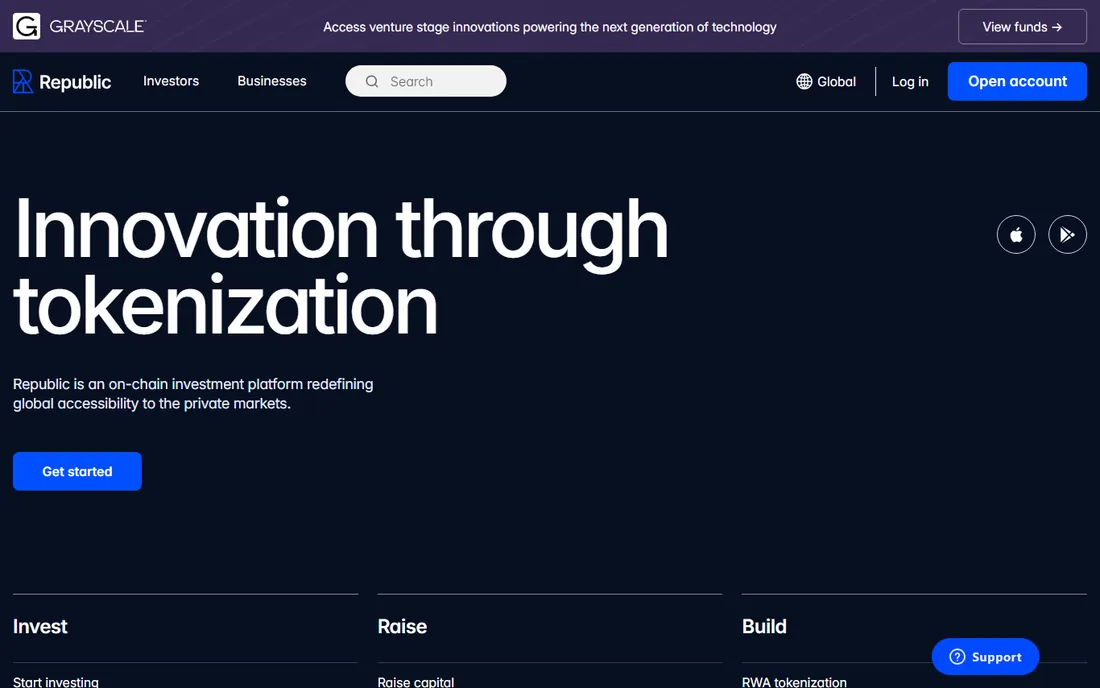
Republic is the heavyweight of startup equity crowdfunding. The platform now describes itself as an on-chain investment platform for private markets, with $2 billion in capital deployed, 3 million community members and raises supported across the US, UK and EU. Startups raise through SEC-regulated offerings: Regulation Crowdfunding for community rounds, Reg D for accredited investors and Reg A+ for larger raises. Success stories on the homepage include Bobbie, Maven and Beacons, which used Republic campaigns to turn customers into shareholders.
The tradeoff is selectivity. Republic's acceptance rate for companies applying has historically been well below 10 percent, and a successful campaign still demands serious marketing effort from the founding team. It fits consumer-facing startups with a story that excites non-accredited investors. If your customers would buy your product, they may also buy your equity, and Republic is the biggest stage for that.
What we like- 3 million member community and $2 billion plus deployed
- Supports Reg CF, Reg D and Reg A+
- Enterprise and tokenization expertise
Watch out for- Selective acceptance
- Issuer fees on top of legal costs
Starting priceSee website
Free planNo
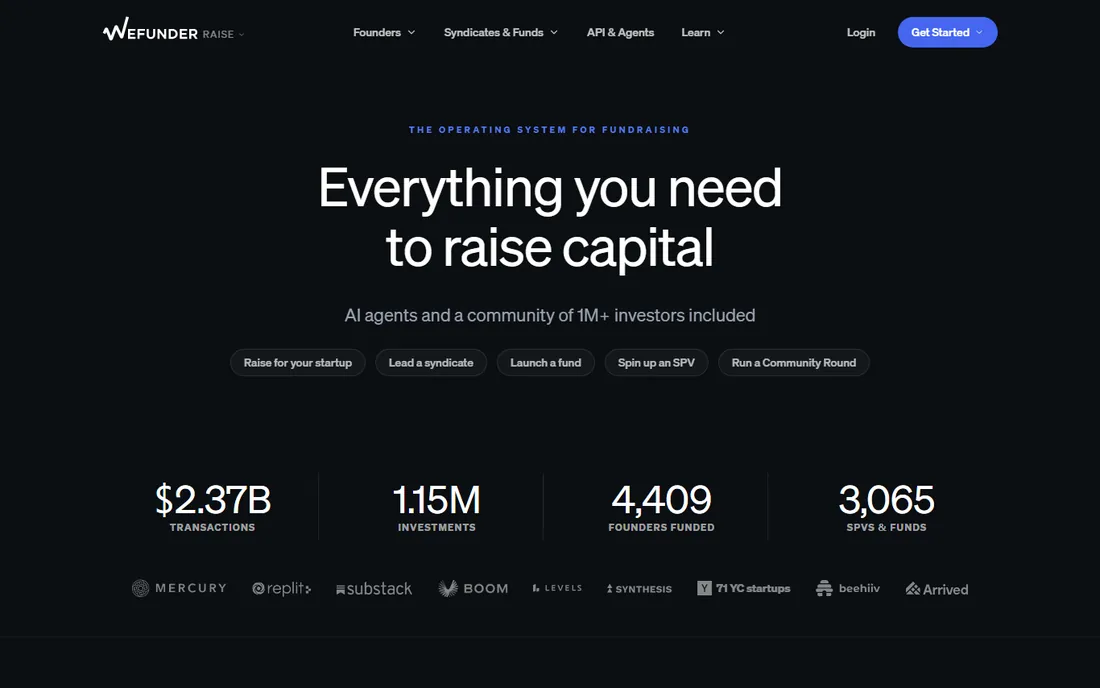
Wefunder calls itself the operating system for fundraising, and the product backs it up: founders can run a private round for invited angels or a community round open to anyone, with $2.37 billion in transactions and 4,409 founders funded. The clever part is structure. Investors commit through an SPV that appears as one line on the cap table, so a thousand backers do not create a thousand headaches. New AI agents help founders find warm intros and draft outreach, and investor updates keep backers in the loop.
Private rounds are accredited-investor only and launch in minutes, while community rounds take days and accept investments from $100. Either way, the platform does not bring the crowd for you; the most successful raises start with a founder who already has a community. Choose Wefunder when your existing network is your unfair advantage.
What we like- Private rounds and community rounds on one platform
- One cap-table line via SPV
- 1 million plus investor community
Watch out for- Accredited-only for private rounds
- Campaign marketing is on you
Starting priceSee website
Free planNo
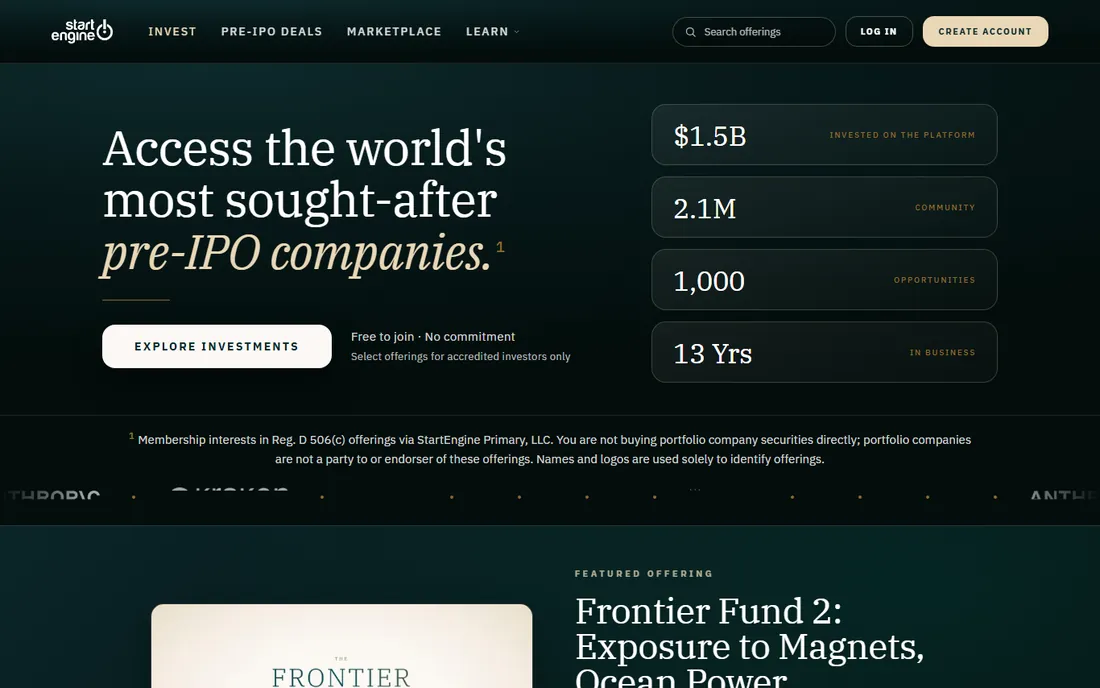
StartEngine positions equity crowdfunding as the new portfolio standard, letting everyday people buy into startups and pre-IPO companies through SEC-regulated offerings. Minimums typically start at $500 for startup investments and $15,000 for pre-IPO offerings, with a dashboard for tracking holdings through any liquidity event. The homepage is unusually honest about risk, stating plainly that most early-stage companies never reach an IPO and investors can lose everything.
For founders, StartEngine's value is its retail audience and its marketing machine around private-market investing. The catch is that audience expects consumer-friendly stories; deep-tech B2B companies often raise better on Wefunder or Republic. Pick StartEngine when your product is something a retail investor can understand in thirty seconds.
What we like- Large retail investor audience
- Clear step-by-step investing flow
- Pre-IPO and startup offerings side by side
Watch out for- Pre-IPO offerings limited to accredited investors
- Startup minimums vary by deal
Starting priceSee website
Free planNo
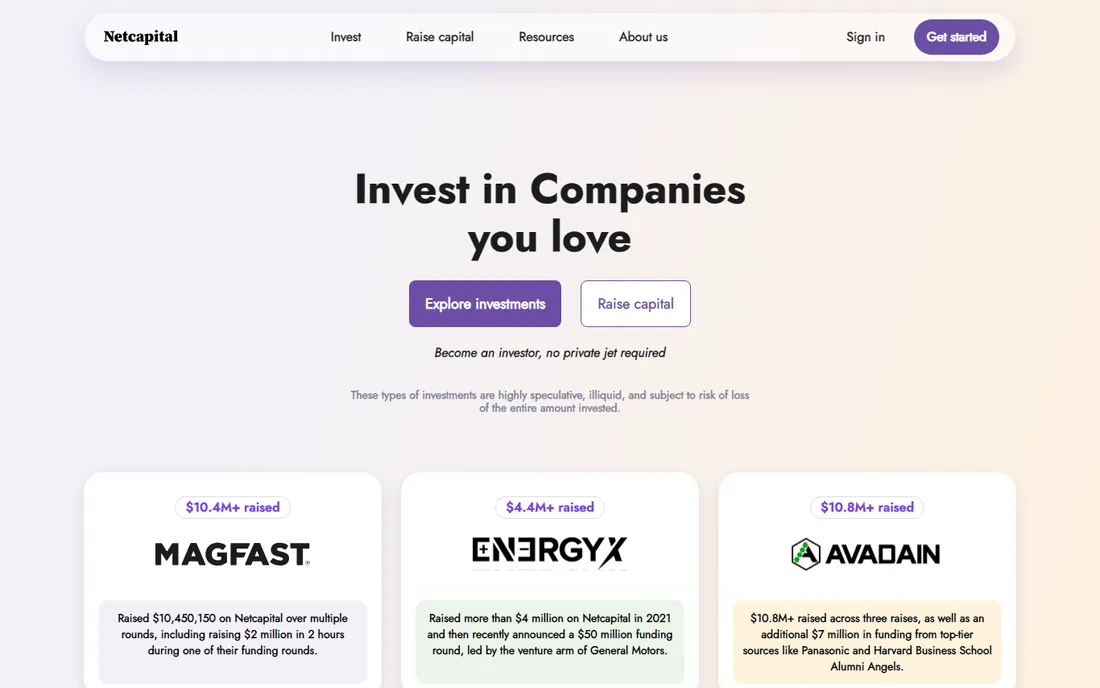
Netcapital keeps equity crowdfunding simple: a secure platform where companies run Reg CF offerings and investors participate for as little as a few hundred dollars, with a custodian holding the securities so one company can take on many small shareholders cleanly. The homepage highlights alumni like EnergyX, which later raised $50 million from GM Ventures, and Vantem Global, backed by Breakthrough Energy Ventures. Investor updates and discussion boards keep communication flowing after close.
It does not have Republic's scale or Wefunder's tooling depth, but the process is transparent and the fee structure is easy to understand. Netcapital suits first-time founders running a modest community round who want a guided process without the pageantry of a flagship platform.
What we like- Straightforward Regulation Crowdfunding flow
- Custodian structure handles many shareholders
- Strong alumni outcomes
Watch out for- Smaller investor community than leaders
- Non-accredited investors face SEC annual limits
Starting priceSee website
Free planNo
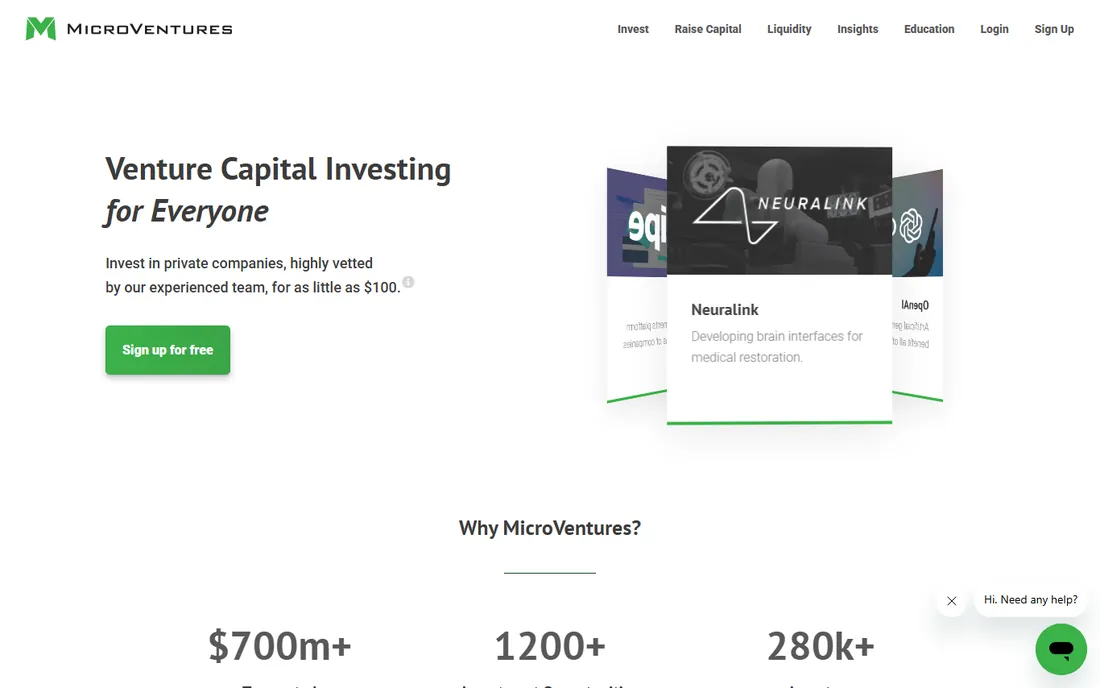
MicroVentures is a different animal: a full-service investment bank offering private-market investments, including late-stage startup shares in companies like OpenAI, Stripe and Neuralink, with $700 million transacted and 280,000 investors. Its team vets every offering, and an investor relations line answers questions without sales pressure. Minimums start at $100 for some offerings, though many are limited to accredited investors.
Founders should understand this is not a place to launch a seed round. MicroVentures is for companies far enough along that secondary or late-stage primary demand exists, and for investors seeking venture exposure without a fund. Include it here because startup fundraising does not end at the seed round, and this is where later-stage capital formation happens online.
What we like- $700 million plus transacted across 1,200 offerings
- Full-service investment bank backing
- Vetted late-stage companies
Watch out for- Not a launch platform for early startups
- Minimums and accreditation rules apply
Starting priceSee website
Free planNo
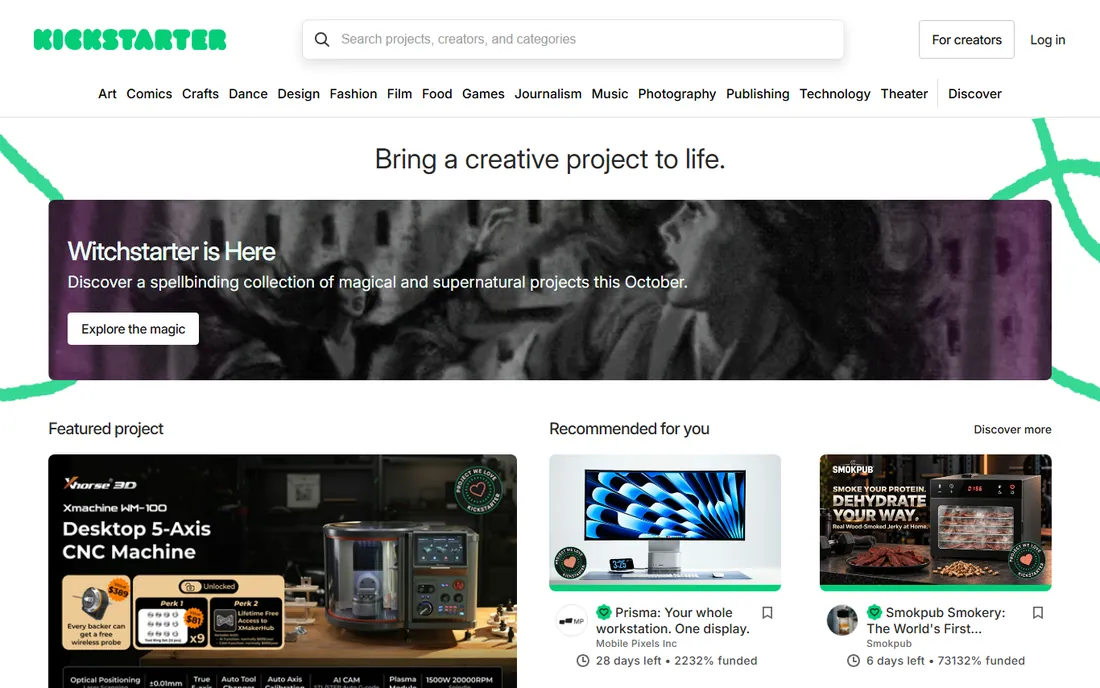
Kickstarter is the original crowdfunding giant and still the best launchpad for a physical product, game or creative project. Backers pledge money for rewards, not shares, so founders keep 100 percent of their equity. The all-or-nothing model means a project only collects if it hits its goal, which protects both sides. Campaigns double as market validation: a funded project proves demand before a dollar of inventory is ordered.
The limitation is structural. Kickstarter cannot be used to sell equity or raise a priced round, and service businesses and apps rarely fit. It belongs on a startup fundraising list because many hardware startups treat a Kickstarter campaign as their seed round, validating the product and funding the first production run without dilution. Just know that fulfillment is the hard part; the raise is the easy part.
What we like- Massive backer community and cultural cachet
- All-or-nothing funding protects creators
- No equity given up
Watch out for- No equity fundraising
- Hardware and creative categories only
Starting priceSee website
Free planNo
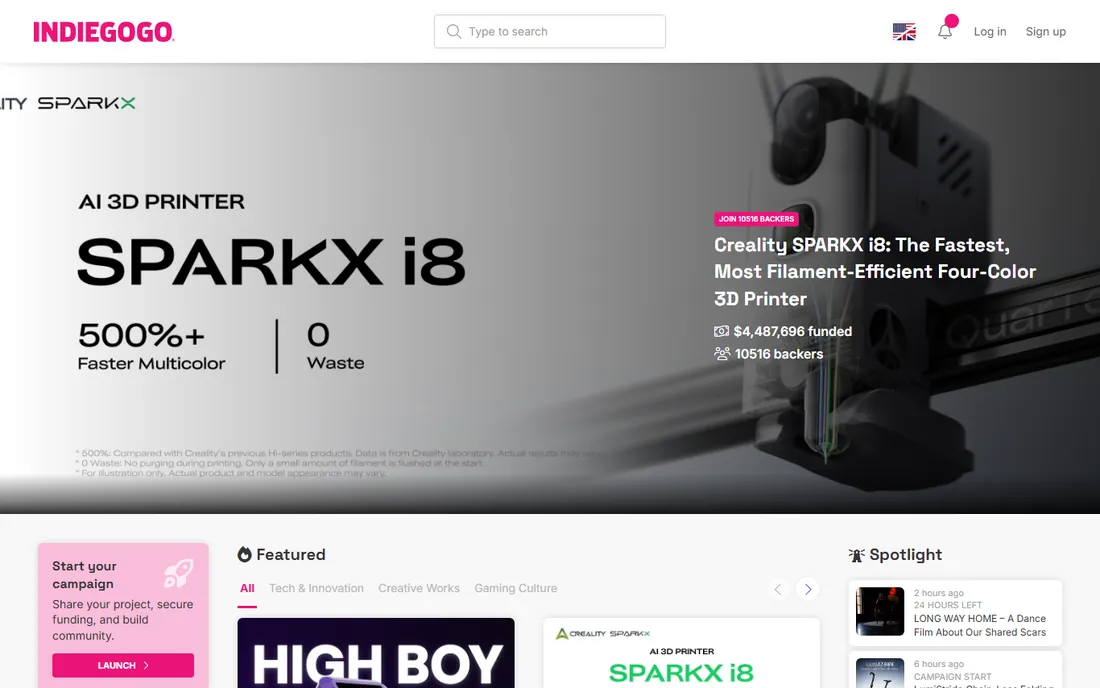
Indiegogo is Kickstarter's long-running rival with a key difference: flexible funding lets creators keep whatever they raise, even if the goal is not met. Its tech and innovation categories are particularly strong, with pledge managers, late pledges, marketing tools and analytics built for product launches. The backer community runs into the millions, and the checkout supports more than twenty payment methods.
Like Kickstarter, it is rewards-based, so it will not put investors on your cap table. The honest comparison: Kickstarter has more cultural momentum and the all-or-nothing trust signal, while Indiegogo offers more control and post-campaign commerce tools. Hardware and gadget startups often run Indiegogo after a Kickstarter, or choose it first when they need flexible funding. Either way, treat it as a product launch channel that happens to raise money, not as equity fundraising.
What we like- Flexible funding option keeps what you raise
- Strong tech and innovation audience
- Pledge management and late pledges built in
Watch out for- No equity option
- Fees apply on top of payment processing
How we chose
We opened every platform's official homepage and recorded what each company currently says about its model, audience and offering types, using only first-party pages. Two candidates were dropped after verification: SeedInvest's domain now serves unrelated content, and AngelList has pivoted to fund infrastructure rather than startup fundraising. We cross-checked positioning against founder communities on Reddit, Hacker News and Indie Hackers, and kept a mix of equity crowdfunding, late-stage investing and rewards platforms. No hands-on testing was involved.
Start with the security you are selling. If you want investors on your cap table, you need an equity platform operating under SEC rules: Republic, Wefunder, StartEngine or Netcapital for Regulation Crowdfunding, MicroVentures for later-stage shares. If you want customers and cash without dilution, Kickstarter and Indiegogo are rewards-based. Mixing these up wastes months, so decide before you shortlist.
Then assess your distribution. Equity crowdfunding platforms provide the rails, not the crowd; Republic's 3 million members and Wefunder's million investors browse, but breakout campaigns bring their own audience. Founders with large email lists and social followings do disproportionately well. Budget for video production, legal and financial review, and a marketing push; platform fees are only part of the cost.
Finally, mind the regulations. Reg CF offerings cap annual raises and limit how much non-accredited investors can invest, and every platform discloses that startup investments are speculative and illiquid. Talk to a securities attorney before you launch, keep your Form C filings clean, and remember that a crowdfunding round puts hundreds of small investors on your cap table via SPV. Done well, they become your most loyal customers; done carelessly, they become your most vocal critics.
The rewards vs equity decision
This is the fork every founder faces, and the answer depends on what the money is for. Rewards crowdfunding on Kickstarter or Indiegogo funds a specific product: backers pre-order, you manufacture, nobody owns part of your company. It validates demand, creates marketing and preserves equity, but it cannot fund headcount, software development or anything without a shippable reward. Equity crowdfunding on Republic, Wefunder, StartEngine or Netcapital funds the company itself: investors buy a stake and share the upside, which works for any business model but adds compliance, disclosure and hundreds of stakeholders. Many hardware startups do both in sequence, a rewards campaign to prove the product and an equity round to scale the company. Choose based on what the money is for: a product launch or the company itself.
Frequently asked questions
What is the best fundraising platform for startups?
For equity fundraising from everyday investors, Republic, Wefunder and StartEngine lead the US market under SEC Regulation Crowdfunding. Wefunder is strongest for community and private rounds, Republic for curated high-profile raises, and StartEngine for consumer-facing stories. For rewards-based product launches, Kickstarter and Indiegogo remain the standards.
How much does it cost to raise money on these platforms?
Platform fees vary and are not always published on homepages, so confirm current terms before committing. Equity platforms typically charge a percentage of the amount raised plus a securities fee, on top of legal, financial review and marketing costs that every Reg CF offering requires. Rewards platforms charge a platform percentage plus payment processing. Budget the full campaign, not just the platform cut.
Can non-accredited investors fund my startup?
Yes, through Regulation Crowdfunding offerings on platforms like Republic, Wefunder, StartEngine and Netcapital. The SEC sets annual limits on how much each non-accredited investor can put into these offerings based on income and net worth. Reg D offerings are accredited-investor only, and MicroVentures deals often carry accreditation requirements too.
What happened to AngelList and SeedInvest?
AngelList pivoted to fund infrastructure: its homepage now covers fund administration, a retail venture fund, a wealth platform and banking, not startup fundraising from angels. SeedInvest's domain no longer serves its equity crowdfunding platform. Both were excluded from this list because they no longer offer startup fundraising as described.
Should I choose Kickstarter or equity crowdfunding?
Choose Kickstarter or Indiegogo when you have a shippable product and want pre-orders without giving up equity. Choose equity crowdfunding when you need to fund the company itself and are comfortable with securities regulations, public financial disclosure and many small shareholders. Hardware startups often run a rewards campaign first, then an equity round.
How long does an equity crowdfunding campaign take?
Expect four to eight weeks of preparation, including video, financial review and SEC Form C filings, followed by a live campaign of 30 to 90 days. The most successful founders treat the campaign as a full-time marketing job during the raise. Rushing the preparation phase is the most common reason campaigns underperform.
Sources we checked (7)
- https://republic.com/
- https://wefunder.com/
- https://startengine.com/
- https://netcapital.com/
- https://microventures.com/
- https://www.kickstarter.com/
- https://www.indiegogo.com/
Is your product missing or out of date?
We review this list regularly. Vendors can request a listing, send updated pricing or ask about featured placement.

Shihab Mia · Founder, Rankite
Shihab has spent more than a decade helping SaaS and e-commerce brands grow through search. He writes Rankite's software buying guides from pricing pages, documentation and public user reviews. More about Shihab.