How we make this list: we compare pricing pages, product documentation and public user reviews. Ratings come from G2, Capterra or Trustpilot, with the date we checked them.
Key takeaways
- MyNetDiary has the strongest free tier overall: verified foods, free barcode scanning, macro tracking, and no ads.
- Cronometer is the pick for nutrient depth, tracking up to 95 nutrients with a free barcode scanner.
- FatSecret keeps core tracking genuinely free with little pressure to upgrade.
- MyFitnessPal and Lose It! still offer free logging, but barcode scanning has moved to paid tiers according to 2026 comparisons.
- Carb Manager is the only pick here built around keto and low-carb tracking, with net carbs and ketone logging.
Quick comparison
Is your product missing or out of date?
We review this list regularly. Vendors can request a listing, send updated pricing or ask about featured placement.
The best free calorie counting apps
Starting price$0
Free planYes
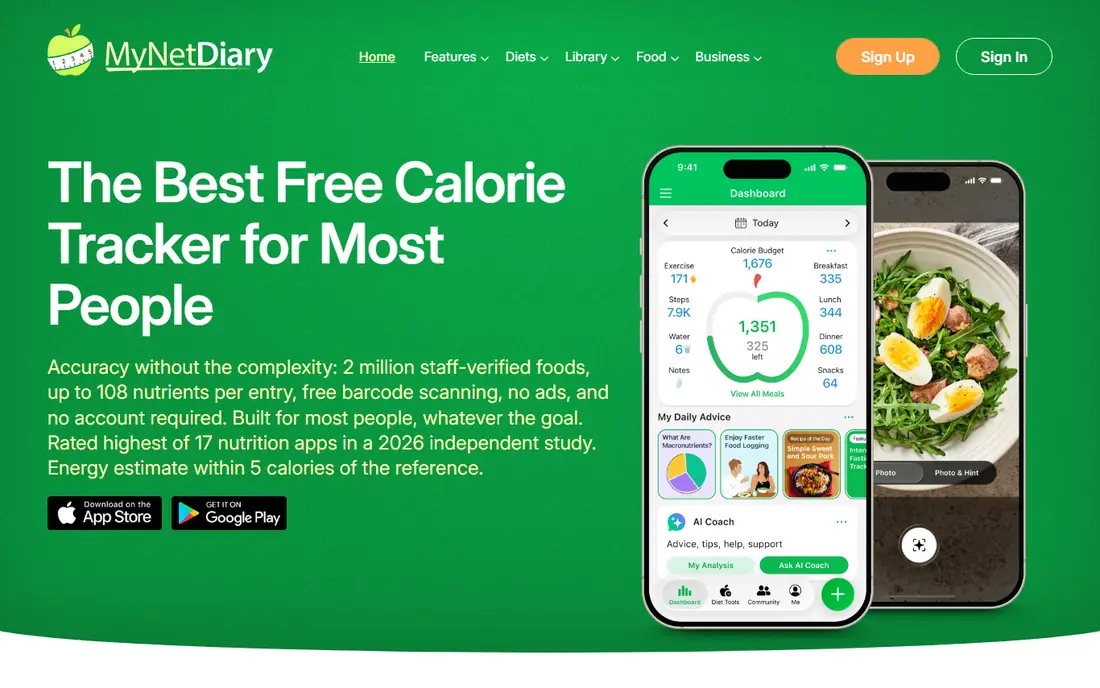
MyNetDiary wins the free tier comparison because it refuses the usual tradeoff. Its database holds more than 2 million staff-verified foods, not user-submitted entries, with up to 108 nutrients per item. Barcode scanning, macro tracking, water tracking, and a full food diary are all free, and the free tier carries no ads and needs no account to start.
Independent testing backs the accuracy claim. A 2026 validation study in Nutrition and Health found MyNetDiary's three-day energy estimate within 5 calories of the reference, the closest of the apps tested, and gave it the highest quality score of 17 apps evaluated. A January 2026 speed test also found it needed fewer actions than rivals to log the same 127 foods.
The weaknesses are cosmetic and premium-gated. The interface looks older than Lifesum or Yazio, and AI coaching, meal plans, and advanced autopilot targets sit in Premium at 59.99 dollars a year. For free tracking, though, nothing else on this list gives you this much without ads or a scanner paywall.
What we like- Staff-verified database
- Free barcode scanner
- No ads on the free tier
Watch out for- Interface looks dated next to Lifesum
- AI coaching and meal plans need Premium
Starting price$0
Free planYes
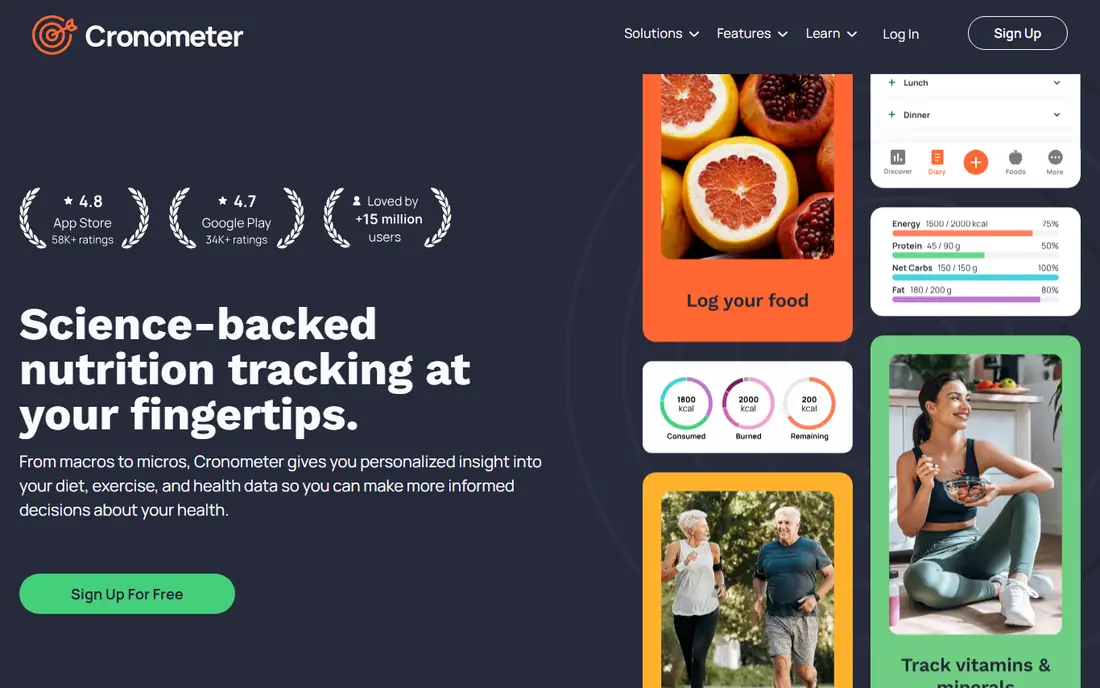
Cronometer is the app for people who care about more than calories. It tracks up to 95 nutrients and compounds, from vitamins and minerals to amino acids, using lab-analyzed and verified data sources. The free barcode scanner works without paying, and the database holds more than 1 million verified foods.
Device support is a genuine strength. Cronometer syncs with watches, scales, and fitness apps, and its charts make it easy to spot which nutrients run low over weeks rather than days. Health professionals use a separate Pro platform built on the same data, which says something about data quality.
The free tier does show ads, and the depth that nutrition enthusiasts love can feel like clutter if you only want a calorie budget. Gold costs 59.99 dollars a year and adds a macro scheduler, custom charts, and no ads. If nutrient detail matters to you, Cronometer is the free pick.
What we like- Up to 95 nutrients tracked
- Free barcode scanner
- Strong device integrations
Watch out for- Free tier shows ads
- Depth can overwhelm simple calorie counters
Starting price$0
Free planYes
FatSecret is the quiet achiever of this list. Its homepage states plainly that the app and its core features are completely free, including calorie and macro tracking, weight logging, the barcode scanner, and community access. The food database is among the largest in the world, and the app has been running since 2006.
That lack of paywall pressure is the point. Where rivals gate scanners, photo logging, or nutrient detail behind subscriptions, FatSecret lets you log for months without hitting a wall. The interface is simpler than MyNetDiary or Lifesum, which many users prefer for a daily habit.
The tradeoff is depth. You will not find adaptive targets, AI coaching, or detailed micronutrient analysis at the level Cronometer offers, and Premium pricing varies by region rather than being published as one US price. If you want free tracking without upsell noise, FatSecret is hard to beat.
What we like- Core tracking completely free
- Barcode scanner included
- Huge global food database
Watch out for- Fewer advanced features than rivals
- Premium pricing varies by region
Starting price$0
Free planYes
MyFitnessPal remains the biggest name in calorie tracking, with more than 280 million users and a database of 20.5 million foods covering restaurant menus, home recipes, and packaged products. It syncs with more than 40 apps and devices, and its diary is the one most people already know how to use.
The free tier still covers basic calorie and macro logging, which is enough for many users. But 2026 comparisons agree that barcode scanning, Meal Scan photo logging, and voice logging now require Premium, which costs 79.99 dollars a year. The free tier also shows ads, and its database leans on user submissions rather than staff verification.
Choose MyFitnessPal if its database and integrations matter more than free scanner access, or if years of your food history already live there. New users who want everything free will do better with MyNetDiary or Cronometer.
What we like- 20.5 million foods
- 40 plus device integrations
- Familiar diary millions already know
Watch out for- Barcode, photo, and voice logging need Premium
- Free tier shows ads
Starting price$0
Free planYes
Lose It! keeps calorie counting simple. Instead of handing everyone a generic target, it assigns a personalized daily calorie budget from your age, height, weight, and goal, then shows progress against that budget in a clean diary. The app has run since 2008 and holds a 4.8 rating across hundreds of thousands of reviews.
The free tier covers basic logging, water tracking, and macro tracking, which is enough for a straightforward weight-loss routine. But several 2026 comparisons place barcode scanning, photo logging, and voice logging in Premium, which costs 79.99 dollars a year, even though the homepage lists scanning as a feature. Check on a fresh install before assuming scanner access is free.
The other limit is depth. Lose It! tracks fewer nutrients free than Cronometer or MyNetDiary, and its free tier shows ads. It suits beginners who want a budget and a diary without complexity, not nutrition enthusiasts.
What we like- Personalized daily calorie budget
- Simple diary
- Running since 2008
Watch out for- Barcode, photo, and voice logging are paid features per 2026 comparisons
- Free tier shows ads
Starting price$0
Free planYes
Yazio stands out for people who combine calorie counting with intermittent fasting. Its built-in timers cover plans like 16:8, 5:2, and 6:1, and the app pairs fasting with food tracking, activity sync, and more than 3,000 recipes tailored to your goals. AI photo tracking and barcode logging speed up entry.
The design is polished, and the goal setup takes minutes, with options for weight loss, muscle gain, balanced eating, and mindful eating. More than 100 million people have used it, according to the homepage.
The free tier is usable but not generous: many planning tools, detailed analysis, and some tracking features sit in Pro, whose price varies by region and billing period in 2026 comparisons. There is also no web app, so desktop users must use the phone. Yazio fits fasters who want recipes and a pleasant diary.
What we like- Built-in intermittent fasting timers
- 3,000 plus recipes
- AI photo tracking
Watch out for- Many planning tools need Pro
- No web app
- Pro pricing varies
Starting price$0
Free planYes
Lifesum is the best-looking app on this list, and its meal plans cover keto, Mediterranean, fasting, protein-focused weight loss, and more. Multimodal tracking lets you log by photo, voice, typing, barcode, or quick entry, and one-tap trackers cover water, fruit, and vegetables. It syncs with Apple Watch and Samsung watches.
The problem is the free tier. One 2026 comparison of free tiers called Lifesum's the least usable of the apps tested, with meal plans, life score, and advanced tracking all Premium-only. Premium pricing also varies across sources, so check the checkout screen before subscribing.
Lifesum suits users who already plan to pay and want a polished experience with meal plans. If you want to stay free, MyNetDiary, Cronometer, or FatSecret give you far more without paying.
What we like- Beautiful interface
- Meal plans for many diets
- Barcode scanner and habit trackers
Watch out for- Free tier is the thinnest here
- Most useful features need Premium
Starting price$0
Free planYes
Carb Manager is the specialist pick. Where general trackers treat carbs as one number, Carb Manager centers net carbs and adds ketone, blood glucose, insulin, glycemic load, and intermittent fasting tracking. Its database covers more than 1 million foods, and it syncs with Fitbit, Garmin, Apple Health, and Google Fit.
The app also includes keto meal plans, grocery lists, and thousands of low-carb recipes, which makes it a complete low-carb companion rather than just a counter. Premium costs 39.99 dollars a year and adds photo logging and premium recipes.
The limit is scope. If you do not eat low-carb, Carb Manager's extra metrics add clutter rather than value, and general trackers will serve you better. For keto and low-carb eaters, it is the clear free pick.
What we like- Net carbs, ketones, glucose, and fasting in one app
- 1 million plus foods
- Strong device sync
Watch out for- Built for low-carb eaters, less useful otherwise
- Photo logging needs Premium
How we chose
We compared apps with genuinely usable free tiers, not just free downloads. Pricing and free features were checked against vendor homepages and 2026 comparisons on 27 October 2026, and any figure we could not verify is listed as See website or noted as varying. We opened each homepage to confirm it loads and belongs to the product. MacroFactor was excluded because it has no free tier, only a 7-day trial, which does not fit a free-apps list. Public reviews, database quality, and device support informed the strengths and weaknesses, and we did not claim hands-on testing. This article is not medical advice: calorie and nutrient targets are estimates, and anyone with a medical condition, eating disorder history, or pregnancy should talk to a clinician before changing their diet.
What to check before you pick
Start with the feature you will use daily. If you scan barcodes at the store, MyNetDiary, Cronometer, and FatSecret include scanning free, while MyFitnessPal and Lose It! gate it behind Premium according to 2026 comparisons. If you track micronutrients, Cronometer is the only free app with real depth.
Next, test the database on your own foods. Search for five packaged foods and three restaurant meals you eat regularly. An app with a huge database still fails if your foods are missing or its entries are wrong, and verified databases beat user-submitted ones for accuracy.
Finally, watch the ads and upsell pressure for a week. A free app you open daily should not fight you with upgrade prompts, and the best free tier is the one you still enjoy using after a month. Export your data before switching, since food history rarely transfers cleanly between apps.
Frequently asked questions
Which free calorie app has no ads?
MyNetDiary is the standout: its free tier is ad-free and includes barcode scanning, macro tracking, and full nutrient detail. FatSecret is also low-pressure, while Cronometer, MyFitnessPal, and Lose It! show ads to free users.
Is barcode scanning really free on MyFitnessPal and Lose It!?
According to several 2026 comparisons, no: both apps moved barcode scanning to Premium tiers. Their homepages still list scanning as a feature, so the paywall status is worth checking on a fresh install before you commit your food history to either app.
What is the best free app for keto?
Carb Manager, because it tracks net carbs, ketones, blood glucose, and fasting alongside calories, with keto meal plans and recipes. General trackers can log keto foods, but none match its low-carb toolset for free.
Do free calorie apps sell my data?
Policies differ, so read the privacy policy before signing up. MyNetDiary and Cronometer both emphasize verified data and standard protections, but free apps generally fund themselves through ads or Premium upgrades. If data privacy is a top concern, check what each app collects and whether it offers data export and deletion.
Can a free app replace a dietitian?
No. Apps estimate calories and nutrients from databases, and their targets are generic formulas, not medical advice. They help with awareness and consistency, but anyone with diabetes, kidney disease, an eating disorder history, or other medical conditions should work with a clinician or registered dietitian.
How accurate are calorie counts in these apps?
Accuracy depends on the database and your portion sizes. Verified databases like MyNetDiary and Cronometer tend to be closer than user-submitted ones, and one 2026 study found MyNetDiary within 5 calories of a reference menu. Weighing food beats eyeballing portions in any app.
Sources we checked (8)
- https://mynetdiary.com
- https://cronometer.com
- https://fatsecret.com
- https://myfitnesspal.com
- https://loseit.com
- https://yazio.com
- https://lifesum.com
- https://carbmanager.com
Is your product missing or out of date?
We review this list regularly. Vendors can request a listing, send updated pricing or ask about featured placement.

Shihab Mia · Founder, Rankite
Shihab has 5+ years in B2B and SaaS SEO. He writes Rankite's software buying guides from pricing pages, documentation and public user reviews. More about Shihab.
 MyNetDiary
 Cronometer
 FatSecret
 MyFitnessPal
 Lose It!
 Yazio
 Lifesum
 Carb Manager