How we make this list: we compare pricing pages, product documentation and public user reviews. Ratings come from G2, Capterra or Trustpilot, with the date we checked them.
Key takeaways
- Strava leads for runners and cyclists who want social motivation, segments, and route sharing.
- Fitbit and Garmin Connect suit users who want a wearable plus an app, with sleep, heart rate, and readiness data.
- Apple Health is the best free hub for iPhone users, pulling data from many apps and devices into one place.
- Premium subscriptions add training plans and deeper stats, but the free tiers cover basic tracking well.
- Tracking data is general wellness information, not medical advice, and heart rate and sleep figures are estimates, not diagnoses.
Quick comparison
Is your product missing or out of date?
We review this list regularly. Vendors can request a listing, send updated pricing or ask about featured placement.
The best fitness tracking apps
Starting priceFree
Free planYes
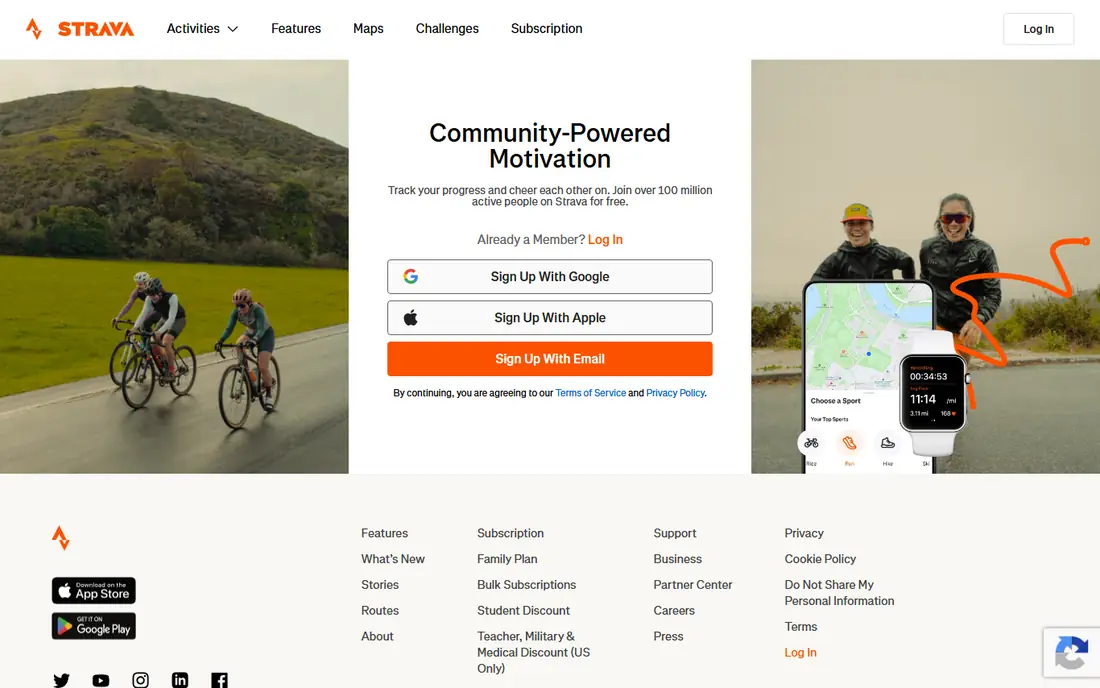
Strava is the leading app for runners and cyclists, recording GPS routes, pace, distance, and elevation, and sharing them with a large community of athletes. Segments let you compare times on popular stretches of road and trail, and clubs, challenges, and kudos add social motivation that keeps many users training. Route planning and Beacon live location sharing add safety for solo workouts.
The limits are cost and pressure. Full training stats, route tools, and segment leaderboards need a paid subscription, and the social feed can push some users to train too hard or compare themselves unfairly. Even so, Strava suits runners and cyclists who stay motivated through community, routes, and friendly competition.
What we like- Huge athlete community
- Segments and leaderboards
- Route planning and Beacon safety sharing
Watch out for- Premium subscription needed for full stats
- Social pressure can push overtraining
- Some features need a wearable
Starting priceFree
Free planYes
Fitbit pairs its app with bands and watches that track steps, heart rate, sleep stages, and exercise, making it the easiest all-day tracker for most people. The app shows daily activity, sleep quality, and trends over weeks, and challenges with friends add light motivation. Devices range from simple bands to full smartwatches, so buyers can pick a price and feature level.
The trade-offs are device dependence and subscription. Tracking is best with a Fitbit device, deeper insights and guided programs need Fitbit Premium, and setup now requires a Google account. Even so, Fitbit suits users who want simple, reliable daily activity and sleep tracking without a complex sports watch.
What we like- Easy daily tracking
- Sleep stages and heart rate
- Wide device range from bands to watches
Watch out for- Best with a Fitbit device
- Premium needed for deeper insights
- Google account integration required
Starting priceFree
Free planYes
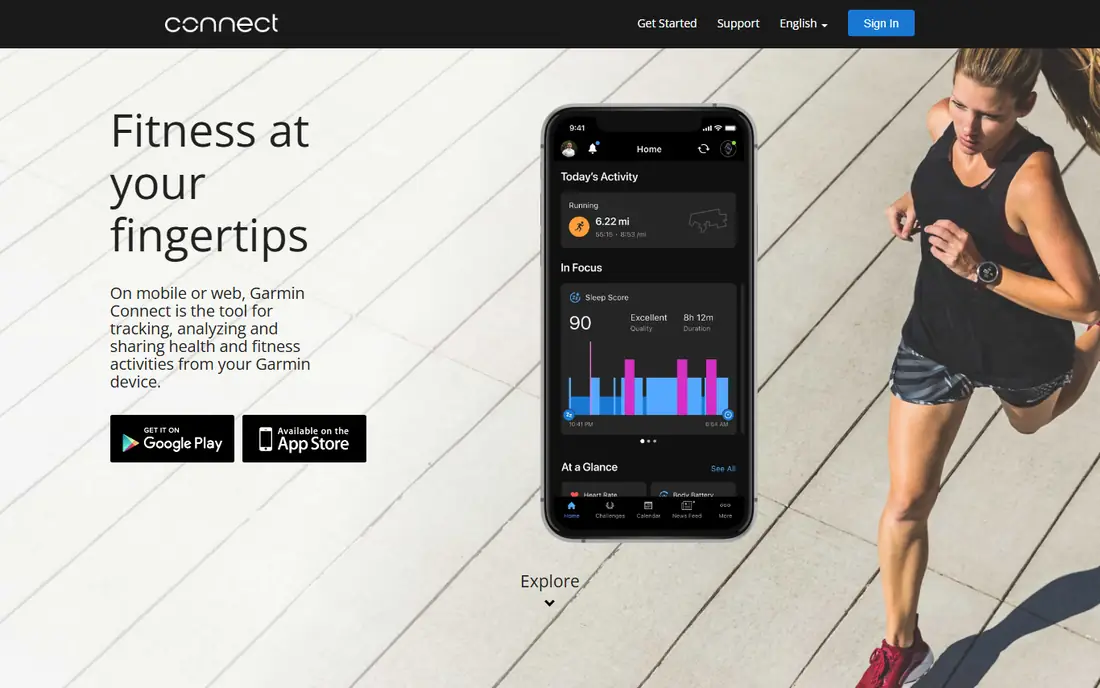
Garmin Connect is the companion app for Garmin watches and bike computers, and it offers the deepest training data of any mainstream platform, including training load, recovery time, VO2 max estimates, and race predictions. Core stats are free with no subscription, which sets Garmin apart from Fitbit Premium and Whoop. Devices are known for accurate GPS and long battery life.
The limits are device cost and complexity. You need a Garmin device to get the full picture, the app packs in many metrics that beginners may find dense, and devices cost more than simple bands. Even so, Garmin Connect suits serious runners, cyclists, and triathletes who want deep training data without a monthly fee.
What we like- Deep training metrics
- No subscription for core stats
- Excellent GPS and battery life on devices
Watch out for- Needs a Garmin device
- Interface is dense
- Devices cost more than bands
Starting priceFree
Free planYes
Apple Health comes free on every iPhone and acts as a hub, collecting steps, workouts, heart rate, sleep, and more from the phone, Apple Watch, and third-party apps. Privacy controls let users choose exactly which apps can read and write each data type, and health records from supported clinics can sit alongside fitness data. For iPhone users, it is the simplest way to see all health data in one place.
The trade-offs are platform and depth. Apple Health is iPhone only, with no Android version, and its training analysis is thinner than Strava or Garmin Connect. Even so, Apple Health suits iPhone users who want a free, private hub for fitness and health data without another subscription.
What we like- Free on every iPhone
- Pulls data from many apps and devices
- Strong privacy controls
Watch out for- IPhone only
- No Android version
- Analysis is thinner than Strava or Garmin
Starting priceFree
Free planYes
MyFitnessPal is the leading food and activity tracker, with a huge food database, barcode scanning, and recipe logging that pairs with exercise data from Fitbit, Garmin, Apple Health, and other apps. It suits users who want to understand both sides of the energy balance: what they eat and how much they move. The free tier covers basic food and exercise logging well.
The limits are cost and accuracy. Full macro tracking, custom goals, and an ad-free experience need a premium plan, and food entries from other users vary in accuracy, so label checks matter. Even so, MyFitnessPal suits users who want food tracking alongside fitness, which most sports apps do not cover deeply.
What we like- Huge food database
- Barcode scanning
- Pairs with many fitness apps
Watch out for- Premium needed for full macro tools
- Ads on free tier
- Food entries vary in accuracy
Starting priceFree
Free planYes
Nike Run Club is a free running app with GPS tracking, guided runs with audio coaching, and training plans for distances from 5K to marathon. Guided runs from coaches and athletes make it welcoming for beginners, and the design stays simple compared with data-heavy rivals. It works with a phone alone or with an Apple Watch, and all core features are free.
The trade-offs are scope. Nike Run Club covers running only, with no serious strength, sleep, or general activity tracking, and some features tie to Nike membership. Even so, Nike Run Club suits runners, especially beginners, who want free coaching and plans without a subscription.
What we like- Free guided runs and plans
- Audio coaching
- Simple and motivating design
Watch out for- Running only
- No strength or sleep tracking depth
- Some features need Nike membership
Starting priceFree
Free planYes
Samsung Health comes free on Samsung phones and tracks steps, workouts, sleep, heart rate, and food, pairing with Galaxy Watch for deeper data. It covers daily activity well, includes challenges with friends, and integrates with Samsung's wider health ecosystem. For Samsung phone owners, it is the simplest free tracker that needs no extra app.
The limits are platform and depth. It works best on Samsung devices, some features vary by region, and training analysis trails Garmin Connect. Even so, Samsung Health suits Samsung phone users who want a free, solid daily tracker without buying a separate platform.
What we like- Free on Samsung phones
- Steps, sleep, and workouts
- Pairs with Galaxy Watch
Watch out for- Best on Samsung devices
- Some features vary by region
- Depth trails Garmin
Starting priceSee website
Free planNo
Whoop is a screen-free band and subscription service focused on recovery, sleep, and strain rather than step counts. It measures heart rate variability, resting heart rate, and sleep quality to give a daily recovery score, then recommends how hard to train. Athletes and coaches use it to balance hard sessions with rest, and the band is light enough to wear around the clock.
The trade-offs are cost and display. Whoop requires a subscription, with the band included, and it has no screen, so live workout stats need a phone. Data is most useful when the band is worn day and night. Even so, Whoop suits athletes who care more about recovery and readiness than about step counts or route maps.
What we like- Strong recovery and sleep analysis
- Strain scores guide training
- No screen to distract
Watch out for- Subscription only
- No built-in GPS display
- Band is worn 24 hours for best data
How we chose
We compared fitness apps on tracking accuracy, device support, training analysis, sleep and recovery data, subscription value, and privacy, favoring apps with large user bases and proven sensor data. We excluded apps that only count steps without workout or health data. Figures in this article are general wellness information, not medical advice, and wearable estimates can differ from clinical measurements.
Buying guide
Start by matching the app to your sport. Runners and cyclists get the most from Strava or Garmin, while everyday users get more from Fitbit or Samsung Health. Next, decide whether you want a wearable: phone-only tracking covers steps and GPS runs, but sleep and heart rate data need a band or watch. Check battery life and comfort, since a tracker you do not wear gives no data.
Then weigh subscriptions. Garmin Connect and Apple Health give core stats free, while Fitbit Premium and Whoop charge monthly for deeper insights. Try the free tier for two weeks before paying, and check whether the data actually changes your training. Finally, treat recovery and heart rate figures as trends, not diagnoses, and talk to a clinician about any worrying readings rather than relying on an app.
Frequently asked questions
What is the best free fitness tracking app?
Strava, Apple Health, Samsung Health, and Nike Run Club all offer strong free tiers. Strava suits runners and cyclists, Apple Health suits iPhone users as a hub, and Nike Run Club suits runners who want free coaching.
Do I need a wearable to track fitness?
No for steps and GPS runs, which a phone handles, but yes for reliable sleep and heart rate data. Bands and watches track overnight and all-day heart rate far better than a phone alone.
Is Whoop worth the subscription?
For athletes who train hard and care about recovery scores, yes, since it focuses on readiness and sleep. For casual users, free apps such as Garmin Connect or Fitbit cover daily tracking without a monthly fee.
How accurate are fitness trackers?
Step counts and GPS distance are usually good, while heart rate is close during steady exercise and less reliable during intense intervals. Sleep stages and calorie burns are estimates, not medical measurements.
Can fitness apps replace a coach?
They can guide beginners and track progress, but they cannot watch your form or adjust for injury. A coach or clinician is still the right choice for serious training plans or health concerns.
Sources we checked (0)
Is your product missing or out of date?
We review this list regularly. Vendors can request a listing, send updated pricing or ask about featured placement.

Shihab Mia · Founder, Rankite
Shihab has 5+ years in B2B and SaaS SEO. He writes Rankite's software buying guides from pricing pages, documentation and public user reviews. More about Shihab.
 Strava
 Fitbit
 Garmin Connect
 Apple Health
 MyFitnessPal
 Nike Run Club
 Samsung Health
 Whoop