How we make this list: we compare pricing pages, product documentation and public user reviews. Ratings come from G2, Capterra or Trustpilot, with the date we checked them.
Key takeaways
- Nike Training Club is the best free all-rounder for guided workouts.
- Apple Fitness+ suits Apple Watch owners who want studio-style classes.
- Peloton leads for instructor-led classes without Peloton hardware.
- Strava is the social home for runners and cyclists.
- MyFitnessPal pairs nutrition tracking with fitness for lifestyle change.
Quick comparison
| Tool | Best for | Starting price | Free plan |
|---|
 Nike Training Club | Free guided workouts | Free | Yes |
 Apple Fitness+ | Apple Watch studio classes | From $9.99 per month | Free trial |
 Peloton | Instructor-led classes | See website | Free tier |
 Strava | Runners and cyclists | Free; Premium from $11.99 per month | Yes |
 MyFitnessPal | Nutrition and fitness tracking | Free; Premium from $19.99 per month | Yes |
 Fitbit | Activity and health tracking | Free; Premium from $9.99 per month | Yes |
 Nike Run Club | Free run tracking | Free | Yes |
 Hevy | Gym strength logging | Free; Pro from $2.99 per month | Yes |
Is your product missing or out of date?
We review this list regularly. Vendors can request a listing, send updated pricing or ask about featured placement.
The best fitness apps
Starting priceFree
Free planYes
Nike Training Club is the best free all-rounder. With a free Nike account, users get guided workouts across strength, yoga, HIIT, core, and mobility, plus training plans for goals from getting started to race preparation. Workouts suit all levels, and the library covers quick sessions and longer programs.
There are no live classes, and personalization is lighter than paid coaching apps. For anyone who wants quality guided workouts at no cost, Nike Training Club is the first app to download, and it pairs well with Nike Run Club for runners.
What we like- Fully free with a Nike account
- Strength, yoga, and HIIT workouts
- Guided plans for all levels
Watch out for- No live classes
- Limited personalization versus paid coaches
- Needs a Nike account
Starting priceFrom $9.99 per month
Free planFree trial
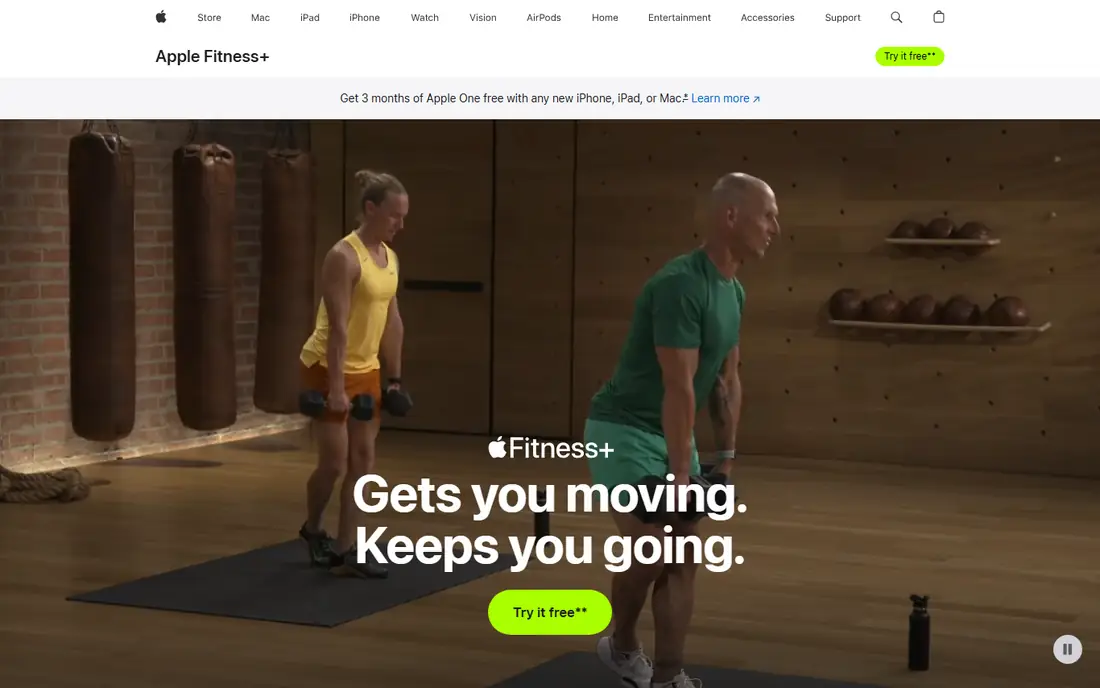
Apple Fitness+ brings studio classes to Apple devices for $9.99 a month or $79.99 a year, with a free month for new subscribers. Classes cover HIIT, strength, yoga, meditation, kickboxing, dance, cycling, rowing, and more, with new workouts weekly. Apple Watch owners see live heart rate, calories, and rings on screen during workouts, and family sharing covers up to six people.
The catch is the ecosystem: it runs on Apple devices and works best with an Apple Watch. For an Apple household that wants polished studio classes at home, Fitness+ is the most convenient subscription.
What we like- Studio-style classes across 12 workout types
- Apple Watch metrics on screen
- New workouts weekly
- Family sharing
Watch out for- Apple devices only
- Best with an Apple Watch
- No free tier beyond trial
Starting priceSee website
Free planFree tier
Peloton classes no longer need Peloton hardware. The app offers live and on-demand classes across cycling, running, strength, yoga, pilates, and stretching, with instructors whose followings drive a strong community. A free tier covers a limited set of classes, and paid app tiers open the full library.
App pricing has changed several times, so check the current page before subscribing, and the full experience still shines with a bike or treadmill. Note the correct homepage: onepeloton.com, since peloton.com belongs to an unrelated oil-and-gas company. For instructor-led motivation at home, Peloton remains the class leader.
What we like- Huge class library without Peloton hardware
- Live and on-demand classes
- Strong instructor community
Watch out for- Subscription pricing changed often
- Full experience needs a bike or treadmill
- App-only tiers limit some features
Starting priceFree; Premium from $11.99 per month
Free planYes
Strava is the social home for runners and cyclists. Free tracking covers runs, rides, and dozens of sports, while Premium at about $11.99 a month adds route planning, segment leaderboards, and deeper training analysis. The social layer turns individual workouts into a shared experience: friends give kudos, clubs organize challenges, and segments turn local routes into friendly competition.
Social pressure can demotivate some users, and strength training features are limited compared with gym apps. For an endurance athlete who trains better with community, Strava is the default app.
What we like- Best social layer for endurance sports
- Route planning and segments
- Works with Garmin, Apple Watch, and more
Watch out for- Premium costs $11.99 a month
- Social pressure can demotivate some users
- Limited strength training features
Starting priceFree; Premium from $19.99 per month
Free planYes
MyFitnessPal pairs nutrition with fitness for lifestyle change. The food database is the largest in the category, barcode scanning logs meals fast, and exercise tracking connects calories in with calories out. Streaks and habit features help users stay consistent, and the free tier covers core logging.
Premium runs about $19.99 a month and adds macro goals, meal timing, and deeper analysis. Calorie tracking needs care for anyone with a history of disordered eating, and the app is a tool, not medical advice. For a user whose goal is weight or nutrition change alongside exercise, MyFitnessPal is the most complete tracker.
What we like- Huge food database
- Barcode scanning
- Pairs nutrition with exercise
- Long streak and habit features
Watch out for- Premium at $19.99 a month
- Free tier limits some tools
- Calorie tracking needs care for disordered eating
Starting priceFree; Premium from $9.99 per month
Free planYes
Fitbit tracks the whole day, not just workouts. Steps, sleep, heart rate, and activity feed one dashboard, and Premium at $9.99 a month adds guided programs, deeper sleep analysis, and health metrics reports. The app works with Fitbit devices and syncs with Google Fit, and challenges with friends add a social layer.
The experience is best with a Fitbit device, and some insights sit behind Premium. For a user who wants all-day health tracking rather than workout classes alone, Fitbit is the most rounded health app.
What we like- Best all-day activity tracking
- Sleep and health metrics
- Works with Fitbit devices and Google Fit
Watch out for- Premium at $9.99 a month
- Best with a Fitbit device
- Some insights sit behind Premium
Starting priceFree
Free planYes
Nike Run Club is the best free running app. GPS tracking covers pace, distance, and splits, guided runs with coaches talk you through sessions, and training plans prepare runners for races from 5K to marathon. Social challenges and achievements keep motivation up, and everything is free with a Nike account.
It is running focused only, so strength and cross-training need a second app such as Nike Training Club. For a runner who wants coaching and tracking at no cost, Nike Run Club is hard to beat.
What we like- Fully free
- Guided runs with coaches
- Training plans for races
- Social challenges
Watch out for- Running focused only
- No strength or cross-training plans
- Needs a Nike account
Starting priceFree; Pro from $2.99 per month
Free planYes
Hevy is the modern gym tracker. Logging sets, reps, and weights takes seconds, routines can be built and reused, and a plate calculator plus rest timers smooth gym sessions. The social community of lifters shares routines and progress, and the free tier covers core logging with limits on routines and custom exercises.
Pro opens unlimited routines and features from about $2.99 a month, though store pricing varies. For a lifter who wants a clean, fast workout log with a community behind it, Hevy is the best gym app here.
What we like- Clean gym workout logging
- Routine builder
- Social community of lifters
- Plate calculator and rest timers
Watch out for- Free tier limits routines and custom exercises
- Strength focused only
- Pro pricing varies by store
How we chose
We compared apps on workout quality, tracking, social features, device support, and pricing, using vendor pages and published comparisons from 2026. We favored apps US users can use today with a distinct strength. We did not claim hands-on testing, and where prices varied by store or plan we quoted the standard figure or wrote See website. This article gives general fitness information, not medical advice: talk to a clinician before starting a new exercise program, especially with a health condition.
How to pick the right fitness app
Start with the exercise you actually enjoy. A running app will not help someone who hates running, and a strength app will not help someone who loves classes. Match the app to your preferred movement first, then check the rest: device support, price, and social features. A free app you open daily beats a premium app you abandon in a week.
Then think about your stack. Apple Watch owners get the most from Fitness+, Garmin owners from Strava or Garmin Connect, and Fitbit owners from the Fitbit app. Gym lifters need a logging app like Hevy, while runners need GPS tracking and training plans. Many serious users run two or three apps together: one for workouts, one for nutrition, one for recovery, since no single app does everything well.
Also set a realistic cadence. Three sessions a week sustained for three months beats a perfect week followed by burnout. Use the app streak and reminder features to build the habit, and review progress monthly rather than daily, since fitness changes slowly. Finally, check privacy settings: fitness apps collect location and health data, so review what is shared publicly, especially on social apps like Strava, where route sharing can reveal home locations.
Common mistakes waste subscriptions. Many people pay for a premium app and use only the free features, so start free and upgrade only when you hit a real limit. Others chase a new app every month instead of sticking with one, so commit to one app for at least six weeks before judging it. The best fitness app is the one that gets you moving consistently, not the one with the longest feature list.
A note on recovery: progress happens between workouts as much as during them, so sleep, rest days, and gradual load increases matter as much as the app you choose. An app that tracks recovery and rest alongside training helps beginners avoid the overtraining trap that ends many new routines early.
Frequently asked questions
What is the best free fitness app?
Nike Training Club for guided workouts and Nike Run Club for running, both fully free with a Nike account. Strava and Hevy also offer strong free tiers.
Is Apple Fitness+ worth it without an Apple Watch?
It works on Apple devices, but the experience is best with an Apple Watch, which shows live metrics on screen. Without a watch, Nike Training Club offers similar classes free.
Which fitness app is best for weight loss?
MyFitnessPal, for pairing nutrition tracking with exercise. Combine it with a workout app for training, and talk to a clinician about safe calorie targets.
Do I need a Peloton bike to use the Peloton app?
No. The app offers classes without hardware, though the full experience shines with a bike or treadmill. Check current app pricing, which has changed often.
Is Strava only for runners and cyclists?
Mostly, though it tracks dozens of sports. Strength-focused users should pair it with a gym app like Hevy, since Strava strength features are limited.
Are fitness apps safe for beginners?
Generally yes for healthy adults, but start slowly, follow form guidance, and talk to a clinician before starting a new program if you have a health condition or injury.
Sources we checked (8)
- https://www.nike.com/ntc-app
- https://www.apple.com/apple-fitness-plus/
- https://www.onepeloton.com
- https://www.strava.com
- https://www.myfitnesspal.com
- https://www.fitbit.com
- https://www.nike.com/nrc-app
- https://hevyapp.com
Is your product missing or out of date?
We review this list regularly. Vendors can request a listing, send updated pricing or ask about featured placement.

Shihab Mia · Founder, Rankite
Shihab has 5+ years in B2B and SaaS SEO. He writes Rankite's software buying guides from pricing pages, documentation and public user reviews. More about Shihab.