How we make this list: we compare pricing pages, product documentation and public user reviews. Rankite is independent; if a vendor ever pays for a featured spot, that listing is clearly labeled Partner.
Key takeaways
- None of the serious tools in this category publish prices: expect a sales process and an annual contract at every vendor below except the entry tiers.
- FloQast (close management) and BlackLine (reconciliations and close automation) solve the month-end close; Workiva solves regulated reporting for public companies.
- If your team lives in Excel, Datarails and Vena keep the spreadsheet interface while adding version control, permissions and audit trails underneath.
- Accounting firms preparing statements for clients should start with Caseware; operating companies should start with Sage Intacct or NetSuite for the underlying ledger.
Quick comparison
| Tool | Best for | Starting price | Free plan |
|---|
 FloQast FloQast | Accounting teams that want a faster, calmer month-end close | See website (quote-based; no per-user fees advertised) | No (demo available) |
 BlackLine BlackLine | Mid-size to large companies automating account reconciliations | See website (quote-based) | No (demo available) |
 Workiva Workiva | Public companies managing SEC filings, ESG and audit reporting | See website (quote-based) | No (demo available) |
 Sage Intacct Sage Intacct | Growing companies that need real dimensional financial reporting | See website (quote-based, modular) | No (demo available) |
 NetSuite NetSuite | Companies that want ERP, financials and operations in one system | See website (quote-based) | No (demo available) |
 Datarails Datarails | FP&A teams that want to keep Excel and lose the chaos | See website (quote-based; Professional, Premium and Expert tiers) | No (demo available) |
 Vena Vena | Finance teams that plan, budget and report inside Excel | See website (quote-based) | No (demo available) |
 Prophix Prophix | Midmarket companies standardizing financial performance management | See website (quote-based) | No (demo available) |
 Caseware Caseware | Accounting firms preparing financial statements for clients | See website (quote-based) | No (demo available) |
 Planful Planful | Finance teams that plan continuously instead of annually | See website (quote-based) | No (demo available) |
Is your product missing or out of date?
We review this list regularly. Vendors can request a listing, send updated pricing or ask about featured placement.
The best financial statement software
Blunt opinion: nobody buys financial statement software from a pricing page. Every serious tool in this category hides its price behind a demo request, sells an annual contract, and prices on company size, entity count and modules. The comparison that matters is not the sticker price but the fit: close management, regulated reporting, general ledger depth, or planning. These ten cover the real market, organized by the job each one actually does.
#1
FloQast
Best for: Accounting teams that want a faster, calmer month-end close
Visit floqast.com
Starting priceSee website (quote-based; no per-user fees advertised)
Free planNo (demo available)
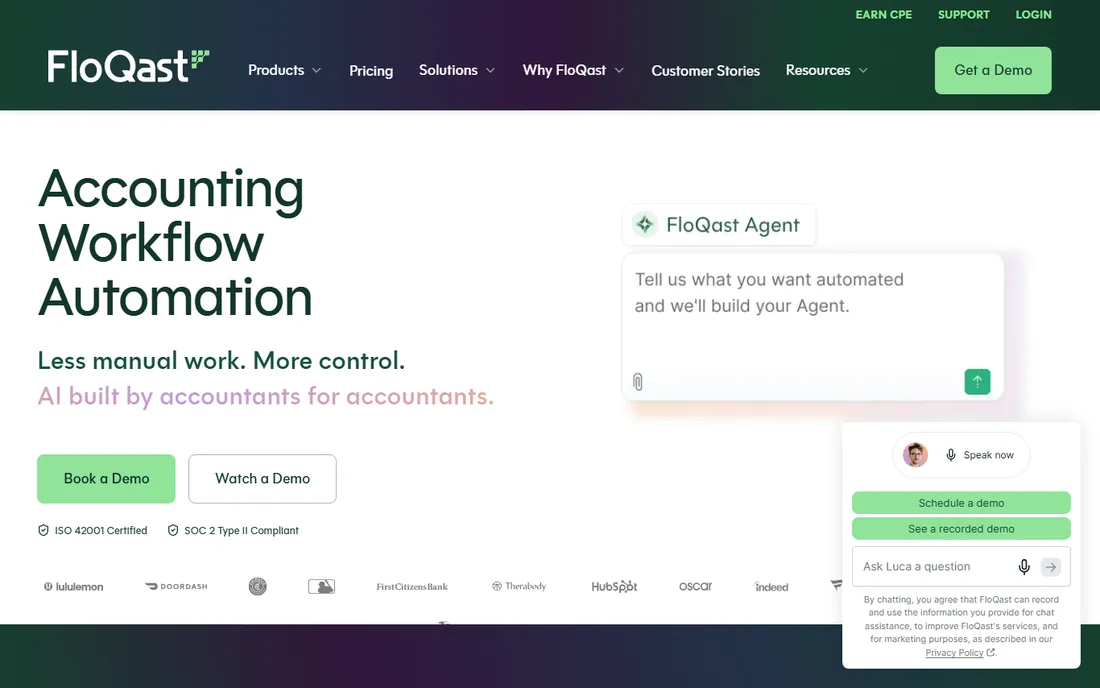
FloQast turned the month-end close into a managed workflow. Instead of a spreadsheet checklist and a shared drive of reconciliations, the team works from one close calendar with assigned tasks, deadlines, review notes and supporting documents attached to each item. Its pricing page states plainly that pricing is built around value rather than headcount, with no per-user fees, which suits accounting teams that swell with contractors at quarter-end.
The honest limitation is scope. FloQast owns the close: reconciliations, task management, flux analysis, audit support. It does not replace your ERP, your planning tool or your SEC reporting solution. Companies usually buy it after the close has already become painful, which is the right time. Ask for the full module list on the demo, because AI matching and advanced analytics may sit in higher tiers.
What we like- Close checklist, reconciliations and flux analysis in one workflow built for accountants
- Integrates with NetSuite, Sage Intacct, QuickBooks and major ERPs
- AI agents for matching and review assistance
Watch out for- No published pricing, so budgeting requires a sales conversation
- Focused on the close rather than full planning or statutory reporting
#2
BlackLine
Best for: Mid-size to large companies automating account reconciliations
Visit blackline.com
Starting priceSee website (quote-based)
Free planNo (demo available)

BlackLine is the incumbent for a reason: when auditors ask how a reconciliation was prepared, reviewed and approved, BlackLine has the answer recorded. Balance sheet reconciliations, journal entry workflows, intercompany handling and task management come with the controls framework that regulated companies need. It is built for accounting teams that close across entities, currencies and time zones.
That depth comes with weight. Expect an implementation project, not a signup form, and price accordingly in both budget and calendar. Single-entity businesses with simple closes should look at FloQast first. BlackLine earns its keep where reconciliation volume, control requirements or entity complexity make spreadsheets indefensible.
What we like- The deepest reconciliation automation in the category, with certification workflows and audit trails
- Strong controls for SOX-regulated environments
- Scales to global multi-entity closes
Watch out for- Enterprise sales motion with implementation effort to match
- Overkill for a single-entity company closing in under five days
#3
Workiva
Best for: Public companies managing SEC filings, ESG and audit reporting
Visit workiva.com
Starting priceSee website (quote-based)
Free planNo (demo available)
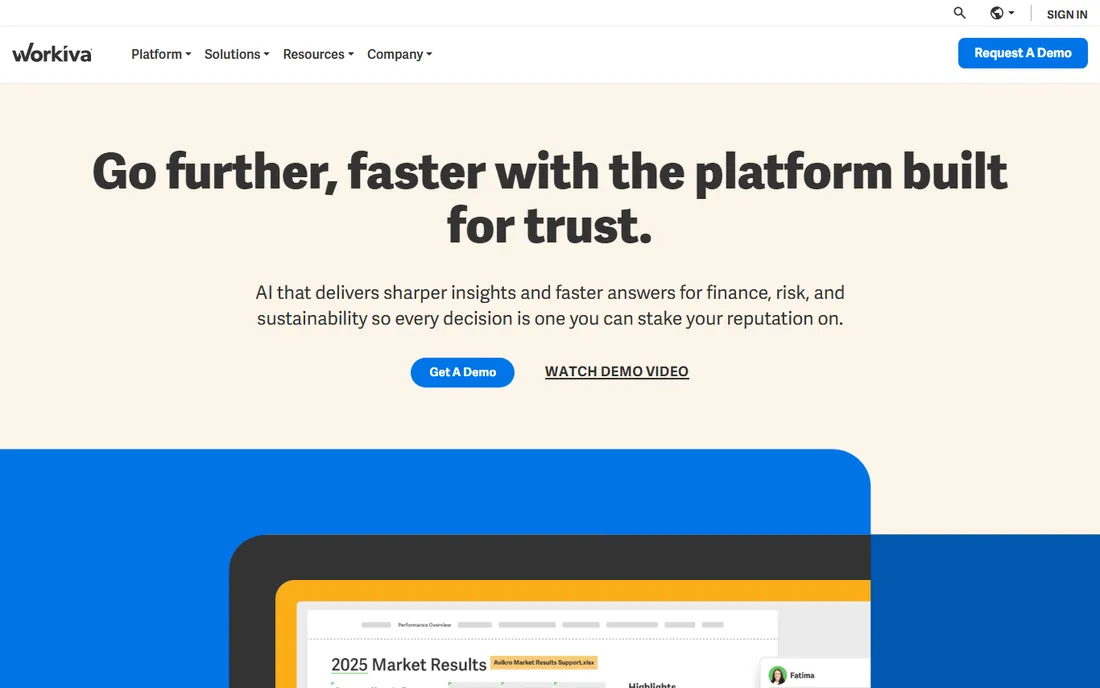
Workiva solves the reporting problem public companies actually have: the same number appears in the 10-K, the earnings release, the board deck and the ESG report, and when the source changes, every instance updates with a full trail. That connected reporting is the product. Teams that file with the SEC, report sustainability metrics or manage controls documentation live here.
Private companies without filing obligations are not the buyer. The platform, the pricing and the sales process all assume regulatory pressure. If that pressure exists, Workiva is the default shortlist of one for connected reporting, usually evaluated alongside the close tools above rather than against them.
What we like- Purpose-built for regulated reporting: SEC filings, ESG disclosures and internal controls on one connected platform
- Data links from source to every report instance
- Strong audit trail for reviewers
Watch out for- Priced and packaged for public companies, so private SMBs will find it heavy
- The platform's breadth means a real onboarding effort
#4
Sage Intacct
Best for: Growing companies that need real dimensional financial reporting
Visit sage.com
Starting priceSee website (quote-based, modular)
Free planNo (demo available)
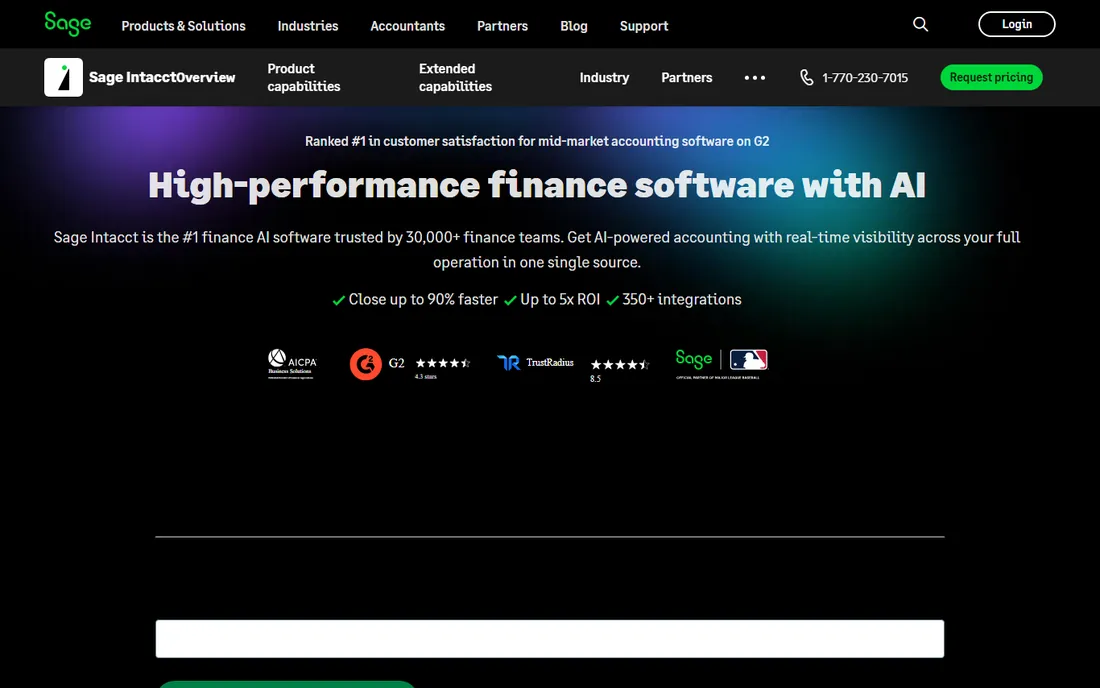
Sage Intacct is the financial core for companies that outgrew QuickBooks. The headline feature is dimensions: tag transactions by department, project, location or customer, then slice financial statements any of those ways without maintaining a bloated chart of accounts. Multi-entity groups consolidate in the system instead of in spreadsheets.
Buy it for the ledger and the reporting, not for planning or close workflow, which need separate tools. The quote will be modular, so get every module you will need in year one priced up front. Companies in the 30-to-500 employee range that need audit-ready financials are the sweet spot.
What we like- Dimensional chart of accounts means reports by department, location or project without account-code gymnastics
- Strong multi-entity consolidation
- Deep integration marketplace
Watch out for- Modular pricing means the quote grows with each add-on
- Implementation partner usually required, adding cost and time
#5
NetSuite
Best for: Companies that want ERP, financials and operations in one system
Visit netsuite.com
Starting priceSee website (quote-based)
Free planNo (demo available)
NetSuite approaches financial statements from the ERP side: when accounting, inventory, purchasing and sales share one database, the statements reconcile themselves because there is only one version of the data. That is the pitch, and for product and distribution companies it holds. Financial reporting, consolidations and audit trails come standard.
The trade is commitment. NetSuite implementations are measured in months, the admin burden is real, and the quote reflects the platform's market position. It fits companies that need operational software anyway and want finance included. If you only need better financial reporting on top of systems you already run, the lighter tools on this list cost less in money and attention.
What we like- One system for accounting, inventory, orders and HR basics, so the financial statements draw from live operational data
- Proven at scale across industries
- Large partner ecosystem
Watch out for- The broadest scope here, which means the longest implementation and the heaviest admin load
- Pricing is entirely quote-driven and historically premium
#6
Datarails
Best for: FP&A teams that want to keep Excel and lose the chaos
Visit datarails.com
Starting priceSee website (quote-based; Professional, Premium and Expert tiers)
Free planNo (demo available)
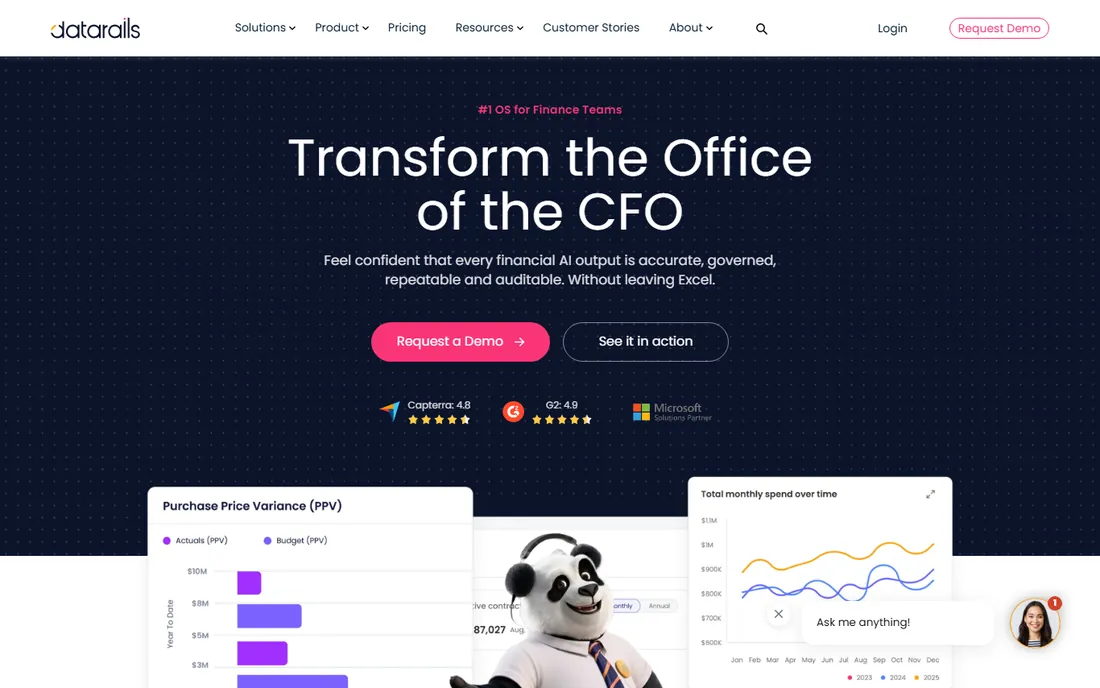
Datarails is built on a simple observation: finance teams will not give up Excel, so give them Excel with guardrails. Models stay in spreadsheets, but the data connects to a central, governed source, versions are controlled, and access is permissioned. The pricing page lists Professional, Premium and Expert tiers, all quote-based, with dashboards, reporting and cash management features scaling up the tiers.
The buyer is the FP&A leader drowning in emailed spreadsheet versions. Consolidation, variance reporting and board-ready outputs arrive without retraining the team on a new modeling language. Get the tier definitions in writing on the demo: the line between Professional and Premium determines what your actual reporting workflow costs.
What we like- Keeps the Excel interface finance teams know while adding a governed data layer, version control and permissions
- Consolidates actuals automatically for reporting
- Tiered plans from Professional to Expert
Watch out for- Every tier requires a custom quote, so price discovery is slow
- Excel-centric, so teams wanting a fully web-native planning UX should look elsewhere
Starting priceSee website (quote-based)
Free planNo (demo available)
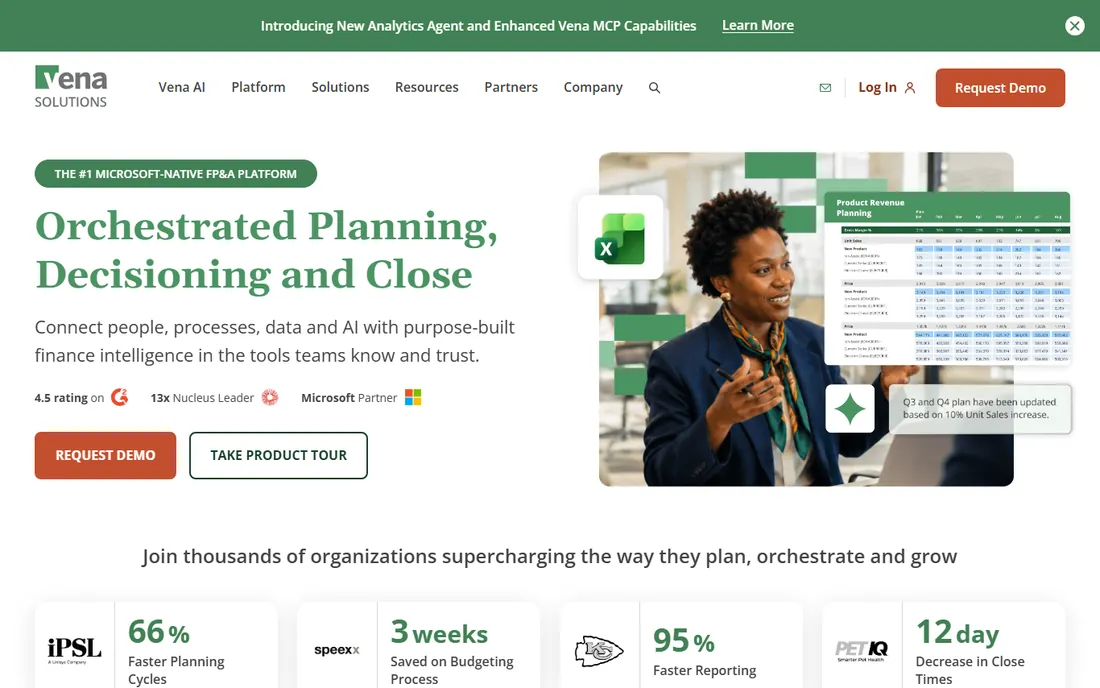
Vena takes the same bet as Datarails from a different angle: budgeting and planning happen in Excel, but with a controlled database behind it, approval workflows around it, and audit trails under it. Department heads submit budgets in a familiar interface while finance keeps version control and consolidation automatic.
Choose between Vena and Datarails on the demo, not the brochure. Both promise Excel with governance; they differ in planning depth, template libraries and implementation style. Vena's heritage is planning and budgeting first, reporting second, so teams whose pain is the annual budget cycle should start here.
What we like- Native Excel interface for budgeting, forecasting and reporting with centralized control
- Strong workflow for budget collaboration across departments
- Pre-built templates for common processes
Watch out for- Quote-only pricing with an enterprise sales process
- The Excel dependency is a strength for finance but a limitation for company-wide planning adoption
#8
Prophix
Best for: Midmarket companies standardizing financial performance management
Visit prophix.com
Starting priceSee website (quote-based)
Free planNo (demo available)
Prophix positions itself as financial performance management without the enterprise ordeal: planning, budgeting, forecasting, reporting and financial consolidation aimed at the midmarket. The platform pitch emphasizes understanding financial performance plans through automation rather than spreadsheet assembly, with AI-assisted analysis layered in.
The evaluation question is scope fit. If your company runs a few entities and needs planning plus reporting in one purchase, Prophix competes well against bigger CPM names. If you run dozens of entities across currencies, verify consolidation depth on the demo before shortlisting. As with everything in this category, the price arrives after the demo.
What we like- Covers budgeting, forecasting, reporting and consolidation in one midmarket-focused platform
- Artificial intelligence features for anomaly detection and insight
- Less implementation burden than enterprise CPM suites
Watch out for- No public pricing or packaging details
- Midmarket focus means very large multi-entity groups may need a bigger platform
#9
Caseware
Best for: Accounting firms preparing financial statements for clients
Visit caseware.com
Starting priceSee website (quote-based)
Free planNo (demo available)

Caseware is the odd one out here, and deliberately so: it is software for accountants who prepare other companies' financial statements. Working papers, trial balance imports, adjusting entries, disclosure checklists and financial statement generation follow the assurance workflow. Firms standardize on it because reviewers, partners and peer reviewers all know where everything lives.
Operating companies should not buy Caseware for internal reporting; it is not designed for that. But if you run a firm, or you are evaluating what your accountants use, Caseware is the category reference. Ask about the cloud versus desktop deployment, since firms are mid-migration and the answer affects remote work.
What we like- The standard for accountants preparing compiled and reviewed statements: trial balance, adjustments, disclosure checklists and statement generation
- Strong audit and assurance companion products
- Trusted by firms of all sizes
Watch out for- Built for practitioners, so operating companies will find the workflow foreign
- Pricing and packaging require a conversation with the firm-focused sales team
#10
Planful
Best for: Finance teams that plan continuously instead of annually
Visit planful.com
Starting priceSee website (quote-based)
Free planNo (demo available)
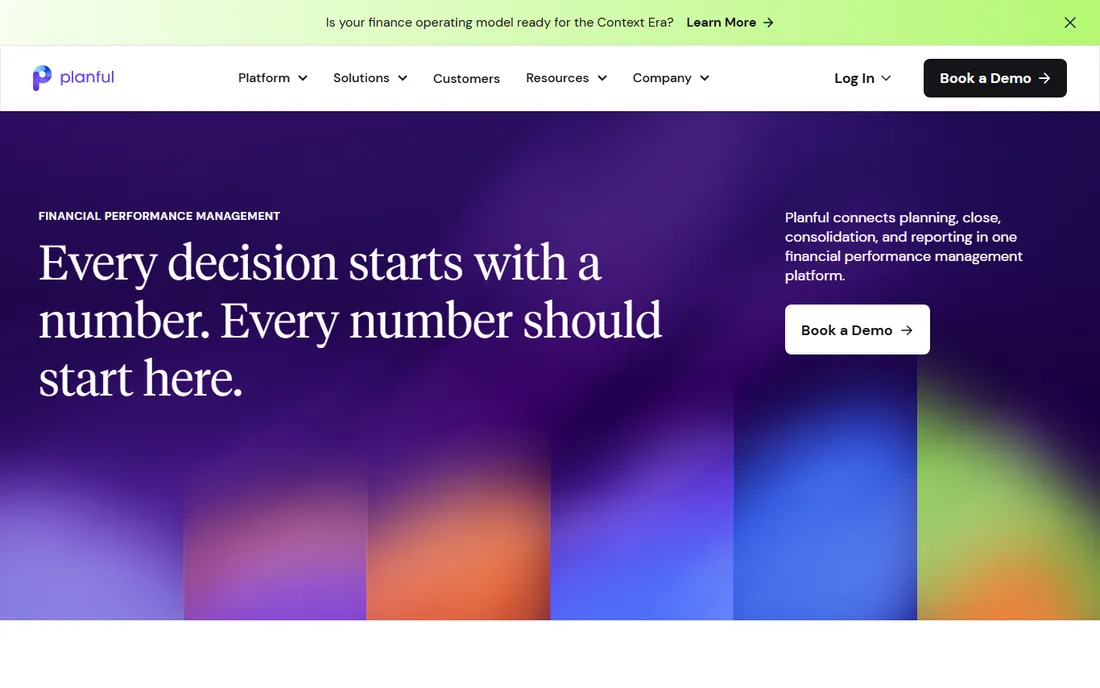
Planful sells continuous planning: budgets that update, forecasts that roll, and scenarios you can model when the market moves, all feeding the same reporting layer. For finance teams that abandoned the annual budget ritual, the platform matches how they actually work. Consolidation and reporting sit alongside planning rather than in a separate tool.
The demo needs to answer two questions: which modules your workflow requires, and what the annual contract looks like with those modules included. Planful competes with the planning-first tools here (Vena, Prophix, Datarails) more than with the close tools (FloQast, BlackLine). Shortlist it when the pain is planning agility, not close speed.
What we like- Planning, budgeting, forecasting, consolidations and reporting in one platform
- Designed for rolling forecasts and scenario modeling
- Strong marketing and analytics integrations
Watch out for- Fully quote-based pricing with no public packaging
- The breadth means scoping the implementation carefully to avoid paying for unused modules
Close management vs. reporting vs. planning: what this category actually covers
"Financial statement software" is three different purchases wearing one name. Close management (FloQast, BlackLine) gets the books closed accurately and on time: reconciliations, task checklists, journal workflows. Reporting platforms (Workiva, and the reporting layers of Sage Intacct and NetSuite) produce the statements themselves, especially regulated ones. Planning tools (Datarails, Vena, Prophix, Planful) build the budgets and forecasts that the statements get compared against.
Map your pain before you shop. If the close takes fifteen days and the auditors complain, you need close management. If producing the board deck eats a week a month, you need reporting or planning. If the budget is a spreadsheet emailed to forty people, you need planning. Buying a planning tool to fix a close problem is the most common expensive mistake in this category.
Caseware sits apart as the practitioner's tool: it is what accounting firms use to prepare statements for clients, not what companies use internally. And the ERP options (Sage Intacct, NetSuite) are the foundation everything else connects to: several tools on this list list them as their primary integration for a reason.
What to ask on the demo call
Since nobody publishes prices, the demo is the pricing page. Ask these five questions in this order. First, which modules does the quoted price include, and which features from the demo are add-ons. Second, how is the annual contract priced: by entity count, user count, revenue band, or something else, and what makes it grow next year. Third, what does implementation cost and how long does it take, including whether a partner is required. Fourth, which ERP and data sources it integrates with natively, and what the integration work looks like. Fifth, what the renewal terms are: price caps, termination rights, and data export if you leave.
Then verify independently. Ask for two reference customers in your industry and revenue band, and ask them what the first-year total was, not just the license line. Check G2 and Capterra reviews for implementation experiences, which is where these purchases succeed or fail. The license quote is the smallest part of the decision; the implementation and the annual uplift are where the money goes.
How we chose
We started with the categories finance leaders search: financial statement software, close management software, financial reporting software and financial performance management. For each candidate we opened the vendor's own site, read the pricing or packaging page, and confirmed that prices are quote-based rather than published. Where a vendor states packaging facts (such as Datarails' tier names or FloQast's no-per-user-fee policy), we used those. We checked product scope against documentation and practitioner discussion on Reddit, and we organized the list by the job each tool does so buyers compare within the right sub-category.
Frequently asked questions
How much does financial statement software cost?
Vendors do not publish prices. Expect quote-based annual contracts priced by company size, entity count and modules. Industry reports put midmarket close and planning tools in the low five figures annually and enterprise platforms higher, but treat those as rough bands: get two competing quotes before budgeting.
Do I need this if I already have QuickBooks or Xero?
Maybe not. QuickBooks and Xero produce financial statements for small companies. You need the tools on this list when the close is painful (FloQast, BlackLine), reporting is regulated (Workiva), entities multiply (Sage Intacct, NetSuite), or planning outgrows spreadsheets (Datarails, Vena, Prophix, Planful).
What is the difference between close management and financial reporting software?
Close management runs the process of closing the books: reconciliations, task lists, journal entries, review workflows. Financial reporting produces the statements from closed data, especially for regulators, boards and lenders. Most companies above a certain size need both, and they buy them separately.
Can these tools replace Excel?
The planning tools (Datarails, Vena) deliberately keep Excel as the interface and add governance underneath. The close and reporting tools replace specific spreadsheet workflows (reconciliation trackers, report assembly) but finance teams still export to Excel for ad hoc analysis. Expect less Excel, not zero Excel.
How long does implementation take?
It ranges from weeks (FloQast for a single entity) to months (NetSuite, BlackLine for multi-entity groups). Ask every vendor for a reference customer of your size and ask that customer how long it really took. Implementation services are usually quoted separately from the license.
Which tool do accounting firms use to prepare client statements?
Caseware is the category standard for firms preparing compiled and reviewed financial statements, with working papers, disclosure checklists and statement generation built for the assurance workflow. Operating companies preparing their own internal statements should look at the other tools on this list instead.
Sources we checked (12)
- https://floqast.com/
- https://www.blackline.com/
- https://www.workiva.com/
- https://www.sage.com/en-us/sage-business-cloud/intacct/
- https://www.netsuite.com/
- https://www.datarails.com/pricing
- https://www.venasolutions.com/
- https://www.prophix.com/
- https://www.caseware.com/
- https://planful.com/
- https://www.g2.com/categories/financial-reporting
- https://www.capterra.com/financial-reporting-software/
Is your product missing or out of date?
We review this list regularly. Vendors can request a listing, send updated pricing or ask about featured placement.

Shihab Mia · Founder, Rankite
Shihab has spent more than a decade helping SaaS and e-commerce brands grow through search. He writes Rankite's software buying guides from pricing pages, documentation and public user reviews. More about Shihab.