How we make this list: we compare pricing pages, product documentation and public user reviews. Rankite is independent; if a vendor ever pays for a featured spot, that listing is clearly labeled Partner.
Key takeaways
- QuickBooks Online is the default for US small businesses, but Intuit publishes no list prices on its site; a 50 percent new-buyer promotion is the number you will actually see, and a free $0 tier is listed on the plans page.
- The cheapest verified paid starts: Zoho Books Standard at $15/month billed annually, Wave Pro at $19/month, and Patriot Accounting Basic at $20/month (with a $10/month promotion listed).
- Real free tiers exist here: Wave's free Starter plan, Zoho Books' free plan, and QuickBooks Online's free $0 tier all let you run books without paying.
- NetSuite is the graduate school: quote-only pricing and a full ERP, right when the tools above start feeling small.
Quick comparison
| Tool | Best for | Starting price | Free plan |
|---|
 QuickBooks Online QuickBooks Online | US small businesses that want the market-standard ledger | See website (paid plans; 50% new-buyer promotion listed on site) | Yes (free $0 tier listed on the plans page) |
 Xero Xero | Small businesses that want clean cloud accounting with bank feeds | $25/month (Early plan; $2.50/month for the first 6 months listed for new buyers) | Free trial (see website) |
 FreshBooks FreshBooks | Freelancers and service businesses that live on invoicing | $23/month (Lite; $1/month for the first year listed as a promotion) | Free trial (30 days) plus a 30-day money-back guarantee |
 Wave Wave | Very small businesses and side hustles that want free accounting | $19/month (Pro, USD) | Yes (free Starter plan) |
 Zoho Books Zoho Books | Businesses wanting a free-forever option inside the Zoho suite | $15/month (Standard, per organization per month billed annually) | Yes (free plan) |
 Sage Accounting Sage Accounting | Businesses that want an established accounting brand with payroll options | See website | See website |
 Patriot Software Patriot Software | US small businesses that want simple accounting with optional payroll from one vendor | $20/month (Accounting Basic; $10/month promotional rate listed) | Free trial (see website) |
 FreeAgent FreeAgent | UK freelancers and small businesses needing HMRC and Making Tax Digital compliance | £33/month (50% off the first 6 months listed) | Free trial (30 days) |
 NetSuite NetSuite | Growing companies that have outgrown entry-level ledgers | See website (custom quote) | No (free product tour available) |
Is your product missing or out of date?
We review this list regularly. Vendors can request a listing, send updated pricing or ask about featured placement.
The best financial accounting software
Most small businesses choose accounting software once and keep it for a decade, so the first decision is worth an hour of your time. Migrating a year of transactions, reconciliations and tax records into a new ledger is nobody's idea of fun, and your accountant will charge you for the mess either way. The nine tools below cover the real market: free starters, mid-priced workhorses, and the ERP you graduate to when the simple tools start feeling small.
Starting priceSee website (paid plans; 50% new-buyer promotion listed on site)
Free planYes (free $0 tier listed on the plans page)
QuickBooks Online is the safe default in the US, and the reason is not the software itself. It is the network: accountants know it, bookkeepers specialize in it, and third-party apps integrate with it first. When something breaks at year end, finding help takes minutes instead of days. The plans page lists paid plans alongside a free $0 tier, so there is a no-cost entry point if you only need the basics.
The honest catch is pricing opacity. Intuit does not publish list prices; what you see is promotional pricing, currently 50 percent off for new buyers, with the full rate kicking in later. Budget for the post-promo price from the start, and price the payroll and payments add-ons separately, because those are where the subscription quietly doubles.
What we like- The default your accountant already knows, which saves real money at tax time
- Huge app ecosystem for payroll, payments and industry add-ons
- Invoicing, bank feeds and reporting in one subscription
Watch out for- No published list prices, so every plan quote comes through Intuit's promo pricing
- The monthly cost climbs quickly once you add payroll and advanced features
#2
Xero
Best for: Small businesses that want clean cloud accounting with bank feeds
Visit xero.com
Starting price$25/month (Early plan; $2.50/month for the first 6 months listed for new buyers)
Free planFree trial (see website)
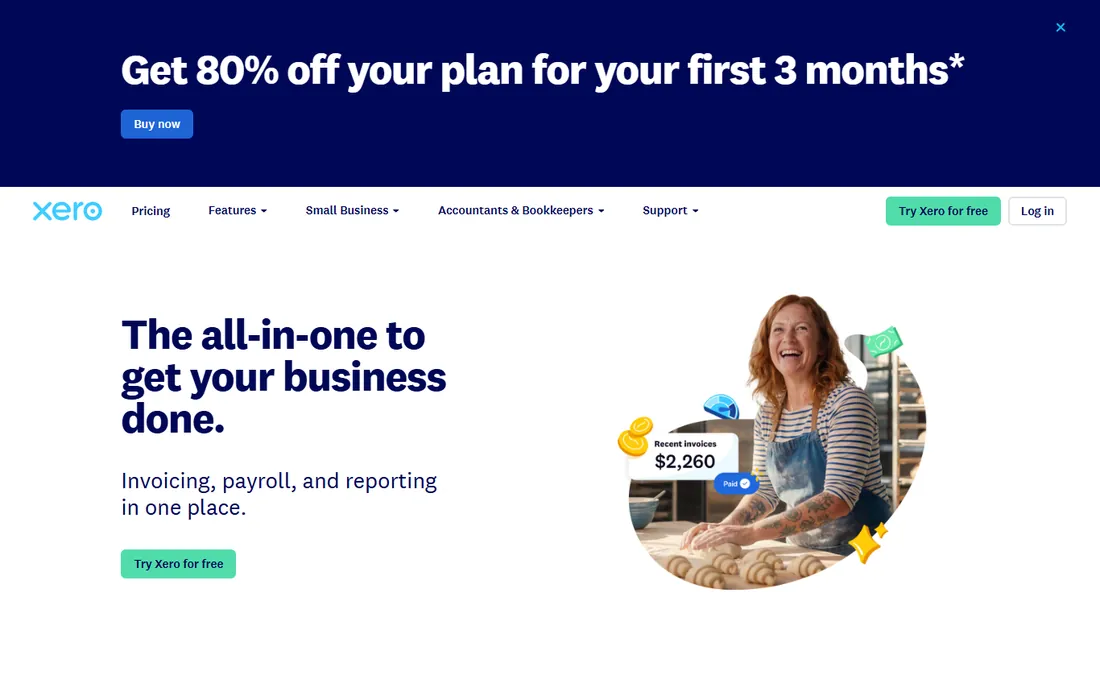
Xero is the strongest QuickBooks alternative for small businesses that want traditional double-entry accounting without Intuit. The pricing page lays out three tiers with published monthly prices and a 6-month introductory rate for new buyers, which is more transparent than most of this list. Bank feeds, invoicing and reporting work the way accountants expect, and the interface is cleaner than QuickBooks for owners doing their own books.
The tradeoff is that there is no free plan, so the meter starts on day one after the trial. The Early plan at $25 per month covers the basics, but businesses with meaningful transaction volume will land on Growing at $55 or Established at $90. Check the per-plan limits on invoices and bills before you commit, because the tiers are differentiated by volume, not just features.
What we like- Published tiered pricing with an intro promo, so you can budget in advance
- Plans scale from Early ($25) through Growing ($55) to Established ($90)
- Bank reconciliation and invoicing are core to every tier
Watch out for- No free tier, only a trial
- The entry Early plan is the cheapest way in but the higher tiers get expensive as you scale
#3
FreshBooks
Best for: Freelancers and service businesses that live on invoicing
Visit freshbooks.com
Starting price$23/month (Lite; $1/month for the first year listed as a promotion)
Free planFree trial (30 days) plus a 30-day money-back guarantee
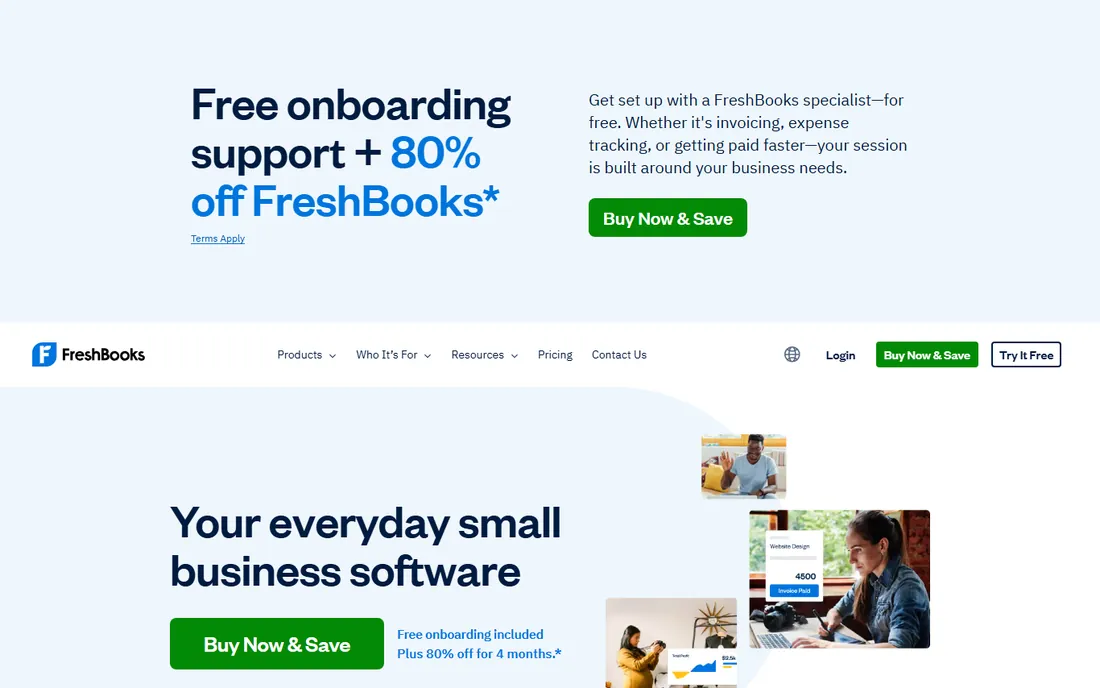
FreshBooks starts from the invoice and works backward, which is exactly how freelancers and agencies think. You track time, attach expenses, send the invoice and chase payment from one screen. Pricing is published: Lite at $23 per month, Plus at $43 and Premium at $70, with a $1-per-month first-year promotion listed on the pricing page. A 30-day trial and a 30-day money-back guarantee stack together, so you can test it on real client work.
The catch is that FreshBooks is not a full accounting suite. The tiers scale with billable clients, and businesses with inventory, multiple entities or complicated books will outgrow it. For service businesses under a few dozen clients, that simplicity is the point; for everyone else, it is a ceiling you will hit.
What we like- Invoicing-first workflow built for service billing, with time tracking and expenses attached
- Published Lite, Plus and Premium tiers
- The trial plus money-back guarantee makes trying it nearly risk-free
Watch out for- The tiers are structured around billable client counts, so growing client lists push you up
- The accounting depth is lighter than full double-entry ledgers for inventory or complex books
#4
Wave
Best for: Very small businesses and side hustles that want free accounting
Visit waveapps.com
Starting price$19/month (Pro, USD)
Free planYes (free Starter plan)
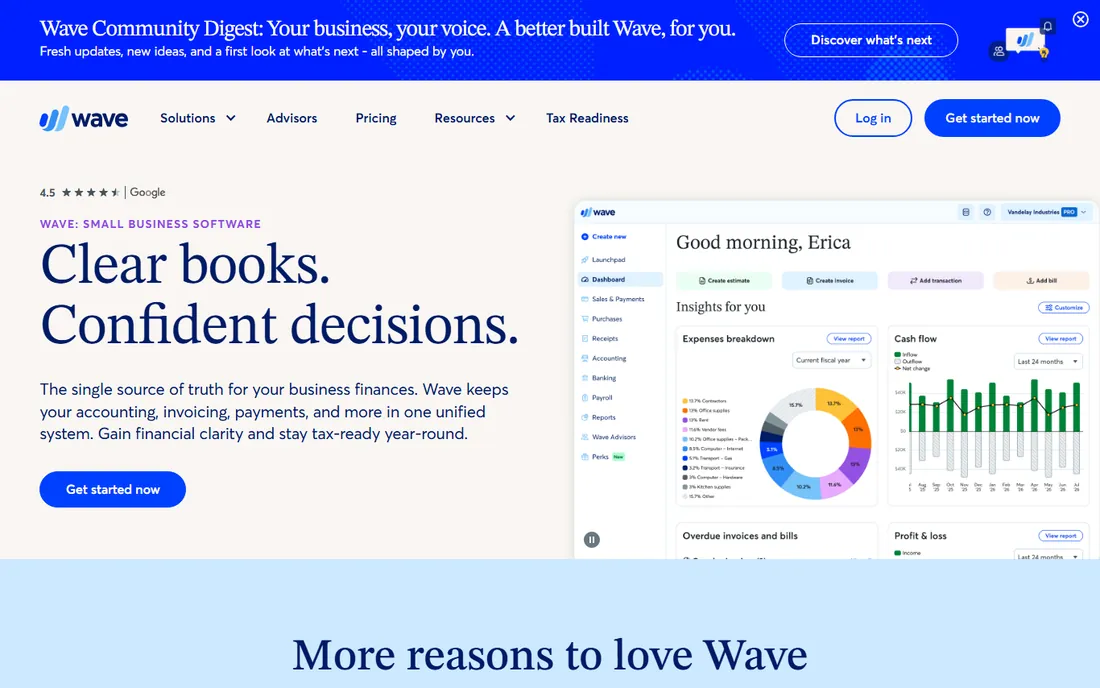
Wave is the answer when the budget is zero. The free Starter plan handles invoicing and accounting without a credit card or a trial clock, which makes it the easiest recommendation for freelancers, side hustles and brand-new businesses. If you outgrow it, Wave Pro at $19 per month adds the paid features at a price most competitors charge for their entry tier.
The limits are honest ones. Payroll costs extra, and the accounting engine is simpler than QuickBooks or Xero, so businesses with inventory, multiple locations or complex books should skip straight to the paid tools. For a one-person business sending invoices and tracking expenses, Wave is free and good enough, which is a rare combination.
What we like- A genuinely free Starter plan covering accounting and invoicing
- The Pro upgrade at $19 per month is among the cheapest paid tiers in this roundup
- Simple enough for owners with no accounting background
Watch out for- Payroll is a paid add-on rather than built in
- Advanced features like inventory and multi-entity accounting are thinner than the paid leaders
#5
Zoho Books
Best for: Businesses wanting a free-forever option inside the Zoho suite
Visit zoho.com
Starting price$15/month (Standard, per organization per month billed annually)
Free planYes (free plan)
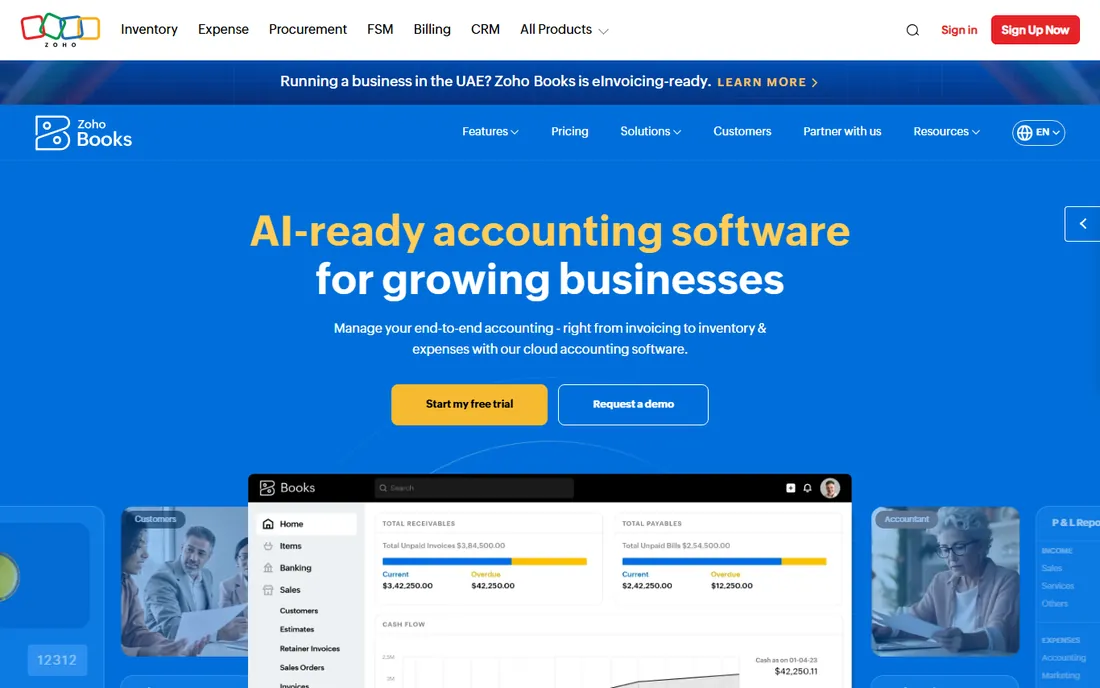
Zoho Books is the value play for businesses already living in Zoho's world, and a strong one even if you are not. The pricing page lists a free plan and six paid tiers: Standard at $15, Professional at $40, Premium at $60, Elite at $120 and Ultimate at $240 per organization per month on annual billing. Per-organization pricing means adding your bookkeeper does not add a seat license, which is a quiet advantage over per-user competitors.
The catch is the usual tier math. The $15 Standard rate assumes annual billing, and features like advanced inventory, multi-currency and custom workflows sit on the higher tiers. Still, for a small business that wants real accounting with a free starting point and a clear upgrade path, Zoho Books is one of the best-structured lineups here.
What we like- A free plan plus six paid tiers from $15 to $240 per month, so there is a price for every stage
- Pricing is per organization, not per user, which keeps team costs flat
- Automation and the wider Zoho suite (CRM, inventory, payroll) integrate natively
Watch out for- The headline $15 price is the annual-billing rate
- The higher tiers with advanced inventory and multi-currency climb steeply from there
#6
Sage Accounting
Best for: Businesses that want an established accounting brand with payroll options
Visit sage.com
Starting priceSee website
Free planSee website
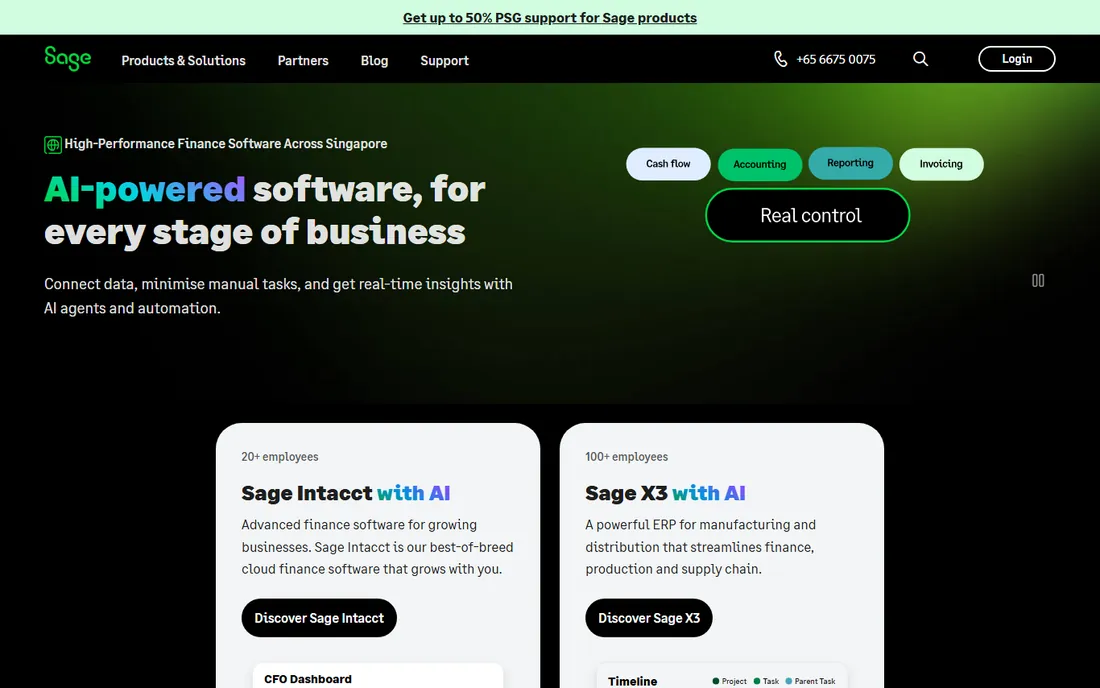
Sage has sold accounting software to small businesses for decades, and that history is the pitch: a known brand, local payroll integrations and support teams that understand small-business tax cycles. For companies that already run Sage payroll, keeping accounting in the same family simplifies the stack.
The honest problem is transparency. Sage publishes no prices on its main site, and when we tried to open the US Sage Accounting page it returned an access-denied error, which is not the confidence-builder you want from a vendor's own website. Sage can be a fine choice, but go in through a sales rep, get the plan details in writing, and compare the quote against the published prices of Xero and FreshBooks before signing.
What we like- A long-established vendor with dedicated small-business accounting plans
- Sage payroll and HR products integrate with the accounting side
- Strong presence in the UK and US small-business markets
Watch out for- No prices are published on the main site, so budgeting requires a sales conversation
- Sage's own US accounting page returned an access error when we checked, so confirm current plan details directly
#7
Patriot Software
Best for: US small businesses that want simple accounting with optional payroll from one vendor
Visit patriotsoftware.com
Starting price$20/month (Accounting Basic; $10/month promotional rate listed)
Free planFree trial (see website)
Patriot is built for the smallest US employers: straightforward pricing, no enterprise anything. The accounting pricing page lists Basic at $20 per month and Premium at $30, with a promotional $10 rate shown for Basic. Payroll is a separate product from the same company, which keeps the vendor count at one if you have employees.
The limits match the price. This is not the tool for inventory-heavy businesses or multi-entity accounting; it is the tool for a service business with a handful of employees that wants clean books and easy payroll. The trial lets you confirm the fit before the first invoice.
What we like- Published two-tier pricing: Accounting Basic at $20 and Premium at $30 per month, with a $10 promotional rate listed for Basic
- Accounting and payroll come from one US vendor with one support line
- The structure is simple enough to explain in a sentence
Watch out for- The Basic tier is accounting only, so payroll is a separate subscription
- Inventory management and job costing are not the product's focus
#8
FreeAgent
Best for: UK freelancers and small businesses needing HMRC and Making Tax Digital compliance
Visit freeagent.com
Starting price£33/month (50% off the first 6 months listed)
Free planFree trial (30 days)
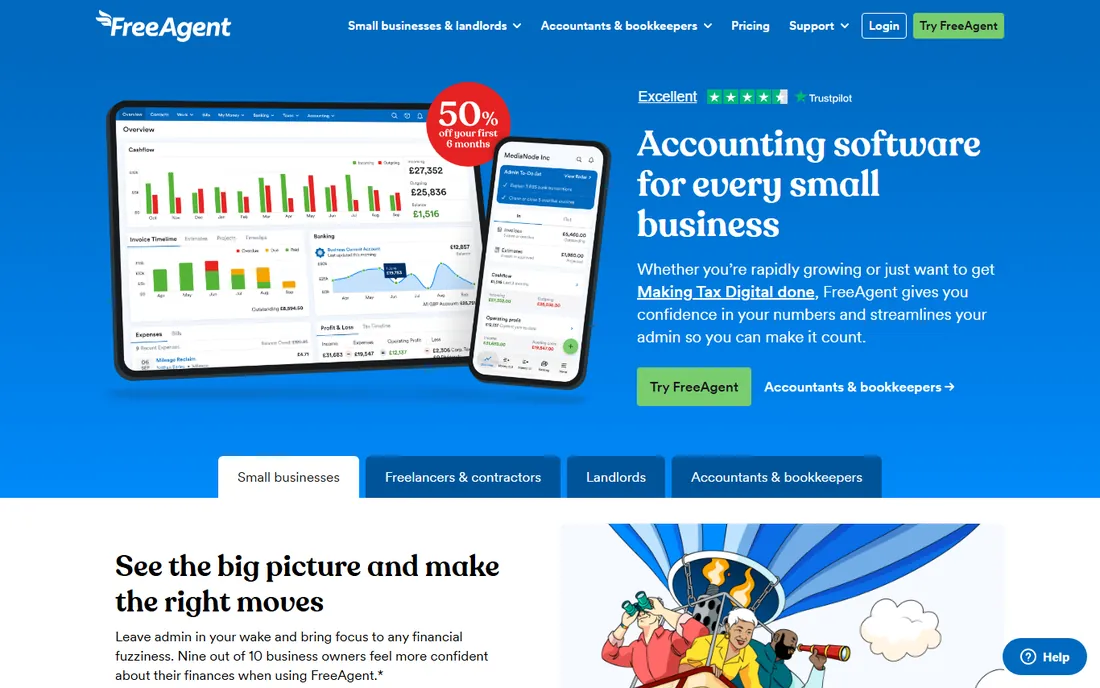
FreeAgent is the UK specialist on this list. If you are a UK freelancer or small limited company, the Making Tax Digital compliance is the feature that matters, and FreeAgent files with HMRC directly. Pricing is published at £33 per month with 50 percent off the first six months, plus a 30-day trial.
For US readers, the honest advice is to treat this as a UK product. The pricing is in pounds, the tax logic is British, and the US payroll integrations are not the focus. If you are UK-based, it belongs on the shortlist; if you are not, the domestic options above fit better.
What we like- Built for UK tax compliance, including Making Tax Digital filing
- Published pricing in pounds with a 6-month introductory discount
- A clean dashboard designed for owners, not accountants
Watch out for- Priced in GBP, so US buyers pay in pounds with the exchange rate on top
- US payroll and state tax integrations are thinner than domestic options
#9
NetSuite
Best for: Growing companies that have outgrown entry-level ledgers
Visit netsuite.com
Starting priceSee website (custom quote)
Free planNo (free product tour available)
NetSuite is what you buy when QuickBooks starts breaking. Multi-entity consolidations, serious inventory, revenue recognition and multi-currency stop being workarounds and become native features. The free product tour on the site is worth taking, because it shows the depth quickly.
Everything about the buying process is enterprise. Pricing is custom-quoted, implementations run months, and you will work with NetSuite or a partner to configure it. Do not buy NetSuite for a ten-person business; do shortlist it the moment your controller says the current ledger cannot close the books cleanly.
What we like- A full ERP with accounting, inventory, CRM and ecommerce in one system
- Scales from mid-market to enterprise without a replatform
- Strong multi-subsidiary and multi-currency support for growing companies
Watch out for- Quote-only pricing with nothing published
- Implementation is a real project with consultants, not a self-serve signup
Free accounting software is real, with limits
Three tools on this list cost nothing to start: Wave's free Starter plan, Zoho Books' free plan, and the free $0 tier QuickBooks Online lists on its plans page. These are real products, not 14-day trials wearing a costume. You can send invoices, connect a bank account and run your books indefinitely without paying.
The limits are where the vendors make their money. Free tiers cap transaction volume, users and support access, and they hold back the features growing businesses need: payroll, inventory, multi-currency and advanced reporting. The business model is the upsell, and it works because switching accounting software mid-stream is painful.
That does not make free plans a trap. It makes them a staging area. Start free when revenue is thin, learn the workflow, and upgrade the month the limits start costing you time. Just go in knowing the free plan is the beginning of a paid relationship, not the end of one.
How to match accounting software to your business
Start with who does the books. If you have an accountant or bookkeeper, ask what they use before you choose; a tool they already know saves you billable hours every quarter. QuickBooks Online wins this question in the US by default, and that alone decides it for many buyers.
Next, count your monthly transactions and name your complexity. Invoicing-heavy service businesses fit FreshBooks or Wave; product businesses with inventory need QuickBooks, Xero or NetSuite; UK businesses with VAT and Making Tax Digital should look at FreeAgent or Sage. Payroll needs narrow the field fast: QuickBooks, Patriot and Sage bundle it, Wave and FreshBooks do not.
Finally, resist buying for the business you hope to become. NetSuite is excellent and completely wrong for a ten-person company. Buy the tool that fits the next two years, keep your chart of accounts clean, and export your data regularly so the next migration is a choice, not a crisis.
How we chose
We searched the terms buyers actually use, from "accounting software for small business" to "free accounting software," and shortlisted the products that appear across buyer guides, review sites and practitioner discussion. For each one we opened the vendor's own homepage and pricing page, quoted plan names and prices exactly as published, and wrote "See website" wherever the vendor publishes no numbers. One vendor page (Sage's US accounting page) returned an access error during our check, which we noted instead of quoting third-party prices.
Frequently asked questions
What is the difference between accounting software and bookkeeping software?
The terms overlap heavily. Bookkeeping software usually means recording transactions: invoices, expenses and bank feeds. Accounting software adds the ledger underneath: double-entry records, financial statements and tax-ready reports. Most tools on this list do both; the simple ones lean bookkeeping, the full ones lean accounting.
Is free accounting software actually free?
The free tiers from Wave, Zoho Books and QuickBooks Online are free in the normal sense: no credit card, no trial clock, usable indefinitely. They make money when you outgrow them and buy payroll, extra users or advanced features. Read the free plan's limits before you commit your books to it.
How much does small business accounting software cost?
From the published prices on this list: Zoho Books Standard at $15 per month billed annually, Wave Pro at $19, Patriot Basic at $20 and FreshBooks Lite at $23 are the cheapest verified paid starts. Xero starts at $25 per month. QuickBooks Online and NetSuite publish no list prices, so their cost depends on the quote or promotion you get.
Does accounting software file my taxes?
It prepares you for taxes; it does not file them. The software produces the profit-and-loss statement, balance sheet and categorized transactions your accountant needs. Some vendors sell tax filing as a separate service, but the accounting subscription itself is about keeping clean books, not submitting returns.
Can I switch accounting software mid-year?
You can, but it is work. Plan on exporting your chart of accounts, open invoices, customer and vendor lists, and bank history from the old tool, then reconciling the opening balances in the new one. Many businesses time the switch to the new year to avoid splitting a tax year across two systems. Ask your accountant before you migrate, not after.
Sources we checked (13)
- https://quickbooks.intuit.com/
- https://quickbooks.intuit.com/online/
- https://www.xero.com/
- https://www.freshbooks.com/
- https://www.freshbooks.com/pricing
- https://www.waveapps.com/
- https://www.waveapps.com/pricing
- https://www.zoho.com/books/
- https://sage.com/
- https://www.patriotsoftware.com/accounting/
- https://www.patriotsoftware.com/accounting/pricing
- https://www.freeagent.com/
- https://netsuite.com/
Is your product missing or out of date?
We review this list regularly. Vendors can request a listing, send updated pricing or ask about featured placement.

Shihab Mia · Founder, Rankite
Shihab has spent more than a decade helping SaaS and e-commerce brands grow through search. He writes Rankite's software buying guides from pricing pages, documentation and public user reviews. More about Shihab.