How we make this list: we compare pricing pages, product documentation and public user reviews. Ratings come from G2, Capterra or Trustpilot, with the date we checked them.
Key takeaways
- Ramp leads on price transparency with a genuinely free tier and Plus at $15/user/month, which pressures the whole category.
- Expensify remains the easiest receipt-scanning app for small teams, with a free individual plan and paid team tiers.
- SAP Concur is the enterprise default for global travel and expense, but expect quote-based pricing and a heavy implementation.
- The real decision is card-plus-software versus software-only: Ramp, Brex and BILL bundle corporate cards, while Expensify and Zoho Expense work with the cards you already have.
Quick comparison
| Tool | Best for | Starting price | Free plan |
|---|
 Ramp Ramp | Free tier with finance automation | $0/month (Plus $15/user/month) | Yes |
 Expensify Expensify | Receipt scanning for small teams | See website | Yes |
 Brex Brex | Global startups wanting cards plus software | See website | No |
 Zoho Expense Zoho Expense | Affordable reporting in the Zoho suite | See website | Yes |
 SAP Concur SAP Concur | Enterprise travel and expense | See website | No |
 Navan Navan | Unified travel and expense | See website | Yes |
 BILL Spend & Expense BILL Spend & Expense | Free spend management with cards | See website | Yes |
 Emburse Emburse | Mid-market with complex approval needs | See website | No |
Is your product missing or out of date?
We review this list regularly. Vendors can request a listing, send updated pricing or ask about featured placement.
The best expense report software
Expense reports are where finance teams lose weeks and employees lose receipts. Modern expense software attacks both: snap a photo, auto-match it to the card charge, route it through approvals, and reimburse without spreadsheets. The category has split between card-bundled platforms and software-only tools. Eight that matter.
Starting price$0/month (Plus $15/user/month)
Free planYes
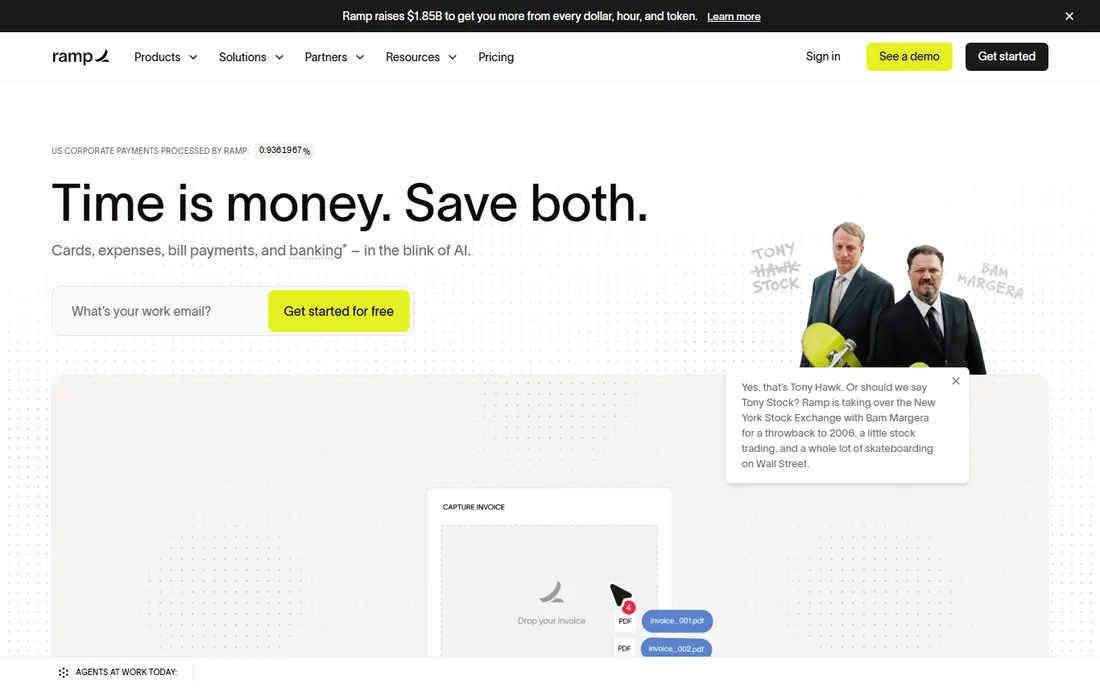
Ramp's pitch is simple: start free, pay only when you need advanced controls. The free tier includes corporate cards, expense management and bill pay, which is more than most paid competitors offer. Ramp Plus at $15 per user per month, per the company's own site, adds deeper automation, and enterprise pricing covers the largest customers.
The honest limitation is the card model. Ramp issues the cards, so approval depends on underwriting, and the economics assume your spend flows through Ramp. For startups and mid-market companies comfortable with that, the value is hard to beat. Ramp suits finance teams that want modern spend controls without a per-seat starting bill.
What we like- Generous free tier with unlimited cards and expense management
- Plus tier at $15 per user per month is transparent
- Procurement and bill pay included
Watch out for- Advanced features concentrate in paid tiers
- Card-based model means underwriting decides eligibility
Starting priceSee website
Free planYes
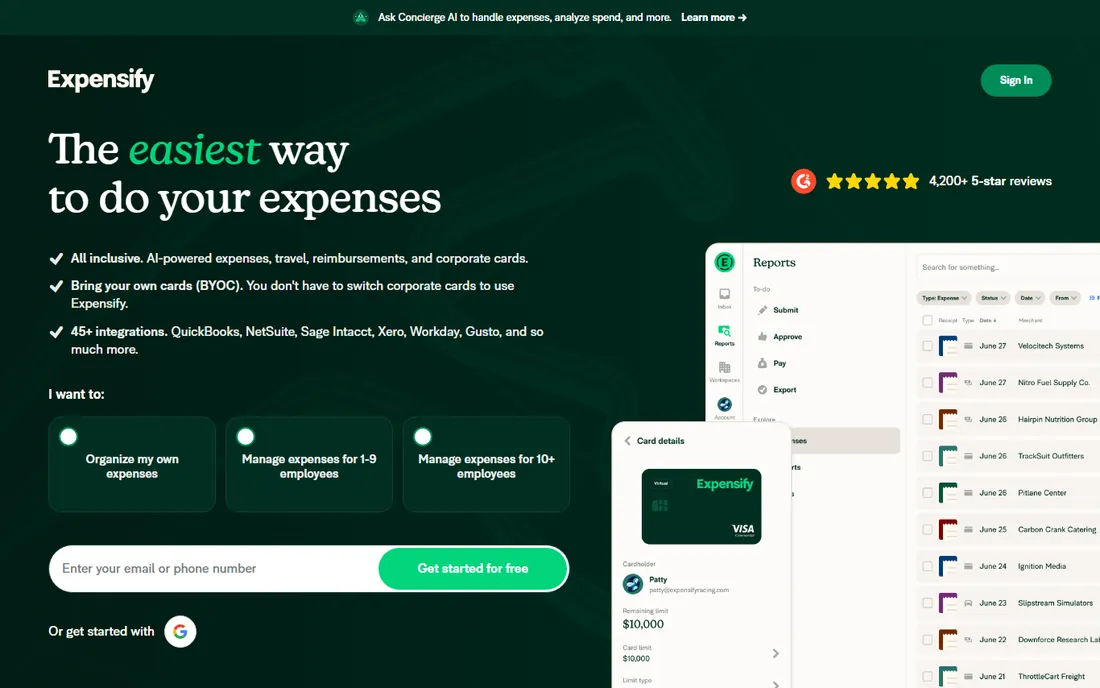
Expensify built its name on one interaction: photograph a receipt and watch the expense create itself. SmartScan extraction, automatic card matching and one-click reimbursement keep it the favorite of small teams and frequent travelers. A free tier for individuals lets anyone start, with Collect and Control plans for teams.
The product has cycled through pricing and card strategies, so confirm the current lineup on its pricing page before committing. Complex multi-entity approvals are not its strength. Expensify fits small businesses and distributed teams that want the fastest path from receipt to reimbursement.
What we like- SmartScan receipt capture is fast and reliable
- Free plan for individuals
- Huge integration list with accounting software
Watch out for- Pricing tiers and card offerings have shifted often
- Advanced approval workflows trail enterprise tools
#3
Brex
Best for: Global startups wanting cards plus software
Visit brex.com
Starting priceSee website
Free planNo
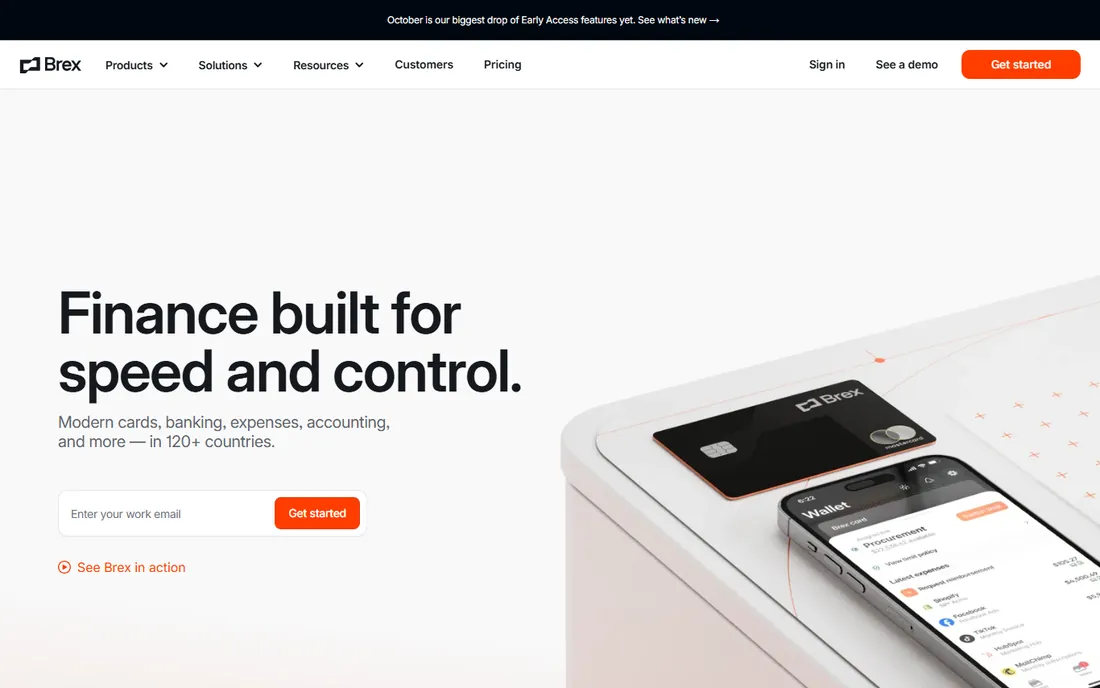
Brex combines corporate cards, expense management, travel and bill pay in one account aimed at startups and global companies. Multi-currency support and high limits suit companies spending across borders, and the rewards tilt toward the software and travel categories startups actually buy.
There is no free plan, and the underwriting favors funded startups and growing companies over tiny bootstrapped teams. Brex suits venture-backed startups and global SMBs that want one financial stack instead of a card from one vendor and software from another.
What we like- Unified cards, expenses and travel with global reach
- Strong rewards on software and travel spend
- Built for venture-backed growth companies
Watch out for- No free tier
- Eligibility and credit limits reflect the startup focus
#4
Zoho Expense
Best for: Affordable reporting in the Zoho suite
Visit zoho.com
Starting priceSee website
Free planYes
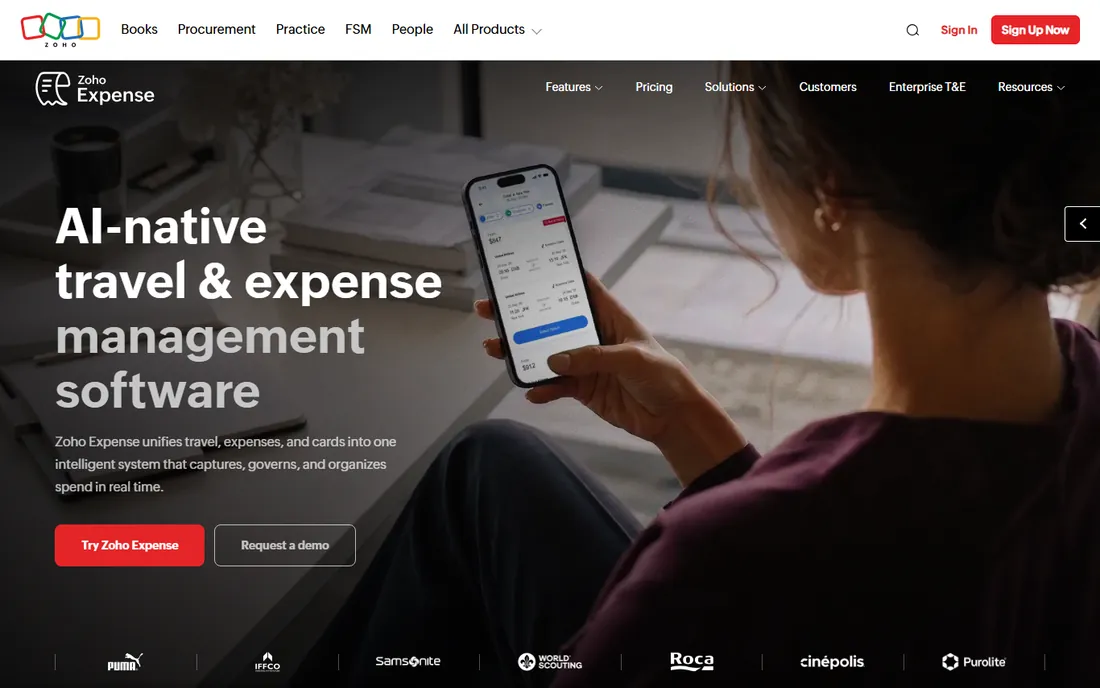
Zoho Expense is the budget-conscious pick that does not feel cheap. Receipt scanning, auto-matching, multi-level approvals, per-diem rates and mileage tracking cover the full expense workflow, and the free tier supports up to 3 users with limited scans. Integration with Zoho Books makes month-end painless for Zoho shops.
The constraints are the free-tier caps and ecosystem gravity: outside Zoho, it competes as a competent mid-priced tool rather than a standout. Zoho Expense fits small businesses already on Zoho, and any cost-sensitive team that wants real approval workflows without enterprise pricing.
What we like- Free tier covers up to 3 users
- Deep integration with Zoho Books and the Zoho suite
- Per-diem and mileage handling for global teams
Watch out for- Free tier caps users and scans
- Best value requires the Zoho ecosystem
Starting priceSee website
Free planNo
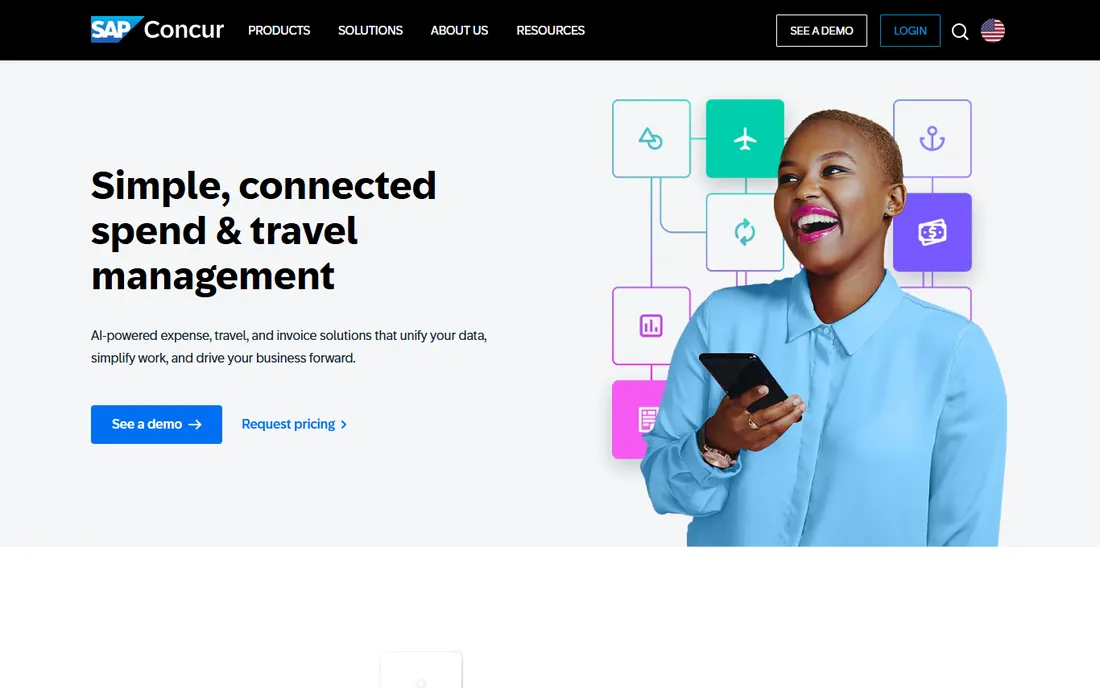
SAP Concur is what large companies mean by travel and expense. It unifies trip booking, expense reporting and invoice management with policy controls, VAT handling and integrations to every major ERP and travel management company. For global enterprises with complex reimbursement rules, it is the safe choice.
Everything about buying it says enterprise: custom quotes, long implementations, admin training. Small companies will drown in it. Concur suits organizations with thousands of travelers, multi-country tax needs and compliance requirements that lighter tools cannot satisfy.
What we like- Global standard for integrated travel booking and expense
- Deep policy enforcement and audit trails
- Massive partner and TMC ecosystem
Watch out for- Quote-based pricing with enterprise sales cycles
- Implementation is a project, not a signup
Starting priceSee website
Free planYes
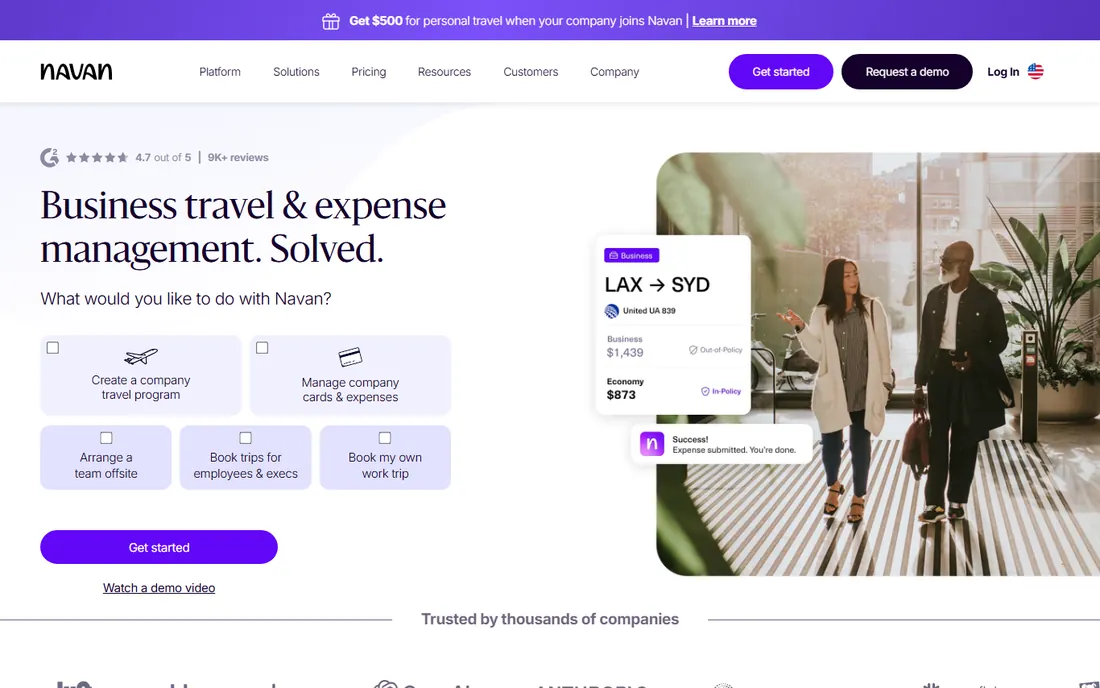
Navan (formerly TripActions) rebuilt corporate travel around the traveler, then added expense management on top. Booking flights and hotels inside policy, with expenses auto-created from the trip, removes the two-system friction of Concur-era stacks. A free tier with seat limits lets small teams start without a contract.
The catch is adoption scope: expense-only buyers get less than travel-plus-expense buyers. And growing companies graduate to custom plans. Navan suits companies where travel is frequent enough that booking and expenses belong together, and where traveler experience drives compliance.
What we like- Travel booking and expense in one app travelers actually like
- Free tier with seat limits
- Strong mobile experience for road warriors
Watch out for- Full value needs the travel side adopted too
- Larger teams move to custom plans quickly
#7
BILL Spend & Expense
Best for: Free spend management with cards
Visit bill.com
Starting priceSee website
Free planYes
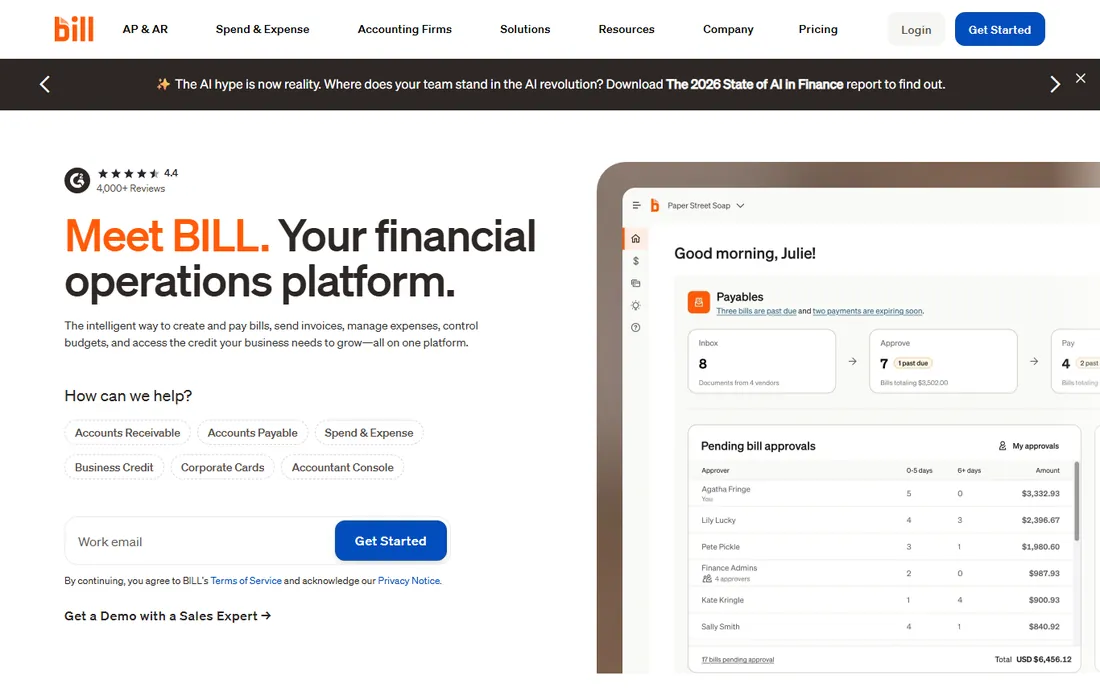
BILL Spend & Expense (formerly Divvy) offers free spend management with corporate cards, budgets and real-time expense tracking. For SMBs already using BILL for accounts payable, the combined workflow is convenient: bills, cards and expenses in one financial operations hub.
It does not match the automation depth of the category leaders, and the free tier exists partly to introduce the broader BILL platform. Still, free is free, and the core expense workflow is solid. BILL Spend & Expense fits small finance teams that want cards plus expense controls at zero starting cost, especially BILL AP users.
What we like- Free tier with corporate cards and expense tools
- Integrates with the BILL AP platform
- Straightforward for SMB finance teams
Watch out for- Depth of automation trails Ramp and Brex
- The BILL ecosystem upsell is always present
Starting priceSee website
Free planNo
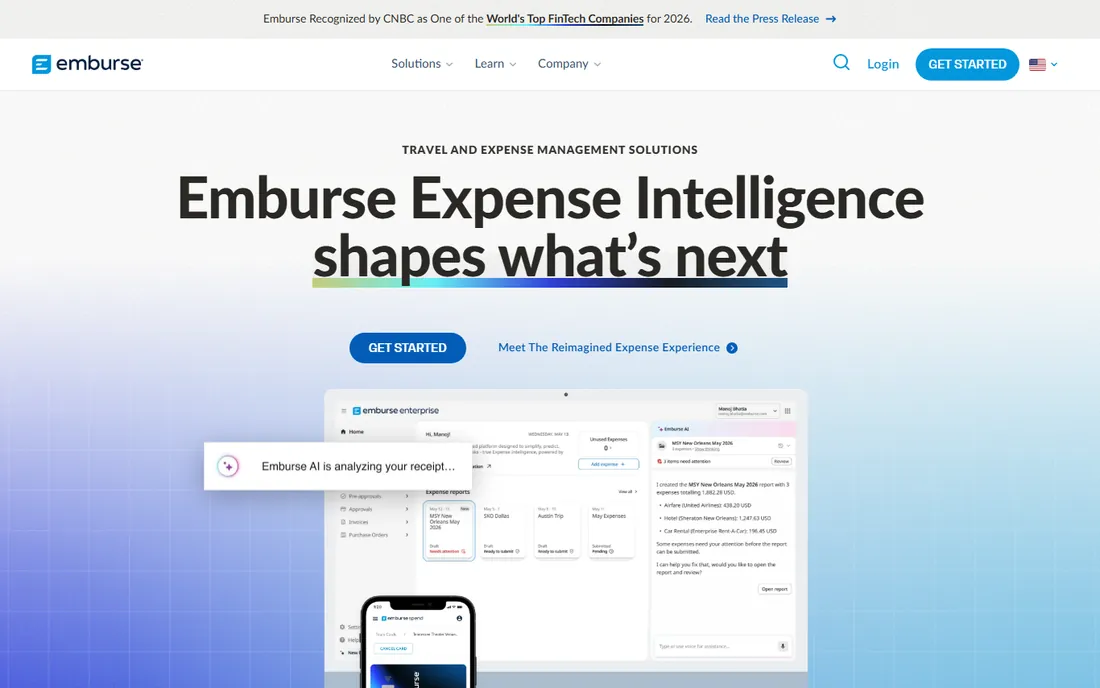
Emburse serves the messy middle: companies too complex for simple apps but not ready for Concur. Its product family covers expense, travel, AP automation and payments, with approval workflows that handle project codes, grants and multi-entity structures. Regulated industries and nonprofits are strongholds.
Pricing is quote-based and the portfolio takes work to navigate. Emburse suits mid-market finance teams with genuinely complex approval needs, like project-based billing or grant tracking, that break simpler tools.
What we like- Handles complex approval chains and policy rules
- Multiple product lines for different company sizes
- Strong in regulated and project-based industries
Watch out for- Quote-based pricing
- Product lineup can confuse buyers choosing between options
What to check before you buy
Decide the card question first. Card-bundled platforms (Ramp, Brex, BILL) give you cards and software together, which simplifies reconciliation but ties you to their underwriting. Software-only tools (Expensify, Zoho Expense, Emburse) work with your existing cards. Switching later is painful, so choose deliberately.
Then test the submitter experience. If logging an expense takes more than thirty seconds, employees delay submissions and data quality collapses. Check receipt scan accuracy on your actual receipts during the trial. Verify accounting integration depth with your specific ERP, not just the logo on the integrations page. Finally, model approval complexity: multi-entity, project-coded or grant-funded expenses break simple tools, so map your real approval chains before signing.
How we chose
We compared expense platforms with live products, real customer bases and documented pricing or free tiers, using vendor sites, pricing pages and public reviews. The Ramp prices shown come from Ramp's own site; elsewhere we wrote See website where we could not verify a current figure on the vendor's pricing page. We did not process test expenses or audit reimbursement timing.
Expense policy basics that prevent most fraud
Software catches fraud; policy prevents it. Most expense fraud is not criminal mastermind work; it is opportunism enabled by vague rules. A clear policy closes most of the gaps.
Set per-diem or caps per category. "Reasonable meals" is an invitation to interpret generously; "$75 per day for meals, itemized receipts over $25" is enforceable. Caps do not need to be stingy to be effective; they need to be specific.
Require receipts above a threshold, and make the threshold low. The $25 line is common because it matches tax documentation norms. Below it, trust; above it, proof. Digital receipt capture at the point of spend (a phone photo, not a shoebox at month end) makes compliance nearly painless.
Separate the approver from the spender. Nobody should approve their own expenses, including executives. This single control prevents the majority of abuse cases, because most fraud needs a compliant approver or none at all.
Publish the consequences. What happens on a first violation versus a pattern? A policy nobody enforces is a suggestion. Occasional audits, even of a small random sample, keep everyone honest because the chance of review is real.
Review the policy annually. Travel patterns change, inflation moves, and rules written for 2019 may be absurd now. A policy that feels fair gets followed; one that feels arbitrary gets worked around.
Frequently asked questions
Should we get corporate cards bundled with the software?
Bundled cards simplify reconciliation since transactions flow in automatically, and many bundled platforms are free or cheap. The trade-off is underwriting: the vendor decides your limits. If you already have cards you like, software-only tools avoid the switch.
How long does implementation take?
Simple tools go live in days: connect cards, set policies, invite users. Enterprise platforms like Concur take months with data migration, policy configuration and training. Ask for a phased timeline in writing.
Do these tools handle international expenses?
The major platforms handle multi-currency expenses, VAT and per-diem rates. Depth varies: verify your specific countries, currencies and tax rules during the trial rather than trusting the feature checklist.
What is the difference between expense management and spend management?
Expense management covers employee-initiated spending and reimbursements. Spend management is broader: cards, procurement, bill pay and budgets controlled proactively. Newer platforms like Ramp and Brex sell the broader vision.
Can employees be reimbursed without corporate cards?
Yes. All eight support out-of-pocket expenses with receipt capture and ACH reimbursement. The workflow differs slightly, but no personal card spending gets left behind.
How do approval workflows work?
You define chains: employee submits, manager approves, finance reviews, with rules for amounts, departments and project codes. Complex organizations should test their hardest approval path during the trial, since that is where simple tools fail.
Sources we checked (10)
- https://www.ramp.com/
- https://ramp.com/blog/corporate-credit-card-expense-management-software
- https://www.expensify.com/
- https://www.brex.com/
- https://www.zoho.com/expense/
- https://www.concur.com/
- https://navan.com/
- https://www.bill.com
- https://www.emburse.com/
- https://www.ofx.com/en-us/blog/best-expense-management-software-solutions/
Is your product missing or out of date?
We review this list regularly. Vendors can request a listing, send updated pricing or ask about featured placement.

Shihab Mia · Founder, Rankite
Shihab has 5+ years in B2B and SaaS SEO. He writes Rankite's software buying guides from pricing pages, documentation and public user reviews. More about Shihab.