How we make this list: we compare pricing pages, product documentation and public user reviews. Ratings come from G2, Capterra or Trustpilot, with the date we checked them.
Key takeaways
- Oracle NetSuite is the best pick for scaling multi-subsidiary distributors, with strong multi-entity and multi-currency support.
- Acumatica suits user-heavy distributors best, since consumption-based pricing allows unlimited users.
- Epicor Prophet 21 offers the deepest distribution-first workflows, built around wholesale distribution from the ground up.
- Infor CloudSuite Distribution is the best wholesale-specific cloud ERP, purpose-built for distribution workflows.
- Full ERP suites are quote-only and partner-implemented: budget for the project, not just the license.
Quick comparison
Is your product missing or out of date?
We review this list regularly. Vendors can request a listing, send updated pricing or ask about featured placement.
The best ERP for distribution companies

#1Oracle NetSuite
Best for: Multi-subsidiary scaling4.1/5 on
G2 (4,969 reviews, checked Oct 2026)
Visit netsuite.com
Starting priceSee website
Free planNo
Oracle NetSuite is a leading cloud ERP for managing back-office operations and financial processes, serving over 43,000 global customers. It offers strong financial management, inventory, supply chain, and real-time analytics in one system, with multi-entity and multi-currency support that suits distributors scaling across subsidiaries and countries. Third-party estimates place pricing around $99 to $199 per user per month, with a base platform near $1,000 per month, though Oracle quotes directly. SuiteCommerce and CRM add-ons extend NetSuite into sales and storefronts without a separate system.
Cost climbs with every added seat, and implementation is partner-led over months. For a growing distributor that needs consolidated financials across entities, NetSuite is the scaling standard.
What we like- Multi-entity and multi-currency
- Unified financials
- 43,000 plus customers
Watch out for- Quote-only
- Cost climbs with every seat
- Implementation measured in months

#2Acumatica
Best for: Unlimited-user licensing4.4/5 on
G2 (2,021 reviews, checked Oct 2026)
Visit acumatica.com
Starting priceSee website
Free planNo
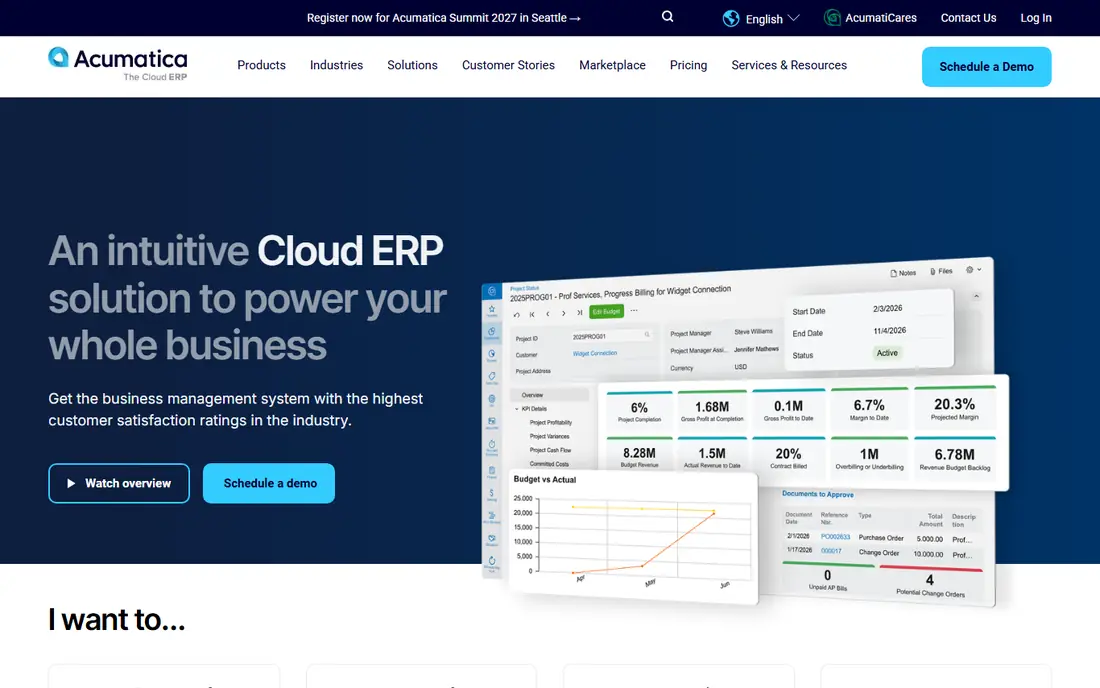
Acumatica prices by resource consumption rather than per seat, which changes the math for distributors with large warehouse teams. Unlimited users mean every picker, packer, and driver can access the system without a per-seat fee, while spend really tracks transaction volume instead. The platform covers financials, inventory, order management, and CRM for SMB and mid-market distributors. Mobile warehouse apps let pickers scan and confirm from handheld devices, which cuts data entry errors.
Pricing is quote only through resellers, and high transaction volumes raise costs. For a user-heavy distributor where per-seat licensing would punish growth, Acumatica licensing is the best model here.
What we like- Unlimited users
- Consumption-based pricing
- Strong for warehouse teams
Watch out for- Quote only through resellers
- Spend tracks transaction volume
- Implementation partner-led

#3Epicor Prophet 21
Best for: Distribution-first depth4.0/5 on
G2 (206 reviews, checked Oct 2026)
Visit epicor.com
Starting priceSee website
Free planNo
Epicor Prophet 21 is tailored for distribution, integrating CRM, sales, finances, and supply chain in a system built around wholesale distribution from the ground up. It boosts customer reach, streamlines daily digital operations, and enhances service offerings, with both on-premise and Azure-powered cloud options. Digital commerce tools let distributors offer customer portals and online ordering without a separate platform. Third-party estimates place cost near $200 per user per month, with project ranges from $10,000 to $500,000.
Implementation is complex and partner-led, and the depth that helps large distributors can overwhelm smaller ones. For a large distributor needing maximum distribution depth, Prophet 21 is the deepest tool here.
What we like- Built for wholesale distribution
- CRM, sales, finance, supply chain
- Cloud and on-premise
Watch out for- Quote-only
- Implementation complex
- Estimates near $200 per user monthly

#4Infor CloudSuite Distribution
Best for: Wholesale-specific cloud4.0/5 on
G2 (24 reviews, checked Oct 2026)
Visit infor.com
Starting priceSee website
Free planNo
Infor CloudSuite Distribution, formerly SX.e, is a specialized ERP for wholesale distributors, streamlining sales-to-inventory operations with deep insights for quick decisions. A customizable interface, Infor OS integration, and mobile accessibility suit distributors whose teams work well across warehouses and branches. Third-party estimates place cost near $150 per user per month, with project ranges from $15,000 to $500,000.
Pricing is quote-only, and implementation needs a partner. For a wholesale distributor that wants a purpose-built cloud ERP rather than a generic suite adapted to distribution, Infor is the best wholesale-specific choice.
What we like- Purpose-built for wholesale
- Customizable interface
- Mobile accessibility
Watch out for- Quote-only
- Estimates near $150 per user monthly
- Implementation partner-led

#5Microsoft Dynamics 365 Business Central
Best for: Microsoft-centric teams4.0/5 on
G2 (917 reviews, checked Oct 2026)
Visit microsoft.com
Starting price$70 per user per month
Free planNo
Microsoft Dynamics 365 Business Central suits smaller teams already on Microsoft 365, with tight wiring into Outlook, Excel, and Teams. Essentials costs $70 to $80 per user per month after a November 2025 price rise, Premium $100 to $110, with a device license at $45 per month and a Team Members tier at $8 with reduced functionality. Manufacturing features need Premium. Power BI integration gives managers dashboards without exporting to spreadsheets.
Setup is partner-led, and licensing everyone on Premium gets expensive fast: 200 Premium seats at $110 costs $264,000 per year at list price. For a Microsoft-centric distributor that lives in Office, Business Central integration is unmatched.
What we like- Tight Outlook, Excel, and Teams integration
- Essentials $70 to $80
- Premium $100 to $110
Watch out for- Partner-led setup
- Manufacturing needs Premium
- Device license $45 monthly

#6SAP Business One
Best for: Mid-market complexity4.3/5 on
G2 (542 reviews, checked Oct 2026)
Visit sap.com
Starting priceSee website
Free planNo
SAP Business One offers financial accounting, CRM, inventory management, manufacturing, and purchasing for small to medium enterprises with complex processes. Strong reporting and scalability suit distributors whose operations outgrow simpler tools but do not yet need S/4HANA. No public price is published, so budgeting requires a partner quote.
Implementation can be complex with potentially higher costs than rivals. For a mid-market distributor with complex processes that values SAP ecosystem depth, Business One is a solid enterprise-grade option.
What we like- Comprehensive functionality
- Scalable
- Strong reporting
Watch out for- Quote-only
- Complex implementation
- Potentially higher implementation costs
Starting priceSee website
Free planNo
Brightpearl focuses on retail and wholesale operations for commerce-led, omnichannel distributors, combining inventory, order management, accounting, and CRM for sellers across online and offline channels. It suits distributors whose business starts with commerce: storefronts, marketplaces, and direct sales feeding warehouse operations.
Pure wholesale depth trails Prophet 21 and Infor, and pricing is quote-only. For a distributor that sells omnichannel and needs commerce at the center, Brightpearl is the best commerce-led pick.
What we like- Retail and wholesale operations
- Omnichannel focus
- Commerce-led workflows
Watch out for- Quote-only
- Less deep on pure wholesale distribution
- Implementation partner-led
Starting price$349 per month
Free planNo
Cin7 publishes a $349 per month starting price, the only concrete number among the operations platforms here, which makes budgeting far easier than quote-only suites. It adds operational depth to existing accounting rather than replacing it, deploying in weeks rather than months. For distributors whose accounting is straightforward but whose inventory is not, Cin7 saves serious money over full ERP.
It is lighter than full ERP: multi-entity consolidation, complex pricing and rebate accounting, and audit-grade controls are thinner. For a smaller distributor that needs inventory depth without an ERP project, Cin7 is the pragmatic pick.
What we like- Only concrete starting price here
- Inventory plus accounting depth
- Faster deployment
Watch out for- Lighter than full ERP
- Pairs best with existing accounting
- Limited multi-entity depth
How we chose
We compared systems on distribution-specific workflows, including multi-location inventory, kitting, lot and serial tracking, replenishment, quantity-break and contract pricing, EDI capability, and vendor-managed inventory support. We used vendor pages and published 2026 comparisons. Where vendors quote privately, we wrote See website and gave third-party estimates only where guides reported them.
How to pick an ERP for distribution
Start with the dividing line today: full ERP versus inventory plus accounting. Full ERP puts the general ledger, inventory, purchasing, and sales in a single system, which pays off when you need consolidated financials across entities, complex pricing and rebate accounting, or audit-grade controls. The cost is an implementation project measured in months and a quote-only price tag. Inventory plus accounting keeps books where they are and adds operational depth, deploying in weeks at a visible monthly fee, which suits distributors whose accounting is straightforward but whose inventory is not.
Next, map your distribution workflows honestly. Multi-location inventory, warehouse management, EDI with major customers, lot and serial tracking, kitting, replenishment, and contract pricing are the features generic ERP often lacks. Test each finalist carefully on your actual workflows: receive a shipment, allocate stock across warehouses, pick and pack an order, handle a return, and run a rebate calculation. A demo that skips your hardest workflow hides the implementation risk.
Then model total cost, not just license price. Per-seat models like NetSuite and Business Central climb with every hire, while Acumatica consumption pricing climbs with transaction volume. Add implementation, partner fees, training, integrations, and EDI setup, which often exceed first-year license costs. Always ask each partner for a fixed-scope implementation quote with a go-live date, and check good reference customers of similar size and complexity.
Negotiate renewal caps in the contract, since ERP vendors raise prices and a 5 percent annual cap protects a growing distributor from surprise bills. Ask about data export rights too, since leaving an ERP should not mean losing your own history. Finally, plan the rollout in phases. Document your workflows today before demos. Visit a reference site in person today. Start with one warehouse or product line, stabilize inventory accuracy, then expand. Inventory accuracy below 95 percent will break any ERP, so count stock and clean item masters before go-live. Train warehouse teams first, since they touch the system most, and keep the old system running in parallel until the new system proves itself on a full month-end close.
Frequently asked questions
What is the best ERP for distributors?
There is no single best ERP for every distributor. NetSuite suits multi-entity organizations, Epicor Prophet 21 suits large distributors needing maximum depth, Acumatica suits businesses preferring resource-based licensing, and Cin7 suits smaller distributors wanting visible pricing.
How much does distribution ERP cost?
Full ERP suites are quote-only, with third-party estimates from $99 to $200 per user per month plus implementation projects from $10,000 to $500,000. Cin7 publishes $349 per month, and Business Central lists $70 to $110 per user per month.
How long does ERP implementation take?
Traditional distribution ERP implementations often run several months or longer and are consultant-led. Data cleansing often takes longer than software configuration, so start cleaning item masters early now. Lighter platforms like Cin7 deploy in weeks, while purpose-built modern tools target around 100 days from signing to go-live.
Do I need full ERP or inventory software plus accounting?
Choose full ERP if finance and operations must share one database, with consolidated financials, complex pricing, or audit controls. Choose inventory plus accounting if your accounting is straightforward but inventory is complex, since it deploys faster and costs less.
What distribution features matter most?
Multi-location inventory, warehouse management, EDI, lot and serial tracking, kitting, replenishment, quantity-break and contract pricing, and vendor-managed inventory support matter most. Generic ERP often lacks these, so test them on your real workflows.
Is Acumatica really unlimited users?
Yes, Acumatica prices by resource consumption rather than per seat, so user count does not drive license cost. Spend tracks transaction volume instead, which suits distributors with large warehouse teams accessing the system.
Sources we checked (8)
- https://www.netsuite.com
- https://www.acumatica.com
- https://www.epicor.com
- https://www.infor.com
- https://www.microsoft.com/en-us/dynamics-365/products/business-central
- https://www.sap.com/products/erp/business-one.html
- https://www.brightpearl.com
- https://www.cin7.com
Is your product missing or out of date?
We review this list regularly. Vendors can request a listing, send updated pricing or ask about featured placement.

Shihab Mia · Founder, Rankite
Shihab has 5+ years in B2B and SaaS SEO. He writes Rankite's software buying guides from pricing pages, documentation and public user reviews. More about Shihab.
 Brightpearl
 Cin7