How we make this list: we compare pricing pages, product documentation and public user reviews. Ratings come from G2, Capterra or Trustpilot, with the date we checked them.
Key takeaways
- Landstar and Mercer give the most load choice, with no forced dispatch and percentage pay that rises when you bring your own trailer.
- Schneider and J.B. Hunt suit drivers who want a large freight base plus an app-based load board and company-backed discounts.
- Prime fits reefer and flatbed drivers who want a high published percentage and an in-house path to leasing a truck.
- CloudTrucks is the newer option for drivers who want dispatch help and fast pay under one flat per-load fee.
- Read the contract before you sign, because deductions, trailer fees, and escrow terms change the real value of any percentage.
Quick comparison
Is your product missing or out of date?
We review this list regularly. Vendors can request a listing, send updated pricing or ask about featured placement.
The best companies for owner operators to lease to
Starting priceSee website
Free planNo
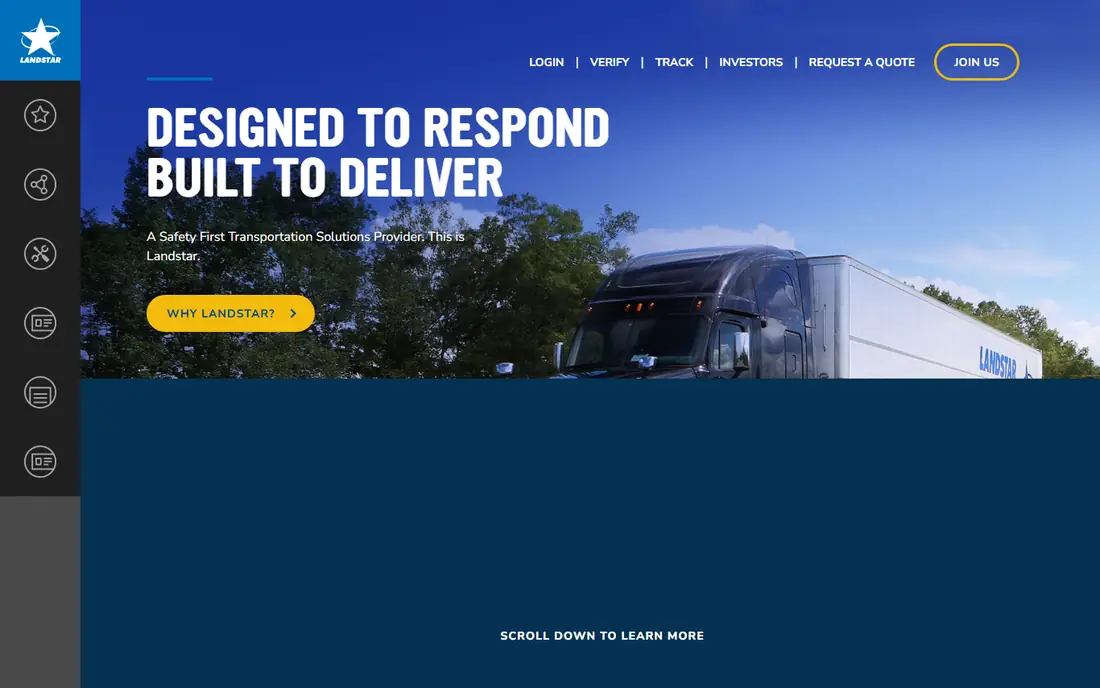
Landstar runs an owner-operator-only model, so every truck on its network belongs to an independent contractor. Drivers, called business capacity owners, pick loads from a board fed by more than 1,000 independent agents. That structure is the main reason experienced drivers rate it so highly: nobody assigns you a load, and you can wait for freight that fits your lane and rate floor.
Pay depends on the trailer. Published figures show 65 percent of linehaul revenue when you pull a Landstar trailer, rising to 72 percent for a van, 73 percent for flatbed and step deck, and up to 75 percent for reefer and heavy haul when you bring your own trailer. Fuel surcharge and accessorials pass through at 100 percent. Discounts on fuel, tires, and parts come through the Landstar Contractors Advantage Purchasing Program. The catch is that independence cuts both ways. You need discipline about rates, deadhead, and home time, because no dispatcher is managing your week for you.
What we like- No forced dispatch
- Higher percentage with your own trailer
- Large agent network and purchasing discounts
Watch out for- You handle more of your own business decisions
- Freight quality varies by agent and lane
Starting priceSee website
Free planNo
Schneider is one of the largest carriers in North America, and its owner-operator program gives you a choice of how you get paid. The percent-of-revenue option pays 65 percent of linehaul revenue plus 100 percent of fuel surcharge and accessorials, with no trailer rental fee on that program. An all-in revenue option bundles the fuel surcharge and accessorials into one rate, which some drivers prefer for simpler math. Loads are picked through the FreightPower platform, where you can see available freight and book without waiting on a dispatcher.
The scale is the selling point. Schneider serves thousands of shippers, so freight stays available in most regions even when spot markets soften. Its purchase program adds fuel, tire, and maintenance discounts, and company facilities offer parking and services on the road. The honest catch is the percentage itself: 65 percent trails Landstar and Mercer for drivers with their own trailers. Schneider fits drivers who value steady volume and a polished load board more than squeezing the last point of percentage.
What we like- Choice of pay programs
- Huge shipper base
- FreightPower load board for self-dispatch
Watch out for- Percentage program pays 65 percent of linehaul
- Large-carrier rules can feel impersonal
Starting priceSee website
Free planNo
Prime is best known for refrigerated freight, and its published independent contractor pay is straightforward: 72 percent of the freight bill for reefer and flatbed drivers, and 71 percent for tanker. That puts it near the top of the large-carrier range, and the company pairs it with a big terminal network, in-house maintenance, and driver support around the clock. Drivers who do not own a truck yet can enter through Success Leasing, which advertises no money down and no credit check on its lease tractors.
Prime also runs a Start Right program that guarantees qualifying drivers with at least six months of recent tractor-trailer experience $1,000 per week in gross minimum pay for the first three weeks, including orientation. The trade-off is control. Prime is closer to a dispatched fleet than a pure self-dispatch board, so drivers who want to pick every load themselves may chafe. It fits drivers who want strong reefer volume, a clear percentage, and a path into their own truck.
What we like- 72 percent of revenue for reefer and flatbed
- Large terminal network
- In-house truck leasing path
Watch out for- Primarily a dispatched model, not full self-dispatch
- Tanker pays a point less at 71 percent
Starting priceSee website
Free planNo
Mercer has run a 100 percent owner-operator fleet since 1977, and it has never owned company trucks to compete with its contractors for freight. Its published contract highlights list 75 percent of gross revenue, excluding a 1 percent insurance surcharge, with pay after every trip. Instead of a dispatcher, you work with a coordinator who offers loads and helps you plan, while you make the final call on every load. There is no forced dispatch, and you can stay home as long as you like between runs.
Mercer is strongest in flatbed, step deck, and specialized freight, with government and heavy-haul work in the mix. That focus is a plus if you run open deck and a limitation if you run dry van. Driver reviews also note a seniority-style system in some regions, where trucks that have waited longest get first offer on a load, which can mean waiting for the right freight. Mercer fits experienced open-deck operators who want a smaller, family-style carrier and a high published percentage.
What we like- 75 percent of gross revenue in published contract highlights
- No forced dispatch
- Personal coordinator support
Watch out for- Open-deck focus limits van drivers
- Seniority can affect load access in some regions
Starting priceSee website
Free planNo
J.B. Hunt is one of the largest freight networks in North America, and its owner-operator program runs under the company's authority with self-booking through the DRIVE app. Contractors can see the load board, check model percentages, contact a capacity coordinator, and book loads from a phone. Recent job listings project gross revenue around $202,000 to $260,000 per year, with top earners higher, though those are projections, not guarantees.
The company also advertises up to 100 percent fuel surcharge pass-through, a diesel fuel card with discounts, and reduced third-party insurance rates plus tire and maintenance discounts. Fleet owners can contract multiple trucks under the same program. The main drawback is transparency: J.B. Hunt does not publish one simple percentage the way Landstar or Prime do, so you need to get the exact pay terms from a recruiter and in writing. It fits drivers who want big-carrier freight volume with modern booking tools.
What we like- No forced dispatch
- DRIVE app load board
- 100 percent fuel surcharge pass-through
Watch out for- Pay percentage is not published in one clear figure
- Large-carrier structure
Starting priceSee website
Free planNo
Werner was founded by an owner-operator in 1956 and now runs a large truckload and dedicated network across the United States. Its owner-operator program leans on account choice: drivers can look for dedicated or regional work that fits their home time and preferred lanes, backed by a support team that works around the clock. Fuel surcharge is paid on loaded miles, and fuel savings are passed through to help keep pump costs down.
The catch is that Werner pay is account-dependent rather than a single published percentage, so two drivers at Werner can earn very different rates. Equipment rules are also strict, with limits on truck age, wheelbase, weight, and appearance. Werner fits drivers who want a stable dedicated account and a big carrier behind them, and who are willing to confirm exact pay for their account before signing. Get the per-mile or percentage figure for your specific account in writing.
What we like- Wide range of dedicated accounts
- Fuel surcharge on loaded miles
- Large support team
Watch out for- Pay varies by account and is not published as a single percentage
- Strict equipment requirements
Starting priceSee website
Free planNo
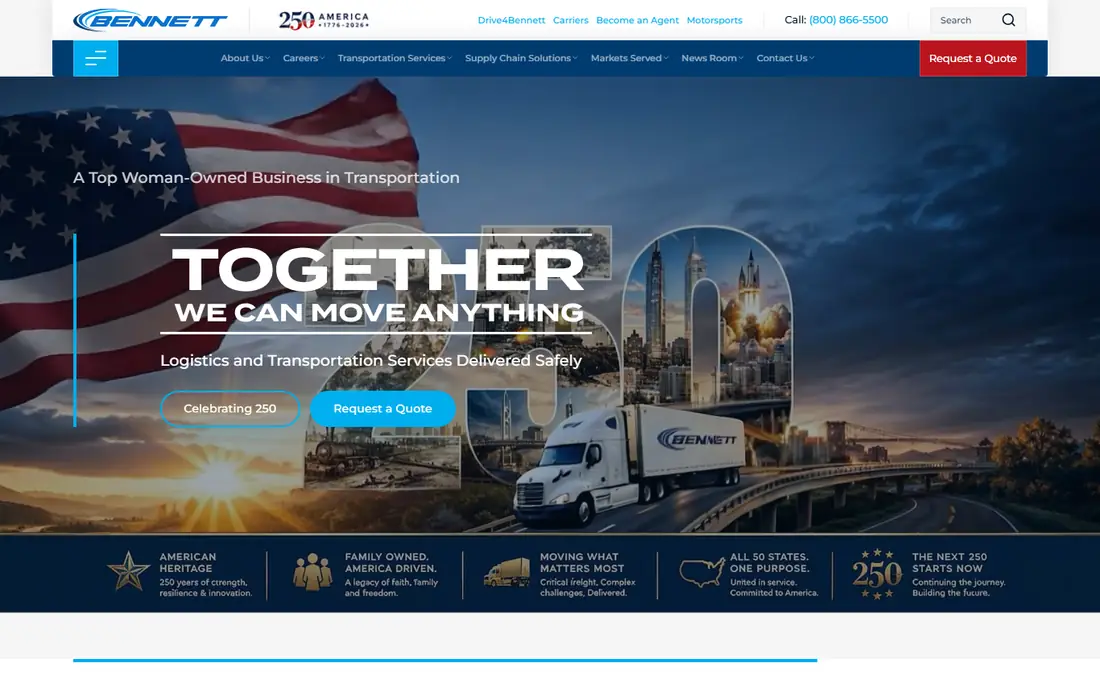
Bennett Motor Express is the flagship carrier of the Bennett Family of Companies, a family-owned group based in McDonough, Georgia. Its divisions cover flatbed, step deck, heavy haul, government services, air and space, and oilfield work. Bennett has moved some of the largest loads on American highways, and its specialized agents handle permits, routing, and escort planning for over-dimensional freight. That depth makes it a strong pick for experienced open-deck drivers who want to move beyond standard flatbed loads.
Bennett also runs power-only, manufactured housing, RV transport, and driveaway divisions, so there are paths for different equipment types. The drawback is that Bennett does not publish a single simple pay percentage for owner-operators, so you will need to talk to a recruiter and read the contract to compare it with the percentage carriers on this list. It fits drivers with specialized experience who value that niche and a family-run culture over a self-serve load board.
What we like- Deep specialized and heavy-haul expertise
- Family-owned since 1974
- Government and aerospace freight
Watch out for- Pay terms are not published in a simple public figure
- Specialized work demands experience and permits
Starting priceSee website
Free planNo
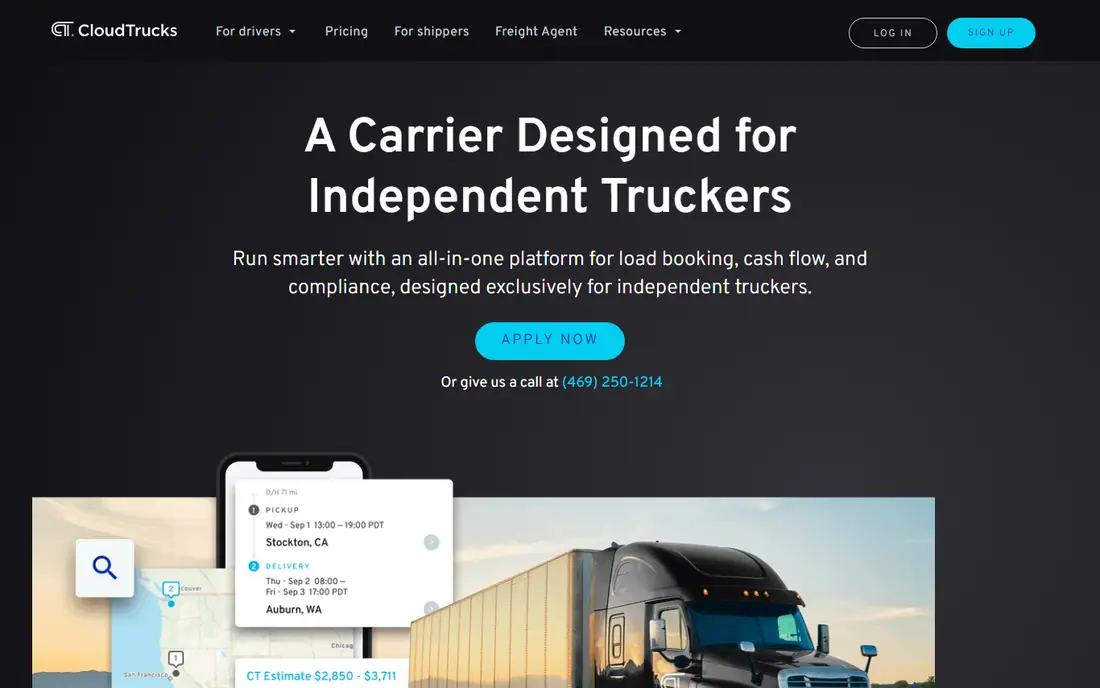
CloudTrucks is the newest name on this list, and it works differently from the traditional carriers. It operates as a virtual carrier: you run under CloudTrucks authority, get access to its load board and dedicated dispatcher, and pay a flat 24 percent per load. That fee covers dispatch, auto liability and cargo insurance, compliance, IFTA filings, and instant pay, so you get cash within hours of delivery instead of waiting for a settlement cycle.
The Road to Independence program lets drivers with at least one year of experience lease a truck through vetted partners with low down payments and a path to ownership, while the one-year service package commitment applies. The honest catch is the fee: 24 percent is steep if you already know how to book your own freight and handle your own back office. CloudTrucks fits newer owner-operators who want support, fast pay, and a simpler start, not veterans who want the highest possible percentage.
What we like- Flat 24 percent fee covers dispatch and insurance
- Instant pay
- Lease-to-own path for drivers without a truck
Watch out for- 24 percent fee is high for experienced self-dispatchers
- Minimum one-year commitment for the lease program
How we chose
We compared carriers that actively lease on owner-operators in the United States, using their own program pages, published pay terms, and documentation. We checked public reviews on G2-style driver forums, TruckersReport, and Reddit to see how pay, dispatch, and support hold up in practice. We favored carriers with clear published terms, a real load board or coordinator model, and a mix of large fleets and smaller or newer options, so the list covers both scale and independence.
What to check before you lease on
A percentage is only one line in a contract. Read the full agreement and ask a recruiter to put every deduction in writing before you sign.
Pay structure
Ask whether the percentage applies to linehaul only or to gross revenue, and whether fuel surcharge and accessorials pass through at 100 percent. A 72 percent deal with full surcharge pass-through can beat a 75 percent deal that keeps part of the surcharge. Also ask about trailer rental, cargo insurance, occupational accident coverage, and escrow, since those deductions come out of every settlement.
Dispatch and home time
No forced dispatch means different things at different carriers. At some, you pick from a board. At others, a coordinator offers loads and you accept or decline. Ask how loads are offered, whether declining a load affects your standing, and how home time requests work. If you need to be home on set days, a dedicated account may beat a percentage program.
Costs and cash flow
Ask when settlements are paid, whether fuel advances are available, and how maintenance reserves work. A carrier with fast pay and strong fuel discounts can be worth several points of percentage. Remember that pay projections in job listings are not guarantees: your revenue depends on freight rates, miles, fuel costs, and time off. This article is general information, not financial advice, so run the contract numbers against your own costs before you commit.
Frequently asked questions
What does it mean to lease on with a trucking company?
Leasing on means you run your truck under a carrier's operating authority instead of getting your own. The carrier provides freight access, handles compliance filings such as IFTA, and often offers insurance and fuel discounts. You stay an independent contractor and keep responsibility for your truck, maintenance, and taxes.
What percentage should an owner-operator expect?
Most lease-on programs pay between 65 and 75 percent of linehaul or gross revenue, with fuel surcharge usually passed through at 100 percent. Drivers with their own trailers generally earn a higher percentage than drivers pulling a company trailer. Always confirm whether the percentage covers linehaul only or the full freight bill.
Is no forced dispatch really no forced dispatch?
At the best carriers, yes: you choose your loads from a board or accept offers from a coordinator without penalty for declining. Ask directly whether turning down loads affects your load priority or standing. Some carriers use seniority or offer order systems that can feel similar to dispatch even without a formal forced-dispatch rule.
Do I need my own trailer to lease on?
No. Most carriers on this list let you pull a company trailer, usually at a lower percentage than running your own. Owning your trailer raises your percentage and gives you more load options, but it also adds maintenance and tire costs. Start with a company trailer if you want lower upfront costs.
Lease-on or own authority: which is better for a first-time owner-operator?
Leasing on is usually the lower-risk first step, because the carrier handles authority, compliance, and freight access while you learn the business. Own authority can keep more of the gross later, but it means buying your own insurance, finding your own freight, and covering a cash-flow gap before settlements arrive. Many drivers lease on first and move to their own authority after a year or two.
What should I ask a recruiter before signing?
Ask for the exact percentage, what it applies to, every weekly deduction, trailer and insurance costs, escrow terms, settlement timing, and the cancellation terms. Get the answers in writing and compare at least two carriers line by line. If a recruiter will not put pay terms in writing, treat that as a warning sign.
Sources we checked (8)
- https://www.landstar.com
- https://schneider.com
- https://www.primeinc.com
- https://mercer-trans.com
- https://www.jbhunt.com
- https://www.werner.com
- https://www.bennettig.com
- https://www.cloudtrucks.com
Is your product missing or out of date?
We review this list regularly. Vendors can request a listing, send updated pricing or ask about featured placement.

Shihab Mia · Founder, Rankite
Shihab has 5+ years in B2B and SaaS SEO. He writes Rankite's software buying guides from pricing pages, documentation and public user reviews. More about Shihab.
 Landstar
 Schneider
 Prime Inc
 Mercer Transportation
 J.B. Hunt
 Werner Enterprises
 Bennett Motor Express
 CloudTrucks