How we make this list: we compare pricing pages, product documentation and public user reviews. Ratings come from G2, Capterra or Trustpilot, with the date we checked them.
Key takeaways
- The cheapest card on paper is not always the cheapest card on your routes, because discounts only count at stations your drivers actually use.
- Prepaid cards such as TCS and Mudflap suit fleets that want to avoid credit checks and monthly fees, while credit cards suit fleets that need payment float.
- Truck stop discount networks matter most for long-haul fleets, while broad Visa and Mastercard acceptance matters most for regional and mixed fleets.
- Fees hide in transaction charges, out-of-network charges, and late payment terms, so read the fee schedule before you compare cents per gallon.
- Strong controls, fraud alerts, and IFTA-ready reports save office time even when two cards offer similar pump discounts.
Quick comparison
| Tool | Best for | Starting price | Free plan |
|---|
 WEX | Broad station acceptance | See website | No |
 Fuelman | Mixed gas and diesel fleets | $39 per month | No |
 Comdata | Long-haul truck stop savings | $0 per month | No |
 Fleet One Edge | Small over-the-road fleets | See website | No |
 AtoB | Tech-first trucking fleets | See website | No |
 Coast | Visa acceptance with controls | See website | No |
 Mudflap | Discounts with no monthly fee | $0 per month | No |
 TCS Fuel | Prepaid truck stop discounts | $0 per month | No |
Is your product missing or out of date?
We review this list regularly. Vendors can request a listing, send updated pricing or ask about featured placement.
The best fuel cards for trucking companies
Starting priceSee website
Free planNo
WEX fits a trucking company that fuels in many places and does not want drivers hunting for one brand. Its card is accepted at 95 percent of United States fuel stations, and its nationwide savings network offers rebates that rise with volume and location. That breadth helps regional fleets, mixed fleets, and companies with vans and trucks on the same account, since one card program can cover most stops.
The catch is that the headline rebate is not the whole story. WEX states that rebates vary by location and gallons purchased, and that Tier 1 truck stop locations are excluded from some rebates. Ask for the fee schedule for your exact program, check how rebates work at the truck stops on your lanes, and compare the net price after fees rather than the largest rebate figure on the page.
What we like- Accepted at 95 percent of United States fuel stations
- Savings network rebates
- Driver controls and reporting
Watch out for- Fees vary by program
- Top rebates do not apply at every truck stop
Starting price$39 per month
Free planNo
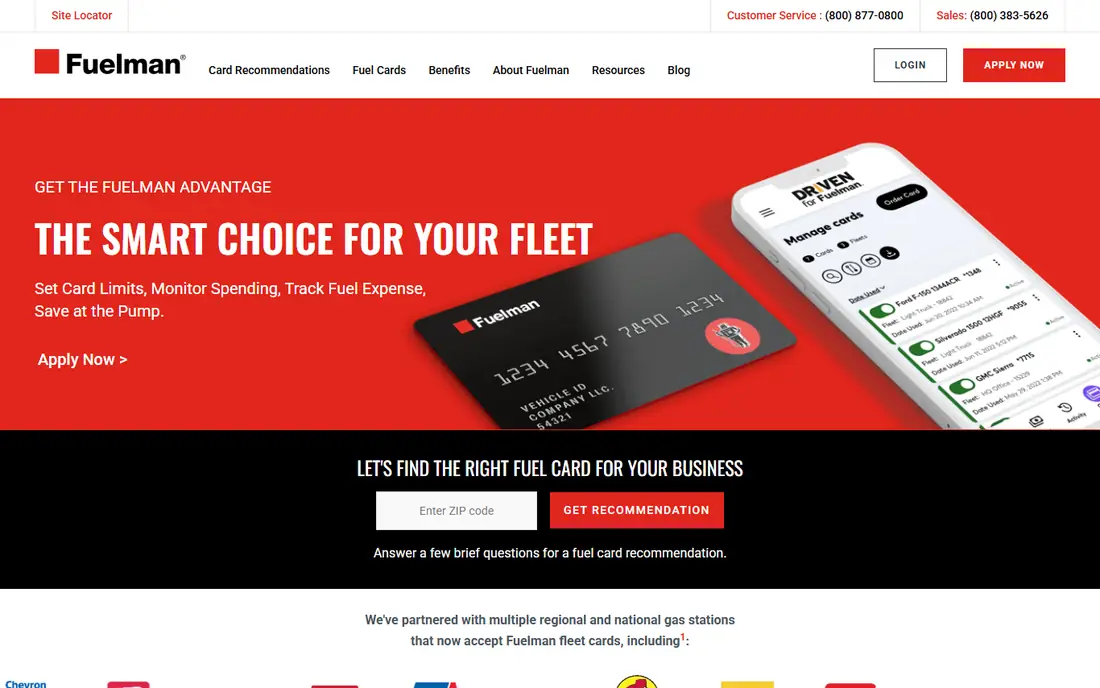
Fuelman suits fleets that run both gasoline and diesel vehicles and want one account structure. The Basic plan starts at $39 per month for all the fuel cards a business needs, and the Mixed Fleet card saves 8 cents per gallon at more than 40,000 discount network locations. Higher plans add dashboards, enhanced fraud loss coverage, and a maintenance management program.
The trade-off is volume. A $39 monthly fee needs about 490 gallons a month at in-network sites to break even on the 8 cent rebate alone, before any other fees. If your drivers rarely reach discount network sites, or if they often fuel at sites that carry a $3 extended network charge, the math changes fast. Map your regular stops against the discount network before you sign up.
What we like- One monthly account fee for all cards
- 8 cents per gallon at discount network sites
- Maintenance management on higher plans
Watch out for- The account fee can outweigh savings for very small fleets
- Some sites charge an extended network fee
Starting price$0 per month
Free planNo
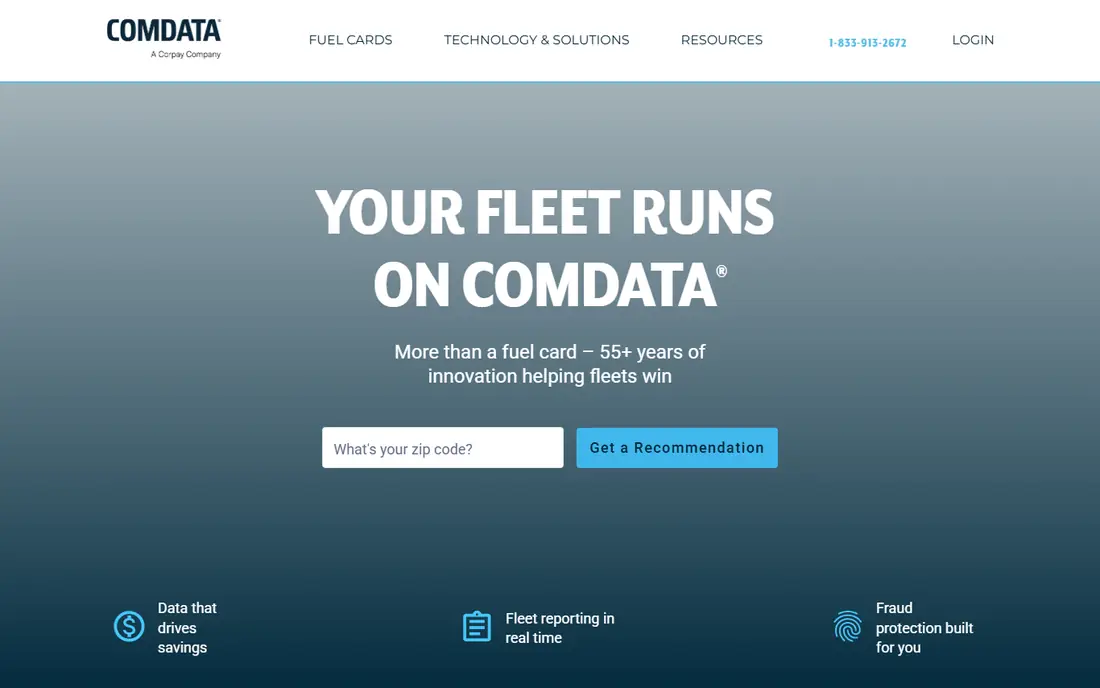
Comdata has served trucking for decades, and its current lineup is built around truck stop economics. The Simple Saver plan offers up to 25 cents off diesel at TA and Petro and up to 8 cents at Pilot and Love's, with no monthly account fee and no truck stop fee. The Smart Fleet and Total Advantage plans add more stations, stronger reporting, and deeper discounts for fleets that want more control.
The honest limit is eligibility and tiering. Comdata notes that advertised discounts are for smaller fleets and that fleets over 20 trucks may receive custom offers instead. Discounts also depend on paying invoices in full and on time. If you run a large fleet, get a written quote for your truck count and lanes rather than budgeting from the public discount figures.
What we like- Simple Saver has no monthly account fee
- Deep discounts at TA and Petro
- FleetAdvance reporting and OneClick fraud controls
Watch out for- Best discounts depend on the plan tier
- Larger fleets may need a custom quote
Starting priceSee website
Free planNo
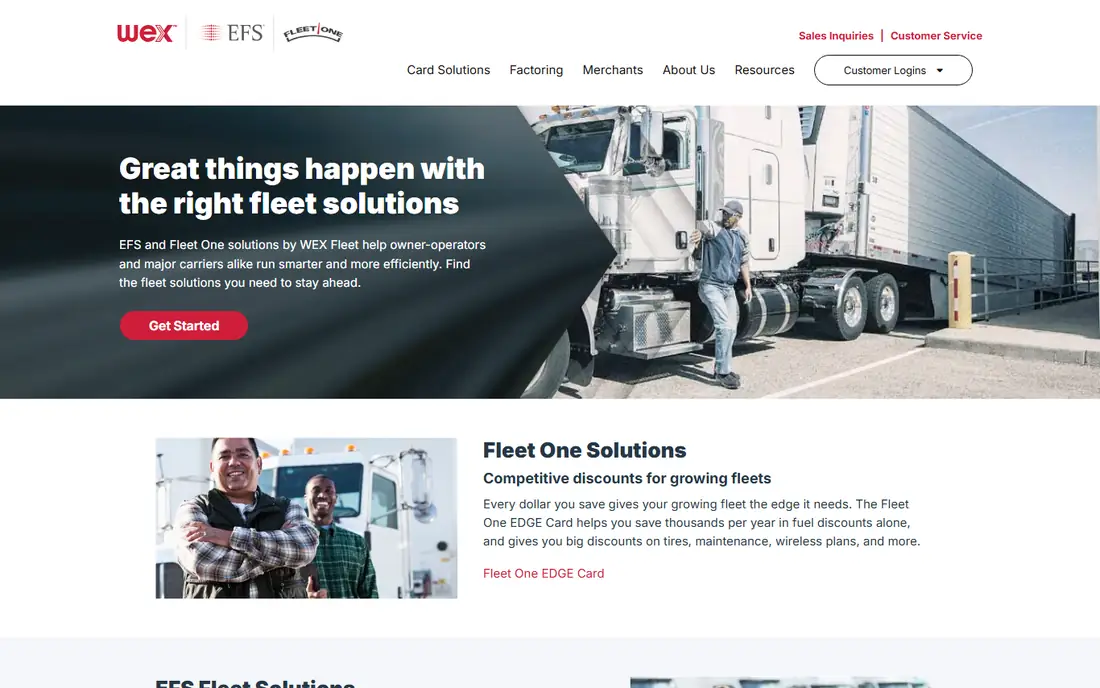
Fleet One Edge, now part of WEX, is aimed at small over-the-road fleets that fuel mainly at truck stops. It offers cash price fueling plus discounts at discount network sites, along with controls, transaction reports, and IFTA reports that reduce back office work. Driver settlement and cash access features also help owner-operators and small carriers who pay drivers on the road.
The limit is scope. A truck stop card is a strong tool on interstate lanes and a weaker tool for local work that fuels at retail stations. Check the discount network against your actual routes, confirm the out-of-network transaction fee, and weigh whether a universal card would serve mixed local and long-haul work better.
What we like- Truck stop discount network
- Spend controls and IFTA reports
- Driver settlements and cash access tools
Watch out for- Acceptance centers on truck stops
- Out-of-network fees can apply
Starting priceSee website
Free planNo
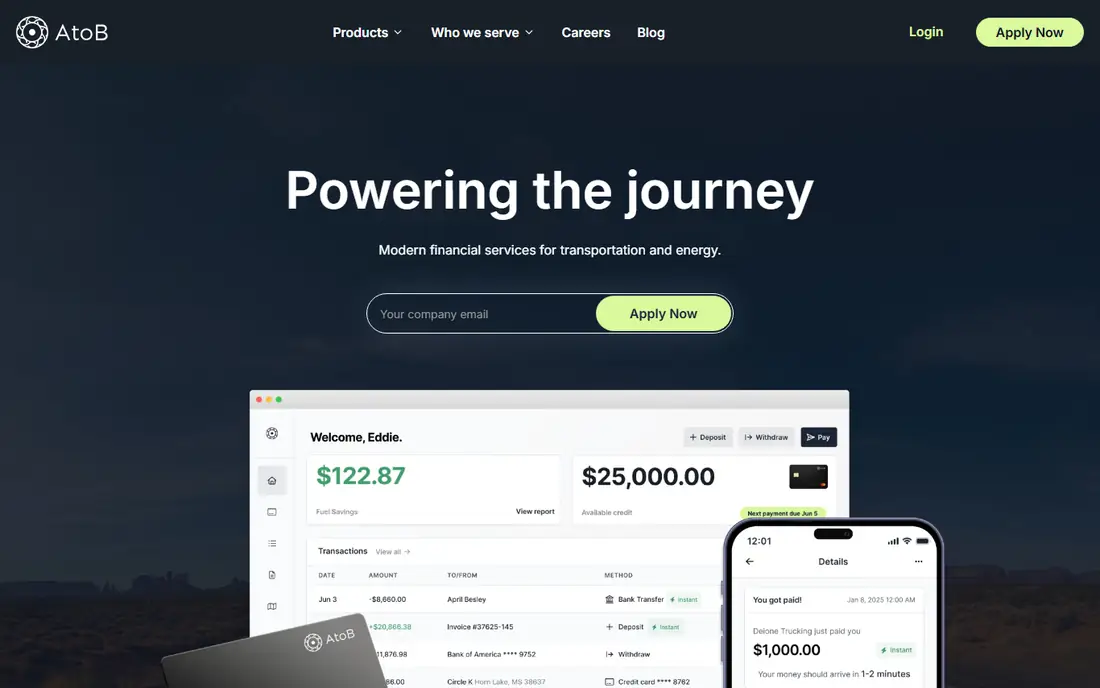
AtoB is a newer fleet card built around a mobile app and modern controls. It runs on the Mastercard network, so drivers can fuel at a wide range of stations, and its partner truck stop network offers larger diesel discounts than its retail station discounts. Managers can set limits by driver or vehicle, watch transactions in real time, and use telematics to check that the vehicle is at the station before a purchase is approved.
The catch is habit. Phone release by drivers works well for drivers who carry a charged phone and use apps daily, and less well for drivers who prefer a simple PIN at the pump. AtoB also offers both prepaid and credit options, so confirm which option your quote covers, what the monthly fee covers, and how discounts differ between truck stops and retail stations.
What we like- Accepted where Mastercard is accepted
- App-based card release
- Telematics checks and fraud protection
Watch out for- Deepest discounts sit at partner truck stops
- Some drivers may dislike phone-based releaseing
#6Coast
Best for: Visa acceptance with controls4.9/5 on
G2 (84 reviews, checked Oct 2026)
Visit coastpay.com
Starting priceSee website
Free planNo
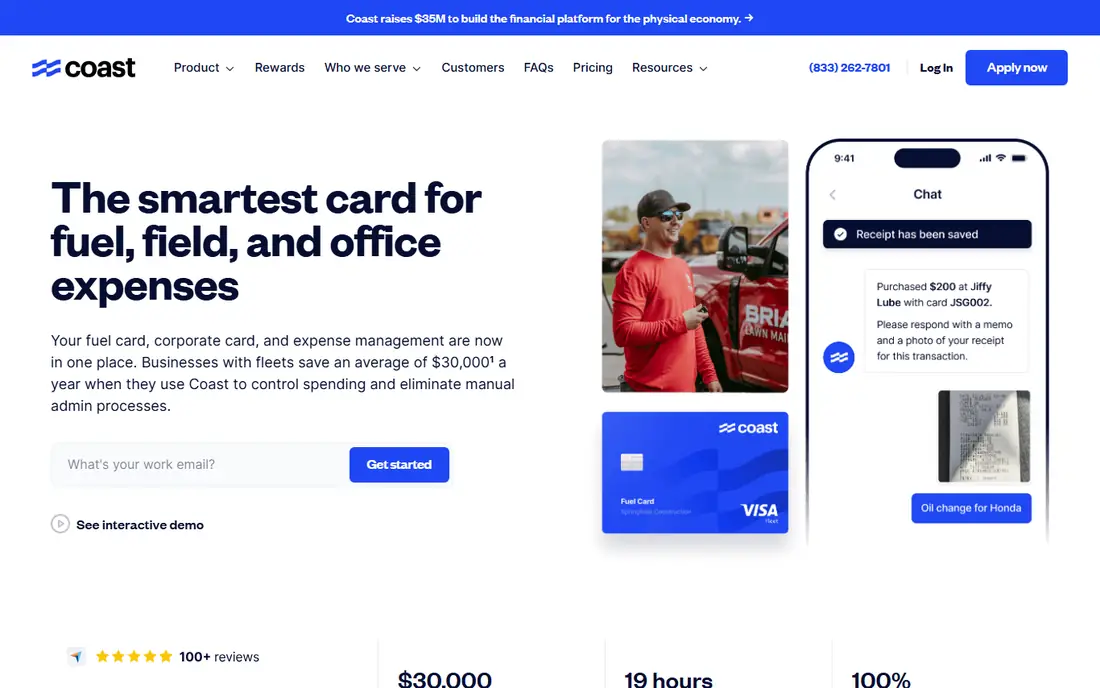
Coast fits fleets that want one card for fuel and field spending, with tight controls. It runs on Visa, so drivers are not limited to a single fuel brand, and it uses GPS and fuel tank data to flag suspicious purchases. Managers can set rules by driver and vehicle, connect the card to accounting tools, and rely on a fuel fraud guarantee for covered losses.
The honest trade-off is discount depth. Coast offers rebates at participating stations rather than at every station where the card works, so a fleet that fuels mostly outside the partner set will see smaller savings. Ask which stations near your terminals and lanes pay rebates, confirm the per-card monthly fee for your fleet size, and check how non-fuel purchases are treated.
What we like- Accepted where Visa is accepted
- GPS and tank data checks
- Fraud guarantee and accounting connections
Watch out for- Discounts depend on partner stations
- Pricing details require a quote
Starting price$0 per month
Free planNo
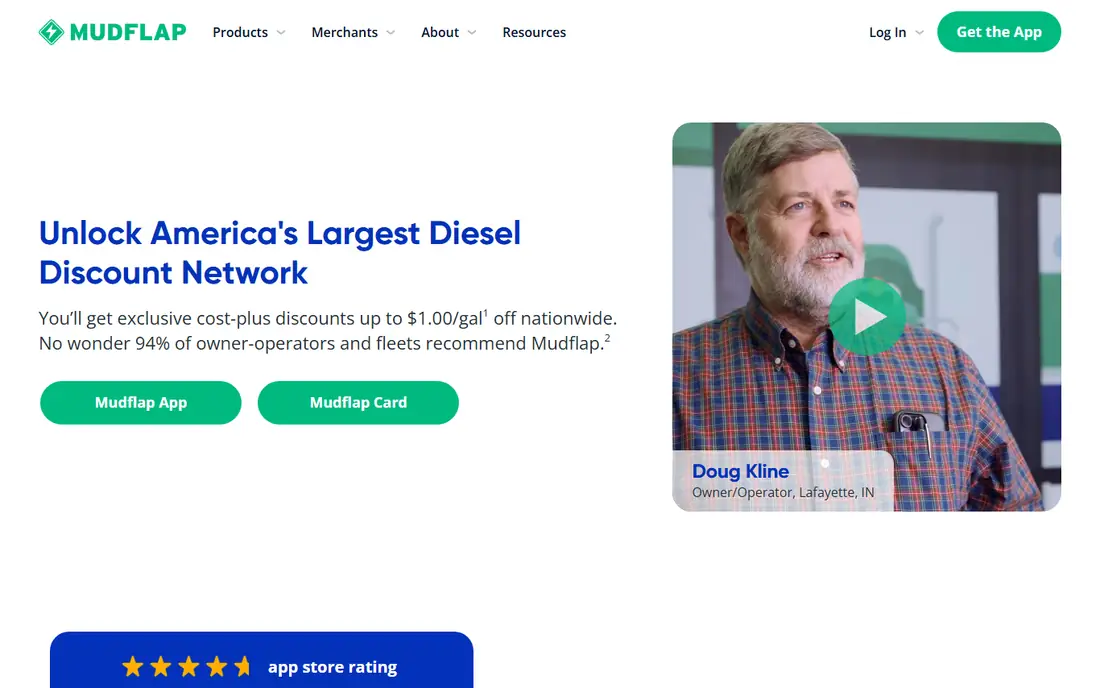
Mudflap started as an app that gave independent drivers access to discounted diesel, and it now offers a Visa fuel card as well. There are no monthly fees, setup fees, or transaction fees on the card, and in-network discounts can reach up to $1.00 per gallon at participating stops. Outside the network, the card still works where Visa is accepted, with a smaller 2 cent per gallon discount.
The limit is coverage. The strongest savings sit at roughly 3,600 in-network locations, mainly independent truck stops and regional chains, rather than every major chain. If your lanes pass those stops, Mudflap can be a low-cost main card or a strong second card. If your drivers must fuel at one specific chain, compare that chain's discount under a different program first.
What we like- No monthly, setup, or transaction fees on the card
- Deep discounts at in-network truck stops
- Visa acceptance elsewhere
Watch out for- Best discounts require in-network stops
- The card is subject to credit approval
Starting price$0 per month
Free planNo
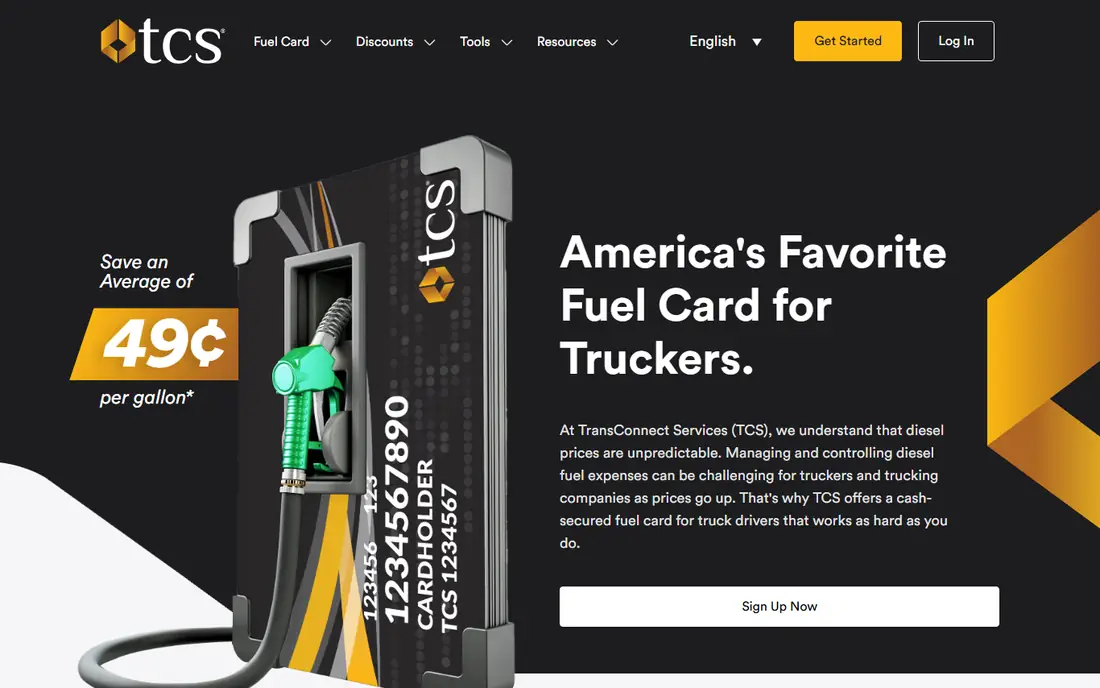
TCS Fuel suits trucking companies that want strong truck stop discounts without a credit application or monthly fee. The card is cash secured, so you load funds and drivers spend from that balance, which removes interest and late fees from the picture. In-network discounts average well above typical retail card rebates, and the card is accepted at more than 12,000 locations, with 2,300 in-network discount sites.
The catch is funding discipline. A prepaid card only works when the balance is topped up, so dispatch and accounting must watch balances on long runs and weekends. Out-of-network transaction fees also vary, so staying in-network matters. For fleets with steady cash flow and regular truck stop lanes, that trade is often worth it. For fleets that need payment float, a credit card may fit better.
What we like- No activation, monthly, or annual fees
- No in-network transaction fees
- Cash-secured funding with no credit line
Watch out for- Prepaid funding needs cash flow planning
- Out-of-network fees vary
How we chose
We compared cards on discount depth at stations trucking companies actually use, network size, monthly and transaction fees, credit or prepaid structure, fraud controls, and reporting for IFTA and driver management. We read vendor pricing pages and homepages, checked public reviews on G2, Capterra, and Reddit, and looked at features such as app-based release, GPS checks, telematics connections, and accounting exports. We favored cards with a real trucking program, not a general business card, and we mixed large providers with newer firms so readers can compare a broad network card, a truck stop card, and a prepaid card side by side.
What to check before you apply
Start with your lanes, not the largest discount number. List the ten stations your drivers use most, then check which cards pay a discount at those stations and what the net price is after fees. A card that pays 40 cents at a stop you never visit is worth less than a card that pays 10 cents at every stop you use.
Fees and payment terms
Add up the monthly fee, the per-transaction fee, the out-of-network fee, and the late payment terms for your fleet size. A per-card fee hurts a small fleet more than a large one, while a per-account fee can be a bargain once you pass a modest gallon count. Credit cards give you float between fueling and payment, but late terms can erase a month of discounts. Prepaid cards remove that risk but require you to fund balances ahead of long trips.
Controls, fraud, and reporting
Set a limit for each driver and vehicle, restrict fuel type where it makes sense, and turn on alerts for unusual purchases. Ask whether the card uses a PIN, an app release, or a GPS check, and how quickly you can freeze a card. For tax time, confirm that transaction reports break out gallons by state and vehicle, since that detail feeds IFTA filings and cuts manual work at quarter end.
Network fit for your fleet type
Long-haul fleets should weight truck stop discounts and amenities such as parking, showers, and maintenance. Regional fleets should weight broad acceptance and retail station discounts. Mixed fleets may need two tools: a truck stop card for interstate drivers and a universal card for local vans and box trucks. Run a one-month trial on one or two trucks when the provider allows it, and compare the real net cost per gallon before rolling the card out to the whole fleet.
Frequently asked questions
How much can a fuel card really save per gallon?
It depends on where you fuel. Truck stop cards often show larger discounts at in-network stops and smaller discounts elsewhere, while universal cards show smaller but wider discounts. The only reliable figure is your net cost per gallon after fees, measured on your own lanes over a full month.
Do I need a credit check for a fuel card?
Some cards require a credit review, while prepaid cards such as TCS do not use a credit line in the same way. Mudflap states that its app needs no credit check, though its card is subject to credit approval. If credit is a concern, ask the provider which product you are applying for and what check it runs.
What is the difference between cash price and retail price?
Cash price is the lower price many truck stops charge when you pay with a fleet card or cash rather than a standard credit card. Some cards start from cash price and then apply a further discount, while others start from retail price. Compare the final price per gallon, not the discount label alone.
How do fuel cards help with IFTA reporting?
Most fleet cards record gallons, state, vehicle, and driver for each purchase, and many export that detail for IFTA filings. That record is far easier to work from than paper receipts. Confirm that the export breaks out gallons by jurisdiction before you rely on it for a quarterly filing.
Can one card cover both trucks and local vans?
Yes, if the card is accepted where both vehicle types fuel. A universal Visa or Mastercard fleet card covers retail stations and truck stops, while a truck stop card may be awkward for vans that fuel at small retail sites. Mixed fleets often pair a truck stop card with a universal card.
Should a small fleet pay a monthly fee?
It depends on gallons. Divide the monthly fee by the discount you actually earn at stations you use. If the result is well below your monthly in-network gallons, the fee pays for itself. If your gallons are low or your stops are mostly out of network, a no-fee card is the safer start.
Sources we checked (8)
- https://www.wexinc.com
- https://www.fuelman.com
- https://www.comdata.com
- https://www.fleetone.com
- https://www.atob.com
- https://www.coastpay.com
- https://www.mudflapinc.com
- https://www.tcsfuel.com
Is your product missing or out of date?
We review this list regularly. Vendors can request a listing, send updated pricing or ask about featured placement.

Shihab Mia · Founder, Rankite
Shihab has 5+ years in B2B and SaaS SEO. He writes Rankite's software buying guides from pricing pages, documentation and public user reviews. More about Shihab.