How we make this list: we compare pricing pages, product documentation and public user reviews. Rankite is independent; if a vendor ever pays for a featured spot, that listing is clearly labeled Partner.
Key takeaways
- Google Ads captures existing demand (people searching to buy); Meta Ads creates it (people scrolling who might buy). Most SMBs should understand both before spending anywhere else.
- There is no minimum spend on Google, Meta or Microsoft: you set the budget. TikTok requires $50/day per campaign, and LinkedIn needs $10/day.
- B2B advertisers with high deal values belong on LinkedIn despite the cost; ecommerce brands should test Amazon and TikTok before programmatic.
- The Trade Desk and Criteo are real platforms, not starter tools: they make sense once monthly spend is serious and you (or an agency) can run them.
US digital ad revenue hit $258.6 billion in 2024, up nearly 15 percent year over year, according to the Interactive Advertising Bureau. That money flows through platforms that could not be more different: an intent-driven search auction, half a dozen social feeds, retail media networks, and programmatic exchanges. Picking the wrong one for your budget is the most expensive mistake on this list, because the platform shapes the audience, the creative and the math. These nine cover where the money actually goes, from self-serve search to enterprise programmatic.
#1
Google Ads
Best for: Businesses that want to capture people actively searching to buy
Visit ads.google.com
Starting priceNo minimum spend (pay per click; you set the budget)
Free planNo (new-advertiser credits offered periodically)
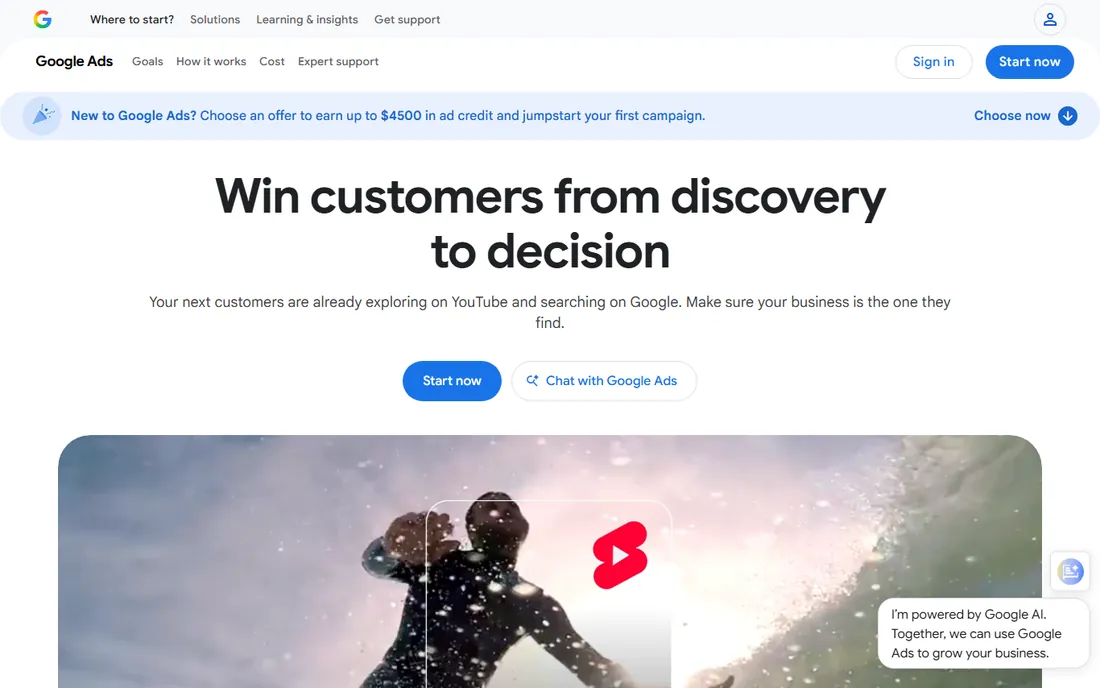
Google Ads is where demand already exists. Someone searching "emergency plumber near me" or "best CRM for startups" has intent you cannot manufacture on a social feed, and Google lets you bid on exactly that moment. The platform spans Search, YouTube, Maps, Gmail and the Display Network, so one account can run search capture, video and remarketing together. There is no minimum spend: a local business can start at $10 a day and scale what works.
The honest catch is that the auction is unforgiving. Competitive keywords cost tens of dollars per click, broad match burns budget on irrelevant searches, and the automated bidding needs conversion data to work well. Beginners routinely spend their first month funding Google's learning curve. Start with exact-match search on your highest-intent terms, track conversions from day one, and expand only when the math works.
What we like- Unmatched intent: you bid on searches from people ready to act
- Enormous reach across Search, YouTube, Maps and the Display Network
- Precise budget control down to the keyword
Watch out for- Click costs in competitive categories (legal, insurance, SaaS) punish beginners
- The interface rewards expertise and punishes guesswork
- Click fraud and broad-match waste need active management

#2
Meta Ads
Best for: Businesses that need to create demand across Facebook and Instagram
Visit facebook.com
Starting priceNo minimum spend (auction-based; you set daily or lifetime budgets)
Free planNo (new-advertiser credits offered periodically)
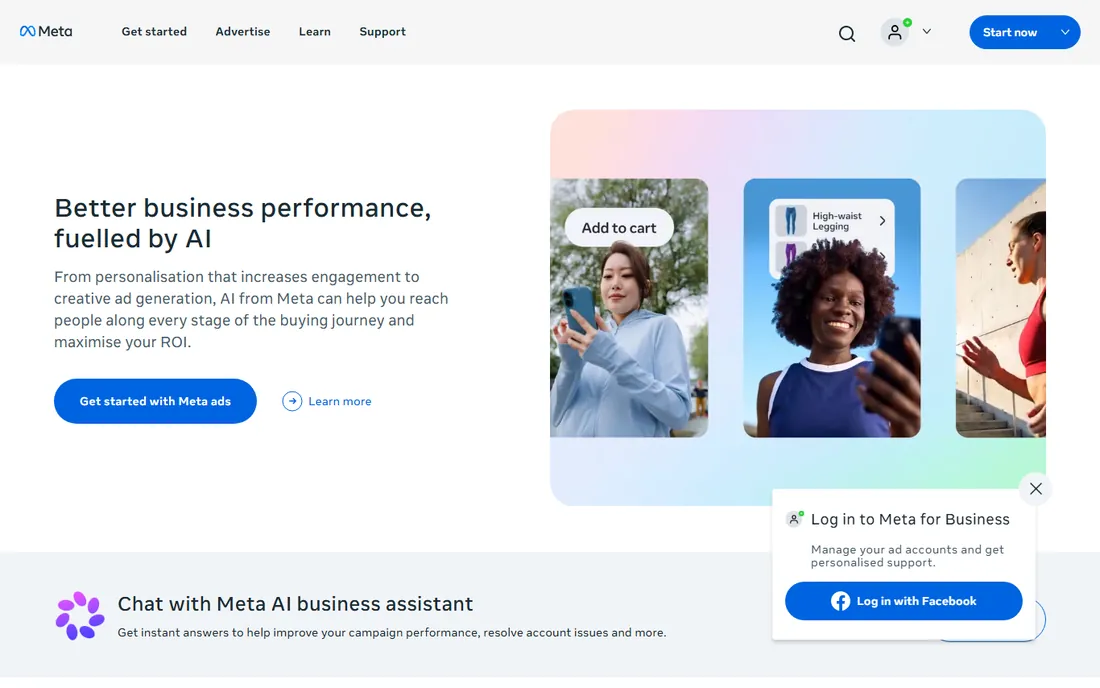
Meta Ads is the demand-creation counterpart to Google. Nobody opens Instagram to buy accounting software, but precise interest, behavior and lookalike targeting puts your product in front of people likely to care, and the creative formats (Reels, Stories, carousels) let a good product sell itself visually. For ecommerce, local services and direct-to-consumer brands, Meta is usually the first social platform to test. Budgets are fully self-serve with no minimum.
The trade is intent. You are interrupting a feed, so the creative does the heavy lifting and fatigue sets in fast: winning ads decay within weeks and need constant refresh. Performance has also grown more volatile with privacy changes, which makes broad targeting and good creative more important than micro-targeting. Budget for creative production, not just media spend.
What we like- The best interest and behavior targeting at SMB budgets
- Creative-first formats (Reels, Stories, carousel) that suit visual products
- Huge US audience across Facebook and Instagram
Watch out for- No search intent, so you are interrupting, not capturing
- Performance swings with algorithm and privacy changes
- Creative fatigue is constant and demands fresh assets
Starting priceNo minimum spend (pay per click; you set the budget)
Free planNo
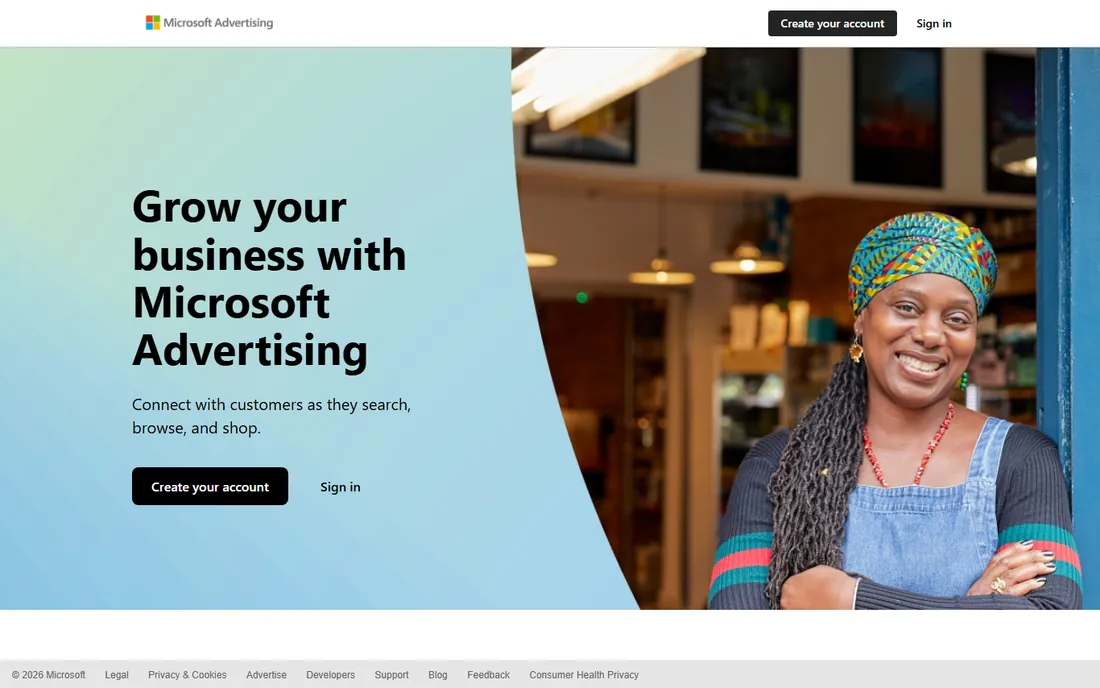
Microsoft Advertising is the arbitrage play in search. It serves Bing, Yahoo, AOL and Edge searchers, and cost per click typically runs well below Google for the same keywords. Campaigns import directly from Google Ads, so setup takes minutes if you already run search. For advertisers whose Google campaigns work but cost too much, Microsoft is the obvious second engine.
The limits are volume and audience. Search volume is a fraction of Google's, so it complements rather than replaces it, and the user base skews older and more desktop-heavy, which suits some categories (finance, B2B, home services) and misses others. Treat it as incremental reach at a discount, not as a standalone strategy.
What we like- Lower cost per click than Google in most categories
- One-click import of Google Ads campaigns
- Reaches Bing, Yahoo, AOL and Edge audiences Google misses
Watch out for- Much smaller search volume, so it caps how far you can scale
- Fewer advanced features than Google Ads
- The audience skews older and more desktop-based

#4
TikTok Ads
Best for: Brands targeting under-40 buyers with video-first creative
Visit ads.tiktok.com
Starting price$50/day campaign minimum (self-serve)
Free planNo
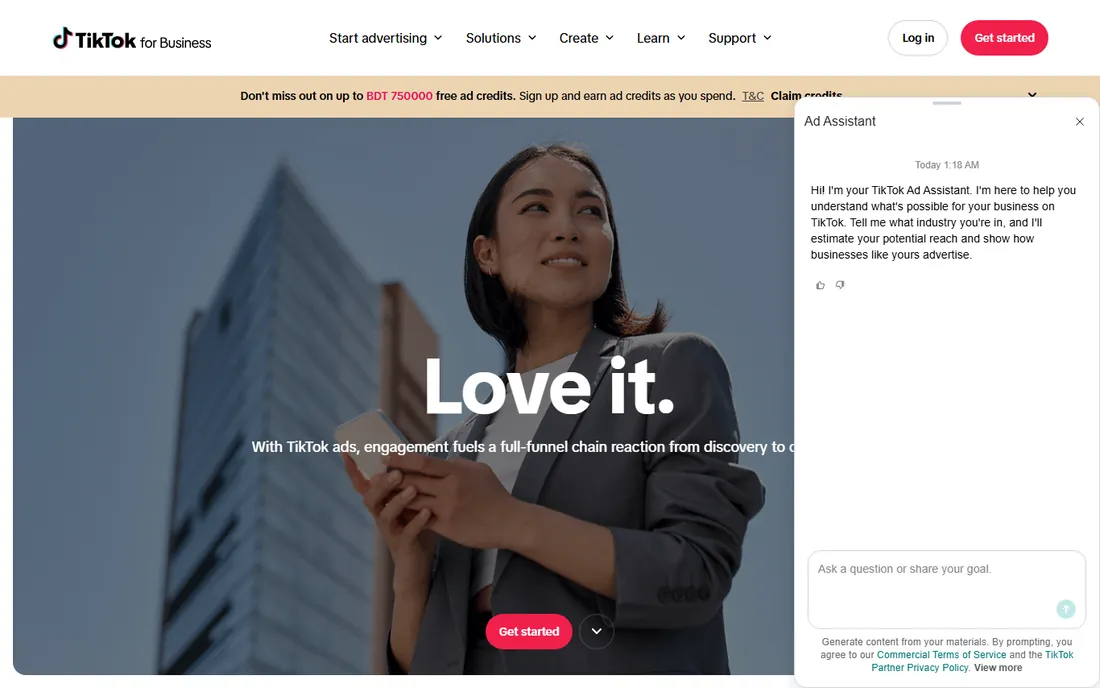
TikTok Ads rewards advertisers who understand the feed. Native-feeling short video, creator-style content and Spark Ads (boosting organic posts) can deliver reach per dollar that embarrasses other platforms for the right product: ecommerce, mobile apps, beauty, food and anything visual aimed at under-40 buyers. The targeting and optimization have matured well past the early hype.
The barriers are the minimum and the creative bar. The $50/day campaign minimum means a real test costs over $1,000 a month, and polished corporate ads flop while lo-fi creator content wins. Measurement is the weakest of the major platforms, so incrementality testing matters. If your customer is on TikTok and you can produce native video weekly, test it; if not, the minimum makes it an expensive lesson.
What we like- Enormous organic-style reach for brands that nail native creative
- Strong performance for ecommerce, apps and direct-to-consumer
- Spark Ads boost existing organic posts
Watch out for- $50/day campaign minimum prices out the smallest testers
- Creative must feel native or it dies
- Attribution and measurement are weaker than Google or Meta
Starting priceSee website (auction-based; no published minimum for self-serve)
Free planNo
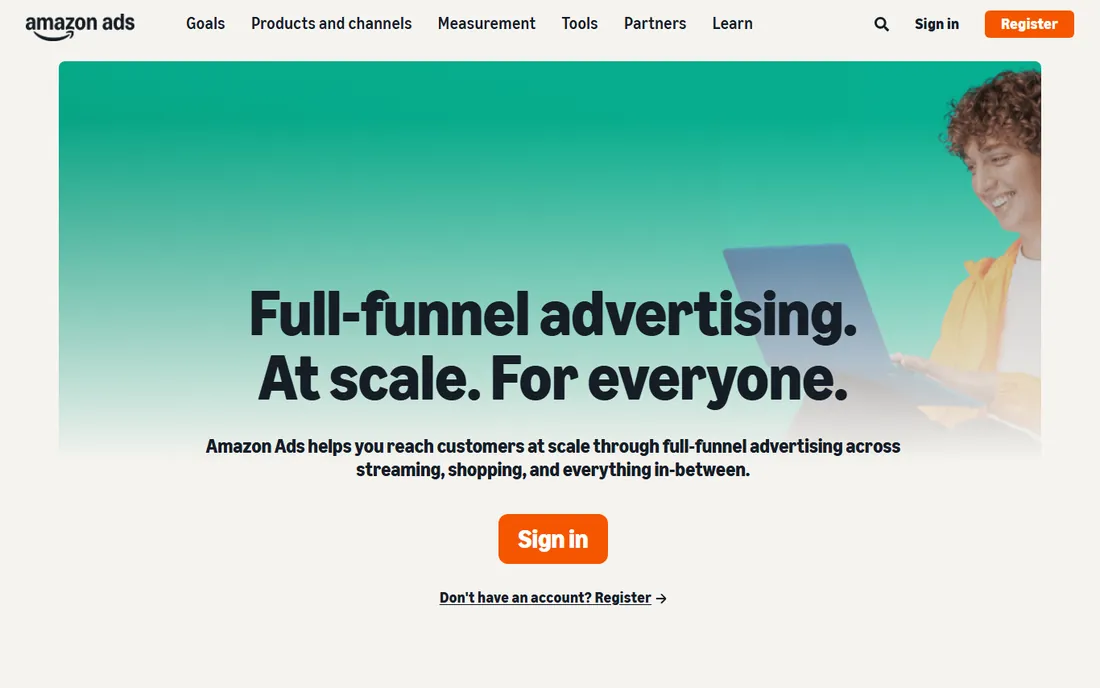
Amazon Ads is the closest thing to a checkout-line billboard in digital advertising. Shoppers searching on Amazon intend to buy, and Sponsored Products put your listing at the top of those results. For brands selling on Amazon, advertising is effectively mandatory: organic rank follows sales velocity, and ads buy the velocity. The self-serve console is approachable, and the DSP extends targeting off Amazon.
The catch is the tollbooth economics. You pay Amazon referral fees, often fulfillment fees, and then ad costs on top, so margin math has to be done honestly. If you do not sell on Amazon, the platform's value drops sharply (the DSP excepted). For Amazon sellers, start with Sponsored Products on your best-converting ASINs and expand only with the margin math in hand.
What we like- Captures shoppers at the point of purchase with the highest buyer intent in ecommerce
- Sponsored Products are self-serve and easy to start
- DSP extends reach off Amazon
Watch out for- Pay-to-play inside a marketplace that also charges referral and fulfillment fees
- Mostly relevant if you sell on Amazon
- Brand-building formats cost real money

#6
LinkedIn Ads
Best for: B2B advertisers with high deal values and precise job-title targeting
Visit linkedin.com
Starting price$10/day minimum campaign budget
Free planNo
LinkedIn Ads is the only platform where you can target "VP of Operations at manufacturing companies with 200-plus employees" and mean it. For B2B with high customer lifetime value (SaaS, agencies, commercial services), that precision justifies click costs that would be absurd anywhere else. Lead gen forms inside the platform convert well because profiles pre-fill. If one enterprise deal pays for a year of ads, LinkedIn is rational.
The math only works at high deal values. Clicks routinely cost several times their Google or Meta equivalents, small audiences exhaust quickly, and the $10/day minimum understates real test budgets. B2B advertisers with long sales cycles must also connect the ads to CRM revenue data, or optimization optimizes for cheap leads instead of deals. High ticket or stay away.
What we like- Unmatched B2B targeting by job title, company, industry and seniority
- Reaches decision-makers during work mindset
- Strong for lead gen with high lifetime values
Watch out for- The most expensive clicks in digital advertising
- Small audiences fatigue fast
- $10/day minimum with real costs far above it in practice

#7
Taboola
Best for: Advertisers wanting cheap native reach on publisher sites
Visit taboola.com
Starting priceSee website (minimums vary by account type)
Free planNo
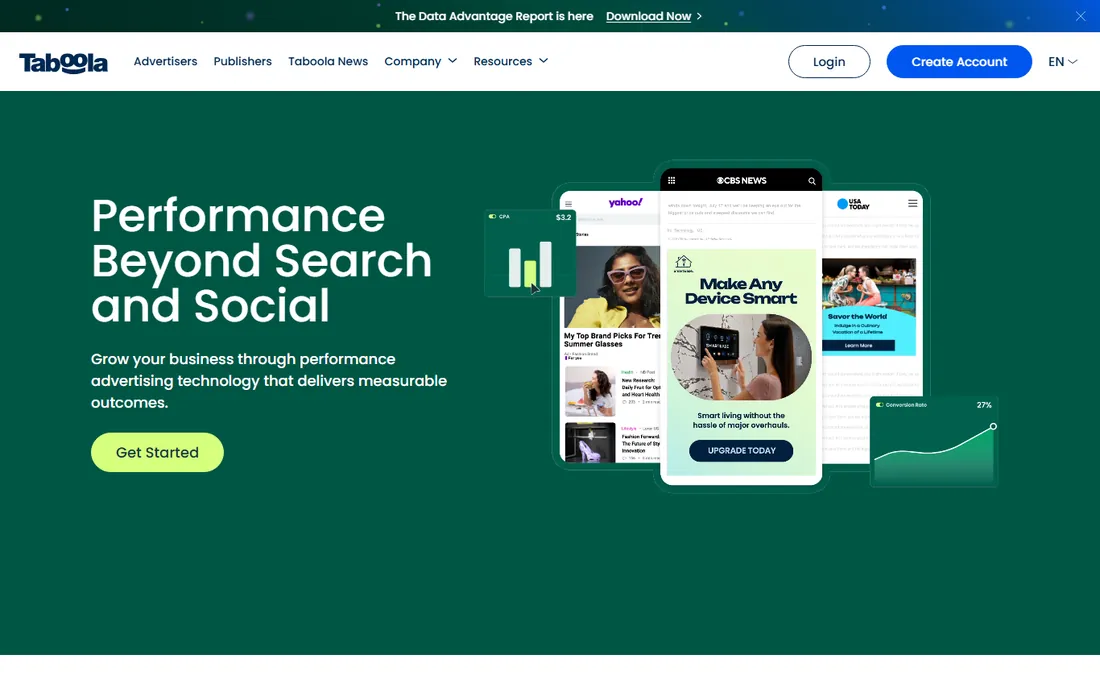
Taboola buys the "recommended stories" units on publisher sites: native placements at article ends across a large network. Click costs run far below search and social, which makes it attractive for content promotion, lead generation and ecommerce discovery at scale. Setup is simple, and the reach is real.
The work is quality control. Traffic quality varies by publisher, so active blocklisting of poor placements is mandatory, and the classic chumbox adjacency raises brand-safety questions some advertisers will not accept. Intent is low: readers are browsing, not buying. Taboola suits advertisers with proven landing pages and the operational discipline to manage placements; it punishes set-and-forget.
What we like- Low cost per click for large-scale native reach across premium publishers
- Strong for content, lead gen and ecommerce discovery
- Simple campaign setup
Watch out for- Traffic quality varies and needs active blocklisting
- "chumbox" ad placements carry brand-safety considerations
- Weaker intent than search or social

#8
The Trade Desk
Best for: Advertisers and agencies running serious programmatic display, video and audio
Visit thetradedesk.com
Starting priceSee website (enterprise contracts; high minimums)
Free planNo
The Trade Desk is the independent alternative to the walled gardens: a demand-side platform for buying display, video, audio and connected-TV inventory programmatically across the open web. Its pitch is objectivity (it owns no media) plus premium inventory and serious data and measurement tools. Agencies and large advertisers use it as the core of programmatic buying.
None of that is built for small budgets. Minimums are enterprise-scale, contracts are the norm, and running it well demands programmatic expertise most SMBs do not have in-house. This is an agency-operated platform for meaningful spend. If your monthly budget has four digits, look at the self-serve platforms above; if it has six, The Trade Desk belongs in the conversation.
What we like- The leading independent demand-side platform with premium inventory access
- Strong data, measurement and connected-TV capabilities
- No media-owner conflict of interest
Watch out for- Enterprise minimums and contracts put it out of SMB reach
- Requires real programmatic expertise or an agency
- Self-serve is not really self-serve at small budgets

#9
Criteo
Best for: Retailers and ecommerce brands wanting performance retargeting at scale
Visit criteo.com
Starting priceSee website (managed and self-serve tiers)
Free planNo
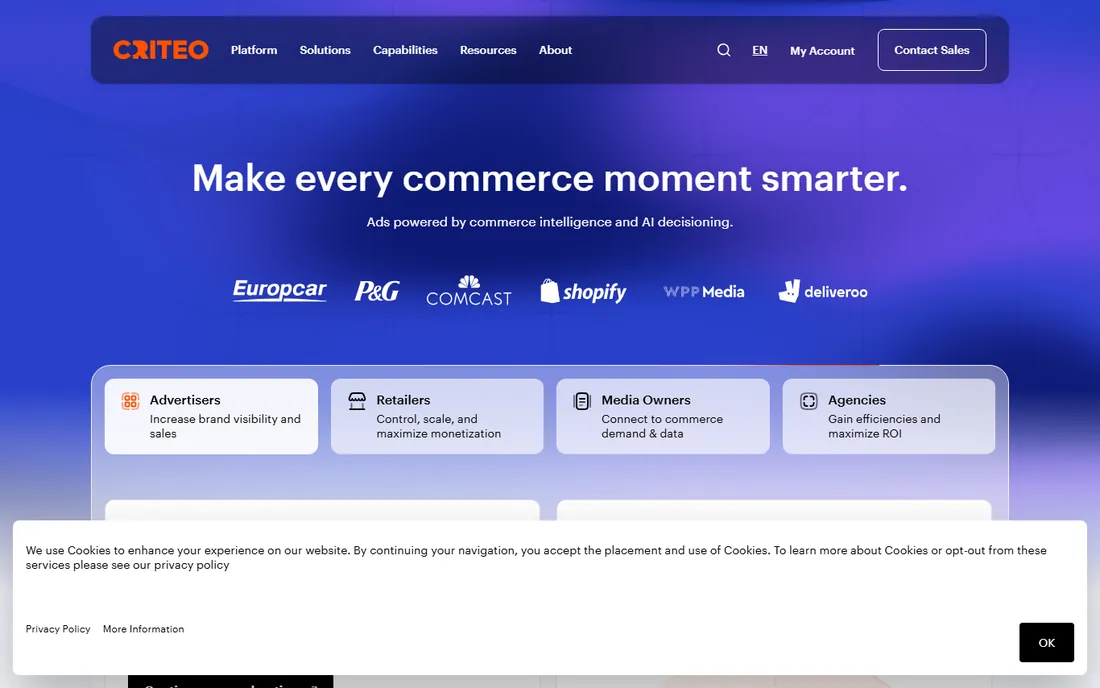
Criteo built its name on retargeting: turning a retailer's browsers into buyers with dynamic product ads across the web and apps. Its commerce data and optimization are purpose-built for retail performance, and mid-market to enterprise ecommerce brands still run it as a core retargeting layer. If your store has real traffic and a real product catalog, Criteo converts the almost-buyers.
The limitation is philosophical: retargeting harvests demand your other marketing created, so it cannot be the whole strategy. Pricing and minimums vary across managed and self-serve tiers, and outside ecommerce the platform has little to offer. Pair it with demand creation (Meta, TikTok, Google) rather than expecting it to find new customers alone.
What we like- Deep commerce data and retargeting performance honed over years
- Strong for mid-market and enterprise retailers
- App and web retargeting in one place
Watch out for- Retargeting-centric, so it harvests existing demand rather than creating it
- Pricing and minimums vary by tier
- Less relevant outside ecommerce
How we chose
We started with the categories advertisers search: digital advertising platform, best PPC platforms, social media advertising platforms and programmatic advertising platforms. For each candidate we checked the vendor's published documentation and advertiser resources against practitioner discussion on Reddit and industry reporting, comparing audience, cost model, minimum budgets and fit by advertiser size and business model. Where a minimum or price could not be verified on the vendor's own pages we wrote "See website" rather than guessing.
On Google Ads, $1,000 buys roughly 100 to 500 clicks depending on category: plenty for a local service business, thin for legal or insurance. On Meta, the same budget buys 500,000 to 2,000,000 impressions or a few hundred conversions for a solid ecommerce offer, with creative as the variable. Microsoft stretches the search dollar further per click but caps volume. TikTok's $50/day minimum consumes $1,500 a month before you start, so $1,000 does not qualify. LinkedIn turns $1,000 into 100 to 200 clicks: sensible only if one deal is worth five figures. Amazon converts $1,000 into real sales velocity for a seller with converting listings. Taboola turns it into tens of thousands of cheap native clicks of variable quality. The Trade Desk and Criteo will not take the meeting at this budget. The lesson: match the budget to the platform's economics before falling in love with its audience.
Start with intent or interruption
Search platforms (Google, Microsoft, Amazon) capture people already looking; social and native (Meta, TikTok, Taboola) interrupt people who are not. Capture is easier to make profitable because intent does the selling, so start with search if your category has search volume. Use interruption platforms when your product needs explaining or your buyers do not search for it yet.
Match creative to the feed
Each platform has a native creative language, and fighting it wastes money. Search needs tight ad copy and landing-page match; Meta and TikTok need native-feeling video; LinkedIn needs credible professional creative; Amazon needs optimized listings first and ads second. Budget for creative production as a line item, not an afterthought: on Meta and TikTok it matters more than targeting.
Set a test budget and a kill rule
Decide before spending what a test costs and what failure looks like. A reasonable SMB test is $500 to $1,500 per platform over 2 to 4 weeks, with conversion tracking live from day one. The kill rule is simple: if the cost per result after the learning period exceeds what the customer is worth, pause and fix the offer, the creative or the targeting, in that order. Platforms do not fix bad math.
Measurement before scale
Install conversion tracking before the first dollar, connect ad platforms to your CRM or ecommerce backend, and distrust last-click attribution on interruption platforms. The advertisers who scale profitably know their cost per acquired customer by channel; the ones who do not are donating to the platforms. This unglamorous work matters more than platform choice.
Frequently asked questions
How much should a small business spend on digital ads?
Start with a test budget of $500 to $1,500 per platform over 2 to 4 weeks, with conversion tracking in place. Scale the winners and kill the losers by cost per acquired customer, not by clicks. There is no minimum on Google, Meta or Microsoft, so the budget question is really about how fast you want answers.
Should we run search ads or social ads?
Run search if people search for what you sell: it captures existing intent and converts fastest. Run social if your product needs discovery, looks good in a feed, or serves buyers who do not search yet. Most healthy SMB programs eventually run both, with search capturing demand and social creating it.
Do we need an agency to run these platforms?
Not at small budgets. Google, Meta, TikTok and Amazon are all genuinely self-serve, and $1,000 to $3,000 a month does not support agency fees plus media. Consider an agency or freelancer when spend passes roughly $10,000 a month, when you need The Trade Desk or Criteo, or when creative production becomes the bottleneck.
How long before we see results from a new campaign?
Search campaigns can produce data within days and decisions within 2 to 4 weeks. Social campaigns need a learning period (usually 50 conversion events per ad set on Meta) before judging performance. Anyone promising instant profitable scale is selling something. Plan for a month of paid learning on any new platform.
Can one person manage all of this?
One capable marketer can run two to three platforms well: typically Google plus Meta, with a third added once those are profitable. Each additional platform adds creative, monitoring and reporting overhead. Spreading $2,000 across six platforms guarantees six underfunded tests; concentrate until something works, then expand.
Sources we checked (10)
- https://ads.google.com
- https://www.facebook.com/business
- https://ads.microsoft.com
- https://ads.tiktok.com
- https://advertising.amazon.com
- https://www.linkedin.com/advertising
- https://www.taboola.com
- https://www.thetradedesk.com
- https://www.criteo.com
- https://www.iab.com
Is your product missing or out of date?
We review this list regularly. Vendors can request a listing, send updated pricing or ask about featured placement.

Shihab Mia · Founder, Rankite
Shihab has spent more than a decade helping SaaS and e-commerce brands grow through search. He writes Rankite's software buying guides from pricing pages, documentation and public user reviews. More about Shihab.