How we make this list: we compare pricing pages, product documentation and public user reviews. Rankite is independent; if a vendor ever pays for a featured spot, that listing is clearly labeled Partner.
Key takeaways
- Dental imaging software is usually bought with the hardware; the software decision deserves its own evaluation, because you will live with it far longer than the sensor.
- DEXIS, Apteryx XVWeb and Planmeca Romexis are the three names every practice should shortlist, covering 2D, cloud and 3D respectively.
- Orthodontists should look at Dolphin Imaging; implant and surgical practices should look at Planmeca Romexis.
- Open Dental ($199/mo/location) is the only option here with fully published pricing; everything else is quote or dealer-based.
Quick comparison
Is your product missing or out of date?
We review this list regularly. Vendors can request a listing, send updated pricing or ask about featured placement.
The best dental imaging software

#1
DEXIS Imaging Suite
Best for: general practices wanting the market leader
Visit dexis.com
Starting priceSee website
Free planNo
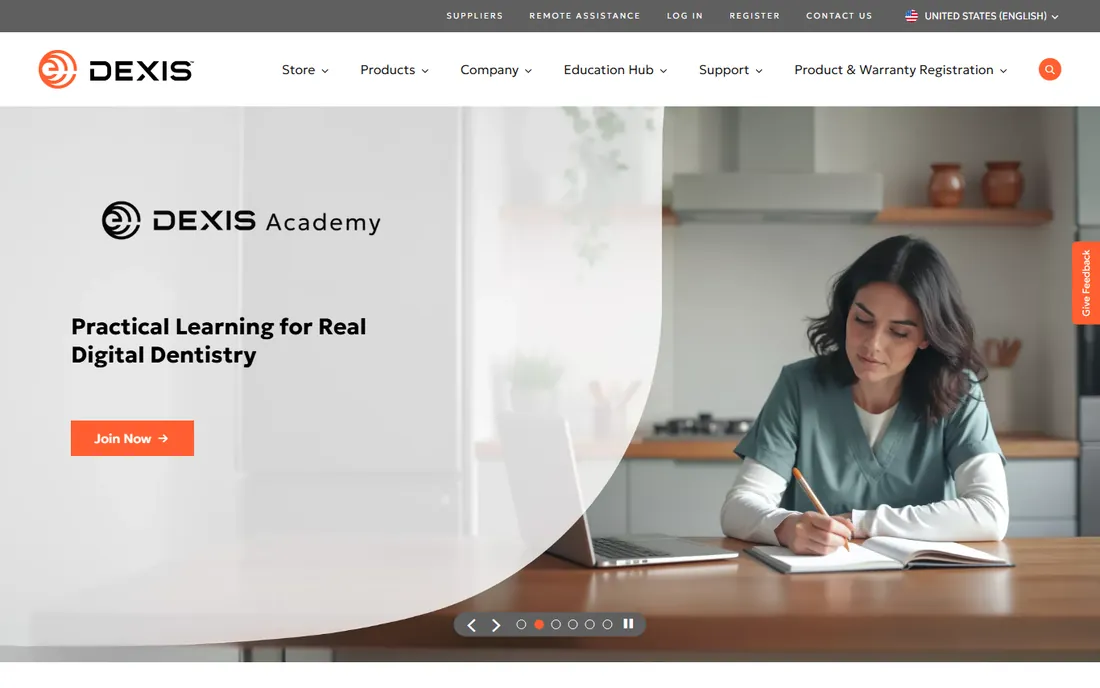
DEXIS is the default choice in dental imaging, and the Envista backing is why. As part of Envista Holdings, alongside brands like Nobel Biocare and Ormco, DEXIS brings together 2D and 3D imaging, intraoral scanning and diagnostic software in one connected, AI-powered ecosystem. The newest software, DEXIS Eleven, builds on the long-running Imaging Suite with workflow improvements and optional cloud features like Cloud Backup and CloudVu.
The practical strengths are speed and familiarity. Images are available instantly after exposure, with magnification, enhancement filters and annotations for diagnosis, and the large detailed images help patients understand treatment recommendations. Sharing with colleagues and referrals is straightforward, and software modules let you add functionality as the practice grows.
The trade-off is ecosystem gravity. DEXIS works best with DEXIS sensors and scanners, and pricing runs through dealers rather than a public price list. For general practices that want the safest, most widely supported choice in the best dental imaging software market, DEXIS is it. For multi-brand offices, the open-architecture options below fit better.
What we like- The global leader in dental imaging
- Connected 2D, 3D and intraoral scanning ecosystem
- AI-powered diagnostic tools
Watch out for- Quote and dealer-based pricing
- The ecosystem rewards staying inside DEXIS hardware

#2
Apteryx XVWeb
Best for: multi-brand practices wanting cloud imaging
Visit apteryx.com
Starting priceSee website
Free planNo
Apteryx XVWeb is the answer for practices that refuse to be locked into one hardware brand. Built from the start as a cloud-based platform for managing, analyzing and processing dental images, it takes an open-architecture approach: use top-tier imaging tools while keeping whatever sensors and scanners you already own, from any leading manufacturer.
That freedom extends to the rest of the stack. XVWeb connects with your practice management software, so you can choose the best mix of software and acquisition hardware rather than accepting a bundle. For multi-site practices and groups, the cloud architecture means images follow the patient and the provider, not the server.
Pricing is quote-based, and like all cloud imaging, it assumes good connectivity. But for DSOs, multi-location groups and any practice that wants hardware independence, Apteryx is the best dental imaging software choice for staying flexible.
What we like- True cloud imaging with open architecture
- Compatible with all leading imaging device manufacturers
- Integrates with major practice management systems
Watch out for- Quote-based pricing
- Cloud dependence requires reliable internet
Starting priceSee website
Free planNo
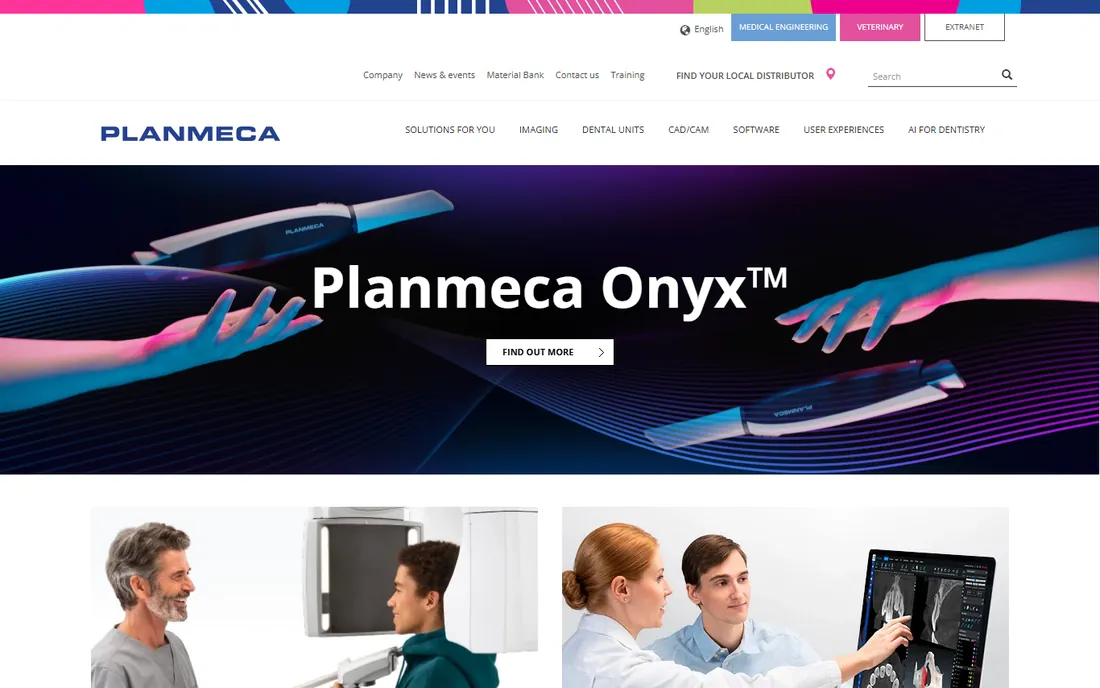
Planmeca Romexis is the 3D powerhouse for implantologists and oral surgeons. Where most imaging software treats 3D as a module, Romexis was built around it: superior volume rendering, implant planning with surgical guide design, and a comprehensive toolset that spans endodontics, orthodontics and maxillofacial surgery.
The depth matters for complex cases. Implant planning, airway analysis, TMJ assessment and orthognathic surgical planning all live in one application, which reduces the file-shuffling between programs that plagues surgical workflows. It integrates with the broader Planmeca digital workflow, from intraoral scanning to CAD/CAM.
Romexis is sold through dealers with quote-based pricing, and it shines brightest alongside Planmeca CBCT units. For general dentistry it is more than most practices need. For implant, surgical and high-end restorative practices, it is the imaging platform to beat.
What we like- Superb 3D rendering and implant planning tools
- Comprehensive toolkit across specialties
- Surgical guide support
Watch out for- Premium pricing through dealers
- Most valuable with Planmeca hardware
Starting priceSee website
Free planNo
Sidexis 4 makes the most sense for practices already invested in Dentsply Sirona equipment. As the imaging software of the world's largest dental equipment maker, it offers powerful local processing and the deepest possible integration with the Dentsply Sirona digital workflow, including CEREC chairside CAD/CAM.
The single-vendor story is the pitch. When the sensor, the CBCT, the intraoral scanner and the mill all talk to the same software, the workflow friction drops: images flow into treatment planning and restoration design without exports and imports. For single-site practices running a full Dentsply Sirona operatory, that cohesion is hard to beat.
The limitation is the obvious one. Sidexis is at its best inside the ecosystem, and stepping outside it for a better-priced sensor means losing the integration advantage. Pricing is quote-based through dealers. If your practice is standardized on Dentsply Sirona, Sidexis 4 is the natural imaging choice.
What we like- Deep integration with CEREC and Dentsply Sirona hardware
- Powerful local processing
- Single-vendor digital workflow
Watch out for- Best value requires the Dentsply Sirona ecosystem
- Quote-based pricing
Starting priceSee website
Free planNo
Carestream Dental's CS Imaging is the workhorse option for general practices. The software covers the 2D imaging essentials well: image capture, calibration management, analysis tools, treatment planning and data import and export, with video support for intraoral cameras.
For practices running Carestream sensors and intraoral cameras, the integration is straightforward, and it pairs with Carestream's practice management offerings. It is a dependable, no-drama choice for everyday diagnostic imaging: periapicals, bitewings, panoramics and the image management that goes with them.
CS Imaging does not lead on 3D or AI features, where DEXIS and Planmeca have moved faster. Pricing is quote-based. For a general practice on Carestream hardware that wants reliable 2D imaging without overbuying, it does the job at a sensible total cost.
What we like- Solid 2D imaging with calibration and analysis tools
- Treatment planning features
- Integrates with Carestream practice software
Watch out for- Quote-based pricing
- The 3D story is weaker than Planmeca or DEXIS
Starting priceSee website
Free planNo
Dolphin Imaging has owned orthodontic imaging since 1988. For cephalometric tracing, growth prediction, treatment simulation and the case presentation tools that orthodontic practices run on, it remains the reference standard that competitors are measured against.
The specialty focus is the strength. Dolphin understands orthodontic workflows at a depth that general imaging platforms cannot match: superimpositions, Bolton analyses, surgical treatment planning for orthognathic cases, and the patient communication tools that sell treatment plans. Integration with the major orthodontic practice management systems keeps the data flowing.
General dentists should look elsewhere; Dolphin is not built for the restorative workflow. Pricing is quote-based. For orthodontic practices, it is less a choice than an expectation: your referrals, your staff and your own training almost certainly assume Dolphin.
What we like- The orthodontic imaging standard since 1988
- Ceph tracing, growth prediction and treatment simulation
- Deep ortho workflow knowledge
Watch out for- Specialty-focused, not a general dentistry platform
- Quote-based pricing
Starting priceSee website
Free planNo
Vatech's EzDent-i comes bundled with some of the best-value CBCT hardware in dentistry. The Korean manufacturer built its reputation on image quality per dollar, and the software follows the same logic: full 2D and 3D imaging, implant planning and diagnostic tools in one package that arrives with the machine.
For practices adding 3D for the first time, the Vatech bundle is often the most affordable path to CBCT. The software handles panoramic, cephalometric and CBCT volumes with the measurement, slicing and rendering tools that implant and surgical planning require.
The ecosystem is narrower than DEXIS or Planmeca, and the US support and dealer network is smaller. But if the hardware decision already points to Vatech, EzDent-i is a capable partner, and the combined price is hard to argue with.
What we like- Bundled with excellent-value Vatech CBCT hardware
- Full 2D and 3D imaging in one
- Strong image quality for the price tier
Watch out for- Tied to Vatech hardware
- Smaller US support footprint than the giants
Starting price$199/mo/location
Free planNo
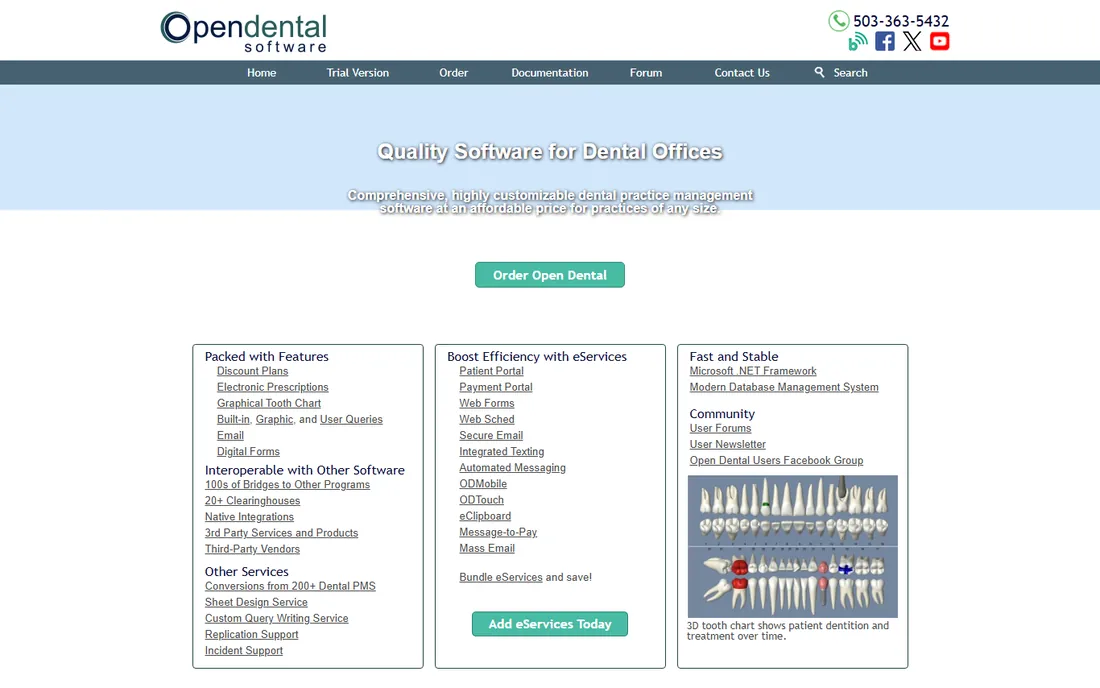
Open Dental is the rare practice management system with imaging taken seriously. Instead of bolting on a third-party viewer, it integrates image capture, storage and display into the same database as scheduling, charting and billing, which means one vendor, one support line and one backup strategy.
The pricing transparency is unique in this list. The vendor publishes everything: $199 per month per location for the first 12 months (covering all computers and up to 3 providers), dropping to $149 after a year, with a 90-day money-back guarantee. Imaging bridges connect to the major sensor and software brands, and the company even offers AI image analysis as an add-on.
The software is Windows-based and self-hosted, which demands more IT attention than cloud options, and the interface is utilitarian. For cost-conscious practices that want honest pricing and deep functionality, Open Dental is the value champion of dental software.
What we like- Fully published pricing ($199/mo/location, dropping to $149 after 12 months)
- Imaging integrated with practice management
- 90-day money-back guarantee
Watch out for- Windows-based and self-hosted
- The interface prioritizes function over polish
Starting priceSee website
Free planNo
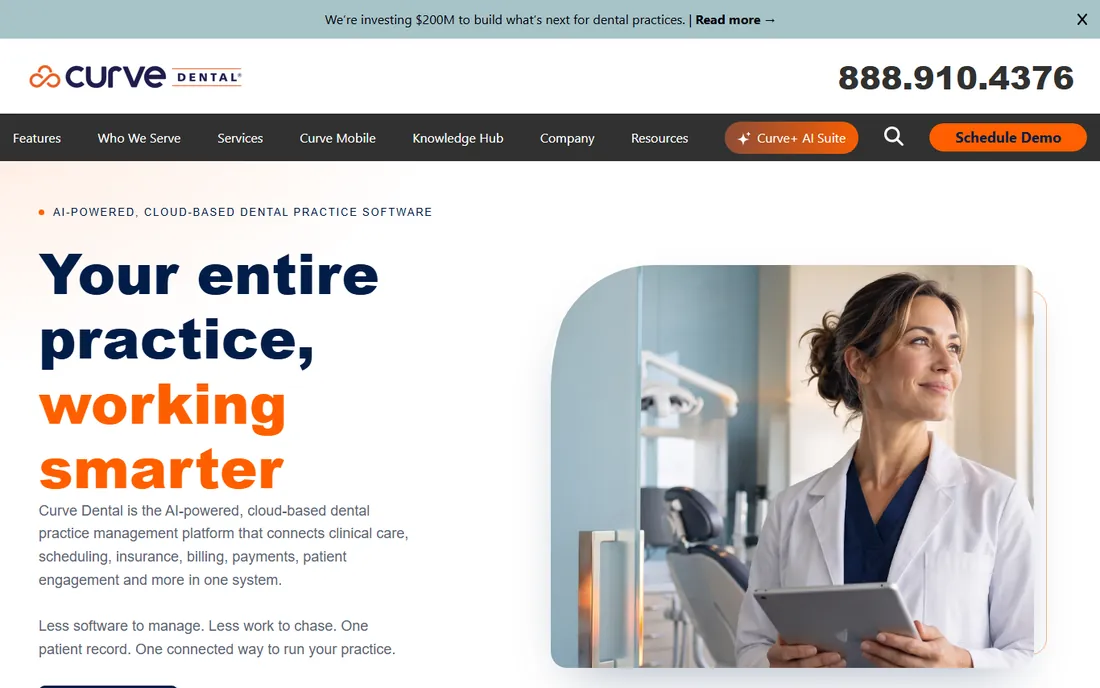
Curve Dental is the cloud-native option for practices that want imaging without a server. Founded in 2005 and focused exclusively on dentistry, Curve delivers practice management and imaging as a true cloud service: no servers, no manual updates, no IT closet, with access from anywhere on any device.
The all-in-one pitch covers scheduling, charting, treatment planning, billing and imaging with HIPAA-compliant data protection. For startups, that means opening day without a server quote; for multi-location groups, it means one system across offices without VPNs and replication headaches.
Pricing is not published, which is the main frustration. But for practices that have decided the server era is over, Curve is the most dentistry-focused cloud option, with imaging integrated rather than attached.
What we like- 100% cloud-based, no servers to maintain
- All-in-one practice management with imaging
- Scales from startups to multi-location groups
Watch out for- Pricing not published
- Cloud dependence like all SaaS
Starting priceSee website
Free planNo
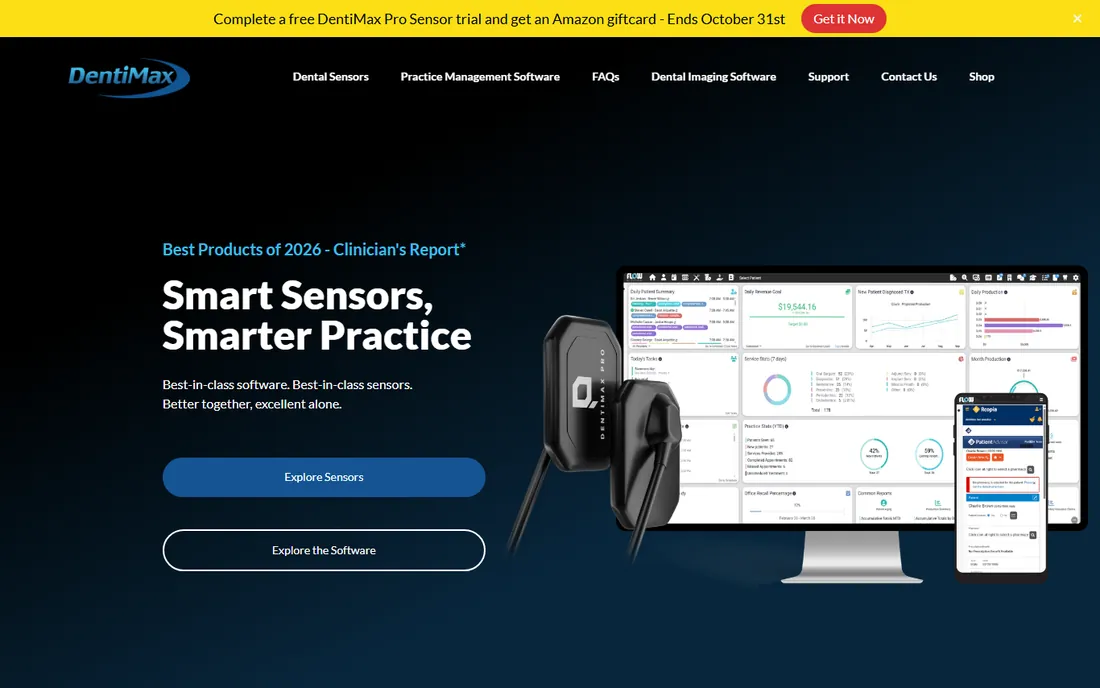
DentiMax is the budget-conscious all-in-one for small practices. Founded in 2004, it bundles practice management with imaging at a price point aimed squarely at solo and small-group offices that find the market leaders overkill.
The value proposition is simplicity: one vendor for scheduling, charting, billing and imaging, with enough capability for everyday general dentistry. For a new practice watching every dollar, or an established office that does not need 3D or AI, DentiMax covers the essentials without the enterprise price tag.
It will not match DEXIS on imaging depth or Curve on cloud architecture, and pricing is not published. But as an affordable entry point to digital dental software, it has kept small practices running for two decades.
What we like- Affordable all-in-one for small offices
- Practice management plus imaging
- Long track record since 2004
Watch out for- Pricing not published
- Smaller feature set than the leaders
How we chose
We researched vendor documentation, product materials and dental software comparisons in October 2026, and cross-referenced public reviews for the gaps vendors omit. Every price above comes from the vendor's own site; dental imaging software is overwhelmingly sold through dealers with quote-based pricing, so where vendors do not publish pricing we say so. We covered dedicated imaging platforms (DEXIS, Apteryx, Romexis, Sidexis, CS Imaging, Dolphin, EzDent-i) and practice management systems with serious imaging (Open Dental, Curve Dental, DentiMax), because most practices buy imaging as part of a broader software decision.
How to choose imaging software for your specialty
Start with your specialty, because imaging needs diverge fast. General dentists need fast, reliable 2D with good patient communication tools: DEXIS, Apteryx or CS Imaging. Orthodontists need ceph tracing and growth prediction: Dolphin Imaging. Implant and surgical practices need 3D planning and surgical guides: Planmeca Romexis or Vatech EzDent-i. Pediatric and high-volume practices need speed and simplicity above all.
Then match the software to your hardware, or decide to break the link. The deepest integrations are single-vendor: Sidexis with Dentsply Sirona, Romexis with Planmeca, EzDent-i with Vatech. If you are happy with your hardware brand, the matching software is usually the path of least resistance. If you want hardware freedom, Apteryx XVWeb's open architecture is built for exactly that.
Finally, decide where your images live. Cloud platforms (Apteryx XVWeb, Curve Dental) remove servers and make multi-site access easy, but they need reliable internet and raise data questions some practices prefer to avoid. On-premise systems (DEXIS, Sidexis, Open Dental) keep data in the building but need backups, updates and IT support. There is no universally right answer; there is only the answer that fits your practice's IT reality.
The integration traps in dental imaging
The first trap is the bridge. Most practices run imaging software from one vendor and practice management from another, connected by a "bridge" that syncs patient data. Bridges work, but they are the most common source of daily friction: failed syncs, duplicate patients, images that do not attach. Ask any vendor exactly how their bridge works with your specific PMS, and talk to a reference customer running the same combination.
The second trap is the upgrade treadmill. Imaging vendors release major versions every few years, and new sensors sometimes require new software. Ask what upgrades cost, whether your current hardware will be supported in the next version, and what happens to your image archive if you switch vendors. Your images are a clinical record you must keep for years; make sure you can export them in a standard format.
The third trap is buying for the demo. Every imaging platform looks impressive in a sales demo with perfect sample images. Insist on a trial with your own sensors and your own difficult cases: the noisy pano, the gagger, the implant with scatter. The software that handles your worst images gracefully is the one you want.
Frequently asked questions
What is the best dental imaging software for a general practice?
For general practices, DEXIS Imaging Suite is the market leader with the broadest support and ecosystem. Apteryx XVWeb is the best choice for practices that want cloud imaging and hardware independence. Carestream CS Imaging is a solid workhorse for practices on Carestream hardware. All three handle everyday 2D imaging well; the decision usually comes down to your existing hardware and whether you want cloud or on-premise.
How much does dental imaging software cost?
Most dental imaging software is sold through dealers with quote-based pricing, so expect a sales conversation. Practice management systems with imaging publish more: Open Dental charges $199 per month per location for the first year, dropping to $149 after 12 months. Budget separately for the hardware (sensors, scanners, CBCT), which typically costs far more than the software, and ask about upgrade and support fees before you commit.
What is the difference between 2D and 3D dental imaging software?
2D dental imaging software handles intraoral X-rays, panoramic and cephalometric images: capture, enhancement, measurement and archiving. 3D software (often called CBCT software) reconstructs volumetric data for implant planning, surgical guides, airway analysis and endodontic assessment. Most vendors offer both, but the 3D capabilities vary enormously: Planmeca Romexis and DEXIS lead for surgical planning, while basic 3D viewers in general platforms are fine for simple implant cases.
Can dental imaging software integrate with my practice management system?
Yes, through bridges or native integration. Most imaging vendors maintain bridges to the major practice management systems (Dentrix, Eaglesoft, Open Dental, Curve Dental), and Apteryx XVWeb is specifically designed for open integration. All-in-one platforms like Open Dental, Curve Dental and DentiMax integrate imaging natively. Always verify the specific bridge for your PMS version with a reference customer before buying.
Is cloud dental imaging software safe for patient data?
Reputable cloud imaging vendors use HIPAA-compliant infrastructure with encryption in transit and at rest, and many practices find vendor-managed security stronger than their own server closet. The real questions are about data ownership, export formats and what happens if you cancel. Confirm you can export your full image archive in standard formats (DICOM for 3D, common formats for 2D) and understand the vendor's data retention policy before committing.
Sources we checked (11)
- https://dexis.com/
- https://www.apteryx.com/
- https://www.planmeca.com/
- https://www.dentsplysirona.com/
- https://www.carestreamdental.com/
- https://www.dolphinimaging.com/
- https://www.vatech.com/
- https://opendental.com/
- https://www.curvedental.com/
- https://dentimax.com/
- https://www.opendental.com/site/fees.html
Is your product missing or out of date?
We review this list regularly. Vendors can request a listing, send updated pricing or ask about featured placement.

Shihab Mia · Founder, Rankite
Shihab has spent more than a decade helping SaaS and e-commerce brands grow through search. He writes Rankite's software buying guides from pricing pages, documentation and public user reviews. More about Shihab.
 Planmeca Romexis
 Sidexis 4
 CS Imaging
 Dolphin Imaging
 Vatech EzDent-i
 Open Dental
 Curve Dental
 DentiMax