How we make this list: we compare pricing pages, product documentation and public user reviews. Rankite is independent; if a vendor ever pays for a featured spot, that listing is clearly labeled Partner.
Key takeaways
- Storylane, Navattic, Arcade and Supademo all offer genuine free plans, so small teams can publish a real interactive demo without paying anything.
- Demostack, Walnut, Reprise, Consensus, Saleo and TestBox target enterprise sales teams and keep pricing behind a sales conversation, which suits teams with presales staff.
- If your reps demo live on calls, Reprise and Saleo inject demo data into the actual product, while TestBox goes further and orchestrates the live product backend with synthetic data.
- Storylane and Navattic publish current prices on their websites (Storylane from $50/month, Navattic Base and Growth billed annually), which makes budgeting easier for growing teams.
- AI demo agents from Arcade, Supademo, Navattic and Walnut can run discovery-style demos around the clock, a useful add-on if your inbound traffic arrives outside working hours.
Picture a rep twenty minutes before a discovery call, opening the demo environment and finding stale data, a broken integration and a dashboard full of zeros from 2022. Demo software exists to make sure that moment never happens again.
Quick comparison
| Tool | Best for | Starting price | Free plan |
|---|
 Demostack Demostack | Enterprise sales teams needing safe, high-fidelity product simulations | See website (custom enterprise pricing) | No |
 Storylane Storylane | Marketing and sales teams that want interactive demos plus digital sales rooms | $50/month (Starter; $40/month on annual billing) | Yes (1 seat, 1 published demo) |
 Navattic Navattic | GTM teams that want AI-built interactive demos with deep analytics | See website (Base and Growth billed annually; Enterprise custom) | Yes (1 seat, 1 demo) |
 Walnut Walnut | Enterprise revenue teams wanting AI-generated, personalized demos | See website | Free trial |
 Reprise Reprise | Enterprise sales and marketing teams running live demos, tours and sandboxes | See website | No |
 Consensus Consensus | Sales teams that want agentic, self-guided and live demos in one platform | See website | No |
 Saleo Saleo | Sales engineers running live demos in the native product | See website | No |
 Arcade Arcade | Teams that need interactive demos plus AI-generated product videos | $42.50 per seat/month (Growth) | Yes (1 published demo, 1 published video, 200 AI credits per month) |
 Supademo Supademo | Teams wanting interactive demos, screen recordings and SOP guides from one tool | See website | Yes (5 guided demos, 50 video recordings) |
 TestBox TestBox | Teams needing demos and POCs that run on the real product with realistic data | See website | No |
Is your product missing or out of date?
We review this list regularly. Vendors can request a listing, send updated pricing or ask about featured placement.
The best demo software for sales teams
#1
Demostack
Best for: Enterprise sales teams needing safe, high-fidelity product simulations
Visit demostack.com
Starting priceSee website (custom enterprise pricing)
Free planNo
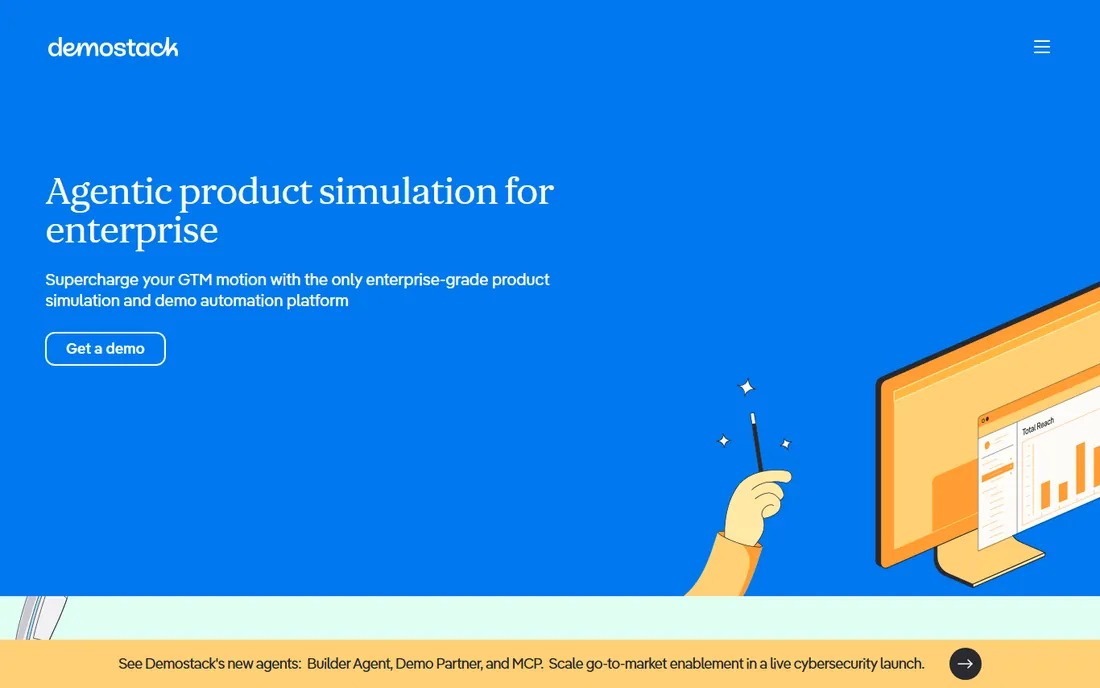
When the stakes are a multi-million-dollar RFP, teams do not want to demo against a live production environment. Demostack creates product simulations that look and behave like the real application without touching production data, and its AI agents now handle much of the building and editing.
The honest catch is scale and cost. Everything about Demostack is built for larger organizations, from the SOC 2 certification to the custom pricing. A startup with three reps will get value faster from one of the self-serve tools on this list.
What we like- Cloner turns a real product walkthrough into a safe, fully functional replica that reps can demo again and again
- AI agents build and edit simulations from natural language prompts
- Demo engagement analytics tie buyer behavior to pipeline
Watch out for- Enterprise pricing with no public tiers puts it out of reach for small teams
- Setup and governance require more effort than a lightweight screen-capture tool
#2
Storylane
Best for: Marketing and sales teams that want interactive demos plus digital sales rooms
Visit storylane.io
Starting price$50/month (Starter; $40/month on annual billing)
Free planYes (1 seat, 1 published demo)
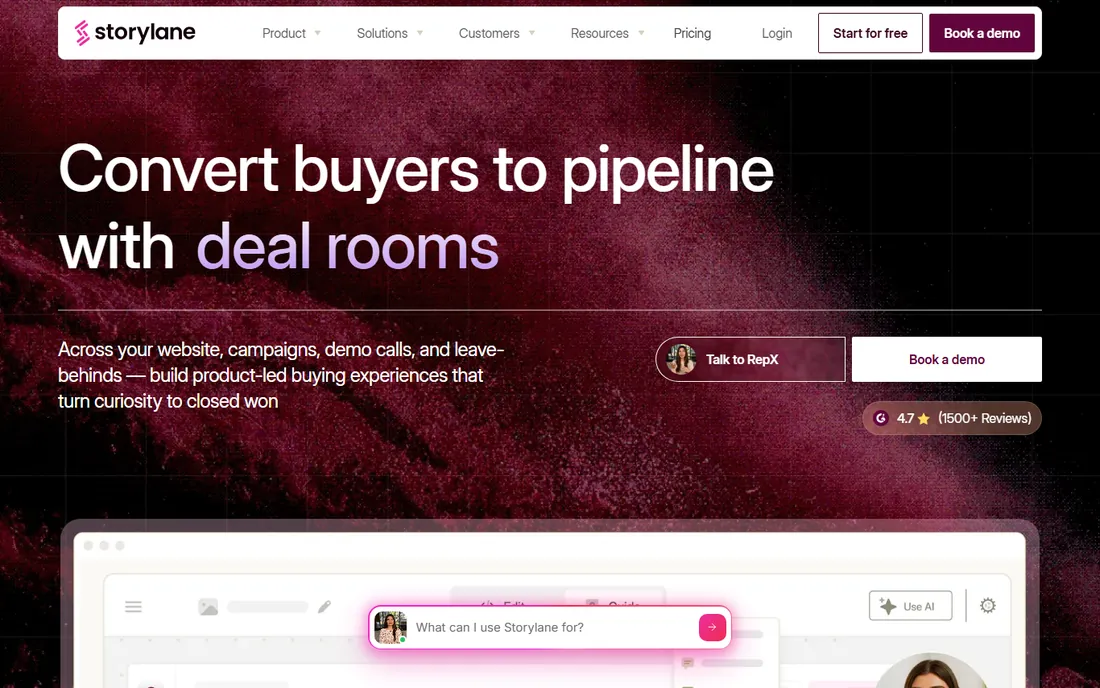
Storylane has become one of the most widely adopted demo tools by combining two things: fast interactive demo building and buyer enablement. A marketer can capture a product walkthrough with the Chrome extension in about ten minutes, and a seller can then package that demo with pricing and collateral into a Hub, which is essentially a digital sales room the champion forwards internally.
Pricing is refreshingly public. The free tier is genuinely useful for testing the concept, the $50/month Starter works for a solo marketer, and Growth adds the HTML editor, personalization tokens and A/B testing. Note that Storylane also charges separately for its AI SDR add-on, so check the quote carefully if a salesperson bundles both.
What we like- Free plan publishes one interactive demo with lead capture and unlimited views
- HTML editor on higher tiers lets you change text and elements on captured screens
- Hubs package demos, pricing and security docs into one buyer link
Watch out for- True product cloning with HTML editing requires the Growth tier at $625/month ($500 on annual)
- Additional seats cost $40 to $100 each per month depending on tier
#3
Navattic
Best for: GTM teams that want AI-built interactive demos with deep analytics
Visit navattic.com
Starting priceSee website (Base and Growth billed annually; Enterprise custom)
Free planYes (1 seat, 1 demo)
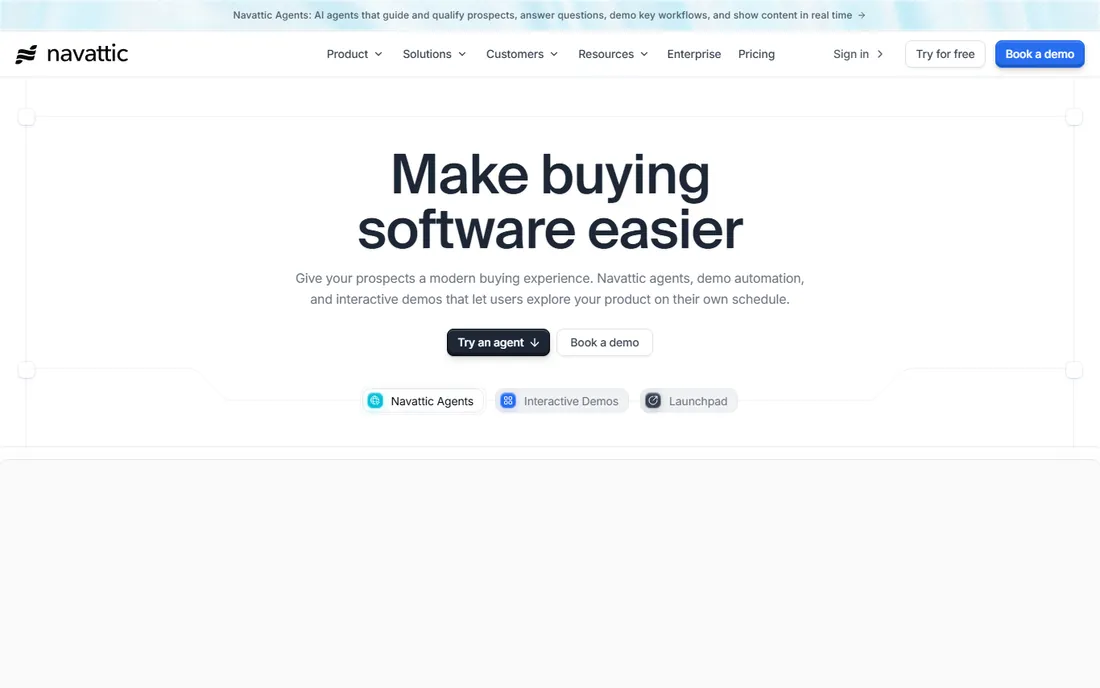
Navattic positions itself as the demo platform for the full buyer journey, and its Launchpad feature shows it: reps get pre-call discovery assets and post-call follow-up demos rather than just website embeds. The AI Copilot generates demos from product screens and improves based on patterns from high-performing demos on the platform.
The free Starter plan is one of the better free tiers in the category because it includes an actual HTML demo, not a limited trial. The trade-off is opacity on pricing. Navattic lists its plan structure (Base, Growth, Enterprise) but hides the numbers, which makes comparison shopping harder than with Storylane.
What we like- Free Starter plan includes one HTML demo built with the AI Copilot
- Paid tiers add account identification, A/B testing and pipeline impact reporting
- Launchpad packages demo automation specifically for pre-call and post-call sales use
Watch out for- Paid plan prices are not published, so you need a sales conversation to budget
- Sandbox demos and SSO sit behind the higher tiers
#4
Walnut
Best for: Enterprise revenue teams wanting AI-generated, personalized demos
Visit walnut.io
Starting priceSee website
Free planFree trial
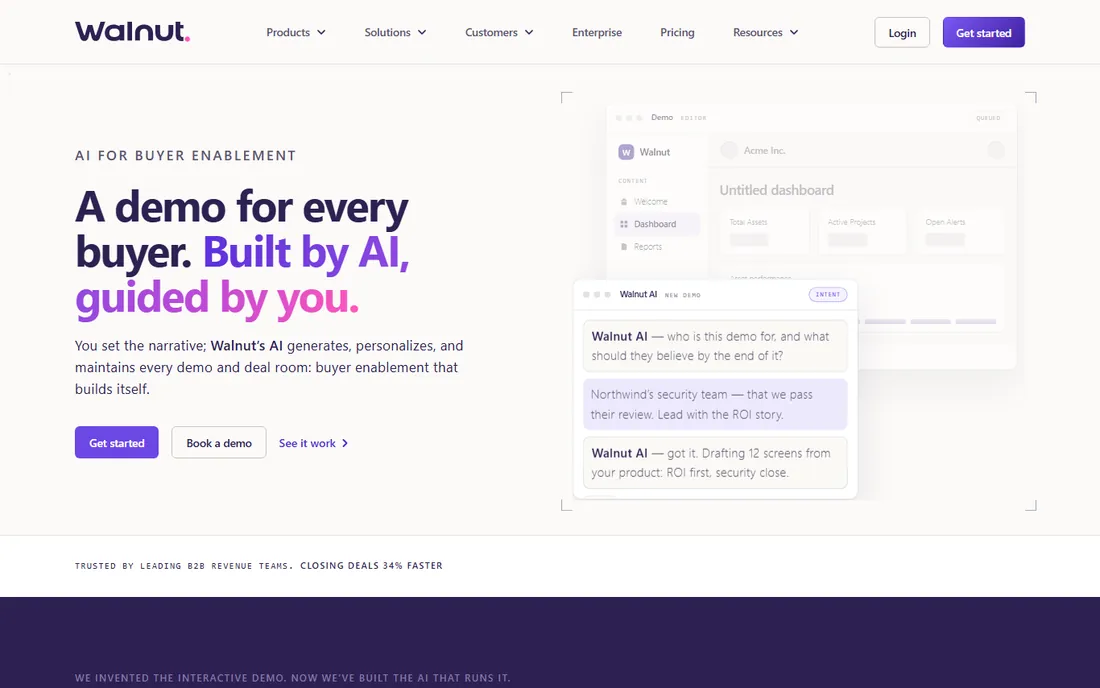
Walnut was one of the earliest interactive demo companies and has now rebuilt itself around AI buyer enablement. The pitch is simple: you write a short brief about who the demo is for and what they should believe by the end, and Walnut drafts the demo, personalizes it per buyer and maintains it when the product changes.
This is an enterprise sale, not a credit-card purchase. Smaller teams should look at Storylane or Arcade instead.
What we like- AI generates a full interactive demo from a written story brief and keeps it updated as the product changes
- Buyer engagement signals sync back to the CRM
- Deal rooms assemble from CRM data for each buyer
Watch out for- Custom enterprise pricing with no public tiers
- Heavier implementation than self-serve builders
#5
Reprise
Best for: Enterprise sales and marketing teams running live demos, tours and sandboxes
Visit reprise.com
Starting priceSee website
Free planNo
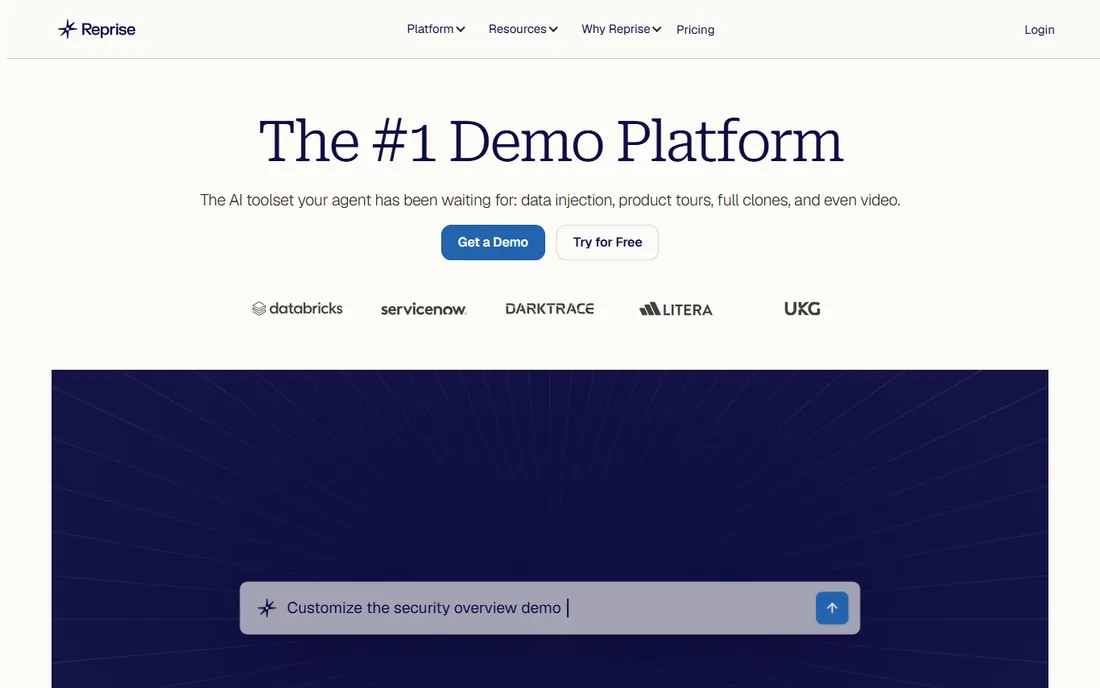
Reprise is the broadest demo platform on this list. Most tools pick a lane (interactive tours or live demo environments); Reprise covers both, plus an AI toolset that can modify demo data, capture screens into tours and analyze which demo assets perform at each funnel stage. Its 2026 launch of a Model Context Protocol server means teams can drive demo creation from their own AI agents.
Breadth comes with complexity. Reprise is a considered purchase that involves implementation, governance and training. It suits companies where demos are a team sport across sales engineering, marketing and sales.
What we like- One platform covers data injection into the live product, guided product tours, sandboxes and video demos
- MCP server lets AI agents build and personalize demos from call transcripts and notes
- Enterprise governance with SOC 2, SSO and role-based access
Watch out for- Pricing and onboarding are geared toward large teams with dedicated presales staff
- No self-serve free tier to test drive
#6
Consensus
Best for: Sales teams that want agentic, self-guided and live demos in one platform
Visit goconsensus.com
Starting priceSee website
Free planNo
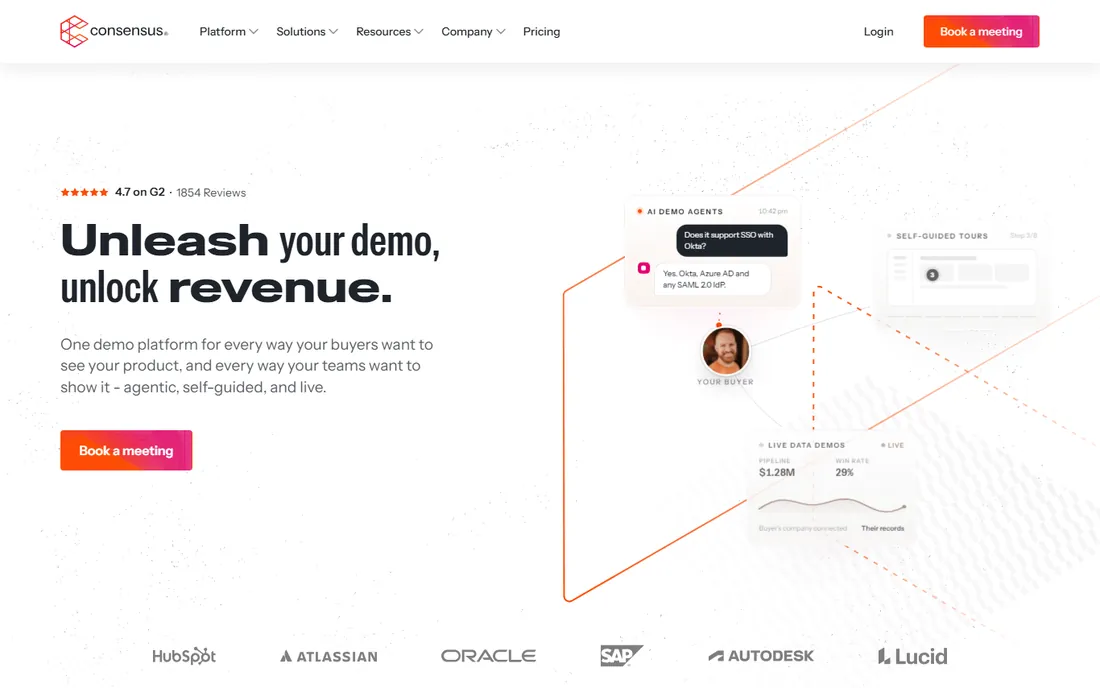
Consensus has been in this category longer than most of its competitors, and its platform reflects that maturity. The core idea is that buyers want to see the product their way: some want a live call, some want to click through alone at midnight, and some now want an AI agent to walk them through it. Consensus offers all three and tracks engagement into a single stream of demo intelligence.
Like Reprise, this is enterprise software sold through enterprise sales. If you sell complex software to buying committees, Consensus is purpose-built for that.
What we like- Combines AI agent demos, self-guided interactive demos and live demo support in a single platform
- Demo intelligence reveals which stakeholders engaged and what they care about
- Strong enterprise customer base with measurable ROI claims
Watch out for- Enterprise pricing with no public plan details
- The breadth of features can mean a longer ramp-up for smaller teams
#7
Saleo
Best for: Sales engineers running live demos in the native product
Visit saleo.io
Starting priceSee website
Free planNo
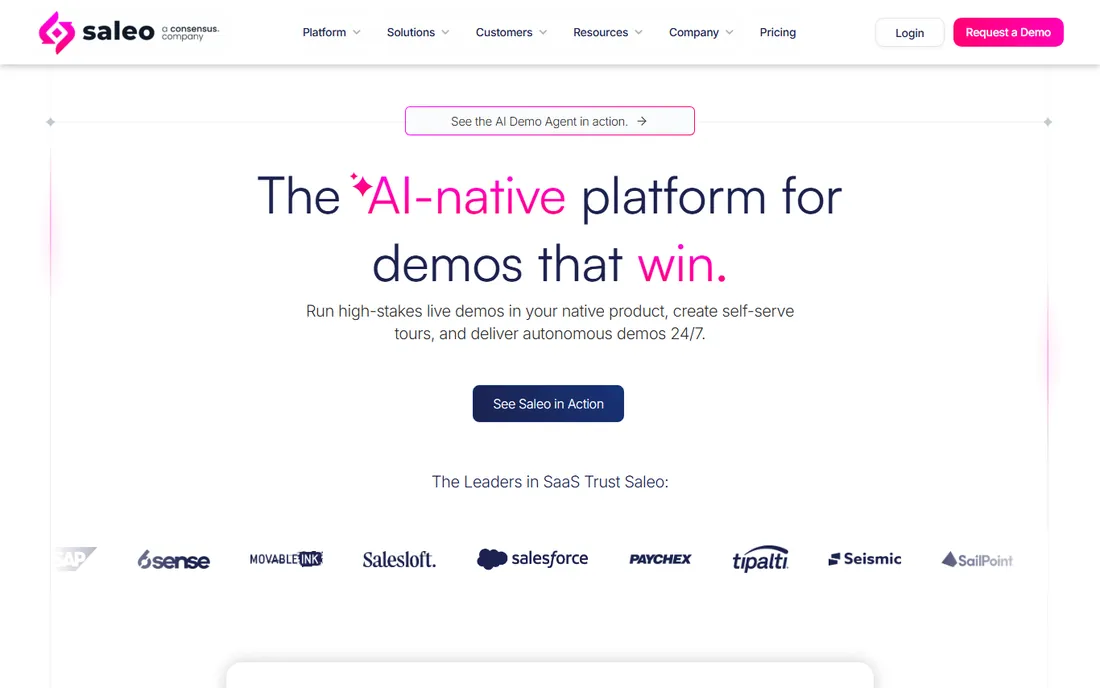
Saleo takes a different philosophy from the screen-capture crowd: instead of cloning the product, it runs the demo in the actual product and uses AI to generate the right data for each scenario. A sales engineer can personalize datasets for an industry or use case in seconds, then run the live call with confidence that the numbers tell the right story.
The focus on live demos is both the strength and the limitation. If your biggest pain is the live call, Saleo is one of the strongest options here. If you mainly need website tours that prospects explore alone, tools like Storylane or Navattic cover that ground more deeply.
What we like- AI demo data engine injects realistic, personalized data directly into the live product for sales calls
- Live demos run in the native product with zero backend access
- Capture product tours and autonomous AI demo agents round out the platform
Watch out for- Live-demo focus means self-serve tour breadth is narrower than pure interactive-demo tools
- Pricing is not published
#8
Arcade
Best for: Teams that need interactive demos plus AI-generated product videos
Visit arcade.software
Starting price$42.50 per seat/month (Growth)
Free planYes (1 published demo, 1 published video, 200 AI credits per month)
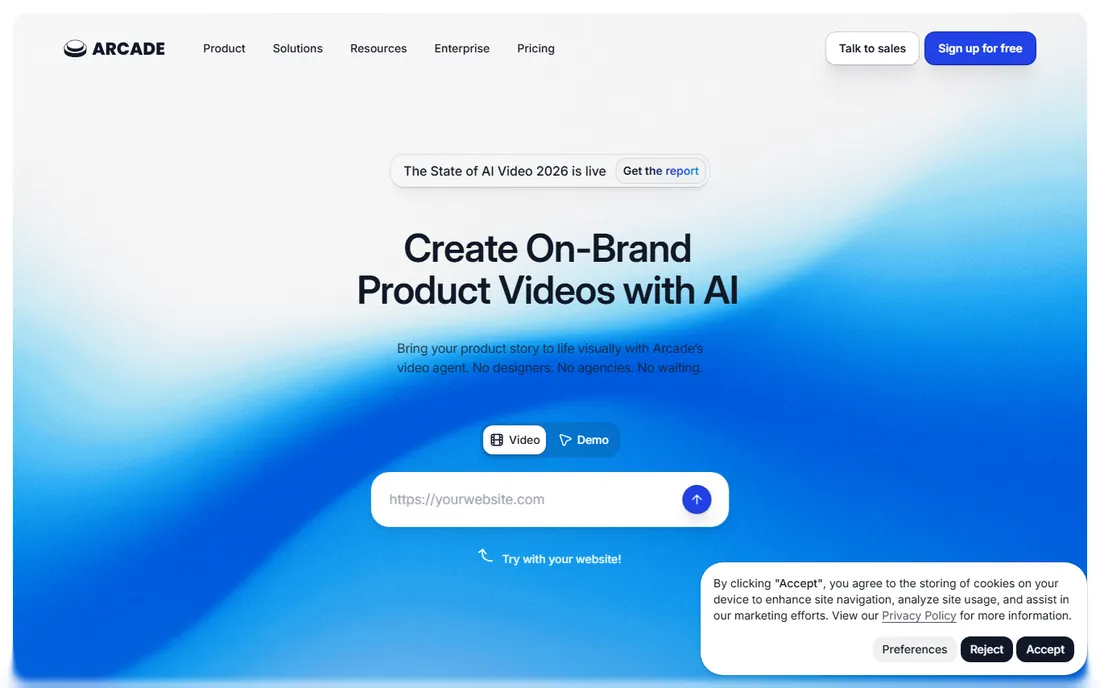
Arcade started as an interactive demo builder and has expanded into a full product storytelling suite: demos, videos, visuals and GIFs, all generated from your product and your brand kit. For a small marketing team, this replaces two or three tools. The AI builds from your product context, so output looks like your best creative work rather than generic templates.
Pricing is transparent: free to start, Growth at $42.50 per seat per month, Enterprise custom. The free plan is honest about its limits (one demo, one video, watermark). Teams that need unlimited demos and real analytics will pay, but the entry point is fair.
What we like- Combines interactive demos, AI videos and visuals in one workspace with brand kits
- Free plan includes a published demo and a published video
- Synthetic voiceover, branching and camera recording included
Watch out for- Free plan limits output and adds a watermark
- Deeper analytics and collaboration features require paid tiers
#9
Supademo
Best for: Teams wanting interactive demos, screen recordings and SOP guides from one tool
Visit supademo.com
Starting priceSee website
Free planYes (5 guided demos, 50 video recordings)
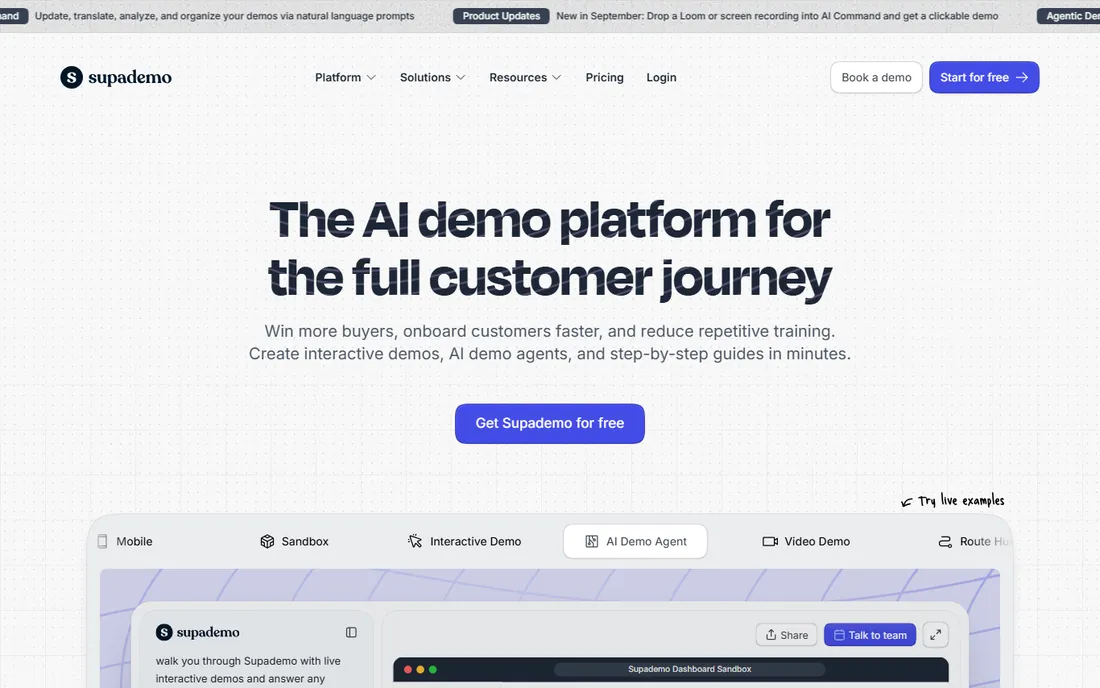
Supademo's pitch is consolidation: one workspace for interactive demos, screen recordings, SOPs and AI demo agents. The free plan is generous by category standards (five guided demos and fifty video recordings), which makes it a strong starting point for enablement teams, not just sales.
Paid plans (Scale, Business, Growth, Enterprise) are per-seat and add HTML cloning, unlimited demos, translations and advanced analytics, though prices are only available through the vendor. If your team produces a lot of training content alongside sales demos, the all-in-one value is real.
What we like- Free plan includes guided interactive demos, video recordings and SOP exports
- AI Demo Agents qualify buyers and hand context to sales around the clock
- HTML cloning and sandbox demos available on paid plans
Watch out for- HTML cloning and clickable sandboxes require paid plans
- AI voiceover and advanced personalization sit on higher tiers
#10
TestBox
Best for: Teams needing demos and POCs that run on the real product with realistic data
Visit testbox.com
Starting priceSee website
Free planNo
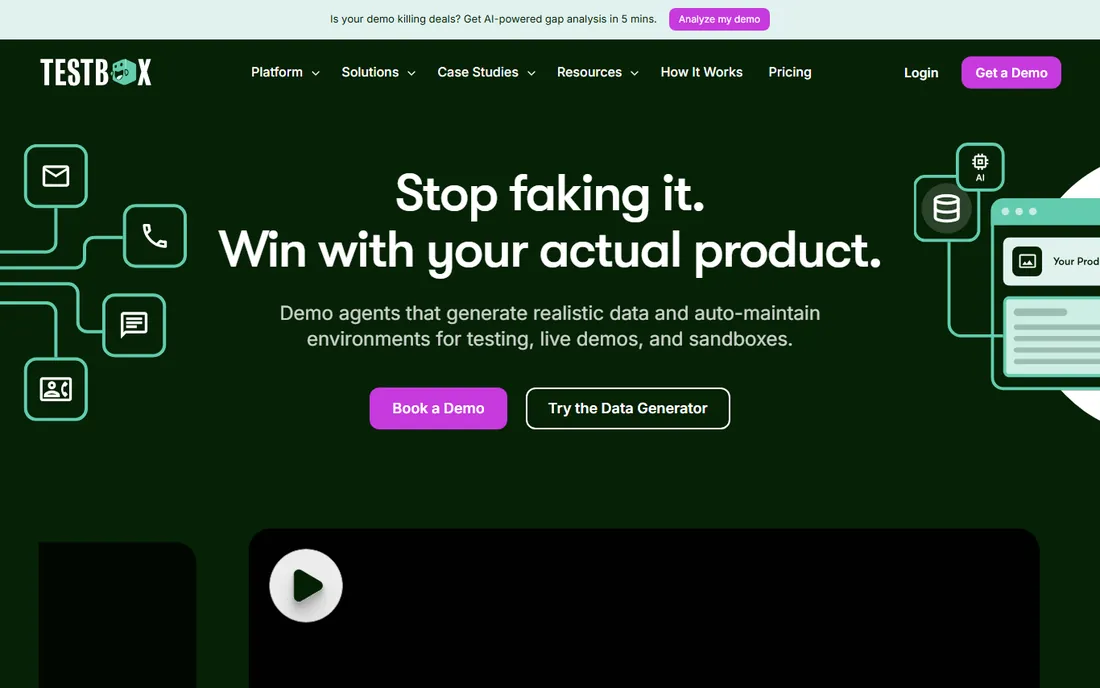
TestBox draws a sharp line between itself and cloning tools: instead of capturing the UI, it maps your product's data model and workflows, then orchestrates the real product with AI-generated synthetic data. Every feature, integration and AI workflow in the demo is genuinely functional. For products whose value depends on data (analytics, AI features, integrations), that realism matters.
The trade-off is setup. TestBox needs a one-time platform mapping to ingest data securely, and there is no free tier to experiment with. This is infrastructure for serious demo operations, best suited to companies where the demo environment is a known bottleneck.
What we like- AI agents generate realistic synthetic data so demos run on the actual product backend, not screenshots
- Supports guided buyer sandboxes, live demos and one-click POCs
- The same data engine works for testing and AI training data
Watch out for- Requires an initial platform mapping and secure data ingestion setup
- No free tier or published pricing
What to check before you buy demo software
Start by deciding what kind of demo you actually give. If reps demo live on calls, you need live-demo support with realistic data (Reprise, Saleo, TestBox, Demostack). If buyers mostly explore alone on your website, an interactive tour builder (Storylane, Navattic, Arcade, Supademo) is the right category. Many teams need both, which is why platforms like Reprise and Consensus exist.
Then check the data story. Screen-capture tours are fast to build but go stale when the product changes; tools with HTML editing (Storylane Growth and up, Supademo paid plans) or AI-maintained demos (Walnut) reduce that maintenance burden. Live-data tools avoid staleness entirely but need setup.
Finally, look at the commercial details. Ask whether pricing is per seat or flat, whether sandbox and AI features are separate add-ons, and what the annual commitment looks like. Several vendors here hide prices behind sales calls, so get the quote in writing with the seat count and included features spelled out.
How we chose
We researched each tool's own website, pricing page and documentation, then cross-checked feature claims against public reviews on G2 and Capterra and community discussions on Reddit. We favored tools that are actively developed in 2026 and fit a defined buyer: enterprise presales teams, growth-stage GTM teams, or small teams that need a free starting point. No vendor paid for placement, and we did not claim hands-on testing of any product.
Demo software pricing, explained
Pricing in this category splits into three bands. Self-serve tools publish their prices: Storylane from $50/month, Arcade Growth at $42.50 per seat per month, Supademo and Navattic with free plans and per-seat paid tiers. These are credit-card purchases with monthly or annual billing, and annual billing typically saves 20 percent.
Enterprise platforms (Demostack, Walnut, Reprise, Consensus, Saleo, TestBox) do not publish prices. Expect annual contracts, per-seat or platform pricing, and implementation fees. The right question is not just the license cost but the total cost: how many seats, which add-ons, and whether you need professional services to get live.
Free plans are genuinely useful in this category. Storylane, Navattic, Arcade and Supademo each let you publish at least one real demo for free, which is enough to test whether interactive demos move your pipeline before spending.
Frequently asked questions
What is the difference between interactive demo software and demo automation?
Interactive demo software creates click-through product tours that buyers explore on their own, usually embedded on a website or shared as a link. Demo automation is broader: it covers building, personalizing, maintaining and measuring demos across live calls, follow-ups and deal rooms, often with AI doing the repetitive work. Most tools on this list do both to some degree.
Do we still need live demos if we have interactive tours?
For most B2B teams, yes. Interactive tours are excellent for early-stage discovery and champion enablement, but complex deals still close on live calls. Tools like Reprise, Saleo and TestBox exist specifically because the live demo remains the highest-stakes moment in the sales cycle.
How long does it take to build an interactive demo?
With a screen-capture builder like Storylane, Navattic, Arcade or Supademo, a simple guided tour takes ten to thirty minutes. HTML-edited or cloned demos take longer. Live-product environments from Demostack, Saleo or TestBox need initial setup and data configuration, typically days to weeks depending on product complexity.
Can demo software integrate with our CRM?
Yes, across the board. Native Salesforce and HubSpot integrations are standard on paid tiers, and most tools also connect to Slack, Marketo, Gong and sales engagement platforms. Engagement data (who viewed, what they clicked, how long they stayed) syncs to contact or account records.
Which demo tool is best for a startup on a budget?
Start with a free plan: Supademo's free tier is the most generous, followed by Storylane and Navattic. If you also need product videos, Arcade's free plan covers both. Move to a paid tier once you need unlimited demos, custom branding or CRM analytics.
Do these tools work for mobile apps?
Most support mobile to some degree. Supademo lists mobile demos explicitly, and HTML-capture tools generally work with responsive web apps. Native mobile app demos are harder; check with the vendor if your product is a native iOS or Android app.
Sources we checked (10)
- https://www.demostack.com
- https://storylane.io/plans
- https://www.navattic.com/pricing
- https://www.walnut.io
- https://reprise.com/
- https://goconsensus.com/
- https://saleo.io/
- https://www.arcade.software/
- https://supademo.com/pricing
- https://www.arcade.software/blog/announcing-arcade-pricing-plans
Is your product missing or out of date?
We review this list regularly. Vendors can request a listing, send updated pricing or ask about featured placement.

Shihab Mia · Founder, Rankite
Shihab has spent more than a decade helping SaaS and e-commerce brands grow through search. He writes Rankite's software buying guides from pricing pages, documentation and public user reviews. More about Shihab.