How we make this list: we compare pricing pages, product documentation and public user reviews. Ratings come from G2, Capterra or Trustpilot, with the date we checked them.
Key takeaways
- The best DeFi apps in 2026 split by job: Uniswap for swapping, Aave and Compound for lending, Curve for stablecoin trades, Lido for liquid staking, and Yearn for automated yield.
- All of these apps are free to use, but protocol fees, network gas, and borrow rates vary by market, so the real cost is per transaction, not a subscription.
- Crypto risk is real: prices are volatile, smart contracts can contain bugs, and yields that look high usually carry hidden risk, so never put in money you cannot afford to lose.
- This article is general information, not financial advice: rates change constantly, and past yield never guarantees future returns.
Quick comparison
Is your product missing or out of date?
We review this list regularly. Vendors can request a listing, send updated pricing or ask about featured placement.
The best DeFi apps
Starting priceFree
Free planYes
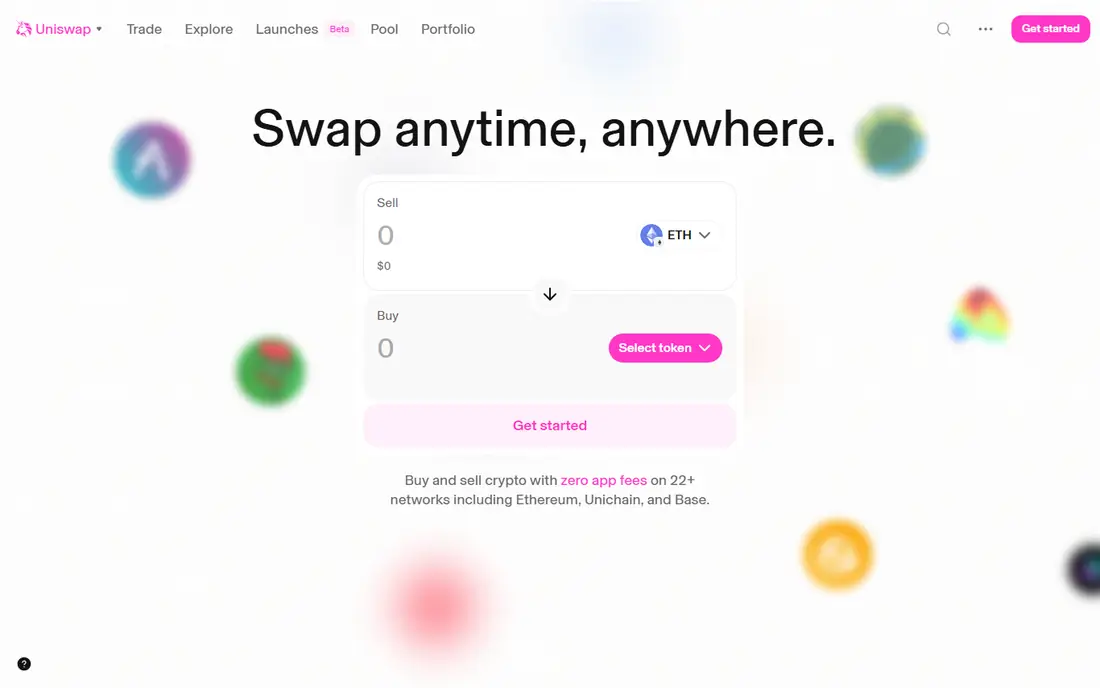
Uniswap is the largest decentralized exchange by usage, and the default pick for swapping tokens without handing over identity documents. Trades price against a liquidity pool rather than a counterparty, and concentrated liquidity lets providers choose a price range and earn more fees inside it, at the cost of more exposure when price leaves the range.
Swap fees run 0.05 percent to 1 percent per trade, plus network gas, which varies by chain and congestion. Liquidity providers face impermanent loss when token prices diverge. For token swapping, Uniswap leads.
What we like- Largest decentralized exchange by usage
- No KYC for token swaps
- Concentrated liquidity lets providers earn more inside a price range
Watch out for- Swap fees of 0.05 percent to 1 percent per trade plus network gas
- Impermanent loss risk for liquidity providers
- No customer support
Starting priceFree
Free planYes
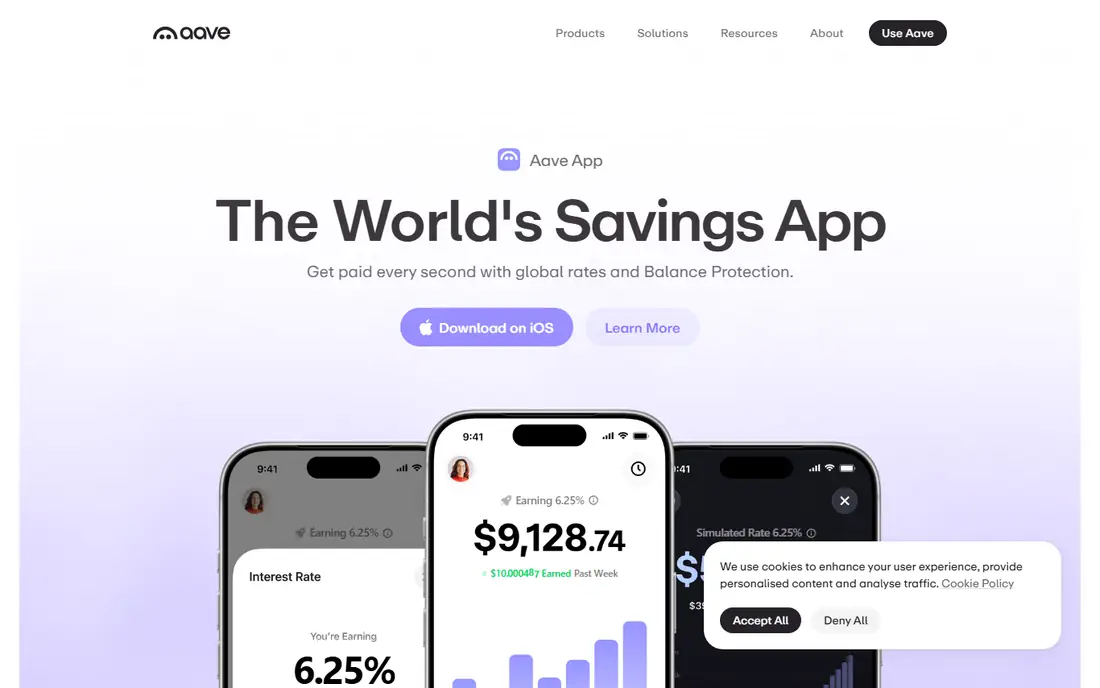
Aave is the reference lending protocol. Its documentation describes it as a collection of smart contracts that facilitates overcollateralised borrowing of digital assets: supply assets to shared pools to earn interest, and borrow by posting more collateral than you draw. If a position falls below its threshold, anyone can liquidate it and take a cut, which is why borrowers watch health factors closely.
Rates move with utilization, so borrow costs vary widely and no minimum deposit applies. Flash loans suit advanced strategies but not beginners. For lending and borrowing, Aave leads.
What we like- Reference lending protocol with deep liquidity
- Supply assets to earn interest
- Flash loans for advanced strategies
Watch out for- Borrow rates vary widely, from under 1 percent to over 20 percent
- Liquidation risk if collateral falls
- Smart contract risk on every position
Starting priceFree
Free planYes
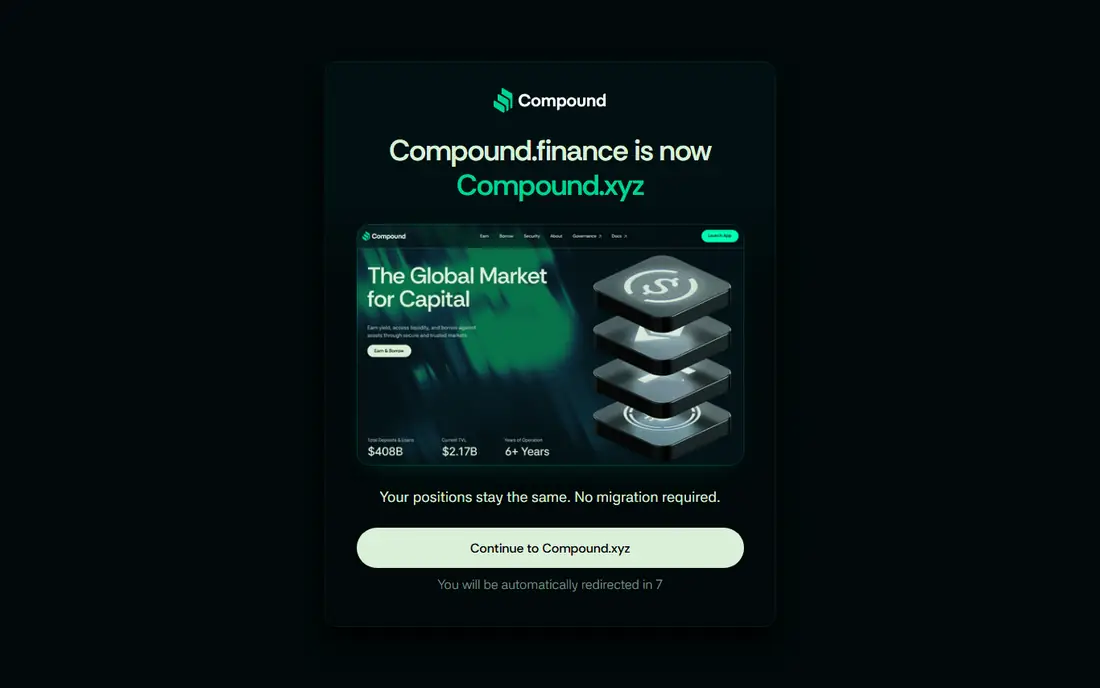
Compound popularized algorithmic money markets: supply and borrow rates move with utilization, without anyone setting them. Supply APY runs from 0 percent to 15 percent depending on asset and demand, with no minimum deposit.
Fewer supported assets than Aave means a correspondingly simpler risk surface, which some users prefer. Liquidation risk applies to every borrowed position. For algorithmic lending with a simpler surface, Compound is the best pick.
What we like- Algorithmic rates that move with utilization
- Simpler risk surface than Aave
- Supply APY from 0 percent to 15 percent
Watch out for- Fewer supported assets than Aave
- Liquidation risk on borrowed positions
- Yields vary constantly with market demand
Starting priceFree
Free planYes
Sky, formerly MakerDAO, is the protocol behind the DAI stablecoin, rebranded to Sky in 2024 with governance moved from the MKR token to SKY. Users lock collateral to mint stablecoins against it, and token holders vote on collateral types and rates through on-chain governance.
Stability fees run 0.5 percent to 8 percent, and opening a position costs nothing, though collateral liquidation risk applies if values fall. For minting stablecoins against your own collateral, Sky leads.
What we like- Mint stablecoins against collateral with no minimum to open
- Governance by token holders
- Long track record since MakerDAO
Watch out for- Stability fees of 0.5 percent to 8 percent
- Liquidation risk if collateral value falls
- Rebrand to Sky can confuse new users
Starting priceFree
Free planYes
Curve Finance is built for swaps between assets that should hold the same value, such as stablecoins and staked ETH derivatives. Its pricing curve is tuned to keep slippage low for those pairs, which makes it the default venue for large stablecoin trades.
Volatile token swaps belong on Uniswap rather than Curve, and the interface feels technical for beginners. For stablecoin swaps at scale, Curve is the best pick.
What we like- Lowest slippage for stablecoin and staked ETH trades
- Default venue for large stablecoin trades
- Deep liquidity in like value pools
Watch out for- Less suited to volatile token swaps
- Interface feels technical for beginners
- Pool fees vary by pool
Starting priceFree
Free planYes
Lido offers liquid staking: you stake, and receive a token representing the staked position that you can trade or use as collateral elsewhere, without lockups. That flexibility is why Lido dominates liquid staking for Ethereum.
The trade is a 10 percent fee on staking rewards, leaving a net APR around 3 to 4 percent, plus the risk that the receipt token trades at a discount to the asset it represents. For liquid staking, Lido leads.
What we like- Liquid staking without lockups
- Receive a tradable token for your staked position
- Net APR around 3 to 4 percent after fees
Watch out for- 10 percent fee on staking rewards
- Receipt token can trade at a discount to the asset it represents
- Validator and smart contract risk
Starting priceFree
Free planYes
Yearn Finance automates yield strategies through vaults that move deposits across lending and liquidity protocols to chase the best available return, without manual rebalancing. That suits users who want yield exposure without managing positions daily.
The hidden cost is stacked risk: vault fees and performance fees apply, and underlying protocol risk stacks across layers, so a bug in any strategy component can affect the vault. For automated yield, Yearn is the best pick.
What we like- Vaults automate yield strategies across protocols
- No manual rebalancing
- Long track record in yield aggregation
Watch out for- Strategy complexity is hidden from users
- Vault fees and performance fees apply
- Underlying protocol risk stacks across layers
Starting priceFree
Free planYes
Balancer suits custom liquidity pools and portfolio weighting. Pools can hold multiple assets at custom weights, so a pool can act as a self rebalancing portfolio, with fees set by liquidity providers from 0.0001 percent to 10 percent.
Complex pools are harder to model than simple pairs, and impermanent loss still applies. For custom pools and portfolio style exposure, Balancer rounds out the list.
What we like- Custom pool weights for portfolio style exposure
- Pool fees set by liquidity providers from 0.0001 percent to 10 percent
- Multi asset pools
Watch out for- Complex pools are harder to model than simple pairs
- Impermanent loss risk
- Smaller liquidity than Uniswap for common pairs
How we chose
We ranked apps by total value locked, track record, ease of use, fee clarity, and range of supported assets. We favored protocols with long operating histories and deep liquidity, since a thin protocol can fail to exit cleanly in a market stress event. We gave extra weight to fee clarity: apps that publish fee ranges score higher than apps that hide costs in slippage or gas.
We also weighed risk honestly. Every app here carries smart contract risk, and lending apps add liquidation risk, so we ranked by how clearly each protocol surfaces those risks rather than by headline yield. A protocol that hides its liquidation threshold or fee schedule behind jargon scores lower than one that states them plainly, since clarity is the only protection a user has before depositing. Rates quoted here change constantly, so readers should check the protocol app before acting.
Buying guide
Start with your goal, not the yield headline. Swapping belongs on Uniswap or Curve, lending on Aave or Compound, staking on Lido, and automated yield on Yearn. Mixing goals in one app usually means paying for features you do not use.
Next, size positions for loss. Crypto prices are volatile, smart contracts can contain bugs, and yields that look high usually carry hidden risk, so never put in money you cannot afford to lose. Check the health factor on every borrowed position, and keep collateral well above the liquidation threshold.
Finally, read the fee stack before acting: protocol fee, network gas, and any performance fee together decide the real return. Keep a written record of every position, including entry price, collateral ratio, and health factor, since DeFi positions move fast and memory is unreliable in a market drop. This article is general information, not financial advice, and past yield never guarantees future returns. Verify rates in the protocol app, since they move with market demand.
Frequently asked questions
What is the best DeFi app overall?
Uniswap leads for swapping, Aave for lending, and Lido for liquid staking. The best pick depends on whether you want to swap, lend, borrow, stake, or earn automated yield.
Are DeFi apps free to use?
Yes, there is no subscription, but protocol fees, network gas, and borrow rates apply per transaction. Uniswap swap fees run 0.05 percent to 1 percent, and Lido takes 10 percent of staking rewards.
Is DeFi safe?
DeFi carries real risk: price volatility, smart contract bugs, liquidation, and impermanent loss. Use established protocols with deep liquidity and long track records, size positions for loss, and never put in money you cannot afford to lose. Check audits, but remember an audit is a snapshot, not a guarantee, and keep funds you need soon in traditional accounts rather than volatile positions.
Do I need KYC to use DeFi apps?
Most DeFi apps do not require KYC for token swaps, lending, or staking, since they run on public blockchains and connect to a wallet rather than an account. On and off ramps that convert dollars to crypto usually do require identity checks, and tax reporting duties still apply to on chain activity, so keep records of trades, interest, and rewards.
Can DeFi yields be guaranteed?
No. Yields move with market demand, utilization, and token prices, so past yield never guarantees future returns. High yields usually carry hidden risk, and a rate that looks far above the market average deserves extra careful scrutiny before any deposit.
Sources we checked (0)
Is your product missing or out of date?
We review this list regularly. Vendors can request a listing, send updated pricing or ask about featured placement.

Shihab Mia · Founder, Rankite
Shihab has 5+ years in B2B and SaaS SEO. He writes Rankite's software buying guides from pricing pages, documentation and public user reviews. More about Shihab.
 Uniswap
 Aave
 Compound
 Sky (MakerDAO)
 Curve Finance
 Lido Finance
 Yearn Finance
 Balancer